Blog

  • How to choose a cologne

    How to choose a cologne

    cologne

    Okay, here are a few quick math paradoxes.

    Let’s take a poll. Ask a small group of people — let’s pick an easy number, let’s say ten — what they think of McDonalds.

    Your results will most likely be that eight of those ten will tell you that they never, ever, go to McDonalds — no way. Absolutely not. Gross. And the other two will say they go rarely — once or twice a year, tops.

    Yet McDonalds sells 75 hamburgers every second.

    So your friends are lying

    The same rule applies for cologne. Ask a group of ten men if they wear cologne and you’ll see the same results. Oh, they’ll tell you that they have a bottle, somewhere — I’m not really sure, I never use it — yet Americans spend one billion dollars a year — a slight exaggeration, the real number is 978 Million — on men’s cologne. So either your friends are getting buckets of the stuff as gifts that they are throwing away, or they are also lying.

    It’s very common for men to remain in the closet regarding cologne and the main reason for this is that we have been exposed to years of cologne abuse. Men have long used cologne s a substitute for personal hygiene and when we didn’t have time for a shower we would toss a thick coat of Aqua Velva on to hide the funk — and we all have memories of that uncle in the polyester sports jacket that put on a pint of two dollar cologne before he headed out for the day.

    But the fact is that scent is an extremely powerful trigger. Animals know this and so do we. A pleasant scent can alter a mood and a bad scent can alter it even faster.

    [amazon asin=B008I2IKTA&template=iframe image][amazon asin=B004O24Q8W&template=iframe image][amazon asin=B000JD4N9M&template=iframe image][amazon asin=B002FAWECK&template=iframe image]

    Choosing a cologne you like — the industry jargon for this is finding your signature scent — is as important as buying that one good watch or knowing how to tie a Windsor-knot necktie.

    SO WHAT IS COLOGNE?

    The term cologne refers to the strength of the perfume. Now, there are colognes for women, but women usually prefer a stronger scent or perfume rather than cologne. So the weaker scent — the cologne strength — usually refers to the product for men.

    The fragrant strengths of colognes are …

         Eau de cologne — contains up to 5 % perfume oil.

         Eau de toilette — 4 to 8% perfume oil.

         Aftershave — up to 2% perfume oil.

    TYPES OF COLOGNE SCENTS:

    The typical cologne scents are …

         Floral — This is largely seen more in perfumes than colognes, but there are a few colognes that can be categorized as floral.

         Fruit.  

         Chypre — this describes earthy or woodsy scents

         Fougere — grassy or herbal.

         Aquatic — — light and airy.

    HOW TO CHOOSE A COLOGNE.

    1. Budget. Unfortunately, in order to get decent cologne you’re going to be anywhere in the $75 to $150 range. This may seem high but with a quality cologne you are actually going to use very little at a time and it will last. Don’t waste your money on ultra cheap colognes or clones — my younger son once bought a bottle of cologne from The Dollar Tree and we received an environmental dumping fine from the EPA. Nasty stuff. And on the other end, most cologne experts will advise colognes over $200 are not a good purchase.

    2. Shop alone. Choosing a cologne is not something you do with your girlfriend, your wife or a couple of guys from the office during lunch. There are too many outside influences. Go alone.

    3. Choose based on you. This may sound a little touchee-feellee but you want to find a cologne that smells like you, not one that you want to smell like. You are not a sailor or a lumberjack. You’ve never played poker on a paddle boat and you don’t own skis. Chose a scent you like, not what you think others will like to smell on you.

     4. Say no to the spritzers. The salesgirl at Macy’s will tell you that colognes smell different on your body. She’s lying. Have them spray it on test strips and smell it from there.


  • How to sharpen a knife

    How to sharpen a knife

    knife

    When I was twelve years old, on my birthday, I received my very first pocket knife. It was a gift from my father and it was amazing. It was a Boy Scout knife that had two blades, a can opener and a screwdriver that hurt your thumbnail when you tried to open it — I can still feel the black faux wood handle and the blade as it bit into a stick or a piece of wood.

    Years later, I can only remember two gifts that my dad ever gave me — even though I’m sure there were more. One was the grey tweed overcoat he had tailored for me when I turned 21 — which I still have but can no longer fit into — and the other was the pocket knife I got when I turned twelve — which I no longer have, but wish that I did.

    This pocket knife tradition continued with my two sons and upon each of their twelfth birthdays they received their very first pocket knife from me. And my youngest son kept my tradition going by losing his six months later.

    Pocket knives have been carried by men for a hundred years or more. However this practice was stilted somewhat by the events of 9/11. With stricter restrictions on security and safety, knives were no longer allowed on flights, government building and other institutions and many men who normally carried a pocket knife, stopped in order to be compliant with the new rules.

    However there are no states that forbid pocket knives.

    See the State Knife Laws — http://http://pweb.netcom.com/~brlevine/sta-law.htm#A-H

    [amazon asin=B0009KF4H0&template=iframe image][amazon asin=B000KSCEH4&template=iframe image][amazon asin=B00006IUWM&template=iframe image][amazon asin=B0037F1B9E&template=iframe image]

    In fact, a ‘knife’ and a ‘pocket knife’ — a folding knife with a blade less than 3” — are in two completely separate categories.

    Now, you’re not going to get your pocket knife on an airplane as carry on — but you can throw it in your bag that you’re checking without a problem at all — any certain federal buildings may not allow it, but anywhere else you not breaking any laws by carrying one.

    Pocket knives are a great handy tool to have and you have a right to carry one if your wish.

    HOW TO SHARPEN A KNIFE.

    For here, we’re going to discuss sharpening a knife using a wet stone. Now there are many other ways to sharpen a knife and even more new gadget-ee devices — those that you can cut a tomato and then a nail — and I’ve tried a few of them and there is nothing better than an old fashioned wet stone.

    1. Get a wet stone. These are also called whetstones because the word whet means to sharpen and you can get one at any hardware store, department store or you flea market.

    2. Soak the stone. Sharpening creates heat. Too much heat and it can warp your blade which is why you should never sharpen your knife on a grinding wheel. Also, wet stones are very porous and in order to keep the filings from the blade of filling the holes of the stones you need to create a liquid coating on the surface. You can do this by soaking the stone in water for twenty minutes, or you can use mineral oil or a light dish soap/water mixture.

    3. Identify the bevel angle. This sounds more complicated than it really is and all it means is that the blade of every knife is angled differently. Most pocket knives have a 30 degree bevel angle, whereas kitchen knives and others may be different. So all this means is, match the angle of the blade with the angle you are lifting the knife up to sharpen it. You want to sharpen the very end of the kinife, not grind down the steel around it.

    4. Sharpen first side of the knife. Position the knife at the bevel angle and pull the blade back; glide the knife along the stone. Gently, slowly pulling the blade back against the stone. Sweep the knife down and off the end of the whetstone. Repeat about a dozen times or so.

    5. Repeat on the other side.

    6. Test the blade. You can do this by slicing rhough a sheet of paper — a sharp blade should glide right through — or run it rough side along your thumb — NOT blade side down, but holding the blade horizontally, run the blade across your thumb. The rougher the blade is against your thumb, the sharper it is going across.

  • The truth about self-discipline

    The truth about self-discipline


    red

    Okay, let’s say you have a goal you want to achieve and for the sake of the example let’s make it a weight and fitness goal. You want to lose twenty pounds. So in order to do this you put together a plan to achieve your goal; you create a fitness schedule, develop a nutritional diet, get a training partner, fill your Facebook and Twitter pages with you can do it re-posts and hit the ground running. Pow, slam, bang. You’re off.

    Now, a few weeks go by and you’ve lost some weight, you feel good, you’re gaining momentum until — until. Until that first big craving hits. And when this craving shows up — strong, determined and bloodthirsty — things start to go bad.

    The craving slithers on the scene and his desires are clear. He hates you. And he wants to destroy you and in order to do that he is going to make you eat that entire family size chicken and gravy, bucket meal. Now, you want to stop the craving, because the last thing in the world you want to do is to have to eat that entire bucket of crispy goodness.

    So the fight begins and the first punch is thrown.

    Over the next few minutes you slug it out with your craving — he gains a little, then you, then him again — until a winner is declared. And either the craving slumps away, happy and fat; leaving you crying with gravy on your shirt. Or you win and the craving leaves, bumping your shoulder and telling you that he’ll be back — loser.

    And this is how we see the path of self-discipline. As a fight. A fight between us and that powerful force out there who wants to hurt us, humiliate us and control us. So the only choice is that this force has to be defeated, beaten and destroyed.

    Right?

    No.

    And here’s why. Is there a force that wants us to eat that food?

    Yes. Yes there is.

    Does it hate us?

    No. It’s trying to keep us safe and happy — actually that’s what its job is.

    Okay, so who put it there?

    We did.

    That force — that strong and destructive entity that can only be defeated by our grit and grace — is not a force at all. It’s a little piece of software — let’s call it wetware — that is clicking along doing what we told it to do. We set it. We programmed it and then we left and forgot it and when it showed back up we tried to fight it — forgetting that we had all the passwords.

    Here’s a real life parallel. There are three ladies that work at a barbershop near our home and one of these ladies smokes. She has smoked for years and has she tried quitting several times. And one particular time that she was trying to quit, her entire personality changed. I mean, this sweet and kind woman was now short tempered and actually cruel. Mean. Her personality altered so much, that those around her just wanted their friend to come back. They no longer cared about her smoking. In fact, customers began coming in with packs of cigarettes for her — they actually did, buying cigarettes for the first time in their lives to give to her.

    The same people — the very same ones — that for years had begged her to quit smoking, were now the very ones who wanted her to smoke the most.

    “Just smoke one,” they’d say, through frightened and concerned smiles.  “Just smoke one and everything will be okay.”

    And it was okay. She smoked and went back to herself. The person they loved came back.

    Don’t let me get stressed, we tell the wetware.

    Okay. And the wetware searches to make that happen and locks it in. Chicken bucket. And the higher the stress is — even if the very stress is about ‘not eating the chicken bucket — the more the program will try to get you to eat it so you’re not stressed.

    So here is the good news. That force, that all powerful force that you think you have to fight — is actually on your side. As powerful as you think he is, he can be even more powerful helping you — since that’s all he wants anyway. It’s all he’s ever wanted.

    He doesn’t care if you smoke, he just wants you happy. He doesn’t care if you are overweight, he just wants you happy.

    But what if he can help you do both?

    Now here is where things get a little touchee-feellee for a while. So, how do we do this? How do we reprogram the wetware?

    By talking to it.

    I know, it sounds weird, but that is when the programming occurs. And how it occurs. And the best time to talk to it is when one of these cravings are are turned on — when the wetware is active.

    Just start asking it, why do you want me to have this? What will I get out of this?  And the big one — what are you afraid of, for me?

    And don’t be surprised if it’s the last query that gets you the answer. Fear — what are you afraid of, for me?

    And that’s it. That’s really all there is to it. When that ‘craving’, that desire, that urge to avoid, comes around, simply talk to it. That’s the only way to lift up the lid and look right into the actual programming code; to see what is driving that piece of wetware.

    Why do you want me to do this?

    What am I afraid of?

    What am I trying to avoid by doing this?

    And you’ll get your answer.

    That’s the secret.


  • How to sew on a button

    How to sew on a button

    button

    If you were to look at an American household in the nineteenth century —- let’s say, 1850 — and compare it with the same household of today, there would be many similarities. Oh sure, you’d have to first take out all the electronic gadgets — remove the TV’s, the microwaves, all the handheld gizmos that we walk around with — until you have the base.

    So you here you have two families. A modern one and one from 1850. In both you have beds to sleep on. You have a place to cook, a place to get warm and a place to wash ourselves and wash clothing. There is a method to light the home, a manner to get water, a table to eat on and there are modes of transportation.

    And now that you have the base, there will be one thing missing.

    The modern home will have garbage cans — many garbage cans in various rooms and outside — along with a method to have these cans emptied weekly. The 1850 home will not.

    So what did the people of 1850 do with their garbage?

    Simple. Nothing. Because there was no garbage.

    Food scraps were fed to animals or placed in a compose pile. And there were no milk cartons or takeout containers to get rid of because they didn’t exist. If there were the occasional tin cans of food items they were often reused or repurposed and clothes were simply recycled. When a shirt was outgrown it was handed down, used as a rag, or stripped for quilting.

    Today, each person in the US creates 1,500 pounds of municipal waste a year that will go to a landfill — that’s all our soda cups, plastic bags and takeout containers — and clothing.

    [amazon asin=B002PI751C&template=iframe image][amazon asin=B004RDH7Y8&template=iframe image][amazon asin=1589234340&template=iframe image][amazon asin=B00817DZWO&template=iframe image]

    Yup clothing. Today, only 15% of all clothing goes to thrift stores, used clothing outlets or are recycled. 85% ends up in landfills.

    As a country, we no longer reuse or hand down clothing as we did only a generation before. We throw it away. And one of the most common reasons to throw an article of clothing away, is because of a missing button.

    In our throw-it-away-and-buy-a-new-one culture we will actually throw away a shirt if there is one missing button on it — even though the shirt will have three spare buttons sewn in the tail only a few inches away.

    As a man, something as seemingly unimportant as sewing on a button is kind of a big deal. It’s one of the seemingly insignificant events that add a little bit of control back into our lives.

    Sewing a button is extremely easy and small sewing kits can be found in any Dollar Tree in the country — so you don’t need to worry about buying your mother’s flowery sewing box.

    SEWING A BUTTON:

    1. Choose the button and choose the color thread that matches.

    2. Thread the needle. This will take a steady hand, but push the end of the thread through the eye of the needle.

    3. For a button, take out about 16 inches of thread — I know it seems like a lot, but you’ll want that extra length to work with — cut the thread and tie a knot in the end. So now you have a threaded needle.

    4. Place the button where you want it

    5. From the back of the cloth, press the needle through the cloth and the first hole of the button. Pull the thread all the way through tightly.

    6. Now place the needle through the button on the outside of the cloth and back down in. You are now creating your stitch.

    7. Repeat in an X pattern. So the thread is crossing the holes of the button and back on to the cloth.

    8. On the final stitch, push the needle through the button and material and make several small knots on the back of the cloth.

    9. Cut the excess thread.


    Done.

  • The Power of the Nap

    The Power of the Nap


    nap

    There are some really cool jobs in the world.

    For example, there is a guy whose job it is to keep the Stanley Cup until the next hockey season. That’s his job. He picks up the Stanley Cup after the championship game and takes it to his house in Toronto and keeps it safe until the next hockey season.

    Then there’s the guy who flies all over the world testing waterslides. Then there is another guy whose job it is to stack all the gold at Fort Knox. Now add to this all the professional eaters, the guy who puts the dirt on the baseballs, and live mannequins — also known in the trades as human statues — and you have some pretty unique career paths.

    But the one person, the very single person who had the very best — I mean, hands down, nothing even close — best job in the world, was Adam. You know, from the Bible.

    It was Adam’s job to name all the animals in the world. All of them.

    So Adam would get up in the morning — without pants, another bonus — and name all the animals.

    “You get to be an ocelot,” and the ocelot moves on knowing he now has a name.

    “You can be called platypus. And you can be a snorf-latt…no, a dog. Yeah, dog works better. You are a dog.”

    Now after Adam, it becomes a little fuzzy on who picked up the naming stuff franchise. I mean, how did a canoe become a canoe and not an artichoke? Why do we say gesundheit instead of saying Maryland? And who came up with macaroni, cable, papaya, and sanctimonious?

    [amazon asin=B00EKO7FOG&template=iframe image][amazon asin=B000ZK4QH8&template=iframe image][amazon asin=B000VVXT9W&template=iframe image][amazon asin=B003CGJRNK&template=iframe image]

    Not sure.

    But the person who was responsible for the word nap — nailed it.

    Nap. It even sounds like what it is — it only has three letters and you sound like you are going to fall asleep before the end of it.

    Nap.

    And although the product development team who came up with the name nap did very well, the marketing team —not so much.

    Well, they did okay with the baby demographic and with older women, but they missed the true target audience — the sweet spot of nap marketing: working men.

    Now, as men we do still nap. Yes, that’s true, and if you don’t believe me go to any shopping mall in the country in the middle of a work day. Then spot the car parked the very farthest away from everything and in that car you will find a sales guy napping. Then go to a park or scenic overlook and here you will see a few delivery trucks and repair vehicles, and inside of them will be technicians taking a ten-minute power nap.

    So we are napping. We are just in the closet about it.

    Because napping is for children and old ladies. Napping is for the lazy, the unfocused, the weak. And we are men. We are strong. And we don’t nap.

    But by working in a nap you not only get more done, but actually are more creative, energetic, and healthier overall.

    The Advantages of Napping

    1. Acts As a Reset Button

    Because that’s what a nap is. A daily reset button. If you can squeeze in a nap in the middle of the day it’s like starting over. You are now alert, energetic, sharp, and ready to hit it hard again. In fact, napping in the middle of the day is a great productivity trick, because now you are just as energetic and alert as you were in the first part of the day — so you get two mornings for the price of a morning and an afternoon.

    2. Boosts Productivity

    When you are tired you are working on energy reserves. You’re not doing your best work. And if you work around heavy equipment your chance of injury goes way up. Napping changes that and recharges those mental batteries. And the irony is that most men wont nap because “they have too much to do.” But studies have shown that men who nap accomplish more than men who don’t.

    3. You’ll Eat Less

    Talk to any physician that specializes in sleep disorders and they will tell you that the more sleep we get, the better we eat and the less we eat. Sleep deprived people are more restless and anxious. They snack and binge and eat far more than those who are well rested. People who sleep better are thinner and in better shape.

    4. Acts as a Caffeine Replacement

    A recent study has shown that a 20-minute nap is much more effective than a cup of coffee or even a session of exercise. That’s the irony — we can nap for energy.

    5. Contributes to Mental Sharpness and Memory

    Naps improve your working memory. When our mind is recharged we can focus better on complex tasks. We can also multitask and keep multiple mental balls in the air. Napping also improves our memory retention.

    So come out of the closet and embrace the nap.

  • How to Live a Cash Life In a Non-Cash World

    How to Live a Cash Life In a Non-Cash World

    cash

    When we were kids, money was a much simpler entity to manage; in fact it was downright easy back then. The process went like this: if our pockets were empty, and they often were, we went without. And if our pockets had something in it, we could spend what we had. And, here comes the stress-free part, how much we spent was determined by how much we had. Simple.

    So, the decision process went like this. Can I buy a soda? Let’s see, do I have any money? No, I don’t have any money. Then the answer is no. I cannot buy a soda. Done.

    Now, it’s a little more complicated.

    Now our buying decisions are not based on how much we have in our pockets, or how much money we have in the bank, or how much money we can afford to spend, or how much we earn, or how much money is left in our budget, or is the thing that we wish to purchase priced correctly. Nope. It’s only based on — do we want it and do we want it now?

    So, do I want a soda? Well, of course I want a soda. And I’m a grown man and I work hard so I’ll buy whatever I want. Because this is America. And I have three credit cards and a debit card in my wallet that says it’s America. So yes. Yes I can buy a soda.

    And we buy. And it’s easy because we don’t really spend money, we spend numbers. Think about it: with little exceptions, it’s possibly to go a very long time spending, buying, and earning and never seeing the actual money that is flowing in and out. We just see numbers on a screen.

    [amazon asin=B001D07XCO&template=iframe image][amazon asin=B00B3PP5Q0&template=iframe image][amazon asin=B009ANX56O&template=iframe image][amazon asin=B00KECATZU&template=iframe image]

    Using a cash system is the only way to spend only what you have. Because with our credit cards we can spend until we hit our credit limit and with our debit we can clean out our account and push the overdraft limit dry before the red light comes on.

    And the irony is that we’ve been conditioned to not think of these swipes of a card as real money. Yet, take actual cash from our wallet and we feel that psychological loss.

    Using a Cash System

    1. Establish a budget.
    2. Create an envelope system. Create a physical envelope for each budget category. Now there will be budget items that won’t fit in the envelopes — automatic payments, etc. — so you keep those automatic and make categories for all that you normally use your credit and debit card for. These should include: Gas, Entertainment, Groceries, Clothing, Car Maintenance, etc.
    3. After you’ve categorized your cash expenses, fill each envelope with the money allotted for it in your budget — if you allow $100 for clothing, put $100 in cash in your clothing envelope for the month.
    4. Determine what is a weekly or bi-weekly (depending on how you get paid) expense and which is ongoing. So if you allot $50 a week for entertainment, then that will fill each pay period, whereas $25 a week for car maintenance will build until needed.
    5. Tweak. During the first three months or so your system is in beta-test mode. There will be items you forgot, over budgeted for, or simply got wrong. Keep adjusting.
    6. Once you’ve spent all the money in a given envelope, you’re done spending for that category. If you go on a shopping spree and spend the $100 in your clothing envelope, you can’t spend any more on clothes until you budget for that category again. That means no visits to the ATM to withdraw more.
    7. When it’s gone, it’s gone. Don’t be tempted.
    8. Blow money. There’s also no problem in adding a “blow money “category — money to have a little fun with! As long as you and your spouse have agreed on it, you are fine. There should be no lying. Agree on your budget, agree on your fun money, and be open. Fun money can be anything you want it to be. There are no rules on that envelope.
    9. Keep the change. Tossing your spare change in a jar is almost a mini savings account. It’s there for small emergencies and at the end of the year it’s not unusual for your change to equal $400 or more.
  • The Fifty-Year-Old You

    The Fifty-Year-Old You

    shutterstock_121370143

    Medifast has come up with an advertising campaign that is not only very creative, but extremely powerful. In these campaigns a person is filmed at the beginning of their fitness plan, having a conversation with someone in a chair next to them — only there is no one in that chair. They are speaking as if they are talking to a new version of themselves, 12 weeks into the program. Then, at the end of the 12 weeks, the same individual comes back and is filmed talking to the other empty chair, as if having a conversation with themselves from 12 weeks ago. Through some video magic these two films are edited into a seamless conversation.

    We see the old version —- beaten, discouraged, and afraid — being encouraged by the new version who is strong, fit, and confident. Of course the new individual is not afraid of anything, because the new one knows what will happen. The new you holds all the secrets.

    Today, I have done the same thing for you — the you of today. I’ve gone into the future and found you at 50 years old. We have spoken and I have brought him here and he wants to tell you a few things. He wants to talk to his 20-year-old, 30-year-old, and 40-year-old self, to not only let him know what to expect but to give him his insights and cheats for the next few decades.

    So here are the five things the 50-year-old you wants you to know.

    #1. You look good.  

    Yes, there will come a point, ten, twenty, or thirty years from now, when you will look at a picture of yourself at this current point in time — it could even be a picture that is taken at this very moment — and that new you is going to smile and think, Wow, I wasn’t bad looking back then.

    Today is the best you will look. Now this might sound like bad news, but it’s not. It does not mean that your appearance will degrade from now on. It means that you won’t appreciate your appearance until it does.

    [amazon asin=B00166DR9S&template=iframe image][amazon asin=B00LDB7Y72&template=iframe image][amazon asin=B00A48G0D4&template=iframe image][amazon asin=1580085520&template=iframe image]

    And that’s the clincher. There will never, ever, be a time when the exact amount you appreciate how you look meets the exact way you look. It just doesn’t happen. Because by the time you do appreciate it, time has moved on and you’re looking back at a photograph and wishing you looked like that now.

    Here is the paradox: If the 30-year-old you was looking at a photograph of the 20-year-old you, he would wish he looked like that now. And if you took a picture of that you looking at that picture, the 40-year-old you would look at the 30-year-old you and wish the same thing — while the 30-year-old you was wishing it on the 20-year-old you in the photograph.

    Which means that someday you will want to look like exactly the way you do right now. Learn to appreciate it.

     #2. Most of the time, you’re kind of a jerk.

    Although your physical appearance is just fine the way it is, your view of life kind of sucks. As a man in your 20s, 30s, and even 40s, your skin is far too thin and your self-involvement levels are way too high. So much that if you and the 50-year-old version of you were talking at a party, the older version would politely excuse himself and find someone more interesting to be around.

    Insecurity runs deep in men and when you mix that with our need for acceptance, the end result is a highly internalized, afraid, and somewhat shallow individual.

    What the evidence? The 50-year-old version of yourself never takes a selfie. Never. Whereas the 20, 30, and 40-year-old version may have dozens of them scattered across social networks.

    Now mix this self-involvement along with another trait the younger version of you has: the need to be right. The younger version of you not only needs to be right, but he needs to prove to those people around him that he’s right — no matter what.

    Although you may build houses for the poor and read to the blind on your free time, your 20, 30, and even 40-year-old attitude needs a little tweaking. Eventually, your confidence will increase and you’ll settle into a solid view of the world, but until then, relax, take the focus off yourself and think.

    #3. Money is better than stuff.

    Now this may seem like a somewhat cold view of life, but it’s actually the opposite. The 50-year-old you knows that money — meaning the actual currency that you’ve earned and built up — is far better than the things you can buy with that currency.

    Yes, there will be a day when you are looking at that photo album and you’ll miss that car you had when you were 20 or that motorcycle you biked to Maine on. But in reality you’re not missing the tangible car, you’re missing the places you went in it — you’re missing the friends that rode with you to Maine.

    As cold and non-poetic as it sounds, the 50-year-old you know that there is confidence to be had in working hard and having a nest egg — actual currency saved — rather than a box full of toys.

    40% of everything you buy will be gone in a year.

    90% will be gone in four, so the total amount you paid for 100% of your stuff has to be amortized across 10% of it.

    Oh, and this doesn’t even include your cell phone and all the electronic gadgets because our constant need to upgrade makes these rentals more than purchases; we simply don’t keep them long enough.

    #4. That same extended family you avoided when you were in your 20s, is the same one you’ll be helping to keep together in your 50s.

    As the focus comes off of you, it goes on to others. The 20-year-old version of you will come up with every excuse to miss the family reunion. In your 30s you will tolerate these get-togethers. In your 40s you will look forward to them, and in your 50s you will be organizing them.

    That same internalized pride we had in our 20s is spread out once we hit 50. We become less proud of us and more proud of those that contributed to us.

    #5. Being 50 is something to look forward to, not fear.

    The 50-year-old version of you is happy, excited, hard-working and confident, and by the time you hit 50 you are just hitting your stride and looking forward to each day and each challenge. The 50-year-old you has a view of life that is clear and accurate and he knows what’s important and what is not. The 50-year-old you laughs more and worries less.

    And he can’t wait to meet you.

  • Becoming the non-passive man

    Becoming the non-passive man

    passive dogThere is this very strange, very weird, social phenomenon that occurs when a man encounters a stranger, that’s very, very interesting — I see women doing a version of this too, but it’s different with them — which makes this particular experience pretty much a guy-thing.

    So, here’s the scenario.

    You are stopping at a store on your way home from work. You locate the store and drive into the lot. You park and turn the car off. You step out of the car, close the door and hit that little button on your key fob to lock the doors; click and beep. The car is safe.

    Now you head towards the store, but as you are walking, you notice that another man is walking out of the store towards you. So unbeknownst to you, some incredibly fast and complicated mental calculations are being made, deep inside your man brain — and most of them you won’t even be aware of. The first thing that occurs is that within milliseconds, your subconscious sends out a probe to determine if the strangers path will be  beyond your personal space  — in other words, will he be three feet away or more, which would place him outside of the danger-zone.

    So the probe comes back and the determination is negative. At the current rate of speed and the space available between the parked cars, the stranger will walk within three feet of you. A full second later we move into prep-mode and this is when we first notice that something is occurring. We see the stranger and we begin to feel just the smallest amount of discomfort; just a tiny bit of unease. We continue walking. We get within four feet of the stranger and he looks up. We look up. Something clicks and we give the stranger — the look. Then we state our greeting — this could be a ‘sup, how ya doin;, hey. The stranger responds, he passes and we continue to the store. Moment over.

    Now what just happened?

    [amazon asin=B007RGCV66&template=iframe image][amazon asin=B00439LBA2&template=iframe image][amazon asin=B00L8MIBC8&template=iframe image][amazon asin=B00IGR1S2I&template=iframe image]

    Well, a lot. Because we just gave the stranger the look and the look is actually a big deal. To describe the look is fairly easy — and once you’ve noticed it, you’ll see it all the time — and it’s simply this. If you press your lips together tightly — as tight as you can — and smile. That’s it. That’s the look.

    So why is it important? Well, what’s interesting about the look is that it’s the — please don’t hurt me, expression. It’s the default passive reaction. It’s the, I don’t want any trouble, I’m just walking here, plea. It’s the human equivalent of lying down to expose our belly to let the bigger dog — the important dog — know that we admit they we are smaller and weaker. Yup, all that in one expression.

    Why do we do this? And why do we care if we do?

    Well first, as we said, it’s a guy thing. Sit in that same parking lot and watch women walk in and out of the store and unless they know someone, they don’t need to acknowledge them. Men do. We travel through life with our social identity constantly on and constantly being updated. And when we acknowledge with the look there is actual damage being done. How?

    In the animal world there are two states; dominant and submissive. A submissive dog — a good dog — will show the dominant dog — the important dog — that they pose no threat. That they don’t want to take anything from them. That they know their place. This is true. But we are not dogs. We are men.

    And that’s where the trick lies because when we were boys we saw men. We admired them and we developed this image of men — this unrealistic, unobtainable, two dimensional image and we told ourselves that when we became men we will be just as strong, just as sure and just as smart as the other men around us. Then we got older. And we were absolutely none of these things. We were frightened and unsure and confused and afraid. And because we knew these were not the traits of the men we saw, we determined that we weren’t men. That we had failed as men. Oh we might be a good person, or a kind friend or a good son, but as men we failed.

    We didn’t.

    Our fathers — our grandfathers, our bosses, our neighbors — those men that we see as the ideal, were just as weak and just as afraid and just as stupid as us. They weren’t always strong and smart and selfless and sometimes they did really dumb things. We can be confident in our career and in our family.

    We can be satisfied with our home and with our finances. We can be in great physical shape and be a good father, a great husband and a sold friend but when it comes to ranking where we believe we fit on the man chart, we will always, always, always, rank ourselves lowly.

    Because the chart is wrong. And the look pushes us down a tiny microscopic step  every time we use it. The stranger in the Kroger parking lot that we pass on the way in to the store, is not going to punch us as we pass by. We know that. But every time we use the look, we have internally just filed away a moment as if we ran from a fight.

    Being courteous is something we give.

    Being passive is something that is taken from us; something that is done to us.

    Because we are not the good dog. And we are not seven years old on a playground. We are strong, thinking men. And there is no place for being passive with strong, thinking men. We either screw up or we don’t. We go or we stay. We decide and we will probably decide wrong — and we do it.

    We are civil.

    We are reasonable.

    We are tolerant.

    And we are rational.

    But we are not passive.

  • The Yankee Drill

    The Yankee Drill

    yankee
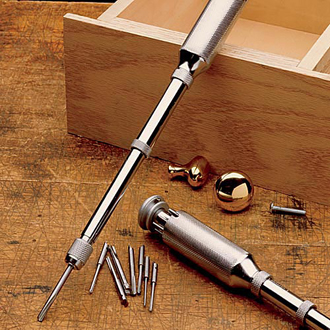
    A Yankee drill — also known as a Yankee Screwdriver or a Push-Drill — is not only a must-have for every man  who owns a tool box, but is also one of the best kept secrets of hand tools.

    I say this with some amount of verifiable data because when we had our fire a few years ago, the Yankee Drill was the one item that kept flummoxing the Liberty Insurance computers when it was trying to establish a replacement value.

    A what kind of drill?

    The Yankee Drill has been around since the mid 1800’s and is one of the earliest forms of hand held drills. It is a mechanical tool — it looks like a long stick with a handle on one end that has a rotating end that is flat but when you set it against a flat surface and press against it, the drill rotates in the shaft and into the surface.

    Now you won’t see commercials about Yankee Drills. There will not be huge displays at Lowes, it won’t be a NASCAR sponsor and your neighbor won’t ask you to come over and look at his new Yankee drill that he just got.

    Why? Because there’s nothing really sexy about them and they’ve been around forever.

    Which is the second reason you need to have one. Because it’s simple, time tested, reliable and will last you a lifetime — unless you burn your house down — and will also save you an enormous amount of time.

    But if I have a cordless drill, why would you need a 150 year old hand held drill?

    [amazon asin=B000JRDLVY&template=iframe image][amazon asin=B00C625KVE&template=iframe image][amazon asin=B000NHTG5A&template=iframe image][amazon asin=B002JWSNIS&template=iframe image]

    Great question. And here is one answer. Pilot holes.

    Picture this. You are putting up a set of vertical blinds — I’m using this as an example because I hate putting up vertical blinds.

    So here is the normal process.

    1. You place the little white boxes where you need them on the wall.
    2. You mark the holes with a pencil.
    3. You take your cordless drill and place in a drill bit.
    4. You drill the pilot holes in the pencil marks.
    5. You replace the drill bit with the screwdriver bit.
    6. You use the cordless screwdriver to screw in the hardware.

    or …

    1.  You place the little white boxes where you need them on the wall.

    2. You take your Yankee Drill and drill in pilot holes — skipping the pencil step.

    3. You take your cordless screwdriver and screw in the screws.

    Done.

    Think of every time you need to drill a pilot hole — and every time you try to screw in something without a pilot hole because you don’t feel like changing the bit on your cordless drill again and spend ten minutes trying to get the screw to bite into the wood on its own. And now take the Yankee Drill; light, easy to push and bam. Instant pilot hole.

    Now you can use your Yankee Drill for standard drilling as well and it is great for areas that the cordless can’t fit in or if you just don’t feel like dragging it out. But just in drilling pilot holes alone, this gem will pay for itself the first few times you use it and you’ll end up using it more than you think.

    Yankee drills are usually easier to find online than they are in hardware stores — Sears has them on their online store but I have yet to find one in an actual Sears store. They come with double fluted bits — which work differently than the modern twist because it cuts as you push and they clears as you release — and will run you about thirty bucks.

    You won’t regret getting one of these.

  • How to Make a Real Cup of Coffee

    How to Make a Real Cup of Coffee

    how to make coffee

    Electric coffeemakers are wonderful things. We take cold water and ground coffee and put them in a machine. We push a button and even before we’ve read through our morning emails, there is a fresh pot of coffee waiting for us. Ding! Depending on the brand of coffeemaker, the overall brew time is between 4 and 7 minutes. Not bad. The modern coffeemaker can trace its roots back to 1972 when Mr. Coffee came out with the first commercially successful automatic drip coffeemaker. Before that, every kitchen in America had either an electric coffee percolator or a coffee pot that was placed on the stove.

    The electric coffee percolator is that device you’ve seen in every episode of The Brady Bunch and Leave it to Beaver. It’s a metal pot that you fill with water. Inside, a long stem fits in the bottom of the pot and a basket attaches to the top where you place the ground coffee. As the temperature rises, the water in the bottom of the chamber boils and travels up the stem to the basket. The hot water is distributed over the dry coffee  and leaches back into the pot. Depending on the brand of percolator you use, a full pot of coffee in an electric percolator should take anywhere from 7 to 11 minutes to make.

    The newest coffee innovation is the K-cup style coffee machine. This was created by Keurig — the ‘K’ in K-cup — who in 1998 introduced a single cup coffee maker designed for office use. In this machine, a K-Cup — a sealed plastic cup of coffee, hot chocolate, tea, etc. — is placed in the machine, water is added, you push the button, and you have one cup of the very coffee you want. Then your cubicle mate can get another cup of a different flavored coffee. It was a success and the company branched out into home style units and now everyone from Folgers to Dunkin’ Donuts offers their coffee in a K-cup option. The time for one cup on a Keurig coffeemaker is just a couple minutes.

    [amazon asin=B004978NKY&template=iframe image][amazon asin=B000RK4GNA&template=iframe image][amazon asin=B000IBLBS6&template=iframe image][amazon asin=B00006IV0Q&template=iframe image]

    The average American consumes 19 gallons of coffee a year, which doesn’t seem like much except that it is second only to milk and beats soda and energy drinks by a wide margin. And the coffee market is such that you can now get a mocha latte at McDonald’s and have twelve different types of coffees to choose from when you pump your gas. But real coffee — simple and classic coffee — is easy to make, takes about the same time as the other methods, and costs pennies compared to your $12 Venti triple mocha.

    How to Make a Real Cup of Coffee

    So the rules here are simple. Get yourself a classic coffee pot that sits on the stove — the electric kind won’t work here because you need to get the water to a rolling boil. Also you want a standard coffee pot that is a cylinder, not one that is tapered and larger on the bottom — you’ll see why in a minute.

    1. Take out the coffee stem and basket and set aside — you’ll need these later.
    2. Fill your coffee pot with water and add a pinch of salt — this takes some of the bitterness out of the coffee.
    3. Bring the pot to a rolling boil.
    4. Now, remove the pot from the heat and wait thirty seconds — this is important because if you add the coffee right after its been boiling, it will flash up and the grounds will cling to the inside of the pot and you’ll not only have grounds in your coffee when you pour but you will waste coffee.
    5. Add the coffee directly into the water, stirring it in if needed. This is to allow the coffee to brew in the water and not get burned by the constant boiling if you use the coffee pot as it was intended.
    6. Cover the pot and let sit for 6 minutes — 10 minutes creates this dark, richer coffee many people like, but 6 minutes is where I like it.
    7. Take the basket and drop it into the pot, then take the large stem with the large part down and drop it into the pot — you would think the stem could fit the other way but it is slightly smaller to allow the basket to sit on the stem.
    8. Slowly press the basket down, pressing the coffee and keeping the grounds on the bottom.
    9. Hold the stem down and pour. Now when you try this for the first time the coffee may taste weaker than what you are accustomed to. And this could be because coffee is very easy to burn and often that rich taste we’ve gotten used to at the gas station or the diner is actually burnt coffee. This could also be because  bolder coffees are often perceived as having more caffeine and therefore we want our coffee to be as dark and bold as possible — when in actuality the light roasts coffees have the most caffeine.

    And that’s it. Enjoy.

  • How to use a soldering iron

    How to use a soldering iron

    soldering

    Soldering irons maintain an interesting place in the male world. Mention the fact that you own one and you may be asked what wattage the iron is or what operating temperature it runs at. Mention it to others and you may get the same reaction saved for discussions on stump grinders or engine diagnostic meters — yes, those things exist and I’m sure they are used by perfectly nice people but I prefer to buy my food from a grocery store and to leave my electronics alone, thank you very much.

    But the truth is that there are several good reasons to own a soldering iron and in having a basic knowledge of using one  — which is all you really need — and the first reason is that it will save you money.

    Almost everything we own or use has some sort of a Printed Circuit Board in it — from toys, to coffeemakers, to exercise bikes, to toaster-ovens. If it has a display or even an on/off switch, it most likely it contains some kind of small PC board. And when these items fail, it’s often due to a loose wire or faulty lead which can easily be repaired with an inexpensive weld.

    The second reason is that there is this, well, inert value in fixing something. It’s true. It’s built in our man DNA. When we can take our kids broken remote control car — lifeless and dead — and come up from the basement with the wheels turning and us smelling of flux and solder, it’s the same as throwing the musk oxen into the cave fire. This isn’t a cheap thrill, it’s not a false sense of accomplishment, but a well-deserved triumph.

    [amazon asin=B0029N70WM&template=iframe image][amazon asin=B000RB38X8&template=iframe image][amazon asin=B00030AP48&template=iframe image][amazon asin=B000IN1B8E&template=iframe image]

    And the third reason is that in our throw it away quick and go buy another one society, we are losing the skills of using a soldering iron — oh sure an electronics guy or someone who repairs ham radios as a hobby can use one, but the average homeowner cannot.

    What’s ironic about this is that our fathers and grandfathers — whose world contained a fraction of the lights and beeps and switches that ours do — owned a soldering iron and knew how to use it. What was different back then was when something broke, you fixed it. And only when you couldn’t fix it — and when your friends or your brother-in-law couldn’t help you fix it — did you buy a new one. In those days having to buy a new one was not a sign of success but one of defeat.

    In our world — where owning a two year old cell phone is a sign that they may be foreclosing on your home — buying a replacement when something breaks is the norm.  But a large part of being a man is that ability to be self-reliant; to take care of you and yours. And being able to fix something when it breaks gives you the option of buying something new because you want to, not because you have to.


    HOW TO USE A SOLDERING IRON.


    DEFINITIONS:

    Soldering iron — a soldering iron is a tool with a metal tip that gets very hot — up to 800 degrees Fahrenheit. You touch the tip on solder and it melts. That’s it. Like anything prices vary but for the once-in-a-while use a $30 soldering iron will probably do you good for years.

    Solder — solder is a silvery metal thread that is made of metal alloys and contains a high content of lead. What the solder does is melt and holds individual components or wire together.

    Flux — flux is a peanut buttery type substance that gets rid of oxidation and helps clean the surfaces of the solder.


    SAFETY:

    The number one fear of using a soldering iron is that you’ll damage the equipment you are working on. But the actual concern should be getting burned —- as mentioned, that tip get up to 800 degrees so take precautions and wear safety glasses and keep all loose fitting clothes and hair away.


    1. Prepare a work space. Lay down a mat or piece of cardboard over your bench — anything that will catch any loose solder.
    2. Warm your soldering iron.
    3. Clean your soldering iron. Because soldering irons get so hot, they oxidize and become dirty quickly. They key to reliable connections is clean components so make sure that your soldering tip and parts you are joining are clean. So heat the tip up and wipe it into a wet sponge — most soldering irons come with one — until the tip is shiny.
    4. Tin. This seems a little ironic, but right after you clean the tip, you get it dirty again. Apply a thin layer of solder to the tip — this is called ‘tinning’— which allows the heat transfer from the tip to the solder.
    5. Apply flux. Flux melts at a temperature lower than solder so that the solder can do its job.
    6. Solder. Using two hands — one hand holding the rolled out solder and the other holding the soldering iron — hold the iron like a pen — place the solder end on the board where you want it and place the tip on top of it. For one or two seconds. Then remove the solder but leave the tip there for an additional second.
    7. Inspect. You want a shiny even joint. If it isn’t what you want feed more solder and do it again. Or if you made a mistake, remove the old solder completely — just place the tip on it until it melts and start over.

    So rescue some piece of electronics that beyond repair from the trash and remove the PC board. Take it down to your workbench and just spend some time desoldering the welds and pulling the various components off — even solder a few back on. By the time you’re done, you’ll be a pro.

    And your grandfather would be proud.

  • REVIEW: Namco Plug-Play TV Games

    REVIEW: Namco Plug-Play TV Games

    namco

    I am not a gamer.

    I don’t own an X-Box or a PlayStation — even though as a father I’ve paid for several of these over the years — and I have probably logged in less than five lifetime hours on Halo or Call of Duty when my kids have asked me to play — I spend most of my time in corners trying to get my character to turn around and sober up.

    But having been a college student in the early 1980’s, I have spent more than my fair share of hours in dark arcades; dumping quarter after quarter of my Guaranteed Student Loan into various Tron, Xevious and Pitfall games — swearing that this will be the last one and then I’d do my laundry and try to locate where the library.

    I have good memories of these days— usually with a group of people thinking we would be eighteen forever and the world was ours — if we ever got out of the arcade and did any real work. Which we would, right after this game.

    One of my favorite arcade games was one called Dig Dug. I’m not really sure why I liked Dig Dug so much or what it really was about; as the object was to guide a man in a space suit underground to either avoid orange creatures with scuba masks and fire-breathing dragons, or destroy them with a bicycle pump — hey, I’m not saying it’s literature I’m just saying it was fun. So when my kids got one of the Plug-N-Play games as a gift a several years ago — have you ever seen these? They are not a counsel but a square box with a few buttons and a joystick that you just plug into the TV and go — I was excited to see that it had Dig Dug on it.

    We played this game for hours and for the first — and only time — I was the Big Kahuna of video games in our house — smoking them at every turn.

    [amazon asin=B001TNYPQM&template=iframe image][amazon asin=B00EQNP8F4&template=iframe image][amazon asin=B00K59HKIQ&template=iframe image][amazon asin=B00I94IPTW&template=iframe image]

    Then the game broke and the party was over and I went back to my status as game outsider.

    About a month ago I told my wife that I wanted to see if we could find another one of these Plug-N-Play games — for the comradery with my kids of course, I have better things to do — and she found one on e-bay and bought it.

    The unit she bought was by Namco and was called Plug-Play TV Games.

    Now, the great thing about these classic arcade games is that they follow a specific pattern. If you memorize the pattern on Level 1 and react the same way every time, the game will react the same way as well. Every time. So once you mastered that level you would move to level 2 and keep going.

    This game had none of that — which I know exists because the other unit we had reacted as the old game did. Here, each level was random, responding differently every time which meant there was no way to build up skill and move up levels. It was simple luck that may, or may not, allow you to survive. There was absolutely no way to develop any skill in the game.

    Also, the timing was delayed so if you tried to lure an orange guy or a dragon into a corner as you could on the arcade game, this game would simply eat you. But the absolute worse thing about it was in the design of the box itself. The RESET button is on the upper left of the box and is not recessed. So when you gripped the box tightly to fire or move, you often hit the reset button with your hand — usually right in the middle of a game — and the screen would go black and start over.

    I know, I know. It’s just a toy. But there are some of these Plug-N-Play games that react like the old ones did and are pretty fun to play. Not just so you can relive the glory days but because you can get to levels that your wallet wouldn’t allow in the 1980’s — you can go back and remove the limits our finances dictated back then. And we can finally have closure.

    Unfortunately this game is not one of them.