Category: Fixes

  • 10 old technologies to never throw away

    10 old technologies to never throw away

    tv

    There is one thing about consumer technology that has always confused me. Let’s say you have a toaster. It’s a good toaster. It makes great toast. This toaster looks good on the counter, cleans easily and has been extremely reliable for all the years you’ve had it.

    Now let’s say that you just found out that the new toasters are being released. Your version is Toaster-6.0 and the new Toaster-7.0 are now out and being gobbled up as soon as they roll off the assembly line. If you don’t move fast, there won’t be any left.

    So you grab your wallet and run to the store — dropping that boat anchor of a toaster at the curb on the way out — to get your new, improved; Toaster-7.0. You stand in line as they count off how many toasters are left. You wait and —. You make it. You get the new toaster.

    Whew, that was close. And you get home and display the new toaster on the counter proudly.

    Now, as goofy as that sounds, we are actually doing this to items like toasters — not as rapidly as we do cell phones, but that’s the danger in it. It’s more subtle. More gentle of an erosion. And then one day we wake up and we miss our old toaster because this is the third toaster we’ve had since we’ve tossed it.

    So here are the ten old technology devices that fit in that category. Here are the ten items we should never throw out.

    10. Old cast iron

    Yes, you can still buy cast new iron pots and pans. Sure. But it’s pricy and is not as durable as the old stuff. And the thing about cast iron is that it never, ever dies. You can find a cast iron frying pan in a garage sale that is rusty and flaking and looks like it has been through three wars. And within a week you can have it cleaned up, seasoned and ready for eggs on the campfire. These things are great and should be held on to forever.


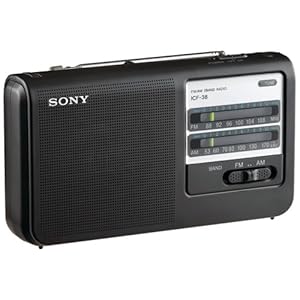
    9. Battery operated radios

    In our world of cellular access to everything, battery operated radios are becoming harder and harder to find. But that old boom box in the garage will come in pretty handy if you loose power and cell coverage. These are worth keeping — and keep the batteries out of them so they don’t corrode.


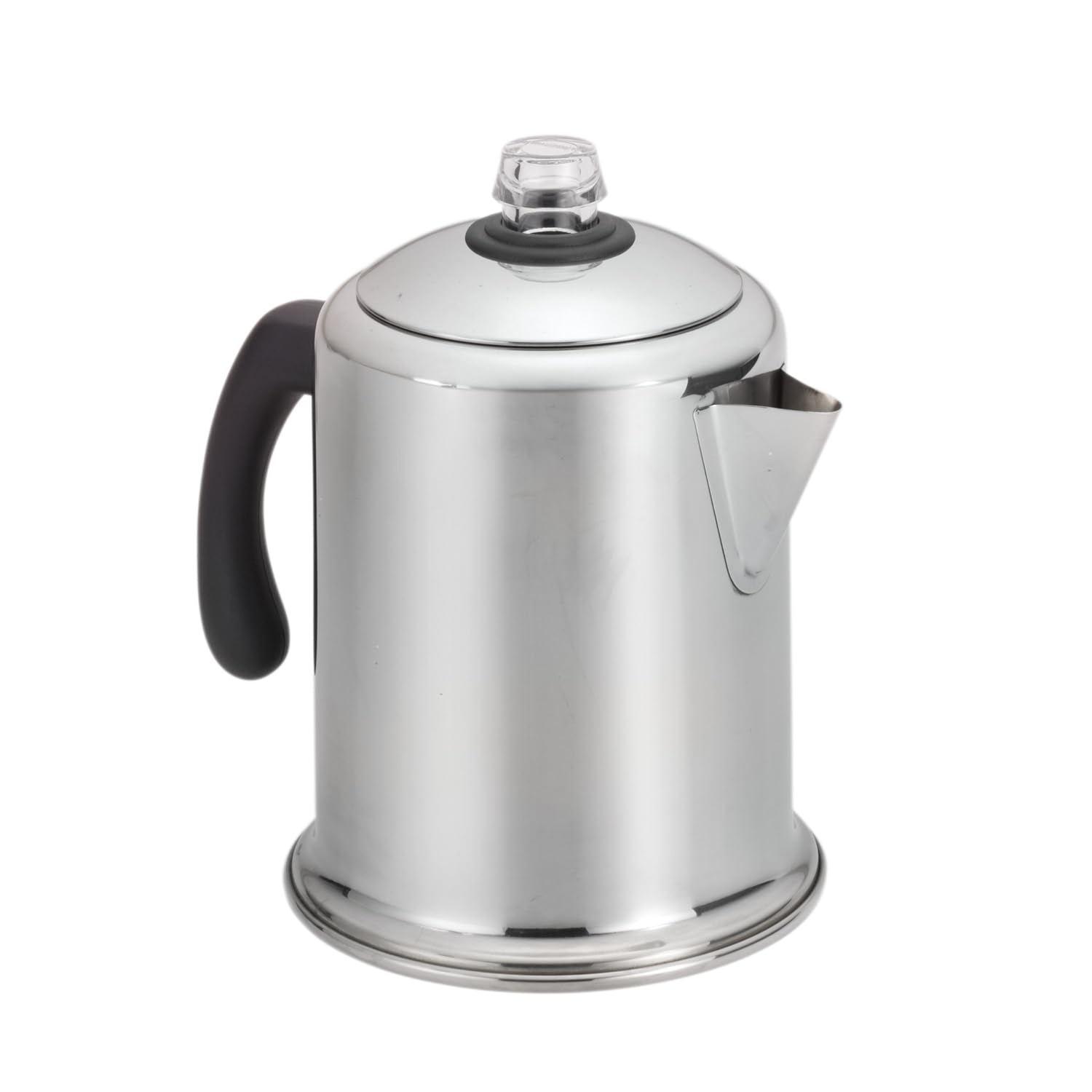
    8. Coffee pots

    Not coffee makers, but coffee pots, are becoming very rare. If you have one, keep it. If you don’t have one, get one — and I’m not talking about the fancy forty-dollar camping pot, I mean a real stainless steel coffee pot. It will cost you about ten bucks and since it has very few moving parts it will last forever. These are great for camping and fishing trips, if the power goes out, or just when you want to control how strong your coffee is.


    7. Metal coffee cans

    These are becoming harder and harder to find since most mainstream coffee comes in plastic containers. But if you have the old metal ones, keep them and use them. Display them proudly because they have hundreds of uses.


    6. Old landline phones

    Again, if you lose power, an old landline phone — one that you can plug into the phone line and doesn’t require power — is a pretty handy thing to have. Keep at least one in your house.


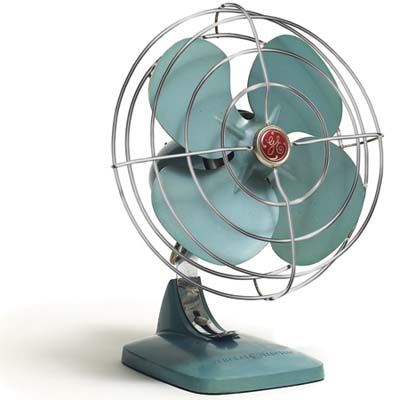
    5. Old metal fans

    It’s probably too late for these beauties because they have moved from the hard to find to the collectable. But if you find an old metal fan, grab it. They last forever and the motors are much larger than the modern plastic versions.


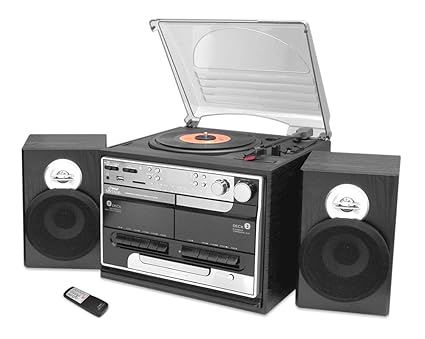
    4. Turn tables/tape decks 

    Sometime in your life you will come across a collection of cassette tapes from your talent show in 1970 or some of Uncle Walters old 45’s. You’ll need something to play these on. If you have one, display it and use it.


    3. Small appliances build before 1970

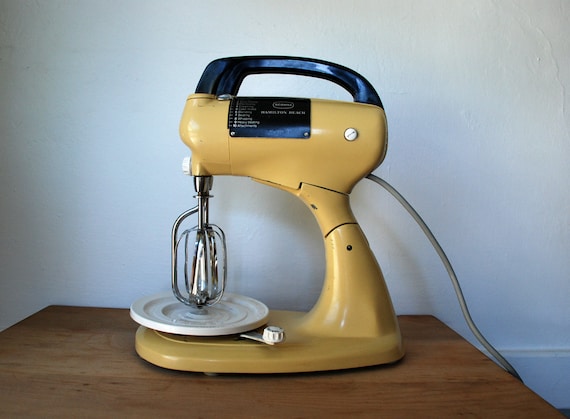
    In my house, I have the milkshake maker from my parents diner in 1956. Besides the constant use it took then, it has been used for decades and still makes amazing milkshakes. These old appliances were replaced by lower quality versions and the old ones will last forever and when they are gone, they are gone.


    2. Old Mason Jars

    You can buy mason jars anywhere but the new design are thinner glass, cheaper fittings and aren’t designed to last as long. If you come across some of the thick old Mason Jars, grab them. They can be used for a thousand different things and they just aren’t making them any more.


    1. Metal fishing reels

    I am still in mourning over giving my brother-in-law my old Mitchel 300 fishing reel when I got my new shiny plastic one years ago. He still has mine and I am four reels down the road. The old metal reels last forever, are rugged and can take a beating.

  • The versatile toolbox

    The versatile toolbox

    tool

    My mother was born in 1922. My dad in 1924. So, if you calculate and then add forward you would think that my age would be — what? 72? Late sixties?

    Well, I guess that makes sense since my brother would have been 70 this year and my sister 66, but no. I’m 52. My mother had me when she was 40 and she had my younger sister when she was 42.

    So I was born in the sixties and my parents were born in the twenties. This is not a generation gap but two generations apart which created some interesting paradoxes. The first was that my brother and sister were the age of most of my friend’s parents — when I was three years old my brother was coming back from Vietnam and when I was six I remember hearing a huge fight as my sister was leaving for something called Woodstock. But those are different stories.

    Now, there were some challenges with this arrangement; my dad’s health never allowed him to be the rough and tumble father that other kids had and at the age of 54 my mother started Nursing School to bring in some much needed income after my father became disabled; which meant that for a period of time my dad was retired and my mother was a college student. And for those friends that came to our house there was a certain generational language barrier that would often need translation; a davenport is a couch, dungarees are blue jeans and gangershank is someone tall and thin.

    But it also created the amazing opportunity to not only experience my own generation growing up but the other two in my home: my older siblings of the sixties and my parents of the Depression Era, 1930’s.

    Now as a kid, having Depression Era parents created certain challenges — plaid pants were just as good as solid colors that cost more and powdered milk is very tasty. And as an adult it engrained a desire for all things to have value and to have multiple uses.

    Tools are like that. Sure, there are tools that are designed for one specific use, one specific application. But the most use we get out of our tools means the we can not only get more done with what we have but it also justifies paying a little more for the tools that are more versatile and we will be using more.

    An example of a non-versatile tool is a hammer. As soon as you put together a tool box the first thing you grab is usually a hammer but in reality it has only a few uses — and is almost becoming obsolete with the use of cordless screwdrivers. A hammer is used for hammering in nails and pulling them out. That’s pretty much it. Anything bigger than that, a post or a beam, you’re going to pound in with a sledge or a mall. So in actuality you will probably not use a hammer all that often.

    But there are other tools that can be used for multiple uses and will allow you to get more bang for your buck.

    VERSATILE TOOLS
    Cordless drill. The cordless drill is the big daddy of versatile tools. This thing has so many uses and is so handy that if you are going to buy a higher end tool, this is where you might want to spend your money. All a cordless drill is, is a drill with a rechargeable battery with a screwdriver bit but you will use it all the time. My neighbor Eric and I just built a 25 X 15 foot deck in our backyard using only two cordless screwdrivers and a power saw. You can change out a door lock, mix paint, grind metal and, oh yeah, drill holes with this amazing tool. Worth having and worth having a good one.


    Socket set. Socket sets are used to tighten bolts and nuts and some will argue that a set of spanners — the silver wrenches with a closed end and an opened one — is better than a socket set. But I have lost far more spanners than I have lost sockets because I always put it back in the spot in the case. Also because of the gears of the ratchet handle, you will always be able to torque a bolt tighter with a socket wrench than a spanner. Now, unless you are going to rebuild a car or doing some high end stuff, my advice is to go middle of the road to cheap on a socket set. Get yourself a metric and American style and keep them handy.


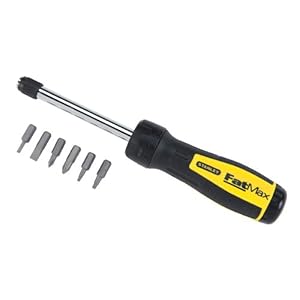
    Multi bit screwdriver. My second favorite versatile tool is the multi bit screwdriver. All this is, is a screwdriver with a hollow magnetic end that allows you to change the ends — flat head, philips, mechanical and a few different sizes — so you have six  screwdrivers in one. These are handy little things and my advice here is to first get the style where the extra heads go into the hollow part of the handle and screw closed. The models where the bits pop into the lower shaft will always get lost. Every time. And the second is to go cheap. Multi bit screwdrivers are great but they are pretty much disposable. Get yourself a few and put in one in your junk drawer, glove compartment, garage. Great little tools to have and you can get them everywhere from Dollar General to Wal-Mart.


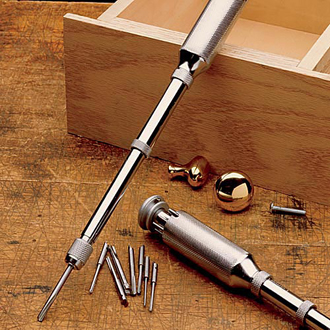
    Mini screwdriver kit. These are also great little kits and have all the very small flathead and phillips screwdriver sizes. They are perfect for fixing a pair of eyeglass, opening up small electronics and getting in anywhere the manufacturer doesn’t want you to go. Again, go cheap here because you will always loose some and every Dollar Tree in the country has these kits.


    Reciprocating saw. Now until recently my reciprocating saw sat on the bottom of my workbench and saw very little use. But once I started using it I saw how incredibly versatile it is. It is so light and portable that you can use them to cut tree branches, metal, PVC, anything. I recently built a large kindling box with leftover wood from our deck and used a reciprocating saw and a cordless screwdriver. Saw-Zall is the big guy here but again unless you’re a pro, go cheap. Harbor Freight has some very inexpensive brands.


    Staple gun. Where you can’t get a hammer, you can get a staple gun. Small, cheap, easy to use, these guys work well for tacking down carpeting, cable, upholstery, any place you would normally use a small hook or nail. They are many different sizes and grade of staple and you can swap out if needed. Go middle of the road here as far as cost. The springs on the cheap ones tangle and snap pretty easily and the cheaper frames are easier to bend.


    The key is if you pretend these tools are all you have in your toolbox and use them as much as you can.

    Have fun.

  • How to build a workbench.

    How to build a workbench.

    bench

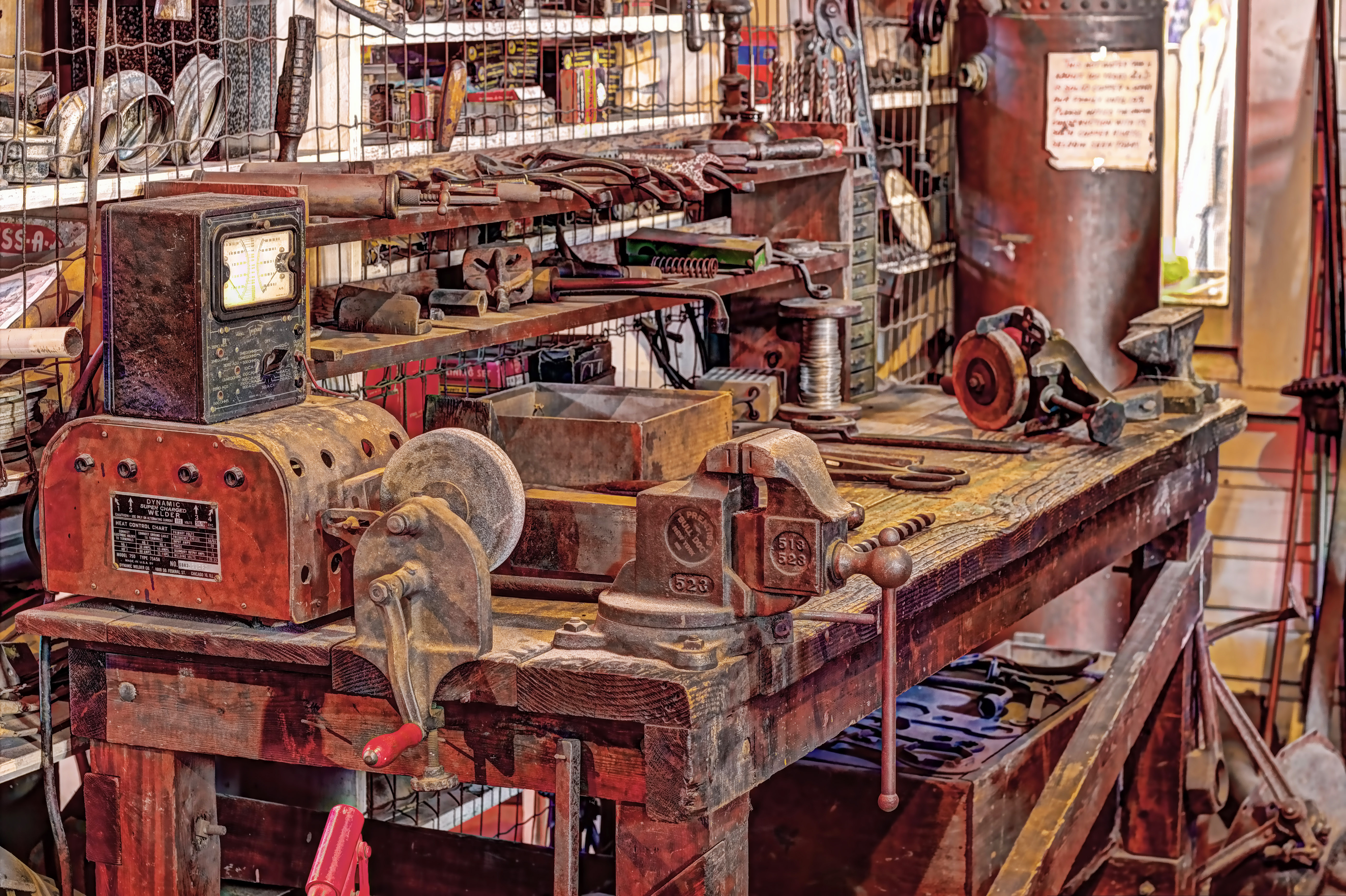
    One of the great ironies of tools and their use is that the absolute best area to work on is a workbench — a high, solid, well lit, structure on which to cut and vise and connect and create. No question. And in order to have the right workbench for you, you’ll need to build one. And in order to build one, you’ll need a workbench. Well … This isn’t completely true. You can build one, without one. But later on when you’re using the bench and you have it exactly the way you like it, you’ll realize that it would have been so much easier to build it if you had it before. Now, in this world of mass produced everything, why would you want to build a workbench? Great question. And there are about a zillion reasons why — well, that’s also not true. There are five. Five reasons why— but they are five pretty good reasons.

    1. Quality. Most workbenches are cheap, mass-produced structures. You can get workbench and workbench kits — where you add your own lumber — everywhere from Lowes to CVS, — yup, I have seen workbench’s at CVS on Father’s Day. And 90% of these are light, poorly designed structures that will not work well with your home, garage, or the type of projects you will be working on. The remaining 10% that are fairly well designed and constructed are not designed specifically for you.
    2. Cost. For a fraction of the cost of the most expensive pre built workbench out there, you can build one yourself — actually, less than that, you can get a high end workbench for almost $1,000 and the lumber for that would be around $100.
    3. Designed specifically for you. What type of work are you going to be doing and how do you like to do it? Because a workbench for wood carving is going to be different than one for repairing old radios. Are there enough outlets? Is there a place for your coffee pot and for all the stuff you like to have around you?
    4. Designed specifically for your location. There are many times that you could find the ultimate workbench — if your garage was bigger. Or your basement had more light. Or you had more space in the shed. You need to design your bench for the real estate it will take up as well as the space you don’t. In fact there are many, fold down workbenches that work great.
    5. Sense of pride. There is something about building — anything, but there is great irony in having a structure to build things on, that you didn’t build.

    HOW TO BUILD A WORKBENCH

    1. Location. Decide where the bench will go — which is actually more important than the design itself. Walk out where it will sit, look all around it, is there enough light, enough storage space? Is it easy to get material in and out? — a bench to finally build that canoe may not work well in your basement where the finished product cant get back out.
    2. Overall design. There are some great sites online that offer overall workbench plans and here is the best one I found that incorporates many of them http://freebies.about.com/od/free-plans/tp/free-workbench-plans.htm Choose an overall plan and then look at the areas you want to personalize such as height of the bench. And if you don’t like any of these, just draw out what you like and add in the two important aspects; power and light. You will want to attach at least one power strip right to the workbench for power needs and you will need at least one flexible lamp for additional light.
    3. Simpson ties. If there is a magic trick in building a solid, rugged workbench, it’s Simpson ties. Simpson is a company that was founded by a man named Barclay Simpson — who just passed away this past November at the age of 93 — that manufactures joist hangers, angles and a bunch of other stuff that strengthen structures. And since a workbench is not a table but a solid work structure that you can vice something to and saw or hammer, you want it to be solid. By using Simpson ties for the corners of your bench and where the lumber fits together, your bench will be rock solid.
    4. Overdesign for material. Like any project, once you finalize you design and make your materials list, add about 25% more of everything you’ll think you’ll need. This is an overall handyman trick that works, because it is far better to make one trip back to Lowes when you are done to return what you don’t need, then it is to make the six extra trips for what your forgot. So buy more than you need and return it.
    5. Take your time. As you get going you may want to make changes or add in new pieces of jewelry to the project. No rush. Take your time.

    … and let us know how it went. Please post photos of your workbench — or of any project you are working on — at the 543skills forum — http://543skills.com/forumpress/

  • How to sharpen a knife

    How to sharpen a knife

    knife

    When I was twelve years old, on my birthday, I received my very first pocket knife. It was a gift from my father and it was amazing. It was a Boy Scout knife that had two blades, a can opener and a screwdriver that hurt your thumbnail when you tried to open it — I can still feel the black faux wood handle and the blade as it bit into a stick or a piece of wood.

    Years later, I can only remember two gifts that my dad ever gave me — even though I’m sure there were more. One was the grey tweed overcoat he had tailored for me when I turned 21 — which I still have but can no longer fit into — and the other was the pocket knife I got when I turned twelve — which I no longer have, but wish that I did.

    This pocket knife tradition continued with my two sons and upon each of their twelfth birthdays they received their very first pocket knife from me. And my youngest son kept my tradition going by losing his six months later.

    Pocket knives have been carried by men for a hundred years or more. However this practice was stilted somewhat by the events of 9/11. With stricter restrictions on security and safety, knives were no longer allowed on flights, government building and other institutions and many men who normally carried a pocket knife, stopped in order to be compliant with the new rules.

    However there are no states that forbid pocket knives.

    See the State Knife Laws — http://http://pweb.netcom.com/~brlevine/sta-law.htm#A-H

    [amazon asin=B0009KF4H0&template=iframe image][amazon asin=B000KSCEH4&template=iframe image][amazon asin=B00006IUWM&template=iframe image][amazon asin=B0037F1B9E&template=iframe image]

    In fact, a ‘knife’ and a ‘pocket knife’ — a folding knife with a blade less than 3” — are in two completely separate categories.

    Now, you’re not going to get your pocket knife on an airplane as carry on — but you can throw it in your bag that you’re checking without a problem at all — any certain federal buildings may not allow it, but anywhere else you not breaking any laws by carrying one.

    Pocket knives are a great handy tool to have and you have a right to carry one if your wish.

    HOW TO SHARPEN A KNIFE.

    For here, we’re going to discuss sharpening a knife using a wet stone. Now there are many other ways to sharpen a knife and even more new gadget-ee devices — those that you can cut a tomato and then a nail — and I’ve tried a few of them and there is nothing better than an old fashioned wet stone.

    1. Get a wet stone. These are also called whetstones because the word whet means to sharpen and you can get one at any hardware store, department store or you flea market.

    2. Soak the stone. Sharpening creates heat. Too much heat and it can warp your blade which is why you should never sharpen your knife on a grinding wheel. Also, wet stones are very porous and in order to keep the filings from the blade of filling the holes of the stones you need to create a liquid coating on the surface. You can do this by soaking the stone in water for twenty minutes, or you can use mineral oil or a light dish soap/water mixture.

    3. Identify the bevel angle. This sounds more complicated than it really is and all it means is that the blade of every knife is angled differently. Most pocket knives have a 30 degree bevel angle, whereas kitchen knives and others may be different. So all this means is, match the angle of the blade with the angle you are lifting the knife up to sharpen it. You want to sharpen the very end of the kinife, not grind down the steel around it.

    4. Sharpen first side of the knife. Position the knife at the bevel angle and pull the blade back; glide the knife along the stone. Gently, slowly pulling the blade back against the stone. Sweep the knife down and off the end of the whetstone. Repeat about a dozen times or so.

    5. Repeat on the other side.

    6. Test the blade. You can do this by slicing rhough a sheet of paper — a sharp blade should glide right through — or run it rough side along your thumb — NOT blade side down, but holding the blade horizontally, run the blade across your thumb. The rougher the blade is against your thumb, the sharper it is going across.

  • The Yankee Drill

    The Yankee Drill

    yankee
    A Yankee drill — also known as a Yankee Screwdriver or a Push-Drill — is not only a must-have for every man  who owns a tool box, but is also one of the best kept secrets of hand tools.

    I say this with some amount of verifiable data because when we had our fire a few years ago, the Yankee Drill was the one item that kept flummoxing the Liberty Insurance computers when it was trying to establish a replacement value.

    A what kind of drill?

    The Yankee Drill has been around since the mid 1800’s and is one of the earliest forms of hand held drills. It is a mechanical tool — it looks like a long stick with a handle on one end that has a rotating end that is flat but when you set it against a flat surface and press against it, the drill rotates in the shaft and into the surface.

    Now you won’t see commercials about Yankee Drills. There will not be huge displays at Lowes, it won’t be a NASCAR sponsor and your neighbor won’t ask you to come over and look at his new Yankee drill that he just got.

    Why? Because there’s nothing really sexy about them and they’ve been around forever.

    Which is the second reason you need to have one. Because it’s simple, time tested, reliable and will last you a lifetime — unless you burn your house down — and will also save you an enormous amount of time.

    But if I have a cordless drill, why would you need a 150 year old hand held drill?

    [amazon asin=B000JRDLVY&template=iframe image][amazon asin=B00C625KVE&template=iframe image][amazon asin=B000NHTG5A&template=iframe image][amazon asin=B002JWSNIS&template=iframe image]

    Great question. And here is one answer. Pilot holes.

    Picture this. You are putting up a set of vertical blinds — I’m using this as an example because I hate putting up vertical blinds.

    So here is the normal process.

    1. You place the little white boxes where you need them on the wall.
    2. You mark the holes with a pencil.
    3. You take your cordless drill and place in a drill bit.
    4. You drill the pilot holes in the pencil marks.
    5. You replace the drill bit with the screwdriver bit.
    6. You use the cordless screwdriver to screw in the hardware.

    or …

    1.  You place the little white boxes where you need them on the wall.

    2. You take your Yankee Drill and drill in pilot holes — skipping the pencil step.

    3. You take your cordless screwdriver and screw in the screws.

    Done.

    Think of every time you need to drill a pilot hole — and every time you try to screw in something without a pilot hole because you don’t feel like changing the bit on your cordless drill again and spend ten minutes trying to get the screw to bite into the wood on its own. And now take the Yankee Drill; light, easy to push and bam. Instant pilot hole.

    Now you can use your Yankee Drill for standard drilling as well and it is great for areas that the cordless can’t fit in or if you just don’t feel like dragging it out. But just in drilling pilot holes alone, this gem will pay for itself the first few times you use it and you’ll end up using it more than you think.

    Yankee drills are usually easier to find online than they are in hardware stores — Sears has them on their online store but I have yet to find one in an actual Sears store. They come with double fluted bits — which work differently than the modern twist because it cuts as you push and they clears as you release — and will run you about thirty bucks.

    You won’t regret getting one of these.

  • How to use a soldering iron

    How to use a soldering iron

    soldering

    Soldering irons maintain an interesting place in the male world. Mention the fact that you own one and you may be asked what wattage the iron is or what operating temperature it runs at. Mention it to others and you may get the same reaction saved for discussions on stump grinders or engine diagnostic meters — yes, those things exist and I’m sure they are used by perfectly nice people but I prefer to buy my food from a grocery store and to leave my electronics alone, thank you very much.

    But the truth is that there are several good reasons to own a soldering iron and in having a basic knowledge of using one  — which is all you really need — and the first reason is that it will save you money.

    Almost everything we own or use has some sort of a Printed Circuit Board in it — from toys, to coffeemakers, to exercise bikes, to toaster-ovens. If it has a display or even an on/off switch, it most likely it contains some kind of small PC board. And when these items fail, it’s often due to a loose wire or faulty lead which can easily be repaired with an inexpensive weld.

    The second reason is that there is this, well, inert value in fixing something. It’s true. It’s built in our man DNA. When we can take our kids broken remote control car — lifeless and dead — and come up from the basement with the wheels turning and us smelling of flux and solder, it’s the same as throwing the musk oxen into the cave fire. This isn’t a cheap thrill, it’s not a false sense of accomplishment, but a well-deserved triumph.

    [amazon asin=B0029N70WM&template=iframe image][amazon asin=B000RB38X8&template=iframe image][amazon asin=B00030AP48&template=iframe image][amazon asin=B000IN1B8E&template=iframe image]

    And the third reason is that in our throw it away quick and go buy another one society, we are losing the skills of using a soldering iron — oh sure an electronics guy or someone who repairs ham radios as a hobby can use one, but the average homeowner cannot.

    What’s ironic about this is that our fathers and grandfathers — whose world contained a fraction of the lights and beeps and switches that ours do — owned a soldering iron and knew how to use it. What was different back then was when something broke, you fixed it. And only when you couldn’t fix it — and when your friends or your brother-in-law couldn’t help you fix it — did you buy a new one. In those days having to buy a new one was not a sign of success but one of defeat.

    In our world — where owning a two year old cell phone is a sign that they may be foreclosing on your home — buying a replacement when something breaks is the norm.  But a large part of being a man is that ability to be self-reliant; to take care of you and yours. And being able to fix something when it breaks gives you the option of buying something new because you want to, not because you have to.


    HOW TO USE A SOLDERING IRON.


    DEFINITIONS:

    Soldering iron — a soldering iron is a tool with a metal tip that gets very hot — up to 800 degrees Fahrenheit. You touch the tip on solder and it melts. That’s it. Like anything prices vary but for the once-in-a-while use a $30 soldering iron will probably do you good for years.

    Solder — solder is a silvery metal thread that is made of metal alloys and contains a high content of lead. What the solder does is melt and holds individual components or wire together.

    Flux — flux is a peanut buttery type substance that gets rid of oxidation and helps clean the surfaces of the solder.


    SAFETY:

    The number one fear of using a soldering iron is that you’ll damage the equipment you are working on. But the actual concern should be getting burned —- as mentioned, that tip get up to 800 degrees so take precautions and wear safety glasses and keep all loose fitting clothes and hair away.


    1. Prepare a work space. Lay down a mat or piece of cardboard over your bench — anything that will catch any loose solder.
    2. Warm your soldering iron.
    3. Clean your soldering iron. Because soldering irons get so hot, they oxidize and become dirty quickly. They key to reliable connections is clean components so make sure that your soldering tip and parts you are joining are clean. So heat the tip up and wipe it into a wet sponge — most soldering irons come with one — until the tip is shiny.
    4. Tin. This seems a little ironic, but right after you clean the tip, you get it dirty again. Apply a thin layer of solder to the tip — this is called ‘tinning’— which allows the heat transfer from the tip to the solder.
    5. Apply flux. Flux melts at a temperature lower than solder so that the solder can do its job.
    6. Solder. Using two hands — one hand holding the rolled out solder and the other holding the soldering iron — hold the iron like a pen — place the solder end on the board where you want it and place the tip on top of it. For one or two seconds. Then remove the solder but leave the tip there for an additional second.
    7. Inspect. You want a shiny even joint. If it isn’t what you want feed more solder and do it again. Or if you made a mistake, remove the old solder completely — just place the tip on it until it melts and start over.

    So rescue some piece of electronics that beyond repair from the trash and remove the PC board. Take it down to your workbench and just spend some time desoldering the welds and pulling the various components off — even solder a few back on. By the time you’re done, you’ll be a pro.

    And your grandfather would be proud.

  • How to build a Hobo Stove

    How to build a Hobo Stove

    hobo

    If you are under the age of eighty, then you — like most of us — have not lived through a true worldwide economic depression. Oh, we have all seen economic challenges — layoffs, rightsizing and recessions — but few of us were alive to experience the prevailing effects of The Great Depression of the 1930’s.

    During this time, jobs did not simply become scarce, they just vanished. Banks collapsed. Manufacturing stopped. Crop prices were cut in half and virtually overnight the country changed and remained changed for nearly a  decade.

    Imagine what happens when a country of men wake up and in spite of their best intensions and efforts, they can no longer take care of themselves or their families. Over time, the strain broke many of these men — because underneath subsistence is survival but underneath survival is hopelessness.

    Very few of us know what it’s like to live in a world when money was not simply hard to come by, but for many American’s it just didn’t exist any longer. Bartering became a common method of commerce and many people simply worked for food and shelter.

    Ironically, the group of people that faired the best during this time was the  American farmer — those located outside of the dustbowl Midwest. Even with low crop and meat prices, the American farmer had enough food for his family as well as had goods to trade with.

    With these farms surviving, migratory workers would travel and seek out the seasonal seeding and harvest work available. This was fueled by the fact that with homes being foreclosed on and with little cash for rent, there were more people living a transitory lifestyle then ever before — moving from town to town seeking what work could be found.

    Now, the most colorful group of travelling men during this time was the American Hobo. The term hobo is believed to come from the phrase ho-boy, referring to the great groups of farm and field workers that competed for migratory work. These men would travel light and stay on the move — often by sneaking aboard freight trains — looking for work, a meal and if possible a little adventure.

    The modern term hobo is often used when referring to anyone homeless but this is not accurate.

    Remember …

    A hobo is someone that travels looking for work.

    A tramp is someone that travels but does not work.

    And a bum neither travels nor works.

    The general philosophy of the hobo — and of many American’s during The Great Depression — was simple: waste nothing, throw little away and make do with what you can find.  And from this, the hobo stove was born.

    Now, there is no evidence that the hobo stove was actually created during the 1930’s. It’s such a simple design — made simply from old cans — and a stove similar to it was used in World War I. But it was commonly used during this period and often associated with it.

    A hobo stove is a simple stove made from discarded food cans — a coffee can is often used but you can build the stove with larger or smaller cans — that allows air to ventilate it and an area to feed fuel in. These stoves are cheap, easy to make, relatively efficient and can be burned at no cost because they burn sticks, pine cones, wood scraps, cardboard, pretty much anything you find along the way. And because they burn pretty much anything, you will never run out of fuel.

    In the modern world, Hobo Stoves are great little devices to have. They can be used during power outages, as a camping stove, while hiking or backpacking, to distill water in or as part of a survival kit.

    Now there are many designs to a hobo stove, but here is a real simple one — and remember, they don’t need to be too pretty they just need to work.

    [amazon asin=1586489011&template=iframe image][amazon asin=B00IK6HKFE&template=iframe image][amazon asin=B000HEKR98&template=iframe image][amazon asin=B007WHCFC0&template=iframe image]

    HOW TO BUILD A HOBO STOVE:

    1. Find a base can for your stove and a slightly smaller top can. You can make this stove as large or as small as you want. I wanted to build a light backpacking stove here, so I used a spaghetti sauce can for the base and a dog food can for the top, but I’ve seen these stoves made out of large #10 food cans for those wanting full sized camp stove.

    2. With a ‘church key’ style can opener, place some holes along the bottom base can. These are to draw air in and up through the stove — it’s important to have some space between holes though so you have stability at the base of the can.

    3.  With a nail, punch some holes in the side of the can, center, for ventilation, as well as four additional holes  — an inch from the top — for the support pins. The small holes in the center will add some additional ventilation and the four peg holes need to be directly across from each other as the pegs that will support the top half will rest on it. Make sure the holes are equal distance across, as you want this stove to be as stable as possible so the pot on top of it is centered.

    4. Place two pins across the can for support of the top can. Metal tent poles work great for this and you can even use coat hangers but you’ll need to find the thicker, heavy coat hangers to use. A standard coat hanger will be too thin and not work here. Remember, this is where the top can, the pot and a few cups of water will be supported. The ones I used metal from a metal bathroom shelf that I rescued from the trash. I cut off a few tent pole sized pieces, straightened them and bent the edges down.

    5. Cut the bottom out of the top-can so it becomes a metal tube. You can try to use a can opener on some cans but this one had a rounded edge so I just poked a hole in it and then used tin snips. Bend the sharp edges in with pliers.

    6. Cut a “V” shaped section out of the top can. This will be used to feed the fuel down into the stove as well as allow the opposite side of the can to become a wind screen. Bend any sharp edges back with pliers.

    7. Set the top-can down into the bottom-can until it rests on the pins. You want your pins to be across parallel with each other not making an X. Although by crossing them might be more stable, you will be placing fuel down past the pins and don’t want anything to get hung up.

    8. Find the pot you will be using. This should really be done earlier in the process, then you can identify the size stove you want based on the pot you will be using — as well as the place it will be stored. But I got lucky here and found this great little coffee pot in my basement — it had a small pinhole in the side that I patched with some J-B Weld and it worked great. The size of the pot was small enough but the right size so the entire stove fit perfectly inside of it — even allowing room for my silverware, fire starters, and other items to be stores. It’s difficult to tell in these photos, but this pot is very compact and is only 6” high. The perfect size for a small backpacking stove.

    9. Cover stove and pot with high temperature spray-paint. You don’t have to take this step, but by covering both the stove and the pot you are not only protecting it but making it more difficult for the tars and oils from the fire to build up on the surfaces. High temperature spray paint can be found in any hardware store.

    Test your gear. If you need to make modifications it’s easier to do this at home. Try the stove at least once before using it in the field and anything you don’t like, just change and tweak until you have it exactly the way you want it.

    I tried this stove and I had water boiling in about four minutes — using just a handful of twigs and leaves from my backyard as fuel. Total cost ended up being zero because I recycled the cans and pegs and found the coffee pot in my basement.

    Remember: keep the design of the stove simple as you don’t need a device to simmer a five hour brisket in. These stoves were designed to quickly cook a few  stolen eggs before breaking down camp and catching the next freight out of town.


    BIG ROCK CANDY MOUNTAIN

    First recorded by Harry McClintock.

    1928

    The Hobo Theme song.

    One evening as the sun went down
    And the jungle fires were burning,
    Down the track came a hobo hiking,
    And he said, “Boys, I’m not turning
    I’m headed for a land that’s far away
    Besides the crystal fountains
    So come with me, we’ll go and see
    The Big Rock Candy Mountains

    In the Big Rock Candy Mountains,
    There’s a land that’s fair and bright,
    Where the handouts grow on bushes
    And you sleep out every night.
    Where the boxcars all are empty
    And the sun shines every day
    And the birds and the bees
    And the cigarette trees
    The lemonade springs
    Where the bluebird sings
    In the Big Rock Candy Mountains.

    In the Big Rock Candy Mountains
    All the cops have wooden legs
    And the bulldogs all have rubber teeth
    And the hens lay soft-boiled eggs
    The farmers’ trees are full of fruit
    And the barns are full of hay
    Oh I’m bound to go
    Where there ain’t no snow
    Where the rain don’t fall
    The winds don’t blow
    In the Big Rock Candy Mountains.

    In the Big Rock Candy Mountains
    You never change your socks
    And the little streams of alcohol
    Come trickling down the rocks
    The brakemen have to tip their hats
    And the railway bulls are blind
    There’s a lake of stew
    And of whiskey too
    You can paddle all around it
    In a big canoe
    In the Big Rock Candy Mountains

    In the Big Rock Candy Mountains,
    The jails are made of tin.
    And you can walk right out again,
    As soon as you are in.
    There ain’t no short-handled shovels,
    No axes, saws nor picks,
    I’m bound to stay
    Where you sleep all day,
    Where they hung the jerk
    That invented work
    In the Big Rock Candy Mountains.


  • How to change a tire

    How to change a tire

    tire

    In 2011 US News reviewed a study performed by AutoMD that looked at trends of new drivers. One of the most interesting discoveries the study uncovered was that two-thirds — over sixty percent — of all new drivers from the age of 16 to 19 could not change a flat tire.

    In fact, the study went on to state that the same percentage — over sixty percent — of these teen drivers were also unable to jumpstart a dead battery or even check their oil. This means two thirds of us starting out in our driving careers are incapable of performing the most rudimentary maintenance tasks or make basic field repairs on our vehicles.

    Now this is not a truly shocking statistic — younger drivers aren’t as experienced as more seasoned ones. So what? Younger drivers just need road experience to be able to develop skills such as changing a tire. But add that to my own personal study of the four dozen or so of men that I have stopped to help change tires over my life. Half of them were older than me and they still had no idea on how to change a tire.

    Now it’s understandable. A skill such as changing a tire isn’t one you can really practice. And in theory, if we replace our tires when they are worn and never hit a bottle or a nail or never go hard over a curb, it’s possible that we could never need to change a tire.

    It’s always possible.

    But why take a chance? If you know the basics, then you can actually be able to change a tire without having to yank a tire off your car and practice a few times. If you understand the process, you’ll be ready when it comes time to act on that knowledge.

    HOW TO CHANGE A TIRE.

    Get to a flat place or a safe place that will allow you to work on the tire. If you have to change a tire alongside a busy highway, this may be difficult. It’s important to get your car as far away from traffic as possible — to a place that will allow you the space to jack up the car and work on it SAFELY. Pull over or even ride the car on the rim if you need to until you find a place that’s safe. I’ve seen guys on the side of the road trying to change a tire with their legs spread halfway into the road. The cost of a tow or a new wheel is a steal, compared to the cost of your life. If it doesn’t feel safe, don’t do it. Call a tow truck.

    Put the parking brake on. With an automatic transmission, put the parking brake on and leave it in park. If you have a manual transmission, put the parking break on and leave the car in reverse as an extra precaution. You can also slide something under the front and back tires to prevent it from rolling.

    Locate the spare tire. This may not be as easy as it seems. At one time spare tires were in the trunk. Period. But many cars such as hatchbacks and mini vans don’t have trunks. In those cases, the spare tires are often mounted under the carpeting of the back, or under the car itself with a release under the mat in the car. When in doubt consult the car’s manual. When you do find the spare don’t be surprised if it is an emergency spare or donut — a small spare tire that is meant to get you to a garage and is only meant to be used for a limited amount of miles. With the exception of large SUV’s and trucks, few cars come equipped with a full sized spare tire.

    Locate the tools. When you find the tire, you will most likely find a scissor jack and tire iron as well. If not, many cars have side compartments where the tools are kept.

    Loosen the lug nuts. Many people think you jack the car off the ground and then start loosening the lug nuts. Nope. By doing that not only are the lugs harder to loosen, but the shaking and moving of the car could make it unstable. Get the lug nuts loose — or what they call breaking the seal — and then jack the car up. And don’t be tricked by those fancy wheel covers that look like lug nuts. Check to see if there is a hubcap to be removed first.

    Jack the car up. This may seem intimidating at first, but it’s not. Get the jack under the frame near the tire that has to be changed. Most frames will have a slot cut into them next to each tire where the top of the jack will fit perfectly. Place the jack directly under that notch and twist the lever to start opening the jack. Most scissor jacks allow you to insert the tire iron into a slot to be used as a handle. Start cranking. And remember, you don’t need the car six feet off the ground. Getting the tire a few inches off the ground is often enough. You can always adjust once you get the old tire off.

    Remove the lug nuts. Use the tire iron and remove the nuts and set aside.

    Remove the old tire.

    Replace with spare tire. Once the spare is on, place lug nuts back on and hand tighten. Then you want to lower the car slightly so the spare is just touching the ground. This will allow you to tighten the lug nuts without the tire spinning.

    Tighten the lug nuts. You’ll want to tighten the lug nuts in star pattern. Tighten one slightly, then go to the one directly across from it. Repeat. Then the one next to that, then to the one across from that. Don’t tighten one lug nut completely and then go to the next, otherwise they will be tightened unevenly and the tire will wobble — or even come off while driving. .

    Drive the car to a shop and get a new tire put on.

    Voilla.

    http://www.usnews.com/education/blogs/high-school-notes/2011/09/19/two-thirds-of-teen-drivers-dont-know-basic-auto-repair