Category: Personal

  • Velma

    Velma

    VelmaVelma invented the Egg McMuffin.

    This would have been around 1957, at a business she owned with her father called The Gem Diner.

    The Gem Diner was a little place in Sanitaria Springs, New York — which in itself was a little place near Binghamton, New York — that sat on the side of Route 7 and sold sandwiches, shakes, burgers and fries to travelers who would stop by for lunch or an early dinner. But few people came in for breakfast.

    “They stop and get coffee,” Velma said to her father.

    “They get coffee,” Grover corrected. “To go. They don’t want to be late for work, so they fill their thermos and leave.”

    So Velma began thinking of a portable breakfast that could be made quickly. She came up with a fried egg, slice of Canadian Bacon and cheese served on a toasted English Muffin.

    “What is it?” Grover felt the warmth of the English muffin and egg flow through the wax paper that covered the sandwich.

    “It’s breakfast,”

    “Well,” he unwrapped it. “We’ll give it a try.”

    They sold out the first week. The item was named The Gem Diner Special and it cost thirty cents.

    “Don’t forget The Gem Diner Special tomorrow,” Grover would remind every customer he rang out.

    Now, on the road from Bainbridge, New York to Binghamton, New York, there were over fifteen places to stop and get a cup of coffee on your way home from work —  twenty if you weren’t picky. But none with a prettier waitress. So every day Larry De Morier stopped at The Gem Diner. And every day he would talk to Velma. And every day he would leave — only after he made her laugh at least twice.

    He proposed to her on the porch steps of Grover’s house in Sanitaria Springs — the big house that was once the town’s hotel — just around the corner from the diner. They were married in January of 1958. Grover rented the upstairs rooms out to people, so he moved to a back bedroom of the house, and the newlyweds took the first floor.

    Life went on.

    Four years later, two days after Christmas in 1962, Velma awoke suddenly and knew it was time to deliver her child. She woke her husband who carried her bag out and scrambled to get her into the car. Larry jumped in — it was ten miles to the hospital but the roads would be clear at this hour — but when he turned the car key, nothing happened. He tried again. And again. But without even a click from the starter to signify effort, the car did not start.

    Larry jumped out of the car — leaving his wife inside — and disappeared. It was cold and silent in Sanitaria Springs at this time of night. Velma sat — trying to remain calm — until she heard the roar of a large engine in the distance, then a car raced towards her; a copper colored Ford Fairlane. Larry jumped out to transfer his wife inside.

    “Who’s car is this?” she asked, through shallow breaths. .

    “A friends.”

    Larry shot out of the stone driveway.

    On the clear back roads, they made good time. They got to the hospital and their child was born, and fifteen hours later — when his head had now cleared — Larry decided he’d better find out who’s car he had taken — since he had ran up the street and looked inside of every car he could find until he came across one with the keys in it. So he and Grover made some phone calls, identified who owned the car, described the situation. The police were contacted and they stopped their search for the stolen Fairlane.

    The Gem Diner did well for a few more years but the hours were long and demanding. And Grover decided it was too much for his daughter and her young family, and too much for him. They closed the doors. So Grover paced the big house trying to determine what do next — especially since Larry and Velma would soon have another mouth to feed with their second child. He had to come up with a source of income for her where she wouldn’t have to be away from home as much.

    “A fish store?” she asked. “You mean, to eat?”

    “No. Tropical fish,” he said excitedly. Pointing to the area that was once the bar of the old hotel. “Right here. You wouldn’t even have to leave the house to take care of customers. You would here the buzzer inside the house when someone came in that door, and you would just walk in through the house. Simple.”

    So Grover got to work on The Mermaid Aquarium, Sanitaria Springs first tropical fish store. He bought display cases and shelving, hose and tank decorations and filled over a hundred different tanks with water, gravel, pumps and exotic fish.

    “Do people care about tropical fish?” she asked.

    “You’ll make them care. And a fish tank is cheaper than one of them color TV’s, remind them of that.”

    Grover walked out to his car, motioning his son-in-law to help him carry something back in.

    “What is it?” Larry lifted his side of the box but something inside moved.

    “Alligators.”

    “What?”

    “Baby ones. Put them in that tank right next to the piranhas.”

    Preparation for the store continued. And two days before the grand opening of The Mermaid Aquarium, Grover Bennett died. Velma opened the store without him. And a week after that, she named her new daughter after her father’s favorite song; Laura.

    The Mermaid Aquarium provided a solid second income to the family and with the rent of the tenants upstairs and Larry’s small salary, they squeaked by. In fact, there were even a few dollars to spend on a new trend: kids birthday parties hosted at McDonalds.

    In 1972, as Velma helped kids into the basement of the Front Street McDonalds —  where they had games, music and cake set up for her son’s tenth birthday — she passed a large poster announcing McDonalds newest food item. The franchise would now start serving breakfast and they invited all to try the new Egg McMuffin.

    Velma smiled.

    And time moved on.

    Velma is 93 years old now and I thought of these stories as I helped her pack last weekend. I thought of how when my dad went on medical disability in 1978 and his small salary would now become even smaller, Velma became the oldest College Freshman at the State University of New York at Delhi’s Nursing Program. She was 56 years old and she combined classes and graduated in one year. She then went to work at The Delaware Valley Hospital in Walton for almost thirty years, where she won nurse of the year in 2002. A plaque still hangs there with her name on it.

    We continued to pack.

    “Not everything,” she said. “We don’t need to take everything, just a few things. I’ll be back.”

    “I know.”

    And we would be back. A few times probably to get the house ready to sell.

    “Your heart is strong, Velma,” Doctor Freeman had said, only a few days before when he examined her. “Very strong. So are your legs. But your balance is terrible.”

    So Velma would go to Ohio. To Laura’s house. Where there was a room waiting for her and a city that had senior centers and groups and organizations and she wouldn’t be alone in a big house.

    “I’m not just going to twiddle my thumbs,” she said.

    “No one is asking you to.”

    “I need to do things.”

    “We know.”

    And we packed her bag and got her medication. We took a few of her pictures and I checked the lock twice. We got in the car and then went back inside for her cane — she didn’t think she would need it. Then we adjusted the heat in the car to volcanic levels — just the way she liked it — and we headed out for the five hour drive to meet my sister half way between Walton and Columbus.

    “I didn’t get breakfast,” she announced, as if a serious crime had been committed against her.

    “We’ll stop at McDonalds on the way out.”

    “Okay.”

    And we did.

  • The broken gauge

    The broken gauge

    path

    From the moment we are born — when we are a minute old, right to the day before our eighteenth birthday — we fall under a specific legal category. We are minors.

    Now, the dictionary definition of a minor is one of lesser in importance, seriousness, or significance. Which in the legal state is somewhat untrue. Yes, as minors we cannot vote, buy tobacco, we cannot serve in the military and we cannot make legal decisions on our own. But as far as importance, we have the very highest priority of legal protection and safety.

    But at eighteen years of age this changes. We leave the state of minorship and enter the legal age of adulthood. This is the line. There are the things that happened before we are eighteen — our childhood — and then all that occurs after — as an adult.

    Now, there is no clear reason why eighteen was chosen for the age of adulthood. Many historians will say that it is tied to the end of the public school system and the beginning of college enrollments and most kids complete high school at the age of eighteen. An age had to be chosen and this one made sense.

    So the normal path of life is tied directly to this age.

    Before eighteen, we are a minor.

    At eighteen we are an adult.

    By twenty-two we should be done with college or have our career path chosen.

    By twenty-five we should be living completely independent and be financially established.

    By thirty we should be married.

    By thirty-five we should have kids.

    By forty we should be hitting our career stride, making a good income and raising our children.

    By forty-five we should be upper management.

    By fifty we should be reaching our area of peak income potential.

    By fifty-five we should have our kids in a good college.

    By sixty we should be looking towards retirement and the good life.

    This is the path. This is the gauge we should measure ourselves and others against. If we are ahead of the curve, we are successful. If we are behind it, we are failing. And all of it is based on the fact that — we are adults at eighteen. And this is when it all begins. This is when the grading starts.

    But there is a major issue with this type of reasoning. The biggest one is that the human brain — the device that has complete control over all we think, reason, decide and do — is still developing until the age of twenty-five. This is true. It’s also the reason why our car insurance rates begins to go down at the age of twenty-five because we are finally done cooking and can now think clearly — at eighteen the rates are the highest and at twenty-five they begin to go down.

    So at twenty-five we first have all the mental equipment we will be given. But according to the scale we should be seven years into our path. And if we’re not; if at twenty-five or thirty we are just opening our eyes and seeing clearly for the first time — we are a failure. And worse, we have missed the boat. We realized too late. The opportunities have left us and we’ll just have to get by someway else.

    And this is absolutely not true.

    Life decisions do not have expiration dates. You don’t go back to college to finish, you go to college. You don’t go back to your old profession; you just decide that is the industry you want to make a living at.

    Fifty is as perfect of an age to begin a business as thirty is. Twenty is just as good a time to go to college as forty. And learning to play the guitar, to speak Spanish, to dive or to juggle, has no age limit at all.

    There is no back.

    Because there is no gauge.

  • Every man needs a garden

    Every man needs a garden

    garden

    Remember when you were a kid and you took the tops of carrots and placed them in in a jar lid of water on the windowsill? Then every hour, all day long, you would run back to check; to see if the carrots had sprouted yet? Then, the next morning, as soon as you got up, you checked again? Then later that day too? Then —. Well then — it would always get a little boring. And by the end of that day you had forgotten it all?

    Remember that?

    Then later, about two weeks, you’d finally think about those carrots and you would run to the windowsill to find one of two things?

    1. Either the carrot tops had completely dried out from neglect and stood there mocking you? Or —
    2. Your mother had watered them, which meant that you had bright green sprouts of success projecting from the top?

    And when that happened, you —. Well, you felt like a —. Well, like a guy who could get carrot tops to grow on a windowsill. Which, at six years old, is about as big a deal as it gets.

    And that — my friends — was your very first garden.

    And for some of us, that was our last one too.

    There are many reasons to have a garden — and when I say garden I mean everything from a few tomato plants to an acre of produce. A garden is just something you grow on your own.

    Reasons to have a garden

    1. No matter where you live, you can have a garden. If you are in the middle of Manhattan or the backwoods of Tennessee, you can grow stuff. On a windowsill, a roof top, the sunny part of an alley or in the many community gardens that are set up. There is no place, no living arrangement, where you can’t grow a few things.
    2. There is little skill involved. Yeah, I know, you don’t have a green thumb. And yes there is an art to gardening. But the basics are incredibly simple. You put seeds in the ground. You water them. They grow.
    3. Cost savings. Just a few tomatoes or squash from the small patch of dirt by the garage saves you money that you would have to pay out. And that’s not even adding in the value of canning or freezing for the winter.
    4. Pride. Yeah, it sounds hokey but there is pride involved. When you take a few zucchini to a neighbor or a basket of tomatoes into work, there is enormous pride in that. A sense of accomplishment.
    5. Health. Whatever you grow in your garden you know how it was grown. You know what pesticides you put on and how much. There are no secrets. And you have the advantage of taking the food at its most peak time and going from garden to table.
  • REVIEW: Audio Book. Johnny Cash: The Life

    REVIEW: Audio Book. Johnny Cash: The Life


    johnny_cash_the_life2-540x340


    Audio Book:

    Johnny Cash: The Life

    Written by: Robert Hilburn

    Narrated by: Charles Pittard


    As I’ve mentioned, I spend a great deal of time in the car — a great deal. In fact, if I sat down and calculated it, I’d say that I average about 2,000 miles a week.

    My routine is simple. In the morning I get in the car. I drive. I have meetings during the day and then I drive home. That’s my life. And it’s not unusual for an average day to contain six or eight hours behind the wheel — or more.

    And when I get in the car — after I return all the phone calls, send the audio emails and check on my mom at least once — what’s left is pure windshield time. And the majority of that windshield time is spent listening to audio books.

    At any given time if you were to look in my car you would see three different audio books. One of them will most likely not have passed my five-minutes-test and I’ll put it in the backseat and not finish it. The second will most likely be tolerable and the third will be good to possibly great. Depending.

    I just finished  an audio book that was the biography of Johnny Cash. It wasn’t great.

    Now, the first thing to know is that I knew very little about Johnny Cash before this book. I could name a handful of songs but I never really followed him and didn’t see any of the films made about him. So I had a clean slate going in and picked up the book to learn more about the singer.

    As the book opens, we learn about Johnny’s  — then called JR’s — childhood and this beginning had a great few chapters. We looked at the artist’s very early life of growing up in the hills of Arkansas and we saw his family through their struggles and hardships. I enjoyed this part — even though the narration was probably one of the worse I’ve ever heard.

    See, audio books are an art form and there is so much talent in these narrators because you don’t have sound effects or music, you have one person reading the book with all the different voices, characters and accents. And a truly good narrator will allow you to forget that there is only one person reading this book and you would swear that there are a dozen or more.

    This is not the case with this book.

    The narrator — a gentlemen named Charles Pittard — simply reads the book. And he reads the book the same way that you would read a shopping list or instruction on putting together a chair. Drole. Dry. And flat. This is probably the second worse reading I’ve ever heard, next to Juila Roberts when she narrated The Nanny Diaries — it was a long drive and the book was loaned, not my normal choice of books — and I couldn’t get past the first few minutes. She just read it like she had one eye on the clock.

    Now you could get around the narration except that most of the book is written in this flat manner as well. In fact, a few chapters in the book stops being a book and becomes more of a report. A list of all the songs Johnny Cash wrote, recorded and all the places he went. I didn’t feel like I was there, I felt like I was sitting in a Moose Halls listening to  someone’s presentation on the life of Johnny Cash; while watching slides and getting to see the speakers collection of  albums and concert tickets.

    Not a good audio book. Don’t bother.

  • How to pack a suitcase

    How to pack a suitcase

    bag

    I love the type of movie where there is a tortured soul, filled with wanderlust, who hears the call of the open road and decides to see the world. So he throws a few meager possessions in a small backpack and starts walking. He hitchhikes, he takes the bus, and he meets people along the way. Then we have scene-five. This will be after he arrives in a town — usually to help a rancher or struggling non-profit group out of a crisis — and he meets the girl. Scene-five will be their first date. You know the scene — the darkened restaurant, the candlelit tables, him in a suit and her in a dress, and as you watch, only one thought goes through your head.

    Really? You packed a suit in that small backpack? C’mon.

    This kid has a daypack that is half full. He carries it from New York City to Provo, Utah, and during that time he has six full changes of clothes, a suit, a raincoat, hiking boots, sneakers and during the date scene he is wearing an expensive pair of Italian loafers.

    No. You did not get all of that in your twelve pound pack.

    But that’s what we want. We want a bag to be light and small, yet we want it to contain a never ending supply of clothes, coats, shoes, formal wear and a few books — just in case we get bored. We want it to be our house — in a bag.

    Type of travel

    There are two basic types of travel packing. You are packing for weight, or you are packing for content. You can’t do both.

    If you are going to be in three different locations over four days, if you are going to be carrying your bag through train stations, airports or have it on your back most of the time, then you want the bag to be the smallest and the lightest possible.

    But if you are going to one location and then back, then you want your bag to contain everything you need, or will ever need, for a specific time period. You want maximum content in a limited space.

    The suitcase laws

    Half of everything in your bag you will use.

    A quarter of everything in your bag you will not use

    And a quarter of items that you end up needing — you forgot to pack.

    Staging

    Most of us pack this way. We open the bag and start stuffing things in. When there is no more room, we’re done packing. But by staging, we can guarantee that we get everything we need.

    Spread out the bare minimum you need for the trip — the absolute least you will need. Pretend that this is all you are allowed to take and you could survive the trip if you only had that. Now pack it. When you’re done, the available space is what you have for everything else you think you’ll need.

    Over packing is a common — and sometimes costly — mistake. Pack too much and your free carry-on could easily cost you a hundred dollars or more in fees. Remember, laundromats exist in hotels, resorts and in every town or city you’ll be in. You can always wash clothing while you’re away.

    And remember if you’re going to be bringing things back — souvenirs, clothing, items purchased while away — you’ll need space for that.

    Rules of the road       

    Try to bring one belt if possible — something that can be used for both casual and dress.

    Try to bring two pairs of shoes — or if needed the pair of shoes your wearing, one extra pair and a pair of sandals. No more.

    HOW TO PACK A SUITCASE:

    1. Use the roll-up method. By taking your clothing — shirts and pants mostly — and rolling them in a tight tube, you can get the best use of space in your bag
    2. Underwear. Pack one pair for everyday your away, plus one extra pair. No more.
    3. Wear the same clothes on your way out, as you do on your way back in. This will save you one change of clothes.
    4. Toiletries. Clean out your toilet kit before you leave — otherwise you’ll be carrying those free shampoos and conditioners you had to have from the last trip out, and then back home again. And if flying, remember the TSA regulations of liquids being 3 ounces or less — unless you are checking your bag.
    5. Pack for the weather. The forecasts for your location could change a dozen times before you get there, but it doesn’t hurt to have a rough idea of what the weather will be like so you can pack accordingly.
    6. Fill your shoes. Pack socks and underwear in the shoes that will be in your bag. This is wasted space so fill them up.
    7. Fill the edges of your bag first. Again, this is where pockets of wasted space often hide, so fill that in first.
    8. Use the outside pockets for items you’ll want to get to quickly: phone chargers, books, magazines, etc.
    9. If checking a bag it’s a great idea to fill your carry on with all you’ll need to survive a few days — contact lens stuff, change of underwear, toothbrush, etc. That way if your bag gets lost you can stick with the plan while they find it and get it to you.
  • The core

    The core

    the core     I just reviewed some standard sourcing material that Guidance Counselors use for career assessment — you know, the stuff that helps students determine what majors to take in college and then what career path to pursue. There was a lot of information to go through, so I first took a few aptitude tests and then familiarized myself with learning platforms. Then I ran through personality assessments, aptitude enhancing exercises and tracking material to map my career path through online grids. I did all of that.

    And? What did all of this determine that I should be doing for a living?

    Well, it looks like I should be in —- Alternate Dispute Resolution.

    Yup. That’s the career for me.

    Now, I’m not really sure what Alternate Dispute Resolution is, but it doesn’t really matter because I love the field that I’m in and I love the job that I have — which has absolutely nothing to do with Alternate Dispute Resolution.

    So what does this mean? Does it mean that the tests aren’t accurate? Does it mean that real life will lead you to where you should go?

    Well sort of. But first, let me distract you with some statistics.

    Recently, Monster.com did a survey which interviewed over 8,000 people in seven different countries and asked them detailed questions about their education and their careers. This is what they found.

    15% of the US workers interviewed said that that they hated their jobs — this was the highest rate among the seven countries surveyed.

    Who had the lowest rate of people who hated their jobs? India, with only 5%.

    The highest pay per capita of all the countries surveyed? — yup, U.S. But — now this is interesting — the US had both the lowest allotted vacation time given to employees as well as the lowest vacation time actually taken. 60% of all US workers roll unused vacation time over each year, where in the Netherlands it’s only 7% and— now this is also interesting — only 8% of the employees in the Netherlands stated that they hated their jobs.

    Hmmm.

    Okay, question two. What percentage of college graduates end up working in their career fields?

    Answer: Roughly half. About 50% of those people with college degrees end up working in their field — and 35% of those people said that they have never worked in that field. Ever.

    Okay, one more. 38% of the people polled said that the need for professionals in their chosen field drastically changed by the time they graduated. So, they entered school to be a teacher because the market was good, and four years later there is an overabundance of teachers and they couldn’t find a job in their field.

    Okay, so what does all of this mean? Well, one thing it means is that we have a culture that works hard, is afraid to unplug and who never really ends up in the field that they spend thousands of dollars being educated in — and then spending the next twenty years paying off. It means that following the money never works. It also means that the long term career plans — don’t really work.

    So —. That’s it.

    What? What do you mean —-? That’s it?

    Yeah. That’s the whole point. That as simplistic as it sounds, the answer to this — and most large questions in life — is that plans are important but with the bigger aspects of life, plans are simply a direction to start moving in. There are too many variables that will determine the end result. They don’t really matter.

    Only this does.

    The core.

    If your heart is strong. If you give more than you take. If you put the needs of those around you in front of your own and if you respect the person who looks back in the mirror — then you will go where you need to be. You will head where you need to head. You will land where the world needs you to be. Every time.

    But if your core is out of balance; is self focused, bitter, jealous or simply driven by the prize itself. Then where you end up is just a location.

    Always.

    You can do all the math, take all the tests and use all the tools and it wont matter. If you contribute, if you think, if you create, if you love and if you believe. Then you’ll get where God wants you to be.

    Work on the core and pick a direction. The rest will take care of itself.

  • The world’s greatest venison roast recipe — ever!

    The world’s greatest venison roast recipe — ever!

    venison

    The first thing I need to mention is, I don’t hunt.

    Not at all. And that’s not because I’m against hunting, I’m not. I don’t view  hunting as being wrong, cruel, barbaric, in fact as long as the meat is being used I think it’s a self-sufficient and admirable thing to do.

    In fact, I grew up in a little town in the Catskill Mountains called Walton, NY. and although it might be different now, in those days if Dad didn’t get a deer, it was going to be a long winter. There were many families back then that depended on wild game to supplement their food stocks and The State Police had a long list of families that would take deer killed in car accidents so the meat didn’t go to waste.

    I have no problem with hunting. Never did. I just don’t hunt.

    But all of us — myself included — know plenty of people that do hunt. Plenty of them. And hunters are very generous people that enjoy sharing some meat with friends and family that will use it.

    Which means, that if you’re like me and don’t deer hunt, that doesn’t mean that we don’t need to be familiar with how to cook venison. Especially a venison roast. And the reason to focus on the roast is that besides being a great piece of meat, it’s not as sexy and sought after as say, the tenderloin; which everyone prizes and covets. So, many folks will have extra venison roasts in their freezer and are more than happy to share with all us non-hunters out there that enjoy it and know how to prepare it.

    In fact, if you have family or friends that have never had venison and are a little apprehensive to try it — this is the recipe for you. Which is actually how I came to get it.

    My mother-in-law grew up being one of those people unfamiliar with venison but her mother-in-law would cook it occasionally for Sunday dinner. This young, recently married woman did not want to insult her husband’s mother, so she tried it. And she was hooked. The meat was tender, moist and tasted, well — nothing like what she expected deer to taste like.

    And that is this recipe here. The actual venison roast recipe from my wife’s grandmother, Elsie Wilkins, circa 1950 and the greatest venison roast recipe you will ever find and the only one you will ever need.

    It’s so simple, fun to make and has an amazing flavor.

    THE WORLD’S GREATEST VENISON ROAST RECIPE — EVER.

    Ingredients:

    A 4-6 pound venison roast

    Flour

    1 tablespoon cooking oil

    1 large onion

    One half garlic clove

    4 teaspoons oregano

    1 pinch celery seed

    4 tablespoons wine vinegar — not cider vinegar

    Salt and pepper to taste

    Accent ™ to taste.

    Directions:

    Peel half of a small clove of garlic

    Cut small slits in the roast and place long pieces of garlic into the roast — this will add moisture while the roast is cooking.

    Place the oil in the bottom of a French Oven (French oven is an enamel covered version of a Dutch oven and retains heat a little better than its Dutch cousin), and bring up to a medium heat on the stovetop.

    Brown roast in oil for 10 to 15 minutes, or until a nice brown sear are on all the edges.

    Slice one large onion and set aside.

    Remove roast. Place onion and vinegar in French oven.

    Place spices liberally over the roast (Accent ™, celery seed, salt and pepper, oregano).

    Place roast on top of the onions and cook at 325 F for 3 to 4 hours.

    Check half way through to see if additional moisture is needed.

     Eat and enjoy.

  • The smart way to spend your tax return money

    The smart way to spend your tax return money


    check

    Around early October — this is when the stores are full of pumpkin carving kits and bite sized packs of Snickers bars — you will see the first sign of the retail Christmas season. In some stores this will be just a peak; a few feet on an aisle where you can buy garland and lights, whereas other retailers will dedicate one side of the Halloween aisle with wrapping paper and bows; just waiting for the first of November when they can evict Halloween and get the inflatable reindeer on the shelf.

    Then Halloween which means that Christmas has officially begun — and yeah, there’s Thanksgiving in between and you’ll see displays for Stove Stop Stuffing and premade pie crusts, but Christmas is the real rock star of retail.

    Now, if you’re paying attention, this is also when you’ll see the very beginning of the retail tax season. In between the commercials for the hottest door buster bargains, you’ll see the first tax commercials. Small and spread out. Just a few and usually from H&R Block who have significantly bumped up their marketing efforts over the last few years. And these ads will be about how much money you’re not going to get back by using other tax preparers.

    These are the teaser adds. Little reminders dropped in amongst the Christmas cheer to get you to start thinking about your taxes.

    Then comes Christmas. Then New Years which means that the retail tax season has officially begun. Now the ads will pick up. H&R Block will tell you that you will lose a fortune to the Government if you don’t set up an appointment with them today. Turbo Tax will tell you that it’s so easy to do your taxes at home with their software, any child could do it.

    These efforts will increase through TV ads, the internet, those inflatable air dancers you see in parking lots along with guys dressed in Uncle Sam costumes waving large arrows that tell you to hurry up and pull into this shopping center right this second and get your taxes done.

    Now what’s interesting is, that at this point in the season the marketing is to get your tax preparations business. After that it begins to switch.

    When March comes so does the shift. Now you’ll see new ads migrate from those who want to file your taxes, to those who want to help you spend your tax return. This is when you’ll see car lots offer to do your taxes for you and use the tax money on a new car. You’ll see furniture outlets do the same thing and charitable organizations will ask you to donate a portion of that return. And throughout the month this will get bigger and bigger until the middle of April when the bubble will pop.

    Now, the dangerous aspect of these ads — as well as how the retail tax market works — is that all of these efforts are based on one interesting premise. That you look at your tax return money as — found money. As extra money. As money that fell from the sky and now you are looking for a way to get it all and then spend it fast.

    Which is perfect. And the retail world is more than happy to help you do that — spend it on a new car, the latest iPhone, furniture, a trip because — well, by gosh, you deserve it.

    But here is the boring truth about your tax return.

    Ready?

    Here it is.

    Your tax return is not found money.

    What?!

    No. It is not.

    You didn’t win the lottery. You didn’t find that money on the street and you weren’t given it by a rich uncle. This money, this tax return, is your money that you earned as salary and it was held — in effect, taken from you — until you could document why you should have some of it back.

    It’s not separate from your income in any way. It is your income.

    Which means that it still falls under the rules of your income.

    WHAT TO DO WITH YOUR TAX RETURN

    Since this tax return is your income in a lump sum form, the rules you’ve established for your income will apply to your return. And the first rule of your income is …

    1. Pay yourself first. No, you shouldn’t blow the tax return, but sticking it all in an account is just as bad because it will soon widdle away and be gone. Like your income, there needs to be a purpose and plan to your money. So, like you do with your paycheck, pay yourself first. This is your income and you would have taken a percentage of it from your salary if these taxes weren’t held. So, if your weekly spending money is 10% of your check, then take 10% of the return and pay it to yourself. And no, this doesn’t mean blow it, it means that this portion of it is your money. It would have been yours if taxes weren’t taken out so it’s yours once they were given back.
    2. Start, or add to, your emergency fund. What happens if you get in an accident and need to cover your deductible? What if you lose your job or get hurt? The general rule of thumb regarding an emergency fund is that it should be six to eight months of your salary. Now your tax return may not be that much and that’s fine, all you want to do is add a portion of the return to the fund to build it up. Create an interest bearing savings account that is only used for emergencies and then add to it each paycheck.
    3. Pay off or pay down, high interest debt. If you are carrying high interest debt, your emergency fund will be eaten up pretty quickly. Create a plan to eliminate this debt. Again, if your return can’t pay it all off, pay it down and create a plan to not acquire any additional debt and pay it off.
    4. Buy what you need. Do you need new tires or is your water heater on its last legs? This is the time to get what you need; those things you’ve been putting off. Pay cash and get that new car battery or replace the broken washing machine.

    Stick to these basic rules and treat the return for what it is. Part of your income given back to you in one lump sum.

  • To Whom it May Concern

    To Whom it May Concern

    leoMy name is Leo Blathe and I would like this letter to act as a personal recommendation for Brandon Delucca for the position of Senior Vice President at Cheltech Industries.

    I have had the pleasure of knowing Brandon for over three years now and during that time I have found him to be a creative and goal oriented individual to which any company would by impacted by hiring.

    I first came to know Brandon when he was a young college student and went door to door looking for odd jobs in our neighborhood. And yes, I have to admit that I was very impressed by his tenacity but I didn’t feel that we needed any help at that time. It was actually my wife, Jocelyn, who immediately saw the potential in this young man and he soon began doing odd jobs for us; helping around the house, mowing the lawn as well as running errands. Later on, as my position changed and I needed to spend more time on the road, Brandon became invaluable to us by not only taking on more responsibility at the house but was even thoughtful enough to stay overnight while I was away. Jocelyn often commented on how comforting it was to have Brandon there while I was gone and I felt better knowing that he was.

    As time moved on, Brandon became a bigger and bigger part of our family. But it was about a year later that I got to know Brandon extremely well during the many court appearances that I would see him at during our somewhat complicated divorce trial. At that time, Brandon was not only dependable enough to make sure that Jocelyn made it to each and every court appearance — she didn’t miss even one — but he was also thoughtful enough to drive her in my 1967 Camaro that I had restored so that I could see it. And I have to admit, seeing that car made the long walk back to the hotel all that more pleasant.

    As a side note, Brandon is a very talented singer; he plays the guitar and has some extremely impressive dramatic talents. And — oh my gosh — this boy is funny. If you could have seen him during the trial; convincing the judge and court officials that I ran a large methamphetamine lab in our garage —holy cow, I thought I was in a comedy club. In fact, this act was so impressive that the court folks didn’t know that Brandon was joking! Isn’t that amazing? And it was this very enactment that was responsible for me being able to now see my children any time I want to — as long as that is no more than twice a month and providing that a Child Protective Service’s agent is available.

    Brandon is an intelligent, capable and dedicated young man. He is quick on his feet and adept at handling any situation. One example of this was when my security clearance at work was being questioned due to the media coverage of our divorce. It was Brandon who played another one of his practical jokes and convinced the National Security Agency that besides being an obvious flight risk, that I had also bragged to him about my years of embezzling and should probably remain under house arrest until this could be fully investigated. And let me tell you, besides it being a pretty funny joke, I sure did appreciate all that down time right about then. I mean, after all the stress of the divorce, my arrest, the heart attack and Brandon’s accident when the Camaro was totaled — don’t worry, he’s fine — it was sure nice to sit in that hotel room and decompress for hours on end. And what a treat; the calming sounds of the freight trains, wow. But it was one nostalgic trip down memory lane getting to watch all three television channels on the hotel rooms black and white television, with vintage rabbit-ears antenna — just like I did as a kid. Ahh, good times. Good times.

    So please feel free to contact me with any questions regarding the employment of Brandon Delucca for my old position at Cheltech Technologies. Although I no longer have a cell phone and am not allowed near a computer until I can explain how all those photographs got on my laptop, you can always contact me through my court appointed attorney; Martin Pincolwski. And please do. I don’t receive much mail any more and I would very much enjoy corresponding with anyone about Brandon. Or if you’d like, we could discuss sports. Or current events. Or anything you’d like. Anything at all.

    Please write me.


    Sincerely,


    Leo Blathe

  • Steve Vaught; The fat man walking

    Steve Vaught; The fat man walking

    Vaught

    It was not only the feel good story of the year but it was the greatest underdog comeback — ever. We loved it. And we couldn’t get enough of it.

    This is what happened.

    In 2005, Steve Vaught; an obese man of 400 pounds, a married, ex-marine with young children — saw that his world was spiraling out of control. He wanted to gain his health and his life back. So, with the support of his family, he decided to do something drastic. He would walk — yes, walk — across the country from his home in  Seaside, California, to New York City, on a spiritual and mental journey. He would walk 3,000 miles. And when he got to New York City he would be the man, the father and the husband, that he had always wanted to be.

    So, Steve said goodbye to his family — his wife April, his infant son Nicholas and his two year old daughter Clara — and began walking, very slowly, heading east. Always east. His wife created a website for him — fatmanwalking.com — to track his movements and to add in journal entries that Steve would dictate to her from the road.

    It didn’t take long for the word to spread of Steve’s walk and people began logging into the website — a few people at first and then a few more until millions were on the site. Then people would wait for him along his route to have their pictures taken and encourage him. Then the media became interested. Then manufacturers contacted him; hiking, camping, walking shoe companies; all donating equipment for Steve to use.

    And — when Steve was not even half way through his walk — Harper Collins offered him a lucrative book deal with a $150,000 advance and assigned a ghostwriter to do all the actual writing; the publisher quickly got a $70,000 check out along with a book contract. Oh — and this was besides the documentary film crew that began filming him and offered him a distribution deal. And I’m not even including the worldwide media coverage that came everywhere from CNN to Oprah to the BBC.

    Steve Vaught had become America’s darling. In fact, Katy Couric used those very words the next morning after Steve entered New York City on May 9th of 2006, this completing his trip and appeared at the Today Show studios to talk about his journey.

    Now that was in May of 2006. And by September of 2006 — three months after completing his famous 3,000 mile trek — Steve Vaught was divorced, broke, unemployed and living in a Super 8 Motel (an actual step up from sleeping in his car where he had been until it was sold to avoid repossession), declaring bankruptcy and fending off lawsuits and creditors.

    Harper Collins wanted their advance back, stating they cannot work with him. The documentary company has shelved the project with no plans of ever completing it and a plan for a fat man walking series of runs and speaking engagements were cancelled.

    What?

    How —? How — did that all happen?

    The idea of a fat man, walking across the country, taming his demons, is a great story. An amazing story. And it’s easy to become attracted to it and want to learn more, which is why the interest grew so quickly. But here are the facts.

    Vaught abandoned his struggling young family to take this walk. Yeah I know, abandoned is a tough word since it was possible that he could have walked away with $150,000 dollars in his pocket afterwards to better support them — something he did not know or expect when he left. But still, it was a gamble and it demonstrated where his priorities were when he would leave a family who was already in serious financial trouble and needed him as a provider and a father. This character flaw would show itself in other ways.

    Vaught went walking but still did not deal with his addiction to food — of all the photos from the website and the video, he eats all the wrong foods and a whole lot of them. A whole lot. For a man on a journey to fight his addictions, it looks like he didn’t fight at all but simply took them on the road.

    Steve Vaught has no problem accepting charity. In fact, Steve was glad to receive donations from people on the road as well as donations through his website. Not a problem at all. If you are walking across the country, it’s almost expected that you’ll need some help along the way. But he quickly began to expect these gifts and feel entitled to them and it appears that this practice has not stopped. On one of his most recent Twitter posts, almost ten years after his famous walk, Steve is asking complete strangers to donate money so he can open up an auto repair facility. Before that he was asking for donation so he could pay his rent. These are not the qualities we like to see in our heroes.

    There is some question if Steve actually did walk the entire way from California to New York. In fact, on one occasion, he walked 114 miles around Albuquerque in a single day. That’s a very long way to walk for a man who moved at a snail’s pace and averaged anywhere from zero to fourth miles a day. So that was also the highest single day he had ever walked — by triple. But Steve states that he did walk that distance and he did not take a single ride.

    Steve Vaught did not lose much weight. In fact, he lost very little weight. Accounts vary since there was not an official weigh in and weigh out. Steve stated he lost 100 pounds and then other times said 60 pounds. But if you look at the before and after photos, there’s not a big difference. In fact, hardly any. And for such a journey we wanted to share in were expecting a spiritual and physical transformation.

    Vaught talks about his journey but if you read the journals and his blog, he doesn’t seemed to have changed much as a person over that trip. We don’t read of any epiphanies or adjustment in his outlook. He doesn’t talk of being blessed or lucky. He doesn’t become humbled. He just walked.

    Walking across the country should take about six months. It took Steve Vaught over one full year because he flew back to California more than once — and on one occasion he stayed there for several months working with a personal trainer.

    And …

    Steve Vaught is not a very nice person. He just isn’t. He is self-focused, a little egotistical and he believes that he is entitled to a whole lot more than he has and is waiting to be given it.

    Which goes to prove — what?

    Well, it goes to prove that opportunity is easy. It’s out there all around us. Everywhere. Big opportunity. But our character will determine if we can capture that opportunity and keep it. Or if it will just burn away.

    Carl Bagley, one of the directors on the now defunct documentary project about Steve Vaught, was quoted as saying, “It’s an amazing thing about America: We can make anybody a hero. Whether they deserve it or not.”

  • The heart of cool

    The heart of cool

    ethan

    There is a supermarket near us where Debbie often sends me to get last minute items — it’s a short drive from our house and is ideal when we need one green pepper or a dozen eggs. Things like that. And yes, it’s convenient. And yeah, it’s reasonably priced. But more importantly it’s where a kid named Ethan works.

    Now, I’m using the word kid here because I have no idea of Ethan’s real age. He’s young — but every year a larger slice of the population look young to me — and he does have those weird double earrings that appear as if dime sized holes were drilled through his earlobes — but they’re not — and if I had to guess I’d say he was somewhere between 17 and the ripe old age of 20. Around there. Which by using the age barometer that we  middle aged men carry; this puts him well within the kid range.

    The grocery store in question is convenient and well stocked and the first time I met Ethan there he was loading yogurts in a dairy case. I walked right by him, to the next glass door. I had already looked in there but you never know, maybe I missed what I wanted so I looked again. Nope. And when I didn’t find it for the second time, I closed the door, turned and saw Ethan’s half smile.

    “I look lost, huh?”

    “Maybe,” Ethan smirked.

    “I’m looking for the Bob Evans, Macaroni and Cheese. You know the ones that –.”

    It was then that Ethan’s smirk became a wider smile. “I gotcha,” he nodded. As if in the history of franchise food shopping, Bob Evans Macaroni and Cheese was the greatest thing that anyone could be looking for. Ever. And only those like me — the rare, the connected, the exceptional — would even think to ask for it.

    Ethan abandoned his pallet of yogurts and walked me over three aisles. He then opened a refrigerator case to reveal two shelves of Bob Evans food products. There. Just waiting for me.

    I thanked Ethan and he smiled and went back to his yogurt.

    After that, anytime I couldn’t find something I would seek Ethan out — I could have found it myself. Eventually. But even if I did, I would have missed out on that cool experience.

    Because that’s what Ethan is. He is one of those rare individuals who are naturally cool. Not cocky. Not arrogant. Not proud, smug or conceited. But cool — because there is a big difference.

    And cool is so much better than all of those other things. Cool is even better than just being confident and self-assured.

    Because cool is — . Well, it’s cool.

    Cool is the ability to be positive, but so much so that people feel confident around you. Cool is inviting. Cool is happy and content — it’s the attitude that no matter where you are, that’s the place to be.

    Cool doesn’t hide anything but it celebrates everything. It can’t be bought, it can’t be faked and it can’t be forced. Because it’s not a destination it’s a side effect.

    Which means, that is we try to get to cool — we never will. Ever. And by trying we’ll get lost or think we’re there — which is so much worse than not being cool at all.

    Cool has nothing to do with what you wear, what you drive, how much money you make, who you know, or where you’ve been. Cool doesn’t care about any of that.

    And cool isn’t perfect or flawless; cool makes mistakes and has errors and even regrets. But cool doesn’t hide those mistakes but celebrates them.

    If you think your cool, you’re not. If you don’t care if you’re cool, you might be — but most likely you’re still not.

    But whether or not we have the ability to be cool, we all have the ability to do things that are cool — which is almost as good.

    Because every time we make someone feel important, powerful or essential — that’s cool.

    Every time we ignore what is normal, standard or average and embrace what simply feels right — that’s cool.

    Every time we turn the attention from us to someone else in a public way — that’s cool.

    Every time we enjoy something from the background, every act that is kind, every chance we have to step forward even though we’re scared to death, for every aspect of beauty that we notice that we’ve never seen before …

    That’s very, very cool.

  • REVIEW: Trivia Crack

    REVIEW: Trivia Crack

    Trivia-Crack-1

    First of all, I have no knowledge of what is cool and what is trendy. It’s important to establish that. In fact, I’m not really sure what a current craze would even look like if I stumbled across it. I don’t have my finger on the pulse of the viral or progressive and I am not aware of what is cutting edge. Actually, the only way I would even have any involvement on trend spotting is that when something is pretty much played out, when it’s already becoming un-cool, that exactly when I’ll first hear about it — Marketing experts call this The Everett Point and they track it on progression and sales curves. It’s also a good way to know when to dump stock.

    But one of the advantages of living with teenaged sons is that if you pay attention, if you look around, you can actually have a front row seat to the relatively new — if only by osmosis but that still counts. And this is one of those times.

    So here it is.

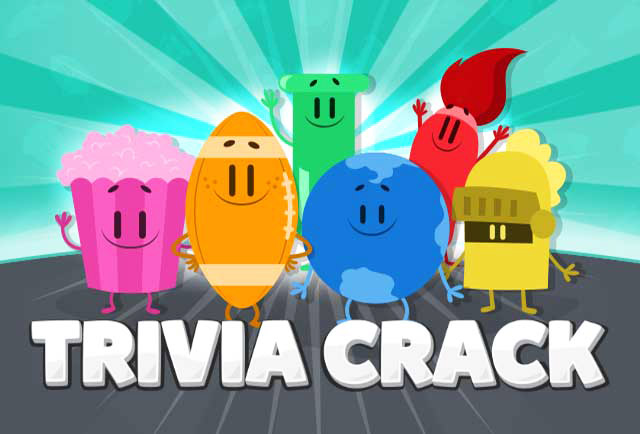
    There is an app called Trivia Crack, that — at the time of this writing — is officially the single most popular app in the country — and we are following Latin America where it is even more widely popular.

    How it works is, you load this app on your phone and then you play against your friends on general trivia questions— you can choose random opponents as well but that takes out the fun of texting those you are playing against and taunting them. You spin the wheel which determines what category question you need to answer; art, science, history, geography, entertainment or sports. You are asked a question and you have a time limit — which is several seconds shy of how long it would take you to Google it. If you answer correctly, then you get another question and another and your opponent has to wait their turn until you get an answer wrong; sitting and watching the screen, hoping you’ll lose so they can get back in the game and save their dignity.

    You need to collect the characters that correspond to each one of the categories that are determined by the wheel and you can steal characters from your person your playing if you challenge them. There are Power-Ups that will help you along with ways to eliminate options of any of the tough 90,000 questions that are constantly updated.

    Now the game itself is pretty fun but that’s not the interesting part about it.

    By definition, because you are playing a real life person, Trivia Crack falls in the category of a social game; meaning that you are competing with a living, breathing people somewhere else. But that title is somewhat misleading because some of the most  anti-social activities can be done with social games — if you are holed up in a room for a weekend playing an interactive game with someone online, this is not exactly a social activity.

    But Trivia Crack is different. First of all it’s very difficult to play the game alone. Meaning you will most likely need help, advice, direction on at least some of the areas that you’re not familiar with. So if you are playing the game in a room with people — even in a room with complete strangers — you can’t help but call out for help. Quick, what Hockey team won the most championships? And someone will answer you.

    Here’s an example. We were playing the game in our living room the other night;  four different games going with four different people that we knew and all of us helping each other win — and we make the ultimate team; Alex is an encyclopedia of sports knowledge, Debbie has a medical and science background Nick is great with pop culture and I have all the weird stuff. So we’re at home playing as a group.

    Now a friend of ours, who is just one of those games going, was in a car with another group of other friends coming back from a trip. They are all screaming out answers to help Dave; helping him play and we are all at home were helping my wife. And — here comes the best part — while they stopped at a restaurant to eat, Dave shouted out a question to Jeff who was ahead of him and a random person heard it and answered — therefore involving even more people.

    Trivia Crack as far as a game is great, but it does what Angry Birds and Candy Crush could never do. It actually gets real people talking to each other in order to play.