Category: Personal

  • Managing found-money

    Managing found-money

    found

    So here’s the scenario. You decide to play the lottery. You choose your numbers, pay your dollar and stick the ticket in your pocket. The next day, just for fun, you check the winning numbers and —-. Guess what? You won! A perfect match. Yes! You jump up and down, you check the numbers again and — yes! You won. So you race to the nearest lottery office — trying not to kill yourself or anyone else along the way — and run in with the winning ticket.

    You are escorted into the lottery offices. They verify the ticket and confirm that there was only one winning lottery ticket sold, which means that the entire lottery — let’s go with, twenty-five million dollars — is all yours. Every penny of it. Congratulations.

    So you are lead to a room and you try to control your heart rate as a photographer takes the standard lottery winner photographs: the ones with you smiling and holding your huge cardboard check that has your name, then a dollar sign followed by a 25 and six zeros. The caption under the photograph will read: John Q. Public, our latest 25 million dollar lottery winner.

    Then there are the interviews with the lottery people asking the normal lottery questions: What will you do with your twenty-five million dollars? How does it feel to now be worth twenty-five million dollars? Did you ever dream you would someday win twenty-five million dollars?

    And by the next day, the world will read about everything that you’re planning to do with your brand-new 25 million dollar pot. They will read that you are going to buy a new house for your sister and have one built for your mom. How you are going to pay your niece’s tuition to medical school and give a lot of the money to charity.

    And after the photographs are taken and the interviews are over, you move on to the good part. The best part. The time when they give you all that money. When they give you all that cash; your twenty-five million dollars!

    You fill out more paperwork and are escorted down the hall to a large conference room where your check is waiting. You sit while a smiling lottery man slides the check across a polished conference table. Your flip the check over to see your name and a check for — $834,000.

    You look up at the lottery man.

    “What’s this?” you ask.

    “That? Why, that’s your lottery check, sir.”

    “But,” You say confused. “I won twenty-five million dollars.”

    But the lottery man is ready for this. The lottery man has dealt with this confusion before.

    “Sir,” he says patiently. “You opted for the lottery payment option when you purchased the ticket. Which means that you will receive twenty-five million dollars over a twenty-year period. Which means that we have put twelve and a half million dollars in an annuity for you, which over the course of twenty years will double and will equal twenty-five million dollars. We have taken the taxes out for you and you will receive a check for this amount, on this same date, every year, for the next nineteen years. Congratulations.”

    You stand there and look at your check. Well, you have to admit, $834,000 is still a lot of money. A lot of money! More money than you have ever had at one time before and besides, you will receive a check like this for nineteen more years and by the end of it you will be worth — twenty-five million dollars!

    So you grab the check and head out of the office happy and excited.

    And soon the world will see you with that big paper check. The world will know that you won twenty-five million dollars. And soon you will start to believe that you do have twenty-five million dollars, or at least you soon will have that much. And suddenly your house is too small for a multimillionaire like yourself. Your car is too drab, your vacations too plain. Someone of your wealth needs to live a little. To share a little; to pay back the family and friends who were with you back before you weren’t so rich. And remember, you did promise to pay for your niece’s college and to build your mother a house. And those preapproved credit cards that are clogging up your mailbox can be put to use. It’s okay to charge a few things. Hey, it’s not like you don’t have the money, right? You’re rich now.

    And let’s not forget those friends and family. Friends and family that now feel—no, now believe—that they are entitled to a part of that twenty-five million. You don’t want to seem greedy. You don’t want to disappoint them.

    And then — four months before the next $834,000 check is set to be cut — you notice that things are getting a little financially tight. Hey, you quit your job months ago, remember? And the minimums on those credit cards are pretty high and then there’s the taxes on the three houses you now own and Suzie’s next tuition payment is due. But hey, you’ll weather the storm, right? Borrow a little to bridge the four months until your next check comes in. It’s okay. You’re a millionaire. It’s not like you don’t have the money. It’s not like you’re not rich.

    But here’s the rub. You’re not rich. You don’t have the money. You’re not even a millionaire. You’re an eight hundred thirty-four thousandaire. You’re the same as that executive who earns that same amount every year, only he has one advantage over you. He knows he’s not rich. The world knows he’s not rich. But you have been lied to and now believe that you are rich. You and your family and your friends and the strangers at restaurants who think that asking you to pick up their dinner tab is normal because you got so lucky with the lottery and all—everyone believes you are rich.

    Evelyn Adams, who not only won the New Jersey lottery but won it twice for 5.5 million, now lives in a trailer.

    Suzanne Mullins won 4 million and is now broke and in debt. Abraham Shakespeare won 30 million and was murdered. Michael Carroll won 14 million and spent it on call girls. ‪Jack Whittaker won 314 million, was robbed, had a murder attempt against him and ended up bankrupt. Billie Bob Harrell won 31 million, was broke in less than two years and committed suicide. And you can go on and on and on.

    The National Endowment for Financial Education estimates that 70 percent of people who suddenly receive a large sum of money, will lose it within two years.

    And that’s the depressing news. The good news is that at some time in your life — through hard work, good timing or simple dumb luck — you will experience at least one  financial windfall. Maybe not a lottery win, but a windfall.

    As you are moving along in life, as the pace is steady and calm, pow, an unexpected lever will be turned and money will fall into your lap. This could be through an inheritance, your industry could be poised on a temporary position in the market, you could be the beneficiary of a life insurance policy or a law suit, whatever. It’s an absolute certainty that at some unknown time an unforeseen spike will occur and you will be sitting on an unexpected fat check.

    And depending on your station in life, this could be for a few thousand dollars or one of those with many zeros. But it is a certainty that at least once, you will experience found money.

    Now the bad news is that because this money occurs quickly, because found money has a different value in our psyche than earned income, because of the emotions attached and because of the pressure put on you from others, you will make a lot of mistakes. Many, many, many, mistakes. And it’s of very higher probability — 70% — that you will blow that money. In fact, it’s entirely possible that when the money is gone you could be financially worse off than before you received it.

    The main reason for this is that we believe that that money can solve most of our problems. If we just had more money, the troubles would be over and when that money comes in suddenly it’s easy to ignore other issues.

    RULES FOR FOUND MONEY

    1. Don’t do anything for one year. Money is a very emotional entity and it’s extremely difficult to make clear decisions when there is so much excitement involved. So don’t do anything with it for a year — one solid year. Stick the money in a savings account, hide the bank book and let it sit for twelve months. Now, the only exception to this is paying off some debt but even that is questionable. You need to allow time pass to think — and this will give you an out later on when you need it because …

    2. Your friends and family are not financial advisors. You are going to need some sound advice, absolutely, and that means professionals. Depending on the amount of money you receive will determine how many of your friends and family are willing to help you make decisions. And because you trust them as people you can trust them with your money, right? No. You need to have advice from professionals who have no emotional ties to you. And — if family and friends put apply pressure on you for loans, you can state that the money is all locked up and you can’t do anything with it for a year. And then give them your advisors name to contact.

    3. Don’t buy a house. Yeah, we covered this in the first area, but I’ll say it again. Don’t do anything for a year. People who come into a windfall will typically buy a new house quickly. And you really don’t want to do that before taking the time to think about the consequences — and then there is everything that comes with a new house; taxes, fees, decorators, furniture, taxes, insurance, even utility costs are greater. So don’t do it.

    4. No loans. And don’t be so quick to make new friends. Once you make money, everyone will approach you about new investments, ways to triple that money quickly, or sad stories of funds needed quickly.

    5. Stay healthy. Since money is so important to us — especially to those who didn’t have it before — we tend to think it can fix anything. Many people that come into money neglect their health. You need to stay healthy and strong.

    6. Keep moving on. As much as possible keep your life as close to it was before the windfall. Stay the course, keep plodding ahead and keep moving forward.

  • Debt Think

    Debt Think

    debt

    At one time, it went like this:

    Something catastrophic occurred — a crop failed, there was a fire, a death, a flood or some unplanned event took place in a person’s life that they were not prepared for. So new priorities would arise. How will this person put food on the table? How will they repair that building, replace that income, or even have a roof over their head?

    This individual would go through all their many options — what can be sold, what can they do without, what extra work can be found, what sacrifices can be made? And after painstakingly going through every single possibility, every potential solution, they may arrive at the very end of the list. The last resort. And with heavy heart and humbled head, they would go to a person that lent money and they would borrow. They would agree to go into debt bondage until the money was paid back, and with interest.

    And once a loan was taken, this person would work hard, they would sometimes go without basic life necessities, perhaps not even eating if it meant the difference between paying this loan back or not. If it meant being free again. If it meant getting back to the way life should be.

    And if something even worse happened so that they could not pay this debt back — if something occurred where they could not earn the money to repay the lender — then they would be imprisoned. After all, they had gone into debt bondage and they now belonged to the debtor — and they would remain there until their family and friends could repay the loan. Until their debt could be paid back in full. Until they would no longer remain the collateral for that debt.

    That’s how debt used to be seen.

    Here is a modern day example:

    Let’s say you take out a car loan and are about to make your last payment. This last $350 means that the car is now yours. You make the payment and the loan is fulfilled. The car is now completely paid for.

    The next month you are excited because you now have an extra $350. You have found money. It’s like getting a raise. And for the first few months you enjoy the found money and just blow it, until it quickly gets absorbed into something else, or your decide it’s time to trade in the car for something newer.

    That’s debt think. In reality, you don’t have an extra $350. You have the same $350 that no longer has to be turned over towards your debt bondage.

    Debt think is when it becomes normal to have debt, and it’s strange when you don’t.

    And when you first bought the car and friends and family asked what you paid for it, what was the answer? $30,000? That’s debt think too, because when the loan is completely paid for you will have actually forked over $50,000 for the car. That’s the real cost.

    Debt think is when we celebrate because we got a boat loan — not a boat. We get to revel in the debt bondage of something we hope to someday own and get high on the temporary illusion of owning something. We didn’t work for it yet. We didn’t sacrifice for it — we may not even really want it. We just agreed to go into bondage for it.

    Debt think is signing that student loan agreement and being so excited because you don’t have to make a single payment until 6 months after you graduate. What you didn’t realize, because you didn’t read the fine print, is that the interest starts the minute we sign the paper — actually, most student loans take decades to pay just the interest off before the principle is even touched. Debt think let’s us see only the small, $50 monthly payment, without thinking about what the loan actually costs us.

    Debt think sees in monthly payments. Debt think sees how fast something can be turned around. Debt think sees the power of borrowing and not the slavery of it. It’s buying into the sexy, slick way that stuff is supposed to makes us feel about ourselves and our lives.

    Hey, not that credit is bad. It’s not. Using other people’s money can be the smartest thing you can do, if done right.

    But debt think is a lie. It is a trick and an illusion.

    If you have to go into bondage, do it. But don’t celebrate the bondage. Get free, and celebrate that.

  • REVIEW: The Anchor Bar, Home of the Original Chicken Wing

    REVIEW: The Anchor Bar, Home of the Original Chicken Wing

    wings

    Dover, Delaware — the smack-dab center of The First State — is a small city of about 40,000 people. It’s the capital of Delaware, the home of the monster mile NASCAR track, and is part of the Delmarva Peninsula — a massive stalactite of land that hangs down between the Delaware Bay and the Atlantic Ocean.

    Now, if you have ever have the chance to visit our fair town, you’ll be able to see all of it pretty quickly — visit the nearby beaches, take pictures of the track, walk through the historical sites. Those are fine and dandy, but what truly makes Dover great are the subtle cultural differences of our city.

    For example, the law that requires a driver to pull over when an ambulance, fire truck, or police car have their sirens and lights on, doesn’t apply here — I mean, the law does apply, but it’s a silly law and no one knows about it. In fact, if you are ever in Dover and do see an emergency response vehicle behind you  — sirens flashing and horn whaling — just do what we do. Bear down and protect your road space — that obnoxious truck can go around you if he’s in such a gosh darn hurry.

    Because in Dover, we have our own way of doing things. For example, we never say goodbye. In fact, we don’t ever end a conversation at all. Let’s say you run into someone you know in a store or on the street. You’ll stop. Say hello. Talk for a while. And then, when the conversation is slowing down — this is the part where you other people say, talk to you soon, or see you later — we just walk away. Then months later, when we run into that person again, we can start the conversation right where we left it.

    And because Dover is a military town, if you are ever at a Little League game or a Caesar Rodney Basketball or Football game, you will experience a reverence during the national anthem like you have never seen. Once the sound of the swoosh of hats being pulled off is over, the silence that will fall will simply hold you.

    But one of the great paradoxes of Dover life involves the food. It’s…well…it’s bad. No that’s a lie, it’s gawd-awful. But this actually turns out to be a good and a bad thing. It’s a bad thing that it’s so terrible. But it’s a good thing because no one knows it.

    We have very few independent restaurants in Dover, and we have every franchise that’s ever been in existence. It’s all we know and it’s all we compare to. Is the pesto grilled chicken at Olive Garden better than the pesto grilled chicken at Applebee’s? Hmmm?

    [amazon asin=B006UU07MA&template=iframe image][amazon asin=B005Z492PU&template=iframe image][amazon asin=B0000DDU2S&template=iframe image][amazon asin=B000V1H0D8&template=iframe image]

    Which brings us to the chicken wing. Many people believe that a chicken wing — simply a wing, deep fried and covered with sauce — is a chicken wing. Many people believe that these are easy to make and hard to screw up. They’re all the same, right? Worse yet, people even believe that wings at Buffalo Wild Wings, Hooters, or TGI Fridays are real wings.

    Well, I’m here to tell you that these people are wrong — and probably communists.

    If you have never been to a little independent bar or restaurant — and this is where the magic happens, a place where the kitchen can be creative and not follow a franchise recipe — and you have never tasted a great chicken wing then it’s easy to think this. Sure, there is some comfort in not knowing. But, you have a hole in your life that needs to be filled.

    When I was twelve years old I got glasses for the first times. I was sitting in my mother’s car after the doctor’s appointment and I put the glasses on. I can still tell you — forty years later — how my world went from fuzzy and foggy to crisp and in Technicolor in seconds. Pow. But before this moment, I never knew the world was like this. I didn’t know what I was missing. It’s the same with a great chicken wing. Your world will never be the same.

    The history of the chicken wing began on a Friday night in 1964 in a place called The Anchor Bar in Buffalo, NY. Now the story is a little unclear of whether Dominic Bellissimo — the son of the owner, Teressa Bellissimo — was returning from college that night or was actually working the bar. But what is known is that when Dominic’s friends got there, they were all very hungry. So Dominic asked his mother to cook them something. Teressa went into the kitchen and found some chicken wings that were there to make stock. She deep fried them, covered them with a hot sauce mixture, and served them. They were a hit, and Buffalo chicken wings were born. (No, the name has nothing to do with the endangered, horned animal of the great plains.)

    And now, fifty years later, you can have Buffalo wing potato chips and Buffalo wing pizza.

    So the question is, does the birthplace of the chicken wing make the best chicken wing?

    The answer is yes. Yes it does.

    And no.

    Being brought up in upstate New York I have had some great chicken wings in my life, made by some great chicken wing masters. And I will tell you that the wings at The Anchor Bar — the original site on Main Street in Buffalo — are absolutely the best I’ve ever had. Bar none.

    They are crispy, but moist. Flavorful and rich. And the sauce…all I can say is wow.

    Yes, The Anchor Bar makes the best wing.

    But, big stipulation here, only at their original location.

    Recently, The Anchor Bar has expanded and now has several locations; at the Buffalo Airport and other locales across Western New York. I’ve eaten at a few of them and the magic is just not there.

    Now if you travel to Buffalo, you will hear some smack about a place called Duff’s and there is a pretty heated rivalry between Duff’s and The Anchor Bar for the best Buffalo chicken wing. So, I’ve eaten at both and my vote goes to The Anchor Bar, hands down. The sauce at Duff’s is hotter — and I always order my wings suicide-style — but making a sauce hot is not a difficult trick since there are so many pepper extracts on the market.

    So the best chicken wing in the country — and possibly the world — goes to The Anchor Bar.

  • Riley the Dog

    Riley the Dog

    dog

    There are a few things in my household that I have complete veto power over — not many, but there are a handful. For example, when my wife and children wanted pets, I said no. I felt bad about it, but the answer was no. I did not want us to be one of those pet-houses.

    Now, don’t get me wrong, pets are great; cute, fun, entertaining — I get it. But having animals means being tied down; constantly running home and feeding them, or letting them out or exercising them. I wanted us to be able to travel and move around freely without having to be animal caretakers.

    So I said no. No pets.

    And to their credit, my family reacted in a way that made me proud. There were no complaints from Debbie and no tears from the kids. They took it extremely well.

    And one morning — this would have been about three years later — I was feeding the cats when Debbie and the kids said that they wanted a dog.

    What? A dog? No absolutely not. No dogs.

    And they took it well.

    Then then, about three years later, they asked for another dog? Absolutely not. We already had a dog.

    But they said a new dog would be a companion to Abby, our Golden Retriever. And, they added that a second dog is not much more work than a first dog. And once again, I pulled out that veto power and said no. Sorry, but no. We would not be a house with two dogs — who has two dogs anyway? That’s like having two swimming pools or two basements. Why would you have more than one?

    And five years later, after Murphy died, we were back to only one dog, so…

    Well, you get the picture.

    We got Riley about six months ago.

    Now the difference between Riley and the other dogs we’ve had — two Golden Retrievers and a Basset Hound — is that Riley is a mixed breed dog.

    After having had three purebreds, I have realized that all breeds are bred to do something — to hunt, to point, to herd, to show, to…something. And that DNA is telling them to herd, to protect, to point — first. Then, if they have some free time, they can be a pet.

    Now, many breeds make excellent pets — it says so right in the book — but some are first and foremost bred to do something else.

    Not that purebred dogs aren’t great. They are. But I prefer my mutt.

    When you take out that breeding — rip out the generations of DNA that force a dog to react a certain way or be on the lookout for a specific action, and strip the dog down to its basic structure — you let the dog just be a dog.

    And when you get to be just a dog, you have the opportunity to see the world through a regular ol’ dog’s eyes. And frankly, they have it all figured out. Riley has it all figured out.

    So here is what Riley has to tell you about life.

    1. Where you are, is the place to be.

    Riley doesn’t wonder if there is something better upstairs or around the corner. All he knows is that right here, right now, is where it’s at. This is the center of the universe and where he’s happy and grateful. He doesn’t regret or second guess. This moment, this time, is the best time that there is, or will ever be.

    2. All memories are good memories.

    Riley doesn’t mentally file away the times you bumped his nose when walking past him in the middle of the kitchen. He forgot how Abby got three more dog biscuits than he did and he has no clue that you could have walked him an hour earlier on Sunday but chose not to. Riley doesn’t know how to keep memories like this or what to do with them even if he did. He doesn’t understand what envy or jealousy or bitterness is and if he did, he would abandon it. It would bore him.

     3. As great as life is, there is always room for new people.

    Riley loves the people around him and is content with just them, forever. But when a new person enters his life he reacts as if it was the first person he ever met. Riley doesn’t treat his tenth friend less than his first friend. Everyone who enters his world is amazing, valuable, and worth getting to know. And he does not respond to people based on how they respond to him. He doesn’t care. He focuses on them, regardless of what they think about him.

    That’s what Riley wanted me to tell you.

  • How to choose a cologne

    How to choose a cologne

    cologne

    Okay, here are a few quick math paradoxes.

    Let’s take a poll. Ask a small group of people — let’s pick an easy number, let’s say ten — what they think of McDonalds.

    Your results will most likely be that eight of those ten will tell you that they never, ever, go to McDonalds — no way. Absolutely not. Gross. And the other two will say they go rarely — once or twice a year, tops.

    Yet McDonalds sells 75 hamburgers every second.

    So your friends are lying

    The same rule applies for cologne. Ask a group of ten men if they wear cologne and you’ll see the same results. Oh, they’ll tell you that they have a bottle, somewhere — I’m not really sure, I never use it — yet Americans spend one billion dollars a year — a slight exaggeration, the real number is 978 Million — on men’s cologne. So either your friends are getting buckets of the stuff as gifts that they are throwing away, or they are also lying.

    It’s very common for men to remain in the closet regarding cologne and the main reason for this is that we have been exposed to years of cologne abuse. Men have long used cologne s a substitute for personal hygiene and when we didn’t have time for a shower we would toss a thick coat of Aqua Velva on to hide the funk — and we all have memories of that uncle in the polyester sports jacket that put on a pint of two dollar cologne before he headed out for the day.

    But the fact is that scent is an extremely powerful trigger. Animals know this and so do we. A pleasant scent can alter a mood and a bad scent can alter it even faster.

    [amazon asin=B008I2IKTA&template=iframe image][amazon asin=B004O24Q8W&template=iframe image][amazon asin=B000JD4N9M&template=iframe image][amazon asin=B002FAWECK&template=iframe image]

    Choosing a cologne you like — the industry jargon for this is finding your signature scent — is as important as buying that one good watch or knowing how to tie a Windsor-knot necktie.

    SO WHAT IS COLOGNE?

    The term cologne refers to the strength of the perfume. Now, there are colognes for women, but women usually prefer a stronger scent or perfume rather than cologne. So the weaker scent — the cologne strength — usually refers to the product for men.

    The fragrant strengths of colognes are …

         Eau de cologne — contains up to 5 % perfume oil.

         Eau de toilette — 4 to 8% perfume oil.

         Aftershave — up to 2% perfume oil.

    TYPES OF COLOGNE SCENTS:

    The typical cologne scents are …

         Floral — This is largely seen more in perfumes than colognes, but there are a few colognes that can be categorized as floral.

         Fruit.  

         Chypre — this describes earthy or woodsy scents

         Fougere — grassy or herbal.

         Aquatic — — light and airy.

    HOW TO CHOOSE A COLOGNE.

    1. Budget. Unfortunately, in order to get decent cologne you’re going to be anywhere in the $75 to $150 range. This may seem high but with a quality cologne you are actually going to use very little at a time and it will last. Don’t waste your money on ultra cheap colognes or clones — my younger son once bought a bottle of cologne from The Dollar Tree and we received an environmental dumping fine from the EPA. Nasty stuff. And on the other end, most cologne experts will advise colognes over $200 are not a good purchase.

    2. Shop alone. Choosing a cologne is not something you do with your girlfriend, your wife or a couple of guys from the office during lunch. There are too many outside influences. Go alone.

    3. Choose based on you. This may sound a little touchee-feellee but you want to find a cologne that smells like you, not one that you want to smell like. You are not a sailor or a lumberjack. You’ve never played poker on a paddle boat and you don’t own skis. Chose a scent you like, not what you think others will like to smell on you.

     4. Say no to the spritzers. The salesgirl at Macy’s will tell you that colognes smell different on your body. She’s lying. Have them spray it on test strips and smell it from there.

  • The truth about self-discipline

    The truth about self-discipline


    red

    Okay, let’s say you have a goal you want to achieve and for the sake of the example let’s make it a weight and fitness goal. You want to lose twenty pounds. So in order to do this you put together a plan to achieve your goal; you create a fitness schedule, develop a nutritional diet, get a training partner, fill your Facebook and Twitter pages with you can do it re-posts and hit the ground running. Pow, slam, bang. You’re off.

    Now, a few weeks go by and you’ve lost some weight, you feel good, you’re gaining momentum until — until. Until that first big craving hits. And when this craving shows up — strong, determined and bloodthirsty — things start to go bad.

    The craving slithers on the scene and his desires are clear. He hates you. And he wants to destroy you and in order to do that he is going to make you eat that entire family size chicken and gravy, bucket meal. Now, you want to stop the craving, because the last thing in the world you want to do is to have to eat that entire bucket of crispy goodness.

    So the fight begins and the first punch is thrown.

    Over the next few minutes you slug it out with your craving — he gains a little, then you, then him again — until a winner is declared. And either the craving slumps away, happy and fat; leaving you crying with gravy on your shirt. Or you win and the craving leaves, bumping your shoulder and telling you that he’ll be back — loser.

    And this is how we see the path of self-discipline. As a fight. A fight between us and that powerful force out there who wants to hurt us, humiliate us and control us. So the only choice is that this force has to be defeated, beaten and destroyed.

    Right?

    No.

    And here’s why. Is there a force that wants us to eat that food?

    Yes. Yes there is.

    Does it hate us?

    No. It’s trying to keep us safe and happy — actually that’s what its job is.

    Okay, so who put it there?

    We did.

    That force — that strong and destructive entity that can only be defeated by our grit and grace — is not a force at all. It’s a little piece of software — let’s call it wetware — that is clicking along doing what we told it to do. We set it. We programmed it and then we left and forgot it and when it showed back up we tried to fight it — forgetting that we had all the passwords.

    Here’s a real life parallel. There are three ladies that work at a barbershop near our home and one of these ladies smokes. She has smoked for years and has she tried quitting several times. And one particular time that she was trying to quit, her entire personality changed. I mean, this sweet and kind woman was now short tempered and actually cruel. Mean. Her personality altered so much, that those around her just wanted their friend to come back. They no longer cared about her smoking. In fact, customers began coming in with packs of cigarettes for her — they actually did, buying cigarettes for the first time in their lives to give to her.

    The same people — the very same ones — that for years had begged her to quit smoking, were now the very ones who wanted her to smoke the most.

    “Just smoke one,” they’d say, through frightened and concerned smiles.  “Just smoke one and everything will be okay.”

    And it was okay. She smoked and went back to herself. The person they loved came back.

    Don’t let me get stressed, we tell the wetware.

    Okay. And the wetware searches to make that happen and locks it in. Chicken bucket. And the higher the stress is — even if the very stress is about ‘not eating the chicken bucket — the more the program will try to get you to eat it so you’re not stressed.

    So here is the good news. That force, that all powerful force that you think you have to fight — is actually on your side. As powerful as you think he is, he can be even more powerful helping you — since that’s all he wants anyway. It’s all he’s ever wanted.

    He doesn’t care if you smoke, he just wants you happy. He doesn’t care if you are overweight, he just wants you happy.

    But what if he can help you do both?

    Now here is where things get a little touchee-feellee for a while. So, how do we do this? How do we reprogram the wetware?

    By talking to it.

    I know, it sounds weird, but that is when the programming occurs. And how it occurs. And the best time to talk to it is when one of these cravings are are turned on — when the wetware is active.

    Just start asking it, why do you want me to have this? What will I get out of this?  And the big one — what are you afraid of, for me?

    And don’t be surprised if it’s the last query that gets you the answer. Fear — what are you afraid of, for me?

    And that’s it. That’s really all there is to it. When that ‘craving’, that desire, that urge to avoid, comes around, simply talk to it. That’s the only way to lift up the lid and look right into the actual programming code; to see what is driving that piece of wetware.

    Why do you want me to do this?

    What am I afraid of?

    What am I trying to avoid by doing this?

    And you’ll get your answer.

    That’s the secret.


  • How to Live a Cash Life In a Non-Cash World

    How to Live a Cash Life In a Non-Cash World

    cash

    When we were kids, money was a much simpler entity to manage; in fact it was downright easy back then. The process went like this: if our pockets were empty, and they often were, we went without. And if our pockets had something in it, we could spend what we had. And, here comes the stress-free part, how much we spent was determined by how much we had. Simple.

    So, the decision process went like this. Can I buy a soda? Let’s see, do I have any money? No, I don’t have any money. Then the answer is no. I cannot buy a soda. Done.

    Now, it’s a little more complicated.

    Now our buying decisions are not based on how much we have in our pockets, or how much money we have in the bank, or how much money we can afford to spend, or how much we earn, or how much money is left in our budget, or is the thing that we wish to purchase priced correctly. Nope. It’s only based on — do we want it and do we want it now?

    So, do I want a soda? Well, of course I want a soda. And I’m a grown man and I work hard so I’ll buy whatever I want. Because this is America. And I have three credit cards and a debit card in my wallet that says it’s America. So yes. Yes I can buy a soda.

    And we buy. And it’s easy because we don’t really spend money, we spend numbers. Think about it: with little exceptions, it’s possibly to go a very long time spending, buying, and earning and never seeing the actual money that is flowing in and out. We just see numbers on a screen.

    [amazon asin=B001D07XCO&template=iframe image][amazon asin=B00B3PP5Q0&template=iframe image][amazon asin=B009ANX56O&template=iframe image][amazon asin=B00KECATZU&template=iframe image]

    Using a cash system is the only way to spend only what you have. Because with our credit cards we can spend until we hit our credit limit and with our debit we can clean out our account and push the overdraft limit dry before the red light comes on.

    And the irony is that we’ve been conditioned to not think of these swipes of a card as real money. Yet, take actual cash from our wallet and we feel that psychological loss.

    Using a Cash System

    1. Establish a budget.
    2. Create an envelope system. Create a physical envelope for each budget category. Now there will be budget items that won’t fit in the envelopes — automatic payments, etc. — so you keep those automatic and make categories for all that you normally use your credit and debit card for. These should include: Gas, Entertainment, Groceries, Clothing, Car Maintenance, etc.
    3. After you’ve categorized your cash expenses, fill each envelope with the money allotted for it in your budget — if you allow $100 for clothing, put $100 in cash in your clothing envelope for the month.
    4. Determine what is a weekly or bi-weekly (depending on how you get paid) expense and which is ongoing. So if you allot $50 a week for entertainment, then that will fill each pay period, whereas $25 a week for car maintenance will build until needed.
    5. Tweak. During the first three months or so your system is in beta-test mode. There will be items you forgot, over budgeted for, or simply got wrong. Keep adjusting.
    6. Once you’ve spent all the money in a given envelope, you’re done spending for that category. If you go on a shopping spree and spend the $100 in your clothing envelope, you can’t spend any more on clothes until you budget for that category again. That means no visits to the ATM to withdraw more.
    7. When it’s gone, it’s gone. Don’t be tempted.
    8. Blow money. There’s also no problem in adding a “blow money “category — money to have a little fun with! As long as you and your spouse have agreed on it, you are fine. There should be no lying. Agree on your budget, agree on your fun money, and be open. Fun money can be anything you want it to be. There are no rules on that envelope.
    9. Keep the change. Tossing your spare change in a jar is almost a mini savings account. It’s there for small emergencies and at the end of the year it’s not unusual for your change to equal $400 or more.
  • REVIEW: Namco Plug-Play TV Games

    REVIEW: Namco Plug-Play TV Games

    namco

    I am not a gamer.

    I don’t own an X-Box or a PlayStation — even though as a father I’ve paid for several of these over the years — and I have probably logged in less than five lifetime hours on Halo or Call of Duty when my kids have asked me to play — I spend most of my time in corners trying to get my character to turn around and sober up.

    But having been a college student in the early 1980’s, I have spent more than my fair share of hours in dark arcades; dumping quarter after quarter of my Guaranteed Student Loan into various Tron, Xevious and Pitfall games — swearing that this will be the last one and then I’d do my laundry and try to locate where the library.

    I have good memories of these days— usually with a group of people thinking we would be eighteen forever and the world was ours — if we ever got out of the arcade and did any real work. Which we would, right after this game.

    One of my favorite arcade games was one called Dig Dug. I’m not really sure why I liked Dig Dug so much or what it really was about; as the object was to guide a man in a space suit underground to either avoid orange creatures with scuba masks and fire-breathing dragons, or destroy them with a bicycle pump — hey, I’m not saying it’s literature I’m just saying it was fun. So when my kids got one of the Plug-N-Play games as a gift a several years ago — have you ever seen these? They are not a counsel but a square box with a few buttons and a joystick that you just plug into the TV and go — I was excited to see that it had Dig Dug on it.

    We played this game for hours and for the first — and only time — I was the Big Kahuna of video games in our house — smoking them at every turn.

    [amazon asin=B001TNYPQM&template=iframe image][amazon asin=B00EQNP8F4&template=iframe image][amazon asin=B00K59HKIQ&template=iframe image][amazon asin=B00I94IPTW&template=iframe image]

    Then the game broke and the party was over and I went back to my status as game outsider.

    About a month ago I told my wife that I wanted to see if we could find another one of these Plug-N-Play games — for the comradery with my kids of course, I have better things to do — and she found one on e-bay and bought it.

    The unit she bought was by Namco and was called Plug-Play TV Games.

    Now, the great thing about these classic arcade games is that they follow a specific pattern. If you memorize the pattern on Level 1 and react the same way every time, the game will react the same way as well. Every time. So once you mastered that level you would move to level 2 and keep going.

    This game had none of that — which I know exists because the other unit we had reacted as the old game did. Here, each level was random, responding differently every time which meant there was no way to build up skill and move up levels. It was simple luck that may, or may not, allow you to survive. There was absolutely no way to develop any skill in the game.

    Also, the timing was delayed so if you tried to lure an orange guy or a dragon into a corner as you could on the arcade game, this game would simply eat you. But the absolute worse thing about it was in the design of the box itself. The RESET button is on the upper left of the box and is not recessed. So when you gripped the box tightly to fire or move, you often hit the reset button with your hand — usually right in the middle of a game — and the screen would go black and start over.

    I know, I know. It’s just a toy. But there are some of these Plug-N-Play games that react like the old ones did and are pretty fun to play. Not just so you can relive the glory days but because you can get to levels that your wallet wouldn’t allow in the 1980’s — you can go back and remove the limits our finances dictated back then. And we can finally have closure.

    Unfortunately this game is not one of them.

  • Take the 30-day, buy used, challenge

    Take the 30-day, buy used, challenge

    actually thrift

    Okay, here is an exercise.

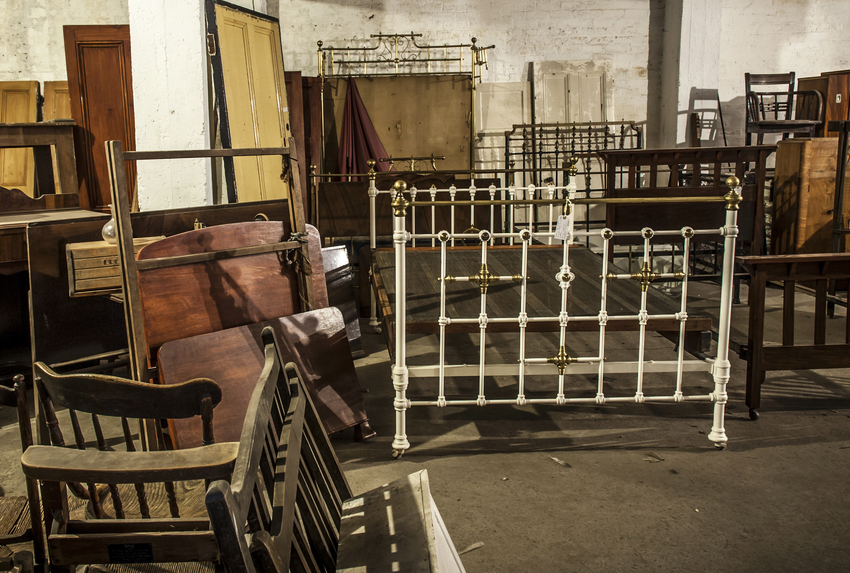
    Let’s say that something bad happens — some financial catastrophe — and you need to come up with an enormous amount of money quickly. And for the sake of this exercise let’s also say that you have already tapped into your savings, your 401K, your lines of credit, cash advances and anything else you can think of. All the traditional methods are exhausted and you still need cash. A lot more. So now all that is left are your things. Your stuff; the things you own. All that you have to sell are those very items you see and use everyday.

    But how much are those things worth? — not how much did they cost, but how much are they really worth? — because a baseball card might have a value of a thousand dollars but until someone puts that amount in your hand, its value is undetermined.

    In this financial scenario, if you had to sell all the things you own, outside of owning a box of gold coins or having a few Corvette’s in your garage, the true value of what we have — meaning what someone else would pay us for them — is actually very small.

    Our flat screen TV may have cost three grand, but if no one is going to give us  three grand for it — especially if it’s a few years old and is no longer the hot technology — it’s probably worth a hundred or less.

    Outside of owning luxury items or precious stones and metal, the contents of an average four bedroom home would sell in an estate sale for $6,000.

    Not bad. Except that the replacement cost of those same items would be  $20,000. Meaning what we pay $20,000 for items that have a street value of $6,000.

    Here’s an example. A few years ago I splurged and bought my wife a very nice gold chain — a jewelry store near our home was having a big sale and a 14 carrot gold chain that would normally be $1,200 was now $800.00. So I bought it. And just out of curiosity — just because I wanted to gloat on what a bargain I had gotten — I stopped at a pawn shop on my way home. I said that I might be interested in pawning the piece and wanted to know how much I would get for it. The gold was tested and weighed and an offer was made.

    $140

    My $800 purchase had a true value of $140.

    Now, I might have found a slightly higher offer at another pawn shop. Maybe. But the highest offer someone had given me was $140 so that was the current value.

    I still gave my wife the necklace — it was a gift and it was not about the money — but it did get me thinking.

    Now this discussion is not about how to get the highest dollar for your things when you sell them. It is demonstrating that anything we buy new — and I mean anything —- the value depreciates just like a car. A $200 microwave has a resale value of around $50. A $100 vacuum cleaner would sell for $30 and a $600 lawn mower would get you about $75. That is the true value of those items.

    So here is the challenge. Take a month and be resolved to be on the other side of this curve. For one month. For thirty days. Vow to buy all the items you need — every coffee maker, every shirt, every book — used.

    Instead of running to Wal Mart on your way home — stop at The Good Will instead. And when you need to swing by Radio Shack, hit the local Pawn Shop. Instead of Target, pick up a few things at The Thrift Store or scan Craigslist.

    Just do it for thirty days — it  won’t be as convenient and it may take some patience — but vow to do it for one month.

    And let me know what happens.