Category: Savings and Deals

  • Debt Think

    Debt Think

    debt

    At one time, it went like this:

    Something catastrophic occurred — a crop failed, there was a fire, a death, a flood or some unplanned event took place in a person’s life that they were not prepared for. So new priorities would arise. How will this person put food on the table? How will they repair that building, replace that income, or even have a roof over their head?

    This individual would go through all their many options — what can be sold, what can they do without, what extra work can be found, what sacrifices can be made? And after painstakingly going through every single possibility, every potential solution, they may arrive at the very end of the list. The last resort. And with heavy heart and humbled head, they would go to a person that lent money and they would borrow. They would agree to go into debt bondage until the money was paid back, and with interest.

    And once a loan was taken, this person would work hard, they would sometimes go without basic life necessities, perhaps not even eating if it meant the difference between paying this loan back or not. If it meant being free again. If it meant getting back to the way life should be.

    And if something even worse happened so that they could not pay this debt back — if something occurred where they could not earn the money to repay the lender — then they would be imprisoned. After all, they had gone into debt bondage and they now belonged to the debtor — and they would remain there until their family and friends could repay the loan. Until their debt could be paid back in full. Until they would no longer remain the collateral for that debt.

    That’s how debt used to be seen.

    Here is a modern day example:

    Let’s say you take out a car loan and are about to make your last payment. This last $350 means that the car is now yours. You make the payment and the loan is fulfilled. The car is now completely paid for.

    The next month you are excited because you now have an extra $350. You have found money. It’s like getting a raise. And for the first few months you enjoy the found money and just blow it, until it quickly gets absorbed into something else, or your decide it’s time to trade in the car for something newer.

    That’s debt think. In reality, you don’t have an extra $350. You have the same $350 that no longer has to be turned over towards your debt bondage.

    Debt think is when it becomes normal to have debt, and it’s strange when you don’t.

    And when you first bought the car and friends and family asked what you paid for it, what was the answer? $30,000? That’s debt think too, because when the loan is completely paid for you will have actually forked over $50,000 for the car. That’s the real cost.

    Debt think is when we celebrate because we got a boat loan — not a boat. We get to revel in the debt bondage of something we hope to someday own and get high on the temporary illusion of owning something. We didn’t work for it yet. We didn’t sacrifice for it — we may not even really want it. We just agreed to go into bondage for it.

    Debt think is signing that student loan agreement and being so excited because you don’t have to make a single payment until 6 months after you graduate. What you didn’t realize, because you didn’t read the fine print, is that the interest starts the minute we sign the paper — actually, most student loans take decades to pay just the interest off before the principle is even touched. Debt think let’s us see only the small, $50 monthly payment, without thinking about what the loan actually costs us.

    Debt think sees in monthly payments. Debt think sees how fast something can be turned around. Debt think sees the power of borrowing and not the slavery of it. It’s buying into the sexy, slick way that stuff is supposed to makes us feel about ourselves and our lives.

    Hey, not that credit is bad. It’s not. Using other people’s money can be the smartest thing you can do, if done right.

    But debt think is a lie. It is a trick and an illusion.

    If you have to go into bondage, do it. But don’t celebrate the bondage. Get free, and celebrate that.

  • REVIEW: The Anchor Bar, Home of the Original Chicken Wing

    REVIEW: The Anchor Bar, Home of the Original Chicken Wing

    wings

    Dover, Delaware — the smack-dab center of The First State — is a small city of about 40,000 people. It’s the capital of Delaware, the home of the monster mile NASCAR track, and is part of the Delmarva Peninsula — a massive stalactite of land that hangs down between the Delaware Bay and the Atlantic Ocean.

    Now, if you have ever have the chance to visit our fair town, you’ll be able to see all of it pretty quickly — visit the nearby beaches, take pictures of the track, walk through the historical sites. Those are fine and dandy, but what truly makes Dover great are the subtle cultural differences of our city.

    For example, the law that requires a driver to pull over when an ambulance, fire truck, or police car have their sirens and lights on, doesn’t apply here — I mean, the law does apply, but it’s a silly law and no one knows about it. In fact, if you are ever in Dover and do see an emergency response vehicle behind you  — sirens flashing and horn whaling — just do what we do. Bear down and protect your road space — that obnoxious truck can go around you if he’s in such a gosh darn hurry.

    Because in Dover, we have our own way of doing things. For example, we never say goodbye. In fact, we don’t ever end a conversation at all. Let’s say you run into someone you know in a store or on the street. You’ll stop. Say hello. Talk for a while. And then, when the conversation is slowing down — this is the part where you other people say, talk to you soon, or see you later — we just walk away. Then months later, when we run into that person again, we can start the conversation right where we left it.

    And because Dover is a military town, if you are ever at a Little League game or a Caesar Rodney Basketball or Football game, you will experience a reverence during the national anthem like you have never seen. Once the sound of the swoosh of hats being pulled off is over, the silence that will fall will simply hold you.

    But one of the great paradoxes of Dover life involves the food. It’s…well…it’s bad. No that’s a lie, it’s gawd-awful. But this actually turns out to be a good and a bad thing. It’s a bad thing that it’s so terrible. But it’s a good thing because no one knows it.

    We have very few independent restaurants in Dover, and we have every franchise that’s ever been in existence. It’s all we know and it’s all we compare to. Is the pesto grilled chicken at Olive Garden better than the pesto grilled chicken at Applebee’s? Hmmm?

    [amazon asin=B006UU07MA&template=iframe image][amazon asin=B005Z492PU&template=iframe image][amazon asin=B0000DDU2S&template=iframe image][amazon asin=B000V1H0D8&template=iframe image]

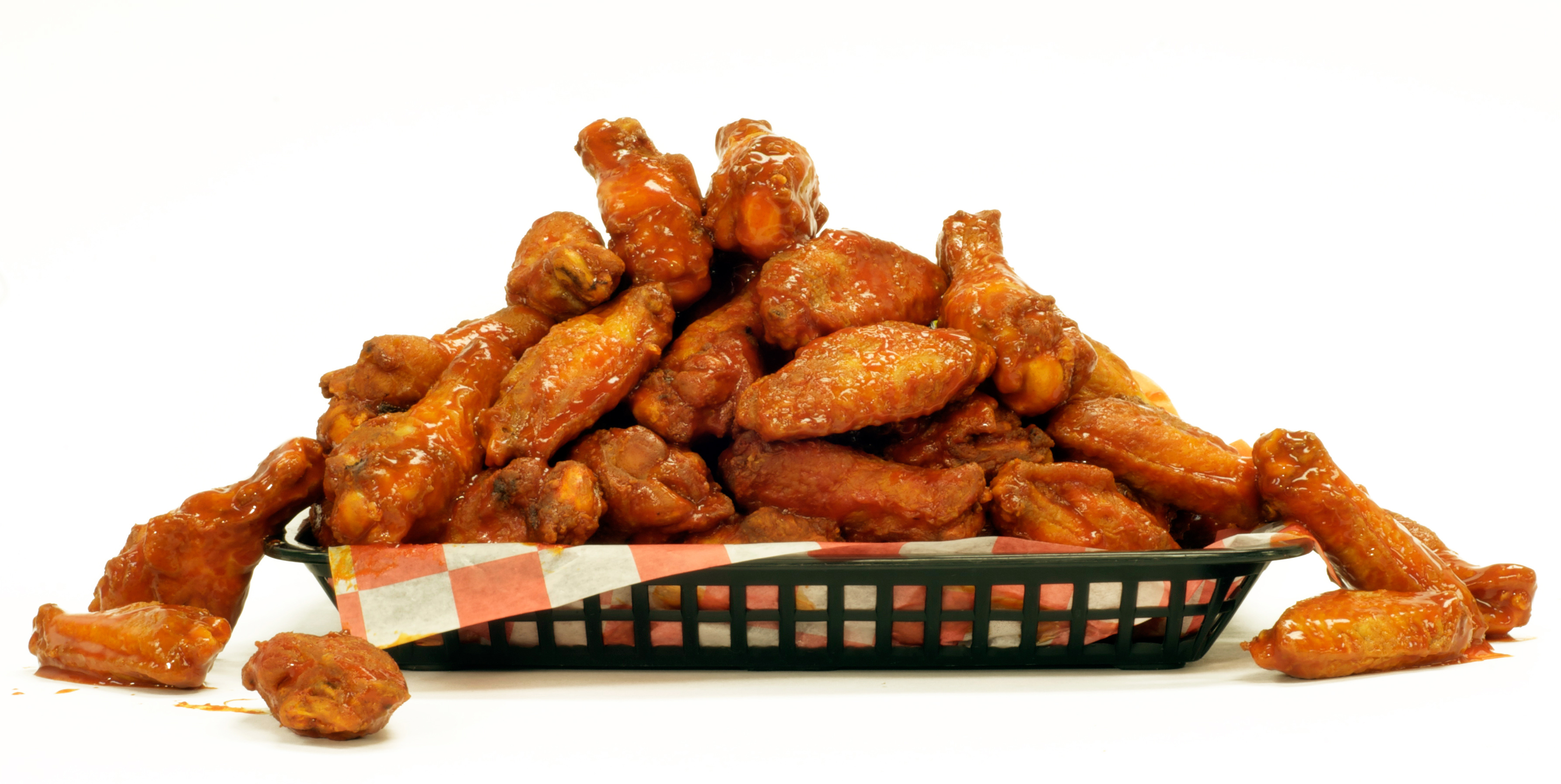
    Which brings us to the chicken wing. Many people believe that a chicken wing — simply a wing, deep fried and covered with sauce — is a chicken wing. Many people believe that these are easy to make and hard to screw up. They’re all the same, right? Worse yet, people even believe that wings at Buffalo Wild Wings, Hooters, or TGI Fridays are real wings.

    Well, I’m here to tell you that these people are wrong — and probably communists.

    If you have never been to a little independent bar or restaurant — and this is where the magic happens, a place where the kitchen can be creative and not follow a franchise recipe — and you have never tasted a great chicken wing then it’s easy to think this. Sure, there is some comfort in not knowing. But, you have a hole in your life that needs to be filled.

    When I was twelve years old I got glasses for the first times. I was sitting in my mother’s car after the doctor’s appointment and I put the glasses on. I can still tell you — forty years later — how my world went from fuzzy and foggy to crisp and in Technicolor in seconds. Pow. But before this moment, I never knew the world was like this. I didn’t know what I was missing. It’s the same with a great chicken wing. Your world will never be the same.

    The history of the chicken wing began on a Friday night in 1964 in a place called The Anchor Bar in Buffalo, NY. Now the story is a little unclear of whether Dominic Bellissimo — the son of the owner, Teressa Bellissimo — was returning from college that night or was actually working the bar. But what is known is that when Dominic’s friends got there, they were all very hungry. So Dominic asked his mother to cook them something. Teressa went into the kitchen and found some chicken wings that were there to make stock. She deep fried them, covered them with a hot sauce mixture, and served them. They were a hit, and Buffalo chicken wings were born. (No, the name has nothing to do with the endangered, horned animal of the great plains.)

    And now, fifty years later, you can have Buffalo wing potato chips and Buffalo wing pizza.

    So the question is, does the birthplace of the chicken wing make the best chicken wing?

    The answer is yes. Yes it does.

    And no.

    Being brought up in upstate New York I have had some great chicken wings in my life, made by some great chicken wing masters. And I will tell you that the wings at The Anchor Bar — the original site on Main Street in Buffalo — are absolutely the best I’ve ever had. Bar none.

    They are crispy, but moist. Flavorful and rich. And the sauce…all I can say is wow.

    Yes, The Anchor Bar makes the best wing.

    But, big stipulation here, only at their original location.

    Recently, The Anchor Bar has expanded and now has several locations; at the Buffalo Airport and other locales across Western New York. I’ve eaten at a few of them and the magic is just not there.

    Now if you travel to Buffalo, you will hear some smack about a place called Duff’s and there is a pretty heated rivalry between Duff’s and The Anchor Bar for the best Buffalo chicken wing. So, I’ve eaten at both and my vote goes to The Anchor Bar, hands down. The sauce at Duff’s is hotter — and I always order my wings suicide-style — but making a sauce hot is not a difficult trick since there are so many pepper extracts on the market.

    So the best chicken wing in the country — and possibly the world — goes to The Anchor Bar.

  • Take the 30-day, buy used, challenge

    Take the 30-day, buy used, challenge

    actually thrift

    Okay, here is an exercise.

    Let’s say that something bad happens — some financial catastrophe — and you need to come up with an enormous amount of money quickly. And for the sake of this exercise let’s also say that you have already tapped into your savings, your 401K, your lines of credit, cash advances and anything else you can think of. All the traditional methods are exhausted and you still need cash. A lot more. So now all that is left are your things. Your stuff; the things you own. All that you have to sell are those very items you see and use everyday.

    But how much are those things worth? — not how much did they cost, but how much are they really worth? — because a baseball card might have a value of a thousand dollars but until someone puts that amount in your hand, its value is undetermined.

    In this financial scenario, if you had to sell all the things you own, outside of owning a box of gold coins or having a few Corvette’s in your garage, the true value of what we have — meaning what someone else would pay us for them — is actually very small.

    Our flat screen TV may have cost three grand, but if no one is going to give us  three grand for it — especially if it’s a few years old and is no longer the hot technology — it’s probably worth a hundred or less.

    Outside of owning luxury items or precious stones and metal, the contents of an average four bedroom home would sell in an estate sale for $6,000.

    Not bad. Except that the replacement cost of those same items would be  $20,000. Meaning what we pay $20,000 for items that have a street value of $6,000.

    Here’s an example. A few years ago I splurged and bought my wife a very nice gold chain — a jewelry store near our home was having a big sale and a 14 carrot gold chain that would normally be $1,200 was now $800.00. So I bought it. And just out of curiosity — just because I wanted to gloat on what a bargain I had gotten — I stopped at a pawn shop on my way home. I said that I might be interested in pawning the piece and wanted to know how much I would get for it. The gold was tested and weighed and an offer was made.

    $140

    My $800 purchase had a true value of $140.

    Now, I might have found a slightly higher offer at another pawn shop. Maybe. But the highest offer someone had given me was $140 so that was the current value.

    I still gave my wife the necklace — it was a gift and it was not about the money — but it did get me thinking.

    Now this discussion is not about how to get the highest dollar for your things when you sell them. It is demonstrating that anything we buy new — and I mean anything —- the value depreciates just like a car. A $200 microwave has a resale value of around $50. A $100 vacuum cleaner would sell for $30 and a $600 lawn mower would get you about $75. That is the true value of those items.

    So here is the challenge. Take a month and be resolved to be on the other side of this curve. For one month. For thirty days. Vow to buy all the items you need — every coffee maker, every shirt, every book — used.

    Instead of running to Wal Mart on your way home — stop at The Good Will instead. And when you need to swing by Radio Shack, hit the local Pawn Shop. Instead of Target, pick up a few things at The Thrift Store or scan Craigslist.

    Just do it for thirty days — it  won’t be as convenient and it may take some patience — but vow to do it for one month.

    And let me know what happens.

  • How to make homemade soup

    How to make homemade soup

    soup

    The concept of soup is as old and established as the act of cooking itself. In fact, the very first item cooked — and I’m not referring to tossing pieces of a raw buffalo or venison over a fire but the first meal — was most likely some kind of soup.

    Soup dates back to primitive man and there is evidence of soup as far back as  6,000 BC. Now, this was the days long before waterproof pots were around to boil liquid in, so rocks would be heated in a fire and then dropped into a hollow log, goard or reed basket full of water. Then meats and vegetables were added. And boom. You have soup.

    Now, the word soup comes from either the French word for broth, or the German word for soak — no one is really sure. But the experts do agree that the word restaurant is from another French word, originally meaning a place to buy soup.

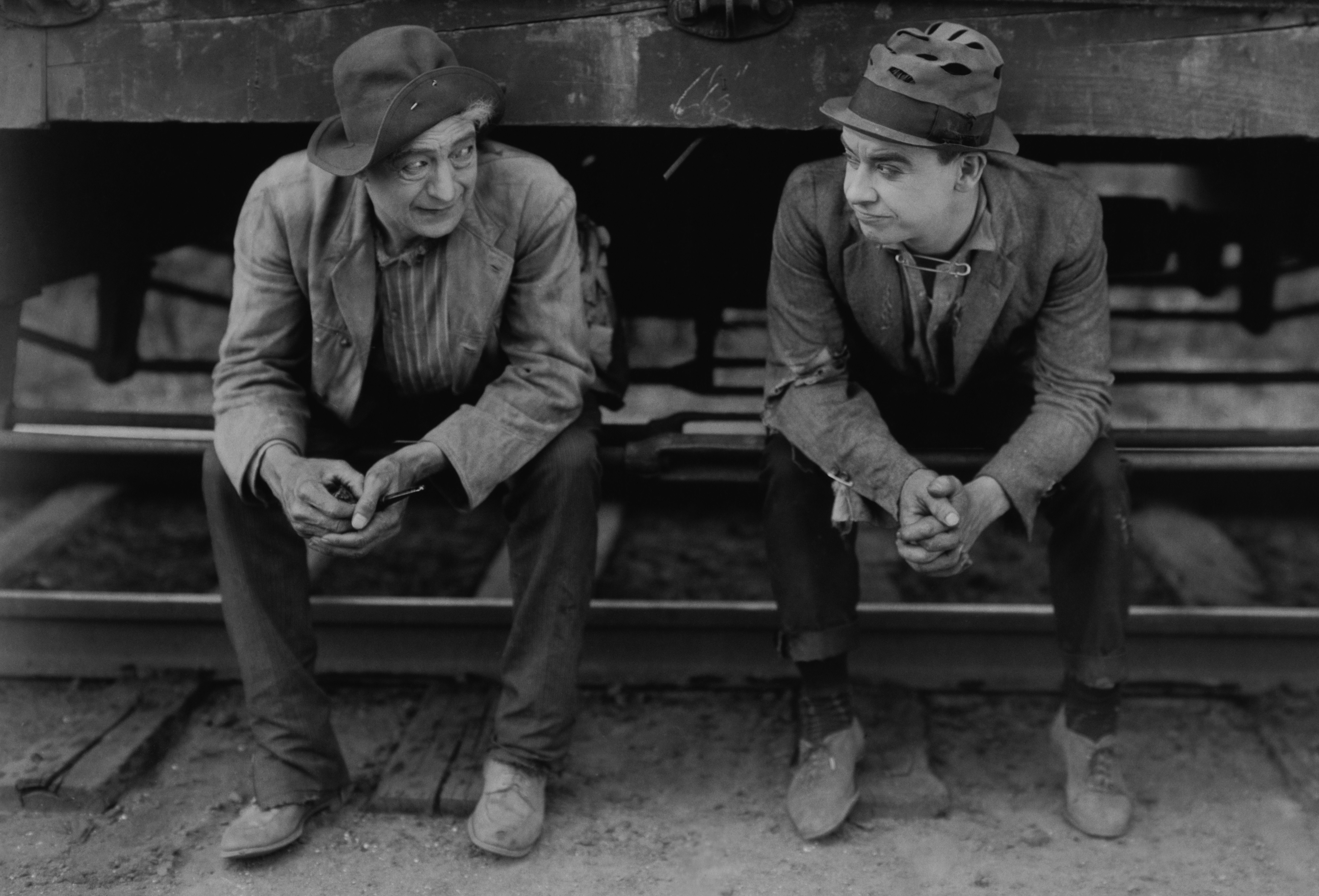
    In the hobo jungles of the 1930’s there was always a pot of soup simmering over the fire. There, the hobos could jump on and off the freight trains and add whatever they found along their travels — a few carrots, an onion, some potato — into the communal pot.

    To us men, knowing how to make homemade soup is crucial. First of all, it gives us a low cost food source. We can make soup for pennies and in fact the cost to make a pot of homemade soup is roughly half the cost of canned soup —- http://juliemcm.blogspot.com/2010/11/canned-soup-vs-homemade-cost-comparison.html . Soup is also a great way to reuse leftovers as well as a method to stretch food farther. And if you hunt, soup is the perfect way to mellow the gaminess of meats. And like all peasant dishes — chili, ratatouille, shepherds pie — homemade soup is easy, hearty, fun to make and feeds many.

    HOW TO MAKE HOMEMADE SOUP

    There are many methods to make homemade soup but this is the method that I have been using for years. It’s simple, basic and allows you to add or change anything along the way.

    The trinity. Onions, garlic, celery. In a pan with some butter and olive oil, fry some sliced onion, garlic and green pepper. You want to sweat these bit — soften them up — but not brown them.

    Into the pot. Place the Onions, garlic and green pepper into a stock pot and set aside.

    Meat. It’s not required to use meat or chicken in soup. In fact, I often think the meat takes away from the flavor of a really hearty soup. If you do not want to use meat, potato is a great substitute because it is so dense but a little known secret is rutabaga. Rutabaga is extremely dense and cooked over long times in a soup it softens up but still remains firm — it also gives the soup a strong flavor. But if you are going to use it, this is where you do. Brown your chicken or you beef in a pan. Once they are browned place them in the stock pot.

    Vegetables. Now you want to add in your core vegetables in — carrots, green beans, peas, whatever you want. The only rule is, fresh not canned. I know it may seem like an extra step but fresh vegetables are actually less then canned and the flavor will be noticed.

    Liquid. Add your liquid to the stock pot, completely covering everything and there is only one rule here. No water. You can use anything — and I mean anything — but water. Beer or wine works great and so does apple or tomato juice — I even know one guy who saves the leftover coffee as his soup stock. And of course, you can use beef, vegetable or chicken stock. Now store bought stock is okay — and I mean just, okay — but nothing beats stock from scratch — the next time you cook a chicken or a ham, save the bone. Toss it in the freezer and make your own stock — and remember, stock can be frozen and saved and thawed out when needed.

    Here is a great stock recipe —-

    http://southsidermagazine.com/2012/10/homemade-stock-is-the-backbone-for-any-soup/y that saves

    Spices. Remember to spice in layers, not all at once. And keep tasting until you get where you want to be.

    Simmer. Once everything is mixed in let the soup simmer. How long is up to you but the longer it simmers the more the flavors marry.

    Experiment and enjoy.


  • How to Create a Budget

    How to Create a Budget

    budget

    When my wife Debbie and I were first married, we were on a very strict budget — I mean a death grip budget — where every dime was needed and every penny was accounted for. And even though we were extremely strict with our money, we didn’t go without. We didn’t go hungry and we didn’t go in debt. In fact, it was not even a difficult financial time for us but more of a disciplined one; a lean but happy one. And actually it was because our household budget was so severe that this was an extremely secure and safe time for us — because no matter what happened financially, we had a budget envelope set aside for it.

    Now, my routine at that time was pretty set as well. Every payday I would leave work at lunch to cash my check and when I did, I had the guilty pleasure of peeling off the very top seven dollars — we had calculated both our checks down to what was needed and mine held an extra seven bucks in it — and I would get to just blow that money. The bulk of the check was converted into cash to be taken  home and placed in the various envelopes where it was needed but that first seven bucks, that top seven bucks, was all mine, baby. And that meant I could spend it on — any — thing — I — wanted.

    And I did.

    [amazon asin=B00NAY3L9U&template=iframe image][amazon asin=B00HLUUBSS&template=iframe image][amazon asin=0451416600&template=iframe image][amazon asin=B006LH5UJ2&template=iframe image]

    It took me about nine minutes.

    Because the bank we used on Court Street in Binghamton, NY was only a block away from the greatest delicatessen north of Flatbush: The Old World Deli. And every Friday, I would wait in line with the downtown lunch crowd along with the smells of pastrami and corned beef and I would order a sandwich the size of my head, a pickle and a drink. And even though I would try to make the lunch last, even though I would try and savor it, the meal would be over in less then ten minutes. And once again I would be broke.

    Happy, but broke.

    Now this type of severe budgeting is not a great way to plan because it breaks the first financial rule of, pay yourself first — and pay yourself more then seven dollars. And it also shows what happens when you are ultra strict about your finances — and what happens when you do get a few bucks in your pocket.

    But, it worked for us.

    CASH IS KING.

    Now, the best and most pure method of creating a budget is to use a cash system. A simple cash envelope system — separate envelopes marked with each budget area and then placing the cash needed in each envelope — is the best method by far. No math errors. No confusion. If you don’t have enough money in the envelope, then you don’t have enough money for that item.

    However, whether we like it or not we are very close to becoming a cashless society. Our paychecks are directly deposited. Many of us pay bills electronically and other items we need we use our debit or credit cards — and electronic bits and bytes bounce back and forth where dollars and coins once did. In fact many economists estimate that paper checks may be completely obsolete by 2020.

    On top of that, we are becoming a society that is not only e-payment friendly, but is actually becoming cash-resistant. Because the business world doesn’t want you to use cash.

    Why?

    Well, from the merchant’s perspective, the less cash a business takes in means less risk of error or theft. It also means there is less need to make physical bank deposits and if you are purchase from a line of credit, then your buying power has increased. So a merchant sells less to those using cash than those using a line of credit.

    From a banking perspective, credit card interest is a financial goldmine but even using debit cards make banks a lot of money — I mean a lot of money. Because every time you use your debit card as a credit card, the merchant pays a bank fee. And every time you use the debit card as a debit card, the bank will either charge you a POS (Point Of Sale) fee, or build in a monthly cost into your account. In fact, many banks are raising these POS fees to discourage consumers from using the cards as debit cards, because they can make so much more income by charging the merchants for the credit transaction.

    And from a consumer perspective, it’s simply becoming easier to use credit or debit cards. We can now use cards in vending machines, in parking meters and many stores have drastically dropped — or completely eliminated — purchase limits on credit and debit cards; which means we can buy a pack of gum or a soda and put it on a card. And since our payroll is often direct deposited anyway, using the debit card from our account just saves a step of running to the bank or ATM.

    So how do we create a cash budget in a cashless society?

    Well, the best way to do this is to use cash in those areas that we have the most flexibility — and therefore the largest margin for error.

    HOW TO CREATE A BUDGET.

    1. Gather data going out. Grab all your bills, statements, account data and begin listing all your expenses — and not only monthly expenses, if you pay something once or twice a year you need to take a portion out for that monthly. Include in this list everything; car insurance, mortgage or rent, car payments, entertainment, groceries, utilities, dry cleaning, garbage services, car maintenance, retirement or college savings, vacations. Everything.

    2. Gather data coming in. List all the monthly income. Record all of your sources of income — if you do something once or twice a year that earns income include that along with your regular income.

    3. Breakdown expenses. Everything you owe is in one of two categories. It’s either fixed — meaning it is the same payment month after month — or its variable — meaning the expense can change, such as  groceries, entertainment, vacations, etc. Use cash for all your variable expenses.

    4. Total everything. If your total for expenses is less than the total for income, good. We’re off to a great start. This means you will have some wiggle room to whittle down any debt you have or save and invest. If your list shows more expense going out then income coming in, you’ll need to make some changes. Usually this is tied to a high debt load, so look at that first and see what can be done to reduce it.

    5. Adjust, adjust, adjust. It will take about three months to tweak your budget so it works for you. There will be items you forgot or things change. The more accurate the budget is, the more of a tool it will be for you.

    And remember a high income is not needed for financial security — the more you budget and stay out of debt, the better you will be. My cousin, Rena, was the sole breadwinner of her family. She bought a house, raised two kids, put them both through college and has a nice retirement lined up, all on the salary of a McDonalds Manager.

  • How to build a Hobo Stove

    How to build a Hobo Stove

    hobo

    If you are under the age of eighty, then you — like most of us — have not lived through a true worldwide economic depression. Oh, we have all seen economic challenges — layoffs, rightsizing and recessions — but few of us were alive to experience the prevailing effects of The Great Depression of the 1930’s.

    During this time, jobs did not simply become scarce, they just vanished. Banks collapsed. Manufacturing stopped. Crop prices were cut in half and virtually overnight the country changed and remained changed for nearly a  decade.

    Imagine what happens when a country of men wake up and in spite of their best intensions and efforts, they can no longer take care of themselves or their families. Over time, the strain broke many of these men — because underneath subsistence is survival but underneath survival is hopelessness.

    Very few of us know what it’s like to live in a world when money was not simply hard to come by, but for many American’s it just didn’t exist any longer. Bartering became a common method of commerce and many people simply worked for food and shelter.

    Ironically, the group of people that faired the best during this time was the  American farmer — those located outside of the dustbowl Midwest. Even with low crop and meat prices, the American farmer had enough food for his family as well as had goods to trade with.

    With these farms surviving, migratory workers would travel and seek out the seasonal seeding and harvest work available. This was fueled by the fact that with homes being foreclosed on and with little cash for rent, there were more people living a transitory lifestyle then ever before — moving from town to town seeking what work could be found.

    Now, the most colorful group of travelling men during this time was the American Hobo. The term hobo is believed to come from the phrase ho-boy, referring to the great groups of farm and field workers that competed for migratory work. These men would travel light and stay on the move — often by sneaking aboard freight trains — looking for work, a meal and if possible a little adventure.

    The modern term hobo is often used when referring to anyone homeless but this is not accurate.

    Remember …

    A hobo is someone that travels looking for work.

    A tramp is someone that travels but does not work.

    And a bum neither travels nor works.

    The general philosophy of the hobo — and of many American’s during The Great Depression — was simple: waste nothing, throw little away and make do with what you can find.  And from this, the hobo stove was born.

    Now, there is no evidence that the hobo stove was actually created during the 1930’s. It’s such a simple design — made simply from old cans — and a stove similar to it was used in World War I. But it was commonly used during this period and often associated with it.

    A hobo stove is a simple stove made from discarded food cans — a coffee can is often used but you can build the stove with larger or smaller cans — that allows air to ventilate it and an area to feed fuel in. These stoves are cheap, easy to make, relatively efficient and can be burned at no cost because they burn sticks, pine cones, wood scraps, cardboard, pretty much anything you find along the way. And because they burn pretty much anything, you will never run out of fuel.

    In the modern world, Hobo Stoves are great little devices to have. They can be used during power outages, as a camping stove, while hiking or backpacking, to distill water in or as part of a survival kit.

    Now there are many designs to a hobo stove, but here is a real simple one — and remember, they don’t need to be too pretty they just need to work.

    [amazon asin=1586489011&template=iframe image][amazon asin=B00IK6HKFE&template=iframe image][amazon asin=B000HEKR98&template=iframe image][amazon asin=B007WHCFC0&template=iframe image]

    HOW TO BUILD A HOBO STOVE:

    1. Find a base can for your stove and a slightly smaller top can. You can make this stove as large or as small as you want. I wanted to build a light backpacking stove here, so I used a spaghetti sauce can for the base and a dog food can for the top, but I’ve seen these stoves made out of large #10 food cans for those wanting full sized camp stove.

    2. With a ‘church key’ style can opener, place some holes along the bottom base can. These are to draw air in and up through the stove — it’s important to have some space between holes though so you have stability at the base of the can.

    3.  With a nail, punch some holes in the side of the can, center, for ventilation, as well as four additional holes  — an inch from the top — for the support pins. The small holes in the center will add some additional ventilation and the four peg holes need to be directly across from each other as the pegs that will support the top half will rest on it. Make sure the holes are equal distance across, as you want this stove to be as stable as possible so the pot on top of it is centered.

    4. Place two pins across the can for support of the top can. Metal tent poles work great for this and you can even use coat hangers but you’ll need to find the thicker, heavy coat hangers to use. A standard coat hanger will be too thin and not work here. Remember, this is where the top can, the pot and a few cups of water will be supported. The ones I used metal from a metal bathroom shelf that I rescued from the trash. I cut off a few tent pole sized pieces, straightened them and bent the edges down.

    5. Cut the bottom out of the top-can so it becomes a metal tube. You can try to use a can opener on some cans but this one had a rounded edge so I just poked a hole in it and then used tin snips. Bend the sharp edges in with pliers.

    6. Cut a “V” shaped section out of the top can. This will be used to feed the fuel down into the stove as well as allow the opposite side of the can to become a wind screen. Bend any sharp edges back with pliers.

    7. Set the top-can down into the bottom-can until it rests on the pins. You want your pins to be across parallel with each other not making an X. Although by crossing them might be more stable, you will be placing fuel down past the pins and don’t want anything to get hung up.

    8. Find the pot you will be using. This should really be done earlier in the process, then you can identify the size stove you want based on the pot you will be using — as well as the place it will be stored. But I got lucky here and found this great little coffee pot in my basement — it had a small pinhole in the side that I patched with some J-B Weld and it worked great. The size of the pot was small enough but the right size so the entire stove fit perfectly inside of it — even allowing room for my silverware, fire starters, and other items to be stores. It’s difficult to tell in these photos, but this pot is very compact and is only 6” high. The perfect size for a small backpacking stove.

    9. Cover stove and pot with high temperature spray-paint. You don’t have to take this step, but by covering both the stove and the pot you are not only protecting it but making it more difficult for the tars and oils from the fire to build up on the surfaces. High temperature spray paint can be found in any hardware store.

    Test your gear. If you need to make modifications it’s easier to do this at home. Try the stove at least once before using it in the field and anything you don’t like, just change and tweak until you have it exactly the way you want it.

    I tried this stove and I had water boiling in about four minutes — using just a handful of twigs and leaves from my backyard as fuel. Total cost ended up being zero because I recycled the cans and pegs and found the coffee pot in my basement.

    Remember: keep the design of the stove simple as you don’t need a device to simmer a five hour brisket in. These stoves were designed to quickly cook a few  stolen eggs before breaking down camp and catching the next freight out of town.


    BIG ROCK CANDY MOUNTAIN

    First recorded by Harry McClintock.

    1928

    The Hobo Theme song.

    One evening as the sun went down
    And the jungle fires were burning,
    Down the track came a hobo hiking,
    And he said, “Boys, I’m not turning
    I’m headed for a land that’s far away
    Besides the crystal fountains
    So come with me, we’ll go and see
    The Big Rock Candy Mountains

    In the Big Rock Candy Mountains,
    There’s a land that’s fair and bright,
    Where the handouts grow on bushes
    And you sleep out every night.
    Where the boxcars all are empty
    And the sun shines every day
    And the birds and the bees
    And the cigarette trees
    The lemonade springs
    Where the bluebird sings
    In the Big Rock Candy Mountains.

    In the Big Rock Candy Mountains
    All the cops have wooden legs
    And the bulldogs all have rubber teeth
    And the hens lay soft-boiled eggs
    The farmers’ trees are full of fruit
    And the barns are full of hay
    Oh I’m bound to go
    Where there ain’t no snow
    Where the rain don’t fall
    The winds don’t blow
    In the Big Rock Candy Mountains.

    In the Big Rock Candy Mountains
    You never change your socks
    And the little streams of alcohol
    Come trickling down the rocks
    The brakemen have to tip their hats
    And the railway bulls are blind
    There’s a lake of stew
    And of whiskey too
    You can paddle all around it
    In a big canoe
    In the Big Rock Candy Mountains

    In the Big Rock Candy Mountains,
    The jails are made of tin.
    And you can walk right out again,
    As soon as you are in.
    There ain’t no short-handled shovels,
    No axes, saws nor picks,
    I’m bound to stay
    Where you sleep all day,
    Where they hung the jerk
    That invented work
    In the Big Rock Candy Mountains.