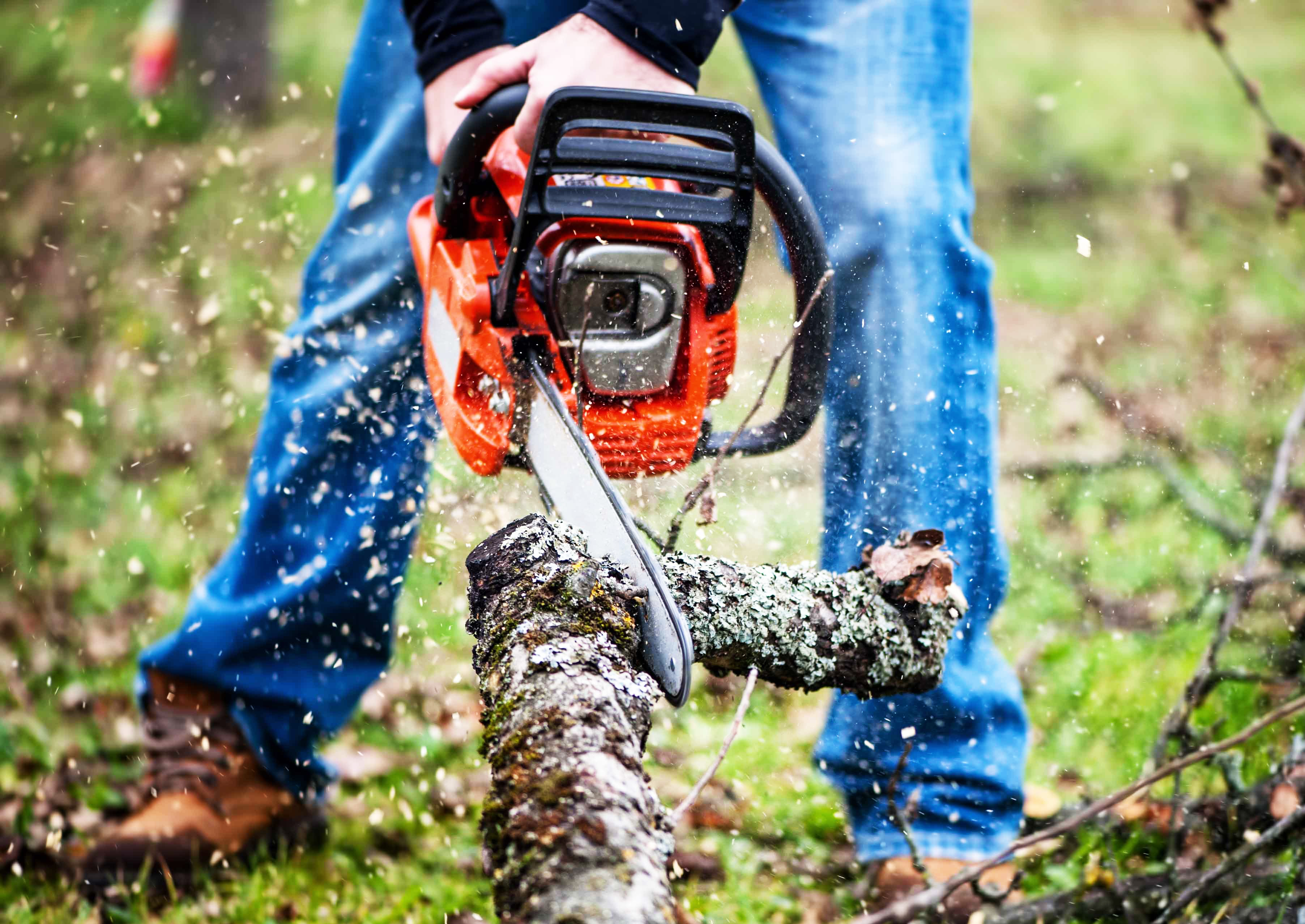
Well, yeah, it can rip your arm off, sure. And yes, it’s true that with the chain rotating at 60 miles per hour it’s the equivalent of holding a small car engine in your hands. Yes. This is also true. And there is the risk of flying pieces of wood and of the saw bucking and on you and — well, I haven’t even got to the series of films set in Texas.
Yes, there are many, many cautious warnings to be said about chainsaws. Chainsaws are powerful, formidable pieces of equipment which is part of the reason that logging tops the list of the most dangerous careers.
TOP 5 MOST DANGEROUS PROFESSIONS:
1. Logger
2. Professional Fisherman or Shrimper
3. Pilot
4. Garbage Men
5. Truck drivers and route salespeople
But there is something very interesting about that list. First, logging as a dangerous industry is only partly due to the chainsaws and other equipment and also due to the twenty-ton tree that has to fall just right — as well as the need to climb high trees and cut limbs. But what’s even more interesting is that if you look at the people who are logging and cutting down trees for a living, the majority of them are doing it by choice. In fact, many of these loggers are highly educated people that take a season off and work in the woods for something different. Whereas the majority of folks that work in the fishing industry will tell you that if they could find something as lucrative close by that was less dangerous, they would probably take it.
[amazon asin=B001DO1OMK&template=iframe image][amazon asin=B000GQ7IJE&template=iframe image][amazon asin=B00CLL6Z3C&template=iframe image][amazon asin=B000VSDHAQ&template=iframe image]
In fact, we have a friend of ours, Adam, who completed law school and passed the bar exam four years ago. He paid for law school by cutting down trees and is still doing it full time today. When my wife asks him when he is going to start practicing law, he’ll just smile and say, “I’ll get to it.”
As adventurous as boats and the open waters are, there is something to be said about the lure of man and the woods.
So, if you’ve never used a chainsaw before, here is one good reason to consider it.
Money.
Although I’m not advocating taking on a large tree removal project on your own instead of paying a professional — absolutely not — but from a purely financial viewpoint it’s hard to argue that the cost of even a small tree project could pay for three chainsaws.
Also, if you burn wood, there is no shortage of free wood around. Take a look on craigslist and there are many posts on wood that is free to whoever will pick it up and hall it away — and then cut it up and split it. And neighbors and friends are always having trees removed and are eager for someone to use the wood.
And if you’re looking for a little side business, there is money to be made for those who are willing to take wood, split it, season it and deliver it.
With a few exceptions, the majority of the firewood we use is free. In fact, I can easily justify using our fireplace instead of investing in a woodstove or insert because even though the fireplace is only 30% efficient — with the majority of heat going up the stack — the fuel is free so it doesn’t matter.
Now, there are a few rules in choosing a chainsaw and the first is that an electric model doesn’t count — getting an electric chainsaw is like getting an electric lawn mower and that’s just silly. Anything you can cut with an electric chain saw you can do yourself with a six-dollar bowsaw just as quickly. And then there is the cord, and if you have to use multiple cords because of distance the current draw will be significantly weaker, so —. No. Get a gas powered chainsaw.
But with that said, get a model you are comfortable handling and using. Don’t get the Paul Bunyam 9000 just because it looks cooler. If it’s too heavy to hold it’s going to be too heavy to control. In fact, before you choose a chainsaw, borrow or rent one instead. Get an idea of the size and blade configuration you are comfortable using.
And FYI, for a beginner, a bar type blade is more practical than a bow blade.
HOW TO USE A CHAINSAW.
1. Survey the area where you are going to work. Is it large enough? Are there obstructions, nearby cars and buildings, or things you can trip over? Is there a path to move way if there are falling limbs or debris?
2. Understand the vernacular.
Felling — the act of cutting down a tree.
Limbing — removing limbs from the tree before it’s felled.
Trimming — cutting back or taking off branches on a limb.
Bucking —- cutting the trunk of the tree into usable pieces.
3. Fill the gas tank with the correct fuel — typically this is one gallon of gasoline to 5 ounces of two cycle oil — the equivalent of what you put in your string trimmer.
4. Understand the kickback zone. The tip upper corner of the chainsaw is known as the kickback zone. If the kickback zone comes in contact with something while the chain is moving, the saw will kick up and back toward you — that’s why modern chain saws are equipped with a chain brake designed to stop the chain if a kickback happens. You want to always cut from the bottom of the bar and avoid the top because with the spinning chain the majority of injuries occur when using this part of the blade. In fact, cutting with the bottom of the bar is the most smooth and natural way to cut and the easiest way to maintain a grip.
5. Get your protective gear on. A helmet with a face screen is not a bad idea but the required gear would be steel-toed boots, thick leather gloves, ear protection, safety glasses, and long pants — logging chaps if you have them.
6. Start the saw. With the saw sitting on the ground, put the toe of your right boot into the back handle loop and grasp the front handle with a stiff left arm. Pull the starter handle to fire up the engine. Push in the choke and take it off fast idle, then pull the chain brake back toward the front handle to release the chain brake for cutting.
7. Take the saw for a spin. Get the feel of it. Cut only when you are in a comfortable, well-balanced position with your feet about shoulder-width apart. Stand to one side of the saw, never directly behind it.
RULES OF THE ROAD:
•Keep the chain sharp. A dull chain is unsafe, hard on both the bar and chain, and it overworks you and your saw.
•Understand the bar’s kickback zone and avoid getting into kickback situations.
•Never cut above shoulder height.
•Work on the uphill side of trees so they’ll roll away from you instead of over you.
•Whenever you aren’t cutting, the brake should be in the locked position.
•Start all cuts with a full throttle before touching the wood.
•Avoid touching the ground with the chain because even a brief encounter will severely dull the cutting teeth.
Leave a Reply