History
Believe it or not, there is actually a great deal of controversy surrounding who actually invented the spark plug — pretty funny, huh?
In one camp, there are those that believe the credit should go to a man named Edmond Berger, who supposedly created the first device on February 2, 1839. But since Berger didn’t patent this invention and there is very little to document it — or provide verification on why the February 2nd date is always used — the title can’t officially go here.
Then there are others that give the credit to a Frenchman named Jean Lenoir in 1860, who used an electric spark plug in a gas engine that he had created — but again, no patents were filed and there is little documentation.
The actual paper trail begins in 1898, when the famed Mr. Nikola Tesla — the creator of the modern AC electrical system — filed a patent for a sparking plug within his ignition timing system. And then another patent was filed in 1902 when Robert Bosch designed a plug for his magneto-based system.
But there is little doubt that the development of what is today the modern spark plug came from an engineer named Gottlob Honold who was working for Bosch in 1902, and took the plug closer to what it is today. And from there, manufacturing developments were made by Albert Champion in creating the insulator and completing the task in 1930.
What is a spark plug?
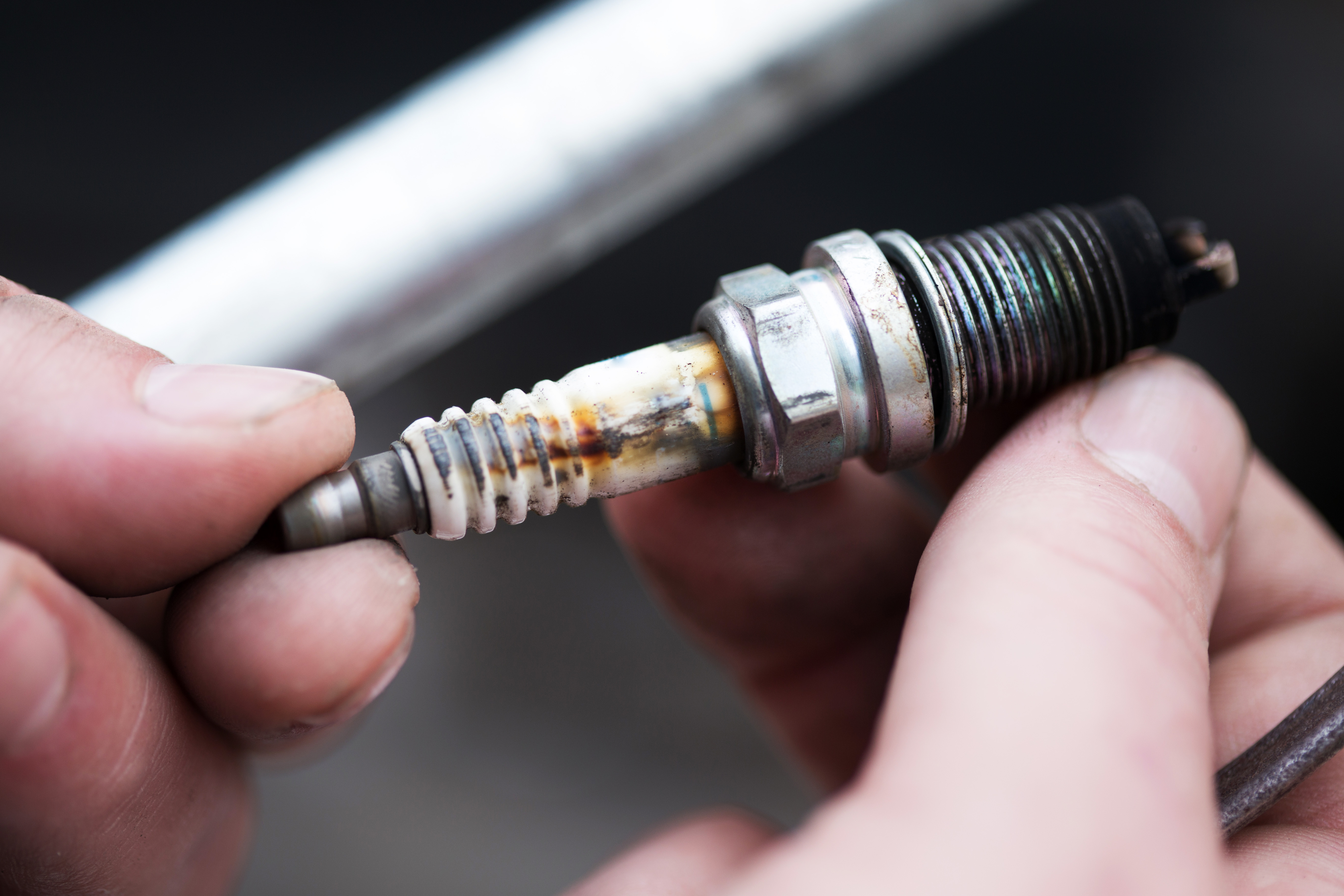
A spark plug is device that has a metal threaded shell surrounded by a porcelain insulator. It is screwed into the cylinder head of an engine and forces electricity to arc across a gap in order to deliver electric current from an ignition system to the combustion chamber of an engine. That’s it. It provides a consistent spark to keep the combustion going and the cylinders moving so the engine keeps moving.
Maintenance
When a spark jumps the gap between two electrodes, it actually burns off small amounts of metal each time. As this continues, the gap widens to a point where the spark cannot make the jump any longer. This is when the engine begins to misfire, your mileage goes done, you have trouble accelerating and the horrible CHECK ENGINE light comes on.
Which means that it’s time to change your plugs.
Now if you’re intimidated by changing your own spark plugs, don’t be. If you can change your oil filter and oil — and even if you have never done this, you can — then you can replace your spark plugs. And remember, each time you do yourself, you pocket the hundred dollars in labor that it would cost you to have it done in a shop. And that adds up pretty quickly.
HOW TO CHANGE YOUR SPARK PLUGS
So here you go. Nine easy steps to go through to replace the spark plugs in your vehicle.
- Buy the correct plugs for the vehicle. At your auto parts store there will be cross reference material for your vehicles make and model and the appropriate spark plug size.
- Gently, disconnect one spark plug, from one spark plug wire. There are two important points here; the first is the word, gently — not yanking, but disconnecting — and the second is the quantity of one. By changing one plug at a time you will always get the right plug back with the right wire.
- Clean the spark plug area with an air canister. This is important because it will prevent any dirt and crud from falling into the cylinder — which as far an engine is concerned is the same as a human getting a germ.
- Unscrew one plug. Using a spark plug ratchet, or the spark plug socket that comes with most socket sets, unscrew the plug by turning counterclockwise. Once the plug is loose enough, just finish by removing it by hand.
- Determine the plug gap. Each engine will have a determined gap that the plug point will need to be. You can get this gap from the vehicles owner’s manual, or it’s included in the decal under the car’s hood. Creating the correct gap is important because it will set it at the exact distance it needs for ideal performance and fuel efficiency.
- Gap the plug. Take your gap gauge, insert it between the bottom of the plug — the inner electrode — and the hook on top — the outer electrode. With the determined gap, bend the hook lower or higher to match the specific gap
- Insert plug. Slowly screw in the spark plug by hand until it’s firmly secure. Finish by tightening with the ratchet.
- Reattach the plug wire. Using a twisting motion, position the boot above the plug. When you hear a click, you’ll know the wire is connected to the spark plug.
- Repeat these steps with the other plugs.
That’s it.

Leave a Reply