

I tried to break my fall with my right hand, and that’s when the bones snapped — I mean, you could actually hear them break. I rolled over, got up off the floor, and just stood there. Waiting. The wrist looked okay. My fingers could still move. But that sound, that snap, was still in the air, and I knew something bad had happened. Then the pain arrived –sharp and intense, and then the arm began to swell and discolor.
Later, the x-rays would show that the wrist wasn’t just broken; it was crushed. But all four bone pieces were still there, and we might be able to avoid surgery if we could cast it, keep it still, and hope for the best.
Why am I telling you this? What does breaking my wrist have to do with talking to Matt Cox, one of America’s most notorious fraudsters, someone who is estimated to have stolen $15 million, was sentenced to 26 years in federal prison, and once held the number-one spot on the Secret Service’s most wanted list?
Well, everything.
Once the cast was on, my wife banished me to the couch, propped my arms with pillows and ice packs, and told me to stay there. So I did. And if I was real still, then the pain was minimal. So I sat and watched YouTube videos on my phone, which was propped against my cast.
If I hadn’t broken my wrist, if I hadn’t had to just sit quietly for days at a time, I couldn’t have justified spending eight straight hours watching video podcasts of Matt Cox on a channel called Koncrete.
Matt Cox began his career as a mortgage broker in the late 1990s. On his very first deal, a coworker advised him to alter a rental history document that showed the client had been 30 days late paying rent, which would have caused the loan to be denied.
Matt made the change but was nervous as he waited to hear if the loan would be approved. He had violated the underwriting guidelines—and done so on his very first mortgage application. But his car was about to be repossessed, his credit cards were maxed out, and he was behind on his mortgage, so Matt needed the commission badly.
The loan went through, and at 29 years old, Matt realized that a few cents’ worth of Wite-Out had just netted him a $3,500 commission. The money got him back on his feet . . and also broke the seal to fraud.
When clients who made $45,000 a year could only get a loan if they made $55,000, Matt, who had a degree in fine arts, manufactured new W-2 forms and verification of employment income.
Matt closed four loans his second month as a mortgage broker and six loans the month after that. Then eight. Then twelve.
He left that job and opened his own mortgage company. It had one rule: If someone walked through the door with a pulse, he would get them a loan. Matt had 14 people working under him and they were committing massive mortgage fraud.
Things changed when the FBI caught some of Matt’s former business partners on a separate fraud case that Matt was connected to. These individuals wore a wire and met with Matt. He was unaware that he was admitting to all the details of his fraud—on tape.
Matt accepted a plea deal and received three years’ probation, but now could no longer legally own a mortgage company. At this same time, Matt was going through a divorce, had given his ex-wife a large amount of money, and had a large monthly child support payment. He needed to make a living. So, he had an idea: Instead of making fake documents for people, why not skip a step and make fake . . . people? If he could create synthetic borrowers, then he could make some serious money.
Matt estimated that every synthetic person he created netted him around $500,000. And he did it for two years.
Matt Cox stole $11 million—all while on probation for fraud.
About this same time, Matt started dating a woman named Gina Laidlaw. Gina was going through a divorce, raising her two-year-old child, and having some financial issues. Matt offered a way for her to make some quick money. Since Matt was obviously doing well and all his friends who were involved seemed to be successful, she agreed.
Gina would play the part of a mortgage buyer named Rosita Perez. So, Gina—brown haired and green-eyed—dyed her hair for the fake ID photographs Matt created. Gina would show up at the closings with her ID and then go to the banks to deposit the checks.
Later that year, Matt received a tip from a friend that the FBI planned to arrest him in a few days. He had over a million dollars in various banks, but couldn’t easily withdraw it, so he gathered the $80,000 he had in cash and went on the lam.
By this time, Matt had stopped seeing Gina and was dating a woman named Rebecca Hauck. She showed up at Matt’s house to find him frantically packing his things. Matt explained that was going on the run from the FBI, along with the crimes he had been committing. Rebecca listened. And then told Matt that she was going with him.
The two hit the road, and with Matt’s talent for false documentation, getting real driver’s licenses and even passports in other people’s names was never an issue. In the meantime, Gina was wracked with guilt over what she had done. A completely honest person, her conscience was eating away at her. She decided to go to the FBI and confess her involvement.
She thought she had an immunity agreement, since she had no past record, came forward on her own, and was confessing to a crime the FBI knew nothing about. But the FBI decided not to grant Gina immunity. She was sentenced to two and a half years in prison and ordered to pay $300,000 in restitution.
Meanwhile, Matt and Rebecca kept on the move and bounced from Atlanta to Las Vegas to Jamaica to Charlotte. Whenever the money ran low, Matt would use one of his new identities and buy some houses, take out multiple home loans, and rack up some credit card debt.
After a close call at getting caught, Matt decided that he and Rebecca should separate. They had about $600,000 in cash, so Matt took $100,000 and gave Rebecca the rest. Matt headed to Nashville, created a new identity, and borrowed $3.5 million.
Rebecca knew she was wanted by the FBI, but called home anyway and revealed to a family member where she was living in and that she was in beauty school. Her relative immediately called the FBI. Rebecca was found and arrested. She was sentenced to six years in prison, with five additional years of supervised release.

Not long after this, Matt’s luck ran out, too. Through a tip from someone looking to cash in on the reward for Matt’s capture, he was arrested on November 16, 2006. In April 2007, Matt plead guilty, he was sentenced one year later, on November 16, 2006, to 26 years. He served one year in various county jails and U.S. Marshal holdovers; three years in the medium-security prison in Coleman, Florida; and 8 and a half years in the low-security prison at Coleman. He was released on supervised release in July 2019.
Now, this is a riveting story and a great way to spend eight hours while you sit on a couch and wait for your bones to mend. But there was one thing that I kept going back to.
In the part of the podcast when Matt was talking about Gina, the former girlfriend who confessed to the crimes she had committed with Matt and was sentenced to prison because of it, Matt smiled and said, “She’s super cool; I talk to her all the time.”
Wait . . . what?!
You’re in contact with the person who went to prison because of you? The person whose child was taken away from her talks to you? And you talk all the time? Like . . . friends?
“I talk to Gina every other day.” Matt said.
“Really,” replied the host.
“Yeah, I talk to her all the time.”
“Wow.”
“I mean, she’s awesome. She’s an amazing person.”
I might not have thought anything about it. After all, Matt Cox is a con man and con men are liars. But after you watch hour after hour of a person telling his story, you start to create a profile of that individual. And there was one thing I had noticed about Matt Cox: He is almost pathologically . . . truthful.
I’m sure this wasn’t always the case, but when Matt’s telling a story, it’s not uncommon for him to stop suddenly and say, “This was Tuesday—wait, no, it was Wednesday—yeah, Wednesday morning.”
He would pause the story to make sure whatever small detail he was describing was as accurate as possible.
Based on the fact that Matt wouldn’t want even the wrong day of the week recorded on camera, why would he make such a bold statement about Gina if it weren’t true?
But if it was true, how is it possible that Matt Cox was now friends with a person who went to prison because of him? How is she friends with him?
In a world where we avoid people in the supermarket because they said something mean to us three years ago, where we delete Facebook friend requests from old coworkers because they gave us a poor job performance rating four jobs ago, and where we rehash all the wrongs done to us for years or even decades, this was extremely interesting.
To become friends with someone who went to prison because of you is no small task, and there are some serious internal forces working against it.
Was it possible that Matt Cox actually had a friendship with Gina and therefore had a leg up on most of us regarding asking for forgiveness and finding redemption?
It was worth finding out.
 So, I reached out to Matt. I sent him an email to his Insidetruecrime.com website to see if his friendship with Gina was actually true and told him that, if so, I’d like to interview him and write about it.
Matt emailed back and said it was true that he still spoke to Gina. Not only that, but he and Rebecca Haulk, the woman who went on the run with him and was sentenced to six years, talk weekly. And two of his codefendants talk to him. He also still talks to the guy who started the investigation into his scam.
This had moved to beyond interesting to something extremely rare. Had this convicted fraudster reached some emotional and relationship level that most of us never get to? And if so, how?
Matt and I got on the phone. We discussed the podcast interviews and I asked how he appeared so open. He had taken all the responsibility for everything he did, but there was no anger or resentment to any part of his story. Why was that?
“Because I went to prison,” he said quickly. “You can’t get away with blaming other people about your situation in prison. They won’t let you get away with it and will always call you out. What you did, got you there. You got you there.”
He added, “Also, I wrote my memoir while in prison and when I did that, I learned a lot about myself. While writing it, I quickly saw that I was pretty self-centered, manipulative, self-serving, and even narcissistic. In short, I had issues.”
While incarcerated, Matt was involved in teaching classes and was asked to write an ethics and fraud manual to help spot real-estate and banking fraud. He also took part in an intensive drug treatment program, part of which involved writing an apology letter to someone you hurt. And they had to write a letter back to you.
“When I asked my ex-wife if I could send this to her, she said, ‘Oh, yeah,’” Matt said laughing. “She said she had been waiting for 20 years to respond to a letter like that.”
Matt’s ex-wife is also now part of his after-prison life and they see each other often.
Matt admitted that the money and the wealth were very important to him at that time. They defined him. Now he defines himself by his friends, family, his paintings, and his writing.
The writing part is a combination of both the creative and business sides of him. While in prison, Matt realized he was surrounded by some of the most amazing, unique, stranger-than-fiction, and often high-profile crime stories, within the inmates all around him. And in his position as a fellow inmate, he had unlimited access to them. So, Matt interviewed these men, wrote some of their stories, optioned some, and left prison with a unique catalog of written books, treatments, options, and book proposals.
Matt wakes up at 5:00 am each morning and spends each day working on getting his new life going. In fact, all of the income he now receives comes from the books and paintings he sells online and he is working on establishing a true crime podcast.
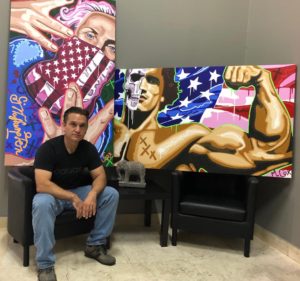
“There are some amazing people out there,” Matt said. “With some incredible stories.” Which may explain why Matt works so hard to get back the relationships he once had on the outside, as well as keep in touch with those that he met while in prison.
As we spoke, the list of people that Matt has reconnected to just kept on growing. He is currently living in the spare part of the house where his old high school girlfriend and her family live. She’s another person he admits he didn’t treat right.
“Are there people you tried to connect to that didn’t want anything to do with you?” I asked.
“Of course,” Matt said. He told me about an old friend he tried to reconnect with on Facebook who sent him a scathing response saying he’d contact Matt’s parole officer if he ever got in touch again. Matt found himself behind another old friend in a Dunkin’ Donuts drive-through. She saw him, did a double-take, then quickly got her coffee and drove away.
Although Matt is very open to his past, Gina’s view is somewhat different.
“I don’t look back at that time like Matt does,” Gina told me. “It happened, I went to jail, it’s over. I don’t really like to talk about it because I have moved on.”
When I asked how Matt reached out to her, Gina told me about receiving a Facebook message from him early one morning.
“I just looked at it and thought, what the hell? He shouldn’t be out for another 10 years!”
They started messaging and then talking. I asked her if that had been difficult.
“It was at first,” she said. “It triggered some old feelings, some depression and PTSD.”
“We’re you angry at him?” I asked.
“Matt honestly believed that no one was getting hurt with what he was doing. That the banks and mortgage companies were insured. He didn’t see that some of these smaller companies probably had to close with the losses.”
Gina told me how Matt had apologized multiple times to her, even breaking down crying.
“But you spent two years in prison because of this guy. Weren’t you angry at him?”
“I was angry, but not really at him. It’s kind of a supportive thing. We both had to rebuild our lives again from nothing. No one knows what we went through but us.”
Gina explained that when she was released from prison, she couldn’t believe the kindness of her family and friends. Family helped her get a car, her ex-husband even signed the lease on her apartment, and soon she was working as well as going back to school.
“Jail was a learning experience for me,” she said. “Almost spiritual. I began to look at the web of people that crossed my path as important. I mean, I only knew Matt for three months, but the rest of my life was affected. So all the people now will affect it as well.”
I asked Gina if she enjoyed the fact that she had reconnected with Matt.
“Yes, she answered. “He is funny and charismatic and, I mean, what person could write and sell the option to a screenplay while still in prison? Only Matt.”
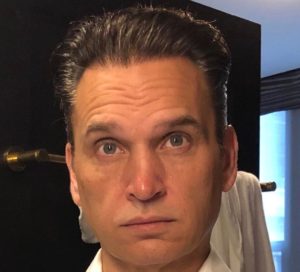
In the two hours that Matt and I spent on the phone, his texts and emails kept coming in. And considering he has only been out of prison for six months, that seemed like solid evidence of a rich life.
“I don’t want to let what happened to me,” Matt said. “Stop me from the chance of having these people in my life.”
But after two hours on the phone, there were still a few questions unanswered.
The first was, what are the steps that Matt Cox took to forgive himself and then ask forgiveness of others? I know he told me that at one time it was very important to have the money and luxury that came from his crimes in order to define him. Maybe he now needs to prove he can be successful without it?
I’m not sure.
But I do know that Matt is not the typical style we like our reformed high-profile crooks to be. We tend to want them either haughty or broken.
If they’re arrogant, then we can say, “See, I told you he would never change.” And if they are broken, then it’s: “That’s what happens when you live a life like that.”
But Matt Cox is neither one of these.
He is remorseful, but confident. He is regretful, but excited about the future. He is truthful about all he has done, but that history does not hold him back. And he is hopeful when he reaches out to those he has hurt, but is strong enough to go on if they reject him.
*Gina Laidlaw is a pseudonym. She has moved to a new state, changed her name, gone back to school, and begun a completely new life. And although she is still friends with Matt Cox, when we spoke, I promised her that I would respect her identity—both old and new—by simply referring to her in this article as Gina Laidlaw.



 Once spring hits and then all through summer, everywhere we go we see people having picnics.