Author: Everett DeMorier

  • How to make homemade chili

    How to make homemade chili

    carne

    In March of 1519, when Cortes landed in what is now Veracruz, Mexico, to conquer the Aztec Empire, he arrived with only 500 men, 15 cannon and 20 horses. With this he would face the 12 million strong Aztec Nation.

    Shortly after Cortes reached Mexico — just so there would be no confusion on intent — he ordered the sinking of ten of their eleven ships so retreat was never an option for his men — they would go home when Mexico was part of Spain, or they would not go home.

    As they moved towards the Aztec capital of Tenochtitlán, Cortes recruited troops by conquering villages and making alliances with various enemies of the Aztec’s. In fact, when a rival Spanish contingent landed, Cortes quickly defeated them and the remaining soldiers were absorbed into his army.

    In November of that year, after conquering numerous Aztec cities, Cortes and his new army — numbering now in the thousands — arrived in Tenochtitlán. Clad in their Spanish armor and riding horseback — which the Aztecs believed were deer — Cortes and his men were perceived as gods —- which made it easier for the Emperor Montezuma to be taken prisoner and for the Spanish to begin removing the gold from the city.

    Once the capital was taken, the army continued, city by city, until August of 1521 — only two years later — when the last Aztec emperor, Cuauhtémoc, surrendered to Cortes. The Aztec Nation was no more.

    Now, the reason these details survived over the last 500 years is largely due to one man. A conquistador named Castillo, who fought with Cortes, had a first hand account of the events, but more importantly kept an extremely accurate journal — in fact, it is from Costillo, that the first documented chili recipe exists.

    [amazon asin=0761147616&template=iframe image][amazon asin=091484606X&template=iframe image][amazon asin=B003IKMSFE&template=iframe image][amazon asin=B0030T1KR0&template=iframe image]

    In one of the very early battles with the Cholulan Indians, in 1519, Castillo wrote that the Cholulan’s were so confident of their defeat over Cortes that they boiled chilies, tomatoes and spices, as a meal to celebrate.

    What was missing in the pot? Meat — which the conquistadors would provide because the Cholulan’s planned on eating them.

    The day — and the meal — did not go as planned but what did occur was that the first meatless chili recipe was documented.

    From there, chili migrated from Mexico through Texas and into the American Frontier where wagon cooks created brick chili; where they would cook chili and then compress the liquid out and form it into bricks so they could transport and cook on the trail by warming it up and adding water.

    But it wasn’t until 1893, at The Chicago Worlds Fair, that The San Antonio Chili Stand exposed 27 million people to the wonders of chili. And from there chili became a part of our American — and worldwide — culture.

    For something so simple in nature — tomatoes, peppers and meat — it’s amazing how many types of chili there are.

    For example, Chili con Carne is the traditional chili with meat.

    Texas Chili, contains no beans; it’s simply meat, peppers and tomatoes — and a true Texas Chili purist will say that the stew should have no other vegetables but peppers.

    Chili Verde is a spicy green chili that is made with pork that has been slow-cooked in chicken broth, peppers, and chili — with no tomatoes.

    And there are many more. And within these and other categories there are a myriad of styles.  In fact, the great thing about chili is that there are no two alike.

    Having our own signature chili recipe is important for us modern men for several reasons. First of all it’s an inexpensive but hearty meal. Being able to whip up a quick pot of chili means we will never go hungry. Also, chili is the quintessential guy meal that is so versatile and allows us so much creativity in preparing, so we get to expend some creative energy in perfecting our chili. And a quick pot of homemade chili is the perfect and simple dish to bring to an event or when you have people over.

    HOW TO MAKE HOMEMADE CHILI

    If you follow just one rule, just one, then you’re chili will be in the top twenty percent of all the homemade chili’s out there.

    The rule is this.

    Use dried beans.

    Canned beans are fine to use for chili — and I’ve made gallons of great chili using canned beans — but by cooking the beans yourself the beans will be firmer and the chili will be heartier. Also, instead of sitting in a salt water solution in the can, your beans will be soaking up all that great flavor of your chili.

    Follow the directions on the bag for your beans but the method that seems to work best is the quick soak method — where you bring to a boil for one minute then let it set for an hour.

    Now here are the basics, but the one thing to remember is this:

    This is not is a chili recipe. You don’t want a chili recipe but  you want the basics. You’re going to develop your own.

    Cook your dried beans.

    In a pan, fry your onions, peppers, garlic, — whatever vegetables you want —  until they begin to caramelize and soften.

    Brown your meat. Now ground beef or ground turkey is commonly used but you can be creative here and use anything you want; sausage, chicken, pork or cut up a steak or a roast. Also game meats work real well such as venison or goose. If you want to make a meatless chili you can cut up potato or use garbanzo beans or tofu — in fact, rutabaga works great in a meatless chili.

    Combine your meat and vegetables in a pot with a few cans of stewed tomatoes, tomato chunks and/or tomato paste or fresh tomatoes if you have them. Whatever you want. You may need to add a little water here but you can also use beer or apple juice for taste.

    Add your spices in. This is completely up to you and the only advice is to avoid the chili spice packets you buy in the store — because you can control it better by doing it yourself. The basic spices are cumin, cayenne pepper, chili powder and salt and pepper, tobacco. But there are no spices you can’t use —- I know a man who adds peanut butter and nutmeg in his chili and it tastes great.

    Simmer and taste. Let the chili simmer down and let all those flavors meld together and keep tasting it and tweaking it.

    And that’s it. Experiment and develop your own recipe. If there is something you don’t like change it next time.

    Also, make a big pot. Chili freezes pretty well and you can save it.

    Have fun.

  • The 10 greatest guy inventions of all time

    The 10 greatest guy inventions of all time

    invention

    There are inventions and then there are guy-inventions — these are the gadgets, tools and innovations that are so deeply embedded in our man-lives that the idea of going without them is completely unthinkable.

    Here are the top 10 guy inventions of all time.


    10. Ramen Noodles

    Whether you buy them now or not, at some point of your life you have consumed many bowls of Ramen noodles, cup o soups, or similar products. Why? Because it’s completely a guy thing; cheap, simple and portable. We lived on this stuff in college and we still buy them when no one is looking.


    9. Dish sponge and soap dispenser

    If you are not familiar with this one yet, stop what you are doing and run to the store right now. I’m not sure who to thank for this dish washing miracle but it is a clear handle filled with dish soap and a sponge at the end. That’s it. But now you don’t need to fill a sink with water — which men hate — instead you can wash a cup, a bowl, a dish with just the dispenser. Run some water, soap up the dish with it and rinse. Done.

    [amazon asin=B00HWL9AR4&template=iframe image][amazon asin=B005BFZ5N6&template=iframe image][amazon asin=B00J7KM5X4&template=iframe image][amazon asin=B00ET5VMTU&template=iframe image]

    8. Digital Video Recorder.

    This innovation still amazes me. The ability to pause and rewind live TV should be a candidate for The Nobel Prize. Now, we can pause anything we’re watching, get a drink, take a call and come back and not miss anything — as well as skip through the commercials. Also it’s great for those ‘what did he say?’ moments when you can rewind and settle a TV bet.


    7. Energy drinks

    Sure women buy energy drinks — in fact the largest demographic of energy drink consumers are young mothers trying to get through the day with as much steam as possible. But the idea of energy drinks is completely a guy thing. It’s fast, cold, comes in a can and gets the motor going.


    6. Microwave Oven

    Microwaves are everywhere men are; construction sites, break rooms, garages. They are these inexpensive little boxes that you plug in, press a buton and within a minute or so your food is hot. What’s not to love?


    5. Global Positioning System

    The GPS system was the freedom rally-cry for all men. Never again, do we need to hear the words, just stop and ask someone for directions — which in the guy world is equivalent of wearing a dress. And if we keep the volume down and just look at the pretty directions, we actually feel like we’re getting there by ourselves.


    4. Safety razor

    When is the last time you walked into work and saw a fellow co-worker with those little pieces of toilet paper stuck to his face to stop the bleeding from shaving? For some of you, probably never. That’s because it rarely happens anymore but it used to happen all the time. New razors are so well developed that it’s almost impossible to cut yourself shaving any longer and the shave is close and fast.


     3. Cordless drill

    When the cordless drills first came on the scene  in the 1980’s they were very expensive and the only group that could afford them were  professional contractors — while the rest of us looked on with lust. Now, the technology has been so well developed and the price point has dropped so much, that everyone has one. And the new 20 volt models keep their charge forever — months without a recharge.


    2. Duct tape

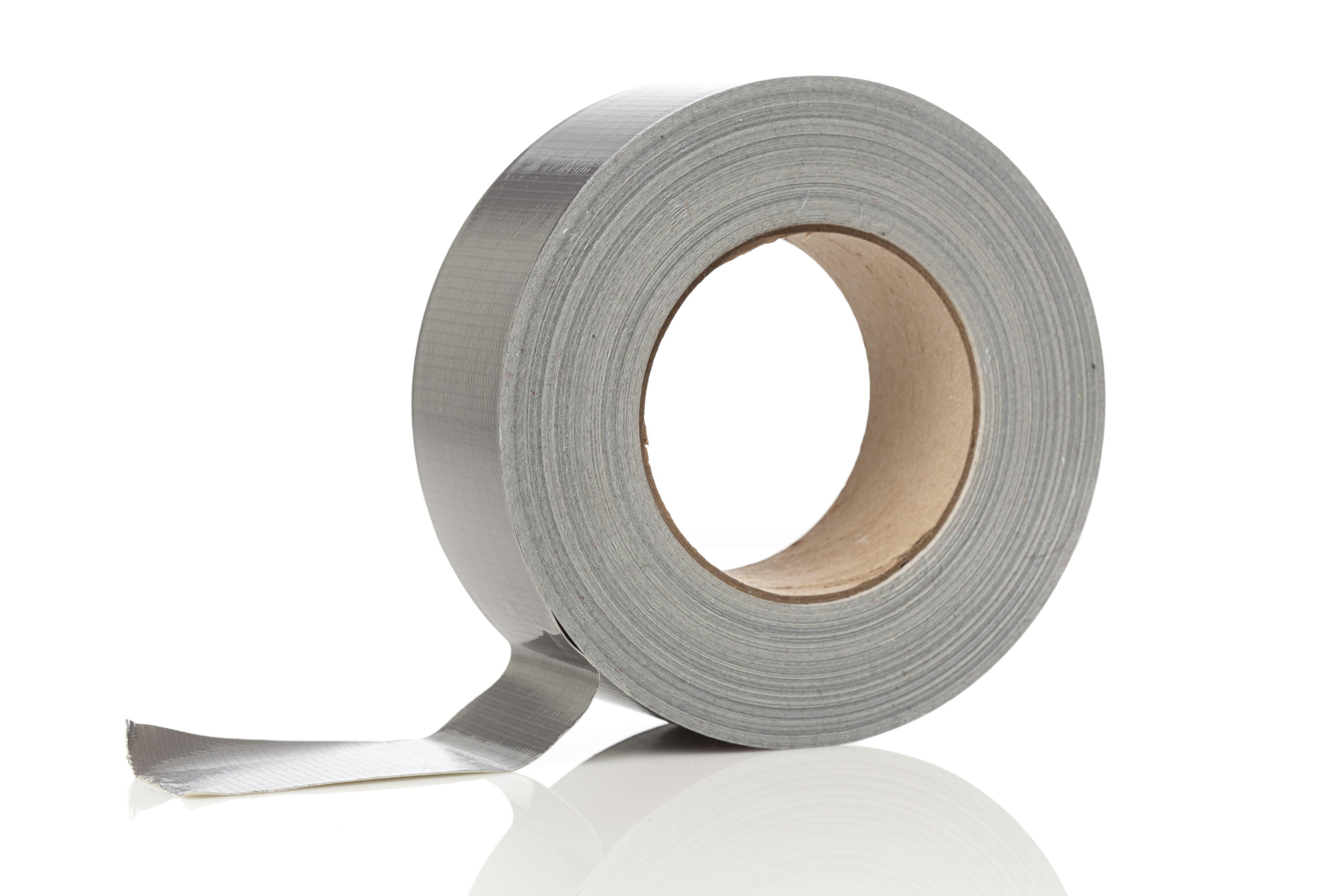
    Duct tape is a pressure sensitive tape coated with polyethylene. It was first developed in World War II to seal ammunition cases and make small repairs because of its water resistance. Now, we use duct tape for everything because it’s fast, easy and it works.


    1. Television Remote Control

    Yes, it’s a cliché, but the truth is the remote control is the greatest guy-invention of all time. It puts the world in our hands, caters to our short attention span and lets us bounce all around the TV universe increasing our programming productivity. In fact, for most of us, if we can’t find the remote — what’s the point of turning the TV on?

  • REVIEW: Film: Snowpiercer.

    REVIEW: Film: Snowpiercer.

    snowpiercer-poster

    One of the simplest questions we all get asked is one that I have difficulty answering. It’s one of those in the icebreaker category — you know, not a; where are you from? what do you do? where did you go to school? but the personal tastes and interest question of — what’s your favorite film?

    That’s tough. And is absolutely impossible to answer.

    See, when I find a film that I like — one that is so good that I just can’t get it out of my head — I will watch it about — well, ten gazillion times. I’ll just keep watching and watching it, over and over; experiencing each scene from the beginning in one continuous loop. I’ll look up deleted scenes. I’ll delve into the life of the actors. I’ll download the actual script and look at how it was first written compared to how it was shot. And when I have reached the ten gazillion mark — when every last bit of emotion and beauty has been wrung out of it and all that’s left is the husk — I’ll discard it. I’ll never watch it again. Ever.

    When it comes on TV, I’ll flip past it. When it becomes a topic of conversation, I’ll wait for it to pass. Because I’ve taken too much of it I’ve overdosed. It’s over.

    This is the first reason why we’ve not done a film review on 543skills so far. The second reason is that I can be kind of a jerk when it comes to movies — I admit this. But hey, when you give someone 100 million dollars to do something — which is the average price tag right now to make a feature film — you expect a quality product. A better than quality product. With 100 million dollars you should be able to make something unforgettable, that changes lives. Every time.

    But there are very, very few absolutely amazing films made. And the even worse part is that we seem to be okay with that.

    Which brings us to Snowpiercer.

    Now, I first heard of the film when Tim Ferriss recommended it (and I am allowing a few seconds to build up so you think that Tim and I discussed the movie during a racquetball game; that this is the type of movers and shakers I associate with, but actually I read it in his newsletter.) In fact, Tim Ferriss raved about the film. So did a lot of people and Rotten Tomatoes gave it a 95%. So, I watched it.

    Now the premise of Snowpiercer is this. The world tries to stop Global Warming by introducing this super chemical into the environment. This chemical is a really bad idea and the entire planet freezes over but not before a genius named Wilford builds a mega train where the last of humanity can be saved and travel around the world at breakneck speeds while the frozen planet lies around them.

    There are two classes in this train. There is the first class who spread out among the majority of cars and live a life of luxury and extravagance. And then there are the lower class who in the back and are kept in a crowded windowless car and fed only protein blocks that look like black Jello. But one brave soul from the back named Curtis, has finally had enough of this poor treatment and organizes a rebellion to get his lower class brethren further up in the train where all the food and good stuff is kept.

    Now besides the ridiculous plot holes of Snowpiercer — instead of building a train that travels at 90 around the world with no stops and no real purpose to travel, why not take that technology and build a bigger structure that’s stationary — it’s is not a bad film. Not really.

    It’s not a good film. But it’s not a bad one. Actually, I’m not really sure what it is.

    The end of the film doesn’t leave you with any more answers than you had in the beginning. In fact, the answers that you are given are disappointing at best. You don’t really care about the characters or what happens to them and the few, oh my gosh you’ve got to be kidding, plot twists, don’t work.

    What you do have is some visually appealing scenes and some fairly good acting — but with a flat script it really doesn’t matter.

    Snowpiercer is worth seeing for the imagery. I guess. But that would be it. There are too many plot speed bumps to count and the end of the ride is — well, just plain silly.

    But hey, Tim Ferris said it’s good.

  • The 10 best animated male characters of all time

    The 10 best animated male characters of all time

    saturday

    In the 1960’s, television executives from ABC were looking for a creative way to diversify their advertising customer base and sell the American consumers more stuff. Oh sure, they were getting their fare share of cigarette, car and dish soap ads — yup, got that covered — but the lucrative toy market was slipping by.

    Now, at this time Saturday mornings were a soft slot in TV programming and were filled with 1950’s filler — The Lone Ranger, Roy Rogers, Tarzan and some animated shorts used in feature films such as Bugs Bunny and Tom and Jerry. So, since kids were already watching at this time it became the ideal time to create some original animated content — something that had never been tried before.

    What came to be known as Saturday Morning Cartoons was such a huge success and such a big deal in the kid world, that the idea of being sick on a Saturday morning or just plain oversleeping and waking up near noon —  when the shows were over —- was the weekly equivalent of missing Christmas. And add to that, now being a social pariah because you would be the only one in fifth grade who didn’t know what mischief Speed Buggy got into — it was enough to ruin your whole week.

    As cable television grew the 24 hour cartoon networks grew with it and The Saturday Morning Line Up faded away, replaced by the round-the-clock access to cartoons. But this did not change the impact of cartoons on our lives, in fact it actually expanded it.


    THE TEN BEST ANIMATED MALE CHARACTERS OF ALL TIME.


    10. UNDERDOG

    1964

    Yes, he’s a dog, but he’s also a man dog and that counts.

    Underdog is that perfect combination of strength and sensitivity. His ability to fight crime, have an active dating life with Sweet Polly Purebred and balance his stressful career as a shoe shine boy — makes him a character to admire.


    9. PATRICK STAR

    1999

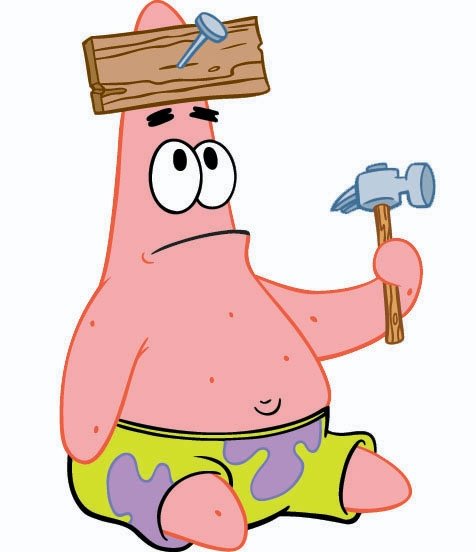
    No, SpongeBob didn’t make the list — a little over-performing tipped the scale a bit — but his buddy Patrick definitely did.

    Patrick is that perfect combination of a best friend that we all want; strong, funny, willing to do anything we ask and not too bright. Patrick is the guy we all want around and miss when he’s not there.


    8. POPEYE

    1932

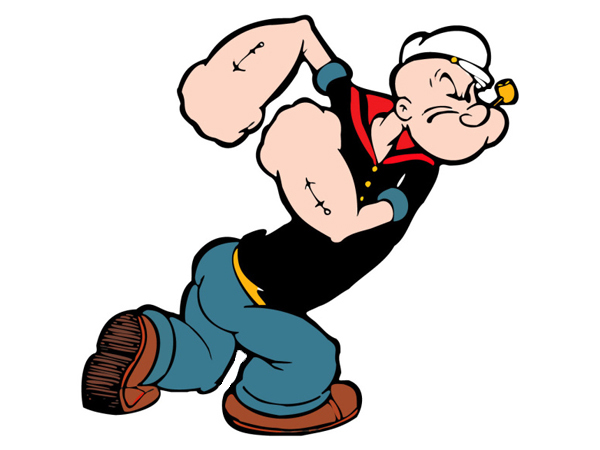
    Popeye the comic strip existed long before the animation did — along with Olive Oyl, Sweet Pee and Wimpy — but the very first Popeye animation sets the stage. Here, he and Brutus come across a bevy of bathing beauties near a pool. We see them scanning all the voluptuous women – a little bored — until they came across the skinny, clumsy, Olive Oyle in her clod hoppers and 1920’s bathing dress. They are smitten and the rivalry begins.

    [amazon asin=B00NF1IQ9S&template=iframe image][amazon asin=B00D7JNAP8&template=iframe image][amazon asin=B00JZCH3RM&template=iframe image][amazon asin=B002F06Q3I&template=iframe image]

    7. SPIDERMAN

    1967

    The Spiderman animated series began in the late sixties and is responsible for that classic Spiderman theme: Spiderman, Spiderman, does whatever a spider can …

    Although Spiderman was well known before the animated series it was here that the American public got their first inside look at the character of Peter Parker and was able to relate to his vulnerability and strength — plus you just cannot get that stinkin’ song out of your head.


    6. BENDER

    1999

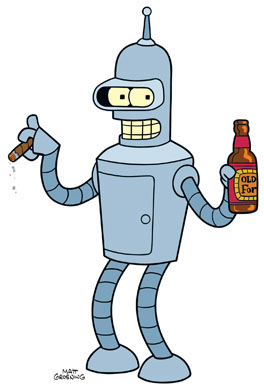
    Bender is a cigar smoking, beer drinking robot with kleptomaniacal tendencies. What’s not to love? He is the best friend of Phillip Fry and an employee of Planet Express in the animated series Futurama. Bender became so popular and made the transition from rogue to hero so many times, that his anti-social activities became largely unnoticed. And out of the six Futurama episodes that were determined to be the most heartwarming, four revolved around Bender.


    5. HANK HILL 

    1997

    It’s difficult to think of Hank Hill as a great animated character because we don’t really think of him as animated at all. He is so real that he comes across as more of a painted reality-series character — or that uncle we all have. King of the Hill was so different than any animated series before it, we responded to it as a live action show and found Hank so incredibly straight-laced that he actually became cool.


    4. PINKY AND THE BRAIN

    1993

    You can’t think of Pinky without The Brain so you need to consider them together. Pinky and The Brain are two lab rats that each night, as the lab is closed, begin to launch their master plan to take over the world — well, The Brain’s plan and Pinky just comes along to mess everything up. It’s funny, creative and one of the best animated buddy teams ever.


    3. BULLWINKLE

    1959

    Bullwinkle J. Moose is the big, dim witted, half of The Rocky and Bullwinkle Show. He lives with his friend Rocky The Flying Squirrel in Frostbite Falls, Minnesota. Each week he and Rocky are thrown in an adventure that usually involves defeating the evil Boris and Natasha. But it’s the subtle innuendos and creative puns of Bullwinkle that make him one of the great animated characters of all time.


    2. BUGS BUNNY 

    1940

    Bugs Bunny has been around so long and is so deeply entrenched in our culture that he is all things to all people. His flippant and relaxed attitude — along with that New York accent — makes him strong, curious and cocky. Plus, since he was developed for World War II fundraising and training films, he’s as American as they come.


    1. HOMER SIMPSON

    1987

    Homer is a fat, lazy, simple minded father that at the same time is caring, thoughtful and brave. After over twenty five years of Homer he still amazes us with his diversity and depth. Homer is the guy we don’t mind loaning money to even though we know we’ll never get it back.

  • Eric

    Eric


    erik


    Eric tossed the bag in the wheelbarrow as if it was just a second thought, a whim, instead of what it really was — a sixty-pound bag of cement — and it hit the metal wheelbarrow with a thud. Even the wheelbarrow shuttered from the impact but Eric didn’t seem to be affected by the task. He picked up his shovel and pierced the sharp end into the bag — which was disappointing because that was becoming my favorite part — then we pulled out the pieces of bag and I added in water from the hose.

    “You two are a mess.” We were caked with mud and sweat when Debbie’s phone made that shutter sound as she snapped a picture.

    “The word you’re looking for,“ I corrected her, through heavy breaths. “Is macho.”

    “That’s right.” Eric agreed, stirring the cement with his shovel.

    “Macho,” I repeated. “And Eric.”

    “Hey!”

    [amazon asin=B000WEKCFM&template=iframe image][amazon asin=B0026RGNJ2&template=iframe image][amazon asin=B001FBG9WG&template=iframe image][amazon asin=B007CZZS3A&template=iframe image]

    Debbie placed the phone back in her pocket because Debbie only takes one picture of anything. Just one. In a world of digital photography, when you could take dozens of shots, increasing the odds of capturing a few treasures, she makes just one single pass at it.

    Debbie could stumble across Elvis coming out of a spaceship shaking hands with Jimmy Hoffa and Bigfoot, and she would excitedly pull out her phone and take one single photograph. Click. Then, hours later when she was trying to post that picture— of the spaceship stairs because that’s all she caught — she would actually have the nerve to be disappointed. And this is the reason that the one and only photograph of Eric and I pouring the footers for our new deck, are of both of our backs.

    “They’ll be more,” she said.

    And there would be. Once the footers were dry, Eric and I would start on the frame and there would be additional pictures — of our eyes closed, our feet and a few of the dog — there is always need for new pictures of the dog. And since pictures of Eric are no longer at a premium — since he’s not dead — there would be time for these new pictures. And since it looks like Eric will remain not-dead for a long time, there would be additional time for other photographs.

    Because Eric is not supposed to be just dead, he’s supposed to be long dead. By almost a year. In fact, that’s why he came here and that’s why he ended up living two houses from us. He came here to die.

    The details of Eric’s life before we met him, aren’t important — and I don’t know all that much anyway. Only that when he arrived he had made some bad decisions and he was diagnosed as terminal. When the doctors said there was no hope he called his family to say goodbye and this was when his sister Dianne, moved him up from Florida to spend his last few weeks with her and her family.

    “I didn’t want my brother to die alone”, Dianne would smile, through tired eyes.

    But Eric in those early days is not the Eric of today. He was a skeleton in a red bathrobe that would walk in his front yard to smoke a cigarette and would nod if cornered, but nothing else. He was gaunt, beaten, broken and sleeping in a borrowed bed while the life he was lent was about to come due.

    When the doctors said it was time, hospice came. They made him comfortable. They said Eric would be gone in a week. The next week they said it would be the following week. Then they said a month. Then they stopped coming and told Dianne to call them as soon as Eric was dead.

    She said she would.

    More months went by and Eric’s travels from the house became longer. He took short walks. Then he took longer ones. Then he bought a used bicycle and could be seen peddling through back streets. Even his conversations became longer — on his front lawn, always in that red bathrobe — and any topic was fascinating and new.

    I didn’t know Eric before he came here, so I don’t know if that childlike excitement he has now is the real him or the reaction of a man who has been given a second chance and doesn’t want to waste a single moment of it. But the him, now, is easy going and inquisitive and if you just moved into our neighborhood, you would swear that Eric had lived with Dianne and Dan for decades — or even that it was the family home and it was Dan that had moved in with them after he and Dianne got married. He just — belongs here.

    “Looks like rain,” Eric covered the two footers with a tarp and we tipped the wheelbarrows over them for additional protection. Then we walked the tools to his truck.

    “This is a great truck,” I shut the tailgate.

    “I know,” Eric beamed. “Did I tell you I got it for fifteen hundred?”

    “No,” I lied.

    And I got to hear the story again.

  • The lost art of pickled eggs

    The lost art of pickled eggs

    eggs

    There are several symbols of life that have pretty much vanished from the American landscape. These include payphones — you still see a few once in a great while, but they are becoming increasingly scarce — Western Union Telegrams, video rental stores, and gone are the days when you would go to the hardware store to use the machine to test your television tubes; in order to determine which ones needed replacing — eliminating those expensive TV repairmen that charge and arm and a leg.

    Yup. Those days are pretty much gone.

    And another casualty of modern living is now missing from the neighborhood bar. At one time, there, back by the cash register, near the packs of cigarettes and the book where they kept track of your weekly sign-in — you would always see — it. That gallon jar of pickled eggs. Beautiful, inviting and glimmering in its vinegar glow.

    The bar pickled egg had been a staple for decades and often provided the only solid food a working man would have before heading home after a hard day. Originally the bar egg was simply a hardboiled egg; offered free to patrons like pretzels are today — in order to make the customer more thirsty and also to keep them from getting sloppily drunk. But health concerns grew and this practice migrated to selling just the pickled version; which could last longer and removed the need to clean up all those egg shells.

    The pickled egg first showed up on the American scene in the 1700’s and although many believe this to be a British transplant, it was actually the German colonists that brought it with them. It was popular with Hessian mercenaries and then migrated over to the Pennsylvania Dutch. It was a very simple practice, where the egg — or the cucumber or the beet — were placed in a jar of spiced vinegar and left there.

    If pickling hasn’t become a lost art, it has definitely become a niche one and is often lumped in with canning. Which is not accurate.

    Canning is the act of preserving food for storage. Pickling is when the vinegar and spices infuse it and alter the structure.

    Can a tomato and you still have a tomato. But pickle and egg and you get something completely different.

    Pickling is pretty easy and does not require canning pots and jars and can be done with just a few leftover glass jars and a pot — I mean you can use all that fancy stuff if you have it, but it’s not required. Because you can easily pickle eggs — or sausage or anything — with items that are just lying around the house. . It’s easy. It’s fun and it’s one of those cooking areas that everyone believes is a lot more difficult than it really is. And you can be very creative with pickling because the flavor is changed with not only the spices, but also with what else is pickled with it — hot peppers or fruit you whatever else you add in.

    Plus there is this unique effect when you bring homemade pickled eggs to a barbecue or an event that moves you up the unique-ladder — it’s possible that depending on how narrow minded and culinary-retentive your friends are, that no one may eat them, but I guarantee there won’t be three other jars of pickled eggs at the tailgate.

    Now the one down side to pickled eggs, is that they do not preserve the food long term like canning does — commercial pickled eggs can be kept on a shelf for years, but homemade ones need to be refrigerated, even before opening.

    And the very first — and really the only rule — of any pickling endeavor is, don’t use the prepackaged pickling spices. I have used these before and they are basically salt with some salt added in for flavor. You can create a much, much better brine on your own.

    Now, the most difficult aspect of pickling eggs has nothing to do with the cooking part, but has everything to do with getting those eggs out of their shells. Unpeeling hardboiled eggs is tedious and yields completely inconsistent results, so here are a few tricks that work pretty well.

    HOW TO PEEL HARDBOILED EGGS

    1. The Baking Soda Method

    If you increase the pH of the water you are cooking the egg in, the shell will actually break down. So add in 1/2 teaspoon baking soda for every quart water you use. Boil the eggs. Let cool and peel.

    1. The Lung Power Method

    Here’s how it’s supposed to work: First, crack the shell at the very top and bottom of the egg, then peel off about a dime sized hole on each end. Then, place your mouth over the hole on the top of the egg, and blow. According to some very cool Youtube videos,  this should work — but I have only made it work if I use the baking soda method first.

    1. The crack all over method

    If you take the egg and crack both top and bottom, then, on a paper towel, roll the egg around and crack the entire surface — you’ll know you’ve done this when you stop hearing the cracking sound. Then, if done right, the shell should come off in large pieces. I’ve had this work many times — and not work many times, and the key seems to be that older eggs peel better. Newer ones — especially the ones my wife gets directly from her friends who have chickens — are a pain to peel.

    1. The Swirl Method

    So the philosophy here is, you cook the eggs, remove them and place in a pot with a few inches of cold water. Then in the pot, swirl they eggs in a circle, letting the eggs bump and crack and slam all over each other. Then when you take the eggs out they should be partially unpeeled and easy to finish. I have tried this method and it works sometimes, but it does make a mess — but you get a great forearm workout.

    1. The Glass of Water Method

    This is my go-to method for unpeeling hardboiled eggs and I use it all the time. You place the egg in a glass with an inch or so of water in it. Cover the top with your hand and shake it and swirl it. The eggshell will take on small cracks over the surface and the water will get in between the shell and help it slip right off.

    HOW TO MAKE PICKLED EGGS

    So step one is to find a jar that can be sealed tightly — leftover pickled jars or anything with a wide mouth and a lid that seals. A quart-size canning jar will hold about one dozen medium sized eggs. Clean the jar thoroughly.

    Add inside the jar the eggs and the extras — extras can include cut up onion, sweet peppers, hot peppers, garlic cloves, whatever you want.

    In a large pan add in ¾ cup of water, 1 ½ cup of apple cider vinegar, 3 tsp salt, 2 tsp sugar, 1 clove garlic, some dill, mustard seed or any other spices you want — remember; there are no rules.

    Bring the pot to a boil and then let it simmer for 5 minutes.

    Right before you are ready to pour everything in the jar, run hot water over the outside surface of the jars you are using to warm them up.

    Pour the mixture into the jar and cover with the lid.


    That’s it.


  • Fame

    Fame

    actor

    Since the beginning of time, man has been coming up with wise things to say to each other. Pearls of wisdom. Proverbs and sage advice. The best of these insightful phrases are remembered and passed on.

         Two wrongs don’t make a right.

         Necessity is the mother of invention.

         Absence makes the heart grow fonder. 

    King Solomon — often touted as the wisest man in the world and the author of The Book of Proverbs, in The Bible, penned over a thousand ‘songs’ or wise sayings about God and life. Great stuff such as: A soft answer turns away wrath. Don’t run too far from your problems, you’ll only have that same distance to return. And; A good name is more desirable than great riches; to be esteemed is better than silver or gold.

    Accurate statements. All of King Solomon’s writings are sound and solid but there is big difference in The Bible between the word of God — I will never leave you or forsake you — and the words of wise men like Solomon — train a child in the way he should go and when he is old he will return to it.

    Because King Solomon’s words are only wise guidelines and God’s words are where the pure truth of The Bible lies.

    We often forget this and therefore the phrases themselves — those motivational words of encouragement that dot our Facebook walls — become our perceived truth. But these phrases can only contain the refection of the truth, not the truth itself.

    An example is the phrase is: Do what you love and the money will come.

    Cute. But wrong.

    If taken literally, this means that if you do only the things that you love and enjoy, you will become wealthy doing it — or at least be able to support yourself doing it. That by going after those areas that we have done before and know that we love, we will be successful and content — so all you need to do is to focus on those things you get pleasure out of and leave the things that you don’t, alone.

    I love eating Oreo’s but not only would it be difficult to find someone to pay me to eat them, I guarantee that after a few weeks I would stop loving them.

    So the phrase is limited. It doesn’t allow for growth and hard work. A more accurate edit might be: Love what you do and the money will come. Yeah, that’s closer. But, if you drill down deeper into what is around the proverb, what supports it, you will see additional flaws.

    So what do we enjoy? — and not only what do we get pleasure out of but why do we get pleasure out of. Because the world is divided between pleasure and pain — we either turn towards something or run from it — yes, that’s true. But there is also the gap factor.

    Pleasure is great, but sometimes pleasure can be pulled from one area into another when needed, which is where gaps occur. The obese woman with immaculate hair and makeup has gaps. The short man in the Hummer has them too; pleasure in one area being syphoned to decrease pain in another.

    This occurs a lot in The Performing Arts where people become hooked on the adoration, the attention, the notoriety, and not the work.

    Here is an example. Think of how many people you know whose dream it is to become one of these three things: a writer, an actor or a musician. Start counting in your head of all the people you know, or have ever known, who have dreamed of becoming well known in one of those categories — to catch their big break, land that perfect roll or simply be discovered.

    Got a rough number?

    Good. Now, do the same thing and think of people you know whose dreams, who’s very passion, is to break into three completely different career paths. A puppeteer, a juggler or a camera operator.

    Got that second number?

    Okay, so why is the first number so much higher than the second? According to logic it shouldn’t be. If artistic talent and passion is the true driver, then those numbers should be the same because it takes just as much creativity in making a marionette come to life as it does to pretend to be someone on stage. It requires as much skill to work a TV camera as it does to sing. So why do we not know a single kid who wants to be a juggler when he grows up? Why don’t we have a few dozen friends who after a few too many Budweiser longnecks, pine over the life they should have had with puppets?

    Tom Hanks was interviewed once and was asked when he first knew that he was a success. He laughed at this and said that he was a success when he first got out of college and was performing Shakespeare in the Park. He was doing what he loved to do, was happy and probably would have been content performing in that way for the remainder of his career. It wasn’t the fame that drew him, it was the craft.

    Kevin Spacy has turned down several film rolls because he doesn’t really like making films. But he loves the theatre and spends as much time performing in theatrical productions as he can.

    If your dream is in one that fits in that first category, then here’s the question. How will you know if you are successful?

    If the answer is — if the true answer, the one you only tell yourself — is when I’m famous, or when I’m rich, then you are heading towards the shadow of this dream rather than the dream itself. It’s a lie, a trick and a gap.

    The Ancient Greeks had a phrase called The Golden Meen. Nothing to excess. Finding the balance. A life with balance is great life. It is strong and solid and cannot be tumbled. But a pursuit where there are only two levels; fame and failure, can never be aligned.

    Breaking in. Catching a break. Being discovered. What does that even mean?

    If you want to write, to perform or to make music, then do it. Get good at it. Hone your craft. Write plays for your church Christmas play, make music at a retirement home and do standup for Veterans. Use your gift and your passion and give it away. Get good at it.

    And find the balance.

  • Clara

    Clara

    clara

    About nine years ago — this would have been when my son Alex was about ten years old — we saw Clara for the first time. We were in the car, we had just turned off of Fiddlers Green and onto Governors Avenue and there she was, over to the left side of the road coming towards us.

    It was cold outside and Clara was pushing her grocery cart against traffic, the way that bicyclists do, and the wheels of the cart were biting into the grey slush of the road. Alex saw her and he stopped talking. We drove another hundred yards or so before he spoke again.

    “We’ve got to go back,” he said.

    Now, I know I saw Clara — not really acknowledging her but seeing her the same way I saw the Burger King sign and I saw the Michelin store behind her. But Alex had locked in on her. He really saw her.

    “We’ve got to go back,” he repeated.

    “Why?”

    Alex told me what he’d seen. That there was an old woman in the street. Everything she owned was in one grocery cart and it was cold outside. We had to go back. To help.

    “Great idea,” I said magnanimously, as I mentally scanned what cash I had on me — hoping that I had something smaller than a twenty.

    “No,” he corrected me. “We need to take her — home. To our house. To live.”

    We kept driving and I told Alex how proud I was of him. I praised the great heart he had and told him of what a great kid he was. And then I gently explained how we could help. With a little bit of money.

    “No. We need to take her home with us.”

    And I explained all the reasons why we couldn’t do that. That the lady was a stranger. We couldn’t bring a stranger into our house, it wasn’t safe. We could help, sure, a little, but we —.

    But Alex looked at me with focused eyes. “But Dad, she’s old. And it’s cold and we have that big guest room that no one is using and she can —. “

    He kept talking and we kept driving. When we got to Walmart he was still talking — well, I was still  talking. Alex was anxiously trying to hurry us up. To get us back in the car and get rolling towards Governors Avenue.

    “How about we get her some food while we’re here, huh? How about that?’

    “No,” he said.

    But I did it anyway. I picked out a few prepackaged sub sandwiches, some chips and some bottled water and I listened to Alex plead. And as I did, I understood that he didn’t want to bring this woman home the way you do a kitten, or a lost dog. She needed to come home with us to be part of us. To be a member of our family.

    Why? It was simple. We had the space. We had a house that was warm and dry and there was plenty of food there. There was no reason to discuss it any further. We had resources that someone else didn’t. It was only fair.

    We drove back to Governors. To the place we had seen her and she was gone. We  drove further down, through the side streets. Nothing. We looked inside of Burger King and the bus stop and then circled the entire loop again but could not find her.

    “Okay,” I said. “I have an idea.”

    Alex looked up at me as if there was nothing I could have done to disappoint him more. We pulled into the homeless shelter that was on Governors Avenue and I parked the car. We walked inside and told the lady at the desk who we were and who we had had seen and that we wanted to get this food to her.

    The woman knew exactly who I was referring to and told us her name was Clara. Clara had been in and out of the shelter many times. She had been offered job opportunities and even an apartment but something always happened. The woman at the desk told Alex how proud she was of him wanting to take Clara home. But that we had to be safe and that there were other ways to help.

    And Alex, silent, looked up at the both of us with frustrated eyes. We could show him statistics, photographs, evidence, all day long and it didn’t matter. Here were the only facts that did. There was a woman that needed help. We can help. Done.

    We left the food at the shelter — she didn’t know if Clara would be in but she would see it went to good use — and we walked back out to the car.

    “Feel better?”

    “No.” And he didn’t.

    We saw Clara a few more times after that. And then we didn’t see her again.

    That was nine years ago. And Alex? Well, he’s nineteen now. And he still has a gentle heart and is a sensitive, caring kid. But he has that filter now about things such as this. The ones we all have.

    Now, there was no way that Clara could have come home with us. Absolutely not. I wouldn’t jeopardize the safety of my family, I know that. Everyone knows that. It would never have happened.

    But still —. There’s something so —. So absolutely pure about putting what we should do — ahead of what we can do. And instead of finding a way to nurture that better in Alex, I somewhat yanked it out of him.

    And I feel bad about that.

  • How to simplify your digital life

    How to simplify your digital life

    digi

    On June 5th of 1883, at the house that stood on 6 Harvey Road in Cambridge, England, John and Florence Keynes gave birth to their very first child. A son they would  name John, after his father. Young John, was bright and happy and had the advantage of being raised by a prominent English family that highly valued formal education.

    A few years passed and shortly after John’s brother Geoffrey was born, John was enrolled in the Perse School Kindergarten — but was absent a great deal due to illness and was almost held back. And by the time his sister Margaret was born, Keynes was a student at Saint Faith’s Preparatory School, where he excelled in mathematics and algebra and was recognized for the breadth of his vocabulary.

    In 1894, at the age of eleven, John Maynard Keynes rose to the top of his class. It was a place that he would stay for the remainder of his education.

    1897 came and Keynes won a scholarship to Eton College where he continued to excel in mathematics, and in 1902 he left Eton for King’s College, Cambridge, where he was given another scholarship as well as began to specialize in economics.

    Now, if you’ve studied economics, you know the basics of Keynes. He would end up changing the standard economic views of the time; as well alter the way we look at governmental roles. He created in depth theories of business cycles — all of which would be later called Keynesian Economics — and in the 1930’s, he began to seriously challenge world economic concepts. He disagreed that free markets would always provide full employment, as well as the idea of demand leading to periods of high unemployment and argued that governmental regulation would need to closely monitor boom and bust cycles.

    Then came World War II and Keynes’s ideas began to be adopted by the leading Western economies, which lead to the creation of The World Bank. And even though Keynes died in 1946, he actually became more influential after his death — as the governments and economic systems that had adopted Keynesian practiced were now booming — which created real life success to support his theories. Time Magazine listed John Maynard Keynes as one of the top 100 most influential people of the 20th century.

    Now there is no doubt of the intelligence and vision of John Maynard Keynes. It’s clear that he was absolutely correct in many of his theories of economics and financial projection, and his understanding of business and world market trends is probably better than anyone’s ever. But — there was one area that Keynes was incorrect about.

    In fact — he was dead wrong.

    Keynes began to map the growth of technology in the 1930’s. He saw that with the rate of the development of useful tools and innovations being created, that this would eventually affect society as a whole. He factored in the advances he was seeing in communications, manufacturing, transportation, all areas, across all industries, and in an essay entitled Economic Possibilities For Our Grandchildren, Keynes made a statement that would be tied to his name from that moment on.

    “By the time my grandchildren are adults,” Keynes had said. “They would be working a 15 hour work week.”

    Technology would free us. New machinery and modernization would be the tools to take on most of the burden of our average work week.

    Keynes stated that over time, with the help of machines, technology and new concepts, people would become more productive. Machinery and the modernization of the work place would be able to take on the burden of most of our work week and an hour of labor would produce more and more stuff as time moved on. So we would be able to work less and less. Technology would free us.

    And Keynes was —- so wrong.

    Well — that’s not true. He was right about the development of technology.

    Since his death in 1946, mechanical and computer innovation has changed every aspect of our lives. We can now send information around the globe, in seconds. We can communicate with anyone we want to in a written, video or text format. We have access to information on any possible subject instantaneously and can bounce signals off satellites to track our location and get us where we need to go faster and more efficiently. We can sort, organize or trend data. And we have successfully made the world a much smaller place by opening access to every part of it.

    But Keynes was wrong about how this would affect us. It didn’t free us. Not at all. It only lead to the bar being raised.

    According to the US Bureau of Labor Statistics, an average individual needs to work 51 hours per week today, in order to produce as much as someone who was working 40 hours a week in 1950 — so a team with email, spreadsheets and cell phones, needs to work more than the team with typewriters, carbon paper and messenger services. And in 1990, MIT completed a study that predicting that with the current rate of technology growth, mixed in with the productivity rates; we will need to increase our work by 120% more in the next 50 years to capture the same current production rate. So we will need to work 15 hours more each week in fifty years, in order to be as productive as we are today.

    The technology that is available now is not creating less work. It’s creating more, by constantly raising the competitive need. So we end up doing more because we need to do more.

    And not only has technology simply raised the minimum standard of work production, it is completely altered how we think and react. We need to be wired, to be connected — all the time. If we hear that ding or buzz of our phone, we have the Pavlovian need to see what it is — no matter what we are doing or where we are.

    Here are some interesting facts.

    84% of people use their cellphones as alarm clocks, so their phones are right there with them, even when they sleep.

    A Health Club chain recently had to post signs asking members not to use cell phones — in the shower.

    Lifeline and Link-Up provides free smart phones to those on state welfare programs, as texting capabilities and wireless internet access is now seen as a basic human need.

    We are 34% more likely to misplace our car keys, than we are our cell phones, because we are on average away from the less.

    Municipalities are now adding signs on rural roads that have limited cell phone coverage to prepare drivers for the fact that their phones will not work for several miles.

    Phones, tablets, smart watches and whatever is next in the technology line, are deeply embedded into our lives. So how do we use these tools — as tools and not leashes? How do we take back our lives and unhook the electronic collars?

    Well, there are a few ways.

    1. When is it ego and when is it priority? Yes, there are times when that phone needs to be glued to your hand — if you’re on call, working out a customer emergency, someone in your family is ill. Yes. You need to work the phone. But those are rare. Most of the times that we respond to an email during dinner, is so we can be the first one on the email chain to do it. To save our place. To let our customers, or co-workers, or the guys on The Little League Committee know that we are on this. And this is just ego. If you are not getting further information or adding information to the conversation, then you are just electronically thumping your chest to show others that you soon will.
    2. Respond with data — anytime you send a work email, text, voicemail without new information, you are wasting time. Especially on long email chains where the world is being copied. Determine what the goal is and work towards that.
    3. Batch tasks. The most productive people out there, batch there electronic chores. The answer emails in the morning or late afternoon. They respond to texts at lunch and return voicemails only in the car. They get more done in a shorter period of time and actually get real work done, offline, with real people, face to face.
    4. Turn off notifications. Just because your aunt posted a video on Facebook or your neighbor put her goulash recipe on Pintrist, this doesn’t make it news. Those notifications are only distractions. So turn them off and look at them later.
    5. Leave it in the car. If you look at an organization’s highest ranking individuals, thye almost always never arrive at a meeting, presentation, lunch or discussion, with their cell phone. They almost always leave it in the car. These are the people that want to be focused and want you to know that they are. The reverse side of that is, when you are meeting with high ranking people from other companies, they won’t have their’s either. And they will respect those that give them the same respect.

    The simple rule is you want walk around all day with your hammer or a spatula. You use these things when needed then put them back. The same thing is true for your phone, tablet watch or whatever other magical electronic gadget you have. Use the tool and master it. Then put it away.

    Confidence is found when you can distance yourself until needed.


  • The bar

    The bar

    the terrace photo

    On Sunday February 4th of 2007 — the day of Superbowl 41 — our house in Vestal, New York, was empty.

    The wooden floors — that had been protected by rugs and furniture for over a decade — were now shiny and bare. The walls — including the ones that Debbie had made me paint twice when she changed her mind on the color — were now only decorated with outlines of where picture frames had blocked the sun. And rooms that we once knew every noise and bump of, now bounced strange sounds through empty spaces.

    The new job I had accepted, came with a complete relocation package, which included a team of packers and movers that marched in and took our entire life — beds, bicycles, furniture, the kids toys, clothes and ten years of living — and squeezed it all into one single truck; into 208 square feet of moving space. Or 52 square feet per person. Or 19 square feet, for every year we had lived there. And all that life, all that stuff, was now parked in a storage lot for a week, until we could close on our new house, two states away.

    But we would need to move out now, in order for the new owners to move in. So we  would leave the town where Debbie and I had first met — at Energetics Health Club, just three blocks from our house — and where our wedding reception was — The Vestal Steak House on The Vestal Parkway — and we would leave the area that we had known for years, leave the neighborhood, the family, and the familiar.

    But first, we would go to the Superbowl and going-away-party at Jennifer and Dave’s next door. The entire neighborhood would be there and we would say our goodbyes and then we would come home for one last time. We would climb into our sleeping bags that were spread out on top of air mattresses and we would sleep. And then in the morning, we would leave.

    And the house at 317 Frey Avenue in Vestal — the place that had been home for eleven years — would belong to someone else.

    Now, when we first bought the house — this was back in 1996 — that move was so much simpler than this one. Going from our small apartment to that big house was incredibly easy and only took my cousin Brad and I a few hours. Plus, we were only a family of three then — Nick was a toddler and Alex hadn’t been born yet and we actually wondered how we would ever fill that big house.

    That first night that we spent in our new Vestal home, back in 1996, Debbie and I had sat in the living room together. We had put Nick to bed and were watching Aladdin — the cable wouldn’t get turned on until the following week and we only owned kid’s video tapes — and it was then that Debbie made the announcement.

    “Go get us wings.”

    Now in Endicott, where our old apartment was — clear across the river — there were plenty of places to get chicken wings and Debbie and I had become complete Endicott wing snobs over the years. But we were in Vestal now.

    “Where?”

    “I don’t know. Go find a place.”

    Now finding a place for good chicken wings in upstate New York is not as difficult as you think. It’s like trying to find a good show in Vegas, or a great fishing spot in Maine. The corner bar-and-grill always had the best food and there were hundreds of them around. So I got in the car and drove.

    And that’s when I found The Terrace.

    It was packed inside when I walked in but I made my way up to the bartender.

    “You look lost,” Lynn spoke over the noise of the jukebox and the crowd, but she was smiling.

    “Yeah, I might be. How are your wings?”

    She gave me a look that was a combination of — what, are you stupid? Mixed with — don’t insult me by asking. So I ordered two dozen wings to go, and sat at the bar and nursed a beer.

    I would stay there for the next eleven years.

    At least once a week we got wings, or sandwiches or some other food from The Terrace — and of course you have to go there to order it. And I became a regular. The Terrace became my bar and I became a part of it. Now I never stayed late, I was always home by six o-clock, plenty of time for dinner with Debbie and the kids, or I brought dinner with me from there — and I was rarely there on weekends. Just once or twice a week for a few hours; the minimum amount of time required to hold my place in the pack. Just enough to keep the bar a part of me and me a part of it.

    Now, everyone has a roll to play at a bar. You have your experts on everything — Mike. You have your big shots — Chris the lawyer and Jimmy the broker. You have the pack leaders — big Frank and Remmy. You had borderline criminals — Newt and the haircut guy, and you had a potpourri of assorted bar characters.

    And at The Terrace, I got to play the part of the writer; a fun roll that required very little work and absolutely no writing. You just needed to talk about writing once in a while and as long as there wasn’t another writer that was already accepted as part of the group — which happens a lot — then you get to be it.

    And then you can cool phrases used about you, like — you should tell Everett that story, he’s the writer.

    I cried at The Terrace. But I laughed there too. And I always left before I really wanted to. And I did this for eleven years; from 1996 to 2007, and during that time I belonged to The Terrace and it belonged to me.

    And then 2007 came and we moved away.

    And although I thought about the bar — a lot — I had never been back. Not even when I’d be passing through that area — I guess I was afraid of not wanting to see something spoiled or ruined. So I never went back.

    Until last month.

    I was in town heading to Syracuse for a meeting and didn’t want to drive any further, so I checked into The Hampton Inn in The Vestal Parkway and then headed for The Terrace for wings.

    It’s humbling to go back to places that were once important to you. Just because you left, you expect them to wind down and stop but they continue. And there are all new faces. With all new groups, that come with a different pecking order and a new gauge of respect and esteem. And you want to grab these people and tell them that you were part of this once too. That you sat where they sat and you passed the same tests they did. And that there was a time when your group — not there’s — were important to this place.

    It’s sad when time moves on without you.

    But it’s even sadder when it doesn’t.

    I had just walked through the door of The Terrace and was working my way towards one of the many empty barstools, when I heard my name. Then I heard it again. Then again.

    After nine years — they were all still there. Mike. Sam. Big Frank. Remmy. Lynn. All of them.

    They were all still there.

    And I sat at the bar and ordered my wings. And the back-slaps and the handshakes started. And then those little blue plastic chips began to build up around my beer glass — this one is from Mike. This is from big Frank. And I took my position back.

    The great crowds are now gone from The Terrace. The once strong blue collar area has dwindled, with most of the coveted high paying factory and manufacturing jobs all but vanished. And many buildings are empty, some with broken windows and grass growing through employee parking lots that once held hundreds of cars and trucks. So the large crowds had moved on, but the people at The Terrace who held court over them, have remained at their post.

    Since I moved, I found the time to finally finish that book I was always talking about and it had been out for a year. And although they all knew about it, they teased and congratulated me, those accolades didn’t give back the emotional dividend I always dreamed it would.

    Because it wasn’t that I moved on from The Terrace. I didn’t. I just — moved. I cheated. I didn’t graduate or wake up one day and no longer need it. I just took the bar out of the equation. And if we hadn’t moved, if I hadn’t evaded that decision, would I still be there too?

    I never found a bar in Dover — where we live now. I remember looking for one when we first arrived, but I didn’t look very hard. And I don’t regret my time at The Terrace, but I don’t yearn for it either. That might be maturity, but I doubt it.

    It’s just that — over time you begin to see the beauty in the unassuming  parts; work, writing, the house. Because older men crave all of those things — we thrive on it. We hunt it. Older men need results.

    Younger men don’t.

    They need bars. Where all you need to do is dream it. Brag about it. And promise to one day — claim it.

    And if your do that — then it’s real.

  • Velma

    Velma

    VelmaVelma invented the Egg McMuffin.

    This would have been around 1957, at a business she owned with her father called The Gem Diner.

    The Gem Diner was a little place in Sanitaria Springs, New York — which in itself was a little place near Binghamton, New York — that sat on the side of Route 7 and sold sandwiches, shakes, burgers and fries to travelers who would stop by for lunch or an early dinner. But few people came in for breakfast.

    “They stop and get coffee,” Velma said to her father.

    “They get coffee,” Grover corrected. “To go. They don’t want to be late for work, so they fill their thermos and leave.”

    So Velma began thinking of a portable breakfast that could be made quickly. She came up with a fried egg, slice of Canadian Bacon and cheese served on a toasted English Muffin.

    “What is it?” Grover felt the warmth of the English muffin and egg flow through the wax paper that covered the sandwich.

    “It’s breakfast,”

    “Well,” he unwrapped it. “We’ll give it a try.”

    They sold out the first week. The item was named The Gem Diner Special and it cost thirty cents.

    “Don’t forget The Gem Diner Special tomorrow,” Grover would remind every customer he rang out.

    Now, on the road from Bainbridge, New York to Binghamton, New York, there were over fifteen places to stop and get a cup of coffee on your way home from work —  twenty if you weren’t picky. But none with a prettier waitress. So every day Larry De Morier stopped at The Gem Diner. And every day he would talk to Velma. And every day he would leave — only after he made her laugh at least twice.

    He proposed to her on the porch steps of Grover’s house in Sanitaria Springs — the big house that was once the town’s hotel — just around the corner from the diner. They were married in January of 1958. Grover rented the upstairs rooms out to people, so he moved to a back bedroom of the house, and the newlyweds took the first floor.

    Life went on.

    Four years later, two days after Christmas in 1962, Velma awoke suddenly and knew it was time to deliver her child. She woke her husband who carried her bag out and scrambled to get her into the car. Larry jumped in — it was ten miles to the hospital but the roads would be clear at this hour — but when he turned the car key, nothing happened. He tried again. And again. But without even a click from the starter to signify effort, the car did not start.

    Larry jumped out of the car — leaving his wife inside — and disappeared. It was cold and silent in Sanitaria Springs at this time of night. Velma sat — trying to remain calm — until she heard the roar of a large engine in the distance, then a car raced towards her; a copper colored Ford Fairlane. Larry jumped out to transfer his wife inside.

    “Who’s car is this?” she asked, through shallow breaths. .

    “A friends.”

    Larry shot out of the stone driveway.

    On the clear back roads, they made good time. They got to the hospital and their child was born, and fifteen hours later — when his head had now cleared — Larry decided he’d better find out who’s car he had taken — since he had ran up the street and looked inside of every car he could find until he came across one with the keys in it. So he and Grover made some phone calls, identified who owned the car, described the situation. The police were contacted and they stopped their search for the stolen Fairlane.

    The Gem Diner did well for a few more years but the hours were long and demanding. And Grover decided it was too much for his daughter and her young family, and too much for him. They closed the doors. So Grover paced the big house trying to determine what do next — especially since Larry and Velma would soon have another mouth to feed with their second child. He had to come up with a source of income for her where she wouldn’t have to be away from home as much.

    “A fish store?” she asked. “You mean, to eat?”

    “No. Tropical fish,” he said excitedly. Pointing to the area that was once the bar of the old hotel. “Right here. You wouldn’t even have to leave the house to take care of customers. You would here the buzzer inside the house when someone came in that door, and you would just walk in through the house. Simple.”

    So Grover got to work on The Mermaid Aquarium, Sanitaria Springs first tropical fish store. He bought display cases and shelving, hose and tank decorations and filled over a hundred different tanks with water, gravel, pumps and exotic fish.

    “Do people care about tropical fish?” she asked.

    “You’ll make them care. And a fish tank is cheaper than one of them color TV’s, remind them of that.”

    Grover walked out to his car, motioning his son-in-law to help him carry something back in.

    “What is it?” Larry lifted his side of the box but something inside moved.

    “Alligators.”

    “What?”

    “Baby ones. Put them in that tank right next to the piranhas.”

    Preparation for the store continued. And two days before the grand opening of The Mermaid Aquarium, Grover Bennett died. Velma opened the store without him. And a week after that, she named her new daughter after her father’s favorite song; Laura.

    The Mermaid Aquarium provided a solid second income to the family and with the rent of the tenants upstairs and Larry’s small salary, they squeaked by. In fact, there were even a few dollars to spend on a new trend: kids birthday parties hosted at McDonalds.

    In 1972, as Velma helped kids into the basement of the Front Street McDonalds —  where they had games, music and cake set up for her son’s tenth birthday — she passed a large poster announcing McDonalds newest food item. The franchise would now start serving breakfast and they invited all to try the new Egg McMuffin.

    Velma smiled.

    And time moved on.

    Velma is 93 years old now and I thought of these stories as I helped her pack last weekend. I thought of how when my dad went on medical disability in 1978 and his small salary would now become even smaller, Velma became the oldest College Freshman at the State University of New York at Delhi’s Nursing Program. She was 56 years old and she combined classes and graduated in one year. She then went to work at The Delaware Valley Hospital in Walton for almost thirty years, where she won nurse of the year in 2002. A plaque still hangs there with her name on it.

    We continued to pack.

    “Not everything,” she said. “We don’t need to take everything, just a few things. I’ll be back.”

    “I know.”

    And we would be back. A few times probably to get the house ready to sell.

    “Your heart is strong, Velma,” Doctor Freeman had said, only a few days before when he examined her. “Very strong. So are your legs. But your balance is terrible.”

    So Velma would go to Ohio. To Laura’s house. Where there was a room waiting for her and a city that had senior centers and groups and organizations and she wouldn’t be alone in a big house.

    “I’m not just going to twiddle my thumbs,” she said.

    “No one is asking you to.”

    “I need to do things.”

    “We know.”

    And we packed her bag and got her medication. We took a few of her pictures and I checked the lock twice. We got in the car and then went back inside for her cane — she didn’t think she would need it. Then we adjusted the heat in the car to volcanic levels — just the way she liked it — and we headed out for the five hour drive to meet my sister half way between Walton and Columbus.

    “I didn’t get breakfast,” she announced, as if a serious crime had been committed against her.

    “We’ll stop at McDonalds on the way out.”

    “Okay.”

    And we did.

  • Brain Health

    Brain Health

    brain2For almost a century, the field of clinical psychiatry — the medical branch dedicated to the study and treatment of mental disorders — was the only branch that did not look at the actual organ it was treating.

    This is true. For over a hundred years, a psychiatric assessment of a patient’s mental care would begin with a patient history and psychological assessment, and would end with therapeutic sessions — and of course, lots and lots of drugs.

    Now, with cardiac treatment, the very first step for diagnosis has always been to have scans of the heart, valves and arties taken. Pulmonary care first begins with looking at the lungs, and if you broke a bone, the first step— the very first action taken — would be to have an x-ray shot of the injured bone.

    But in the world of mental health it was always assumed that the mental illnesses had nothing to do with the vessel that illness was contained in. That struggles, disease and conditions of the brain —– had nothing to do with the brain itself. So it was simply ignored.

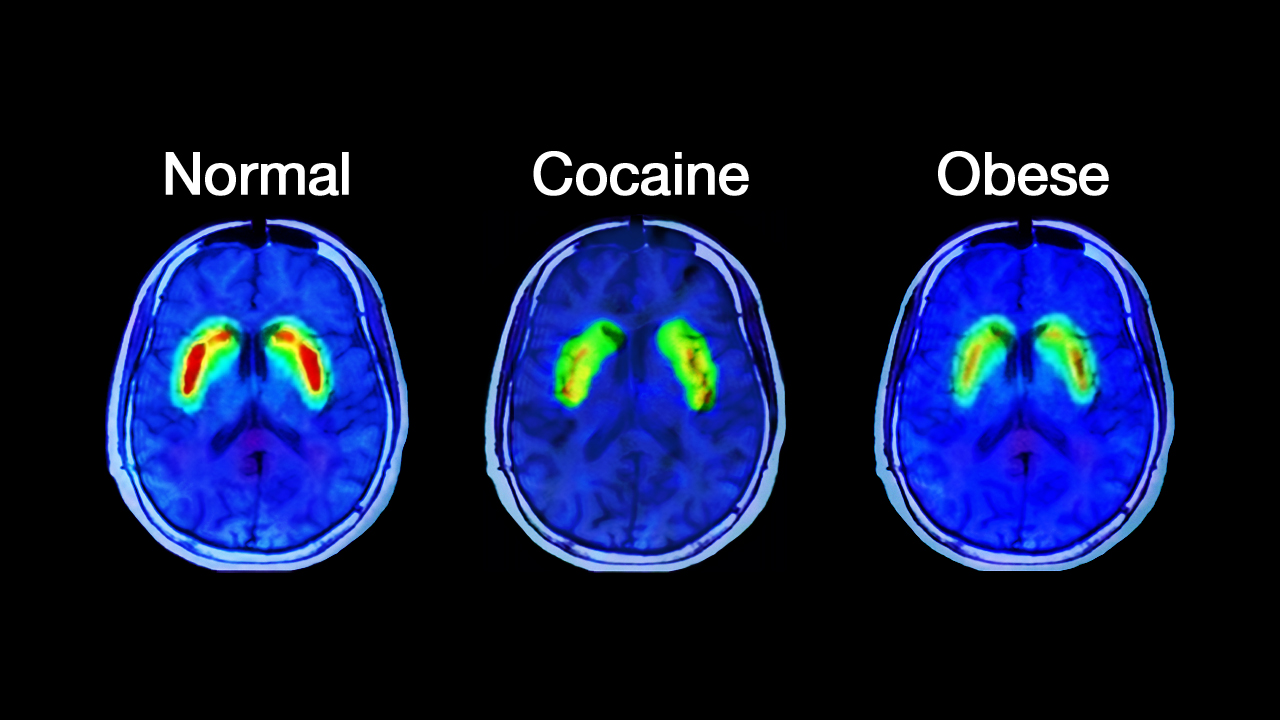
    But something interesting happened in the 1990’s when a few groundbreaking doctors first began to use SPECT (Single-photon emission computed tomography) scans of their patients brains, in their treatment. And when they did, they discovered some interesting patterns — especially where addictions are concerned.

    For example, if you scan a person’s brain who is addicted to alcohol and compare that to a healthy person’s brain, you will see two completely different organs.

    The healthy person’s scan will show activity in the various areas of the brain — the frontal lobe, the hypothalamus, the prefrontal cortex — all firing off as needed. There will be a dispersed activity in all these areas. All parts of the machine have a use and all of those parts are being utilized where needed.

    But the alcoholic scan will show overactive areas in the what is referred to as the pleasure and reward bundle of the brain — the nucleus accumbens, the prefrontal cortex and the amygdala — with other areas seeing very little use. In fact, an alcoholic’s brain will have this swiss-cheese-appearance with certain areas of the brain basically shutting down due to lack of use. And an alcoholic’s brain will actually be physically smaller than a healthy person’s brain. We see the exact same thing when we look at a brain scan of someone addicted to drugs.

    Now this isn’t very surprising to us. We know that there are chemicals in alcohol and drugs that are extremely harmful. So a chemical attack of the brain can result negatively to someone who abuses drugs or alcohol. Yeah. That makes sense.

    But here is where things get interesting.

    If you now scan a person brain who is addicted to say, food for example — someone who is morbidly obese — or someone who is addicted to gambling, pornography, sex or shopping, you will see —- the exact same thing.

    A person’s brain addicted to shopping — is almost identical to that of someone who is addicted to alcohol. The brain from an individual who is addicted to pornography — will look just like the brain of someone who is addicted to heroin.

    brain

    What? How is that possible?

    It’s simple.

    The brain registers all pleasures in the same way — whether it’s booze or sex. Gambling or cocaine. Finishing an important project at work, or scraping enough change together for a fifth of bourbon. In the brain, pleasure has a simple and distinct signature: the release of the neurotransmitter dopamine. That’s it. To the brain, all pleasures are the same.

    All drugs of abuse — nicotine or chicken wings, crystal meth or Facebook — causes a particularly powerful surge of dopamine. And in our brain we then create a well-worn path to get to it.

    And in addiction our view of the daily life becomes very simplified.

    Stressed? No problem, grab the addiction.

    Celebrating? No problem, grab the addiction.

    Bored? No problem, grab the addiction.

    Eventually the other areas of the brain — reason, patience, problem solving, planning, — aren’t needed as much. You have only a condition and response. This equals that —- with the ‘that’ being the addiction. The magic button that can be used at any time, all the time.

    And eventually a very worn path is created between a very small part of our brain. And the other rooms just —well. Shut the lights off because there is no activity going on there.

    Now, where it gets even more interesting is that the likelihood that the use of a drug or activity will become an addiction is directly linked to the speed and intensity of that dopamine release. So smoking or injecting a drug, produces a faster and stronger dopamine signal and is more likely to lead to drug use that taking as a liquid or pill.

    But we live in a very fast paced society. A person who is addicted to shopping can get that dopamine rush as soon as they pull out the credit card out or even hit the shopping cart icon. And someone addicted to gambling doesn’t need to find a bookie or a casino any longer. You can gamble online from your phone. And food —? Twenty four hours a day we can get fast and hot food delivered, picked up or microwaved — in seconds. And that dopamine rush is triggered.

    And this is not only for addictions that we consider ‘destructive’ but for all addictions. A person’s brain who ids addicted to marijuana will look like the one who is addicted to work. The individual, who has to get to the gym six times a week, will have a brain that looks like the person who is addicted to nicotine.

    Do you know anyone who cannot hear that ping of a text message or the sound that an email has just been received, without checking their phone? That little sound can easily be hard wired to that dopamine trigger, and a path is formed.

    So what does all of this mean?

    Well, it means that when we get most of the joy, happiness, release, and pleasure from only a few areas, that there is not only a spiritual cost but a biological one. It means that that quick pleasures can be extremely costly — not just for what we are leaving out of our lives, but for the damage done to the organ that keeps us breathing and allows us to reason.

    It means that old habits destroy, and new skills build.

    It means that quick fixes are costly, and new experiences are constructive.

    It means that the greatest joys are the ones we work at, and the ones we strive for.