Author: Everett DeMorier

  • The broken gauge

    The broken gauge

    path

    From the moment we are born — when we are a minute old, right to the day before our eighteenth birthday — we fall under a specific legal category. We are minors.

    Now, the dictionary definition of a minor is one of lesser in importance, seriousness, or significance. Which in the legal state is somewhat untrue. Yes, as minors we cannot vote, buy tobacco, we cannot serve in the military and we cannot make legal decisions on our own. But as far as importance, we have the very highest priority of legal protection and safety.

    But at eighteen years of age this changes. We leave the state of minorship and enter the legal age of adulthood. This is the line. There are the things that happened before we are eighteen — our childhood — and then all that occurs after — as an adult.

    Now, there is no clear reason why eighteen was chosen for the age of adulthood. Many historians will say that it is tied to the end of the public school system and the beginning of college enrollments and most kids complete high school at the age of eighteen. An age had to be chosen and this one made sense.

    So the normal path of life is tied directly to this age.

    Before eighteen, we are a minor.

    At eighteen we are an adult.

    By twenty-two we should be done with college or have our career path chosen.

    By twenty-five we should be living completely independent and be financially established.

    By thirty we should be married.

    By thirty-five we should have kids.

    By forty we should be hitting our career stride, making a good income and raising our children.

    By forty-five we should be upper management.

    By fifty we should be reaching our area of peak income potential.

    By fifty-five we should have our kids in a good college.

    By sixty we should be looking towards retirement and the good life.

    This is the path. This is the gauge we should measure ourselves and others against. If we are ahead of the curve, we are successful. If we are behind it, we are failing. And all of it is based on the fact that — we are adults at eighteen. And this is when it all begins. This is when the grading starts.

    But there is a major issue with this type of reasoning. The biggest one is that the human brain — the device that has complete control over all we think, reason, decide and do — is still developing until the age of twenty-five. This is true. It’s also the reason why our car insurance rates begins to go down at the age of twenty-five because we are finally done cooking and can now think clearly — at eighteen the rates are the highest and at twenty-five they begin to go down.

    So at twenty-five we first have all the mental equipment we will be given. But according to the scale we should be seven years into our path. And if we’re not; if at twenty-five or thirty we are just opening our eyes and seeing clearly for the first time — we are a failure. And worse, we have missed the boat. We realized too late. The opportunities have left us and we’ll just have to get by someway else.

    And this is absolutely not true.

    Life decisions do not have expiration dates. You don’t go back to college to finish, you go to college. You don’t go back to your old profession; you just decide that is the industry you want to make a living at.

    Fifty is as perfect of an age to begin a business as thirty is. Twenty is just as good a time to go to college as forty. And learning to play the guitar, to speak Spanish, to dive or to juggle, has no age limit at all.

    There is no back.

    Because there is no gauge.

  • Every man needs a garden

    Every man needs a garden

    garden

    Remember when you were a kid and you took the tops of carrots and placed them in in a jar lid of water on the windowsill? Then every hour, all day long, you would run back to check; to see if the carrots had sprouted yet? Then, the next morning, as soon as you got up, you checked again? Then later that day too? Then —. Well then — it would always get a little boring. And by the end of that day you had forgotten it all?

    Remember that?

    Then later, about two weeks, you’d finally think about those carrots and you would run to the windowsill to find one of two things?

    1. Either the carrot tops had completely dried out from neglect and stood there mocking you? Or —
    2. Your mother had watered them, which meant that you had bright green sprouts of success projecting from the top?

    And when that happened, you —. Well, you felt like a —. Well, like a guy who could get carrot tops to grow on a windowsill. Which, at six years old, is about as big a deal as it gets.

    And that — my friends — was your very first garden.

    And for some of us, that was our last one too.

    There are many reasons to have a garden — and when I say garden I mean everything from a few tomato plants to an acre of produce. A garden is just something you grow on your own.

    Reasons to have a garden

    1. No matter where you live, you can have a garden. If you are in the middle of Manhattan or the backwoods of Tennessee, you can grow stuff. On a windowsill, a roof top, the sunny part of an alley or in the many community gardens that are set up. There is no place, no living arrangement, where you can’t grow a few things.
    2. There is little skill involved. Yeah, I know, you don’t have a green thumb. And yes there is an art to gardening. But the basics are incredibly simple. You put seeds in the ground. You water them. They grow.
    3. Cost savings. Just a few tomatoes or squash from the small patch of dirt by the garage saves you money that you would have to pay out. And that’s not even adding in the value of canning or freezing for the winter.
    4. Pride. Yeah, it sounds hokey but there is pride involved. When you take a few zucchini to a neighbor or a basket of tomatoes into work, there is enormous pride in that. A sense of accomplishment.
    5. Health. Whatever you grow in your garden you know how it was grown. You know what pesticides you put on and how much. There are no secrets. And you have the advantage of taking the food at its most peak time and going from garden to table.
  • How to shine your shoes

    How to shine your shoes

    shoe shine

    Although the good old days when shoeshine boys stood on street corners — young kids with a shoe box, offering a quick shine to passersby — was well before my time, I did get to be part of the great suit era of the 1980’s; when no matter whether you worked in the mail room or had the corner office, you were donned in a suit and tie.

    And this was also the time of the shoeshine guys.

    These shoeshine guys — with their barbershop like chairs on a pedestal — were everywhere; hotels, airports and even some restaurants. Which made perfect sense because these were the days when your first impression was determined by the firmness of your handshake and the shine of your shoes.

    Now if you think that the shoeshine guys were just a nostalgic look at a different era, I guess they were. But for a young man they were also a rite of passage. Having your shoes professionally shined while you sat there and looked on,  meant that you were not only old enough to get your shoes shined — and were actually wearing shoes that you could be shined, not sneakers — but that you could pay for it yourself. And for a few bucks you could feel both responsible and frivolous at the same time.

    They are mostly gone now, the shoeshine guys. I mean, you still see them in airports and most major cities still have them, but the bulk of them; the shoeshine guys set up as you waited to get a table for lunch or as you sat at a bus stop, are all gone. With the majority of us in business casual, our loafers don’t seem to need to be as shiny as our wing tips.

    And most likely the next generation probably doesn’t need the shoe shine guys like we did. Because they have there own rites to go through. But there still — even if just for a wedding, funeral or interview — you will be a need to shine your shoes. And when you do, you want them to glow.

    HOW TO SHINE YOU SHOES:

    1. Remove the laces of the shoes. A lot of people don’t bother with this but its the only way to get the tongue polished and get in all the nooks at crannies of the shoe. Take the laces out and fold the tongue up — this is also a good time to replace the laces if needed
    2. Clean the shoe. Not polish, but clean. Place your hand inside the shoe and with the other hand take a slightly damp cloth and wipe down the entire surface of the shoe to get off all the dirt and dust. Note, if you skip this step you could not only polish the dirt into the leather, but any sort of particle of dust could easily scrath the surface of the shoe.
    3. Apply polish. Using circular motions apply a thick coat of polish all over the shoe. Don’t be stingy here. Get a thick coat of polish all over the shoe and work it in.
    4. Get the shoes wet. With a spray bottle or a just taking your hand over the stream of water from the sink, cover the shoes with beads of water — its best to do one shoe at a time. Once its wet, you get in there and start buffing the shoe. This is the shining stage. Work it hard and add more water if needed.
  • REVIEW: Audio Book. Johnny Cash: The Life

    REVIEW: Audio Book. Johnny Cash: The Life


    johnny_cash_the_life2-540x340


    Audio Book:

    Johnny Cash: The Life

    Written by: Robert Hilburn

    Narrated by: Charles Pittard


    As I’ve mentioned, I spend a great deal of time in the car — a great deal. In fact, if I sat down and calculated it, I’d say that I average about 2,000 miles a week.

    My routine is simple. In the morning I get in the car. I drive. I have meetings during the day and then I drive home. That’s my life. And it’s not unusual for an average day to contain six or eight hours behind the wheel — or more.

    And when I get in the car — after I return all the phone calls, send the audio emails and check on my mom at least once — what’s left is pure windshield time. And the majority of that windshield time is spent listening to audio books.

    At any given time if you were to look in my car you would see three different audio books. One of them will most likely not have passed my five-minutes-test and I’ll put it in the backseat and not finish it. The second will most likely be tolerable and the third will be good to possibly great. Depending.

    I just finished  an audio book that was the biography of Johnny Cash. It wasn’t great.

    Now, the first thing to know is that I knew very little about Johnny Cash before this book. I could name a handful of songs but I never really followed him and didn’t see any of the films made about him. So I had a clean slate going in and picked up the book to learn more about the singer.

    As the book opens, we learn about Johnny’s  — then called JR’s — childhood and this beginning had a great few chapters. We looked at the artist’s very early life of growing up in the hills of Arkansas and we saw his family through their struggles and hardships. I enjoyed this part — even though the narration was probably one of the worse I’ve ever heard.

    See, audio books are an art form and there is so much talent in these narrators because you don’t have sound effects or music, you have one person reading the book with all the different voices, characters and accents. And a truly good narrator will allow you to forget that there is only one person reading this book and you would swear that there are a dozen or more.

    This is not the case with this book.

    The narrator — a gentlemen named Charles Pittard — simply reads the book. And he reads the book the same way that you would read a shopping list or instruction on putting together a chair. Drole. Dry. And flat. This is probably the second worse reading I’ve ever heard, next to Juila Roberts when she narrated The Nanny Diaries — it was a long drive and the book was loaned, not my normal choice of books — and I couldn’t get past the first few minutes. She just read it like she had one eye on the clock.

    Now you could get around the narration except that most of the book is written in this flat manner as well. In fact, a few chapters in the book stops being a book and becomes more of a report. A list of all the songs Johnny Cash wrote, recorded and all the places he went. I didn’t feel like I was there, I felt like I was sitting in a Moose Halls listening to  someone’s presentation on the life of Johnny Cash; while watching slides and getting to see the speakers collection of  albums and concert tickets.

    Not a good audio book. Don’t bother.

  • 10 things to never buy from a dollar store

    10 things to never buy from a dollar store

    Dollar

    Dollar Stores are amazing — and by Dollar Store I am referring to Dollar Tree or others like it where everything costs a dollar; not any one of the discount stores where the word Dollar is simply in the name.

    I frequent Dollar Tree a great deal and these are great places to get greeting cards, decorations, cheap hand tools and Millar balloons — nothing cheers someone up more than a dozen helium balloons from the dollar store.

    But in my experience, I’ve discovered that there are certain things that you should never — and I mean ever — buy from the place. Here are the top ten.

    10. Ear buds

    How bad can they be right? They’re only a buck and if the sound isn’t that great you can just chuck them. No. First of all these things are designed for some race of ears much larger than humans have and even if you can cram them in your ear holes the sound will melt your brain. Stay away.


    9. Glue sticks

    A pack of four, Elmer’s glue sticks at Wal-Mart is about five bucks. A pack of four no-name glue sticks at the dollar stare are, of course, a buck. What’s not to like? Except that these are made from one of the few materials in the store that are not sticky and permanent. These don’t work so don’t waste your money.


    8. Band aids

    The Band-Aids at The Dollar Tree must use the same stick-technology as the glue sticks. It’s as if someone printed Google Images of band aids and put them in packs. They don’t work so skip by them.


     7. Razors


    Okay, we are getting in serious territory now because buying Dollar Tree razors will simply tear your face off. It will. These are dull and dangerous devices and even if you’re traveling and forgot your razor, it’s far better to walk into your meeting with a two day beard, then it is to do it while missing an ear. No.


    6. Soda

    I’m not even sure that Dollar Tree soda is legally soda. It’s more like Kool Aid with a very slight carbonation sound added when you open it. Horrible stuff. Buying the individual bottles of the brand name soda in the cooler up front is fine, but never get one of these three-liter horrors.


    5. Knives

    Dollar Tree sells many kind of knives; kitchen knives, utility knives even no name Swiss Army type knives. And the ones that are actually made from a metal — most are silver painted plastic blades — will never hold an edge and therefore are extremely dangerous. You will slice off a leg with one of these things trying to cut something, so don’t buy them.


    4. Colognes/perfumes

    Again we are getting in an area that is a danger to human life. The only thing worse than cologne from The Dollar Tree is the thought of the long term environmental impact if that same bottle managed to getting in the water supply. These things will set off smoke alarms. Stay far away.


    3. Super Glue

    Any super glue that is not made by Loctite, is just glue — my humble opinion, of course. And this stuff is barely that. It doesn’t work and don’t buy it.


    2. Aluminum foil

    Aluminum foil is expensive — especially if your barbecuing or using a smoker, when you’re going to need a lot of it. But there is not enough Dollar Tree aluminum foil in that entire store to do what you need to do. It’s thin, it breaks easily and it’s more like shiny paper than anything even close to aluminum foil. Don’t buy it.


    1. Batteries

    Right before a battery dies, as its saying goodbye to its wife and children, they unplug the monitors and wheel it into The Dollar Tree. By the time you get the battery out of the store and into your car, the trip will be enough to kill it.

  • How to pack a suitcase

    How to pack a suitcase

    bag

    I love the type of movie where there is a tortured soul, filled with wanderlust, who hears the call of the open road and decides to see the world. So he throws a few meager possessions in a small backpack and starts walking. He hitchhikes, he takes the bus, and he meets people along the way. Then we have scene-five. This will be after he arrives in a town — usually to help a rancher or struggling non-profit group out of a crisis — and he meets the girl. Scene-five will be their first date. You know the scene — the darkened restaurant, the candlelit tables, him in a suit and her in a dress, and as you watch, only one thought goes through your head.

    Really? You packed a suit in that small backpack? C’mon.

    This kid has a daypack that is half full. He carries it from New York City to Provo, Utah, and during that time he has six full changes of clothes, a suit, a raincoat, hiking boots, sneakers and during the date scene he is wearing an expensive pair of Italian loafers.

    No. You did not get all of that in your twelve pound pack.

    But that’s what we want. We want a bag to be light and small, yet we want it to contain a never ending supply of clothes, coats, shoes, formal wear and a few books — just in case we get bored. We want it to be our house — in a bag.

    Type of travel

    There are two basic types of travel packing. You are packing for weight, or you are packing for content. You can’t do both.

    If you are going to be in three different locations over four days, if you are going to be carrying your bag through train stations, airports or have it on your back most of the time, then you want the bag to be the smallest and the lightest possible.

    But if you are going to one location and then back, then you want your bag to contain everything you need, or will ever need, for a specific time period. You want maximum content in a limited space.

    The suitcase laws

    Half of everything in your bag you will use.

    A quarter of everything in your bag you will not use

    And a quarter of items that you end up needing — you forgot to pack.

    Staging

    Most of us pack this way. We open the bag and start stuffing things in. When there is no more room, we’re done packing. But by staging, we can guarantee that we get everything we need.

    Spread out the bare minimum you need for the trip — the absolute least you will need. Pretend that this is all you are allowed to take and you could survive the trip if you only had that. Now pack it. When you’re done, the available space is what you have for everything else you think you’ll need.

    Over packing is a common — and sometimes costly — mistake. Pack too much and your free carry-on could easily cost you a hundred dollars or more in fees. Remember, laundromats exist in hotels, resorts and in every town or city you’ll be in. You can always wash clothing while you’re away.

    And remember if you’re going to be bringing things back — souvenirs, clothing, items purchased while away — you’ll need space for that.

    Rules of the road       

    Try to bring one belt if possible — something that can be used for both casual and dress.

    Try to bring two pairs of shoes — or if needed the pair of shoes your wearing, one extra pair and a pair of sandals. No more.

    HOW TO PACK A SUITCASE:

    1. Use the roll-up method. By taking your clothing — shirts and pants mostly — and rolling them in a tight tube, you can get the best use of space in your bag
    2. Underwear. Pack one pair for everyday your away, plus one extra pair. No more.
    3. Wear the same clothes on your way out, as you do on your way back in. This will save you one change of clothes.
    4. Toiletries. Clean out your toilet kit before you leave — otherwise you’ll be carrying those free shampoos and conditioners you had to have from the last trip out, and then back home again. And if flying, remember the TSA regulations of liquids being 3 ounces or less — unless you are checking your bag.
    5. Pack for the weather. The forecasts for your location could change a dozen times before you get there, but it doesn’t hurt to have a rough idea of what the weather will be like so you can pack accordingly.
    6. Fill your shoes. Pack socks and underwear in the shoes that will be in your bag. This is wasted space so fill them up.
    7. Fill the edges of your bag first. Again, this is where pockets of wasted space often hide, so fill that in first.
    8. Use the outside pockets for items you’ll want to get to quickly: phone chargers, books, magazines, etc.
    9. If checking a bag it’s a great idea to fill your carry on with all you’ll need to survive a few days — contact lens stuff, change of underwear, toothbrush, etc. That way if your bag gets lost you can stick with the plan while they find it and get it to you.
  • How to make corned beef and cabbage

    How to make corned beef and cabbage

    corned

    Until they make Superbowl Sunday an official holiday, the most gastro-masculine celebration of the year has to go to —  Saint Patrick’s Day. I mean, c’mon, any day that revolves around red meat and beer is bound to attract testosterone. Which means that being able to make the staple meal of Saint Patrick’s Day, corned beef and cabbage, is right up there in the masculine food hierarchy with grilling a great steak or deep frying a whole turkey.

    History

    Corned beef and cabbage became part of the Irish-American culture in the early nineteenth century when Jewish butchers offered very inexpensive cuts of salted beef to the public. Salted meats had been available in Europe for centuries but most of Ireland ate little of it, in either fresh or salted form, because it was not only extremely expensive but came from cows that were owned by the wealthy — so even if you did have the coin to purchase it, you probably didn’t have permission to buy it. So what beef that wasn’t used by the estate was salted and exported at a much higher profit than they could have received at selling it to the lowly peasants. So, when Irish immigrants came to the larger cities in the US, they saw inexpensive cuts of salted beef were available for purchase — possibly for the first times in their lives.

    More corned beef in consumed in the United States on Saint Patrick’s Day than any other day, which means that the price need to  be competitive on that day. This gives you an opportunity to purchase a few of these salted gems and freeze them for later on in the year.

    Corned beef and cabbage is an example of what is called a boiled dinner. These are one pot meals that are cooked low and slow and include a piece of meat, and many root vegetables and spices. These are great because they are easy to make, inexpensive, hard to mess up and feed many people — which makes them ideal for camping trips, tailgating, deer camps or any time you want a big hearty meal for many.

    And the best part is, they are really hard to mess up. A boiled dinner is quick to prep it, then you turn it on and wait.

    HOW TO MAKE CORNED BEEF AND CABBAGE

    Ingredients

    • 1 medium onion, cut into wedges
    • 6 red potatoes — or a bag of fingerling potatoes.
    • 1 bag of carrots
    • 1 bottle of dark beer
    • 3 garlic cloves, minced
    • 1 bay leaf
    • 3 stalks of celery
    • I head of cabbage cut into wedges
    • 1 cup of apple cider
    • 1 corned beef brisket with spice packet (2-1/2 to 3 pounds), cut in half
    • 1 small head cabbage, cut into wedges

    Many people make this meal in a Crockpot and you definitely can. However, I find that the more modern the Crockpot the faster it cooks — I can’t prove this yet, but it seems like the newer crockpots cook at a higher temperature and can dry out the meat. So a Dutch oven or any pot or pan you can cover, will work fine.

    Place your onions, celery — cut long way like your carrots — and potatoes in the bottom of the pan. Place your brisket on top of the vegetables. Add the spice pack that came with the meet to the top and place the cabbage on top of the meat. Pour the vinegar and beer to the side to fill the pot.

    And that’s it. Cook for about 4 hours at 300 degrees.

  • Freelance

    Freelance

    free

    Around the time that I first met my wife — this would have been 1990 or so — I made a change in my occupation and  began calling myself a writer. Now, I didn’t say I was a writer, or that I was writing much or had even been published.  That’s not the point. I just started calling myself one — see, how it works is that first you call yourself a writer, then you become one.

    And what do would-be writers call themselves if they have little to no publishing credits? That’s easy. We are freelance writers. So, that’s what I was. A freelance writer.

    In fact, if you look at our wedding announcement you will see listed under occupation, both a purchasing agent and a freelance writer — see, it was okay to be a purchasing agent, as long as your were a writer too.

    Now, if I were to research this, it may have been possible that I had a small piece published by then, but I doubt it and it didn’t matter. The title was what was important. Which is the great thing about being a freelance writer; you didn’t  have to be published or even have written anything. And because people were somewhat confused by the freelance heading back then, they pretty much left it alone after that.

    Calling myself a writer was also a convenient safety chute, or back door. If my real life failures were ever brought up, I just pulled the writer thing out. Yeah, well, I’m also a freelance writer. Meaning, yeah, I may look like a loser now, but some day you may be bragging that you met me once. Other variations of this include; yeah, well I’m also a musician, and, yeah, well I’m also an actor. And when you’re young, these back doors actually work.

    So Debbie and I got married and I continued being a writer. I had a few bad articles published in a few bad independent newspapers — that pretty much accepted anything — and now I crowned myself, published freelance writer. Then, when Debbie was pregnant with our first son, I pimped a copy of his ultra sound for my very first paid writing gig. A short article in The Weekly World News — a highly respected periodical of the day known for in depth studies of both bigfoot and aliens — entitled, I’m having Elvis’ baby; because at that early stage of Nick’s development, his head had that Elvis pompadour thing. I was paid fifty dollars and a batboy t-shirt. And now, I had moved to the level of professional freelance writer.

    I started sending query letters out to magazines and publishers by the truck load and this probably explains while I still have this weird thing about the mail. Even in the day of texting and email there is a solid Pavlovian reaction to the sound of the mailbox being opened — I have to get the mail, this might be good news.

    I managed to get a few pieces published in a few magazines and then, on the very same day that we were closing on our first house, I heard back from a small publisher. They liked a book idea I had pitched and wanted to publish it.

    I had made it.

    Now, the book was a non-fiction look at the first year of marriage — at all the changes and challenges that existed. And although I didn’t want to write non-fiction — no one wants to write non-fiction —  it’s widely known that once you get a non-fiction book published, agents and publishers beat a path to your door in order to get to your good stuff.

    The book was badly written and badly edited and I didn’t care. I was about to be a published book author which would put me on the correct path. I went on a small book tour, did the CNN, Fox News, thing along with a bunch of book signings. And because the book was the only one of its kind back then — there are dozens now — I convinced the publisher into letting me write another one. This time on the first year of fatherhood.

    Book two was the same. Rinse and repeat. And then everything stopped. The world didn’t beat a path to get to me. The publisher wasn’t interested in more of my dumb ideas and I was — confused.

    The books — that were supposed to fix everything, to justify my existence and erase my many failures  — did not. And I actually felt worse than I did before I was published.

    Now, we enter my angry phase. I mentioned the books on my resume — as a way to catch an interviewer’s eye — but otherwise I didn’t talk about them at all. If the topic were brought up in casual conversation, I changed the subject — the same way you do when asked if you beat that DWI charge or how the bankruptcy is going.

    I did very little writing during this time but ironically did land the highest paid writing job I had, or would ever have. This was the beginning of the end of the dot-com bubble and finding content providers was still difficult to do; which meant that they were actually pretty highly paid. There was a website being developed called Decisionagent.com that paid me three hundred bucks for every 700 word article I could write for them. I pumped out three of these a day, every day, for six weeks before the bubble popped and they went belly up.

    Now there’s more to my glorious writing career. I got to spend the last six years working with a great group of people writing and helping direct Christmas plays, I have a book coming out next week and of course there is this website. But here is the point to all of this.

    I no longer think of myself as a writer. I don’t. And a large reason for this is that I’ve learned that I really don’t like writers all that much. I’m sorry if this offends, but writers — for the most part, there are exceptions — are largely self important, arrogant, self involved people, usually with a 70/30 mix of ego over talent. They’re not much fun to hang out with and you really don’t want to aspire to be like them.

    So I’m no longer a writer — freelance or otherwise.

    Now, I just write.

    The history of bat boy — http://en.wikipedia.org/wiki/Bat_Boy_(character)

  • Five great peasant dishes

    Five great peasant dishes

    peasant

    As far as fun, creative cooking, nothing can compare to peasant dishes. You know, comfort food. The meals that you grandmother made that tasted amazing, cost pennies, and you never, ever got tired of.

    Peasant dishes have been given that name because they were made from ingredients that were inexpensive and readily available. These were the meals of the common folk and they usually consisted of one dish, were made from less desired chunks of meat or sausages and used whatever vegetables, grains and starches were easily found.

    There is an art to creating great peasant dishes; it being more instinct than cooking. And my Aunt Isabelle — who ran a boarding house and provided a decent living for herself for three decades, after her husband walked out and left her penniless — could make a mouthwatering meal for a dozen hungry men, from a few cheap cuts of meat, some vegetables and a lot of practice.

    There are many recipes for peasant dishes but using a recipe here seems almost blasphemous. The cooks that developed these dishes didn’t use recipes. They just looked at what they had to work with and they made it as rich and as flavorsome as possible. And anyway, by following a recipe, you’re just copying someone else style — robbing you of the pleasure of developing your own.

    So, here are the top 5 peasant dishes of all time. These are all easy to make, cost pennies and have ingredients that are readily available. But more importantly they have few rules which allows you to experiment and get creative.

    Have fun.

     5. Shepherd’s pie

    Like many classic peasant dishes, there are dozens of variations of shepherd’s pie — some have a brown sauce, some red, but the basics are the same. Ground meat and vegetables covered in mashed potatoes and cheese. What’s not to love?


    4. Pot pie

    Now, homemade pot pie tends to get some reluctance from cooks, because it  involves making a crust. But basically this is just a simple biscuit dough — which is very easy to make. Pot pies are rich, tasty and so, so filling.


    3. Goulash

    Like shepherds pie there are so many deviations of goulash that there are actually serious arguments about it. What some people call goulash — dark gravy with sirloin mixed with egg noodles — are not what others consider the dish — red sauce, ground beef and elbow noodles. But whatever variation you choose to make, this a great dish to make, easy and cheap.


    2. Haluski

    Haluski is not only the lowest price dish here — the meatless version will cost you about fifty cents in ingredients — but it is beyond a doubt the most flavorful. My kids, who are pretty picky eaters, love this every time my wife makes it. All haluski is, is cabbage and egg noodles. That’s it. But many people add in bacon for flavor — my wife’s version also includes capers. Amazing.


    1. Chili

    Chili is, was, and will always be, the mack daddy of peasant dishes. It is easy to make, flexible and includes so many possibilities, that there are countless cookbooks dedicated to just making chili. It’s a great, easy and fun dish to make.

  • How to make jerky

    How to make jerky

    jerky

    Origins

    Tracing the history of jerky is somewhat difficult because people have been salting and drying meat for centuries. However, the word jerky has a direct line back to the ancient Incas: sometime around the year 1550. During that time, the Incas would cut slices of llama meat, rub it with salt and dry it in the sun or over a fire. When the Conquistadors arrived, they continued this tradition and called it Charqui, and when they later invaded the Americas they noticed that the natives were doing a similar process with meat from buffalo, deer and elk. The Native Americans began using the same term — only with their accents they pronounced it jerky.

         Jerky allowed people to consume high protein fuel that was readily available and eat it when food was scarce. It became a staple food item for early American pioneers and allowed for Western expansion. Over the years people discovered that the meat could hold more flavor if certain spices and tastes could be added and they began to create it for flavor, not only as a survival food.

    Nutrition

    Contrary to popular belief, beef jerky is actually a pretty healthy snack. It’s a great source of protein, is low in fat and calories and has minimal carbohydrates. Yeah, the sodium content is through the roof, but hey, it’s salted meat.

    And remember, jerky is not just a snack food. Jerky is dehydrated meat which means it can be rehydrated again when placed in hot water so you can use it in chili’s, stews, at home or while camping or hiking.

    But here’s the thing. The cost of commercial jerky is downright ridiculous.

    Economics

    Let’s use the Jack Links brand of beef jerky as an example. This brand resale’s for $5.99 for a 3.25 ounce bag. So, if we take $5.99 and divide it by 3.25, we find out that this jerky costs $1.84 an ounce. And since there are 16 ounces in a pound, that means the cost of this jerky is — $29.44 a pound.

    That’s thirty dollars a pound for — beef jerky.

    In comparison:

    • Lobster is currently running around $12.00 a pound
    • Filet Mignon is $19.00 a pound
    • And Prime Rib is about $17.00 a pound

    But beef jerky — that you buy at the gas station — is thirty dollars a pound.

    Now add to this, the comparison between the taste of homemade jerky and the prepackaged kind, and it’s not even worth comparing. The jerky you can make at home tastes worlds better, hands down — and will not contain any strange chemicals, preservatives or nitrates.

    Now marketers jumped on this fact a few years ago and starting producing small commercial dehydrators to dry your meats and vegetables, at home. They created infomercials, bought television time and dominated the shopping channels, stating what a crime it was for you to pay so much for beef jerky when you can make it yourself. But they would like you to make it at home — with their two hundred dollar dehydrator.

    Now, that’s just plain silly.

    Why would you pay two hundred dollars — for something that is basically a little heater and fan? And why would you pay any amount of money for a device that can do what the Incas did in the 1500’s with just fire and the sun?

    Because everything you need to do to dehydrate — herbs, vegetables, meats, anything — can be done in your kitchen oven and can be done for pennies.

    And it doesn’t matter what type of meat you use. You can use beef, venison, turkey, salmon, tuna or something even more exotic. And you can cater each batch to different tastes — make sweet, smoked or spicy.

    HOW TO MAKE JERKY

    1. Cut meat in strips. You’ll want these to be about the size of a slice of bacon. And the best way I’ve found is to get your butcher or meat department in the supermarket to cut the meat for you.
    2. Prepare marinade. Here is a real simple marinade that works well.
    • 1 part Worcestershire sauce
    • 1 part Soy Sauce
    • 1 tbl Honey
    • 2 tsp black pepper
    • 1 tsp chili powder
    • 1 tsp crushed red pepper flakes
    • 1 tsp liquid smoke
    • 1 slice of onion
    • 1 squeeze of lemon
    1. Place meat in storage dish, cover with foil and refrigerate anywhere from two hours to overnight.
    2. Preheat oven to 160°F
    3. Place a cookie sheet, wrapped with aluminum foil, in the bottom of the oven. This is to catch all the dripping from the jerky, because you are going to place the jerky right on the oven racks.
    4. Allow to dry in the oven for anywhere from 6 to 12 hours.
  • 10 free things to do this weekend

    10 free things to do this weekend

    frisbee

    When the kids were little — probably around age 7 and 9 — we had this Saturday tradition. I’d get them up, get them fed and dressed, and we would head out for the day; just the three of us. No girls allowed. Now, we could do anything we wanted to on those days. Anything. But there was only one rule. We couldn’t spend any money.

    Now part of the reason for this was because we were a young family and were trying to be frugal — hey, just an afternoon of bowling or movies with kids will cost fifty dollars or more — but there was actually more to it. When you pay for something — especially when you pay for entertainment — it loses charm quickly. It’s less special, less personal, since it’s easily accessible and available to anyone who will pay for it. But if you have to find the things to do, to locate and get to them; there is a reward at the end.

    So those Saturdays had to be free.

    And today, if you asked the kids about those times — ten years later — they will tell you, in exciting detail, of all the goofy things we did. Of the battlefields we went to, of the time we took a bus tour of a landfill — which was actually pretty fun. They’ll tell you of open air concerts, of the wars we had in the woods, the street fairs and the concerts of Irish dancers. We went to museums and zoos. We toured churches and synagogues and we caught buckets and buckets of fish.

    All fun. All free.

    10 FREE THINGS TO DO THIS WEEKEND

    10. Movie festival.

    This may seem corny, but home movie festivals are a lot of fun — and can be as large or as an intimate as you want them to be. Break out all the DVD’s in the house and pick the top ten or so and that’s your film selection for the day — an entire guilt free Saturday of doing nothing but watching movies. If you want to open it up to family and friends, a quick post on your favorite social network showing the schedule, and you’re good to go. Or you can pull down the curtains, turn the phones off and just escape for the entire day.


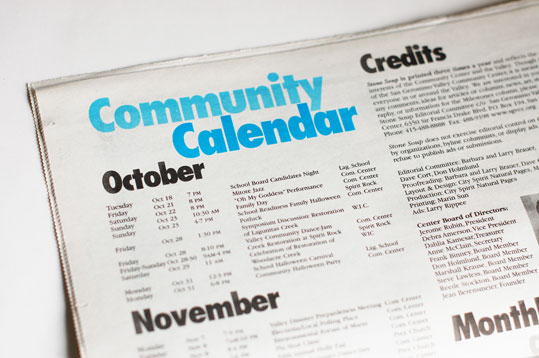
     9. Community Calendar.

    Community calendars are amazing and much of what the kids and I used to do, came from these sources of information. On any Saturday, there are always little festivals, tours, classes and concerts. Always. And these folks are so glad to see you and to tell you about what they do.


    8. Community sports

    Professional and college sporting events are pretty pricey and even High School level sports will cost you a few bucks. But there are always community sports that are open to the public. Softball leagues, Little League Baseball and Pop Warner Football, are a lot of fun to watch. But what’s really interesting is to find the less mainstream sports — I just found out that in our area, there are Cricket Leagues. I’ve never been but we’ll be going this year.


    7. Create a potluck open house

    With a few phone calls, texts or posts, you can invite the world in for the day. Ask everyone to bring a dish to pass and break out the board games, the horseshoes, the video controllers or just sit in the backyard and catch up. People can come and go, arrive and leave, all day long.


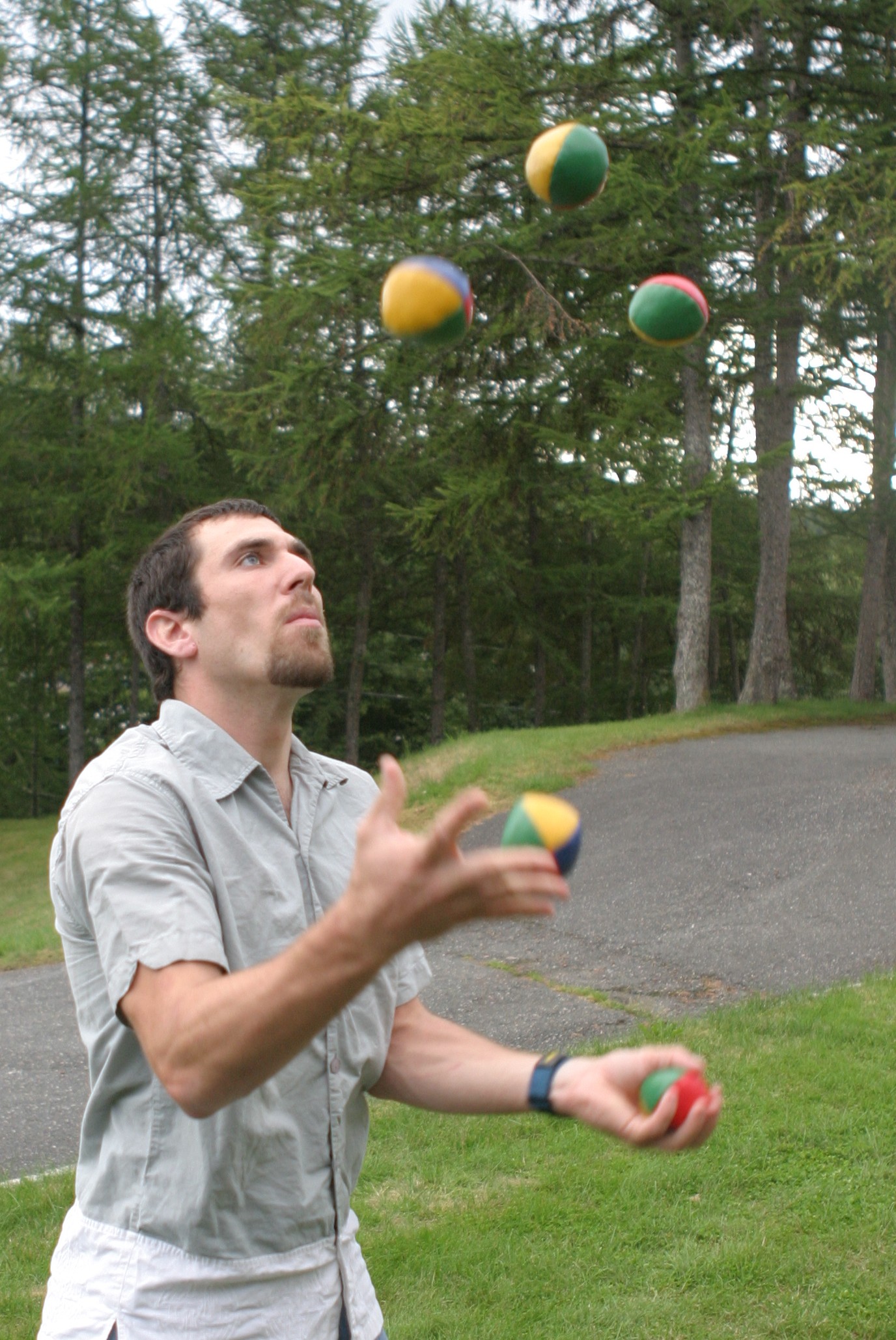
    1. 6. Learn how to juggle

    Okay, hear me out on this one. On Monday morning, when your co-workers ask, “So, what did you do this weekend?” You can answer, “Oh, not much”. Or you can say, “Me? Oh I learned to juggle.” With a few tennis balls, some online videos and a couple of hours of practice, you can learn the basics of juggling — in a single day. And believe it or not, you will use this for the rest of your life.


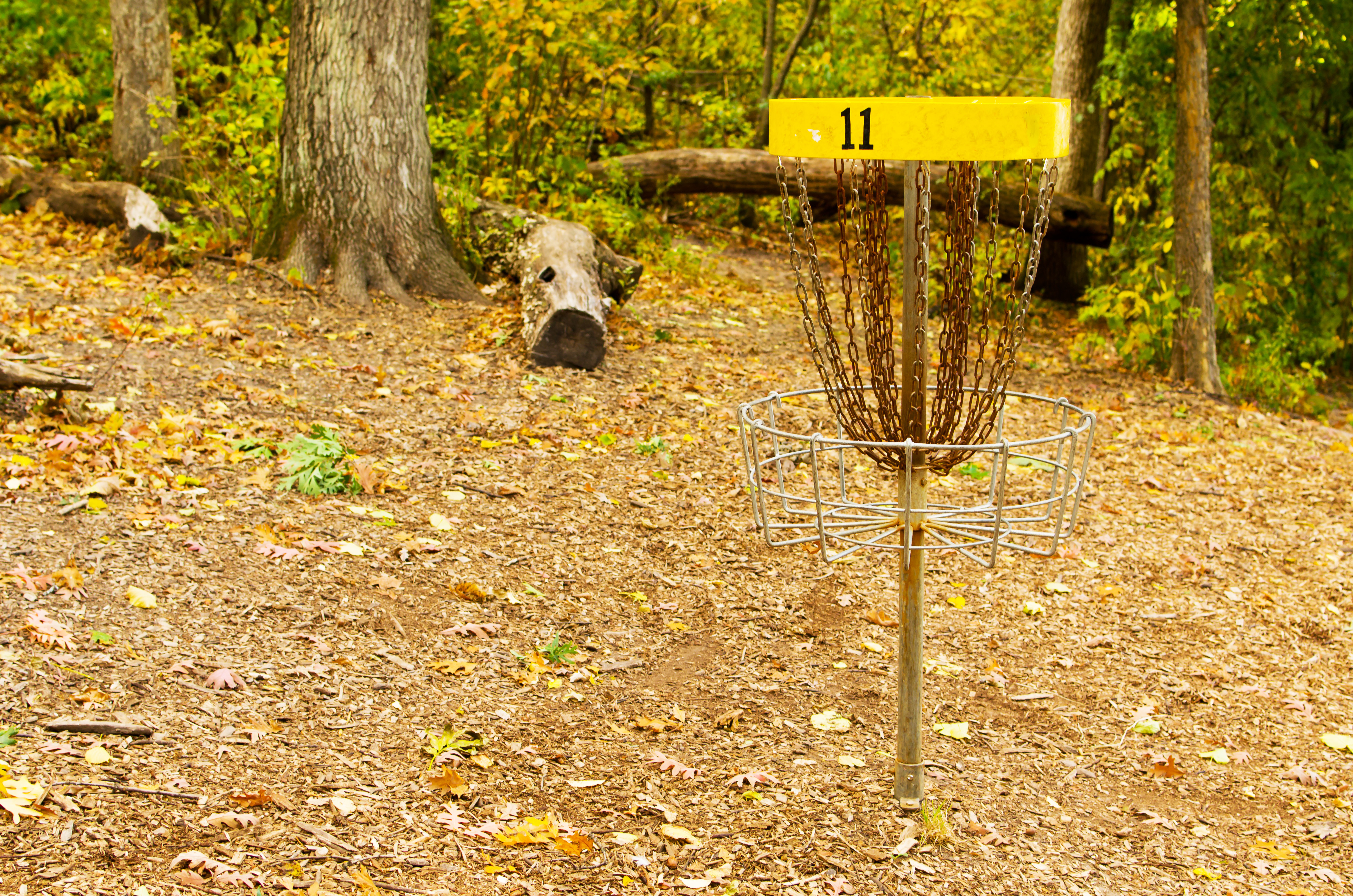
    5. Frisbee golf

    Most of the Frisbee golf courses I’ve ever seen are open to the public and are inside parks. A cooler full of sandwiches, a few Frisbees and some friends, and you have another cool story to tell on Monday morning.


    4. Pick up game.

    With the exception of basketball, you rarely see pickup games of baseball and flag football anymore because organized sports are more the norm. But with a few phone calls you can organize a pickup softball game on Saturday. Bring a cooler and sandwiches and your all set — and if it’s a park where you can bring a charcoal grill, even better.


    3. Have a yard sale.

    I said you couldn’t spend any money, I didn’t say you couldn’t make any. Yard sales are actually pretty fun to host and can be quite lucrative; depending on the goods you have to sell. And it also allows you to clean out your attic or garage.


    2. Habitat for Humanity

    There are many organizations that don’t want your money as much as they need your time. Habitat for Humanity is a great example. On any given Saturday they have ongoing projects where they could use your help and the great thing is they don’t care if you’re a carpenter or don’t know which end of the hammer to hold. There’s something for everyone to do — and it’s a great way to learn basic construction skills.


    1. A trip to nowhere

    Probably the most fun I’ve had with my kids is when we would get in the car and head out with absolutely no destination or plan. Because when you do this, you’re not just focused on the destination — because you don’t have one — you’re enjoying the entire trip.

  • The core

    The core

    the core     I just reviewed some standard sourcing material that Guidance Counselors use for career assessment — you know, the stuff that helps students determine what majors to take in college and then what career path to pursue. There was a lot of information to go through, so I first took a few aptitude tests and then familiarized myself with learning platforms. Then I ran through personality assessments, aptitude enhancing exercises and tracking material to map my career path through online grids. I did all of that.

    And? What did all of this determine that I should be doing for a living?

    Well, it looks like I should be in —- Alternate Dispute Resolution.

    Yup. That’s the career for me.

    Now, I’m not really sure what Alternate Dispute Resolution is, but it doesn’t really matter because I love the field that I’m in and I love the job that I have — which has absolutely nothing to do with Alternate Dispute Resolution.

    So what does this mean? Does it mean that the tests aren’t accurate? Does it mean that real life will lead you to where you should go?

    Well sort of. But first, let me distract you with some statistics.

    Recently, Monster.com did a survey which interviewed over 8,000 people in seven different countries and asked them detailed questions about their education and their careers. This is what they found.

    15% of the US workers interviewed said that that they hated their jobs — this was the highest rate among the seven countries surveyed.

    Who had the lowest rate of people who hated their jobs? India, with only 5%.

    The highest pay per capita of all the countries surveyed? — yup, U.S. But — now this is interesting — the US had both the lowest allotted vacation time given to employees as well as the lowest vacation time actually taken. 60% of all US workers roll unused vacation time over each year, where in the Netherlands it’s only 7% and— now this is also interesting — only 8% of the employees in the Netherlands stated that they hated their jobs.

    Hmmm.

    Okay, question two. What percentage of college graduates end up working in their career fields?

    Answer: Roughly half. About 50% of those people with college degrees end up working in their field — and 35% of those people said that they have never worked in that field. Ever.

    Okay, one more. 38% of the people polled said that the need for professionals in their chosen field drastically changed by the time they graduated. So, they entered school to be a teacher because the market was good, and four years later there is an overabundance of teachers and they couldn’t find a job in their field.

    Okay, so what does all of this mean? Well, one thing it means is that we have a culture that works hard, is afraid to unplug and who never really ends up in the field that they spend thousands of dollars being educated in — and then spending the next twenty years paying off. It means that following the money never works. It also means that the long term career plans — don’t really work.

    So —. That’s it.

    What? What do you mean —-? That’s it?

    Yeah. That’s the whole point. That as simplistic as it sounds, the answer to this — and most large questions in life — is that plans are important but with the bigger aspects of life, plans are simply a direction to start moving in. There are too many variables that will determine the end result. They don’t really matter.

    Only this does.

    The core.

    If your heart is strong. If you give more than you take. If you put the needs of those around you in front of your own and if you respect the person who looks back in the mirror — then you will go where you need to be. You will head where you need to head. You will land where the world needs you to be. Every time.

    But if your core is out of balance; is self focused, bitter, jealous or simply driven by the prize itself. Then where you end up is just a location.

    Always.

    You can do all the math, take all the tests and use all the tools and it wont matter. If you contribute, if you think, if you create, if you love and if you believe. Then you’ll get where God wants you to be.

    Work on the core and pick a direction. The rest will take care of itself.