
Category: Featured

  • The Ghosts of Writing

    The Ghosts of Writing

    It was time to take Riley for his morning walk. I knew it and Riley knew it, which was why he was staring at me through the office doorway with those big dog eyes.

    “Okay,” I told him. “Let’s go.” And that’s when the text came in.

    “Be careful” was printed on the screen.

    I texted back, “I will.”

    I started to get up, heard a buzz, and read: “And be alert to your surroundings, and if anything happens, call me right away.”
    I texted the thumbs-up sign, stuck the phone in my pocket, and we headed out.

    Now, when a former crime boss tells you to be alert to your surroundings, you listen. After all, this particular crime boss has survived multiple assassination attempts and knows how to react and how to survive when someone means you harm. And today, yeah, someone meant me harm.

    Was Peter, the former crime boss, overreacting? Sure. I mean, I knew that Esekiel —not his real name, but the one I’ll use—wasn’t hiding in my neighborhood with a sniper rifle. No way. After all, Ezekiel lived several states away, and his threats were more . . . What? Personal? Vindictive? Vengeful? Chicken shit? Sure. But I did stay alert to my surroundings as Peter told me to. And so did Riley.

    It’s funny that in my business life—my sales funnel, working lunch, PO-gathering, proposal-delivering life—I’ve never, ever had a single issue where any specific person wanted to do me harm. Not one. Sure, I’ve had people upset with me; I’ve blown deals, burned bridges, all that normal stuff. Bad things happened and we moved on because that’s how most of the world works.

    But in my writing world, in my creative life, over 30 years, I have had 4 people who have wanted me . . . well, maybe not dead, but hurt. Wounded. Broken. Damaged. And these people went to extreme means to pursue that goal.

    That means that 4 times my average—yes, in my world, 0 x 4 = 4—from normal world to writing world, there have been issues where former clients wanted bad, sometimes very bad, things to happen to me.

    Ezekiel is the most recent. And the most bizarre.

    I met Ezekiel a year and a half ago. He was working for a wealthy businessman in a different country who had a book that was successful there. Ezekiel’s client wanted to bring this book to the United States, so Ezekiel was hired as the translator for a Zoom call between this gentleman and myself.

    The meeting went well, I agreed to help, and Ezekiel set up another call for a different project. That one looked promising as well, and so did the next one. Then Ezekiel told me about his own project. His book. I listened.

    “Since I bring you so much business,” he said, “you market my book for free, yes?”

    It was phrased as a question, but it really wasn’t.

    “I guess,” I said. “Sure. If all these other projects come in.”

    Some did. Some didn’t. And the few that did were smaller in fees than the client promised . And it was also at this time that I realized that Ezekiel was not only extremely high maintenance—he was calling, emailing, and texting multiple times a day—but there was also something . . . else. Ezekiel was—what’s the right word? Oh yeah. Nuts.

    Ezekiel is way, way out there. Besides the serious personality defects of being arrogant, hostile, manipulative, controlling, and rigid, Ezekiel is also never, ever wrong. Even though I could see there were times that he knew he was wrong, it was obvious even he knew he was, but he could never admit it. I’ve never seen anything like it. If he messed up and said that the sky was pink, from that point on, even after he realized the truth, the sky would be pink.

    I knew pretty quickly that I couldn’t work with Ezekiel on his project. No way. So, before it officially began, I reached out and nicely told him that my workload had increased and I couldn’t take him on. Then I offered to pay him a commission on the writing jobs that he recommended me for instead of taking on his job for free.

    This was the first snap.

    Ezekiel demanded—and that’s the perfect word here: demanded—that I take on his book project. I declined.

    Before I go any further, let me give an analogy here to prepare you for what’s coming next.

    Let’s say that I have a car I want to you to buy. And I really, really want you to buy this car, but you don’t want to. So I call you every day. I start following you to work to talk about the car. I’m at your favorite lunch place to ask if you want to buy the car. I’m outside your house. I text you continuously, asking you to buy the car.

    Sure, okay, I can do all of those things. It’s obnoxious, but not crazy.

    What I probably wouldn’t do—and what most other humans beings would probably never do—is contact your boss and tell them that you are untrustworthy because of this car transaction you backed out on, and that you should be fired. I most likely would not reach out to the principal of your kids’ school and tell them that you have some legal issues involving a car that they should know about. And I definitely wouldn’t meet with the pastor of your church talking about your car fraud, all the while telling you that this can all stop, all of this will go away, if you just—just—buy this car.

    No. I wouldn’t do that. Few people would. . . .

    Now let’s go back to Ezekiel a year and a half ago, when first I told him I couldn’t work with him. Ezekiel knew enough about me to launch a bizarre attack. He contacted my literary agent—a person he had no connection to or dealings with in any way—to complain about my ethics and to suggest that I be dropped as a client. He reached out to several of the parties involved in a big book announcement that had just been made, letting them know about my flawed character. He sent emails, made calls, and contacted anyone he could to bring pressure on me. All the while, he kept telling me that all of this would stop if I just worked on his book.

    Strangely, if there was one emotion that rose up for me during that time, it was shame. Isn’t that weird? You’d think it would be anger or fear, but nope. It was just truckloads of shame that were delivered, to mix with the piles of embarrassment and imposter syndrome that were already inside me. I felt terrible that these key people in my creative life were being made to suffer because of me. I was ashamed.

    But I had no time to wallow in this shame; I had to fix it. I reached out to get help from an incredible gentleman who does conflict resolution. He met with Ezekiel. He met with me. He prepared me for what I needed to do and we all got on a Zoom call together.

    It was done. I would walk away. Ezekiel would find someone else. The harassment would stop, and life would go back to normal.

    And it did.

    For one year.

    Until this Saturday.

    Now, knowing Ezekiel, something must have happened to him this past week that reminded him that I was still out there. Something brought back the realization that he was over there, and I was over here—me, the disobedient; me, the non-compliant. That realization must have created an itch.

    Because on Saturday, completely out of the blue, after I hadn’t heard from him in a year, Ezekiel resurfaced. He emailed me a multipage manifesto of his plans to contact the Writer’s Guild with a formal complaint about my moral conduct. He told me that I had two days to agree to work with him on his book or he would write and file a damaging report that would stop my career.

    Now, the one difference between this new Ezekiel battle and the first one was that Ezekiel can’t surprise me this time. I know his MO. I can’t stop him if he writes to the Writer’s Guild—an organization I have no connection to and that has no authority over me, by the way—but I knew what he was capable of outside of that. So I circled the wagons and got in front of the problem.

    I quickly contacted the list of people I thought he would reach out to: I started with my literary agent. Then I contacted Peter, the former crime boss, whose book is going to be pretty high-profile in a few months when it is released—something Ezekiel could easily see on Google. I sent a cease and desist to Ezekiel and told him that I had contacted my literary agent, I also contacted people I work with so they would let me know if he reached out to them. I informed him that I had done all this as a courtesy. The next step would be to pursue legal action.

    So, what’s the point of all of this? Well, I told you all of that to get to these three points:

    The first is that I Peter and I had become friends. He and I have been working on his book for over two years, and we’ve become incredibly close. But I was totally unprepared at how protective and angry he became when I told him about Ezekiel. Peter called and texted me multiple times a day, checking in, making sure I was all right. He was so upset that he wanted me to come stay at his house or for him to come and stay with me. I was incredibly touched by this.

    The second point is that my literary agent and I talked right after I told her about Ezekiel. “Look, kiddo,” she said. “I know who you are, and we know who you are, and no one is going to ever change that. We’ve all got this together.”

    Which brings me to the third and most important point.

    After writing for almost three decades, I’ve discovered that the joy, the pleasure, the impact that comes from writing doesn’t come just from the work, but from those connected to it. It’s born from the strength and love of the people who have joined you, because their success is now is tied to yours. They win if you win. They are your partners. They are your friends.

    And a hundred Ezekiel’s can never take that away.

  • That One Big Break

    That One Big Break

    198519170

    I just had a famous billionaire fly me, first class, to his mansion to talk about writing his life story.

    Yup, that actually happened.

    And I can’t think of a better opening line for an article than that because that one amazing sentence not only grabs you, but elevates me at the same time: Who is this writer who’s being flown to billionaires’ homes? Now you’re curious. Now you want to learn more.

    This first sentence could also work on a visual level as the opening for a film, where the wealthy tycoon reaches out to the broke writer—usually it’s a broke private detective, but we’ll substitute writer here—to offer the deal of a lifetime: a huge paycheck, a glance behind the curtain, and by doing so, taking this author from unknown to center stage. From one of many, to one of a few.

    Now, I’ll skip ahead and tell you that I didn’t get this life-changing, bank account–booming, career-altering gig. I did well at the interviews and the actual meeting—well, I think I did—and I didn’t embarrass myself or the literary agency that sent me. I didn’t show up drunk, I didn’t try to sneak photos of the exotic cars in the garage, and I didn’t mention as an ice breaker any of the interesting articles I had read about this billionaire’s current legal trouble.

    Yeah, looking back, I did okay. But I still didn’t get the job.

    And I’m now feeling the impact of not getting it. I’m dealing with the emotional hangover and looking at the cost of not being given this award, this prize, this bonus card that would have moved me five spaces on the game board. Because there was a cost.

    From a mental perspective, I know most people would say I should be honored and flattered that I even made it to the final bonus round of a handful of writers being considered for such a high-profile and lucrative deal. Yes, absolutely; my mind agrees with that assessment.

    And my heart is telling me that it’s probably for the best that I didn’t get the job. The billionaire subject of the book has had something of a questionable history, and I suspect there would have been some dark aspects to navigate that would have had an emotional cost for me as the narrator. Absolutely, this is also true.

    But it’s this other area, this yet unidentified set of data points, that keeps gnawing at me.

    See, this opportunity, this project, would have changed my life, and would have done so very quickly. In one move, one decision, my world would have been different in so many areas: financial, career, position, title, access, clout. Boom.

    And that’s where I think the gnawing comes from. It’s not that my life would have changed as fast as a lottery winner’s does, but that I needed a lottery win to make it happen. Not only could I not get to that place as quickly without this opportunity, but, I worry, it’s possible that I can never get to that same place without it.

    I needed this powerful lottery win to swoop down from the heavens and pick me, this lowly shepherd, and speak: Verily, you shall be the one I have chosen. I would cast away my rags and join the billionaire in the clouds, with my name being mentioned on daily news feed coverage.

    Without being chosen, without that golden ticket, I worry that I will be . . . well, just me.

    When you buy a lottery ticket, the bonus feature attached is that there are three minutes of wondering: What if I actually won this thing? It’s the quick high that is the true lure of buying the ticket. It lasts for a few minutes, or maybe hours, and we mourn the fantasy a little when it’s gone, but it hasn’t been around long enough for us to really miss it.

    But from the time I got on the plane for this meeting, with every limo ride, and even for the three days after I came home, my center mental focus was: Wow, this is going to change everything.

    Then I started believing and planning. It became real. And then it was gone.

    When a big “could have” happens, it builds. The mind begins to see the potential changes as if they’ve already happened. You think: I’ll be able to pay off this, I’ll have access to that, this person will be proud, that one will be jealous. You begin to believe it, to see it. It’s yours.

    Then, when the bubble pops, it doesn’t leave you back where you were before. No, it pushes you back three steps behind, emotionally. You’re in a lower place. A sadder one.

    I’ve always hated that “one big break” concept because it’s not about that one pivotal moment: that meeting, that small success, that venture that started us on a different path. The one big break myth is the Cinderella moment. It takes the guy washing dishes to the corner office, the lady cleaning hotel rooms to the Hollywood walk of fame, the homeless guy to the red carpet at the Emmys.

    There are so, so many of us who are banking on that one big break. So much so that we just lean into our brooms, we bus those tables, we sleep under those bridges, without a plan, only the hope that the next person we meet will discover us, make us, give us that break that we deserve and are entitled to. That one big break. Because maybe today . . .

    And this kind of pisses me off. Not that the futile concept of “one big break” exists, but that I was banking on it . Counting on it. Believing in it.

    I’m glad I didn’t get this—well, sort of. Because now I can get to work and start working on creating my own break, not one big one but several small ones, if that’s what it takes. Whatever their size, they’ll be breaks that I create. Not one big one that is given to me.

  • Modern-Day Shawshank Redemption

    Modern-Day Shawshank Redemption


    There was life before the pandemic—short drive-thru lines, flying for work travel, shopping for groceries—and then life after the pandemic, where a quick Teams or Zoom call from our dining room is easier than getting on a plane, where six people in the drive-thru doesn’t seem unreasonable, and where we use an app to order groceries that are bagged up and ready for pickup at ten o’clock in the morning.

    The pandemic also left us with something called the Coronavirus Aid, Relief, and Economic Security Act, or the CARES Act: an 880-page document that went into effect in April of 2020 and touched pretty much everyone in the country since it authorized those $1,200 stimulus checks, extended unemployment, and even placed a moratorium on foreclosures and tenant evictions.

    There is also a part of the CARES Act that involves federal inmates. Here, in mostly minimum-security prisons, during the federal COVID-19 state of emergency, qualified inmates would be transferred to serve their prison term in home confinement. There are certain parameters for approval of this aspect of CARES Act; for example, you have to be nonviolent, you have to have served 50 percent of your sentence, and there has to be a health reason to transfer you.

    The authority to determine and manage those who qualified to be transferred from prison to home confinement using the CARES Act was given from Attorney General William Barr to the Bureau of Prisons. The BOP would have complete power to determine who was eligible for this part of the program, and therefore, prevent contagion and move more vulnerable prisoners to home confinement.

    Based on all available metrics, the federal prison aspect of the CARES Act has been a success. Of the 12,000 inmates who have been released to home confinement, fewer than 12 have violated the terms of their release. That’s a failure rate of .001. And the program has reduced the strain on overcrowded prisons.

    Donovan Davis Jr. is an inmate at the minimum-security Coleman Federal Camp in Coleman, Florida. Davis requested home confinement under the CARES Act in November 2021. He met the requirements set by the Bureau of Prisons. Davis has been a model inmate, has an outstanding disciplinary record, has had multiple medical issues—diabetes, morbid obesity, asthma, and he uses a CPAP machine, placing him at a much higher risk of death should he contract COVID-19. He checks all the boxes for release under the CARES Act. Yet 15 months after his request, with the CARES Act window about to close, Davis is still in prison.

    Why?

    Simple. Davis is making too much money for the prison to let him go. And because the Bureau of Prisons determines who gets approved, it is not in the bureau’s financial interests to release Davis.

    Federal Prison Industries, Inc., or FPI, does business as an organization called UNICOR, which was created 1934 and provides prison labor for inmates within the Federal Bureau of Prisons. Davis has high level expertise as a heavy equipment mechanic and operator. He works roughly 40 hours per week in the institution’s Facilities Department. Davis does everything from repairing the UNICOR factory’s forklifts and the institution’s zero-turn lawnmowers to trimming hundreds of trees and clearing the acreage surrounding the camp—the low-security and medium-security prisons as well as the penitentiary.

    Davis is paid $0.65 an hour for his high-skill, high-expertise work. That means there is a positive cost savings on the Bureau of Prisons’s books compared to having to source this work to someone outside the prison system. In fact, according to a progress report filed by his case manager, Juan Coriano, and former unit manager, Paula Floyd, they acknowledge that Davis has saved the UNICOR factory approximately $250,000, as well as saving the Coleman complex an additional $1,050,000, by working for $0.65 an hour, compared to having the prison pay a professional mechanic or landscaper 30 times that rate.

    “That’s $1.3 million in savings,” says Brian Horwitz, Davis’s attorney. “I mean, why would they get rid of this guy? He’s invaluable slave labor.”

    Horwitz goes on to say, “Mr. Davis was convicted of a nonviolent, white-collar crime, and both of his co-defendants, who were more culpable than Mr. Davis in the fraud, have already been released from the Bureau of Prisons’s custody.” Davis was convicted of a three-man-conspiracy involving a $12 million Ponzi scheme. He was sentenced to 17 years.

    So why not just stop working while in prison? This idea has been suggested to Davis, even by his own wife, Christy. “Don has staff members at the prison telling him to stop working,” said Christy Davis. “If you stop working, they might let you go.”

    However, if Davis, or any inmate, refuses to work, the inmate is placed in an area of the complex called the Segregated Housing Unit (SHU), while also receiving disciplinary reports that result in loss of privileges such as phone calls and visitations with their family.

    In 2021, Davis did not completely qualify for the 50 percent time served requirement under the CARES Act, but he did qualify in every other way. A Coleman staff member, who requested anonymity out of fear of reprisal from the BOP, stated that they requested the 50 percent requirement to be overridden in Davis’s case. The Central Office denied the request. “He meets all of the other criteria,” said the staff member, “but they denied him for no reason that I can think of.”

    By August 2022, Davis did meet the 50 percent requirement and therefore completely qualified for release under the act. Once again, he requested home confinement, and once again, he was denied. Based on a source within the BOP, “Davis was denied due to ‘public safety issues.’”

    “This makes no sense,” said attorney Horwitz. “Davis has a community status security level and he’s being housed at a minimum-security camp with no perimeter fence. He’s not a risk to anyone.”

    “They give him the keys to the facility’s vehicles, and he’s allowed to roam the complex,” says Davis’s wife, Christy. The Coleman complex is the largest BOP facility in the country, boasting 1,600 acres. “If he were a danger to the public, none of that would be possible.”

    “His medical problems are serious,” says Christie, Davis’s wife. “According to the pulmonologist, he has damage to his lungs that needs to be treated. . . . He’s not going to get that treatment in prison.”

    “The real issue is Mr. Davis’s constitutional right to equal protection is being violated,” says Horwitz. The equal protection component of the Fourteenth Amendment precludes the arbitrary application of policy to protect inmates from being treated differently from other, similarly situated individuals based on their membership in an identifiable or protected class such as race, religion, sex, or national origin. “Based on the similarly situated white inmates receiving home confinement, yet Mr. Davis, a black inmate, being repeatedly denied the same placement, I believe that the BOP is applying the CARES Act in a discriminatory manner.”

    What doesn’t help Davis’s current situation is that the BOP is currently in the process of moving vehicles in need of maintenance from around the country to the Coleman complex—specifically for Davis to repair. This means Davis is now needed more than ever.

    “He’s fixed BOP equipment from all over Florida,” says Davis’s wife. “And now the central office is rerouting heavy equipment from the southeast region for him to repair. They’re denying him the CARES Act, so he can save them millions of dollars.”

    Davis’s case manager, Coriano, and former unit manager, Floyd, stated in their progress report: “Inmate Davis meets the criteria listed in the Attorney General’s COVID-19 pandemic memorandum.” Unfortunately, the decision isn’t up to Coriano or Floyd.

    But let’s look at some other CARES Act cases in comparison.

    Michael Riolo, a healthy Caucasian inmate convicted of a $44 million Ponzi scheme, was released to home confinement after serving 50 percent of his 24-year sentence, under the CARES Act.

    Frank Amodeo, a Caucasian inmate with no health issues, defrauded the U.S. government out of $200 million. Amodeo was released after serving 50 percent of his 22-year sentence, under the CARES Act.

    Ron Wilson, a healthy Caucasian inmate, incarcerated for defrauding nearly 800 victims out of an estimated $90 million in a Ponzi scheme, was released after serving only 50 percent of his 20-year sentence, under the CARES Act.

    Frank Vennes, a healthy Caucasian, convicted of a $3.65 billion Ponzi scheme, his second offense, was released at 50 percent of his sentence under the CARES Act.

    What does all this mean? There are only two possible conclusions.

    The first is that Davis is the modern-day equivalent of Andy Dufresne from Shawshank Redemption, where a corrupt prison system has too much financially to lose to release the cash cow they currently have incarcerated and will keep him locked up purely for financial reasons, in spite of his personal health risk.

    The second possible conclusion is that the prison system is completely racist.

    It has to be one or the other.


    Photo by Marco Chilese on Unsplash

  • The depression agreement

    The depression agreement

    Robin Williams, Hunter S Thompson, Anthony Bourdain …Yup, they all committed suicide. But they also have something else in common.

    What is the demographic of people—what age group and what sex— that will commit suicide the most in the U.S. this year?

    Now, if your answer is teenagers and young adult males, then you would be absolutely correct.

    If it was 1997.

    But it’s not.

    The group that now dominates the top of the suicide chart, year after year, with little sign of slowing down, is middle-aged men. In fact, males between the ages of 45 and 64 made up almost 70% of the suicides that occurred last year. 1

    Not far behind are middle-aged women, between age 45 and 64. In fact, suicide rates for women of that age group actually increased by 60% between 2000 and 2016. 1

    And those numbers only reflect the 50,000 people each year who die by suicide in this country. They don’t include the 1.4 million people who attempt to kill themselves each year but fail or are rescued. And the numbers are still skewed because they also don’t include the large number of suicides each year that are hidden as car accidents and other means and not reported as self-inflicted.

    If these statistics aren’t powerful enough, the numbers are actually climbing. The number of national suicides has risen 33% since 1999. And the National Center for Health Statistics recently reported that the U.S. suicide rate is now the highest it’s been since World War II. 2

    That means we are now killing ourselves more often than we ever did in the past, but it also means that the ones leading the charge, middle-aged people, are the parents and grandparents to the same age group that used to be at the highest suicide risk only a few decades ago.

    Why is this?

    Why is this generation of middle aged individuals, who are supposed to be at the top of their game, with the most life experiences, earning more, experiencing more, and having the technology to tie them to more opportunities and information than any other group in history, in such emotional and mental pain that they think that suicide is the only way to relieve it?

    I don’t know.

    I mean, there are theories, many, many theories of why the middle-aged suicide rate is so high, and there are the pat answers: mental health issues, drug and alcohol addiction, depression and anxiety disorders.

    But if you look into each middle-aged group, you do see some common markers. Middle-aged men—this strong and independent group—often see admitting to feelings of depression or anxiety as a weakness. They’re extremely reluctant to tell anyone when issues arise and even less likely to seek professional help. Middle-aged men who commit suicide are often experiencing severe financial stress, recent job loss, debt, and a myriad of other life pressures that affect their sense of worth. Plus they are in a very unique position, begin raised by that self-sufficient generation that survived The Great Depression and World War II.

    The markers for middle-aged women often align with severe emotional stresses: marriage issues or loss, infidelity, depression, and anxiety. Interestingly, the suicide statistics for this group might actually be higher than those for middle-aged men, if not for the fact that women often choose pills and other methods to kill themselves that are less reliable than firearms—the common male choice. More women than men attempt suicide and are rescued.

    Okay, so what’s the point of all of this?

    Well, here it is.

    I am a middle-aged man. And I am depressed. And I have been for a while.

    There. I said it.

    And no, I will not kill myself. How do I know? Because, like many of us, I’m simply not built that way. My wiring won’t allow it. But that doesn’t mean the dark times don’t come. When they do, it’s pretty overwhelming. And to answer your question, yes, I have gone to see someone, and yes, I have tried antidepressants—two different prescriptions actually. They just didn’t work for me.

    And yes, I also feel like I am betraying the people I care the most about simply by feeling this way. I worry that my family will feel that they’re not enough, that it’s something they did, some flaw in them, which is absolutely not true and is part of the reason why I have kept this hidden.

    I have enormous guilt about making this public statement because I have a wonderful and beautiful wife of almost 30 years, two amazing kids I absolutely love, a job that is challenging, a roof over my head. Yeah, I get it. I know how much I have to be grateful for.

    But that’s not the point of writing this. The point is that I think I may have stumbled onto something. Something kind of important. And I wanted to give it to anyone who might be able to use it.

    So, let’s start with this: When a person is suffering a deep depression, it’s so huge, so overwhelming, it’s all they can see. They open their eyes and it’s everywhere, all over, weighing down on them from all directions. Anything new that comes in has to cut through all that fog first. And because the depression is so incredibly massive, those experiencing it just expect that others can see it on them. I mean, how could they not? It’s all over us! Like chickenpox or a black eye. We expect people to run up and say, “Holy cow, what happened to you?”

    But they don’t.

    We see friends at our kids’ school, in the neighborhood. We sit next to them at little league games and talk for hours. And then . . . well, then nothing. They don’t see it, they don’t say anything, and we move on. And when these people don’t notice anything different about us, when they aren’t concerned, we think: “Great, no one cares.” And this hurt causes us to move us away from these people, from most people, as well as from the activities and areas we used to take joy in, and that moves us more toward . . . ourselves.

    And here is the great irony.

    Ready? Most of us—especially those in a state of depression—don’t really like ourselves all that much. Or even a little bit. Or at all. And now that we’ve pushed all other people away, we’re living on a deserted island with the very individual we don’t want to spend time with. Ourselves.

    What’s the most controversial punishment in the federal prison system today? Solitary confinement. Or what prison officials call “the prison within the prison.” Studies on solitary confinement and social isolation show that there is a physical effect on the brain that slows down the brain’s ability to use the feel-good neurotransmitters dopamine and serotonin, and over time this can actually cause physical changes in the brain. 3

    See, I have always considered myself a fairly selfless person. But depression is an incredibly selfish act—at least, for me it is. Why? Because it’s all about how I feel, what I am experiencing, and what I am going through. It forces you to plan, react, think, and strategize, 100%, on yourself.

    You are in pain, but it’s your pain. You feel worthless, but it’s your feeling of worthlessness. You feel helpless, but you are the one feeling this way, and the microscope is turned so far inward that the rest of the world simply becomes white noise.

    And you begin to think in terms of away, rather than toward. What you want to avoid, rather than what you want to experience—because, often, the only thing we want to experience is sleep, or alcohol, or Netflix, or food, or whatever deep numbness we can get to the most quickly. And when you do that often enough, the world becomes incredibly small. We crawl into our own self-inflicted solitary confinement.

    But reality is that the world isn’t small. At all. And the world needs us.

    There are people all around us, every day, in every capacity, and they need us. They need us to listen and to care and to be part of their lives, even if it’s just having a conversation or showing up for their kid’s dance recital or bringing over a bowl of chili when you make too much. They need us.

    When I think about the people I have pushed away, shunned, people who might be screaming inside just as much as I am, hurting and in trouble, I’m ashamed. There are others who simply want me to be part of the special times of their lives. In fact, one of my closest friends had a baby a month ago and I still haven’t seen him. I’ve avoided it, gotten out of it, and probably seriously hurt him, and that’s the most selfish act I can think of—sorry, Dave.

    But no more.

    At this point you might say, so you’re saying the cure for depression is to suck it up and go take a casserole to your neighbor?

    Nope.

    But I’m saying that my depression needs to be less about me and more about the people around me. I need to be part of their lives and they need to be part of mine and it doesn’t matter that I don’t like myself, because it’s not about me. At all.

    I said that I am someone who could never kill himself. and that wasn’t entirely true. Over the years, I have already done it. I have pulled myself so far away that I am now socially, mentally, spiritually, and intellectually dead.

    But no more.

    I want to knock on all the houses I’ve passed on Fiddlers Green and say, “Hey, you don’t know me, but I’m the guy who has lived in this neighborhood for 12 years, pass you every day, and don’t even know your name.” I will break the cycle and go to the Elks Club fundraiser with our neighbors that invited us, and I will remind my family every day of how incredibly special and important they are.

    I don’t pretend this is the cure for anything. It’s not meant to be. It’s a responsibility. A duty. It’s the agreement you sign when you join the human race, and I have seriously defaulted on that agreement.

    And yeah, sure, this may not change anything as far as my depression goes. In six months, I may still be here.

    Maybe.

    But at least I’ll be alive.

    I’ll be socially, intellectually, and spiritually alive.

    And that’s good enough for me.

    1 2017, report Centers for Disease Control and Prevention — https://www.cdc.gov/vitalsigns/suicide/index.html
    2 National Institute of Mental Health, 2017 report — https://www.nimh.nih.gov/health/statistics/suicide.shtml
    3 Behavior Neuroscience, Emotions, 2016 — https://neuwritesd.org/2016/12/08/the-neuroscience-of-loneliness/

  • The art of the picnic

    The art of the picnic

    Once spring hits and then all through summer, everywhere we go we see people having picnics.

    In movies.

    And on television.

    But in real life — not so much.

    Here, in the actual world, a true picnic sighting is pretty rare. In fact, it’s up there with finding a working payphone or a thriving drive in theatre. I mean, once in a while you will see one. But not all that often.

    Now, we see people eating outside, al fresco, all the time. The office worker driving to a park to eat their Burger King meal #4 on a picnic table with a paperback opened. Sure. And the road crew at a rest stop throwing back a few sandwiches and gallons of store bought ice tea. Yup. But these are what we call — not-picnics. They are just — eating outside. And they don’t count.

    Picnics have been around forever, but they didn’t have an actual word to describe them until the 17th-century. When the French word ‘piquenique’ was formed — which took the verb ‘piquer’, meaning to pick, along with a silly rhyming syllable, ‘nique’. So the alteration of the word followed the same rule and it became — pic-nic.

    Originally, the picnic was a large outside pot luck for the gentry, with each guest expected to bring a dish to share. These were elaborate, society events, which lead to those who were involved in them to be referred to as — the picnic-society.

    From there, the picnic took it’s true form.

    As travel became more common — first with the horse and carriage and later with car — the picnic became a large part of the trip. As you traveled, the need for food on the way would need to be planned in. A trip to visit uncle Earl’s in a neighboring town a few hours away, would require you would to prepare the food — the roads weren’t always paved with drive-through’s and bargain meal deals. So, the picnic became part of the excursion. A piece of the adventure. Halfway through the trip, you find a field or a pond, or a meadow, to spread your blanket out and bring out the basket. The kids would bring a ball, or maybe a kite, and the event, would now have another event in the middle of it. You would stretch your legs, relax and recharge before getting back in the car and continuing.

    And that’s what a picnic is. An event. Not just eating — because we do that all day long while we do something else. We eat while we drive. We eat while checking our phones. We eat while watching television. We eat and don’t even notice that we’re eating.

    So what makes a picnic, a picnic?

    Okay, that’s easy. A picnic has a few fundamental aspects of it.

    1. It has to be outside. An inside picnic is called — lunch. It doesn’t count. And a picnic should be in a unique outside area — a park, a lake, a field and even a picnic area at a rest stop counts.

    2. It is held on a blanket or a picnic table. Period. You can’t have a picnic on camp chairs while setting paper plates on your lap, while leaning against the car, inside a food court, or inside the car. This is called — eating. It’s not a picnic.

    3. It should not contain store-bought food. Picnic food can be extremely simple and easy to prepare, but it has to be yours. It has to have your fingerprint and design on it. The only exception to this rule, is if you bought a rotisserie chicken — not a fast food chicken — and then prepared sides for it. There is something about cold chicken on a picnic that just fits.

    4. It has to be cold food. Cooking a meal over charcoal is incredible, but that’s not a picnic. That’s a cookout. And if you are fussing with the fire and getting burgers to cook just right, then you are missing the very crucial element of the picnic. The people you are with and the area you are at.

    5. And it has to have some recreational aspect to it besides the meal. Picnics are not to be rushed, but to be enjoyed, even if that recreation is just sitting back after the meal and talking, playing cards or a board game, throwing a frisbee or playing a harmonica — which is why free community concerts are ideal places to hold picnics. Because the entertainment aspect is already provided.

    As far as picnic food, you can be as elaborate as you want, but the real aspect of it is to be simple. Simple food to be enjoyed leisurely. Boiled eggs, cheeses, peperoni, hard crusted bread, cold chicken, pickles, olives, pasta salads, grapes, all make amazing and simple picnic food.

    So plan a trip. And a plan a picnic smack dab in the middle of that trip. Make it a priority to skip the eleven-dollar hotdog at the water park and pull the kids over to the picnic area instead and open the basket.

    You heard me.

    Go have a picnic.

  • How to jumpstart a car

    How to jumpstart a car

    cable

    Now the basics of jumpstarting a car are extremely simple and require only three parts. One, a car with a dead battery — the jump-ee. Two, a car with a live battery — jump-er. And three, a set of large, industrial, jumper cables.

    Now, this is a very simple process that gets complicated quickly if you are lacking or have undersized jumper cables. The reason for this is that it’s always  easier to find someone willing to give your car a jumpstart, than it is to find someone willing to do so who also has a set of jumper cables — or a set sized large enough to actually work. You may find one or you may find the other, but now you need to find both. This is the same as needing help moving, but you can only accept help from friends with red hair — you’ve not only decreased your odds but you have put yourself in a vulnerable position.

    Being men means that we are prepared to take care of ourselves, the people we care about and others who need our help along the way. It’s okay to have a dead battery. It’s not okay to drive around unprepared expecting others to take care of us. A man on the side of the road with a sign reading NEED JUMPER CABLES, is different than that same man with his hood up, cables ready, looking for a quick charge from a willing traveler.

    And don’t think for one minute that those cheap jumper cables that came with the car, or the set that was in the emergency car kit your aunt gave you for Christmas, count. They don’t. They are worthless and unreliable. I have helped more people jumpstart cars that were trying to do so with cheap cables, than those who had no cables at all. They just don’t work. Go out and get yourself a heavy set of jumper cables — 6 gauge or better (remember, the lower the gauge number the better, so, 6 is better than 8 and 4 is better than 6, etc.) — 300 amp or better with rubber handles on the clamps; not plastic ones. Also, a 15’ length is a good length. 12’ cables are often hard to use if you have to pull the cars in at a strange angle and with more than 15’ you risk some current loss.

    [amazon asin=B00ELASYIA&template=iframe image][amazon asin=B0006MQJ0M&template=iframe image][amazon asin=B00167TYHQ&template=iframe image][amazon asin=B003UVCY00&template=iframe image]

    THE PROCESS:

    So, now you’ve got a decent set of jumper cables, a car with a battery that needs to be jump started (jump-ee) and a car that is has a fully charged battery (jump-er). From here it’s pretty straightforward. With the jump-er’s car running — it’s very important that the car jumpstarting from is running — you’ll start the process.

    First you need to determine if the problem with the car is truly a dead battery. So, if when you turn the key and the car does nothing or if it tries to turn over but can’t, it’s most likely to battery. If the dash lights come on and/or there is a clicking sound when you try to start the car, this might be a starter issue instead of a battery.

    The rule of jumper cables is simple. It doesn’t matter which way you connect the cables, as long as they are the same on both cars. So, if the black jumper cable clamp is on the positive terminal on the jump-er, then the black clamp goes on the positive terminal of the jump-ee. The black and orange (or yellow) on the cables does not mean positive or negative, it’s just a way to distinguish a difference between the cables.

    So that means, do not cross the cables. Don’t put the red cable on positive of the jump-er and the other red end on negative of the jump-ee. If you do, bad things will happen. But the good news is, that’s really the only rule of using jumper cables.

    So let’s say you choose to connect red to positive on the jump-ee car, then red to positive on the jump-er. Then go back and do black to negative on jump-ee and then black to heavy metal bracket or frame of the jumper — I’ve connected the negative to the negative, but this is no longer recommended.

    Now, you wait a minute to let the charge build up then try and start the car. If it starts, great. If it does not start, wait a few more minutes and let the charge build up further. Try again. If still nothing, look at the cars you are matching up.

    If you have a Honda Civic trying to jumpstart a Chevy Bronco, you may have an issue. The smaller battery may not be strong enough to charge the larger one. You can wait longer to see if a charge will build, but most likely you will need to find a larger car to jump from. The rule is you want an equal or larger battery as the jump-er.

    So if the battery sizes are equal, and the cables are of heavy industrial strength, you should get a charge and the car should start. Then, unhook the cables — red from the jump-er then red from the jump-ee, etc. — and let the car run to build up a charge.

    That’s it.

    So do you now know how to jumpstart a car?

    No. Because you haven’t done it yet.

    Put a good set of cables in your trunk and wait to find someone you can help and once you’ve actually jumpstarted, then you know how to do it. And when you find someone — walking out to them with your heavy duty cables still in their plastic bag —  be honest. Tell the person that you have never used the cables but are willing to help. And don’t be embarrassed by this. I had a neighbor — he was almost sixty at the time — I found reading his car manual trying to find out how to jumpstart his car. He refused to let me help him because he wouldn’t admit he didn’t know how to do it.

    The worst kind of knowledge is the type that is offered but never accepted.


  • Narcissus

    Narcissus

    boston

    For a few months, in 1985, Kirk and I were in Boston. Starving. Well, probably not medically starving, we did have the olives and slices of lemons we stole from the garnish tray whenever we could. Altogether, I’d say we ate every two or three days.

    When we first arrived in Beantown we were eating pretty regularly. This was partially due to the fact that YMCA on Huntington Avenue gave you a breakfast voucher to their cafeteria every day; one egg, any style, toast, and coffee. So every morning, with the $35 room that Kirk and I split, we ate. And it was a great beginning to the day. But you can only stay at the Y for two weeks so we had to move on. Later, when breakfast had to be removed from the budget, we would miss that voucher and would actually taunt each other with the chant — one egg —any style—toast and coffee.

    The shoeboxes of food my mom gave us at the Greyhound bus station in Oneonta, NY, oh man, they were long gone; the ham sandwiches on croissants, the plastic jugs of Kool-Aid, (frozen to keep them cold longer), the apples, the crackers, the pepperoni, the boiled eggs, the cottage cheese containers filled with macaroni salad. All gone.

    Now in Oneonta, yeah it was my idea to leave. I admit it. But it was Kirk’s idea to go to Boston.

    “I’m taking off,” I said as I looked out of his apartment window that looked down on Market Street. “Come with me.”

    “To Binghamton? Why?”

    “Because there’s nothing for me here and there’s nothing for you either.” I said. “C’mon, it’ll be a blast.”

    And I made it sound like the beginning of a film. As if we were two desperados. Two beaten men who would head out to make their fortunes and leave the place that had mocked them behind. Me? I was nursing a seriously broken heart and damaged ego and didn’t want to be around when school started back up again. And Kirk had flunked out last semester and couldn’t re-enroll until the spring semester anyway.

    “I’m taking a semester off. I’m leaving. So come with me.”

    “Maybe,” Kirk flipped the channels until he got to an episode of MASH. “But not to Binghamton. If we’re gonna go, let’s go.”

    And we toyed around with different locales. Chicago. Miami, we even thought of L.A. But once we landed on the idea of Boston, Kirk was sure that this was the place for us.

    “Boston?” I asked.

    “Yup. That’s where we need to go.”

    So, Boston it was.

    We had taken the seven-hour bus ride from Oneonta to Boston a week before, to scope everything out — to see how difficult jobs and apartments were to find — and by mid-morning of that very first day, at our very first interview, we both walked out with two jobs in our pockets. And not just any jobs; for two college kids from the sticks, they were dream jobs.

    Kenmore Square is the intersection of Beacon Street and Commonwealth Avenue and was the heart of Boston nightlife. It was behind Fenway Park and Boston University and Narcissus was a huge nightclub where students from Harvard and B.U. came to spend all their money. And Kirk and I were hired to be two of their newest employees.

    The place was huge and actually held three clubs in one: Narcissus, Celebration, and Lipstick. But Narcissus was the gleaming, Studio 54 jewel of the crown.

    Since it happened so quickly, Kirk and I went to the club that night to see if the crowds really did bring pockets full of tips for their favorite bartenders, as we were promised. And they were.

    “Well, my friend,” Kirk clinked his beer glass to mine and screamed over the sound of a thousand college kids. “We are gonna to be rich.”

    We were ecstatic. And as soon as we got back to Oneonta we tossed everything into a few bags and jumped the next bus to Boston.

    Finding an apartment was the first challenge. With all the fees added up between first and last month’s rent and the security deposit, we would need to come up with $3,200. Which we didn’t have.

    We were earning a little bit of money, but the challenge was that there was a pecking order at Narcissus and we had not earned the plum bartending slots yet. Because we worked during the day, Juno scheduled us for a lot of corporate parties and band things where we worked the service bar and our tips came from the waitresses who were supposed to give us a percentage. Which they never did.

    And because there were so many bartenders at Narcissus, if we worked a night, Kirk and I would come home with $35 to $45 each — hardly the $100 a night we were hoping for. The good news was that the work was easy and the place was completely mobbed; we only had a few feet of bar space to cover.

    Unfortunately, what money we were earning was going straight into Terry’s hand. He waited behind the door where we lived, and would pop out like a sentry as soon as our feet hit the wooden landing.

    “Well?” Terry scratched his chest through his Talking Heads t-shirt and held out hand — like we had tried to sneak out of a window a thousand times before this. And without words we’d hand over the forty bucks — or however close we could get to it. If Kirk and I were both working that night, our combined tips would make it with a few bucks to spare. But if just one of us was on that night, we’d be short, unless we saved from a night when we did both work.

    Forty dollars would get rid of Terry until the next day, since that’s how much the room cost per night. Thirty-five dollars would lead to a tirade on how he wasn’t a bank and we were the most worthless rags he’d ever met.

    I don’t know if rags was a Terry phrase or a Boston one, but he was the only one that we ever heard use it and he did so  often.

    By October we knew we had lost a lot of weight — each time we got dressed it seemed like we had shrunk a pant size — but when the junkies on Washington Street took interest in our new ultra-thin frames, probably thinking we might have a connection or a hit to share, we knew that food had to become a bigger priority.

    That’s why the envelope was such a big deal.

    The envelope — and I can still see it after all these years — Kirk had found on High Street. It was in the shape of a small paper rectangle and had Asian lettering on it and since we were pretty close to Chinatown, this made sense. Inside the envelope was a bright red foiled liner and a small card. The card had more lettering, stuff we couldn’t read, but inside of the card, pressed between the thick paper folds, were two crisp ten dollar bills.

    Kirk kept punching my shoulder. “We could of walked by it,” and he continued to punch me all the way to a Burger King, where we ordered two Whopper meals. We dove into the burgers and could only finish about half before our shrunken stomach’s gave in.

    “I know what’s for dinner,” Kirk smiled, as he wrapped his leftover sandwich back in the foil. And we sat there for a long time. Happy. Happy because not only did we have a meal, but we actually had the next one covered too.

    From the remaining money we bought crackers, peanut butter, and beef jerky — stuff we could easily hide from Terry, since food in the room was forbidden and he checked regularly.

    We had a certain routine, Kirk and I. Northeastern University had bought a huge apartment building near us and was converting it to dorms. We went exploring one day and found that the laundry room was never locked and within the room was an ironing board and iron. So every day that we had to work, we would stop there and iron our black pants and white shirt before getting on the train to Kenmore Square — we didn’t have an iron and had been yelled at a few times for coming in with wrinkled clothes.

    There was this very cute girl in the dorms with red hair that we would see every now and then. She never paid much attention to us but when Kirk went alone to iron his clothes, he would always come back telling me of how she stopped to talk to him and flirt. But then when we went back together, she ignored us again. Kirk was like that. The nights I didn’t work, he would come back with stories of how the owners would buy him shots and pretty bartenders would hit on him. And then when we worked together, we were invisible.

    That’s why the shooting probably didn’t happen. Looking back it doesn’t matter if it did, but it most likely was made up.

    It was the second week of November and I was off for the night but Kirk was working. He came home excited. He told about how there was a robbery and a guy shot one of the bartenders. Then the shooter came back behind the bar, robbed the cash register and then headed out — only to be shot by cops before he hit the street.

    The story probably didn’t happen. But I never had a chance to verify it. The shooting was my excuse. I was going back to New York.

    Kirk was sitting in the chair by the door as I threw my clothes into a bag. He looked at me with a mixture of fear and pain as I said goodbye. From Brookline, I walked to the bus station where I used my last $22 — my half of tomorrow’s rent — to get a ticket to Schenectady where a friend picked me up and took me the remaining two hours to my parents’ house.

    And I left Kirk there. Alone and broke in a city that didn’t want him.

    There are two kinds of bad decisions. There is the mistake. And there is the regret.

    A mistake is a miscalculation. An error. Bad data and bad calculations.

    But a regret is when a moral or ethical line has been crossed. When you have the chance to do the right thing and you don’t. And most regrets come from the wrong answer to one simple question. Do I stick, or do I run?

    A life filled with mistakes is not a bad life at all. It’s one of excitement and energy and fire. But one with regrets will weigh you down because regrets don’t have shelf lives and their backup batteries never run dry.

    I never saw Kirk again. I have no idea what happened to him, since I transferred to Cortland the next semester. I do know that he didn’t have any family — his mom had died when he was young and his father a few years after he graduated High School.

    So here is the question. How hard would it have been to get us both to my parents’ house? To get us both someplace safe until we figured out the next step? How difficult would it have been to have thought of my friend even a fraction of the amount that I thought of myself?

    Probably not very. It most likely would have taken the same energy it took to leave him behind.

    The irony that Narcissus is the Greek god of self-love, isn’t wasted here. And neither is the fact that I have very few good memories of Boston — most likely because it represents the ugly parts of myself that I want to forget. But I would like to think if this happened today, thirty years later, that the man I am now would react differently and show just a little bit of loyalty and grace.

    I’d like to think so. But I’ll never know.

    Because that’s why they call them regrets.

    http://www.thecrimson.com/article/1993/7/6/narcissus-fuit-or-the-death-of/

  • Thieves

    Thieves

    cross

    There was an article posted a few days ago about a church that had the sound equipment stolen for their big Sunrise Easter Service. This service is outside, is attended by over a thousand people and without that equipment there would be no way for the large crowd to hear the music or the pastor. They would have to cancel it. But what was interesting about the story was that when the church discovered the theft, they all got together, discussed what happened, and —  they prayed for the thieves. They forgave them. Then they rented sound equipment and the service went on as scheduled.

    Now, what’s even more fascinating about this story is when you look at it from a different angle — at the people who took the equipment — you can tell a few things about them. See, those thieves did not set out to be thieves. Absolutely not. They didn’t tell their Guidance Counselors that’s what they wanted to do. They didn’t set thief-goals. They didn’t dream about being the greatest thieves ever and they didn’t brag at High School reunions of how one day they would steal sound equipment from churches. It just happened. Stealing became the default. The fall back. And it happened for one simple reason.

    They got desperate.

    We know this as a fact. Because no one — and I mean, no one — steals for the sheer pleasure of it. The idea of the millionaire cat burglar taking jewels for the thrill of the challenge, is fiction. Because nobody has a great day stealing. No thief takes pride in their work. No thief feels good about what they do. They get desperate. Then they get stupid. In fact, every stupid thing we do, have done, and will ever do, is because we got desperate. Which means we got stupid. And then we say those words. I have no choice. We get in a corner and our options seem limited.

    Which is a lie. No matter what — every time — we always have options. We always have choices.

    Why do millions of people fall for internet and e-mail scams every year? That’s easy. Because they are so desperate that they need those cons to be true — wealthy people don’t fall for these things, desperate people do. They are in a dire need for money, their options seem limited and they think: if this were true, it would fix everything.  They switch off their  intelligence because they need it to be true. This has to work becausethere is no other choice.

    And when you go even further, when you boil that desperation down what do you have? What is at the core of desperation?

    Fear.

    Desperation is the fear that the alternative, the next step, is so terrible that we have to do this horrible thing to make sure that the other horrible thing doesn’t happen.

    Stealing is less scary then going without that next fix or that next drink. Stealing is less risky than waking up and having to face the world clear headed. Taking this stuff is far less scary than having to face all the bad decisions we’ve made and take different route. So we cross that line. We pop open that church’s storage trailer and fueled by desperation we grab that sound equipment. And what happens then?

    Nothing. Nothing happens. We get that sound equipment and we get it to a pawn shop and we get the money. And when we wake up the next morning there aren’t people pounding on our door. We don’t hear sirens wailing towards us. The world doesn’t end. Nothing happened.

    Not to us anyway. But something always happens.

    Several years ago, my wife’s ninety year old grandmother had her house robbed while she was out. The thieves got away with two old televisions and some costume jewelry. Total take, around four hundred dollars.

    When Beulah — yes, that’s her real name — came home, she was shocked. She called the police and she called her family. A new lock was put on the house and a new television was purchased. But the story didn’t end there.

    Beulah couldn’t sleep after that. She was so worried about the thieves coming back that she became completely preoccupied with this idea. She stopped sleeping and eating altogether. She would call family all hours of the night and tell them that someone was upstairs. And one night a neighbor found Beulah in her driveway in just a nightgown, running from the house because she was convinced the thieves had come back for her.

    Beulah went into a nursing home shortly after that because she was couldn’t focus on anything other than the  thieves. And when she died a few years later she was still obsessed with that break in.

    Now, did those thieves kill Beulah?

    No. Probably not. But they did take the joy and security out of the few years that she had left. No doubt about that. And they did it for four hundred dollars.

    But the good thing for the thieves is, that they will never know that — that’s the only career advantage in being a thief. You steal, you run, you never have to look your victims in the eye and the consequences are kept far, far away from you.

    When we get desperate, we get stupid. We change. And we change the world around us. Every time.

    2,000 years ago two other thieves faced their own last hours on earth. They thought about their lives and they considered all that they had done.

    One became humble.

    And the other one remained desperate.

  • How to clean a fish

    How to clean a fish

    fishie

    The Colonel — his real name is Frank but we all know him as The Colonel — lives across the street from us. He is a 93 years old but no one has really taken the time to explain to him how a 93 year old man is supposed to act so you can’t blame him for his ignorance. Frank is healthy, active, sharp as a tack and lives alone in the same house he has owned since he and his late wife bought it in the 1970’s — well, that is saying he lives alone for those rare occasions that he’s actually at home. Because even when he is home — referring to being in town — he’s rarely at his house. Frank hates staying home and when he is actually in the area he’ll pull out of the garage early in the morning, wave goodbye, pick up his sixty year old girlfriend and head out for the day. I would say in a given year Frank spends possibly four, maybe five months of it even in town and when he is, he only sleeps at his house.

    It’s a depressing fact The Colonel has a far more active social life than anyone else on the street. Bar none. And most of us are four or five decades younger than he is.

    Now, Frank is known as The Colonel, because that’s simply what he is. A retired World War II Air Force Colonel and he is only given this title behind his back. If you do slip up and refer to him as The Colonel to his face, he will quickly correct you.

    “Please,” he’d smile. “Just call me Frank.”

    Frank drives his own car. He plays golf — he actually participates in several senior golf tournaments every year — he competes in poker tournaments and he skeet shoots. But Frank’s true passion, what The Colonel truly enjoys more than anything, is fly fishing. Frank loves fly fishing and he goes on several major fly fishing trips a year. For weeks at a time he will fly into Maine or New Hampshire or Alaska and meet a friend or one of his sons and fly fish.

    Trout and Salmon fear The Colonel.

    [amazon asin=B000QAS14G&template=iframe image][amazon asin=B002VYWWKO&template=iframe image][amazon asin=B002OFJ578&template=iframe image][amazon asin=B000Q89MCS&template=iframe image]

    Now fly fishing is a gentlemen’s sport and is somewhat different than the hook and line variety the majority of us barbarians practice. There is an art to fly fishing, a grace, that is missing in conventional fishing. And once I asked Frank if he kept that fish that he caught.

    “Naw,” Frank would say. “I just like giving them a sore mouth and sending them on their way.”

    But occasionally, if they have a large group of people that are fishing with that  need to feed, The Colonel will end up eating a few of the salmon or trout that he catches.

    Even if you fish occasionally, even if you fish once in a great while, there will come the times when you will want to keep a few of the fish you catch. And when I say keep, I mean eat. So you’ll need to know how to gut a fish.

    HOW TO CLEAN A FISH.

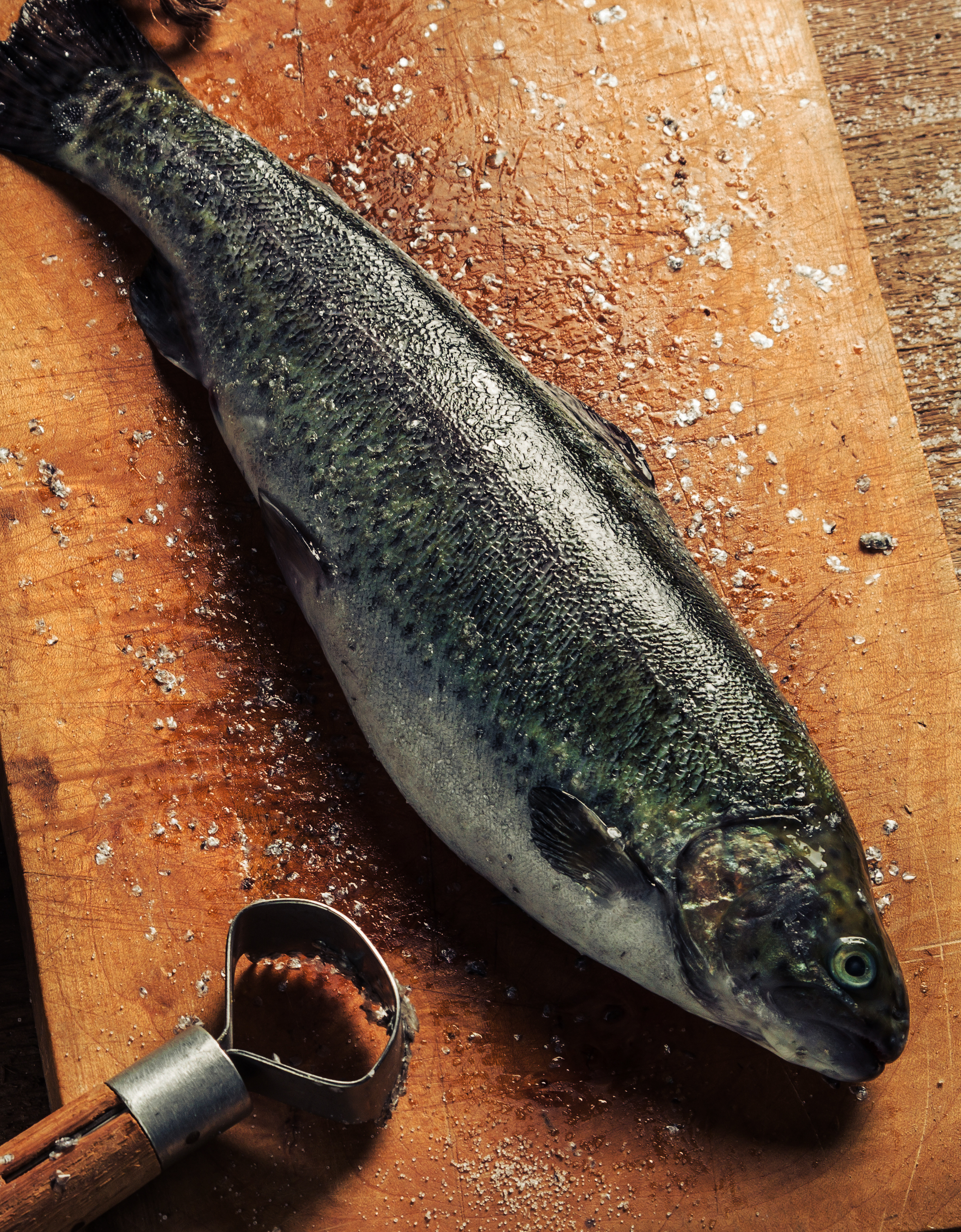
    Go outdoors. Cleaning fish is messy business. Even with a skilled fisherman the smell will remain so this is done outdoors, preferably where you have water available. A makeshift table —- even a piece of wood between two saw horses with a garden hose works well.

    Scale the fish. Hold the fish by the head and with the back end of a knife — you can also use a butter knife or a spoon — scrape against the scales to remove them. You want these strokes to be smooth and even otherwise you’ll cut into the meat of the fish.

    Rinse the fish. This is also a good time to check and verify that all the scales are off.

    Cut open the fish. With the fish belly up, make a clean cut from the bottom of the mouth to just below the tail.

    Open the fish and remove the entrails. This is the messiest part of the process but it doesn’t last long. Simply pull everything out and then cut anything remaining. When you think it’s complete, rinse the fish.

    Remove the head. Depending on the type of fish you caught as well as the type of cooking you’ll be doing, you can remove the head. If you’re cooking over the fire, it might make sense to leave the heads on. A simple stick placed through the inside and mouth of the fish will make for a great way to smoke the day’s catch over a fire. Also, trout cooks well with the heads left one — as well as the scales left on. Pan fish or anything deep fried you’ll want the heads and tails off.

    And that’s it. Once you’ve done this a few times you’ll be a pro.

  • Homesteading

    Homesteading

    homestead

    There is a great quote by Robert Heinlein that goes, “Every generation thinks they invented sex.”

    Yup. We do. And not just sex, every generation thinks they were the first to discover — everything.

    We arrive in the world and we begin to see and experience. And when we see and experience it’s assumed that no one has seen or experienced before us. How could they? We just found out about it ourselves and since we’re the center of it all, how could anything of any importance have occurred before we got here? Or before it involved us?

    It can’t. And since it’s all new to us, therefore it’s all new.

    Makes sense. Except for the fact that — it’s all been done before. And just because we are now experiencing it, doesn’t make it new.

    What has been will be again, what has been done will be done again; there is nothing new under the sun.” Ecclesiastes  1:9

    And there isn’t.

    With the exception of every generations new technological gizmos that are coming out, and will always be coming out, everything important has been done before.

    But this isn’t a bad thing.

    What is a bad thing is when we think that by just renaming it or repackaging it, that we get the discovery credits. Because there aren’t new discoveries, there are only new movements.

    Eating only what food that will go to waste if we don’t eat it, doesn’t get to be freeganism. It’s what people have been doing for centuries and do every day around the world.

    Making use of what materials you have, doesn’t get to be repurposing or even recycling; it’s just plain good sense and what’s been done since — forever.

    Now, there’s another new trend of an old idea that has popped up in the last few years that isn’t new at all, but is still pretty intriguing. And it’s the old concept of homesteading.

    The term homesteading is pretty commonly known and we all have a general idea of what that means. You go someplace where few people live and you live there and farm.

    Sort of.

    The true definition of the term homesteading has to do with subsistence farming or living a self-sufficient lifestyle — more modern terms for old ideas. But what makes this  modern trend and an interesting one is that there is now land out there that developers have no interest in — in every state, probably within two or three hours from where you are right now — that is dirt cheap.

    And I mean dirt cheap. In fact, for less than the cost of a big screen TV you can get a few acres of land — and some plots for even less than that.

    Now, these are homesteading lots — or undeveloped lots. Most don’t have power, or water or much of anything except the land itself. But they are cheap and they are plentiful.

    What is homesteading?

    The pure definition of homesteading dates back to the 1862 and the United States Homestead Act. It is the ability to establish a home in unsettled land and get everything you need from that land. You get your food from your garden, your fruit trees and your livestock. You get what currency you need in the sale of said items, by bartering or other means. You take care of the land and the land takes care of you.

    Now recently homesteading has been placed in a ultra-liberal almost radical box by using such terms as self-sufficiency and living off the grid. But the act of homesteading is simply taking responsibility for yourself through your land.

    Now the reason I’m bringing up all of this is not to promote the idea of homesteading. I think it’s a great concept for the right people but I also think it can be used as an  excuse to pull away from society and the neighbors that need you. So it’s two edged.

    But what I do want to promote — and think that this does apply to everyone — is that there is cheap land out there. It’s probably on a hill, covered in trees and probably will never see a power connection or a water line, but it’s affordable. And the thing about land is that they are not making any more of it.

    There is something in our core — and this goes back further than generations, it’s why our ancestors came here — about the need to own a piece of land. If you own your home that’s great, but it’s not land. It’s not a piece of the earth.

    For a few thousand bucks you can own a few acres of land. And if you only throw a tent there a few times a year, if you only go to it to show your friends, if you only build a shack or a cabin or an a-frame on it, it’s your land. And if you pay the few hundred dollars a year in taxes, it will be yours forever.

    That flat screen will be gone. That vacation will be distant memories. But your land will always be there.

    Your land.

  • 10 old technologies to never throw away

    10 old technologies to never throw away

    tv

    There is one thing about consumer technology that has always confused me. Let’s say you have a toaster. It’s a good toaster. It makes great toast. This toaster looks good on the counter, cleans easily and has been extremely reliable for all the years you’ve had it.

    Now let’s say that you just found out that the new toasters are being released. Your version is Toaster-6.0 and the new Toaster-7.0 are now out and being gobbled up as soon as they roll off the assembly line. If you don’t move fast, there won’t be any left.

    So you grab your wallet and run to the store — dropping that boat anchor of a toaster at the curb on the way out — to get your new, improved; Toaster-7.0. You stand in line as they count off how many toasters are left. You wait and —. You make it. You get the new toaster.

    Whew, that was close. And you get home and display the new toaster on the counter proudly.

    Now, as goofy as that sounds, we are actually doing this to items like toasters — not as rapidly as we do cell phones, but that’s the danger in it. It’s more subtle. More gentle of an erosion. And then one day we wake up and we miss our old toaster because this is the third toaster we’ve had since we’ve tossed it.

    So here are the ten old technology devices that fit in that category. Here are the ten items we should never throw out.

    10. Old cast iron

    Yes, you can still buy cast new iron pots and pans. Sure. But it’s pricy and is not as durable as the old stuff. And the thing about cast iron is that it never, ever dies. You can find a cast iron frying pan in a garage sale that is rusty and flaking and looks like it has been through three wars. And within a week you can have it cleaned up, seasoned and ready for eggs on the campfire. These things are great and should be held on to forever.


    9. Battery operated radios

    In our world of cellular access to everything, battery operated radios are becoming harder and harder to find. But that old boom box in the garage will come in pretty handy if you loose power and cell coverage. These are worth keeping — and keep the batteries out of them so they don’t corrode.


    8. Coffee pots

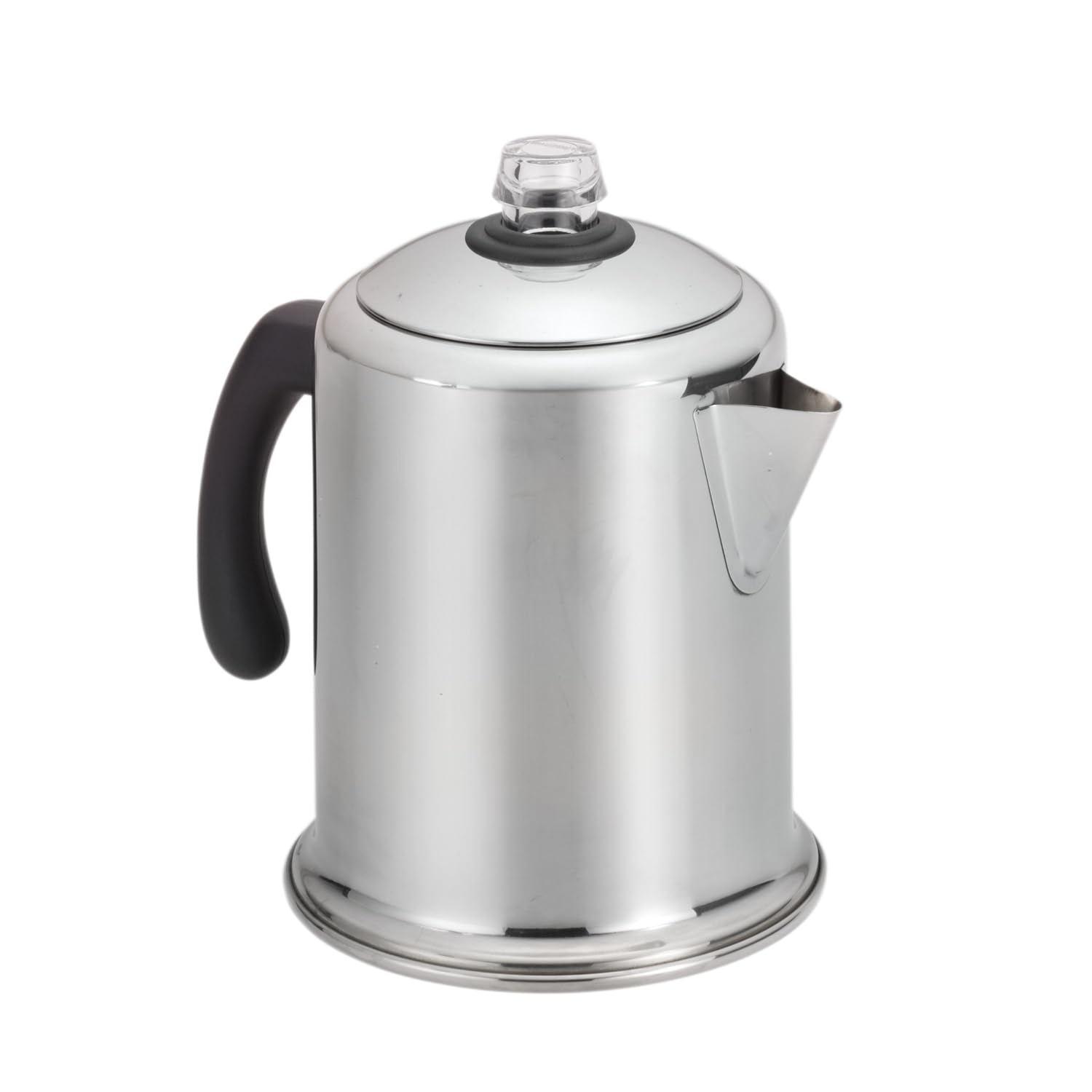
    Not coffee makers, but coffee pots, are becoming very rare. If you have one, keep it. If you don’t have one, get one — and I’m not talking about the fancy forty-dollar camping pot, I mean a real stainless steel coffee pot. It will cost you about ten bucks and since it has very few moving parts it will last forever. These are great for camping and fishing trips, if the power goes out, or just when you want to control how strong your coffee is.


    7. Metal coffee cans

    These are becoming harder and harder to find since most mainstream coffee comes in plastic containers. But if you have the old metal ones, keep them and use them. Display them proudly because they have hundreds of uses.


    6. Old landline phones

    Again, if you lose power, an old landline phone — one that you can plug into the phone line and doesn’t require power — is a pretty handy thing to have. Keep at least one in your house.


    5. Old metal fans

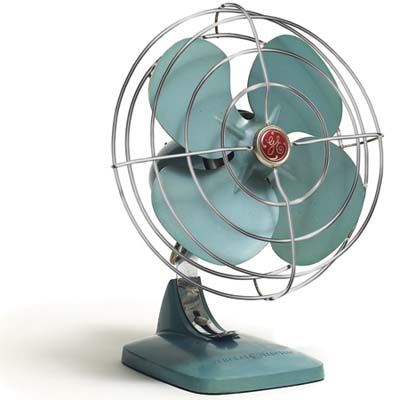
    It’s probably too late for these beauties because they have moved from the hard to find to the collectable. But if you find an old metal fan, grab it. They last forever and the motors are much larger than the modern plastic versions.


    4. Turn tables/tape decks 

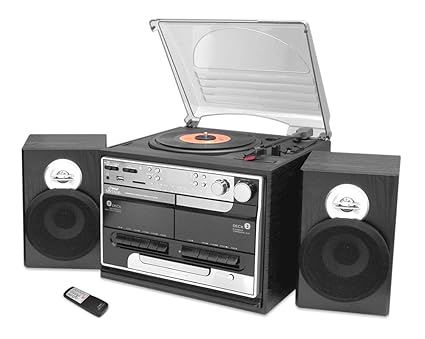
    Sometime in your life you will come across a collection of cassette tapes from your talent show in 1970 or some of Uncle Walters old 45’s. You’ll need something to play these on. If you have one, display it and use it.


    3. Small appliances build before 1970

    In my house, I have the milkshake maker from my parents diner in 1956. Besides the constant use it took then, it has been used for decades and still makes amazing milkshakes. These old appliances were replaced by lower quality versions and the old ones will last forever and when they are gone, they are gone.


    2. Old Mason Jars

    You can buy mason jars anywhere but the new design are thinner glass, cheaper fittings and aren’t designed to last as long. If you come across some of the thick old Mason Jars, grab them. They can be used for a thousand different things and they just aren’t making them any more.


    1. Metal fishing reels

    I am still in mourning over giving my brother-in-law my old Mitchel 300 fishing reel when I got my new shiny plastic one years ago. He still has mine and I am four reels down the road. The old metal reels last forever, are rugged and can take a beating.

  • How to remove a tick

    How to remove a tick

    tick

    My son Alex is a bonafide tick magnet — not a chick magnet, but a tick one; which at 17 years old is strangely not as cool.

    I’ve never seen anything like it. This kid excretes some sort of tick pheromone, a disco ball for parasites, because not only when we go into the woods does he come out with new colonies of ticks that are settling in and designing the city center, but even if he walks across a lawn or the grassy part of a parking lot he often gets a few hitchhikers — and this is where the outlying ticks are, the ones that have been banned from the forests and when they see Alex coming they sing songs and hold each other as they wait for their salvation to arrive.

    In fact, when Alex, our dog Riley, and myself are in the woods, Alex will come out with ticks. When it’s just Riley and myself, Riley will. So according to this highly scientific evidence, if given the chance. ticks prefer to risk the larger target of Alex — even though their chance of success is far less — then shoot for the shorter and easier one of Riley the dog.

    It’s very weird.

    WHAT IS A TICK?

    So, a tick is a type of mite that falls in the external parasites category. They attach to animals —mammals and birds but will also go after reptiles and amphibians as well — and live off the blood. They burrow their mouths under the skin and start drinking.

    Now the challenge with ticks is unlike mosquitos, who take a big drink and leave, ticks are in for the long hall. Once they have found The Promised Land they have their mail forwarded and take up residency. And the longer they are there, the fatter they get off the hosts stolen blood and the harder they are to get rid of.

    The most common ticks in North America are the deer ticks and the dog tick — which look very much alike

    Besides being unwanted, ugly, a thief, and just plain gross, the other concern with ticks is that some carry disease. These include Colorado Tick Fever, Rocky Mountain Spotted Fever and of course, Lyme Disease. But if you’ve come out of the woods with a few ticks don’t automatically think you’ve been exposed. Even though only a few types of ticks are capable of spreading the diseases it also depends upon the geographic location, the season of the year, the type of tick and how long it was attached.

    In fact, even if a tick that carries a disease has attached to you and even fed, the chance of infecting are still very low. For example, the deer tick that transmits Lyme Disease must feed for more than 36 hours before it can pass on the disease and most ticks are found within a few hours.

    But if you are an overly cautions individual and want to make sure that no disease was transmitted from a tick bite, can you get a blood test to determine this? No. Even if you were infected signs in your blood will not show up for two to six weeks later. But, as  long as you catch that tick before it’s been on you for three days, the odds are very high that no disease has been passed.

    TICK REPELLENT

    So a good offense is a strong defense. True. And the best defense against ticks are through your clothing. Commercial bug spray that you apply to your skin tries to be everything to everyone and also wears off. The best tick defense is to use a Permethrin based products that you apply to your clothes. Permethrin is a synthetic chemical found in insect repellent and there are many tick repellents made with Permethrin but the best one I’ve seen is made by a company called Sawyer that has a Duranon Permethrin spray for the deep woods. This stuff is amazing and I’ve been in the woods and watched ticks crawl on my clothes and die before they got to me.

    HOW TO REMOVE A TICK

    First, what not to do.

    When I was a kid there were dozens of folk-treatments that were used to remove ticks — many of which, we know now, not to do. The most common is to irritate the tick into removing itself and you do this by lighting a match, blowing it out and holding the hot match head behind the tick. Or putting fingernail polish. kerosene, Vaseline or dish soap on the end of the tick. The idea is that the tick will pull out of the skin to get away from the heat or the chemical burn.

    Don’t do this.

    Yes, it’s possible that the tick might actually pull out of the skin. Maybe. But in panic the tick is more likely to inject its bodily fluids before escaping — fluids that would include any disease it might be carrying. And that would be a bad thing.

    The best way to get rid of a tick is the tride-and-true, tweezer method — this is why it’s great to carry a small first aid kit or 48 hour kit on you in the woods — an easy one can be made from an Altoids tin and kept in your pocket.

    The tweezer method:

    1. With a pair of tweezers, as close your skin and its mouth as you can.

    2. Pull slowly back using steady and even pressure — don’t twist. And don’t squeeze the body as this can send the body fluids into the skin.

    3. If the whole tick came out, great. If not, leave the part that is still in the skin alone. If you try to go after that part you could irritate the skin even more and possibly cause an infection. Your body will eventually reject it.

    4. Clean and treat the area.