Category: Recipes

  • How to Make Acorn Pancakes

    How to Make Acorn Pancakes

    acorn

    When I was a kid, my all-time favorite book — and I mean all-time favorite — was a novel entitled My Side of the Mountain. I loved that book and I read it at least a dozen times. It’s the story of a boy named Sam — I think he was around twelve years old — who runs away from his New York City home and heads for the Catskill Mountains to live off the land. The book actually takes place in Delhi, NY, which is sixteen miles from my hometown of Walton.

    Now Sam isn’t the typical runaway. He doesn’t hate his parents. He’s not in trouble with the law. And he is not being abused by his family. Sam just wants to be on his own and wants to live in the mountains

    So he does.

    And while surviving alone he hollows out the base of a tree to live in, raises a baby peregrine falcon that he trains to hunt for him, and has some other amazing adventures.

    For food, Sam survives on the rabbits and squirrels that Frightful — Sam’s trained Falcon — brings him, as well as the occasional stolen deer that he would poach from the illegal hunters who shot them out of season. And of course, there were acorn pancakes. Sam lived on piles and piles of acorn pancakes.

    Now, when I was a kid I asked my mother if we could make acorn pancakes, and she told me that this was impossible. She said that My Side of the Mountain was simply a story; you couldn’t make flour from acorns and therefore you couldn’t make pancakes from acorn flour.

    I was heart broken. The author had lied to me! Everything else had seemed so real… Years later, when I had finally come to grips with forgiving author Jean Craighead George for her deception, I discovered that she was not the one lying. (Sorry, Mom!) There are acorn pancakes.

    Acorn pancakes and acorn biscuits were actually a staple of the Native American meal. Acorns hold some valuable proteins and carbohydrates and also hold a good deal of saturated fats. In the modern world they are fun to collect, fun to process, and add a unique nutty flavor that can’t be found anywhere else.

    How to Make Acorn Pancakes

    Gather. The first step is to collect your acorns, and the rule of thumb here is to harvest a third more than you need. The acorns should be perfect specimens — if they are rotten or have been infiltrated by bugs, they can’t be used.

    1. You need to crack the acorns and get to the meat. This is where you’ll do your final inspection. If the nuts are dark, chipped, or look as if bugs have gotten in, chuck them.
    2. A coffee grinder works well for this. You don’t want to get the acorn meal down to a flour consistency, but more like the consistency of ground coffee beans.

    Wash. If you were to taste the acorn meal right now you would notice one thing: it’s horrible. That’s because it’s loaded with tannins. Native Americans would take the acorns and fill them in baskets and leave them in streams. It’s difficult to get this tannin out, but crucial. The method I’ve found that works the best is using a stocking. Take a stocking and fill it with the acorn meal. Tie it off and run it under cold water, all the time kneading the stocking. You’ll need to do this several times — a dozen or so — to make sure the tannins are all out. A good way to check is to taste the water that comes out of the meal you are rinsing. If it’s clear and has no taste, you’re good.

    Some people bake the acorn meal, but I find this gives it a more bitter taste. Just spread it out and let it dry.

    Now, there is no yeast in acorn meal so it is best used to add into other meals — I like using buckwheat flour or corn meal. This gives it a unique nutty and sweet flavor.

    Knowing how to make acorn pancakes is not a mission critical skill to possess. It’s not up there with being able to change your tire or tie a tie. But it’s a fun thing to do with your kids as a fall project or as just a very creative way to zest up foods.

    Enjoy.

  • How to make homemade hot sauce

    How to make homemade hot sauce

    hot sauce

    Around 6,000 years ago — I think it was on a Wednesday — the early people of South America first began to cultivate and plant crops. And one of the first — one of the very first plants they placed into the ground — was the chili pepper; a spicy and flavorful morsel that quickly spread from The Bahamas all the way to the Andes.

    So by the time that Christopher Columbus got to Caribbean in 1492, the pepper was well established throughout Latin America. When the famous explorer found the pimiento — the Spanish word for the chili — he shortened the word to pepper because the taste reminded him of the heat that came from the black peppercorns of Europe.

    But as impressed as Columbus was, he did not take any peppers back with him. It wasn’t until the next voyage that a physician named Diego Álvarez Chanca — who became fascinated with the medicinal possibilities of the pepper — brought these little beauties back to Spain for the first time in 1494.

    In Europe, the chilies were grown but only as curiosities until the monks began to experiment with their culinary potential and soon discovered that their heat offered a very inexpensive substitute for black peppercorns — which were so incredibly costly at the time that they were actually used as currency. From there the popularity of chili’s spread through Europe and then to India, Japan and China. We were now a world of spicy food — when the peppers were in season.

    In 1807 the very first commercially bottled cayenne pepper sauce appeared in Massachusetts. Then in 1840, J. McCollick & Company of New York, produced a Bird Pepper Sauce, and in 1870, Edmund McIlhenny obtained a patent on his well-known Tabasco Brand sauce.

    Between 1918 and 1928, the first battle of the hot sauce wars had begun and this lasted until The Great Depression slowed things down in 1929. All was quiet until 1980, when The El Paso Chile Company was created and began to mass produce salsas and hot sauces. This took off and the 1980’s quickly became known as the decade of salsa — which during that time made the condiment more popular than even ketchup. And with that popularity, many of the staple hot sauce companies were created — Panola, Franks, Montezuma, etc.

    The 1980’s also saw the very first store dedicated to just hot sauces — Le Saucier in Boston — and in 1988 the first National Fiery Foods Show occurred in El Paso; which still goes on today.

    Then, things took a strange turn in 1989, when Blair Lazar created the very first extreme sauce which contained pepper extract — the same base ingredient used in pepper spray. And the pain level of hot sauces went crazy.

    The hot sauce industry is a multi-billion dollar market with hot sauces now a staple from military meals-ready- to-eat to high school cafeterias.

    But here is the great thing. You can make your own hot sauce. Oh yeah. It’s easy to do, cost pennies and is much better than anything you can buy off the shelf — even the forty dollar gourmet stuff — because it’s going to be fresh, tailored to your taste and totally unique.

    And on top of that there is something incredibly amazing about showing up at a dinner, barbecue, Superbowl party or whatever, with a bottle of your own homemade hot sauce.


    HOW TO MAKE HOMEMADE HOT SAIUCE …


    1. RED SAUCE

    Heat level: Medium


    Ingredients:

    Twenty or so, serrano chilies or red jalapenos — , stemmed and cut crosswise into slices.

    ½ medium onion, minced

    About 2 cups of water,

    1½ tablespoons minced garlic

    1 teaspoon salt

    1 teaspoon olive oil

    1 cup apple cider vinegar


    Directions: Caramelize the peppers, garlic, onions, salt, and oi, in a pan over medium heat. Add in the water and stir. For about 20 minutes. Remove from the heat and allow to cool. In a food processor or blender, purée until smooth. Then add vinegar in while the food

    Let age at least 2 weeks — can be stored for up to 6 months.


    1. JALAPENO SAUCE

    Heat level: Hot

    Ingredients:

    1 teaspoon olive oil

    ½ cup minced onion

    1 teaspoon salt

    20 fresh jalapeño peppers, sliced

    3 cloves garlic, minced

    2 cups water

    1 cup apple cider vinegar


    Directions: Caramelize peppers, onions, combine oil, and salt — everything but the vinegar — over medium heat. Add the water and let simmer for 20 minutes, stirring often. Remove from heat and allow to cool.

    Add into food processor and purée until smooth. With the processor running, add in the vinegar. Pour into a sterilized jar with a tight lid. This sauce will keep for 6 months when stored in the refrigerator.


    1. HABANERO HOT SAUCE

    Heat level: Oh yeah.

    Ingredients:

    4 habanero peppers, rough chopped

    2 cups of water

    1 tablespoon brown sugar

    ¼ teaspoon ground cloves

    ½ teaspoon salt

    2 tablespoons apple cider vinegar


    Directions: Put peppers, sugar, cloves and salt in a food processor or blender. Process the fruit and peppers until they are completely smooth and puréed. Scrape down the side of the bowl as necessary.

    Pour into a saucepan and add the water and vinegar and let simmer for five minutes. Let cool and fill your bottles or jars. Refrigerate and eat within the month.

  • The lost art of pickled eggs

    The lost art of pickled eggs

    eggs

    There are several symbols of life that have pretty much vanished from the American landscape. These include payphones — you still see a few once in a great while, but they are becoming increasingly scarce — Western Union Telegrams, video rental stores, and gone are the days when you would go to the hardware store to use the machine to test your television tubes; in order to determine which ones needed replacing — eliminating those expensive TV repairmen that charge and arm and a leg.

    Yup. Those days are pretty much gone.

    And another casualty of modern living is now missing from the neighborhood bar. At one time, there, back by the cash register, near the packs of cigarettes and the book where they kept track of your weekly sign-in — you would always see — it. That gallon jar of pickled eggs. Beautiful, inviting and glimmering in its vinegar glow.

    The bar pickled egg had been a staple for decades and often provided the only solid food a working man would have before heading home after a hard day. Originally the bar egg was simply a hardboiled egg; offered free to patrons like pretzels are today — in order to make the customer more thirsty and also to keep them from getting sloppily drunk. But health concerns grew and this practice migrated to selling just the pickled version; which could last longer and removed the need to clean up all those egg shells.

    The pickled egg first showed up on the American scene in the 1700’s and although many believe this to be a British transplant, it was actually the German colonists that brought it with them. It was popular with Hessian mercenaries and then migrated over to the Pennsylvania Dutch. It was a very simple practice, where the egg — or the cucumber or the beet — were placed in a jar of spiced vinegar and left there.

    If pickling hasn’t become a lost art, it has definitely become a niche one and is often lumped in with canning. Which is not accurate.

    Canning is the act of preserving food for storage. Pickling is when the vinegar and spices infuse it and alter the structure.

    Can a tomato and you still have a tomato. But pickle and egg and you get something completely different.

    Pickling is pretty easy and does not require canning pots and jars and can be done with just a few leftover glass jars and a pot — I mean you can use all that fancy stuff if you have it, but it’s not required. Because you can easily pickle eggs — or sausage or anything — with items that are just lying around the house. . It’s easy. It’s fun and it’s one of those cooking areas that everyone believes is a lot more difficult than it really is. And you can be very creative with pickling because the flavor is changed with not only the spices, but also with what else is pickled with it — hot peppers or fruit you whatever else you add in.

    Plus there is this unique effect when you bring homemade pickled eggs to a barbecue or an event that moves you up the unique-ladder — it’s possible that depending on how narrow minded and culinary-retentive your friends are, that no one may eat them, but I guarantee there won’t be three other jars of pickled eggs at the tailgate.

    Now the one down side to pickled eggs, is that they do not preserve the food long term like canning does — commercial pickled eggs can be kept on a shelf for years, but homemade ones need to be refrigerated, even before opening.

    And the very first — and really the only rule — of any pickling endeavor is, don’t use the prepackaged pickling spices. I have used these before and they are basically salt with some salt added in for flavor. You can create a much, much better brine on your own.

    Now, the most difficult aspect of pickling eggs has nothing to do with the cooking part, but has everything to do with getting those eggs out of their shells. Unpeeling hardboiled eggs is tedious and yields completely inconsistent results, so here are a few tricks that work pretty well.

    HOW TO PEEL HARDBOILED EGGS

    1. The Baking Soda Method

    If you increase the pH of the water you are cooking the egg in, the shell will actually break down. So add in 1/2 teaspoon baking soda for every quart water you use. Boil the eggs. Let cool and peel.

    1. The Lung Power Method

    Here’s how it’s supposed to work: First, crack the shell at the very top and bottom of the egg, then peel off about a dime sized hole on each end. Then, place your mouth over the hole on the top of the egg, and blow. According to some very cool Youtube videos,  this should work — but I have only made it work if I use the baking soda method first.

    1. The crack all over method

    If you take the egg and crack both top and bottom, then, on a paper towel, roll the egg around and crack the entire surface — you’ll know you’ve done this when you stop hearing the cracking sound. Then, if done right, the shell should come off in large pieces. I’ve had this work many times — and not work many times, and the key seems to be that older eggs peel better. Newer ones — especially the ones my wife gets directly from her friends who have chickens — are a pain to peel.

    1. The Swirl Method

    So the philosophy here is, you cook the eggs, remove them and place in a pot with a few inches of cold water. Then in the pot, swirl they eggs in a circle, letting the eggs bump and crack and slam all over each other. Then when you take the eggs out they should be partially unpeeled and easy to finish. I have tried this method and it works sometimes, but it does make a mess — but you get a great forearm workout.

    1. The Glass of Water Method

    This is my go-to method for unpeeling hardboiled eggs and I use it all the time. You place the egg in a glass with an inch or so of water in it. Cover the top with your hand and shake it and swirl it. The eggshell will take on small cracks over the surface and the water will get in between the shell and help it slip right off.

    HOW TO MAKE PICKLED EGGS

    So step one is to find a jar that can be sealed tightly — leftover pickled jars or anything with a wide mouth and a lid that seals. A quart-size canning jar will hold about one dozen medium sized eggs. Clean the jar thoroughly.

    Add inside the jar the eggs and the extras — extras can include cut up onion, sweet peppers, hot peppers, garlic cloves, whatever you want.

    In a large pan add in ¾ cup of water, 1 ½ cup of apple cider vinegar, 3 tsp salt, 2 tsp sugar, 1 clove garlic, some dill, mustard seed or any other spices you want — remember; there are no rules.

    Bring the pot to a boil and then let it simmer for 5 minutes.

    Right before you are ready to pour everything in the jar, run hot water over the outside surface of the jars you are using to warm them up.

    Pour the mixture into the jar and cover with the lid.


    That’s it.


  • How to make corned beef and cabbage

    How to make corned beef and cabbage

    corned

    Until they make Superbowl Sunday an official holiday, the most gastro-masculine celebration of the year has to go to —  Saint Patrick’s Day. I mean, c’mon, any day that revolves around red meat and beer is bound to attract testosterone. Which means that being able to make the staple meal of Saint Patrick’s Day, corned beef and cabbage, is right up there in the masculine food hierarchy with grilling a great steak or deep frying a whole turkey.

    History

    Corned beef and cabbage became part of the Irish-American culture in the early nineteenth century when Jewish butchers offered very inexpensive cuts of salted beef to the public. Salted meats had been available in Europe for centuries but most of Ireland ate little of it, in either fresh or salted form, because it was not only extremely expensive but came from cows that were owned by the wealthy — so even if you did have the coin to purchase it, you probably didn’t have permission to buy it. So what beef that wasn’t used by the estate was salted and exported at a much higher profit than they could have received at selling it to the lowly peasants. So, when Irish immigrants came to the larger cities in the US, they saw inexpensive cuts of salted beef were available for purchase — possibly for the first times in their lives.

    More corned beef in consumed in the United States on Saint Patrick’s Day than any other day, which means that the price need to  be competitive on that day. This gives you an opportunity to purchase a few of these salted gems and freeze them for later on in the year.

    Corned beef and cabbage is an example of what is called a boiled dinner. These are one pot meals that are cooked low and slow and include a piece of meat, and many root vegetables and spices. These are great because they are easy to make, inexpensive, hard to mess up and feed many people — which makes them ideal for camping trips, tailgating, deer camps or any time you want a big hearty meal for many.

    And the best part is, they are really hard to mess up. A boiled dinner is quick to prep it, then you turn it on and wait.

    HOW TO MAKE CORNED BEEF AND CABBAGE

    Ingredients

    • 1 medium onion, cut into wedges
    • 6 red potatoes — or a bag of fingerling potatoes.
    • 1 bag of carrots
    • 1 bottle of dark beer
    • 3 garlic cloves, minced
    • 1 bay leaf
    • 3 stalks of celery
    • I head of cabbage cut into wedges
    • 1 cup of apple cider
    • 1 corned beef brisket with spice packet (2-1/2 to 3 pounds), cut in half
    • 1 small head cabbage, cut into wedges

    Many people make this meal in a Crockpot and you definitely can. However, I find that the more modern the Crockpot the faster it cooks — I can’t prove this yet, but it seems like the newer crockpots cook at a higher temperature and can dry out the meat. So a Dutch oven or any pot or pan you can cover, will work fine.

    Place your onions, celery — cut long way like your carrots — and potatoes in the bottom of the pan. Place your brisket on top of the vegetables. Add the spice pack that came with the meet to the top and place the cabbage on top of the meat. Pour the vinegar and beer to the side to fill the pot.

    And that’s it. Cook for about 4 hours at 300 degrees.

  • Five great peasant dishes

    Five great peasant dishes

    peasant

    As far as fun, creative cooking, nothing can compare to peasant dishes. You know, comfort food. The meals that you grandmother made that tasted amazing, cost pennies, and you never, ever got tired of.

    Peasant dishes have been given that name because they were made from ingredients that were inexpensive and readily available. These were the meals of the common folk and they usually consisted of one dish, were made from less desired chunks of meat or sausages and used whatever vegetables, grains and starches were easily found.

    There is an art to creating great peasant dishes; it being more instinct than cooking. And my Aunt Isabelle — who ran a boarding house and provided a decent living for herself for three decades, after her husband walked out and left her penniless — could make a mouthwatering meal for a dozen hungry men, from a few cheap cuts of meat, some vegetables and a lot of practice.

    There are many recipes for peasant dishes but using a recipe here seems almost blasphemous. The cooks that developed these dishes didn’t use recipes. They just looked at what they had to work with and they made it as rich and as flavorsome as possible. And anyway, by following a recipe, you’re just copying someone else style — robbing you of the pleasure of developing your own.

    So, here are the top 5 peasant dishes of all time. These are all easy to make, cost pennies and have ingredients that are readily available. But more importantly they have few rules which allows you to experiment and get creative.

    Have fun.

     5. Shepherd’s pie

    Like many classic peasant dishes, there are dozens of variations of shepherd’s pie — some have a brown sauce, some red, but the basics are the same. Ground meat and vegetables covered in mashed potatoes and cheese. What’s not to love?


    4. Pot pie

    Now, homemade pot pie tends to get some reluctance from cooks, because it  involves making a crust. But basically this is just a simple biscuit dough — which is very easy to make. Pot pies are rich, tasty and so, so filling.


    3. Goulash

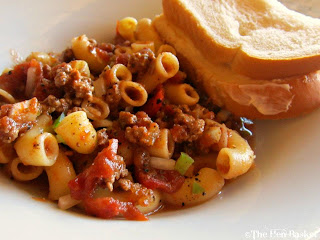
    Like shepherds pie there are so many deviations of goulash that there are actually serious arguments about it. What some people call goulash — dark gravy with sirloin mixed with egg noodles — are not what others consider the dish — red sauce, ground beef and elbow noodles. But whatever variation you choose to make, this a great dish to make, easy and cheap.


    2. Haluski

    Haluski is not only the lowest price dish here — the meatless version will cost you about fifty cents in ingredients — but it is beyond a doubt the most flavorful. My kids, who are pretty picky eaters, love this every time my wife makes it. All haluski is, is cabbage and egg noodles. That’s it. But many people add in bacon for flavor — my wife’s version also includes capers. Amazing.


    1. Chili

    Chili is, was, and will always be, the mack daddy of peasant dishes. It is easy to make, flexible and includes so many possibilities, that there are countless cookbooks dedicated to just making chili. It’s a great, easy and fun dish to make.

  • How to make jerky

    How to make jerky

    jerky

    Origins

    Tracing the history of jerky is somewhat difficult because people have been salting and drying meat for centuries. However, the word jerky has a direct line back to the ancient Incas: sometime around the year 1550. During that time, the Incas would cut slices of llama meat, rub it with salt and dry it in the sun or over a fire. When the Conquistadors arrived, they continued this tradition and called it Charqui, and when they later invaded the Americas they noticed that the natives were doing a similar process with meat from buffalo, deer and elk. The Native Americans began using the same term — only with their accents they pronounced it jerky.

         Jerky allowed people to consume high protein fuel that was readily available and eat it when food was scarce. It became a staple food item for early American pioneers and allowed for Western expansion. Over the years people discovered that the meat could hold more flavor if certain spices and tastes could be added and they began to create it for flavor, not only as a survival food.

    Nutrition

    Contrary to popular belief, beef jerky is actually a pretty healthy snack. It’s a great source of protein, is low in fat and calories and has minimal carbohydrates. Yeah, the sodium content is through the roof, but hey, it’s salted meat.

    And remember, jerky is not just a snack food. Jerky is dehydrated meat which means it can be rehydrated again when placed in hot water so you can use it in chili’s, stews, at home or while camping or hiking.

    But here’s the thing. The cost of commercial jerky is downright ridiculous.

    Economics

    Let’s use the Jack Links brand of beef jerky as an example. This brand resale’s for $5.99 for a 3.25 ounce bag. So, if we take $5.99 and divide it by 3.25, we find out that this jerky costs $1.84 an ounce. And since there are 16 ounces in a pound, that means the cost of this jerky is — $29.44 a pound.

    That’s thirty dollars a pound for — beef jerky.

    In comparison:

    • Lobster is currently running around $12.00 a pound
    • Filet Mignon is $19.00 a pound
    • And Prime Rib is about $17.00 a pound

    But beef jerky — that you buy at the gas station — is thirty dollars a pound.

    Now add to this, the comparison between the taste of homemade jerky and the prepackaged kind, and it’s not even worth comparing. The jerky you can make at home tastes worlds better, hands down — and will not contain any strange chemicals, preservatives or nitrates.

    Now marketers jumped on this fact a few years ago and starting producing small commercial dehydrators to dry your meats and vegetables, at home. They created infomercials, bought television time and dominated the shopping channels, stating what a crime it was for you to pay so much for beef jerky when you can make it yourself. But they would like you to make it at home — with their two hundred dollar dehydrator.

    Now, that’s just plain silly.

    Why would you pay two hundred dollars — for something that is basically a little heater and fan? And why would you pay any amount of money for a device that can do what the Incas did in the 1500’s with just fire and the sun?

    Because everything you need to do to dehydrate — herbs, vegetables, meats, anything — can be done in your kitchen oven and can be done for pennies.

    And it doesn’t matter what type of meat you use. You can use beef, venison, turkey, salmon, tuna or something even more exotic. And you can cater each batch to different tastes — make sweet, smoked or spicy.

    HOW TO MAKE JERKY

    1. Cut meat in strips. You’ll want these to be about the size of a slice of bacon. And the best way I’ve found is to get your butcher or meat department in the supermarket to cut the meat for you.
    2. Prepare marinade. Here is a real simple marinade that works well.
    • 1 part Worcestershire sauce
    • 1 part Soy Sauce
    • 1 tbl Honey
    • 2 tsp black pepper
    • 1 tsp chili powder
    • 1 tsp crushed red pepper flakes
    • 1 tsp liquid smoke
    • 1 slice of onion
    • 1 squeeze of lemon
    1. Place meat in storage dish, cover with foil and refrigerate anywhere from two hours to overnight.
    2. Preheat oven to 160°F
    3. Place a cookie sheet, wrapped with aluminum foil, in the bottom of the oven. This is to catch all the dripping from the jerky, because you are going to place the jerky right on the oven racks.
    4. Allow to dry in the oven for anywhere from 6 to 12 hours.
  • The world’s greatest venison roast recipe — ever!

    The world’s greatest venison roast recipe — ever!

    venison

    The first thing I need to mention is, I don’t hunt.

    Not at all. And that’s not because I’m against hunting, I’m not. I don’t view  hunting as being wrong, cruel, barbaric, in fact as long as the meat is being used I think it’s a self-sufficient and admirable thing to do.

    In fact, I grew up in a little town in the Catskill Mountains called Walton, NY. and although it might be different now, in those days if Dad didn’t get a deer, it was going to be a long winter. There were many families back then that depended on wild game to supplement their food stocks and The State Police had a long list of families that would take deer killed in car accidents so the meat didn’t go to waste.

    I have no problem with hunting. Never did. I just don’t hunt.

    But all of us — myself included — know plenty of people that do hunt. Plenty of them. And hunters are very generous people that enjoy sharing some meat with friends and family that will use it.

    Which means, that if you’re like me and don’t deer hunt, that doesn’t mean that we don’t need to be familiar with how to cook venison. Especially a venison roast. And the reason to focus on the roast is that besides being a great piece of meat, it’s not as sexy and sought after as say, the tenderloin; which everyone prizes and covets. So, many folks will have extra venison roasts in their freezer and are more than happy to share with all us non-hunters out there that enjoy it and know how to prepare it.

    In fact, if you have family or friends that have never had venison and are a little apprehensive to try it — this is the recipe for you. Which is actually how I came to get it.

    My mother-in-law grew up being one of those people unfamiliar with venison but her mother-in-law would cook it occasionally for Sunday dinner. This young, recently married woman did not want to insult her husband’s mother, so she tried it. And she was hooked. The meat was tender, moist and tasted, well — nothing like what she expected deer to taste like.

    And that is this recipe here. The actual venison roast recipe from my wife’s grandmother, Elsie Wilkins, circa 1950 and the greatest venison roast recipe you will ever find and the only one you will ever need.

    It’s so simple, fun to make and has an amazing flavor.

    THE WORLD’S GREATEST VENISON ROAST RECIPE — EVER.

    Ingredients:

    A 4-6 pound venison roast

    Flour

    1 tablespoon cooking oil

    1 large onion

    One half garlic clove

    4 teaspoons oregano

    1 pinch celery seed

    4 tablespoons wine vinegar — not cider vinegar

    Salt and pepper to taste

    Accent ™ to taste.

    Directions:

    Peel half of a small clove of garlic

    Cut small slits in the roast and place long pieces of garlic into the roast — this will add moisture while the roast is cooking.

    Place the oil in the bottom of a French Oven (French oven is an enamel covered version of a Dutch oven and retains heat a little better than its Dutch cousin), and bring up to a medium heat on the stovetop.

    Brown roast in oil for 10 to 15 minutes, or until a nice brown sear are on all the edges.

    Slice one large onion and set aside.

    Remove roast. Place onion and vinegar in French oven.

    Place spices liberally over the roast (Accent ™, celery seed, salt and pepper, oregano).

    Place roast on top of the onions and cook at 325 F for 3 to 4 hours.

    Check half way through to see if additional moisture is needed.

     Eat and enjoy.

  • No knead bread

    No knead bread

    art2

    In November 2006, New York Times food columnist Mark Bittman wrote an article for his Sunday feature—it was just an interview with a baker who came up with a new method to bake bread, no big deal. Except that this baker claimed he had not only developed a manner of making absolutely amazing bread at home without the headaches of kneading and working the dough, but that his process was so easy, a four-year-old could do it.

    Wait.

    Why would a commercial baker develop a way to make his product at home? This seemed a little self-defeating. But this baker—his name was Jim Lahey—stated that his goal was for anyone to be able to create bakery-quality bread—you know, that bread with the hard crust and the rich center, not the squishy store-bought stuff—as often as they wanted.

    So, Mark Bittman met with Lahey and the two baked this new bread together. Bittman wrote the piece and that article launched an entire bread-making movement. There were videos, additional articles, online pieces, cookbooks—all about this new method of baking bread easily.
    Now, baking bread had always been a daunting and intimidating task, one only taken on by the serious home baker. It was time-consuming, required a lot of attention, and was easy to mess up—which is why homemade bread has always been so revered.

    The traditional process of baking bread requires dissolving yeast and sugar in water, then adding in lard, salt, and flour. Then the kneading starts. After that, the bread has to rise for an hour. Then you punch the dough and allow it to deflate and sit for another hour. Then you bake.

    Then, in the 1990s, bread machines came along. These things were great. Now there was a machine where you could load in all the ingredients and allow the device to do all the kneading, punching, waiting, and cooking. You just loaded it up, pressed a few buttons, and walked away. But the bread was still the soft, squishy store-bought kind—a much fresher, preservative-free version of it, but still not that artisan, bakery-style bread we all love.

    Then came Jim Lahey’s method, where we can not only make the most amazing artisan bread ever, but it is so incredibly easy that—yes, a four-year-old can do it.
    It’s cheap—an average loaf will cost you about thirty cents to make—incredibly crispy, tasty, and easy to do.

    What Jim Lahey came up with was a way to allow time to do all the work—up to twenty-four hours. It takes a minute to mix the bread, uses only a quarter teaspoon of yeast (most recipes call for a full teaspoon or more), and allows the yeast to ferment very slowly. The dough is so sticky that you couldn’t knead it even if you wanted to, which is good because you just leave it alone and let it do its thing.

    His method creates a great cracking crust and flavor and is the kind of bread that you get from professionals’ steam-injected ovens. And it does this by allowing the pot you cook it in to act as a steam oven and get the same results. Over the past year, I’ve made dozens of loaves of this bread and with a few tweaks, it’s pretty bullet proof.

    So how do you make no-knead bread? It’s pretty easy.

    First, you will need:

    1¾ cup of warm water
    3 cups of flour
    1 teaspoon of salt
    ¼ teaspoon of yeast

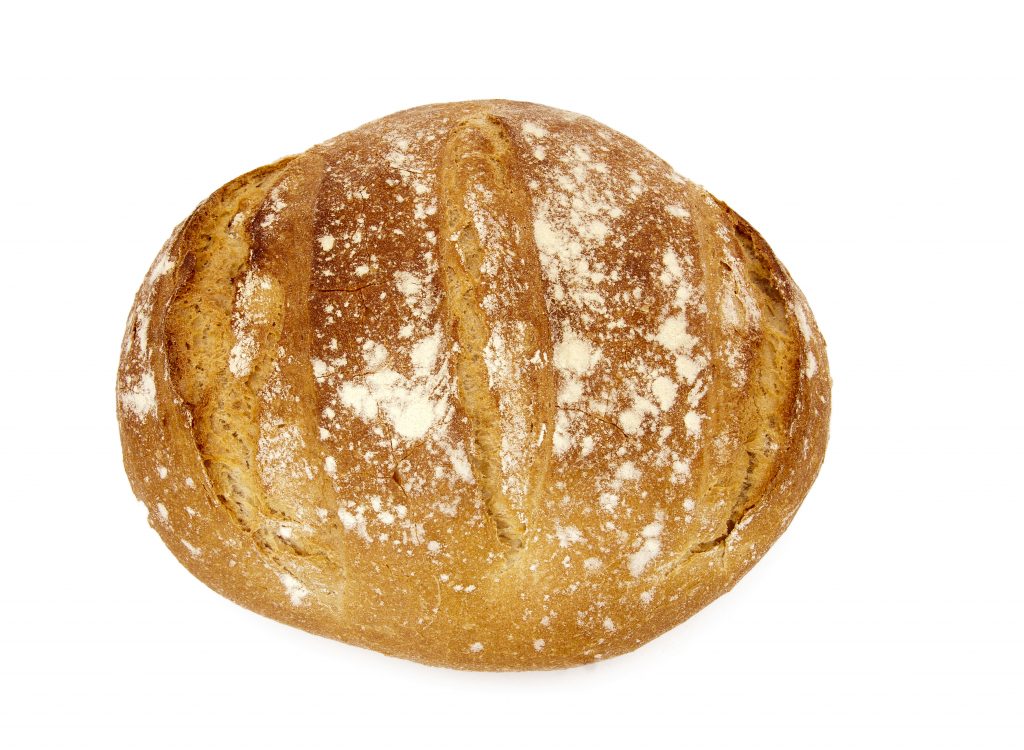
    In a large bowl combine flour, yeast, and salt. Mix the dry ingredients, then add your water. Cover the bowl with plastic wrap and let it sit. Jim Lahey’s recipe calls for between eighteen and twenty-four hours, but I would say eight hours is a minimum. I make a batch up at night and we have it for breakfast the next day. I also use a Sharpie and write on the plastic wrap the time that I started it, so I don’t forget. If you like a larger loaf and less dense bread, wait longer, toward the twenty-four-hour time frame.

    Place flour over a cutting board and place the dough on it. Fold it into a ball—don’t knead it or work it; just fold it—place back in the bowl and cover back with plastic wrap for thirty minutes.
    HINT: What I do here is, while the dough is on the cutting board, I wash out the bowl, dry it, and place a layer of olive oil on the bottom. Then when the dough goes back in the bowl, I’ll add a little olive oil on the top. This will add flavor and allow the bread to easily slip into the pan when you cook it.

    Preheat the oven to 400 degrees and place a Dutch oven, casserole dish, or anything that has a heavy cover and seals, into the oven to preheat—empty—for ten minutes. You want the pan to be hot when you start.

    Place the bread inside the Dutch oven. I used to cut vent holes on the top of the loaf, but found that they don’t do much and the look of the bread is nicer without them. Cook for thirty minutes.
    Remove the lid and cook for an additional five minutes or so to get the top get crusty.
    It’s tempting to cut it right out of the oven, but you get a better result if you let it cool for ten minutes or so.

    Now, I might add that with this recipe is everything depends on the Dutch oven or pot that you use to cook it in. With mine, I can’t get the crust extremely crusty, without burning the bottom of the bread, so I settle for a medium crust. I’ve seen others do it where they can cook and extra five minutes or so and get it crusty all over. You can try adding parchment paper to the bottom of the pot; that will give you some additional cooking time.

    And that’s it. No-knead bread. Fast, easy, fun, and costs probably around thirty cents a loaf. Obviously, there are no preservatives in it like there are with store-bought bread, so it won’t stay fresh for more than a week or so, but you won’t have to worry about it. This bread goes fast. We’ve never had a loaf make it to three days.

    Two days is our record—two days, five hours, and sixteen minutes.

  • How to Make a Real Cup of Coffee

    How to Make a Real Cup of Coffee

    how to make coffee

    Electric coffeemakers are wonderful things. We take cold water and ground coffee and put them in a machine. We push a button and even before we’ve read through our morning emails, there is a fresh pot of coffee waiting for us. Ding! Depending on the brand of coffeemaker, the overall brew time is between 4 and 7 minutes. Not bad. The modern coffeemaker can trace its roots back to 1972 when Mr. Coffee came out with the first commercially successful automatic drip coffeemaker. Before that, every kitchen in America had either an electric coffee percolator or a coffee pot that was placed on the stove.

    The electric coffee percolator is that device you’ve seen in every episode of The Brady Bunch and Leave it to Beaver. It’s a metal pot that you fill with water. Inside, a long stem fits in the bottom of the pot and a basket attaches to the top where you place the ground coffee. As the temperature rises, the water in the bottom of the chamber boils and travels up the stem to the basket. The hot water is distributed over the dry coffee  and leaches back into the pot. Depending on the brand of percolator you use, a full pot of coffee in an electric percolator should take anywhere from 7 to 11 minutes to make.

    The newest coffee innovation is the K-cup style coffee machine. This was created by Keurig — the ‘K’ in K-cup — who in 1998 introduced a single cup coffee maker designed for office use. In this machine, a K-Cup — a sealed plastic cup of coffee, hot chocolate, tea, etc. — is placed in the machine, water is added, you push the button, and you have one cup of the very coffee you want. Then your cubicle mate can get another cup of a different flavored coffee. It was a success and the company branched out into home style units and now everyone from Folgers to Dunkin’ Donuts offers their coffee in a K-cup option. The time for one cup on a Keurig coffeemaker is just a couple minutes.

    [amazon asin=B004978NKY&template=iframe image][amazon asin=B000RK4GNA&template=iframe image][amazon asin=B000IBLBS6&template=iframe image][amazon asin=B00006IV0Q&template=iframe image]

    The average American consumes 19 gallons of coffee a year, which doesn’t seem like much except that it is second only to milk and beats soda and energy drinks by a wide margin. And the coffee market is such that you can now get a mocha latte at McDonald’s and have twelve different types of coffees to choose from when you pump your gas. But real coffee — simple and classic coffee — is easy to make, takes about the same time as the other methods, and costs pennies compared to your $12 Venti triple mocha.

    How to Make a Real Cup of Coffee

    So the rules here are simple. Get yourself a classic coffee pot that sits on the stove — the electric kind won’t work here because you need to get the water to a rolling boil. Also you want a standard coffee pot that is a cylinder, not one that is tapered and larger on the bottom — you’ll see why in a minute.

    1. Take out the coffee stem and basket and set aside — you’ll need these later.
    2. Fill your coffee pot with water and add a pinch of salt — this takes some of the bitterness out of the coffee.
    3. Bring the pot to a rolling boil.
    4. Now, remove the pot from the heat and wait thirty seconds — this is important because if you add the coffee right after its been boiling, it will flash up and the grounds will cling to the inside of the pot and you’ll not only have grounds in your coffee when you pour but you will waste coffee.
    5. Add the coffee directly into the water, stirring it in if needed. This is to allow the coffee to brew in the water and not get burned by the constant boiling if you use the coffee pot as it was intended.
    6. Cover the pot and let sit for 6 minutes — 10 minutes creates this dark, richer coffee many people like, but 6 minutes is where I like it.
    7. Take the basket and drop it into the pot, then take the large stem with the large part down and drop it into the pot — you would think the stem could fit the other way but it is slightly smaller to allow the basket to sit on the stem.
    8. Slowly press the basket down, pressing the coffee and keeping the grounds on the bottom.
    9. Hold the stem down and pour. Now when you try this for the first time the coffee may taste weaker than what you are accustomed to. And this could be because coffee is very easy to burn and often that rich taste we’ve gotten used to at the gas station or the diner is actually burnt coffee. This could also be because  bolder coffees are often perceived as having more caffeine and therefore we want our coffee to be as dark and bold as possible — when in actuality the light roasts coffees have the most caffeine.

    And that’s it. Enjoy.