Category: Life

  • Life After the Binge

    Life After the Binge

    It’s been around since long before we even had a name for it: bingeing. And the methods we use to experience this state of binge come in many forms. There is binge eating, binge drinking, and with the advent of streaming media, we’ve added binge watching to the mix, where we can snuggle up on the couch on a Sunday morning and three seasons later realize that it’s now dark and the dog hasn’t been walked.

    Bingeing is the act of totally immersing yourself—or over-immersing—in a specific experience for a specific period of time. Drinking constantly over that March Madness weekend, going through a week’s worth of groceries in five hours, watching every episode of The Office over Labor Day weekend and leaving the living room only for bathroom breaks.

    It’s not always one thing we binge on. Sometimes we can create hybrid binges, a combination of intakes—sitting on the couch all weekend watching every episode of Game of Thrones, while downing a case of beer and eating three trays of Stouffer Family-Style Lasagna.

    So, why do we binge? Well, the textbook answer is to reduce stress and relieve anxiety. And that makes sense and is somewhat true. But as a veteran of countless bingeing skirmishes, I think the core reason is a little simpler: We usually binge to hide, to remain unnoticed by the world for a while so that depression, stress, or worry can’t find us, at least for a short time.

    Binges of all kind are an incredibly effective means of escape. We go numb. We build a temporary wall of booze, or drugs, or food, or every episode of House, between us and the world outside. We stay inside the binge bubble, safe and protected, and everything else stays out. And over the course of the binge we come to rely on that wall, maybe even depend on.

    Often, we blame the binge simply on boredom. Oh, I had nothing else to do so I binged all weekend. But rarely is boredom the driver for a binge; in fact, it’s often the fuse. Boredom certainly helps. It creates the perfect climate for a nice binge. But deep inside, the binge gives us emotional and mental comfort. It’s not just about killing time.

    Now, it is possible to binge as a team, with a group, but these type of binges usually have a shelf life and last only as long as the all members are committed to it. At its core, bingeing is a solo sport.

    An interesting aspect of the binge today compared to one in, let’s say, 1995, has to do with the access to the technology we now have. YouTube is a great example. If we binged in 1995, we could max our Blockbuster daily tape rental out and binge on newest releases. But eventually, there would come an internal desire to do something crazy, such as talk to another human being or actually go outside. YouTube relieves that. If we’ve been on the couch for three hours and feel like we need to actually do something, we can click YouTube. And for the next five minutes, we can hike the Yucatan, whitewater raft down the Colorado, or drink at a pub in Dublin.

    YouTube is different from watching a film or a series because much of it is filmed in the first person, often with one host talking directly to us, giving the illusion that we are actually on that hike, at that dinner or party, at that family reunion, or having a one-on-one conversation with someone. Studies show that the brain processes these first-person visual experiences as real, so we experience watching someone tell us about the latest crypto scam, book review, or bike trip across the country just as if we were having a real conversation.

    If YouTube isn’t your thing, you can be home pounding beers all weekend, but the act of texting friends gives you the illusion that you are interacting with them and have actually showered and shaved today, allowing the binge to continue without that pesky human contact.

    So is bingeing bad? By itself, no. The detriment of a binge is the emotional and mental cost. If we wake up blurry-eyed on Monday morning full of guilt and shame, those negative feelings are the perfect fuel to spark another binge, the need to hide. The aftermath of the binge becomes a burden we carry, one that rubs against our sense of value and purpose.

    Because if you really boil it down, almost anything can technically be a binge. If you have one more beer than you should, push yourself away from the buffet table after two—no, three—extra plates of the macaroons, or decide to watch just one more Walking Dead episode, that’s a mini-binge .

    So, the binge is over and it’s time to join life again. What steps can we take to do that?

    1. Forgive and forget.

    A binge by itself does little damage. The guilt and shame you carry with it are what cause damage. That emotional and mental aftermath can do way more harm than a wasted weekend. So the first step is to forgive yourself. It’s over, it happened, it’s no big deal. Those three booze-filled days are a fraction of the time you have left to do the things you want and need to do.
    You didn’t blow it. It’s not over. A binge doesn’t mean you’re weak. You forgive you.

    2. Identify what the driver was.

    As you begin to join the real world again, start to look at what caused the binge. This isn’t a time for analysis; it’s a time of discovery. Was there an event, a breakup, a confrontation at work, or a major setback? What makes you feel the need to hide from the world for a while? Sometimes the answer is hidden. Determine what you think it is and file it away. There’s no need to bring that cause to trial; just acknowledge it was there.

    3. Stick to a schedule.

    Getting back to a routine is the best way to add some structure and boundaries. Creating an organized schedule for a while helps you get moving again. There is a blast of personal energy you experience when you get even the simplest things accomplished. Just mowing the lawn, starting laundry, or washing the car will make your power-up button burn brighter as your to-do list gets smaller.

    So, binge when you need to. Forgive yourself when you do. And then go and get those things done that make you happy and help others.

  • That One Big Break

    That One Big Break

    198519170

    I just had a famous billionaire fly me, first class, to his mansion to talk about writing his life story.

    Yup, that actually happened.

    And I can’t think of a better opening line for an article than that because that one amazing sentence not only grabs you, but elevates me at the same time: Who is this writer who’s being flown to billionaires’ homes? Now you’re curious. Now you want to learn more.

    This first sentence could also work on a visual level as the opening for a film, where the wealthy tycoon reaches out to the broke writer—usually it’s a broke private detective, but we’ll substitute writer here—to offer the deal of a lifetime: a huge paycheck, a glance behind the curtain, and by doing so, taking this author from unknown to center stage. From one of many, to one of a few.

    Now, I’ll skip ahead and tell you that I didn’t get this life-changing, bank account–booming, career-altering gig. I did well at the interviews and the actual meeting—well, I think I did—and I didn’t embarrass myself or the literary agency that sent me. I didn’t show up drunk, I didn’t try to sneak photos of the exotic cars in the garage, and I didn’t mention as an ice breaker any of the interesting articles I had read about this billionaire’s current legal trouble.

    Yeah, looking back, I did okay. But I still didn’t get the job.

    And I’m now feeling the impact of not getting it. I’m dealing with the emotional hangover and looking at the cost of not being given this award, this prize, this bonus card that would have moved me five spaces on the game board. Because there was a cost.

    From a mental perspective, I know most people would say I should be honored and flattered that I even made it to the final bonus round of a handful of writers being considered for such a high-profile and lucrative deal. Yes, absolutely; my mind agrees with that assessment.

    And my heart is telling me that it’s probably for the best that I didn’t get the job. The billionaire subject of the book has had something of a questionable history, and I suspect there would have been some dark aspects to navigate that would have had an emotional cost for me as the narrator. Absolutely, this is also true.

    But it’s this other area, this yet unidentified set of data points, that keeps gnawing at me.

    See, this opportunity, this project, would have changed my life, and would have done so very quickly. In one move, one decision, my world would have been different in so many areas: financial, career, position, title, access, clout. Boom.

    And that’s where I think the gnawing comes from. It’s not that my life would have changed as fast as a lottery winner’s does, but that I needed a lottery win to make it happen. Not only could I not get to that place as quickly without this opportunity, but, I worry, it’s possible that I can never get to that same place without it.

    I needed this powerful lottery win to swoop down from the heavens and pick me, this lowly shepherd, and speak: Verily, you shall be the one I have chosen. I would cast away my rags and join the billionaire in the clouds, with my name being mentioned on daily news feed coverage.

    Without being chosen, without that golden ticket, I worry that I will be . . . well, just me.

    When you buy a lottery ticket, the bonus feature attached is that there are three minutes of wondering: What if I actually won this thing? It’s the quick high that is the true lure of buying the ticket. It lasts for a few minutes, or maybe hours, and we mourn the fantasy a little when it’s gone, but it hasn’t been around long enough for us to really miss it.

    But from the time I got on the plane for this meeting, with every limo ride, and even for the three days after I came home, my center mental focus was: Wow, this is going to change everything.

    Then I started believing and planning. It became real. And then it was gone.

    When a big “could have” happens, it builds. The mind begins to see the potential changes as if they’ve already happened. You think: I’ll be able to pay off this, I’ll have access to that, this person will be proud, that one will be jealous. You begin to believe it, to see it. It’s yours.

    Then, when the bubble pops, it doesn’t leave you back where you were before. No, it pushes you back three steps behind, emotionally. You’re in a lower place. A sadder one.

    I’ve always hated that “one big break” concept because it’s not about that one pivotal moment: that meeting, that small success, that venture that started us on a different path. The one big break myth is the Cinderella moment. It takes the guy washing dishes to the corner office, the lady cleaning hotel rooms to the Hollywood walk of fame, the homeless guy to the red carpet at the Emmys.

    There are so, so many of us who are banking on that one big break. So much so that we just lean into our brooms, we bus those tables, we sleep under those bridges, without a plan, only the hope that the next person we meet will discover us, make us, give us that break that we deserve and are entitled to. That one big break. Because maybe today . . .

    And this kind of pisses me off. Not that the futile concept of “one big break” exists, but that I was banking on it . Counting on it. Believing in it.

    I’m glad I didn’t get this—well, sort of. Because now I can get to work and start working on creating my own break, not one big one but several small ones, if that’s what it takes. Whatever their size, they’ll be breaks that I create. Not one big one that is given to me.

  • The Self Help Of A Con Man: What convicted fraudster Matt Cox has to teach us about life

    The Self Help Of A Con Man: What convicted fraudster Matt Cox has to teach us about life

    I tried to break my fall with my right hand, and that’s when the bones snapped — I mean, you could actually hear them break. I rolled over, got up off the floor, and just stood there. Waiting. The wrist looked okay. My fingers could still move. But that sound, that snap, was still in the air, and I knew something bad had happened. Then the pain arrived –sharp and intense, and then the arm began to swell and discolor.

    Later, the x-rays would show that the wrist wasn’t just broken; it was crushed. But all four bone pieces were still there, and we might be able to avoid surgery if we could cast it, keep it still, and hope for the best.

    Why am I telling you this? What does breaking my wrist have to do with talking to Matt Cox, one of America’s most notorious fraudsters, someone who is estimated to have stolen $15 million, was sentenced to 26 years in federal prison, and once held the number-one spot on the Secret Service’s most wanted list?

    Well, everything.

    Once the cast was on, my wife banished me to the couch, propped my arms with pillows and ice packs, and told me to stay there. So I did. And if I was real still, then the pain was minimal. So I sat and watched YouTube videos on my phone, which was propped against my cast.

    If I hadn’t broken my wrist, if I hadn’t had to just sit quietly for days at a time, I couldn’t have justified spending eight straight hours watching video podcasts of Matt Cox on a channel called Koncrete.

    Matt Cox began his career as a mortgage broker in the late 1990s. On his very first deal, a coworker advised him to alter a rental history document that showed the client had been 30 days late paying rent, which would have caused the loan to be denied.

    Matt made the change but was nervous as he waited to hear if the loan would be approved. He had violated the underwriting guidelines—and done so on his very first mortgage application. But his car was about to be repossessed, his credit cards were maxed out, and he was behind on his mortgage, so Matt needed the commission badly.

    The loan went through, and at 29 years old, Matt realized that a few cents’ worth of Wite-Out had just netted him a $3,500 commission. The money got him back on his feet . . and also broke the seal to fraud.

    When clients who made $45,000 a year could only get a loan if they made $55,000, Matt, who had a degree in fine arts, manufactured new W-2 forms and verification of employment income.

    Matt closed four loans his second month as a mortgage broker and six loans the month after that. Then eight. Then twelve.

    He left that job and opened his own mortgage company. It had one rule: If someone walked through the door with a pulse, he would get them a loan. Matt had 14 people working under him and they were committing massive mortgage fraud.

    Things changed when the FBI caught some of Matt’s former business partners on a separate fraud case that Matt was connected to. These individuals wore a wire and met with Matt. He was unaware that he was admitting to all the details of his fraud—on tape.

    Matt accepted a plea deal and received three years’ probation, but now could no longer legally own a mortgage company. At this same time, Matt was going through a divorce, had given his ex-wife a large amount of money, and had a large monthly child support payment. He needed to make a living. So, he had an idea: Instead of making fake documents for people, why not skip a step and make fake . . . people? If he could create synthetic borrowers, then he could make some serious money.

    Matt estimated that every synthetic person he created netted him around $500,000. And he did it for two years.

    Matt Cox stole $11 million—all while on probation for fraud.

    About this same time, Matt started dating a woman named Gina Laidlaw. Gina was going through a divorce, raising her two-year-old child, and having some financial issues. Matt offered a way for her to make some quick money. Since Matt was obviously doing well and all his friends who were involved seemed to be successful, she agreed.

    Gina would play the part of a mortgage buyer named Rosita Perez. So, Gina—brown haired and green-eyed—dyed her hair for the fake ID photographs Matt created. Gina would show up at the closings with her ID and then go to the banks to deposit the checks.

    Later that year, Matt received a tip from a friend that the FBI planned to arrest him in a few days. He had over a million dollars in various banks, but couldn’t easily withdraw it, so he gathered the $80,000 he had in cash and went on the lam.

    By this time, Matt had stopped seeing Gina and was dating a woman named Rebecca Hauck. She showed up at Matt’s house to find him frantically packing his things. Matt explained that was going on the run from the FBI, along with the crimes he had been committing. Rebecca listened. And then told Matt that she was going with him.

    The two hit the road, and with Matt’s talent for false documentation, getting real driver’s licenses and even passports in other people’s names was never an issue. In the meantime, Gina was wracked with guilt over what she had done. A completely honest person, her conscience was eating away at her. She decided to go to the FBI and confess her involvement.

    She thought she had an immunity agreement, since she had no past record, came forward on her own, and was confessing to a crime the FBI knew nothing about. But the FBI decided not to grant Gina immunity. She was sentenced to two and a half years in prison and ordered to pay $300,000 in restitution.

    Meanwhile, Matt and Rebecca kept on the move and bounced from Atlanta to Las Vegas to Jamaica to Charlotte. Whenever the money ran low, Matt would use one of his new identities and buy some houses, take out multiple home loans, and rack up some credit card debt.

    After a close call at getting caught, Matt decided that he and Rebecca should separate. They had about $600,000 in cash, so Matt took $100,000 and gave Rebecca the rest. Matt headed to Nashville, created a new identity, and borrowed $3.5 million.

    Rebecca knew she was wanted by the FBI, but called home anyway and revealed to a family member where she was living in and that she was in beauty school. Her relative immediately called the FBI. Rebecca was found and arrested. She was sentenced to six years in prison, with five additional years of supervised release.

    Not long after this, Matt’s luck ran out, too. Through a tip from someone looking to cash in on the reward for Matt’s capture, he was arrested on November 16, 2006. In April 2007, Matt plead guilty, he was sentenced one year later, on November 16, 2006, to 26 years. He served one year in various county jails and U.S. Marshal holdovers; three years in the medium-security prison in Coleman, Florida; and 8 and a half years in the low-security prison at Coleman. He was released on supervised release in July 2019.

    Now, this is a riveting story and a great way to spend eight hours while you sit on a couch and wait for your bones to mend. But there was one thing that I kept going back to.

    In the part of the podcast when Matt was talking about Gina, the former girlfriend who confessed to the crimes she had committed with Matt and was sentenced to prison because of it, Matt smiled and said, “She’s super cool; I talk to her all the time.”

    Wait . . . what?!

    You’re in contact with the person who went to prison because of you? The person whose child was taken away from her talks to you? And you talk all the time? Like . . . friends?

    “I talk to Gina every other day.” Matt said.

    “Really,” replied the host.

    “Yeah, I talk to her all the time.”

    “Wow.”

    “I mean, she’s awesome. She’s an amazing person.”

    I might not have thought anything about it. After all, Matt Cox is a con man and con men are liars. But after you watch hour after hour of a person telling his story, you start to create a profile of that individual. And there was one thing I had noticed about Matt Cox: He is almost pathologically . . . truthful.

    I’m sure this wasn’t always the case, but when Matt’s telling a story, it’s not uncommon for him to stop suddenly and say, “This was Tuesday—wait, no, it was Wednesday—yeah, Wednesday morning.”
    He would pause the story to make sure whatever small detail he was describing was as accurate as possible.

    Based on the fact that Matt wouldn’t want even the wrong day of the week recorded on camera, why would he make such a bold statement about Gina if it weren’t true?

    But if it was true, how is it possible that Matt Cox was now friends with a person who went to prison because of him? How is she friends with him?

    In a world where we avoid people in the supermarket because they said something mean to us three years ago, where we delete Facebook friend requests from old coworkers because they gave us a poor job performance rating four jobs ago, and where we rehash all the wrongs done to us for years or even decades, this was extremely interesting.

    To become friends with someone who went to prison because of you is no small task, and there are some serious internal forces working against it.

    Was it possible that Matt Cox actually had a friendship with Gina and therefore had a leg up on most of us regarding asking for forgiveness and finding redemption?

    It was worth finding out.
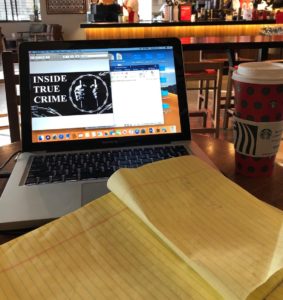
    So, I reached out to Matt. I sent him an email to his Insidetruecrime.com website to see if his friendship with Gina was actually true and told him that, if so, I’d like to interview him and write about it.

    Matt emailed back and said it was true that he still spoke to Gina. Not only that, but he and Rebecca Haulk, the woman who went on the run with him and was sentenced to six years, talk weekly. And two of his codefendants talk to him. He also still talks to the guy who started the investigation into his scam.

    This had moved to beyond interesting to something extremely rare. Had this convicted fraudster reached some emotional and relationship level that most of us never get to? And if so, how?

    Matt and I got on the phone. We discussed the podcast interviews and I asked how he appeared so open. He had taken all the responsibility for everything he did, but there was no anger or resentment to any part of his story. Why was that?

    “Because I went to prison,” he said quickly. “You can’t get away with blaming other people about your situation in prison. They won’t let you get away with it and will always call you out. What you did, got you there. You got you there.”

    He added, “Also, I wrote my memoir while in prison and when I did that, I learned a lot about myself. While writing it, I quickly saw that I was pretty self-centered, manipulative, self-serving, and even narcissistic. In short, I had issues.”

    While incarcerated, Matt was involved in teaching classes and was asked to write an ethics and fraud manual to help spot real-estate and banking fraud. He also took part in an intensive drug treatment program, part of which involved writing an apology letter to someone you hurt. And they had to write a letter back to you.

    “When I asked my ex-wife if I could send this to her, she said, ‘Oh, yeah,’” Matt said laughing. “She said she had been waiting for 20 years to respond to a letter like that.”

    Matt’s ex-wife is also now part of his after-prison life and they see each other often.

    Matt admitted that the money and the wealth were very important to him at that time. They defined him. Now he defines himself by his friends, family, his paintings, and his writing.

    The writing part is a combination of both the creative and business sides of him. While in prison, Matt realized he was surrounded by some of the most amazing, unique, stranger-than-fiction, and often high-profile crime stories, within the inmates all around him. And in his position as a fellow inmate, he had unlimited access to them. So, Matt interviewed these men, wrote some of their stories, optioned some, and left prison with a unique catalog of written books, treatments, options, and book proposals.

    Matt wakes up at 5:00 am each morning and spends each day working on getting his new life going. In fact, all of the income he now receives comes from the books and paintings he sells online and he is working on establishing a true crime podcast.

    “There are some amazing people out there,” Matt said. “With some incredible stories.” Which may explain why Matt works so hard to get back the relationships he once had on the outside, as well as keep in touch with those that he met while in prison.

    As we spoke, the list of people that Matt has reconnected to just kept on growing. He is currently living in the spare part of the house where his old high school girlfriend and her family live. She’s another person he admits he didn’t treat right.

    “Are there people you tried to connect to that didn’t want anything to do with you?” I asked.

    “Of course,” Matt said. He told me about an old friend he tried to reconnect with on Facebook who sent him a scathing response saying he’d contact Matt’s parole officer if he ever got in touch again. Matt found himself behind another old friend in a Dunkin’ Donuts drive-through. She saw him, did a double-take, then quickly got her coffee and drove away.

    Although Matt is very open to his past, Gina’s view is somewhat different.

    “I don’t look back at that time like Matt does,” Gina told me. “It happened, I went to jail, it’s over. I don’t really like to talk about it because I have moved on.”

    When I asked how Matt reached out to her, Gina told me about receiving a Facebook message from him early one morning.

    “I just looked at it and thought, what the hell? He shouldn’t be out for another 10 years!”

    They started messaging and then talking. I asked her if that had been difficult.

    “It was at first,” she said. “It triggered some old feelings, some depression and PTSD.”

    “We’re you angry at him?” I asked.

    “Matt honestly believed that no one was getting hurt with what he was doing. That the banks and mortgage companies were insured. He didn’t see that some of these smaller companies probably had to close with the losses.”

    Gina told me how Matt had apologized multiple times to her, even breaking down crying.

    “But you spent two years in prison because of this guy. Weren’t you angry at him?”

    “I was angry, but not really at him. It’s kind of a supportive thing. We both had to rebuild our lives again from nothing. No one knows what we went through but us.”

    Gina explained that when she was released from prison, she couldn’t believe the kindness of her family and friends. Family helped her get a car, her ex-husband even signed the lease on her apartment, and soon she was working as well as going back to school.

    “Jail was a learning experience for me,” she said. “Almost spiritual. I began to look at the web of people that crossed my path as important. I mean, I only knew Matt for three months, but the rest of my life was affected. So all the people now will affect it as well.”

    I asked Gina if she enjoyed the fact that she had reconnected with Matt.

    “Yes, she answered. “He is funny and charismatic and, I mean, what person could write and sell the option to a screenplay while still in prison? Only Matt.”

    In the two hours that Matt and I spent on the phone, his texts and emails kept coming in. And considering he has only been out of prison for six months, that seemed like solid evidence of a rich life.

    “I don’t want to let what happened to me,” Matt said. “Stop me from the chance of having these people in my life.”

    But after two hours on the phone, there were still a few questions unanswered.

    The first was, what are the steps that Matt Cox took to forgive himself and then ask forgiveness of others? I know he told me that at one time it was very important to have the money and luxury that came from his crimes in order to define him. Maybe he now needs to prove he can be successful without it?

    I’m not sure.

    But I do know that Matt is not the typical style we like our reformed high-profile crooks to be. We tend to want them either haughty or broken.

    If they’re arrogant, then we can say, “See, I told you he would never change.” And if they are broken, then it’s: “That’s what happens when you live a life like that.”

    But Matt Cox is neither one of these.

    He is remorseful, but confident. He is regretful, but excited about the future. He is truthful about all he has done, but that history does not hold him back. And he is hopeful when he reaches out to those he has hurt, but is strong enough to go on if they reject him.

    *Gina Laidlaw is a pseudonym. She has moved to a new state, changed her name, gone back to school, and begun a completely new life. And although she is still friends with Matt Cox, when we spoke, I promised her that I would respect her identity—both old and new—by simply referring to her in this article as Gina Laidlaw.


  • The depression agreement

    The depression agreement

    Robin Williams, Hunter S Thompson, Anthony Bourdain …Yup, they all committed suicide. But they also have something else in common.

    What is the demographic of people—what age group and what sex— that will commit suicide the most in the U.S. this year?

    Now, if your answer is teenagers and young adult males, then you would be absolutely correct.

    If it was 1997.

    But it’s not.

    The group that now dominates the top of the suicide chart, year after year, with little sign of slowing down, is middle-aged men. In fact, males between the ages of 45 and 64 made up almost 70% of the suicides that occurred last year. 1

    Not far behind are middle-aged women, between age 45 and 64. In fact, suicide rates for women of that age group actually increased by 60% between 2000 and 2016. 1

    And those numbers only reflect the 50,000 people each year who die by suicide in this country. They don’t include the 1.4 million people who attempt to kill themselves each year but fail or are rescued. And the numbers are still skewed because they also don’t include the large number of suicides each year that are hidden as car accidents and other means and not reported as self-inflicted.

    If these statistics aren’t powerful enough, the numbers are actually climbing. The number of national suicides has risen 33% since 1999. And the National Center for Health Statistics recently reported that the U.S. suicide rate is now the highest it’s been since World War II. 2

    That means we are now killing ourselves more often than we ever did in the past, but it also means that the ones leading the charge, middle-aged people, are the parents and grandparents to the same age group that used to be at the highest suicide risk only a few decades ago.

    Why is this?

    Why is this generation of middle aged individuals, who are supposed to be at the top of their game, with the most life experiences, earning more, experiencing more, and having the technology to tie them to more opportunities and information than any other group in history, in such emotional and mental pain that they think that suicide is the only way to relieve it?

    I don’t know.

    I mean, there are theories, many, many theories of why the middle-aged suicide rate is so high, and there are the pat answers: mental health issues, drug and alcohol addiction, depression and anxiety disorders.

    But if you look into each middle-aged group, you do see some common markers. Middle-aged men—this strong and independent group—often see admitting to feelings of depression or anxiety as a weakness. They’re extremely reluctant to tell anyone when issues arise and even less likely to seek professional help. Middle-aged men who commit suicide are often experiencing severe financial stress, recent job loss, debt, and a myriad of other life pressures that affect their sense of worth. Plus they are in a very unique position, begin raised by that self-sufficient generation that survived The Great Depression and World War II.

    The markers for middle-aged women often align with severe emotional stresses: marriage issues or loss, infidelity, depression, and anxiety. Interestingly, the suicide statistics for this group might actually be higher than those for middle-aged men, if not for the fact that women often choose pills and other methods to kill themselves that are less reliable than firearms—the common male choice. More women than men attempt suicide and are rescued.

    Okay, so what’s the point of all of this?

    Well, here it is.

    I am a middle-aged man. And I am depressed. And I have been for a while.

    There. I said it.

    And no, I will not kill myself. How do I know? Because, like many of us, I’m simply not built that way. My wiring won’t allow it. But that doesn’t mean the dark times don’t come. When they do, it’s pretty overwhelming. And to answer your question, yes, I have gone to see someone, and yes, I have tried antidepressants—two different prescriptions actually. They just didn’t work for me.

    And yes, I also feel like I am betraying the people I care the most about simply by feeling this way. I worry that my family will feel that they’re not enough, that it’s something they did, some flaw in them, which is absolutely not true and is part of the reason why I have kept this hidden.

    I have enormous guilt about making this public statement because I have a wonderful and beautiful wife of almost 30 years, two amazing kids I absolutely love, a job that is challenging, a roof over my head. Yeah, I get it. I know how much I have to be grateful for.

    But that’s not the point of writing this. The point is that I think I may have stumbled onto something. Something kind of important. And I wanted to give it to anyone who might be able to use it.

    So, let’s start with this: When a person is suffering a deep depression, it’s so huge, so overwhelming, it’s all they can see. They open their eyes and it’s everywhere, all over, weighing down on them from all directions. Anything new that comes in has to cut through all that fog first. And because the depression is so incredibly massive, those experiencing it just expect that others can see it on them. I mean, how could they not? It’s all over us! Like chickenpox or a black eye. We expect people to run up and say, “Holy cow, what happened to you?”

    But they don’t.

    We see friends at our kids’ school, in the neighborhood. We sit next to them at little league games and talk for hours. And then . . . well, then nothing. They don’t see it, they don’t say anything, and we move on. And when these people don’t notice anything different about us, when they aren’t concerned, we think: “Great, no one cares.” And this hurt causes us to move us away from these people, from most people, as well as from the activities and areas we used to take joy in, and that moves us more toward . . . ourselves.

    And here is the great irony.

    Ready? Most of us—especially those in a state of depression—don’t really like ourselves all that much. Or even a little bit. Or at all. And now that we’ve pushed all other people away, we’re living on a deserted island with the very individual we don’t want to spend time with. Ourselves.

    What’s the most controversial punishment in the federal prison system today? Solitary confinement. Or what prison officials call “the prison within the prison.” Studies on solitary confinement and social isolation show that there is a physical effect on the brain that slows down the brain’s ability to use the feel-good neurotransmitters dopamine and serotonin, and over time this can actually cause physical changes in the brain. 3

    See, I have always considered myself a fairly selfless person. But depression is an incredibly selfish act—at least, for me it is. Why? Because it’s all about how I feel, what I am experiencing, and what I am going through. It forces you to plan, react, think, and strategize, 100%, on yourself.

    You are in pain, but it’s your pain. You feel worthless, but it’s your feeling of worthlessness. You feel helpless, but you are the one feeling this way, and the microscope is turned so far inward that the rest of the world simply becomes white noise.

    And you begin to think in terms of away, rather than toward. What you want to avoid, rather than what you want to experience—because, often, the only thing we want to experience is sleep, or alcohol, or Netflix, or food, or whatever deep numbness we can get to the most quickly. And when you do that often enough, the world becomes incredibly small. We crawl into our own self-inflicted solitary confinement.

    But reality is that the world isn’t small. At all. And the world needs us.

    There are people all around us, every day, in every capacity, and they need us. They need us to listen and to care and to be part of their lives, even if it’s just having a conversation or showing up for their kid’s dance recital or bringing over a bowl of chili when you make too much. They need us.

    When I think about the people I have pushed away, shunned, people who might be screaming inside just as much as I am, hurting and in trouble, I’m ashamed. There are others who simply want me to be part of the special times of their lives. In fact, one of my closest friends had a baby a month ago and I still haven’t seen him. I’ve avoided it, gotten out of it, and probably seriously hurt him, and that’s the most selfish act I can think of—sorry, Dave.

    But no more.

    At this point you might say, so you’re saying the cure for depression is to suck it up and go take a casserole to your neighbor?

    Nope.

    But I’m saying that my depression needs to be less about me and more about the people around me. I need to be part of their lives and they need to be part of mine and it doesn’t matter that I don’t like myself, because it’s not about me. At all.

    I said that I am someone who could never kill himself. and that wasn’t entirely true. Over the years, I have already done it. I have pulled myself so far away that I am now socially, mentally, spiritually, and intellectually dead.

    But no more.

    I want to knock on all the houses I’ve passed on Fiddlers Green and say, “Hey, you don’t know me, but I’m the guy who has lived in this neighborhood for 12 years, pass you every day, and don’t even know your name.” I will break the cycle and go to the Elks Club fundraiser with our neighbors that invited us, and I will remind my family every day of how incredibly special and important they are.

    I don’t pretend this is the cure for anything. It’s not meant to be. It’s a responsibility. A duty. It’s the agreement you sign when you join the human race, and I have seriously defaulted on that agreement.

    And yeah, sure, this may not change anything as far as my depression goes. In six months, I may still be here.

    Maybe.

    But at least I’ll be alive.

    I’ll be socially, intellectually, and spiritually alive.

    And that’s good enough for me.

    1 2017, report Centers for Disease Control and Prevention — https://www.cdc.gov/vitalsigns/suicide/index.html
    2 National Institute of Mental Health, 2017 report — https://www.nimh.nih.gov/health/statistics/suicide.shtml
    3 Behavior Neuroscience, Emotions, 2016 — https://neuwritesd.org/2016/12/08/the-neuroscience-of-loneliness/

  • The art of the picnic

    The art of the picnic

    Once spring hits and then all through summer, everywhere we go we see people having picnics.


    In movies.

    And on television.

    But in real life — not so much.

    Here, in the actual world, a true picnic sighting is pretty rare. In fact, it’s up there with finding a working payphone or a thriving drive in theatre. I mean, once in a while you will see one. But not all that often.

    Now, we see people eating outside, al fresco, all the time. The office worker driving to a park to eat their Burger King meal #4 on a picnic table with a paperback opened. Sure. And the road crew at a rest stop throwing back a few sandwiches and gallons of store bought ice tea. Yup. But these are what we call — not-picnics. They are just — eating outside. And they don’t count.

    Picnics have been around forever, but they didn’t have an actual word to describe them until the 17th-century. When the French word ‘piquenique’ was formed — which took the verb ‘piquer’, meaning to pick, along with a silly rhyming syllable, ‘nique’. So the alteration of the word followed the same rule and it became — pic-nic.

    Originally, the picnic was a large outside pot luck for the gentry, with each guest expected to bring a dish to share. These were elaborate, society events, which lead to those who were involved in them to be referred to as — the picnic-society.

    From there, the picnic took it’s true form.

    As travel became more common — first with the horse and carriage and later with car — the picnic became a large part of the trip. As you traveled, the need for food on the way would need to be planned in. A trip to visit uncle Earl’s in a neighboring town a few hours away, would require you would to prepare the food — the roads weren’t always paved with drive-through’s and bargain meal deals. So, the picnic became part of the excursion. A piece of the adventure. Halfway through the trip, you find a field or a pond, or a meadow, to spread your blanket out and bring out the basket. The kids would bring a ball, or maybe a kite, and the event, would now have another event in the middle of it. You would stretch your legs, relax and recharge before getting back in the car and continuing.

    And that’s what a picnic is. An event. Not just eating — because we do that all day long while we do something else. We eat while we drive. We eat while checking our phones. We eat while watching television. We eat and don’t even notice that we’re eating.

    So what makes a picnic, a picnic?

    Okay, that’s easy. A picnic has a few fundamental aspects of it.

    1. It has to be outside. An inside picnic is called — lunch. It doesn’t count. And a picnic should be in a unique outside area — a park, a lake, a field and even a picnic area at a rest stop counts.

    2. It is held on a blanket or a picnic table. Period. You can’t have a picnic on camp chairs while setting paper plates on your lap, while leaning against the car, inside a food court, or inside the car. This is called — eating. It’s not a picnic.

    3. It should not contain store-bought food. Picnic food can be extremely simple and easy to prepare, but it has to be yours. It has to have your fingerprint and design on it. The only exception to this rule, is if you bought a rotisserie chicken — not a fast food chicken — and then prepared sides for it. There is something about cold chicken on a picnic that just fits.

    4. It has to be cold food. Cooking a meal over charcoal is incredible, but that’s not a picnic. That’s a cookout. And if you are fussing with the fire and getting burgers to cook just right, then you are missing the very crucial element of the picnic. The people you are with and the area you are at.

    5. And it has to have some recreational aspect to it besides the meal. Picnics are not to be rushed, but to be enjoyed, even if that recreation is just sitting back after the meal and talking, playing cards or a board game, throwing a frisbee or playing a harmonica — which is why free community concerts are ideal places to hold picnics. Because the entertainment aspect is already provided.

    As far as picnic food, you can be as elaborate as you want, but the real aspect of it is to be simple. Simple food to be enjoyed leisurely. Boiled eggs, cheeses, peperoni, hard crusted bread, cold chicken, pickles, olives, pasta salads, grapes, all make amazing and simple picnic food.

    So plan a trip. And a plan a picnic smack dab in the middle of that trip. Make it a priority to skip the eleven-dollar hotdog at the water park and pull the kids over to the picnic area instead and open the basket.

    You heard me.

    Go have a picnic.

  • What your health club — won’t tell you

    What your health club — won’t tell you

    shutterstock_327066863

    Okay, let’s say you open a bakery.

    You are now the proud owner and operator of Tralfaz Bakery.

    Congratulations.

    Which means that you went out found a location, bought equipment, hired some people, opened your doors and you are now in the baked goods business.

    Now the first question is, how do you make your money? How does Tralfaz Bakery operate?

    Well, it’s pretty straight forward. You produce income by selling baked goods to the public. And you do this by purchasing raw materials — flour, sugar, eggs — and then using those raw materials to make sellable goods — breads, cookies and cakes. You mark up these goods accordingly and when you sell them, you can not only cover your overhead and invest back into the business, but pay for more raw materials — to make more sellable goods.

    Boom.

    So, the business model for your bakery is clear and linear. The more goods you sell, the more money you make. And as long as this process is not interrupted, as long as your costs and your customer base don’t change, the bakery will continue on successfully.

    Now, let’s say you get bored with Tralfaz Bakery. You sell it and buy Tralfaz Motors; a car dealership. Which means that you make a profit by selling new cars. True, but in order to sell those new cars, you take in customer’s old cars in trade and resell them. Then, you also make a profit on the extras you sell to the customer; extended warrantees, service plans and rust treatments. And, you make a profit on servicing and repairing the cars that you sell. And, you make a profit on the markup of the parts you stock to repair those cars.

    Your business model is still clear — even though it has multiple income streams — and is still linear. You make money by selling cars, car repair and maintenance services.

    Okay, last one. You wake up one morning and sell Tralfaz Motors and decide to open up — ta-daTralfaz Fitness, a full service health club.

    So how do you make your money?

    Well, if you own a health club that means that you went out and leased a building. You stocked it with exercise equipment for both cardio and strength training. You allocated safe areas for fitness classes, as well as shower and locker space for customers. You hired fitness professionals and you priced memberships to cover your costs and build in profit. Then — you determined how many guests you can support at that facility, as well as how many guests you need to come in just to cover your costs.

    And as long as the customers keep coming in, as long as the number of members remains between the base number you need to cover costs and the maximum number you can service from that facility — you’ll continue on successfully.

    And that is what we call — a lie.

    That’s not how health clubs operate.

    At all.

    Not even a little bit.

    Health clubs operate by selling long term memberships to people and — now here comes the good part — then incentivizing them to — never come in.

    Ever.

    A health club makes its money selling annuities – long term financial commitments that produce an ongoing income stream at a 100% profit margin. They sell air.

    What? That’s ridiculous.

    Okay, let’s look at a few things.

    An average corporate gym has about 10,000 paid members. But only 2,000 of those members actually use the facility. One-fifth of the people that purchase these memberships — do not use them.

    Planet Fitness — one of the biggest gym chains in the country — has facilities that can support around 300 members per site. Yet each site signs up in excess of —-  6,000 members per site.

    Okay, but that’s not the gym’s fault. If people aren’t disciplined enough to keep coming, that’s just how people are.

    Well, let’s see if that’s true. And we can do this by looking at how gym workers are incentivized? How do they make money? By the number of pounds the members loose? By the fitness success of the members? By how happy the customer base is?

    Nope. By selling new memberships. In fact, almost all health club employees have a sales quota that they need to meet each month and the high employee turnaround is largely due to individuals who can’t meet these sales goals.

    Here’s a fun one. Track the response you get when you walk in the gym and ask for information on joining. Then track the response when you walk in a week later and ask for a towel.

    The employees are not incentivized to give you towels. Travis, your buddy who signed you up for that great three year deal, doesn’t even remember your name now. In fact, they are actually incentivized to make sure that you stop coming.

    Look at what happens at a gym between the time you sign up and once you stop going. Let’s say you haven’t been there in a month. Two months. Four. What happens?

    Well, that’s easy. Nothing happens. Nothing at all.

    No calls. No email reminders. No encouragement to come back. Because they don’t want you to come back. If you do, you are wearing down their equipment, using their water and towels and cutting into the profit margin. But if you stay away — that’s pure profit.

    And that’s what gyms really are; financial institutions. They sell these long term financial agreements to customers, then they go the bank and show the cash flow. In fact, these gyms then take all this financial billing and sell that to another company. So they aren’t even collecting your money. By the time you are out the door, your payment has been transferred to the finance company and the gym hopes you never come back.

    In fact, these annuities are the entire structure of the business model of a health club. They have a solid cash flow based on the complicated and long term contracts with members, and they have no limit with the number of new members they can sign up. In fact, the only limitation is the demographic of the region where the gym is located. If it could, a health club that can support 300, would gladly take on 10,000 members or more.

    Here is a quick test. Walk into your gym after you’ve signed up and gauge the response you get from the staff.

    Then turnaround and walk into your bank and gauge the response you get from the staff. The bank will be all over you — good morning sir, how are we doing today? Is there anything else I can do for you? Thanks for banking with us.

    Because you can leave your bank. But leaving your gym is a little more complicated. Not only are there serious fees and penalties for cancelling, but the structure itself is  designed to keep you ever from cancelling it.

    Recently, I decided that I didn’t want to spend twenty dollars a month — along with that high yearly fee — for the right to carry the Club Fitness key tag around with me. So after years of membership, I called to cancel.

    I was told that I could not cancel over the phone. I had to come in.

    So I went in. But I was told that I had to cancel with a manager and had to come in when one was on duty.

    So I went back when a manager was on duty. But the manager was tied up. So I made an appointment to meet with the manager the following week.

    When I got there a week later, the manager was tied up again and I waited. But the manager was never free to meet with me.

    So after about four months of this, I called and said that I could not catch a manager and needed to cancel my membership — immediately. I was told that if I mailed in a certified letter stating that I wanted to cancel, that would take care of everything.

    So I wrote a letter and sent it in certified. A few weeks later, the sender receipt came back to me signed.

    There. Done.

    Then I noticed the next month that I was not only billed again — but had the yearly fee billed as well.

    So I made a copy of the certified letter, drove down to the gym to meet with a manager — who of course, wasn’t there. I left the copy of the letter, with a message to call my cell phone — ASAP.

    Three days later, since I did not hear back, I called and asked for a manager. She was tied up. After telling the person on the phone that I would stay on hold —- forever, she suddenly became free.

    The manager looked up my account, saw that they certified letter came in, saw that it was processed and that it was filed. And — congratulations. Done. I had now successfully —- given my one month notice.

    What?

    Yes sir. When you signed up, you agreed to giving us a month written notice if you ever wanted to cancel. So after being billed next month, your membership will end.

    So what does all this mean? That gyms are evil?

    No. But it does mean that they are unethical. That their business model is deceptive and their practices are deigned to get us to pay for something that we don’t use.

    It’s an illusion.

    So what’s the answer?

    Well, just because you go to a health club — doesn’t mean you’re healthy. And just because you don’t go to a health club — doesn’t mean you’re not.

    You are in control of your health.

    And your money.

    So you need to determine what you are going to do — and no prepackaged health club membership can do that for you.

  • How to promote your event — the opposite way that everyone else is

    pole

    In the days before the internet — this is when the earth was still cooling and bread cost a nickel — telephone poles near intersections and on busy streets were often covered with rusting thumb tacks and the gummy residue of old tape. Why? Because this was where people passed by regularly, which meant that this was an ideal area to get information to those people.

    These poles became the holders of cheaply copied signs for garage bands, bake sales and fundraisers, along with the desperate pleas to find lost pets. Some poles held a poster or two, while the prime locations would be so covered with old staples and nails that the surfaces were now more metal than wood. These were the go-to spots for grassroots marketing; when you didn’t have a budget, when you just needed to get information out to a select group of people quickly without cost.

    Now there was no way to track how successful this method actually was — few people at the garage sale passed out how did you hear about us, surveys. But the poster-on-a-pole system was easy, it was free, and it was what everybody else was doing.

    Now occasionally you will see these telephone poles being used this way today, but they are somewhat rare — you’re more likely to see signs in the grassy parts near stoplights offering to get you out of debt quickly or to buy that old unwanted house, but that’s not the same. The garage band and the yard sale have now moved on to social media.

    Social media has become the telephone pole of the internet; a way to get the word out about your stand-up routine at an open mic night, or when the Little League is having a car wash. Why? Because it’s simple, it’s free, and it’s what everybody else is doing.

    Now, all of us eventually will need to do some kind of promotion — whether it’s to get the word out about the church’s Easter play, or to help increase membership in the dart league. At some time in our lives, we all need to promote — something. And it’s very easy to think, hey I am never going to do this again, I just want people to know that we are having a chicken barbecue for The Lions Club — so let me put in on Facebook and be done with it.

    Yup, you can do that. In fact most people do.

    But here is an example.

    Next time you are on Facebook, in the search bar type the words WRITERS GROUP. When you do, many Facebook groups will pop up — some from your area, your region, and others will be large country wide groups — some of these will be large groups of 50,000 members or more.

    Now if you go on one of these groups, this is what you’ll see. There will first be a description for the group that will say something like — this is the Tralfaz Writers Group. We are dedicated to the craft of writing and of supporting each other develop the skill of storytelling.

    Okay, great. Then scroll down and look at the posts. The first one you’ll find will be from a middle aged women showing her face and her book jacket. She will tell you that her book, Vampire School, is now on sale for only .99 on Amazon. The next post will be from a young man talking about his book Space Sylum, and that it’s free all this week with Amazon Prime. The one after that, will be from a college student stating that she is willing to give away a copy of Wispy Danger, to anyone that will give her an online review.

    And so on.

    And so on.

    And so on.

    There will be no discussion on prose, or of storytelling, or of crafting a character. In fact, there will be no discussion of writing at all; it will simply be one message over and over, from everyone there — buy my book, buy my book, buy my book. A message that quickly becomes white noise.

    But it actually goes beyond that because these people are trying to sell books — to people who are trying to sell books. That’s like going up to people at a bus stop and asking for a ride.

    So why do writers to this?

    That’s easy. Because it’s simple, it’s free, and it’s what everybody else is doing.

    It’s like the old joke where a man sees another man under a street light looking for his lost watch. “Where did you lose it?” the man asked.

    “Oh, I lost it way over in that alley. But the light is better here.”

    We tend to promote, the way that is easiest — even if the results will be affected.

    And when it comes to events, the irony of social media is that it’s great to get information out quickly, but it’s more difficult to track a call to action that involves attendance.

    You could have 400 people commit on your Facebook Poetry Reading Event, but that doesn’t mean that 400 will show up, because there is no connection. It’s not a commitment; they just clicked YES on a Facebook page.

    So what’s the answer?


       THE FOUR PROMOTION METHODS THAT WORK EVERY TIME


          1. Don’t publicize. Promote.

    There are very few things in life that will make you react — just because you know about them. We don’t hear about a new movie coming out and suddenly want to see it — oh, there’s a new movie? Let’s go. No, we need more information; what’s the movie about, who is in it, what type of film is it? The same is true about grassroots events. If there is a yard sale this Saturday, so what. There is a yard sale every Saturday. How big is the yard sale? How close it? How rare are the items? What does this yard sale have that the one closer to my house doesn’t?

    Now that’s a yard sale, what about hearing of events you have no connection to. What if there is an Opera coming to town? So what. I know nothing about Opera and have never been to one — and am probably a little intimidated by then — so hearing about an Opera would have no effect on me.

    However, if a friend had tickets and asked me to go along, I might. If there was a promotion for people who had never been to the Opera, to get a reduced ticket, maybe. If the Opera Company approached my employer and offered a special rate for us, I might go. If a radio station gave me tickets and then was going to interview me right after and ask what my first experience with Opera was like, yeah. Or if I knew more about the Opera itself, if by going I felt connected to something I wasn’t before, then yeah, I might go.


         2. Nose-to-nose.

    There was an old phrase in business back when I started thirty years ago. It said, a face to face meeting, is much better than a phone call. That same rule has changed. It’s now — a phone call, is much better than an email.

    We are getting further and further away from our customers. Which means that those marketers that do make a direct connection, have a clear advantage.

    An example here is, how many times have you seen kids outside of Walmart asking for money for their Little League team or their town basketball team? All the time. Those fundraisers have a low cost and bring in a lot of needed money for the group.

    But how many times have those kids or parents — asked you to come watch a game?

    Probably never. They most likely just thank you for your donation and move to capture the next person leaving. They have that great opportunity to market directly to you — to tell you about their organization and get you involved — and they pass it by.

    Even if they invite you and you never go — you are now connected to them, simply because you were asked.


          3. Create an event — to promote the event.

    As much as the word stunt can has a negative connotation to it, stand out events work — walk down Broadway in New York anytime and see how many actors in full costumes, hand you a flyer and ask you to come see them later in the show.

    At the Sundance Film Festival, there is a VIP and celebrity shuttling service that actually creates an event in the vehicle on the way to the film. These are sponsored by various companies, so on the way to the film, there will be truth or dare questions and winners are given Ray Ban sunglasses as prizes.

    Why does it work? People want to experience new things, they want to see something cool and tell people about it.

    Don’t believe me? Watch the Macy’s Parade this Thanksgiving. This event has taken this idea to the extreme, in fact the parade itself has become a very small portion of this event — the bulk is dedicated to the promotion of the latest Broadway shows, and singer’s new albums. It’s presented as if it’s all part of the parade, but in reality this is now one long infomercial.

    But one area that actually does a very good job with this concept, are County Fairs. If you go to a fair and go in the areas where nonprofit groups display, they will have interactive events, games, contests, all to tell you about what their organizations do but also getting you quickly involved in it.

    Having a community theatre event? Get the actors in full costume to the mall and hand out flyers. Having a penny social? Have an event to try and guess how many pennies in a jar. Having a bake sale? Create a free class where you make your favorite cookies in front of people and give them the secret recipe.

    The only limit is what you are willing to do.


          4. The side push

    Now if there is one method that works better than all the methods combined, it’s the side push.

    Here is a perfect example. My publisher recently sold the film rights to a novel I wrote to a film company that is packaging the book as a feature film. The novel is set in 1992 and the story is presented as if the events really happened; the book is only the journals that finally tell that story. In fact, Amazon called the book — the novel that you have to Google to see if it really happened.

    The film company wanted to capitalize on this and set out to have a small companion book written; documenting the events as if they were facts  — sort of the way that The Blair Witch Project promoted that film. They went out to get some bids from writers on getting a small companion book made that they could give out to potential investors, as well as used to market the film.

    So what happened?

    Book sales went up. Drastically.

    Why?

    Because all the writers that wanted to be a part of this project, went out and bought the book to familiarize themselves with it — they didn’t do it because they were told to, but for research. But once they did, they felt a connection to it because they wanted to be the writer chosen. Now their creative work — the companion book — was connected to the novel itself. There was a bond and they not only bought it and read it, they began promoting it — writing reviews and telling others.

    So how can you create this effect that happened by accident?

    Let’s say that your Garage Band is playing an event you’re trying to promote. Post that you need a new logo designed — don’t go to a logo company, post on social media and craigslist that you want to find a local artist that can capture the music in that perfect image, and that you want to have the logo in place for this specific event.

    Now promote your new logo search. Post on social media, ask people to give their opinion, give certain designers a plug and provide links to their work and ask for feedback.

    What will happen is, that there the artists will first research your music to get an idea of who you are — promotion — then they will go to work and their creative efforts are now tied to your creative work.

    Having a community theatre event? Post for a singer to perform at the intermission. Offer to promote that singer on the website and the playbill, and then do the same thing — promote the search.

    The key is to choose something slightly different than the event you are promoting. For the garage band, promoting for a singer may not work, because of the competition between musicians. But a graphic artist would want to help the band to help himself.

    So however you promote — your yard sale, your band, or your community car wash — do it differently then you have ever done it before. Different is remembered.

    And different works.

    Why?

    Because it’s smart, it’s low cost, and no one else is doing it.

  • Two good men

    john

    On Saturday, two men that I knew, died.

    They didn’t know each other. They lived in different towns in different states and they probably never would have met. But they both died within an hour of each other — one after battling cancer and the other completely without warning.

    These were both good men. Great men. Men who left this world the same way that they lived it — John, while helping out a friend, and Kirk, while being surrounded by his family.

    And these two people who had never met — these solid Christians who were rooted in their beliefs and demonstrated it in all ways — arrived in heaven on the same day.

    I know that they are in heaven and I know that heaven is real because Jesus said it is. In John 14, Christ said, “Do not let your hearts be troubled. You believe in God; believe also in me. My Father’s house has many rooms; if that were not so, would I have told you that I am going there to prepare a place for you?”

    And this is what John and Kirk both knew to be true.

    John Risner was probably one of the most giving men that I had ever met. He was the guy behind the scenes, the ghost that was always carrying away a paint brush or loading a lawnmower up just minutes before you got there. One that never sought attention and who’s humble sweat just got stuff done.

    John donated hundreds of hours to the church, he and his wife were in charge of the kids AWANA program and John was the church properties director. And they both had taken vacation time to go on a mission’s trip to The Dominican Republic.

    John Risner died, while giving up a Saturday to help a young couple from the church. They had just bought a house and were fixing it up and John was on a ladder pulling the last piece of aluminum siding off. He lost his footing and fell.

    John did everything right — he had people holding the ladder from below, he had the right angle and wasn’t reaching too far. No one could have predicted it. Which meant that John didn’t have the time from the top of the ladder to the bottom, to think about his life. He didn’t lay in his deathbed for days to contemplate his mortality and consider whether to make a commitment.

    kirk

    And Kirk Darville had that time, but he didn’t need it. He had made that decision decades earlier. It showed all around him, while he was the pastor of his small church and during his career as a school teacher. He was fun and happy and was always there to patch something up, or fix something at my elderly mother’s house — accepting pennies on the dollar from what the work really should have cost.

    Kirk’s faith was solid and although he didn’t want to leave this world and fought to stay with the people he loved, he knew there was a better place waiting for him.

    I know these two men are in heaven. And I know that I will see them again. But I am still sad.

    Sad for the people that they have left and sad for the hole that now remains without them.

    A big empty place that was vivid and fun and full — just because they used to be there.

  • The bomb shelter diet

    The bomb shelter diet

    bomb

    Klaus Fuchs was extremely smart.

    He was born in 1911, in Rüsselsheim, Germany, and from a very young age demonstrated a clear gift in mathematics and the sciences; breezing through his primary education and then being accepted into The University of Leipzig.

    Klaus studied mathematics and physics at the University, and this is where he first became involved in student politics; joining both the Social Democratic Party of Germany, as well as the Reichsbanner Schwarz-Rot-Gold, the Communist Party’s paramilitary arm.

    Now, while Klaus was still in school, on February, 27, 1933, a Berlin fire station received an alarm for the German Parliament. They quickly responded and found that the entire Chamber of Deputies was engulfed in flames — and because of the size of the fire as well as its political location, arson was suspected. So fireman fought the fire, while the police surrounded the complex to look for evidence.

    What they found, was Marinus van der Lubbe, a young Dutch Communist, inside one of the buildings. Lubbe was arrested and confessed to being involved in the arson. Soon three other men were arrested — Georgi Dimitrov, Blagoi Popov and Vasil Tanev — all Communist Party members and all confessed to the crime. They were tried and later executed.

    The event became known as, The Reichstag Fire, and here is where things really get interesting. Only a month before this, a man named Adolf Hitler had been sworn in as Chancellor of Germany. Hitler was outraged at this attack, and saw the fire as solid evidence that communists were plotting against the German government. Hitler urged President Paul von Hindenburg to pass an emergency decree that would suspend all civil liberties in order to counter this ruthless hostility. He did. And when this occurred — Nazi Germany was born. Almost overnight, the Nazi Party went from a political entity, to a dictatorship. With Adolf Hitler at the wheel.

    So the question is, did Hitler orchestrate The Reichstag Fire?

    Well historians have been trying to prove this for decades without much luck. It’s very possible that he did. And it’s also possible that he only took advantage of this opportunistic moment — to use fear as a vehicle to seize control of the government. But either way, Germany quickly become a Nazi controlled country, as well as one where being a card carrying Communist, could be extremely dangerous. So Klaus Fuchs went into hiding until he could get out of the country later that year.

    In September of 1933, Fuchs fled to England where he worked as a physics research assistant at the University of Bristol, and in 1937 he received his Ph.D. in physics. After this, he worked at the University of Edinburgh, where he earned a second Ph.D. in Science.

    Then World War II broke out.

    After spending some time in Canada, Fuchs returned to England where he began working on The Tube Alloys Project — England’s covert atomic bomb group. And this is where Fuchs began his career as a spy. He immediately began passing detailed information on the project, directly to The Soviet Union.

    In 1943 Fuchs went to New York City, to work on the Manhattan Project and then in  1944 to the Los Alamos Laboratory — where he developed the calculations relating to the first nuclear weapons as well as early models of the hydrogen bomb.

    Then came Hiroshima and Nagasaki and the end of the war. Klaus returned to the UK and worked at the Atomic Energy Research Establishment as the head of the Theoretical Physics Division.

    Five years later, on January 31, 1950, President Harry Truman announced his decision to develop The Superbomb. A hydrogen weapon that would be one hundred times more powerful than the atomic bombs dropped on Hiroshima and Nagasaki — with Klaus Fuchs having a front row seat to the project. And on November 1, 1952, the United States successfully detonated Mike, the world’s first hydrogen bomb. This ten megaton thermonuclear device, was detonated the Pacific Marshall Islands — it vaporized the entire island and left a mile long crater behind.

    Fuchs’ luck ran out later that year.

    While passing some sensitive information to a Soviet contact, American intelligence followed and arrested him. He was questioned and confessed; which led to his trial and eventually lead to him being sentenced to fourteen years in prison. But the damage had already been done — the Soviet Union now knew everything we knew, about the hydrogen bomb.

    On November 22, 1955, the Soviet Union detonated its first hydrogen bomb; based on the same principle of radiation implosion as Mike —- with the same results.

    Which meant that both superpowers were now in possession of what had been called — the hell bomb.

    Two of the most powerful nations in the world, both had a weapon that could kill millions on both sides. And they didn’t like each other very much.

    The US announced that it would use massive retaliation to any Communist aggression, and for the first time in history, the world lived under the threat of thermonuclear war.

    Movies, films, books, television, newspapers — all echoed the fear of nuclear obliteration. And on October 6, 1961, President John F. Kennedy addresses the American people, and asked them to — build bomb shelters to protect themselves and their families against nuclear fallout.

    The President of the United States — one of the most powerful men in the world — asked his people to — dig a hole and get ready to hide in it.

    It wasn’t now a question of — if it would happen — it was now — when would it happen.

    Bomb shelters began to pop up everywhere. These ranged from a corner of the basement, built up with sandbags and food and water, to elaborate underground rooms with ventilation and water purification systems.

    Civil Defense agencies provided canned drinking water and water packaged in milk cartons, to citizens. Fallout drills were exercised in schools and public buildings. We were preparing.

    We had a plan and we knew where to hide and wait it out. And we had a stockpile of the basics — canned goods, dried goods, food stuffs, water. We just wanted to survive. That’s all. Nothing fancy. We just wanted to — live.

    And we waited.

    And we watched.

    And the bombs — never came.

    And that was good.

    And the bomb shelters remained unused. And then they became root sellers and playhouses and storage. And that was good too.

    But along with all that good —- came one bad thing —.


    WHAT IS A BOMB SHELTER?


    A bomb shelter is a safety net. It’s a place where the basics can be taken care of. It’s the fallback plan. The retreat point. It’s a ready area  where you and the people you care about, can go to get the basics taken care of and to be safe.

    Talk of bomb shelters today are rare, unless you are referring to the trend of Doomsday Prepping or simply Prepping.

    Prepping is similar to the movement of bomb shelters in the 1950’s and 1960’s, in that it is the preparing for a particular disaster to occur — a governmental collapse, massive chemical warfare, an electromagnetic pulse that will wipe out all electronics — but there are two main differences between preppers and those who built bomb shelters during the cold war.

    The first is, that modern prepping is more individualistic and less community based. You see evidence of this in that during the cold war, the list of items to include in your shelter contained many things, but weapons were never one of them. With modern preppers, weapons and ammunition are high on the list — in fact, many preppers have small arsenals set aside to protect their stockpiles.

    And the second difference is, that the modern day preppers are almost hoping that the disasters they are preparing for will occur. They are highly invested in them. So when the government does collapse, when modern currency no longer has value, when the world is left unprotected and vulnerable, then we will be on top of the food chain — simply because we will have the most food, water and guns.

    So bad things can’t happen?

    Oh absolutely they can — and probably will. But you are much more likely to lose your job, than you are of having your home attacked by a biological weapon.

    You are much more likely to be in a car accident, be hurt at work, or have a major health issue, than you are of experiencing a governmental collapse.

    And you are much more likely to go through a career downsizing or industrial shift where your current skill set is worth far less than it once was, than you are of experiencing a nuclear attack.

    But all of these things are life altering — a layoff is not as sexy as an asteroid, but it can still do some damage if you’re not ready for it.

    It was good that cold war didn’t escalate to something far worse. But the casualty of that time period is that sense of preparation didn’t migrate forward. That sense of simplicity, of basic need, didn’t trickle down through the decades.


    MISSIONARIES


    Many years ago, a missionary couple from Africa was traveling through my hometown and was going to speak at our church. While they were there, my parents had them stay with them and while giving them a quick tour of the area, my mother stopped at the small grocery store to pick a few things up. In one of the aisles, the man just stopped talking. He froze.

    “What —?” he asked, pointing at all the colored jars. “Is this?”

    My mother looked to where he was pointing and answered. “Jelly,” she said. “And jams.”

    He stood there. Unable to take his eyes off all the different flavors, styles and sizes of jellies and jams.

    “Why,” he asked. “Would anyone need — twelve flavors of jelly?”

    And he wasn’t mocking her, he wasn’t judging her. He was only asking a question — to something that he couldn’t understand.

    Why would something as luxurious as jelly, something as rare as jam —- not a necessity but a true delicacy — why would you care, what flavor it was?

    But we do. We do care what flavor it is. And we care how much if it we have. And we care what brand it is. And what it looks like and how we look holding it.

    In Africa — food is survival.

    In Europe — food is social.

    In the US, food — has become something so much more.


    FOOD IRONIES


    • 32% of all homeless people, are obese. (Boston Health Care Study, 2008).


    • In a 2012 study, 42% of the time that we eat, was done because we are — afraid of being hungry later


    • 27% of all the food we buy, we end up throwing away — 160 Billion pounds of food each year in the US alone. And still, 75% of us are overweight and 36% of us are obese.


    • The average American spends three hours a month, staring into a refrigerator; trying to determine if he is hungry or not. And during peak times, we average fifteen to twenty minutes wait time to get into a restaurant. Yet — ‘not having enough time’ is listed as the key issue for most Americans.


    • A dinner in France averages two hours, and a dinner in the US averages forty minutes. Yet the obesity level in the US is twice of that in France.


    • A 2011 University of Michigan study asked, how long could a person live without food? The most common belief was — 37 hours. (With water a person can live three weeks or more without food).


    • The cost of eating one (1) lunch out, is equivalent to the cost of six (6) packed lunches from home. Yet the most common reason listed for people that don’t bring lunch to work is,I don’t want to look poor.


    • A Cliff energy bar has 280 calories. A Snickers candy bar has 215.


    • 23% of all high income homes, eat at a restaurant once a day. 78% of all low income homes eat at a restaurant once a day.


    • The average food markup at a restaurant is 300% — for a meal priced at twenty dollars or less. The average food markup for fast food is 400% — for a meal priced at six dollars or less.


    • We are seven times as likely to eat at a restaurant, then we are of inviting someone to our home for a meal, or to going to someone’s home for one.


     THE BOMB SHELTER DIET

    A bomb shelter is safety. It is a vessel that contains the basic needs — food, shelter, water, medical supplies.

    The food in a bomb shelter will have several things in common.


    • It will be able to be stored for a long time — rice, pasta, oats, dried beans, can all be stored for thirty years or more.


    • It will require no refrigeration.


    • It will be able to be cooked in a creative and unique way.


    • Each meal will cost pennies.


    • It will contain little chemicals and preservatives since it will contain the basic food groups.


    STEP ONE: The Bombs fall


    The alarms sound. The bombs are coming. This is it.

    When crisis occurs — when something bad happens — we react. We get the people we care about to safety and we get out of danger. At that point we are focused on survival and protection and we will allow nothing to get in our way.

    Think of a time when a crisis unexpectedly occurred to you — the sudden death of someone close to you, a fire, a car accident, a layoff; any catastrophe that happened s quickly and without warning. When this happens — in the heat of the battle — were you thinking about food?

    You could be starving only a minute before the truck veers into your lane — thinking you can barely wait until you get to the drive thru — and then wham. Six hours later you remember that you haven’t eaten.

    What happens when you realize that you haven’t eaten? You are suddenly hungry again. Starving.

    How many times do you see photos of people outside of their burning building with a cheeseburger in their hands? Or being treated by paramedics as they grab the last of their fries? Never. Because at that point, food is not important. At all.


    • Make a list of ten (10) things you are worried about, trying to get to, concerned with or trying to achieve. These can be work goals, financial worries, family situations, or aspirations. When you have this list, keep it close to you; on your phone, in your bag — so you can get to it quickly, review, edit and add to it.


    • When between meal hunger hits, take thirty minutes — this will seem like a lot at first, but it will fly by later — and work only on this list. Make phone calls, contact whoever you need to, create options, but for thirty minutes you are only focusing on these bombs; these goals, these little issues that could become large, or these large issues that you have been avoiding.


    • Don’t set a timer — because you want to keep this flexible — and allow your focus to shift to what is truly important. But don’t stop until you have done at least one thing, one action, towards everything on that list.


    •  A few things are going to happen here. First, you are forcing yourself to see what is important, as well as what isn’t — getting food quickly into your mouth. The second is that you are reducing your appetite — which gives you freedom, which takes away the anxiety, which diffuses the food bomb.


    Now this goes directly against what many nutrition experts recommend — suggesting five or more little meals a day as opposed to three larger ones. But we’re not focused on nutrition, we are looking at why we do things. And the majority of time we overeat, we do it out of reflex or boredom.

    Sure there is the Thanksgiving dinner that we push ourselves back from the table and vow to never, ever eat again. But more often there are the dozens of times we finish an entire bag of potato chips in the car and not only don’t remember eating it, but are still hungry.

    We have made food important in our lives. We have made it more important than our families, than our homes, than our careers and then our goals. We need to analyze things every now and then, so we can prioritize.


    STEP TWO: Protein pack


    In a bomb shelter you will see a lot of rice, grains and pasta. That’s true. These are inexpensive, easy to store and last forever. But you will also see plenty of dried beans,   canned tuna and Salmon — because you need the protein. The starches are largely there to stretch out the meal — to make it last and to fill you up.

    Sugars and starches are cheap — that’s why they are in everything. These are the foods that stimulate insulin, which sends the signal to store fat in the body. The more starches and sugars you take in, the more fat that gets produced. And when insulin levels goes down — when we take in less sugars and starches — then more fat gets burned than is stored.

    The irony here is, sugars and starches make you hungry and proteins make you full. So you can actually eat less protein and feel better.

    We have bought into the fact that we need to stretch meals — to add in the majority of pasta, rice or grains to make it last. We feel like we are spending too much money if at least half of the meal isn’t a starch.

    So reverse the trend. Instead of the majority of the meal being starches or rice, make the majority of them the beans, eggs, fish or chicken. Eat more protein than you eat anything else.


    STEP THREE: Bomb shelters are for many


    The majority of time that we eat — we eat alone. Even if we’re in a separate room in a house full of people, we are still eating alone. And eating should always be a communal event.

    Add to that that we eat less — when we eat with others. European meals last for hours, with the majority of this time is spent laughing, visiting, talking and having fun. The smallest part is actually the eating part.

    So don’t eat alone. And I mean — ever.

    That may seem crazy, but think about it.

    If food goes back to being a communal event, something we do with others, then a major shift occurs. Instead of saying — what do I want to eat? We begin saying — who do I want to eat with?

    And remember, a meal is simply food shared with others. It doesn’t have to be a five course meal on Waterford china, it can be a few tuna sandwiches on paper plates.

    Take two weeks and vow to eat every single meal with someone else — and this includes eating in front of a TV alone, in your car alone, or picking out of a refrigerator alone.

    If you can’t find someone to share a meal with — then don’t eat until you do.


    STEP FOUR: Stock the bomb shelter


    When the bombs of life do fall — health issues, layoffs, downsizing, family crisis — having a stockpile of basic foods takes a financial and time burden off of you. For less than a hundred dollars, you can have a several months’ supply of dry goods stored and ready.

    The basics would include:

    • Dried beans — lots and lots of them. These are extremely inexpensive, easy to make and loaded with protein.


    • Canned tuna


    • Canned salmon


    • Canned chicken


    • Pasta


    • Rice


    • Cornmeal


    • Flour


    • Canned vegetables


    • Canned fruit


    Stock these things and leave them. Use them when the end of the month rolls around and you’re creeping up on your budget, or when the bombs fall.


    AND REMEMBER …


    A bomb shelter is a plan. This plan can take any form; a room, a group of people or an idea. But it’s a plan to give you freedom and allow you to think while the basics are taken care of.

    Food is not our bomb shelter.

    Food is just one of the many things we put in it.

  • The invention of everything

    The invention of everything

    invention

         It’s easy to take our modern, convenience filled world, for granted. Innovation and technology have not only changed the pace of the daily experience to one that is faster and ever interconnected, but it also has taken the once sharp edges of life and rounded them down smooth. Life today is easier than it once was. Which makes it extremely convenient for us to forget that most of what we now take for granted — what are today considered the baseline of modern life — are largely thanks to a handful of visionary pioneers.

         Martin Renee from Utica member station WTVI, reports …

    “The problem with stories like mine,” Tom Protraska tears the cruller from his plate in two and then eats both pieces — first with his right hand and then with his left. “Is that it —. It worked so well that that nobody remembers — or even really cares about — what it was like — before.”

    Tom is a very thin man; weighing in at around 150 pounds on his six foot frame. And according to his Wikipedia page, he is 79 years old — even though he tells everyone that he is five years younger. Tom is bald with a penchant for white oxford shirts that he wears tucked in tightly.

    Tom and I met at a Utica diner where we discussed his life after he left the world limelight. It’s a relatively quiet routine now. His days are largely spent with his wife Gretchen and their pug Max. They garden, they visit their grandchildren and Tom gets in some fishing a few times a year.

    But in 1965, Tom Protaska’s life was much more chaotic. Because this is when he became a worldwide sensation by first inventing — air.

    “Nobody believed it would work.” Tom signals to the waitress with his empty coffee cup. “We were all breathing hydrogen and methane back then and had been since the beginning. And everyone was —. I don’t’ know, okay with it, I guess. I mean, how can you miss what you didn’t have, right? And yeah, the Swedes were playing around with this — this Xenon mixture for years. But they could never make it work.”

    But Tom had an idea — or more like a gnawing obsession — that there had to be a better gas for humans to breathe. So after three long years of tinkering in his home garage in Utica, Tom Protaska became the very first person, ever, to breathe in a mixture of oxygen, nitrogen and carbon dioxide. Or what we now commonly refer to as — air.

    “I just stood there for a few minutes — breathing it in and out — and I couldn’t believe it.” Tom’s watery eyes become youthful again as he recounts the story. “I wasn’t bleeding from my ears, or throwing up, or convulsing like I always had been before — from taking in all that hydrogen and methane that we all used to breathe. I was just — breathing. Easily, in and out. And it was — working. It was really working. And that’s when I knew that I had something.”

    But the members of the scientific community were skeptical.

    “There were still regulations back then,” Tom stirred his coffee and reminisced. “Nothing like there is today, but there were hoops to jump through and you really needed to get with the big boys if you wanted to get anything done on a large scale. I had no idea how to do that. So I just made the stuff and sold it out of my house.”

    Word spread quickly and soon Tom Protaska was earning more money selling his product part time, then he was at his full time job with the Post Office. So he left his job to make his living by manufacturing air.

    “The problem was,” Tom folds his hands across his chest. “That I never patented the stuff. So it didn’t take long for others to figure out how I did it.”

    And then the competition came.

    By 1968, air had replaced hydrogen as the global standard for human and animal breathing gasses. But by then, worldwide production was at it’s peak and Tom’s garage operation couldn’t compete with the ever plummeting competitive market price.

    “I had few options at that point. So I went back to work at the Post Office.”

    Since 1985, air has fallen under the public domain and is now available for free in all but three countries. There is no longer a North American market for it.

    And of the 320 million people living in the United States today, over 200 million of them have never lived in a world that breathed anything but air — or even had to pay to breathe it.

    “Ah, what can you do?” Tom looks dreamily out the diner window. “The same thing happened to Brennon.”

    Brennon, of course, refers to Lyle Brennon, the inventor of — gravity. Who in 1957, was able to patent his famous invention — but with limited success.

    “He wasn’t looking at the big picture — at all.” Maureen Brennon, Lyle’s widow, spoke to us by phone from her Kings River, Virginia home. “Lyle knew he had discovered something — something really big — with that gravity thing. But he only patented it for use in sports. He didn’t see any real need for it anywhere else.” Maureen sighed as she gathered her thoughts. “That was dumb.”

    The invention, and then worldwide use, of gravity is the key historic driver that lead to ‘The Ground Revolution’ of 1958. It was the paradigm shift that allowed the world to construct, interact and make a living on the surface, rather than the space above it.

    “It changed everything.” Martin Brille is the chief economists at the University of New Mexico.

    “When gravity came along, we basically threw away the old playbook. Everything was different. And everything was now possible.”

    Grille estimates that if gravity was still in the hands of the private sector, the worldwide global market would tip 300 trillion dollars.

    And as I sat in Charlie’s Diner in Utica with Tom Protaska, we discussed the changes that he and a handful of his counterparts made to the world. I asked him if it was all worth it.

    Tom’s smile was bright now. “Are you kidding?” He leans across the table towards me. “Breathe. In and out.”

    I do.

    He sits back and places his thin hands behind his head. “Well, then —-. You’re welcome.”

    For Utica member station WTVI, this is Martin Renee.

  • How to build a fire.

    How to build a fire.

    fire

    Barbara Streisand, Ricky Gervaise, Daniel Radcliffe, Tina Fey and Barbara Walters. What do they all have in common?

    Well, they are all successful, recognizable names in their own fields but there is something else that binds them together.

    Ready?

    None of them can drive a car.

    These are very prosperous, highly motivated people that have achieved so much in their lives but have never mastered one of the skills that most of us learn at 16 years old — now some of this has to do with living in places like London or New York where driving is actually a detriment, but for others it has to do with simply not having an interest in driving.

    So, can you be successful without learning to drive a car? Yup. Sure. You can work around it.

    And can you go through life without knowing how to build a fire? Yup. Sure. You can work around that too.

    But there will come a time — whether in the woods, in a cabin , or even in a survival situation — where you’ll need to. And knowing how means that you don’t have to ask someone for a ride.

    THE GOLDEN RULE OF BUILDING A FIRE.

    There is one thing —- one single entity — that is the single most important part of  building a fire and the one that has the most impact. It’s also the first rule that’s ignored. It’s that you are building a fire. Not starting one, arranging one or finding one. But building one.

    I’ve been on camping trips where I’ve seen guys throw a pile of sticks on the ground and light it and then get frustrated when a fire doesn’t magically appear.

    You are building a fire. Constructing it. You are creating layer of light material that can be lit easily that will then light other slightly larger material which will then light slightly larger material in a precise manner so heat is created and larger pieces of wood can be burned. This is a constructing project not cooking.

    Don’t be in a hurry. Take your time and get the foundation done and the fire will happen.

    Years ago I was on a two day survival weekend with a group of people on Hiawatha Island in New York and one of our challenges was to build a fire with a battery and steel wool and then get a can of water to boil. Now as soon as the timer began — we were all racing against each other — we all scrambled to get materials. Now the guy who lit the fire last, the one who spent the most time on the construction of the fire, is the one who succeeded first. His fire went up quickly and efficiently and he actually worked less on the maintenance of the fire because his foundation was so solid.

    BUILDING A FIRE

    Whether your building a fire in a fireplace, a pit, a stove or a camp the rules are all the same. You will need three types of wood:

    1. Tinder — pine needles, paper, dry leaves, dried grass, birch bark
    2. Kindling — small sticks under 1″, pine cones, bark, wood shavings.
    3. Fuel — sticks larger than 1” in diameter.

    So your tinder goes in the basement of your construction project, the kindling above it and then the fuel either above that or added on once the fire gets going.

    1. Loosely pile the tinder in the center of fire pit or on yoru firegrate/stove. Be sure there is air around it for fuel.
    2. Add the kindling around the tinder so it catches. The two ways to do this are in a teepee — best for camp fires — or a frame, where you have large pieces off to the side and the kindling in the center. You can place the fuel on the edge but don’t rush it, you can always add the fuel when the kindling is hot.
    3. Light the tinder.
    4. Add more tinder as the fire grows — you want the flame to be high at first so it catches
    5. Then add more kindling — rule of thumb is get twice as much as you think you need. Remember kindling is more important that fuel. Getting the fire hot means you can add larger and ever wetter pieces later but not getting it hot means it has a chance of going out.
    6. Add fuel.

    Experiment and play around. Building a fire should be something you’re confident in doing and may come in pretty handy someday.

  • You Choose

    You Choose

    chose

    In Oneonta, New York, on the corner of Main and Church Street, there once sat a bar called Red’s Filling Station. Now this was a great place. The outside was covered in red painted stone. The inside had walls and ceilings filled with vintage gas pumps, motorcycles, and license plates — this was long before the TGI Friday style became so common. Red’s wasn’t named for the color but for the owner, a crotchety upstater who breezed in once a week to complain about the ice usage and sign our paychecks. It was the most loud, crazy, and popular watering hole in that part of the Catskills, and was where several of my friends and I worked as bartenders one summer.

    Now one night — this would have been somewhere in July or August of 1985 — my roommate Kurt and I realized that, well, not only was our rent due the next day, but collectively we were $84 short. So we came up with a plan — a quick and creative plan that had only one moving part. We would make all the money we needed that night in tips. And we would do this by simply telling the customers what we wanted them to tip us.

    The doors opened, our shift began, and soon the bar was two feet deep with summer college kids and townies, all clamoring to get drinks.

    I went first.

    “Okay, two beers,” I sat the drinks down on the bar in front of a guy in the Sammy Hagar t-shirt. “That’ll be a buck-fifty for the beer and a dollar tip. So two-fifty total.”

    And Sammy Hagar dropped the cash and made way for the next customer.

    “Okay,” Kurt yelled out. “Here ya go. Two vodka cranberries and a Molson. Four-fifty and with the tip that will be six bucks.”

    And it went on like this. For an hour. Until we had made the $84 we needed — then we went back to allowing the customers to decide what to tip us and the remainder of the night wasn’t as prosperous.

    What’s interesting is that no one, not one single person, questioned us. No one complained. And no one tipped less or more than we told them to.

    Now this is just a story told at barbecues and over lunches, but it’s important here because it frames the next story — the important one.

    Fast forward about fifteen years. I was now married, we had bought our first house, and we were raising our two small sons in a town called Vestal, NY. And for ten years I made a living in industrial computer electronics — which is a fancy way to say that I befriended corporate buyers and tried to talk them into buying more from me and less from my competition. And life was good.

    Then, as the electronics industry began to shift heavily offshore, the pinch was felt. And in May of 1999 I received my first of two career layoffs.

    I wasn’t really concerned about this layoff because I had received job offers from competitors fairly often, so I contacted them. But the shift was being felt by all, and these very contacts were scrambling for their own jobs.

    With the severance I received, along with unemployment, we could just take care of the essentials if we tightened our belts a bit. So we did. And I made the job hunt my full-time position, leaving early and coming home late.

    During this time one company made me an interesting proposal. They, like everyone, had a hiring freeze. But if I could work for commission only — covering my own hotel, gas, and expenses and receiving a commission on new business — I could start right away.

    It wasn’t ideal. Money would go out before it came back in and even if I sold something that first day, it would be months before a commission followed. But it kept me in front of customers, making new contacts, and in the industry, so I agreed.

    A few months went by and a little money was trickling in, but not much. Then, the Vice President of Sales was retiring and had hired his replacement. They were both flying into Rochester to introduce the new VP to one of our largest customers. My job was to make the three-hour drive to pick them up at the airport, go to the meeting, and then get them back to the airport. And I could tell by the coolness of the past week that our relationship would soon end.

    When the plane landed I was there to pick them up.

    “Well, we should probably start with the real reason you’re here and get that out of the way first,” I said, in a friendly tone.

    But they both laughed this off. I was wrong. They had no interest in making any changes like that, and in fact I was doing a great job. And the hour and a half drive from the airport to the meeting was light and friendly.

    We had our meeting. It went well, as did the working lunch after. Then we began the long drive back to the airport.

    When we had reached the halfway mark, with about forty minutes left to the airport, the mood changed. They started talking about how their expectations were higher than I was hitting. Was I really giving this my full attention? The new customers I had set up were not as many as they were hoping. They weren’t sure that this was working for them. So, they were canceling our agreement — which would have been fine, except they then started to get angry. The mood started to intensify and even become threatening.

    As the anger built up on their end, I felt myself move into defense mode — to listen and apologize, to brainstorm, to offer to work harder, to make sacrifices and…

    Then something clicked. In one of those brief moments of clarity, everything snapped into place and became absolutely clear.

    I then knew the difference between what I had to do and what I didn’t have to do. Everything stopped and I knew what my options were. And without anger, without emotion, I put my turn signal on and worked the car towards the far right lane.

    “What are you doing?” the VP snapped.

    “I’m going home,” I said. In a calm and almost sleepy tone. “So I’ll let you guys out here.”

    There was a moment of quiet, then a laugh. “Very funny,” he pointed down the road and then gave the new VP in the backseat one of those, don’t worry, I’ve got this under control, kind of looks.

    But I continued to move the car to the right and then to the side of the highway. Then I stopped.

    “Okay, okay,” the new VP joined in from the back. “I can understand you’re upset. So let’s talk about it. Let’s head back to the airport and sit down and…”

    “I’m not upset,” I put the car in park. “I’m not upset at all. This isn’t working for either of us. But I also don’t have to take you to the airport.”

    This idea confused them. What did I mean? Of course I had to take them to the airport. What kind of a lunatic was I? I did have to take them to the airport. Didn’t I see that?

    “You have to…”

    “No, I don’t,” and still there was not a single trace of anger in me. “I don’t have to and I don’t want to. So I’m not going to.”

    Several moments of frustrated silence followed before anyone spoke.

    “Well,” the current VP finally said, with a cocky smirk, “then we have an issue because we’re not getting out of the car.”

    “That’s fine,” I replied. “But I’m turning around at the U-turn spot right up there. And then I’m heading the three hours home, in the opposite direction. So if you want to get to the airport, this is the closest you’ll be.”

    More silence. More looks back and forth. Then I pressed the button that popped the trunk. They both sat there. Quietly. Then the old VP got out and the new one followed. I let them get their bags from the trunk and shut it. Then I pulled out, turned the car around, and headed home and I never saw or heard from either one of them again.

    Now, do I feel bad for leaving a 65-year-old man and an overweight VP on the side of Highway 90 in the middle of the summer?

    Nope. Not at all.

    They both had cell phones, granted back then they were the size of hoagie rolls and cost about three dollars a minute, but they could have called someone. And I have no pride in the act of leaving them, only in clearly seeing what my options were. The point was that I didn’t have to drive them to the airport, and I didn’t want to. So I didn’t. I made a choice instead of followed the momentum.

    And I also have no bitterness or anger towards them — I didn’t then and I don’t now. Because it’s not about anger. It’s about options.

    Because there is nothing in life, and I mean absolutely nothing, that we have to do.

    We don’t have to go to work. We don’t have to make our car payment. We don’t have to pay taxes and we don’t even have to get out of bed in the morning. We choose to do all those things.

    Now are there repercussions if we don’t do them? Yes. Of course there are. But there is a cause and effect in all things.

    There is nothing in life that we have to do. We choose to do it all. And yes we can make bad choices and we all do. Every day. But the challenge is to make sure they are our choices not just our reactions.

    Choose to do it, or choose not to. These are the only options. But never respond simply because the bartender tells you to, or the guy going to the airport needs a lift —it’s not your fault those two idiot bartenders didn’t budget for their rent and neither is it that the two business men didn’t want to spring for a rental car.

    You determine if you want to tip them or give them a ride.

    You decide. And then you choose.