Category: Life

  • How to never have a car payment again. Ever.

    How to never have a car payment again. Ever.

    sales

    I have an amazing investment opportunity for you — I mean a killer venture — with big rates, a solid format, the flexibility to choose which particular commodity you want to invest in and an incredibly popular financial method that has been in motion for over seventy years. In fact, last year alone there was 370 Billion dollars currently invested in this security with projections that it will only increase over the next five years.

    For example, in our $20,000 investment package — and we have many price ranges to tailor to your needs — we can guarantee that in just three short years your investment of $20,000 will be worth — are you ready? — that projected out, your investment will be worth — $12,000.

    That’s right. We see a solid 40% depreciation in your investment in just three short years, in each and every investment.

    But this is just the beginning. If you don’t have the initial $20K to invest, no problem at all, (in fact, we would much rather that you didn’t). Because we can set you up with a payment plan where for only $24,000 we will loan you the $20,000 to give to us to start the depreciation on your investment.

    And — and here comes the best part — at the end of five years, you can sell your product for 25% of your initial invested net worth and take on another loan for a new product — and if that product is not completely paid off, just roll the remainder of the old loan into the new investment.

    I know, I know. You’re welcome.

    [amazon asin=1936078333&template=iframe image][amazon asin=0989178412&template=iframe image][amazon asin=0760337969&template=iframe image][amazon asin=B0099ZDJJ6&template=iframe image]

    THE TRUTH ABOUT CARS AND TRUCKS.

    The average American will own 16 vehicles in their lifetime. Estimating car loans and depreciation that means that you will pay somewhere between $175,000 to $350,000 — depending on your tastes — for the privilege of driving those vehicles for a six year period. This will continue until you stop driving somewhere around the age of 74.

    Now 22% of all vehicles purchased are bought for cash. For these people they will pay around $75,000 in their lifetime for the same vehicles. So who are these incredibly wealthy individuals who can afford to pay cash for such a big ticket item?

    Well, they’re teachers, cops, waitresses, landscapers, cooks and salesman. That kind. Smart people. But these smart people know something that you don’t. They know what a car or truck is.

    To them a vehicle is a tool. Period. It’s a device to take them from point A to Point B. It is a reliable method to transport them where they need to go so they can do what they need to do. It’s a disposable utensil. That’s it.

    What it’s not, is a reflection of their personality. It’s not a symbol of their success or of their lifestyle. It is not a statement to the world and it will not change their life, make them feel better, give them confidence or fill in any gaps or holes from their past.

    Trivia question. What is the largest demographic of people that buy the most ultra-high millage Jaguars each year?

    Answer: Those with an income below $28,000.

    In fact, many bad credit, buy here/pay here, lots have stopped stocking Corollas, Camry’s and Taurus because their buyers simply don’t want them. Instead they offer ultra-high mileage SUV’s and luxury cars. The car of choice? A Jaguar S-Type with 150,000 or more miles and a shiny exterior — those babies fly off the lot for $8,000 – $12,000, made on weekly payments.

    And on the other side, many highly successful people drive late model cars that they paid cash for, maintain and keep until it financially makes sense to dump them and buy another one.

    HOW TO NEVER HAVE A CAR PAYMENT AGAIN.

    1). Agree to never, ever, take on a car payment again. Write this promise down. Sign it. Tape it to your bathroom mirror and post it on Facebook. From now on, you will only pay cash for vehicles for the rest of your life.

    2. Take a year. If you have a car now, vow to keep this car for at least one more year, to give you time to build up your car fund. If you don’t have a car then vow to go without a vehicle for that same time. Take the bus, car pool, rideshare, whatever you need to do. You can go without a car for a year — 84% of the people in the world don’t own a vehicle and never will. Remember this single decision can save you $100,000 over your lifetime.

    3. Create a car account. This will be where your car payment, to yourself, and it will be your vehicle maintenance repair and replacement fund. Determine a set amount — an average car payment is around $350 a month — and deposit this in this account, each and every month. You don’t want the amount to be too high that you’ll try to cheat when those unexplained expenses come up but not too low that it takes too long to build up. You will keep this account for many, many years so make it one that’s easy to transfer money into.

    4. Buy a vehicle. Once you hit the $3,000 to $4,000, go on craigslist and get yourself a safe, reliable vehicle. Take your time and remember — you have a choice. So many times we chose a vehicle because we feel limited. No. You have all the time in the world, cash in your pocket and you will only buy the right vehicle for you.

    5. Continue the payment. Once you have your car, you will continue to make the monthly car payment to yourself. This will act as your maintenance, repair and replacement fund. You will take all your oil changes, tires, and repairs from this fund and not buy tires on credit or charge the new muffler.

    6. When to buy another car. The key is, you will continue to drive your vehicle until the overall repair costs exceeds the car payments for four months. So, if you are making a $350 monthly payment to yourself and you need a $600 fuel pump, great. Replace it. But when the $1,500 catalytic converter needs to be swapped out, this probably means it’s time to dump the car and get another one. You can now take the $1,500 you would have used for the repair, add some more and get another safe and reliable vehicle. How much should you spend? It’s safe to use 75% of your car fund for a replacement vehicle but don’t feel that you have to spend that much. It’s your choice. Hey, you’re a wealthy person with cash to spend. You can do whatever you want.

  • The weight goal secret

    The weight goal secret

    dave

    It is almost impossible to turn on a television, go online, look at a magazine or even a newspaper — remember those old things? — without seeing some advertisement, article or new miracle pill for — what? Of course. How to put on pounds. How to get big. How to be fat and how to remain overweight.

    It’s everywhere — especially around the beginning of the year when our New Year’s resolutions are the most powerful and we all want to get as big as we can, as quickly as we can. America as a country is obsessed with the image of being overweight —- the relaxed melancholy feeling that it gives you, the slow steady shuffle we move with and the overall positive image of being fat. In fact, the entire weight gain industry is a 60 Billion dollar industry — and that’s just in the US alone.

    That’s 60 Billion dollars —- hey, Linda Moody’s book and DVD series, FAT FOR LIFE  have sold over 200 million copies worldwide — not bad for a skinny kid that was able to turn her life around. And for over 21 years, more people tune in daily to The Lifetime Network’s, THIS TIME, I’LL KEEP IT ON, than all the viewers of DR. OZ, ELLEN and THE VIEW — combined.

    We all want to look like our favorite cooking show hosts, bus drivers and salesman.  We all want to get those admiring gazes that come when we accidentally complain about having no clothes that fit. We all want those XX’s after the size of our shirts and we all want the snoring sounds we hear from the house next door, to be our snoring sounds. Of course we do.

    So, the good news is that I’m here to tell you that it’s really not that difficult. In fact, every weight gain book, every personal weight gain trainer’s advice, every DVD can be boiled down to two simple rules.

    The core of every weight gain strategy is simply this:

    1. Eat more.

    2. Move less.

    That’s it. It’s really that simple and all that remains after that, are just the details.

    Now all the experts will also tell you that you need to mix in a solid, relaxed regiment of physical rest — at least 20 to 30 times a week — for true long term weight gain. This is true. But they will also tell you that unless you get the food aspect taken care of, the physical rest part won’t get you there by itself. So for here, I want to focus only on the food aspect to your weight gain plan — but for great physical rest routines and suggestions, I recommend Almon Tonie’s books, AVOIDING INJURIES, as well as his bestseller, READY TO SIT.

    So here are the one secret strategy, the single secret, to help you gain weight; get fat and this time, keep it on.

    Ready? Here it is.

    Food is love.

    That’s it. With our incredibly busy lives it’s so very easy to forget what food is. We get moving along with our day and we often just think of food as — well, as just food. Nothing more. We see it as no more than fuel for our bodies. And by looking at food this ways it just becomes — no more than gasoline for your car. That’s it.

    And this is so, so untrue.

    Food is a reward. Food is a treat, food is medication and of course, food is love. It’s how we show the people around us that we care about them. It’s how we give back to co-workers. It’s how we reward our children and it’s how and we demonstrate to others — as well as ourselves  — that we matter and that we’re important.

    How many times have you been so busy that you forgot to eat? How does that make you feel when food just becomes nothing but fuel? Nothing else. What holes are left in your day?

    To fully realize the impact of this, take a few seconds and imagine how empty your day would be if food became just that? Just fuel. What would you fill that time with? — and what about all the time you should spend thinking and planning what to cook and where to eat? What would now take its place? How would you spend time with the people you care about if it wasn’t around food?

    The answer is, you couldn’t. There is no other way.

    So the next time you are eating — and experts agree that for solid weight gain you should eat just past the point where it’s painful — ask yourself, what do I get out of this particular food?

    If your answer is; nutrition, fuel, energy —- then you have a poor food image.

    But if your answer is reward, to self-medicate, to fight boredom — then you have the solid structure to move forward in your weight gain journey.

    And of course, don’t forget your quantities.

    Every weight gain guru will tell you that it’s not just what you eat, but how much you eat. Yeah, yeah, yeah. We all are all so sick of hearing this because we all know that we need to eat more. But it’s not always that easy.

    Remember, the more you eat — the more you eat. As we exercise our stomachs, they stretch and are able to take in more food. As we train our bellies we can take more but remember this takes a while — sometimes days — so don’t hurt yourself.

    So make today the day you begin this incredible quest.

    And remember, I believe in you.

    You can do this.

  • No knead bread

    No knead bread

    art2

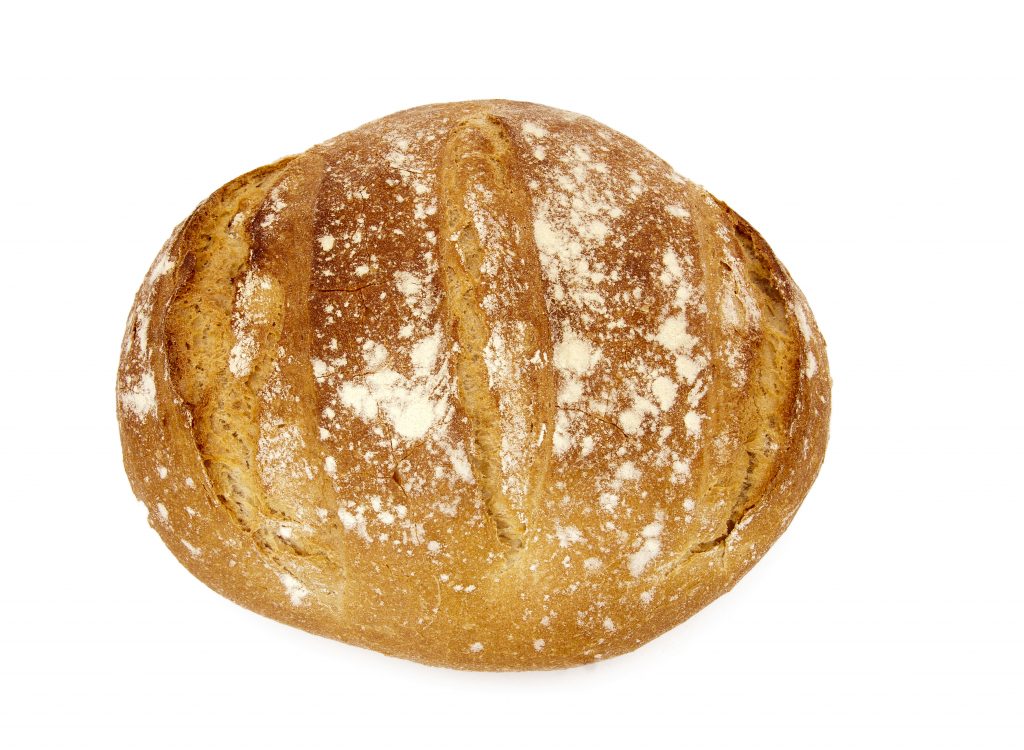
    In November 2006, New York Times food columnist Mark Bittman wrote an article for his Sunday feature—it was just an interview with a baker who came up with a new method to bake bread, no big deal. Except that this baker claimed he had not only developed a manner of making absolutely amazing bread at home without the headaches of kneading and working the dough, but that his process was so easy, a four-year-old could do it.

    Wait.

    Why would a commercial baker develop a way to make his product at home? This seemed a little self-defeating. But this baker—his name was Jim Lahey—stated that his goal was for anyone to be able to create bakery-quality bread—you know, that bread with the hard crust and the rich center, not the squishy store-bought stuff—as often as they wanted.

    So, Mark Bittman met with Lahey and the two baked this new bread together. Bittman wrote the piece and that article launched an entire bread-making movement. There were videos, additional articles, online pieces, cookbooks—all about this new method of baking bread easily.
    Now, baking bread had always been a daunting and intimidating task, one only taken on by the serious home baker. It was time-consuming, required a lot of attention, and was easy to mess up—which is why homemade bread has always been so revered.

    The traditional process of baking bread requires dissolving yeast and sugar in water, then adding in lard, salt, and flour. Then the kneading starts. After that, the bread has to rise for an hour. Then you punch the dough and allow it to deflate and sit for another hour. Then you bake.

    Then, in the 1990s, bread machines came along. These things were great. Now there was a machine where you could load in all the ingredients and allow the device to do all the kneading, punching, waiting, and cooking. You just loaded it up, pressed a few buttons, and walked away. But the bread was still the soft, squishy store-bought kind—a much fresher, preservative-free version of it, but still not that artisan, bakery-style bread we all love.

    Then came Jim Lahey’s method, where we can not only make the most amazing artisan bread ever, but it is so incredibly easy that—yes, a four-year-old can do it.
    It’s cheap—an average loaf will cost you about thirty cents to make—incredibly crispy, tasty, and easy to do.

    What Jim Lahey came up with was a way to allow time to do all the work—up to twenty-four hours. It takes a minute to mix the bread, uses only a quarter teaspoon of yeast (most recipes call for a full teaspoon or more), and allows the yeast to ferment very slowly. The dough is so sticky that you couldn’t knead it even if you wanted to, which is good because you just leave it alone and let it do its thing.

    His method creates a great cracking crust and flavor and is the kind of bread that you get from professionals’ steam-injected ovens. And it does this by allowing the pot you cook it in to act as a steam oven and get the same results. Over the past year, I’ve made dozens of loaves of this bread and with a few tweaks, it’s pretty bullet proof.

    So how do you make no-knead bread? It’s pretty easy.

    First, you will need:

    1¾ cup of warm water
    3 cups of flour
    1 teaspoon of salt
    ¼ teaspoon of yeast

    In a large bowl combine flour, yeast, and salt. Mix the dry ingredients, then add your water. Cover the bowl with plastic wrap and let it sit. Jim Lahey’s recipe calls for between eighteen and twenty-four hours, but I would say eight hours is a minimum. I make a batch up at night and we have it for breakfast the next day. I also use a Sharpie and write on the plastic wrap the time that I started it, so I don’t forget. If you like a larger loaf and less dense bread, wait longer, toward the twenty-four-hour time frame.

    Place flour over a cutting board and place the dough on it. Fold it into a ball—don’t knead it or work it; just fold it—place back in the bowl and cover back with plastic wrap for thirty minutes.
    HINT: What I do here is, while the dough is on the cutting board, I wash out the bowl, dry it, and place a layer of olive oil on the bottom. Then when the dough goes back in the bowl, I’ll add a little olive oil on the top. This will add flavor and allow the bread to easily slip into the pan when you cook it.

    Preheat the oven to 400 degrees and place a Dutch oven, casserole dish, or anything that has a heavy cover and seals, into the oven to preheat—empty—for ten minutes. You want the pan to be hot when you start.

    Place the bread inside the Dutch oven. I used to cut vent holes on the top of the loaf, but found that they don’t do much and the look of the bread is nicer without them. Cook for thirty minutes.
    Remove the lid and cook for an additional five minutes or so to get the top get crusty.
    It’s tempting to cut it right out of the oven, but you get a better result if you let it cool for ten minutes or so.

    Now, I might add that with this recipe is everything depends on the Dutch oven or pot that you use to cook it in. With mine, I can’t get the crust extremely crusty, without burning the bottom of the bread, so I settle for a medium crust. I’ve seen others do it where they can cook and extra five minutes or so and get it crusty all over. You can try adding parchment paper to the bottom of the pot; that will give you some additional cooking time.

    And that’s it. No-knead bread. Fast, easy, fun, and costs probably around thirty cents a loaf. Obviously, there are no preservatives in it like there are with store-bought bread, so it won’t stay fresh for more than a week or so, but you won’t have to worry about it. This bread goes fast. We’ve never had a loaf make it to three days.

    Two days is our record—two days, five hours, and sixteen minutes.

  • Facebook

    Facebook

    facebook

    Facebook is ten years old this year. Can you believe it? Which means that for a solid decade we’ve been able to digitally connect with friends, co-workers and family, whether they were a few blocks away or around the world — instantaneously. Just like that. We can now share events, tragedies, laugh at jokes and keep connected — all the time; not just through yearly Christmas Cards or the occasionally phone call. We can watch children grow up, share videos of events and rally around when needed. All the time and everywhere — from our laptops to our phones. We are always connected to them.

    And because we are so accustomed to Facebook it’s difficult to remember a time before it. When if you wanted to reconnect with someone you would Google their name and hope to find an email address — which you never could and it actually just lead to bit of digital stalking; looking in but not able to knock at the door. But not now. A quick Facebook search and not only can you often find the person you are looking for, but by the very act that they are on Facebook states they are willing to consider reconnecting with you.

    Today, by the stroke of a keyboard, decades can disappear and within seconds not only can we be joined back to the people we remember so clearly even though so many years have passed, but they are brought into our current life and become part of the day to day Facebook feed. Facebook has made the world small and accessible.

    [amazon asin=B007PJ4PN2&template=iframe image][amazon asin=076116085X&template=iframe image][amazon asin=1439102120&template=iframe image][amazon asin=B00DN88V52&template=iframe image]

    Now, I am celebrating my own personal anniversary with Facebook. Three months. I have been a part of Facebook for one quarter now and I have to admit, I like it and I see value in it — even though I did not go willingly. When we were ready to launch 543skills I was told — in a very nice way — to get over it and get on Facebook. It was necessary to coordinate the site with social media which meant getting a personal Facebook page and then one for the site. So I did. But the reality is I think I was ready.

    In part, the delay might have been because I actually felt special because I shunned Facebook. And possibly I was waiting for Mark Zuckerburg to call me and ask if there was anything he ever did to offend me. I would even grandstand a little on how I didn’t get involved in such things. But there were two other parts. The second was that I thought Facebook was a lot more intrusive than it really is. It’s not. You can open the door as wide or as shallow as you want to. But the second reason was —.

    Well, here’s an example.

    There is a company called Publish America. I am not going to say anything about this company; instead let’s play a game. Take the next three minutes — that’s all you’ll need, three minutes — and do a Google search of this company; Publish America. Then come back.

    Go.

    Okay, in those three minutes you have seen many things. In fact, within seconds of your search, on the very first Google page, you will see the words, complaints, lawsuits, beware, as well as the F-Rating from The Better Business Bureau — and this is thirty seconds into your allotted three minutes of time. In fact, on that same first page you will see that this company has changed their name in order to keep operating and put some distance between the lawsuits and image of the old company.

    Now with all of that. Here is the question. In the three minutes of your Google search, if someone were considering signing an agreement with this company, what would you advise them?

    Correct. So why does Publish America continue to get customers? Why do would-be authors sign up with them — every day?

    Great question.

    So here is what Publish America is about. If you want to get published, you send your manuscript into Publish America and they accept it — they say they reject many, but that’s not true (Google; Atlanta Nights and see what I mean). So they accept your book, give you one dollar as an advance and voila, you are a published author.

    So, you tell all your family and friends that you are now published and of course they want to read your book — which Publish America will gladly sell them for thirty dollars. In fact Publish America will sell anyone your soft cover book for thirty dollars — because it’s Print-on-Demand — except bookstores, who won’t touch your book because it’s not edited, its error ridden, because Publish America is not a legitimate publisher, because the price is ridiculously high and because you cannot return them. Oh yeah, once you sign the contract, Publish America now owns your book and they can keep it for seven years — unless you wish to buy it back. The business model is that Publish America markets books to its authors. Period.

    When I first heard about this company I thought it was sickening; taking the dreams of people and stealing it. But if you go on the Publish America website and look at the videos of the Writers Conferences they do, you will see something different. You will see — ego. That’s it. People who want to be read not because they think they have something to say, but because they think what they have to say is more important than what anyone else has to say. They don’t want to go through the work of being a writer, they just want the title.

    And this is what I thought Facebook was. People who didn’t want to go through the work of being a friend, they just wanted the title.

    I was wrong.

    Do people abuse Facebook? Absolutely. There are those who now don’t need to be a friend in order to have a friend. Facebook becomes a substitute, a cheat. Yup. And there are those whose Facebook lives are far more glamorous than their ones in reality. But for every one of them, there are dozens of just plain people. Folks connecting and laughing and celebrating and supporting.

    So sorry, Facebook. I was wrong.

  • Austin

    Austin

    pizza

    There are many people in the world that are nice, once you get to know them. Once you peel back a few layers. After you coax them out, develop some trust and gain access to the true individual. But rarer are those souls that are nice — genuinely nice — from the moment you meet them. From the very second you walk into their lives you know you are standing in front of the pure, unguarded, essence of the individual. They have no agendas or desires to impress. These are just balanced and happy and the pleasure of life just spills out. They can’t help it. They are content which makes them nice.

    Al Santillo is one of those truly nice guys. Al owns Santillo’s Brick Oven Pizza, which is located in a small house tucked between a church and an apartment building in Elizabeth, New Jersey — in fact, when I was first trying to find it, I walked in the front door and walked back out; this could not be the place with three pages of raving Yelp reviews for it. It was so small, so —- so, not what I was expecting. I walked in, saw Al, his back to me writing something down at a cluttered table, I didn’t see any lines of people clambering for what I was told was the best pizza in New Jersey, I didn’t see any banners, posters or signs telling the customer how amazing their pie was. So I left.

    When I got to my car I went back to the Yelp search — because this pizza was for Austin and it had to be great. This was going to be his last dinner with us before he moved and I wanted it to be — well, amazing. Austin had had now had his first taste of good pizza a few weeks before this when we had taken him to New York City for his first time, his going away present. So this had to rival that pizza and since I had a meeting in New Jersey— which is close to New York, the capital of Pizza — this is where I would find it. Hopefully.

    Now, we had known Austin was leaving us for a while, several months actually, but denial is a wonderfully comforting thing when you call upon it. And we did. But the day rudely came anyway. On Saturday morning, Austin and his family would begin the 1800 miles trek from Delaware to Colorado to begin a new life.

    Austin came into our lives seven years before this. I had walked into the family room one day and there were three warm bodies in there, instead of only the two male dependents that share my last name.

    “This is Austin,” Nick introduced from behind him. Not taking his eyes off the screen or taking his hand off the controller.

    “Hi,” Austin said, while killing Nick’s character in a blaze of digital gunfire.

    And from that time he was a fixture at our house. But it wasn’t until the first time that this shy and quiet kid looked into our refrigerator and screamed out, “We’re out of ice tea.” And Debbie yelled back. “I’ll get some in the morning.” — was he officially part of the family.

    Over the past seven years Austin would go on family trips with us, vacations and most weekends either he was sleeping at our house or Nick was sleeping at his. In fact, Austin and Nick were in my car when I learned our house was on fire and I broke every speed law in Delaware to get to it. And they both took dates together to the prom.

    With all the electronic gizmos available, Nick and Austin will keep in touch. They’ll face time and game together and do a bunch of other technological miracles that I don’t understand. But first, I had to get him pizza.

    After I had conformed with Yelp that I was at the right place, I walked back into Al’s place. He spent the next thirty minutes telling me about the difference between cheese from Romania and cheese from Wisconsin. Without ever meeting me before, he brought me behind the counter to try a pizza type he was experimenting with, he asked me about my family and where I grew up and he showed me how his huge brick oven works.

    Al is a genuinely nice guy.

    Just like Austin.

    And, oh yeah —. Al’s pizza is absolutely amazing.

  • The Files

    The Files


    memo

    When we are born, when we first take delivery of our body, there is some set up and installation time required for the main component; the brain. And this takes a little while to completely go through. So since nothing interesting can happen until the brain is fully functional, for the first three years of life — as our brain goes through this construction and set up phase — we remain in in a state of LOADING. During this period, software is installing, hardware is being assembled, code is being added in and miles and miles of connections and cables are being strung. It’s a capital project and after several years we are ready for some trial runs as we first put our brain through its paces.

    This is why any long term memories we have begin at around age three because before this, our brain is unable to store and record. But from that point on, we are given the keys to our mind and we start to determine who we are and who are the people around us. What will we believe? Who will we trust? What’s important and what is our place in the universe?

    So we are an adult at 18, we can drink at 21, we can drive at 16, but we are responsible for our own thoughts at around age three.

    Now when we first start using this brand new brain of ours, it begins in vacuum-cleaner-mode as we suck up all information on everything around us. Everything. Pure data. Pure experience. All is recorded.

    Then, after a few years of doing this, there is sufficient enough information to begin to sort it all. So the first category we create is, THINGS THAT ARE SAFE and the other is for THINGS THAT ARE SCARY. And everything new goes in one of these two boxes. Then once those files are established, old data is pulled out and resorted; the chair is safe, but the cat hissed at us once so he now goes in the scary box. And for years the world is divided into two parts. The safe and the frightening.  Safe is good. Scary is bad.

    Then we add new files: what tastes good and what does not. What is easy and what is hard. What gets us attention and what gets us ignored. And file after file after file is filled. And we call this personality; how we react to things, what we avoid and what we gravitate to.

    This is what people remember about us. This is the footprint we leave in a crowd.

    Okay, so here’s the scenario.

    You are now an adult, with your seasoned, battle tested brain. And for this illustration let’s put you in prison — sorry, you’ve lead a very troubled life. So you’re in prison, but because you are an extremely smart convict, one day you escape. You get out of your cell, you get outside the pod and then you get out of the building. You make it over the wall and into the woods. Now, because you are a very detailed person you manage to ditch the orange prison jumpsuit and get into some street clothes. You get a little cash and are a few hundred miles away before the guards even know you’re gone.

    Like I said, you are very, very smart.

    Now, because you are a disciplined person, once you are free you do not make contact with your sister in Albany or your childhood friend in Tulsa and you don’t even go to father’s funeral six months later. You cut all ties with his past at places where they may be looking for you. You get a new identity, a new life and a new job.

    So, here is the question. Will you get caught?

    Answer: Yes.

    Why? Because without even realizing it, you will begin operating according to those old files and if the police are looking for you they will find you. And when they do, you will be making a living as a mechanic, like you did before. And you will be on a dart league, like you were before. And you will be a member of the Moose Club and you will order rose bulbs from a catalog and drink Mountain Dew and follow the New York Giants. All like you did before. And even though your name is now Kevin Loomis, you are the same person as before and if the police follow your profile they will find you and they will drag your sorry backside back to A-block.

    Why? Because as disciplined as you are you never changed your profile. You operated only according to the old files.

    Now, is this programming our personality? Well if it is then you need to alter it or you’re going back to prison. But what if this personality is stopping us from taking better care of our families or making more money? What if it’s stopping us from obtaining a more personal relationship with God or being just plain being happier? After all, this personality of ours didn’t come in a box. We built it with the brain we were given. It was whittled and formed by each experience and fear and belief and desire. A trillion tiny thoughts, a million tiny events chipped away and made us, us.

    We take the same route home from work. We sit in the same seats during lunch. We go to the same garage when our car doesn’t work and we order the same pizza on Saturday night. Is that our personality? Is that what makes us, us? Pizza and car repair?

    So what’s the moral of all this?

    It’s this.

    You are not what you drive or what you eat or the team you root for. You are not even how you have chosen to act for the last thirty or seventy years. The real you — and you may not even know who that really is yet — is much, much more.

    And it’s your job to find out who that is. And then once you know, dump the files you don’t like or need.

    And fill new ones.

  • Riley the Dog

    Riley the Dog

    dog

    There are a few things in my household that I have complete veto power over — not many, but there are a handful. For example, when my wife and children wanted pets, I said no. I felt bad about it, but the answer was no. I did not want us to be one of those pet-houses.

    Now, don’t get me wrong, pets are great; cute, fun, entertaining — I get it. But having animals means being tied down; constantly running home and feeding them, or letting them out or exercising them. I wanted us to be able to travel and move around freely without having to be animal caretakers.

    So I said no. No pets.

    And to their credit, my family reacted in a way that made me proud. There were no complaints from Debbie and no tears from the kids. They took it extremely well.

    And one morning — this would have been about three years later — I was feeding the cats when Debbie and the kids said that they wanted a dog.

    What? A dog? No absolutely not. No dogs.

    And they took it well.

    Then then, about three years later, they asked for another dog? Absolutely not. We already had a dog.

    But they said a new dog would be a companion to Abby, our Golden Retriever. And, they added that a second dog is not much more work than a first dog. And once again, I pulled out that veto power and said no. Sorry, but no. We would not be a house with two dogs — who has two dogs anyway? That’s like having two swimming pools or two basements. Why would you have more than one?

    And five years later, after Murphy died, we were back to only one dog, so…

    Well, you get the picture.

    We got Riley about six months ago.

    Now the difference between Riley and the other dogs we’ve had — two Golden Retrievers and a Basset Hound — is that Riley is a mixed breed dog.

    After having had three purebreds, I have realized that all breeds are bred to do something — to hunt, to point, to herd, to show, to…something. And that DNA is telling them to herd, to protect, to point — first. Then, if they have some free time, they can be a pet.

    Now, many breeds make excellent pets — it says so right in the book — but some are first and foremost bred to do something else.

    Not that purebred dogs aren’t great. They are. But I prefer my mutt.

    When you take out that breeding — rip out the generations of DNA that force a dog to react a certain way or be on the lookout for a specific action, and strip the dog down to its basic structure — you let the dog just be a dog.

    And when you get to be just a dog, you have the opportunity to see the world through a regular ol’ dog’s eyes. And frankly, they have it all figured out. Riley has it all figured out.

    So here is what Riley has to tell you about life.

    1. Where you are, is the place to be.

    Riley doesn’t wonder if there is something better upstairs or around the corner. All he knows is that right here, right now, is where it’s at. This is the center of the universe and where he’s happy and grateful. He doesn’t regret or second guess. This moment, this time, is the best time that there is, or will ever be.

    2. All memories are good memories.

    Riley doesn’t mentally file away the times you bumped his nose when walking past him in the middle of the kitchen. He forgot how Abby got three more dog biscuits than he did and he has no clue that you could have walked him an hour earlier on Sunday but chose not to. Riley doesn’t know how to keep memories like this or what to do with them even if he did. He doesn’t understand what envy or jealousy or bitterness is and if he did, he would abandon it. It would bore him.

     3. As great as life is, there is always room for new people.

    Riley loves the people around him and is content with just them, forever. But when a new person enters his life he reacts as if it was the first person he ever met. Riley doesn’t treat his tenth friend less than his first friend. Everyone who enters his world is amazing, valuable, and worth getting to know. And he does not respond to people based on how they respond to him. He doesn’t care. He focuses on them, regardless of what they think about him.

    That’s what Riley wanted me to tell you.

  • The truth about self-discipline

    The truth about self-discipline


    red

    Okay, let’s say you have a goal you want to achieve and for the sake of the example let’s make it a weight and fitness goal. You want to lose twenty pounds. So in order to do this you put together a plan to achieve your goal; you create a fitness schedule, develop a nutritional diet, get a training partner, fill your Facebook and Twitter pages with you can do it re-posts and hit the ground running. Pow, slam, bang. You’re off.

    Now, a few weeks go by and you’ve lost some weight, you feel good, you’re gaining momentum until — until. Until that first big craving hits. And when this craving shows up — strong, determined and bloodthirsty — things start to go bad.

    The craving slithers on the scene and his desires are clear. He hates you. And he wants to destroy you and in order to do that he is going to make you eat that entire family size chicken and gravy, bucket meal. Now, you want to stop the craving, because the last thing in the world you want to do is to have to eat that entire bucket of crispy goodness.

    So the fight begins and the first punch is thrown.

    Over the next few minutes you slug it out with your craving — he gains a little, then you, then him again — until a winner is declared. And either the craving slumps away, happy and fat; leaving you crying with gravy on your shirt. Or you win and the craving leaves, bumping your shoulder and telling you that he’ll be back — loser.

    And this is how we see the path of self-discipline. As a fight. A fight between us and that powerful force out there who wants to hurt us, humiliate us and control us. So the only choice is that this force has to be defeated, beaten and destroyed.

    Right?

    No.

    And here’s why. Is there a force that wants us to eat that food?

    Yes. Yes there is.

    Does it hate us?

    No. It’s trying to keep us safe and happy — actually that’s what its job is.

    Okay, so who put it there?

    We did.

    That force — that strong and destructive entity that can only be defeated by our grit and grace — is not a force at all. It’s a little piece of software — let’s call it wetware — that is clicking along doing what we told it to do. We set it. We programmed it and then we left and forgot it and when it showed back up we tried to fight it — forgetting that we had all the passwords.

    Here’s a real life parallel. There are three ladies that work at a barbershop near our home and one of these ladies smokes. She has smoked for years and has she tried quitting several times. And one particular time that she was trying to quit, her entire personality changed. I mean, this sweet and kind woman was now short tempered and actually cruel. Mean. Her personality altered so much, that those around her just wanted their friend to come back. They no longer cared about her smoking. In fact, customers began coming in with packs of cigarettes for her — they actually did, buying cigarettes for the first time in their lives to give to her.

    The same people — the very same ones — that for years had begged her to quit smoking, were now the very ones who wanted her to smoke the most.

    “Just smoke one,” they’d say, through frightened and concerned smiles.  “Just smoke one and everything will be okay.”

    And it was okay. She smoked and went back to herself. The person they loved came back.

    Don’t let me get stressed, we tell the wetware.

    Okay. And the wetware searches to make that happen and locks it in. Chicken bucket. And the higher the stress is — even if the very stress is about ‘not eating the chicken bucket — the more the program will try to get you to eat it so you’re not stressed.

    So here is the good news. That force, that all powerful force that you think you have to fight — is actually on your side. As powerful as you think he is, he can be even more powerful helping you — since that’s all he wants anyway. It’s all he’s ever wanted.

    He doesn’t care if you smoke, he just wants you happy. He doesn’t care if you are overweight, he just wants you happy.

    But what if he can help you do both?

    Now here is where things get a little touchee-feellee for a while. So, how do we do this? How do we reprogram the wetware?

    By talking to it.

    I know, it sounds weird, but that is when the programming occurs. And how it occurs. And the best time to talk to it is when one of these cravings are are turned on — when the wetware is active.

    Just start asking it, why do you want me to have this? What will I get out of this?  And the big one — what are you afraid of, for me?

    And don’t be surprised if it’s the last query that gets you the answer. Fear — what are you afraid of, for me?

    And that’s it. That’s really all there is to it. When that ‘craving’, that desire, that urge to avoid, comes around, simply talk to it. That’s the only way to lift up the lid and look right into the actual programming code; to see what is driving that piece of wetware.

    Why do you want me to do this?

    What am I afraid of?

    What am I trying to avoid by doing this?

    And you’ll get your answer.

    That’s the secret.


  • How to Live a Cash Life In a Non-Cash World

    How to Live a Cash Life In a Non-Cash World

    cash

    When we were kids, money was a much simpler entity to manage; in fact it was downright easy back then. The process went like this: if our pockets were empty, and they often were, we went without. And if our pockets had something in it, we could spend what we had. And, here comes the stress-free part, how much we spent was determined by how much we had. Simple.

    So, the decision process went like this. Can I buy a soda? Let’s see, do I have any money? No, I don’t have any money. Then the answer is no. I cannot buy a soda. Done.

    Now, it’s a little more complicated.

    Now our buying decisions are not based on how much we have in our pockets, or how much money we have in the bank, or how much money we can afford to spend, or how much we earn, or how much money is left in our budget, or is the thing that we wish to purchase priced correctly. Nope. It’s only based on — do we want it and do we want it now?

    So, do I want a soda? Well, of course I want a soda. And I’m a grown man and I work hard so I’ll buy whatever I want. Because this is America. And I have three credit cards and a debit card in my wallet that says it’s America. So yes. Yes I can buy a soda.

    And we buy. And it’s easy because we don’t really spend money, we spend numbers. Think about it: with little exceptions, it’s possibly to go a very long time spending, buying, and earning and never seeing the actual money that is flowing in and out. We just see numbers on a screen.

    [amazon asin=B001D07XCO&template=iframe image][amazon asin=B00B3PP5Q0&template=iframe image][amazon asin=B009ANX56O&template=iframe image][amazon asin=B00KECATZU&template=iframe image]

    Using a cash system is the only way to spend only what you have. Because with our credit cards we can spend until we hit our credit limit and with our debit we can clean out our account and push the overdraft limit dry before the red light comes on.

    And the irony is that we’ve been conditioned to not think of these swipes of a card as real money. Yet, take actual cash from our wallet and we feel that psychological loss.

    Using a Cash System

    1. Establish a budget.
    2. Create an envelope system. Create a physical envelope for each budget category. Now there will be budget items that won’t fit in the envelopes — automatic payments, etc. — so you keep those automatic and make categories for all that you normally use your credit and debit card for. These should include: Gas, Entertainment, Groceries, Clothing, Car Maintenance, etc.
    3. After you’ve categorized your cash expenses, fill each envelope with the money allotted for it in your budget — if you allow $100 for clothing, put $100 in cash in your clothing envelope for the month.
    4. Determine what is a weekly or bi-weekly (depending on how you get paid) expense and which is ongoing. So if you allot $50 a week for entertainment, then that will fill each pay period, whereas $25 a week for car maintenance will build until needed.
    5. Tweak. During the first three months or so your system is in beta-test mode. There will be items you forgot, over budgeted for, or simply got wrong. Keep adjusting.
    6. Once you’ve spent all the money in a given envelope, you’re done spending for that category. If you go on a shopping spree and spend the $100 in your clothing envelope, you can’t spend any more on clothes until you budget for that category again. That means no visits to the ATM to withdraw more.
    7. When it’s gone, it’s gone. Don’t be tempted.
    8. Blow money. There’s also no problem in adding a “blow money “category — money to have a little fun with! As long as you and your spouse have agreed on it, you are fine. There should be no lying. Agree on your budget, agree on your fun money, and be open. Fun money can be anything you want it to be. There are no rules on that envelope.
    9. Keep the change. Tossing your spare change in a jar is almost a mini savings account. It’s there for small emergencies and at the end of the year it’s not unusual for your change to equal $400 or more.
  • The Fifty-Year-Old You

    The Fifty-Year-Old You

    shutterstock_121370143

    Medifast has come up with an advertising campaign that is not only very creative, but extremely powerful. In these campaigns a person is filmed at the beginning of their fitness plan, having a conversation with someone in a chair next to them — only there is no one in that chair. They are speaking as if they are talking to a new version of themselves, 12 weeks into the program. Then, at the end of the 12 weeks, the same individual comes back and is filmed talking to the other empty chair, as if having a conversation with themselves from 12 weeks ago. Through some video magic these two films are edited into a seamless conversation.

    We see the old version —- beaten, discouraged, and afraid — being encouraged by the new version who is strong, fit, and confident. Of course the new individual is not afraid of anything, because the new one knows what will happen. The new you holds all the secrets.

    Today, I have done the same thing for you — the you of today. I’ve gone into the future and found you at 50 years old. We have spoken and I have brought him here and he wants to tell you a few things. He wants to talk to his 20-year-old, 30-year-old, and 40-year-old self, to not only let him know what to expect but to give him his insights and cheats for the next few decades.

    So here are the five things the 50-year-old you wants you to know.

    #1. You look good.  

    Yes, there will come a point, ten, twenty, or thirty years from now, when you will look at a picture of yourself at this current point in time — it could even be a picture that is taken at this very moment — and that new you is going to smile and think, Wow, I wasn’t bad looking back then.

    Today is the best you will look. Now this might sound like bad news, but it’s not. It does not mean that your appearance will degrade from now on. It means that you won’t appreciate your appearance until it does.

    [amazon asin=B00166DR9S&template=iframe image][amazon asin=B00LDB7Y72&template=iframe image][amazon asin=B00A48G0D4&template=iframe image][amazon asin=1580085520&template=iframe image]

    And that’s the clincher. There will never, ever, be a time when the exact amount you appreciate how you look meets the exact way you look. It just doesn’t happen. Because by the time you do appreciate it, time has moved on and you’re looking back at a photograph and wishing you looked like that now.

    Here is the paradox: If the 30-year-old you was looking at a photograph of the 20-year-old you, he would wish he looked like that now. And if you took a picture of that you looking at that picture, the 40-year-old you would look at the 30-year-old you and wish the same thing — while the 30-year-old you was wishing it on the 20-year-old you in the photograph.

    Which means that someday you will want to look like exactly the way you do right now. Learn to appreciate it.

     #2. Most of the time, you’re kind of a jerk.

    Although your physical appearance is just fine the way it is, your view of life kind of sucks. As a man in your 20s, 30s, and even 40s, your skin is far too thin and your self-involvement levels are way too high. So much that if you and the 50-year-old version of you were talking at a party, the older version would politely excuse himself and find someone more interesting to be around.

    Insecurity runs deep in men and when you mix that with our need for acceptance, the end result is a highly internalized, afraid, and somewhat shallow individual.

    What the evidence? The 50-year-old version of yourself never takes a selfie. Never. Whereas the 20, 30, and 40-year-old version may have dozens of them scattered across social networks.

    Now mix this self-involvement along with another trait the younger version of you has: the need to be right. The younger version of you not only needs to be right, but he needs to prove to those people around him that he’s right — no matter what.

    Although you may build houses for the poor and read to the blind on your free time, your 20, 30, and even 40-year-old attitude needs a little tweaking. Eventually, your confidence will increase and you’ll settle into a solid view of the world, but until then, relax, take the focus off yourself and think.

    #3. Money is better than stuff.

    Now this may seem like a somewhat cold view of life, but it’s actually the opposite. The 50-year-old you knows that money — meaning the actual currency that you’ve earned and built up — is far better than the things you can buy with that currency.

    Yes, there will be a day when you are looking at that photo album and you’ll miss that car you had when you were 20 or that motorcycle you biked to Maine on. But in reality you’re not missing the tangible car, you’re missing the places you went in it — you’re missing the friends that rode with you to Maine.

    As cold and non-poetic as it sounds, the 50-year-old you know that there is confidence to be had in working hard and having a nest egg — actual currency saved — rather than a box full of toys.

    40% of everything you buy will be gone in a year.

    90% will be gone in four, so the total amount you paid for 100% of your stuff has to be amortized across 10% of it.

    Oh, and this doesn’t even include your cell phone and all the electronic gadgets because our constant need to upgrade makes these rentals more than purchases; we simply don’t keep them long enough.

    #4. That same extended family you avoided when you were in your 20s, is the same one you’ll be helping to keep together in your 50s.

    As the focus comes off of you, it goes on to others. The 20-year-old version of you will come up with every excuse to miss the family reunion. In your 30s you will tolerate these get-togethers. In your 40s you will look forward to them, and in your 50s you will be organizing them.

    That same internalized pride we had in our 20s is spread out once we hit 50. We become less proud of us and more proud of those that contributed to us.

    #5. Being 50 is something to look forward to, not fear.

    The 50-year-old version of you is happy, excited, hard-working and confident, and by the time you hit 50 you are just hitting your stride and looking forward to each day and each challenge. The 50-year-old you has a view of life that is clear and accurate and he knows what’s important and what is not. The 50-year-old you laughs more and worries less.

    And he can’t wait to meet you.

  • Becoming the non-passive man

    Becoming the non-passive man

    passive dogThere is this very strange, very weird, social phenomenon that occurs when a man encounters a stranger, that’s very, very interesting — I see women doing a version of this too, but it’s different with them — which makes this particular experience pretty much a guy-thing.

    So, here’s the scenario.

    You are stopping at a store on your way home from work. You locate the store and drive into the lot. You park and turn the car off. You step out of the car, close the door and hit that little button on your key fob to lock the doors; click and beep. The car is safe.

    Now you head towards the store, but as you are walking, you notice that another man is walking out of the store towards you. So unbeknownst to you, some incredibly fast and complicated mental calculations are being made, deep inside your man brain — and most of them you won’t even be aware of. The first thing that occurs is that within milliseconds, your subconscious sends out a probe to determine if the strangers path will be  beyond your personal space  — in other words, will he be three feet away or more, which would place him outside of the danger-zone.

    So the probe comes back and the determination is negative. At the current rate of speed and the space available between the parked cars, the stranger will walk within three feet of you. A full second later we move into prep-mode and this is when we first notice that something is occurring. We see the stranger and we begin to feel just the smallest amount of discomfort; just a tiny bit of unease. We continue walking. We get within four feet of the stranger and he looks up. We look up. Something clicks and we give the stranger — the look. Then we state our greeting — this could be a ‘sup, how ya doin;, hey. The stranger responds, he passes and we continue to the store. Moment over.

    Now what just happened?

    [amazon asin=B007RGCV66&template=iframe image][amazon asin=B00439LBA2&template=iframe image][amazon asin=B00L8MIBC8&template=iframe image][amazon asin=B00IGR1S2I&template=iframe image]

    Well, a lot. Because we just gave the stranger the look and the look is actually a big deal. To describe the look is fairly easy — and once you’ve noticed it, you’ll see it all the time — and it’s simply this. If you press your lips together tightly — as tight as you can — and smile. That’s it. That’s the look.

    So why is it important? Well, what’s interesting about the look is that it’s the — please don’t hurt me, expression. It’s the default passive reaction. It’s the, I don’t want any trouble, I’m just walking here, plea. It’s the human equivalent of lying down to expose our belly to let the bigger dog — the important dog — know that we admit they we are smaller and weaker. Yup, all that in one expression.

    Why do we do this? And why do we care if we do?

    Well first, as we said, it’s a guy thing. Sit in that same parking lot and watch women walk in and out of the store and unless they know someone, they don’t need to acknowledge them. Men do. We travel through life with our social identity constantly on and constantly being updated. And when we acknowledge with the look there is actual damage being done. How?

    In the animal world there are two states; dominant and submissive. A submissive dog — a good dog — will show the dominant dog — the important dog — that they pose no threat. That they don’t want to take anything from them. That they know their place. This is true. But we are not dogs. We are men.

    And that’s where the trick lies because when we were boys we saw men. We admired them and we developed this image of men — this unrealistic, unobtainable, two dimensional image and we told ourselves that when we became men we will be just as strong, just as sure and just as smart as the other men around us. Then we got older. And we were absolutely none of these things. We were frightened and unsure and confused and afraid. And because we knew these were not the traits of the men we saw, we determined that we weren’t men. That we had failed as men. Oh we might be a good person, or a kind friend or a good son, but as men we failed.

    We didn’t.

    Our fathers — our grandfathers, our bosses, our neighbors — those men that we see as the ideal, were just as weak and just as afraid and just as stupid as us. They weren’t always strong and smart and selfless and sometimes they did really dumb things. We can be confident in our career and in our family.

    We can be satisfied with our home and with our finances. We can be in great physical shape and be a good father, a great husband and a sold friend but when it comes to ranking where we believe we fit on the man chart, we will always, always, always, rank ourselves lowly.

    Because the chart is wrong. And the look pushes us down a tiny microscopic step  every time we use it. The stranger in the Kroger parking lot that we pass on the way in to the store, is not going to punch us as we pass by. We know that. But every time we use the look, we have internally just filed away a moment as if we ran from a fight.

    Being courteous is something we give.

    Being passive is something that is taken from us; something that is done to us.

    Because we are not the good dog. And we are not seven years old on a playground. We are strong, thinking men. And there is no place for being passive with strong, thinking men. We either screw up or we don’t. We go or we stay. We decide and we will probably decide wrong — and we do it.

    We are civil.

    We are reasonable.

    We are tolerant.

    And we are rational.

    But we are not passive.

  • Take the 30-day, buy used, challenge

    Take the 30-day, buy used, challenge

    actually thrift

    Okay, here is an exercise.

    Let’s say that something bad happens — some financial catastrophe — and you need to come up with an enormous amount of money quickly. And for the sake of this exercise let’s also say that you have already tapped into your savings, your 401K, your lines of credit, cash advances and anything else you can think of. All the traditional methods are exhausted and you still need cash. A lot more. So now all that is left are your things. Your stuff; the things you own. All that you have to sell are those very items you see and use everyday.

    But how much are those things worth? — not how much did they cost, but how much are they really worth? — because a baseball card might have a value of a thousand dollars but until someone puts that amount in your hand, its value is undetermined.

    In this financial scenario, if you had to sell all the things you own, outside of owning a box of gold coins or having a few Corvette’s in your garage, the true value of what we have — meaning what someone else would pay us for them — is actually very small.

    Our flat screen TV may have cost three grand, but if no one is going to give us  three grand for it — especially if it’s a few years old and is no longer the hot technology — it’s probably worth a hundred or less.

    Outside of owning luxury items or precious stones and metal, the contents of an average four bedroom home would sell in an estate sale for $6,000.

    Not bad. Except that the replacement cost of those same items would be  $20,000. Meaning what we pay $20,000 for items that have a street value of $6,000.

    Here’s an example. A few years ago I splurged and bought my wife a very nice gold chain — a jewelry store near our home was having a big sale and a 14 carrot gold chain that would normally be $1,200 was now $800.00. So I bought it. And just out of curiosity — just because I wanted to gloat on what a bargain I had gotten — I stopped at a pawn shop on my way home. I said that I might be interested in pawning the piece and wanted to know how much I would get for it. The gold was tested and weighed and an offer was made.

    $140

    My $800 purchase had a true value of $140.

    Now, I might have found a slightly higher offer at another pawn shop. Maybe. But the highest offer someone had given me was $140 so that was the current value.

    I still gave my wife the necklace — it was a gift and it was not about the money — but it did get me thinking.

    Now this discussion is not about how to get the highest dollar for your things when you sell them. It is demonstrating that anything we buy new — and I mean anything —- the value depreciates just like a car. A $200 microwave has a resale value of around $50. A $100 vacuum cleaner would sell for $30 and a $600 lawn mower would get you about $75. That is the true value of those items.

    So here is the challenge. Take a month and be resolved to be on the other side of this curve. For one month. For thirty days. Vow to buy all the items you need — every coffee maker, every shirt, every book — used.

    Instead of running to Wal Mart on your way home — stop at The Good Will instead. And when you need to swing by Radio Shack, hit the local Pawn Shop. Instead of Target, pick up a few things at The Thrift Store or scan Craigslist.

    Just do it for thirty days — it  won’t be as convenient and it may take some patience — but vow to do it for one month.

    And let me know what happens.