Category: Life

  • The return of business non-casual

    The return of business non-casual

    casual

    In the 1990’s, the stodgy American business world created a weekly event called Casual Friday.

    Casual Friday began on the West Coast and was an  innovative idea that was pretty simple; one day a week — a Friday — employees could leave their business attire at home and come to work casually. Now, casual in some offices meant khaki’s and a polo shirt where in another office this would include jeans and t-shirts.

    When Casual Friday first began, it was an instant hit. Employers noticed there was higher productivity, more comradery and a general lifting of office morale — and employees actually seemed more comfortable.

    As the same time that this trend began to gain popularity, the landscape of American business began to change. Certain hi-tech companies began to adapt business casual as there everyday dress code. And as these hi-tech companies began to dominate the economic stage, spin offs and start ups began — all with this new business casual approach to their dress code. The idea of wearing jeans and sneakers was now the sign that a company was edgy and creative.

    So in order to attract the same technical talent, larger hi-tech firms began to relax their dress requirements, allowing their engineering, IT and other technical people to wear chinos and golf shirts. But now a paradox was forming.

    Because the salesmen to these companies were wearing the traditional shirt and tie, but their customers — the engineers, the software designers, the technical supervisors — were all wearing polo shirts and jeans, there was a gap. Before this, the salesman was always seen as a problem solver; one of us. But now, just from the act of wearing a shirt and tie, he stuck out. He was an outsider. So sales departments began to match their dress codes to their customers.

    And from this, business casual was born.

    Because before this, business men — doctors, salesmen, accountants, hotel clerks — all woke up in the morning and put on a dress shirt, jacket, tie. The business suit — or at least the dress shirt and tie — had been the staple of American business since the 1800’s. But then the business dress code changed.

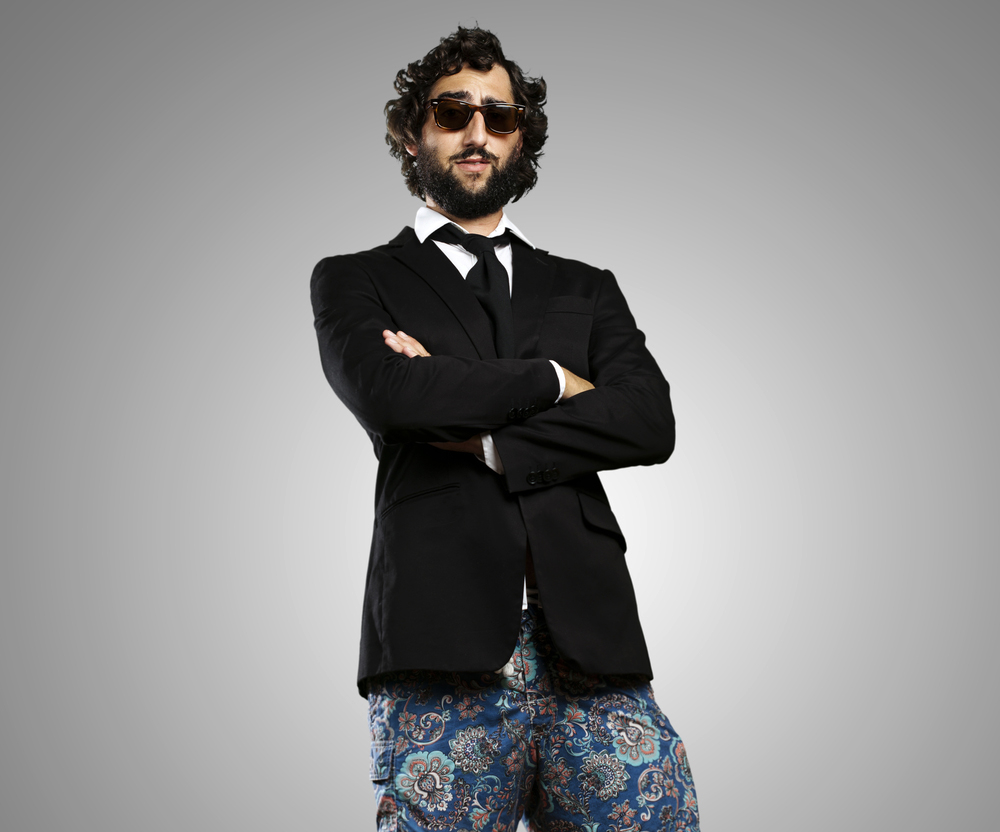
    But now the landscape is changing once again. After almost two decades of business casual, there is a trend now to bump that up a notch. The idea of a dress shirt with a jacket, a shirt with a tie, a pair of suit pants instead of chinos, is rising fast with many American men: opting to dress a little higher than mere business casual.

    And the Men’s apparel industry has noticed and have catered to this trend with what is called Business Separates. Now khakis and a button down shirt can be highlighted with a separate colored blazer. A tie and a vest will be worn or dress pants and dress shoes will be worn instead of chinos and penny loafers.

    The full blown grey suit and tie are no longer the norm in American business. But the bar is now being raised from the dark days of the ’90’s to something — different.

  • The unexpected

    The unexpected

    fire

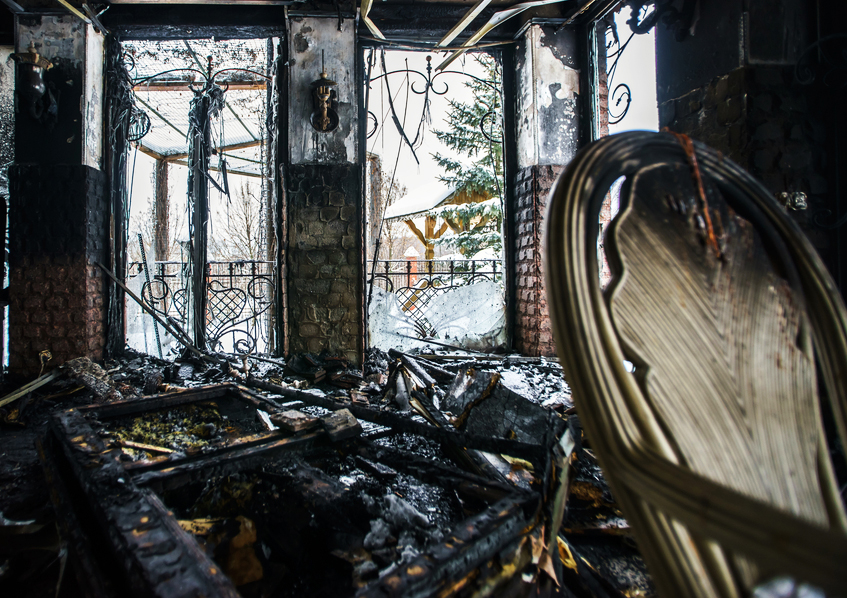
    On January 9, 2011 — on the day The Philadelphia Eagles were scheduled to beat The Green Bay Packers and move up in the NFL playoffs — I burned our house down.

    It was an accident. A stupid mistake. But it was my accident. It was my stupid mistake and because of it our home was destroyed, our family was displaced and our world changed.

    The day before the fire, a friend had given us a goose and I smoked it along with a ham in our backyard smoker.  At four that afternoon I had taken the ham and goose off the smoker and sat the charcoal pan on the cement patio to cool and since it was twenty degrees that night, I simply poured the water tray over the charcoal instead of dousing it like I normally did.

    The next afternoon — almost twenty hours later — I went to clean up the smoker and took the charcoal pan — which had stayed out all night, was cold to the touch and even had a thick coat of ice on top of it — and dumped it in our outside garbage can. A few hours later, some hidden spark that sill lived in the center of the charcoal pile reignited and the garbage can caught fire. Next to the garbage can was a recycling bin full of newspapers and junk mail that caught fire. Then the garage wall went up. Then the roof and within twenty minutes the fire had shot through the house at record speeds.

    The rest of the day was pretty action packed and it included my thirteen year old son getting his mother out of the house safely — my wife was on the treadmill in the basement with her iPod on and she couldn’t here the smoke alarms — as well as neighbors running into the burning house to help. And as I had taken my oldest son and his friends to the mall, I also received one of those phone calls you hope you never get — your children are hurt, your wife is hurt, or your house is on fire. And on that day our lives changed.

    [amazon asin=B0012SNLJG&template=iframe image][amazon asin=B00AO4AKYS&template=iframe image][amazon asin=B001612HIU&template=iframe image][amazon asin=B000A09SQW&template=iframe image]

    The key to this change is in the word unexpected. A fire is unexpected. So is a flood, a car accident, an injury at work, or a sudden death. These are all unexpected. They are events where in the course of a single day, life tilts. It changes. These are days when you go to bed living in one life, and go to bed the next night living in another. And we do this without the luxury of, yup, tomorrow is the day of the car accident, or tomorrow is the day we’ll get hurt, or tomorrow is the day someone breaks into our house. Nope. These events occur without our knowledge or permission.

    And when they do, they divide time. There is the time before the fire. There is the time after the fire. There is that world before the car accident; before you needed to learn to walk again— and there is that new world that remains afterwards. It is one of the dividing lines that will determine the rest of your life.

    Because regardless of what your challenges have been through, we all still go through life with a protective belief that although bad things happen — and we all acknowledge that they do — they just don’t happen to us. Not the big stuff anyway. We calculate the odds and accept that these odds are basically in our favor; that the chances of one of those life changing catastrophes happening to us are fairly slim. Sure a layoff can happen, but not a fire. Yeah, we could get into financial trouble, but a sudden death won’t happen. Or our home won’t be robbed. These are TV plots. These are the bad things that fall in other peoples lives. Not ours.

    In the U.S. alone, 1,000 house fires occur everyday. On that same day there will be 60,000 injuries from car accidents and 4,000 people injured while their homes are robbed. According to the US Census, 9 million people this year will experience one of these unexpected life changing events and these nine million catastrophes will occur with one thing in common; the day before, everyone  involved, everyone, would have bet you their car that it wouldn’t’ happen to them.

    Now, before you label this article as one that is selling fear and you roll your eyes in disgust, wait. This is not here to shock you or shame you or compel you to dedicate four hours a week to home fire drills and weekly tire pressure checks. The unexpected cannot be planned for and it shouldn’t be.

    Yes, you can make sure your smoke alarms work and you don’t keep oily rags in the garage. Yes, you should have safe tires on your car and wear your seat belts. Yup. And once you done these things leave it alone. Because you can not plan for the unexpected and you shouldn’t waste your time worrying about what possibly might happen. You should take precautions and then you should leave it alone and live your life.

    And actually, the odds are in your favor that that one of these big unexpected events won’t occur to you. Out of the 300 million people in this country, only 9 million will experience the unexpected this year — fire, serious car accident, unexpected death, robbery, etc. That’s less then 3%. The better news is, that if one of these events do happen — you’ll not only survive, you’ll actually thrive from it. I know, weird, huh?

    The point of all of this is that I can now say that our fire was one of the defining moments for us. Now granted, no one got hurt in our fire, so I’m cheating a little and the things we lost in the fire, well, things can be replaced and they were. But the seven months that it took to rebuild our home we had a rental house by the lake. We were unplugged from our routines and the outside. We relied on each other and we spent more time together then we ever had. We were closer. We were stronger.

    As a man, the unexpected — those events that cannot be planned for — happen. They occur without our consent and regardless of how prepared or unprepared we are. And when they do, they define us.

  • The five things our grandfathers would kick our tails for

    The five things our grandfathers would kick our tails for

    grand

    There is an old story about two frogs. The first frog was tossed into a pot of boiling water. He screamed — Yeah, I looked it up, frogs can actually scream — http://conservationreport.com/2009/03/03/nature-screaming-frogs/ — and then he jumped out of the pot. He checked himself over. He took a few frog breaths, and then he moved on with his frog life.

    But the second frog was different. He was tossed into the pot while the water was still cool. The frog swam around. He checked everything out and saw nothing to be concerned about so he settled in. Then the burner under the pot was turned on, the water all around the frog began to heat up, slowly. But the frog doesn’t seem to notice or care. Bit by bit the water temperature increased. There were no frog screams. There were no frog escape attempts. The frog simply remains in the pot until the water boiled. And until —. Dead frog.

    Now, this phenomenon is often referred to as creeping normalcy or a shifting baseline and it describes the state that occurs when change occurs slowly, in small steps, over time. And because we only see the parts of the change not the total change itself, we don’t react to it.

    Every day. Every moment. Our lives change. What is normal today was not normal only a few years ago.

    Now, yes, technology has something to do with this.  But the big changes, the sweeping changes, the dead frog changes, have very little to do with technology. These changes are driven by shifting priorities and varying acceptance.

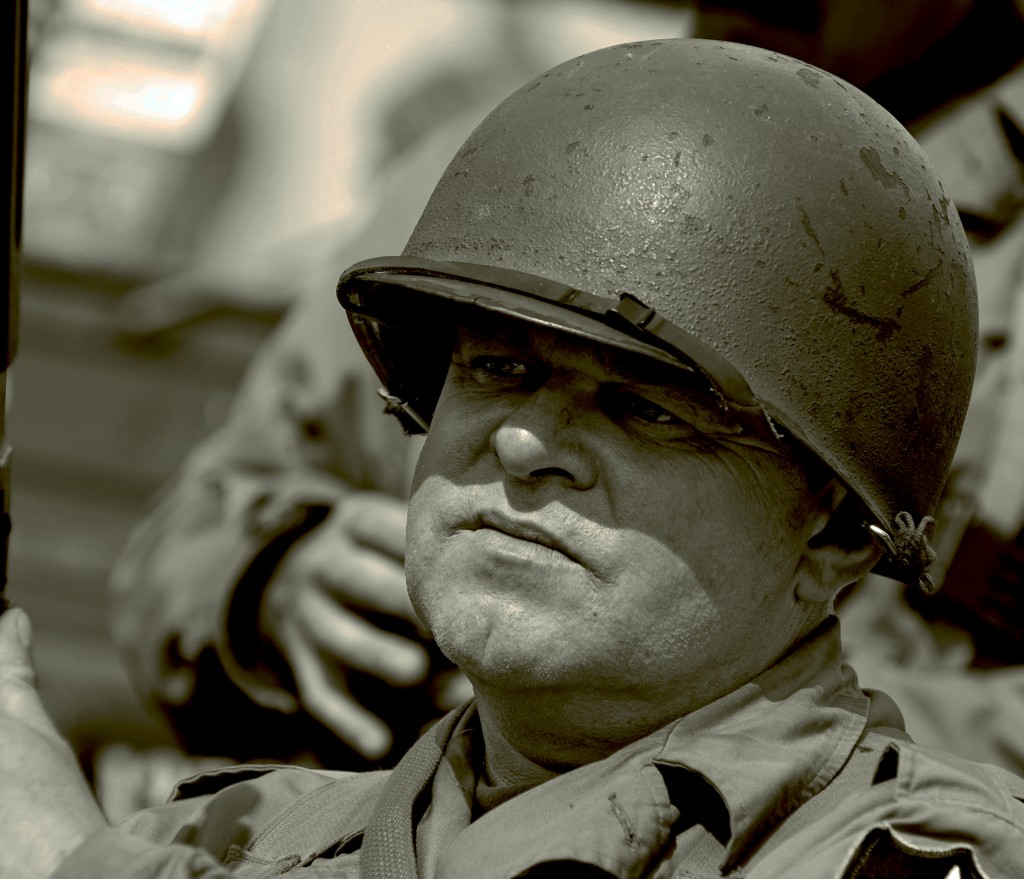
    Now let’s turn back the clock a bit. Let’s take a look at our normal, everyday lives through someone else perspective. Let’s go back in time but not simply to the generation before us  — born in the 1950’s — but to the one before that — the ones born in the 1920’s and ’30’s. This is the generation that fought in World War II. This is the generation that fought in Korea — in fact, many WWII vets volunteered to fight again in Korea. This is the generation that was raised through The Great Depression. This is the generations that struggled and sweated and built the structure of this country and is the one that lead Tom Brokow to deem it as “…the greatest generation any society has ever produced.”

    If we are going to look at the everyday structure of our society, then what better generation to view it through than the eyes of that group of men.

    Through the eyes of our grandfathers.

    Now, these changes are not large cultural and world changes — because the big changes are not the interesting ones. What’s fascinating is the little stuff. The tiny insignificant items that move and wiggle and shift all around us until one day we wake up and see it all as normal. But this version of normal would cause our grandfathers to smack us on the back of the head.

    So what would these men — our grandfathers — think of the every day, the basic, the routine, aspect of our lives today?


    THE FIVE THINGS OUR GRANDFATHERS WOULD KICK OUT TAILS FOR.


     1. Bottled water.

    This is one of those dead frog changes that has built up slowly for the last few decades and is now so embedded in our culture that we don’t even notice it. But think about it. We are paying —- for water.

    The stuff that comes out free from sinks and water fountains and garden hoses?

    Water.

    Which means that in a factory some place, someone turns the tap on, filters the water for taste — because our sensitive twenty-first century palate wants all our water to taste the same — squirts it into a plastic bottles and we buy it by the truck loads.

    In fact, the bottled water industry is a 60 Billion dollar industry. But did you realize that we buy more bottled water than we buy milk? And ready for a real surprise? We also buy more bottled water than we do — beer.

    So, say we yanked a solider out of the battlefield of World War II and brought him to the modern day. Then we gave him three bucks and said, Okay, go to that convenient store and buy me a bottle of water.

    The soldier would look at you strangely. He would walk into the store and open the cooler. He would pick up the water and look at the money you gave him and then look at the bottle of water. He would check the ingredients — nope, just water. And then he would walk back to you.

    “No,” he’d say. “I can’t do it.

    It would be so foreign to him that he wouldn’t be able to do it.

    http://www.bottledwater.org/economics/bottled-water-market

    2. The backyard deck.

    Backyard decks are great places. It’s where we entertain family and friends. It’s where we barbecue and it’s the place we often relax. But in our grandfathers day there was a place called the front porch and this was a social place. An open and connected place to sit and visit with neighbors.

    During this time it was very common to finish dinner and take a walk. And during this walk you would stop and visit with the folks sitting on their porch. You would connect with the neighborhood. Hear the gossip and check up on people. When you had visitors at your home, you often sat on the porch. When you listened to the ball game, you did it on the front porch so anyone could stop and listen with you.

    The front porch was open. The front porch was inviting.

    When the front porch became a merely decorative place, our neighborhoods became less involved with us and we became less involved with them. Now, we can now drive into our driveway, hit the electronic garage door opener, drive into the garage and never see our neighbors.

    3. Logos

    Your grandfather probably had a set of ESSO Put a Tiger in Your Tank coffee mugs. They were thick and white and very common and he probably had a few of them. Why? Because they gave them away free when you purchased ESSO gas. Your grandfather had the coffee cups with the ESSO tiger logo on it because they were free. No other reason. If they had offered to sell those same mugs — even at a very low cost — your grandfather would have sneered.

    Why would I pay to buy someone’s name on a mug?

    But today we do. We actually pay — and pay quite a bit — for the right to wear clothing, coffee mugs, key chains or hats that says Aeropostale, Harley Davidson or Nike.

    And I haven’t even gotten into the sports logos yet. With sports we pay for the right to promote our favorite sports teams. And what would your grandfather say when you spent eighty bucks to wear your favorite quarterbacks jersey?

    What?

    Your grandfather would want to know why any man would want to put another man’s name on his own back?

    What’s wrong with your own name? —he’d ask. What’s wrong with doing something you are proud of instead of pretending to be someone else?

    4. Credit

    Now before you argue, that there wasn’t credit available in your grandfather’s day, you’re wrong. Of course there was. There has always been credit. The only difference is that in your grandfather’s day, credit was seen as a weakness not a reward. In his day, the people who used credit were the ones who could not afford to pay in cash. They were looked down on because a man in debt was no man at all.

    Credit meant bad planning. Credit meant that you didn’t earn enough to take care of yourself and your family. The men that lived through The Great Depression and fought in foreign lands and came back home to raise families had only one rule. If you can’t afford it — meaning you don’t have the cash money to buy it — then you go without it.

    5. T-shirts  

    Yes, your grandfather owned t-shirts — he wore them under his dress shirts. And the only time you saw him in wearing only it, was when he was sitting in his chair listening to the ball game, or when he was mowing the lawn. And if someone came to the door, he would grab his dress shirt and pull it on before opening the door.

    When your grandfather went out to eat, he wore a tie. Even if he was a blue collar guy there was a sense of pride that he had.

    Whether you were a ditch digger or a doctor, a lawyer or a shoe shine man, there was a sense of pride in appearance.

    Now it’s casual —- well, that’s what we call it — but casual has long fallen into a new category. Now we have work clothes and everything else. We don’t dress for dinner at a restaurant, much less dress for dinner at our home.

    Your grandfather did. He would often dress to eat dinner with his wife and family. Because it was an event. He was proud to have earned the money for the food. He was proud of his home and wife and his children.

    Your grandfather had pride.

    And that’s probably what it boils down to. Pride. Our grandfathers had it and we as modern men are lacking it.

    Why did they have it? Because they deserved it. They fought and sacrificed and planned for it.  They earned that pride — it wasn’t given to them, they paid for it several times over.

    When is the last time we sacrificed or went without? When is the last time that we felt real pride in something — not simply in the pride in a new car we owe on or of what comforts we can rent. But true, bone deep pride?

    … for most of us, it’s been a long time.