Category: Personal

  • The 10 films that guys are supposed to like, but aren’t very good.

    The 10 films that guys are supposed to like, but aren’t very good.

    guy

    There are films. There are guy films — and then there are great guy films and sometimes the term great gets placed on a film and we just end up accepting it. Then, twenty years later, these groups of movies are now considered classics and we’re not really sure how that happened.

    This is the list of films of those films. Movies that we are supposed to like. Ones that every testosterone carrying male should be able to discuss and quote on demand and failure to do so could result in serious infractions applied to ones man card.

    But in actuality, many of these films — these classic guy movies — aren’t very good. In fact some are actually quite bad.

    Now the irony here is that being a bad film shouldn’t matter because we men love bad films — a great bad-film is sometimes better than a great good-film — see, Demolition Man, Time Cop or any of the Earnest movies as example .

    But these, this list,  are movies that are not good or not bad in a good way. but we are told they are great.

    … and they’re not.


    1. Point Break.

    Keanu Reeves and Patrick Swayze. Two guys who are very good at playing —. Well — Keanu Reeves and Patrick Swayze; that’s  pretty much it. In a film about an FBI agent who infiltrates a group of bank robbing surfers. It’s a movie that shows a great deal of  surfing scenes along with guys with long flowing locks of hair. And not much else.


    1. Bullitt

    Bullitt is the 1968 Steve McQueen film that every male car lover is supposed to love because of the Mustang chase scene — I actually had to study that exact scene several decades ago in a film class. But in actuality Bullitt is not a very good film. And it’s not even a fun film to watch and is really kind of boring. But it’s one we are supposed to like and now is old enough that we even seem cultured if we’ve seen it.


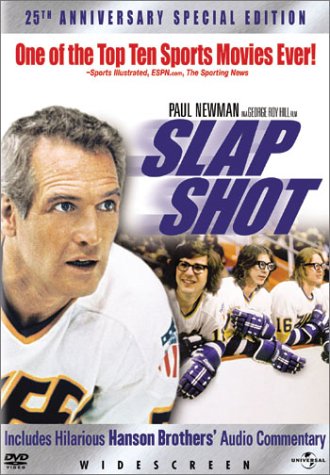
    1. Slapshot

    Slapshot is a 1977 Paul Newman film concerning a small mill town who is about to lay off workers where the town’s hockey team decides to save the day. If you love watching hockey players fight and a lot of toilet humor, Slapshot is for you — but you will loose about three IQ points when you are through — and then you’ll  need to watch Shindlers List about halfway through to even recover.

    The  Grifters

    I really wanted to like The Grifters — a film about traveling con-men, you’re off to a good start — and even saw it at the theatre when it first came out and for the first ten minutes I wasn’t disappointed. Then it just sort of — drifted off and tried to tie in this love story that didn’t work. But the  film now has a cult following and I’m not really sure why. If you feel pressured to watch it, see the first fifteen minutes of it then turn it off and then you can tell everyone what a great movie it is and not be lying.

    1. Days of Thunder

    I guess no one told the male population that Days of Thunder was a marketing stunt — a way to make a quick film on the racing industry to get all those NASCAR fans into movie seats. It’s badly written, quickly produced and has no real heart. But men love this film. And again, it’s now been around long enough that new generations are being spoon fed on what a great film it is.


    5. Matchstick Men

    Another con man movie I wanted to like because I loved the book. But of course, the only thing that was anything like the book was the title. A truly bad attempt and like everything Nicholas Cage has made since The Rock, it sucked.


    1. Blade Runner

    Every nerd born before 1980 is supposed to love Blade Runner — I actually saw it at the theatre the week it came out in 1982. In fact, I had a Blade Runner poster on my dorm room wall — because that’s what all Sci-fi fans at the time were expected to do. And then later, I realized that I didn’t really like it.


    1. Dances with Wolves

    I’m actually a big fan of all the Kevin Costner films that bombed — Waterworld, The Postman, those are great bad-movies. But the most successful one; Dances with Wolves, is not on that list. It’s a homogenized, preachy story that is a chick flick disguised as a western.

    1. Top Gun

    Want to piss a lot of guys off? Just say you don’t like Top Gun. Go ahead. I dare you.  Well, here goes. I don’t like Top Gun. It’s sterile. It’s forced. And the best acting in it is done by the airplanes. And worse yet, when Goose dies — I really don’t care.


    1. 2001 a Space Odyssey

    Yes, I understand that the monolith is supposed to be a religious symbol. And yes, the bone used by the monkey men to win over the waterhole represents technology. Yes,. But any time a writer or a director answer interviews with —it’s open to interpretation, that’s a cop out. I’ve seen the film several times and I now openly admit that I don’t get it. And I don’t really like it.

  • How to build a wooden toolbox.

    How to build a wooden toolbox.

    wooden

    There are certain phrases in the English language — and I’m sure in other languages as well — that are spoken so often that they are no longer heard. It’s not that they you don’t actually hear them, it’s more that they become overused; white noise. And we never even question their validity because they’ve been around for so long.

    There are many examples of this, such as — Don’t go to bed angry. What? That’s the dumbest thing I’ve ever heard and is also totally wrong because angry is the absolute best time to go to bed. Since sleep is the cosmic reset button, you go to bed angry, you wake up not angry. Perfect. And you also wake up and realize what an idiot you were for being ticked off in the first place.

    Here’s another one. Let’s give it 110%. Dumb. I mean, I get it. You’re saying let’s give more than we have, let’s push the envelope, —. Yeah. But you’re also stating that we should give an immeasurable, incomprehensible amount that can never be tracked or gauged — and the phrase is so overused that our 110% has been reduced to about 40%.

    How about this one. Well, to be honest here … That great. So it basically it says, okay, I’ll start telling the truth now because everything else I’ve said so far has been total crap.

    And how about this one. The best gifts are the homemade. This is basically false. Because the best gifts are the ones with thought behind them, where we have spent time thinking about the gift and most homemade gifts are usually quickly made, generic items, thrown together without much thought or meaning.

    However …

    There are a few homemade gifts that can be both made pretty quickly, are of higher quality and will show a little thought. And — here is the best part — they will actually be used.

    On the very top of the list is the classic open faced wooden toolbox. These things are great and have been used for generations and even if you have a toolbox — even if you have ten toolboxes — you need a classic wooden toolbox because they are ideal to carry specific tools to a specific project. They are simple to make, quick, have a real charm and will actually be used —- and more importantly they will be remembered.

    Make one for yourself and them make them as gifts.

    HOW TO MAKE AN OPEN FACED WOODEN TOOLBOX.

    1. Get some lumber. The great thing about these boxes is they can be made from any scrap lumber you have laying around — often these are made from pine because its low cost but you can also get yourself a solid piece of oak to give it more of a furniture look. On the other side, I’ve seen some really great ones made out of rough cut lumber that gives it that rustic quality. So there is not wrong answer.

          2. Design the size of the box. There is no standard length and height for these boxes and they range from a few feet long to three or four feet long to hold saws and levels in. But a 24” box is pretty common. So lay out the tools you want to fit in there and go from there.

    I have seen several drawings online for these boxes but the most simplistic and easy is one I found on the handymanwire.com site …

    draw

    http://www.handymanwire.com/articles/toolbox.html

    3. Cut your lumber. (see above).

          4. Assemble the tray. Glue and nail the tray bottom and sides — and remember, you are nailing in the edges of wood so screws and even larger nails will split the wood. Be careful. Use furniture or finishing nails.

         5. Insert the dowel. Slip it in and glue it — you can also add a nails into the edge for support.

         6. Finish. You can leave these boxes unfinished or you can stain or paint. Completely up to you.

  • How to build a workbench.

    How to build a workbench.

    bench

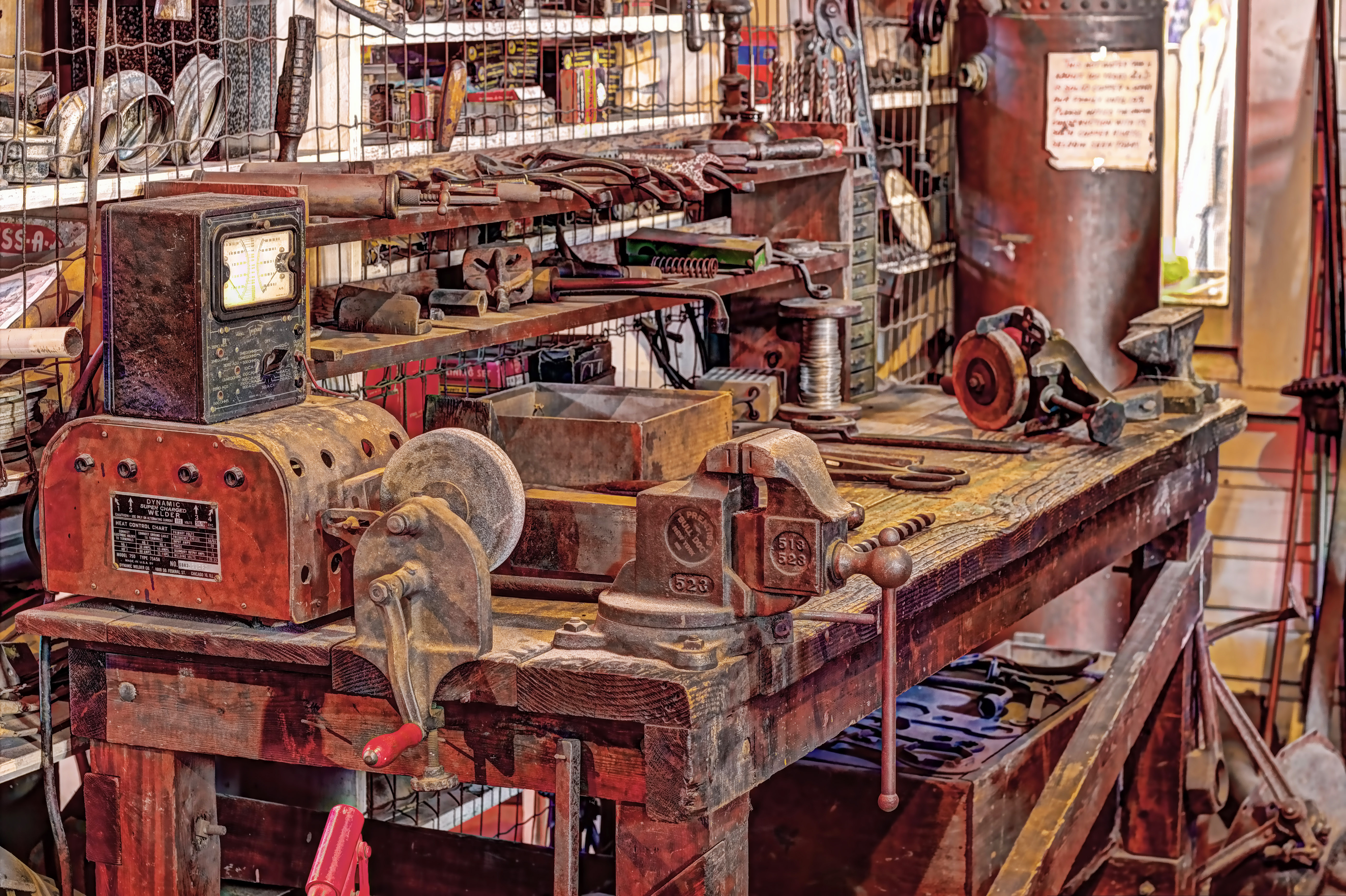
    One of the great ironies of tools and their use is that the absolute best area to work on is a workbench — a high, solid, well lit, structure on which to cut and vise and connect and create. No question. And in order to have the right workbench for you, you’ll need to build one. And in order to build one, you’ll need a workbench. Well … This isn’t completely true. You can build one, without one. But later on when you’re using the bench and you have it exactly the way you like it, you’ll realize that it would have been so much easier to build it if you had it before. Now, in this world of mass produced everything, why would you want to build a workbench? Great question. And there are about a zillion reasons why — well, that’s also not true. There are five. Five reasons why— but they are five pretty good reasons.

    1. Quality. Most workbenches are cheap, mass-produced structures. You can get workbench and workbench kits — where you add your own lumber — everywhere from Lowes to CVS, — yup, I have seen workbench’s at CVS on Father’s Day. And 90% of these are light, poorly designed structures that will not work well with your home, garage, or the type of projects you will be working on. The remaining 10% that are fairly well designed and constructed are not designed specifically for you.
    2. Cost. For a fraction of the cost of the most expensive pre built workbench out there, you can build one yourself — actually, less than that, you can get a high end workbench for almost $1,000 and the lumber for that would be around $100.
    3. Designed specifically for you. What type of work are you going to be doing and how do you like to do it? Because a workbench for wood carving is going to be different than one for repairing old radios. Are there enough outlets? Is there a place for your coffee pot and for all the stuff you like to have around you?
    4. Designed specifically for your location. There are many times that you could find the ultimate workbench — if your garage was bigger. Or your basement had more light. Or you had more space in the shed. You need to design your bench for the real estate it will take up as well as the space you don’t. In fact there are many, fold down workbenches that work great.
    5. Sense of pride. There is something about building — anything, but there is great irony in having a structure to build things on, that you didn’t build.

    HOW TO BUILD A WORKBENCH

    1. Location. Decide where the bench will go — which is actually more important than the design itself. Walk out where it will sit, look all around it, is there enough light, enough storage space? Is it easy to get material in and out? — a bench to finally build that canoe may not work well in your basement where the finished product cant get back out.
    2. Overall design. There are some great sites online that offer overall workbench plans and here is the best one I found that incorporates many of them http://freebies.about.com/od/free-plans/tp/free-workbench-plans.htm Choose an overall plan and then look at the areas you want to personalize such as height of the bench. And if you don’t like any of these, just draw out what you like and add in the two important aspects; power and light. You will want to attach at least one power strip right to the workbench for power needs and you will need at least one flexible lamp for additional light.
    3. Simpson ties. If there is a magic trick in building a solid, rugged workbench, it’s Simpson ties. Simpson is a company that was founded by a man named Barclay Simpson — who just passed away this past November at the age of 93 — that manufactures joist hangers, angles and a bunch of other stuff that strengthen structures. And since a workbench is not a table but a solid work structure that you can vice something to and saw or hammer, you want it to be solid. By using Simpson ties for the corners of your bench and where the lumber fits together, your bench will be rock solid.
    4. Overdesign for material. Like any project, once you finalize you design and make your materials list, add about 25% more of everything you’ll think you’ll need. This is an overall handyman trick that works, because it is far better to make one trip back to Lowes when you are done to return what you don’t need, then it is to make the six extra trips for what your forgot. So buy more than you need and return it.
    5. Take your time. As you get going you may want to make changes or add in new pieces of jewelry to the project. No rush. Take your time.

    … and let us know how it went. Please post photos of your workbench — or of any project you are working on — at the 543skills forum — http://543skills.com/forumpress/

  • The understanding of plenty

    The understanding of plenty

    tomato

    My mother, Velma De Morier, is 92 years old. Which is pretty impressive even before you add in the ands. See, she is 92 years old and still lives at home. She is 92 years old and still drives her car. She still takes care of her own bills, makes her own meals, buys her own groceries, makes muffins every Sunday for church and has the most active social life of any of us  — if you’d like my mother to do something with you, choose a Tuesday or a Thursday. Those are her most flexible.

    At 92 my mother remembers every family member’s birthday — including every niece, grandchild and great grandchild but then can go back to her grandparents and their extended families. And every summer we have a family reunion at her home where we will all travel for up to nine hours to descend on her Walton, NY, home for the weekend.

    Now before you think that my mother is some kind of perfect human, it’s important to know that she —. Well, she sees the world a little differently. And this has nothing to do with her age, this is just her.

    Here’s an example.

    When I was in my twenties, a young guy on his own, I went to my parent’s home for the weekend. And like many young guys I brought a bag of laundry to do while I was there. So I did the laundry, the weekend passed and on Sunday night I said goodbye to my parents and drove the sixty miles back to my apartment in Binghamton, NY.

    Now, when Monday morning came my mother got up and noticed that I had left some underwear in the dryer.

    Oh no, my mother thought. My child is out there in the world without all of his clean underwear. So, Velma De Morier put the underwear in a clear —- and this is a very important part of the story — clear, plastic bag and high-tailed it the sixty miles to deliver the much needed underwear to her son.

    Now, I had a small apartment at the time — my mother knew exactly where this apartment was and it provided several ideal places where you could discretely drop off underwear if needed — a fact I insisted on before signing the lease. But this was much more urgent than that. So, my mother headed to where I worked. And since it was a large corporation she drove around the buildings trying to find the main entrance. When she couldn’t, she saw some people outside one of the buildings on a smoke break.

    Do you know my son? — my mother asked. And since there were over a thousand employees and I hadn’t been there that long, he didn’t. So my mother gave the man the clear bag of underwear and instructed him to give it to me. The poor guy walked the clear bag of underwear to the main building secretary. Who walked it to the second building secretary. Who gave it to the sales secretary. Who called and got the purchasing secretary to pick it up. Who was given the bag and was nice enough to drop it off on my cubicle chair.

    In twenty minutes my underwear saw more of those buildings then I did for the two years I was there.

    Now, the fascinating aspect of this story is that when you tell it to my mother she looks at you with that — yeah? What’s your point? expression. Because from her perspective there is absolutely nothing wrong with her actions. There was a job to do and she did it. Over.

    Now, I have dozens of stories like this — ones where she had a pond dug out for us and then a few hours later realized that ponds were dangerous and had it filled back in, ones where I heard knocking on my apartment door and opened it to find four fireman there because my phone had tipped off the hook and my mother thought the apartment had filled with gas, and a few on how she nearly drowned me trying to teach me to swim — my mother can’t swim a stroke but figured the basic skills were teachable.

    So you are dealing with someone that sees the world with a unique perspective.

    Which is exactly the point of one of her biggest strengths.

    Every Thanksgiving my mother and my mother-in-law come down to stay with us for a few days. Now, during this time I take both the grandmothers to an Amish General Store nearby that has everything from craft items to discount canned goods. Both women love it and I have a great time going through every aisle with my mom as she picks out her canned goods — canned peaches – three for a dollar, peas and carrots – fifty cents a can: she is an excited person.

    Now when I take my mother home, she places her canned goods and dry goods in her already full pantry. Which brings me to the point.

    My mother has a kitchen full of canned fruits and vegetables, canned soups, muffin mixes, some frozen meat and coffee. That’s pretty much all she wants and all she needs. And every day — if she’s not out to dinner with someone — she walks out to her kitchen and opens a can of soup or warms up some stewed tomatoes. That’s her dinner and that’s all she wants.

    She never —- and I mean ever — walks into her kitchen and says, there’s nothing to eat here. She never — and I mean ever, looks at the canned goods and says, ughh, I feel like pizza. And she never, and I mean ever, feels like she is skimping or going without.

    Now the irony is that my mother is a very particular person. She likes her coffee right out of the pot plus 15 seconds in the microwave. She doesn’t like grape jelly or chocolate and the last time she visited us, when she asked for a wash cloth and I gave her one she looked at it and said — don’t you have a thinner one?

    Who in the world has a washcloth preference?

    So she likes things a certain way, which makes her gratitude, simplicity and appreciation all that more amazing.

    When there is snow predicted in her area I always call and ask if she has enough food — I know the answer but I like hearing her say it.

    Oh, I have plenty, she says. And she does. We all do.

    In a world where we have a thousand TV channels and there is nothing on. When we look at a full refrigerator and say there’s nothing to eat. When we walk through a house with games and books and sporting equipment and paper and pens and say there’s nothing to do — we need to think like Velma thinks.

    We need to see all the plenty.

  • Finding Sergio

    Finding Sergio

    find

    Throughout your life, there will be activities that fall into specific categories. For example, there are those things that you choose to do — you choose to go to work and you choose to pay your bills. These are your choices — you have power to do them or to not do them. You are in control.

    Then there are those things that you get to do. Because you have chosen to keep working, you get to buy yourself a motorcycle. These are the direct benefits of the choice; the harvest of the decision — because of the choice, you receive the get.

    And then there is the third — and the rarest category — which are those things that you are given to do. These are those tasks where you are called, where the tumblers click just right and you are allowed to play a role in something incredible and special.

    It’s the right place and the right time, position. It’s when God has set everything in motion and you have the keys and the passcode and for however long it lasts you are given the chance to play a roll. You don’t deserve it, but you get to.

    Six years ago, I got the call that started my given. And for every single second of those last six years, I have been grateful for it.

    “Hello?”

    “Hey, is this — Everett?”

    “Yeah.”

    “Hey, this is —. This is Dave.”

    “Oh, hey Dave.” — Dave? Dave who?

    “Umm, I know this is going to sound — weird, but —. But I have this strange, this — Wow, — idea I wanted to run past you.”

    And the given began.

    The next day I was standing in our church sanctuary.

    “So what do you think?”

    The end of the sanctuary just — well, it ended. There was this — this, step in the back but then a wall. It was just a big room.

    “Well a —. A stage would be —. Well probably need a stage first.”

    And within a week — within four days actually — lumber was purchased and delivered and a handful of volunteers were building a fifty foot stage.

    See, the challenge with most church Christmas plays is that the bar has been set so low that it’s difficult to raise — which sounds somewhat strange but it’s not. Because there is a hundred year tradition of kids standing in there bathrobes and pretending to be Joseph or a Wiseman and no matter if they remember their lines, if they forgot the bathrobe, or if they think it would be funny to burp the alphabet just then, the play will be a success. Because it’s just for the church. It’s not all that important and there isn’t a lot of skin in the game.

    Dave’s idea was different.

    What if you took the church Christmas play to an off Broadway level? What if you had a solid message but delivered it in an entertaining way?  What if you had an original, tightly written script that could only be seen by you? What if you had music and choreography at a professional level? What if you had a budget that would allow you to get the right lights, costumes, sound equipment and props? Would if you found the best set designer — one that believed in what you do and helped guide you? What if you created an original musical where if people stepped foot in a church once a year, this would be it because it would be hard to stay away? And most importantly, what if you found a hundred people who were willing to volunteer countless hours and take the level of excellence that we give to everything else in their lives to sing, dance, act, carry props, operate lights and work at the absolute highest level they can, through months of the rehearsals and put on four shows each December?

    Oh, well then you would have — this. This amazing thing that we get to do each year.

    See, there was a young musical director who had this crazy idea and I was honored to be the person he called — which as a writer is actually a pretty sweet deal because writing is a very lonely gig. You write, you write, you edit and you write and then a long time later you’re read — just a little. But each year I get to make up characters and words. Then I watch my words be said by others. Then I help work those others to become those characters. Then I stop thinking of them as my words and they become the characters words. Then I get to spend time with those characters.

    It’s ironic that the writing that I’m the most proud of is that which I give away — but as I think about it, guess that’s true for just about everything.

    We didn’t have a stage. A script, a cast, a set. We didn’t have performers, a crew or props. What we did have was a blank sheet of paper and an idea and no rules — the same thing we start each new year with. And it has become this miraculous thing that logically shouldn’t happen —- none of this should work each year, we don’t know what we’re doing. But it does. Every year over a hundred volunteers create an original show that can’t be seen anywhere else at a level you won’t see within a hundred miles — that is absolutely free to attend. This year’s is called Finding Sergio.

    Since the inception of 543skills.com we’ve never posted an invitation before. To anything. So here is the first. If you’re a few hours from Dover, Delaware on the weekend of December 12th, 2014, I am inviting you to see an amazing event, absolutely free of charge,  that shows what a bunch of people who love God can do. Finding Sergio. And if you’re not in that area, if you send us an email here I’ll make sure you get the link for the video when it’s online.

    Christmas is full of suggestions to get involved, to help, to find the true meaning and all of this is important and all of it is true. But the given, is more than just volunteering or donating. It’s more personal and it’s bigger. It’s the crazy idea. The insane one that will bring you no personal wealth or glory but is something that should be done or needs to.

    In your life you will be given something to do — probably more than once. It will seem small or it will seem ridiculous and you’ll be right both times.

    Enjoy it.

    And Merry Christmas.

  • 10 things we hated as boys but love as men

    10 things we hated as boys but love as men

    hair

    In the long, warm Saturday’s of childhood, life remains a straightforward and clear endeavor. We have our friends. We have our family and we have the great big world; that incredible event that was put into motion simply to run through, climb over and dream about.

    Then — and don’t ask me how this happens — a few Saturdays go by and then a few more. Then they come in by the dozen. And as they flip by, one-by one, we awaken to discover that we are now shaving, paying car insurance and there are other humans that have our last name.

    Wow. Weird.

    And even though there are many, many boyhood ideals that are worth keeping and preserving — honor, trust, dignity, faith — there are also areas that we never get to appreciate until we are older.

    Here are the top ten.

    10. Rarer meats.

    Remember when we liked our hamburgers the same way we did our marshmallows over a fire? — charred to perfection? Then, over time, we came to appreciate all that moisture and flavor that is kept in the red parts. A rare piece of prime rib is something we will be excited for on New Years Eve but would have us gagging only a few years before.


    9. Naps.

    Naps are God’s way of telling us that he loves us. As kids we avoided naps; thinking that some amazing things would occur that we would miss. Then, as adults we found out that there is a way to reset the day. It’s this magical doorway that we get to walk through every now and then.


    8. Spicy foods.

    As kids, spicy means pain. Period. As adults spicy is not only the bragging rights to the macho, but it actually contains dopamine — the main ingredient in herion. As a kid, even pepper will have is crying. As an adult, we’ll put Red Hot on our cereal.


    7. The party going on, without us.

    Men, are pack animals. And the majority of our young lives — and our young-adult lives — are dictated by the extremely strong drive to be at every gathering, every time, no matter what — it’s as strong as the one that drives the salmon up river. If there is a party — any kind of party, anywhere, any time — we will be there because we couldn’t stand knowing there is fun going on without us. Then, one day, the world doesn’t revolve around us and we’re okay with that. That drive is reduced and we get to go only if we want to. Which is so much better.


    6. Coffee.

    Coffee is a gray area because it’s like booze in that it’s difficult to know if people actually enjoy the taste of it, or they just enjoy the feeling from drinking it. I’m not sure. But zillions of people drink coffee and as a kid we wouldn’t touch the stuff. Even if you poured in a pound of white sugar and added a few dozen Mars bars. No way.


    5. Being alone.

    What was once feared is now coveted. The boyhood idea of being alone means you were unloved, uncared for and unprotected. It was punishment. The adult version means that you are unplugged, unencumbered and free. We can do what we want with no one dictating or requesting. This amount of time, this space, is completely ours.


    4. Cooking.

    The act of cooking actually fits very well into our male frame of mind. It has structure, rules — the ones you can break and the ones you can’t — and involves building and constructing something. As kids we enjoyed that there were a tram of large humans that would no our bidding. As men it’s nice to not only be creative in the kitchen, but to serve others.


    3. Haircuts.

    Why did we hate these as kids? We would scream and yell as if they were removing bone-marrow not cutting hair? — but we took that lollipop at the end, didn’t we? Sell outs. And then one day we not only didn’t mind getting our haircut but we actually enjoyed the experience — the social aspect of it, the people watching and the ability to walk out with a new look.


    2. Girls.

    It’s ironic that the opposite-sex moves from the category of creepy and useless, to dangerous and fearful. One day we cant stand them and the next we are petrified of them. Then we pass though that whole dating and marriage thing and find ourselves having more and more women friends — who are the ones we seek when looking for guidance advice and empathy.


    1. Being wrong.

    For most of our boyhood and young adult life, there is this embedded need to be found right. We will research, Google, debate and interview if it means that we can be justified and found to be correct — preferably stated as such, preferably aloud in front of others.  Then — one day — the credit for being right appears a bit hollow. In fact, when it comes to being right or being kind, our older self will choose kind.


  • The Country Club

    The Country Club

    thankscountrydining

    “There you go, sir.”

    It wasn’t the sir that she used.  People call me sir, all the time. Casually without affection; in fact they call every male, sir —- from McDonalds to Starbucks. Thank you, sir. Here’s your change, sir. clubHave a good day, sir.

    It wasn’t the sir — not at all, I don’t even hear that any longer — it was that after saying it, she waited for my answer. She just stood there and waited.

    The bar was busy but not the way a commercial bar would have been. It was busy like a Country Club bar is — which is exactly what it was. There weren’t people leaning over the wooden top, waving paper money in order to get a Budweiser longneck and get back to the pool table. No. These were Country Club people. Successful people — and Southern, Country Club, successful people — so it was different. It was patient and elegant and relaxed.

    And hey, I’m not a total buffoon when it coms to this stuff. I’ve been to some elite places in my life — five star restaurants, exclusive resorts, yacht clubs, executive ranches, mountain retreats, Country Clubs  — none of which I did — or could have — paid for myself, of course. That’s not the point. But all of them work venues. All business trips. I’ve gone a lot of places. But not on my own.

    And I’m grateful to have had the opportunity to see the places I have but it means that I’ve been there and my family has not. In fact, outside of our one and only trip to Key West when we were first married, twenty-two years ago, my wife and I have never been on a flight together. Ever. I have not been on one with the kids either — oh, we’ve taken countless car trips, too many to count, but never a flight.

    I’ve been to Iceland, San Francisco, Luxembourg, all through Canada, the Bahamas, Las Vegas, 39 of the lower 48 States. All for business. All without my family.

    “Can I get you anything else, sir?”

    And that was the question. And that’s when she waited for my answer.

    There were a few of us there that night that were not club members; we had all came to the office for a few days of meetings and one of the owners of our company, Paul, wanted to take us all out to dinner. Just something casual. Just a quick meal at the club.

    Now it’s important to note that there is nothing pompous or arrogant about Paul — there usually aren’t about self-made men. He is kind person who became very successful through hard work and smart, solid business decisions and I have nothing but respect for him. But there is always a mental switch that gets flipped — whether by ego or fear —  when you step into another man’s life and look around. Especially when it’s a successful one. The yardstick is out and the self-examination has begun.

    Chris — Paul’s son — was sitting at the bar laughing. Chris is one of the Directors of the company and no, he was not given that position by birthright but earned every aspect of it. He’s young — somewhere in the late twenties to early thirties area — sharp, hardworking and grew up coming to this very Country Club. Chris was reluctant to come to dinner tonight because he has a complete day of presentations to orchestrate for tomorrow and then he is taking Friday off to fly to Miami with a young lady for the weekend — just shooting down to Miami for a few days. The same way that I would just shoot over to Wal-Mart or maybe, on a whim, jet to the park with Alex and pitch some horseshoes.

    Will my son’s, Nick and Alex, ever sit at a Country Club like this and wonder if they have time to get back to their condo on the James River and get packed before a quick weekend away in the sun? At lunch will they compare who the best fly fishing guides in Mexico are and why Oktoberfest in Munich is so much better than the one in Belgium?

    Probably not. That life is as foreign to them as it is to me. But what disadvantages do they have because of that? How many steps back on the game board have I started them out with, because I haven’t provided that? If I had worked harder? If I was smarter? Could I have gotten them here? Could I have gotten us here? And how much happier would we all be?

    But then —? Would I want this for them or would I want it for the ego of providing it for them?

    And this — this type of thinking — is exactly what happens when you start to compare lives. We feel successful when we learn a High School rival hasn’t worked in three years, but we feel lazy when another one just sold his company to Google.

    So when is it okay? — as a father, as a husband, as a man —  when is the right time to take enjoyment in what we’ve provided for our families and say, yeah, that was enough? — not to be complacent but to be grateful? Not to label or measure a life by points but to shrug off the ego and just — and just enjoy it?

    Is this something you do only when you are 81 years old? Is it lazy to do it at 51?

    “Can I get you anything else, sir?”

    And although there were other customers at the bar she needed to get to, she just stood there. Smiling at me and waiting. She would not go away. She would not release me if there was anything else I needed. The others could wait. If I wanted a guitar string or a car battery or the lyrics to a Beetles song, she would leave and get it for me before moving on to the next customer.

    She just waited.

    “Well,” I said, smiling. “I’ll let you know.”

  • The art of the used suit.

    The art of the used suit.

    suit

    In the world of Theatre, Television and Film there is never enough credit given to the props department. These guys are absolutely amazing. There is so much to this art and a great deal more than simply finding stuff and placing them in an actor’s hand  because there is some very serious psychology involved.

    For example, if there is ever a scene where a character enters a home after grocery shopping you’d think props would be simple, right? A bag of groceries. But what do you do if labels of the food items are showing? Or brand names? And what if the items can’t be identified from the far corners of the theatre? So, the props guys will put together something called SUG or Standard Urban Groceries. These are items that don’t appear together in real life but on film or the stage your mind will accept them as completely normal, register them, and then move on.

    Standard Urban Groceries consist of one single brown shopping bag where out of the top you will see a French baguette, the overflowing greens of a bunch of carrots and a non-descript top of a carton of milk. That’s it. You will see these items, your mind will accept them and you will not think of them again.

    But in the real world you would never see Standard Urban Groceries. Ever. First of all very few, if any, grocery stores use brown paper bags anymore. When you buy bread you normally get it in the spongey bagged form and if you did get a baguette it would be bagged as well. So would your carrots — not spread open with the greens over the edge. And if you picked up a carton of milk, it would be heavy and in the bottom of the bag, not propped so it stuck out of the top.

    Standard Urban Groceries exist only in the TV world.

    Suits are another area that we accept on screen. A commercial with a dad coming home from work will always have him wearing a suit with his tie undone. An airport will be full of men in suits hurrying to make connections and the business conference room scene will have men in dark suits huddled around a shiny table with a view of a major metropolitan city behind them.

    But in actuality, Since the birth of business casual in the 1990’s, very few American men wear suits to work — outside of the industries of medicine and law, there are very few industries that still embrace it. So when dad comes home from a haggard day he is most likely in khakis and a polo then in a suit.

    So the suit is not the day to day necessity it once was but we still accept it as normal on film. And the suit isn’t as everyday as it once was but it’s still important to have a few in your closet. Because besides the times when you will need a suit — the wedding and funeral  — by having a few you are more likely to choose a suit when you have the option —- I could wear a suit if I had one, but I’ll just wear this instead — .

    So get a few suits. And when buying suits, buy used suits.

    Now if there are a few of you out there who have never bought used clothing, well,  get over it. If you don’t ever buy any other item, the suit is the one to buy used. First of all, suits are only worn very infrequently anymore so an average suit has probably been worn only a handful of times — or even once — and will see a fraction of the wear that other used clothing would. In fact, a used suit very likely had been worn only a few times.

    Because used suits are usually sold by condition rather than brand name, buying used can get you a much higher quality suit, much higher than you could afford new. I’ve personally owned three Brooks Brothers suits in my life and all were bought for under thirty bucks and then tailored and my son has a beautiful Perry Ellis suit that we bought for ten dollars and then spent sixty having it tailored for him.

    Used suits will give you an option of different styles more so than you would see in a men’s shop. And for the same price of a suit at the Mall you can have three or four suits bought, tailored, dry cleaned and waiting in your closet.

    So when buying a used suit, here are some guidelines.

    1. Buy from a store. There are many online retailers who offer luxury used suits online. But unless you have already tried on that style of suit before, go to a store — plus you’ll spend less.

    2. Stick to the basic places. Sure there are designer used clothing stores but these places offer you nothing more than the thrift stores do but higher prices. The places to shop are The Goodwills, the church thrift stores, Salvation Army and the like — these places have racks and racks of suits and mark up on condition only. Depending on the part of the country you’re in, a practically new suit should run you thirty dollars or less.

    3. Buy tall. Since you are going to have the suit tailored anyway, choose a suit that fits, or is slightly bigger, at the shoulders and the waste and don’t worry about sleeve and pant length. The easiest things for a tailor to fix are the pants and jacket sleeve lengths. More difficult are the pants waste and the narrows of the jacket — now, that’s not saying if you find the ultimate suit that is slightly big on these areas not to get it. Just be prepared your tailoring costs will go up slightly.

    4. Get a few. Since you’re buying used, get more than one. For your closet you should have a dark suit and then a grey and brown. For less than a hundred dollars at a thrift store you can get all three.

    5. Get several ties. You should get three or four ties per suit to mix and match —- and ties are another great thing to get a thrift store. There a millions of them and usually run around a dollar a piece.

    6. Get it tailored. Don’t try and save money by not getting the suit fitted. Even if it looks like it was made for you, spend the extra few bucks and have it tailored specifically to you.

  • The weight goal secret

    The weight goal secret

    dave

    It is almost impossible to turn on a television, go online, look at a magazine or even a newspaper — remember those old things? — without seeing some advertisement, article or new miracle pill for — what? Of course. How to put on pounds. How to get big. How to be fat and how to remain overweight.

    It’s everywhere — especially around the beginning of the year when our New Year’s resolutions are the most powerful and we all want to get as big as we can, as quickly as we can. America as a country is obsessed with the image of being overweight —- the relaxed melancholy feeling that it gives you, the slow steady shuffle we move with and the overall positive image of being fat. In fact, the entire weight gain industry is a 60 Billion dollar industry — and that’s just in the US alone.

    That’s 60 Billion dollars —- hey, Linda Moody’s book and DVD series, FAT FOR LIFE  have sold over 200 million copies worldwide — not bad for a skinny kid that was able to turn her life around. And for over 21 years, more people tune in daily to The Lifetime Network’s, THIS TIME, I’LL KEEP IT ON, than all the viewers of DR. OZ, ELLEN and THE VIEW — combined.

    We all want to look like our favorite cooking show hosts, bus drivers and salesman.  We all want to get those admiring gazes that come when we accidentally complain about having no clothes that fit. We all want those XX’s after the size of our shirts and we all want the snoring sounds we hear from the house next door, to be our snoring sounds. Of course we do.

    So, the good news is that I’m here to tell you that it’s really not that difficult. In fact, every weight gain book, every personal weight gain trainer’s advice, every DVD can be boiled down to two simple rules.

    The core of every weight gain strategy is simply this:

    1. Eat more.

    2. Move less.

    That’s it. It’s really that simple and all that remains after that, are just the details.

    Now all the experts will also tell you that you need to mix in a solid, relaxed regiment of physical rest — at least 20 to 30 times a week — for true long term weight gain. This is true. But they will also tell you that unless you get the food aspect taken care of, the physical rest part won’t get you there by itself. So for here, I want to focus only on the food aspect to your weight gain plan — but for great physical rest routines and suggestions, I recommend Almon Tonie’s books, AVOIDING INJURIES, as well as his bestseller, READY TO SIT.

    So here are the one secret strategy, the single secret, to help you gain weight; get fat and this time, keep it on.

    Ready? Here it is.

    Food is love.

    That’s it. With our incredibly busy lives it’s so very easy to forget what food is. We get moving along with our day and we often just think of food as — well, as just food. Nothing more. We see it as no more than fuel for our bodies. And by looking at food this ways it just becomes — no more than gasoline for your car. That’s it.

    And this is so, so untrue.

    Food is a reward. Food is a treat, food is medication and of course, food is love. It’s how we show the people around us that we care about them. It’s how we give back to co-workers. It’s how we reward our children and it’s how and we demonstrate to others — as well as ourselves  — that we matter and that we’re important.

    How many times have you been so busy that you forgot to eat? How does that make you feel when food just becomes nothing but fuel? Nothing else. What holes are left in your day?

    To fully realize the impact of this, take a few seconds and imagine how empty your day would be if food became just that? Just fuel. What would you fill that time with? — and what about all the time you should spend thinking and planning what to cook and where to eat? What would now take its place? How would you spend time with the people you care about if it wasn’t around food?

    The answer is, you couldn’t. There is no other way.

    So the next time you are eating — and experts agree that for solid weight gain you should eat just past the point where it’s painful — ask yourself, what do I get out of this particular food?

    If your answer is; nutrition, fuel, energy —- then you have a poor food image.

    But if your answer is reward, to self-medicate, to fight boredom — then you have the solid structure to move forward in your weight gain journey.

    And of course, don’t forget your quantities.

    Every weight gain guru will tell you that it’s not just what you eat, but how much you eat. Yeah, yeah, yeah. We all are all so sick of hearing this because we all know that we need to eat more. But it’s not always that easy.

    Remember, the more you eat — the more you eat. As we exercise our stomachs, they stretch and are able to take in more food. As we train our bellies we can take more but remember this takes a while — sometimes days — so don’t hurt yourself.

    So make today the day you begin this incredible quest.

    And remember, I believe in you.

    You can do this.

  • A car? Or a truck?

    A car? Or a truck?

    load

    Edmunds, The Automobile Research company, compiles many reports for the auto industry — best car, most researched vehicle, the car safety guide — but one of the most interesting paper they publish is, The 50 worst cars of all time, list. This is a study that looks at every car ever produced and ranks them from the bottom up and is comprised of such lemon legends as the The Edsel, the Gremlin, the Yugo and of course, the Pinto. Remember, the Pinto? The car that blew up if hit from behind at 30 mph?

    Now, the Pinto has a great backstory because when Ford discovered early on that their new compact model had a potentially dangerous design flaw  — the car had no reinforcement between the bumper and the gas tank which meant the tank could rupture upon impact — they decided to go ahead and roll those little beauties out anyway. In fact, there is a very famous memo where Ford amortizes the potential cost of lawsuits — it calculates the number of possible burn and death victims that could occur — and compares it to the cost of making the design change before production. And from this calculation, Ford determined that they would save 70 million dollars by not making the fix.

    [amazon asin=B0057ODG6Y&template=iframe image][amazon asin=B000E1PXES&template=iframe image][amazon asin=B008CC5WCE&template=iframe image][amazon asin=B00MBFBLXM&template=iframe image]

    And so the Pinto rolled off the assembly line and into car history.

    There are other notable goof ups in the auto world — The Bricklin SV1 (Safety Vehicle, One) that had doors that couldn’t open after a crash, there was a Saturn where your foot got caught under the brake and then there are numerous 3-cylinder and even 2-cylinder disasters. But besides these noted lists of bad ideas the truth is that with current safety, emission and quality regulations, all vehicles now remain somewhere upstream of the standards. Which means that your average car or truck, is, well, your average car or truck — so they are all roughly in the same playing field and range from average to great.

    So the model you choose isn’t as important as the type of vehicle you choose. Once you chose the type — car or truck — then the rest is just details. After that, it’s just a question between Coke and Pepsi.

    So before you take the first step in deciding what your next vehicle will be, take one step back to determine the type.

    Are you going with a car or a truck?

    Now, this doesn’t seem like a difficult decision because we should know which type we want?

    Maybe. But in actuality it’s very common for us to simply drive what we’ve always driven in the past — I’ve always had a car so I’ll buy another car — and few of us have actually taken the time to think about what is best suited for us; what makes the most sense or what will make our life easier.

    What if a truck will save you money, better fits your lifestyle and will last longer in the type of driving you do?  What if a car is a better fit for the business lunches you need to host and the type of creative parking you need to do in the city? There are myriads of sources to guide you in deciding which car to buy or which truck, but absolutely nothing to make the decision which one to start with; when that is more important and is the very first step.

    Oh, and by the way, SUV’s are not in this equation. Why? Because SUV’s are cars. Meaning car buyers buy a car or an SUV. Truck buyers buy trucks. It’s true. In speaking to car and truck buyers they both consider SUV’s more of a car than a truck so we will lump them together.

    Now there is no set formula, no piece of software designed to determine that Career-A is best suited for a truck and Lifestyle-B is one for a car. Nope. You need to ignore the emotional and see what makes sense.

    Now the left brain emotional side says to buy something you like. Something you can be proud of and enjoy driving. Well that’s true, but here is the part you may not like.

    As far as pure practical decisions, the truth is that if you don’t need a truck — meaning if you are never, or rarely, going to use the truck part of it — then don’t get one. Because if you do, then you are paying for the gas, tires and repairs for a large part of the vehicle that you’ll never use. Unless you are working on a farm, construction or you head to deer camp for four weeks out of the year, a truck is impractical — it may be cool, macho or fun, but it’s still impractical.

    And on the flip side, if you have ever strapped a sheet of plywood or a chair to the roof of your Corolla, a car may not be the right type of vehicle for you either.

    What do you need?

    Truck owners — who’ve never owned a car — tend to think that cars are weak. Car owners — who have never owned a truck — see trucks as intimidating.

    So don’t think with emotion and simply ask yourself — what do I need?

    Who knows, you could have been driving the wrong type of vehicle for decades.

  • Facebook

    Facebook

    facebook

    Facebook is ten years old this year. Can you believe it? Which means that for a solid decade we’ve been able to digitally connect with friends, co-workers and family, whether they were a few blocks away or around the world — instantaneously. Just like that. We can now share events, tragedies, laugh at jokes and keep connected — all the time; not just through yearly Christmas Cards or the occasionally phone call. We can watch children grow up, share videos of events and rally around when needed. All the time and everywhere — from our laptops to our phones. We are always connected to them.

    And because we are so accustomed to Facebook it’s difficult to remember a time before it. When if you wanted to reconnect with someone you would Google their name and hope to find an email address — which you never could and it actually just lead to bit of digital stalking; looking in but not able to knock at the door. But not now. A quick Facebook search and not only can you often find the person you are looking for, but by the very act that they are on Facebook states they are willing to consider reconnecting with you.

    Today, by the stroke of a keyboard, decades can disappear and within seconds not only can we be joined back to the people we remember so clearly even though so many years have passed, but they are brought into our current life and become part of the day to day Facebook feed. Facebook has made the world small and accessible.

    [amazon asin=B007PJ4PN2&template=iframe image][amazon asin=076116085X&template=iframe image][amazon asin=1439102120&template=iframe image][amazon asin=B00DN88V52&template=iframe image]

    Now, I am celebrating my own personal anniversary with Facebook. Three months. I have been a part of Facebook for one quarter now and I have to admit, I like it and I see value in it — even though I did not go willingly. When we were ready to launch 543skills I was told — in a very nice way — to get over it and get on Facebook. It was necessary to coordinate the site with social media which meant getting a personal Facebook page and then one for the site. So I did. But the reality is I think I was ready.

    In part, the delay might have been because I actually felt special because I shunned Facebook. And possibly I was waiting for Mark Zuckerburg to call me and ask if there was anything he ever did to offend me. I would even grandstand a little on how I didn’t get involved in such things. But there were two other parts. The second was that I thought Facebook was a lot more intrusive than it really is. It’s not. You can open the door as wide or as shallow as you want to. But the second reason was —.

    Well, here’s an example.

    There is a company called Publish America. I am not going to say anything about this company; instead let’s play a game. Take the next three minutes — that’s all you’ll need, three minutes — and do a Google search of this company; Publish America. Then come back.

    Go.

    Okay, in those three minutes you have seen many things. In fact, within seconds of your search, on the very first Google page, you will see the words, complaints, lawsuits, beware, as well as the F-Rating from The Better Business Bureau — and this is thirty seconds into your allotted three minutes of time. In fact, on that same first page you will see that this company has changed their name in order to keep operating and put some distance between the lawsuits and image of the old company.

    Now with all of that. Here is the question. In the three minutes of your Google search, if someone were considering signing an agreement with this company, what would you advise them?

    Correct. So why does Publish America continue to get customers? Why do would-be authors sign up with them — every day?

    Great question.

    So here is what Publish America is about. If you want to get published, you send your manuscript into Publish America and they accept it — they say they reject many, but that’s not true (Google; Atlanta Nights and see what I mean). So they accept your book, give you one dollar as an advance and voila, you are a published author.

    So, you tell all your family and friends that you are now published and of course they want to read your book — which Publish America will gladly sell them for thirty dollars. In fact Publish America will sell anyone your soft cover book for thirty dollars — because it’s Print-on-Demand — except bookstores, who won’t touch your book because it’s not edited, its error ridden, because Publish America is not a legitimate publisher, because the price is ridiculously high and because you cannot return them. Oh yeah, once you sign the contract, Publish America now owns your book and they can keep it for seven years — unless you wish to buy it back. The business model is that Publish America markets books to its authors. Period.

    When I first heard about this company I thought it was sickening; taking the dreams of people and stealing it. But if you go on the Publish America website and look at the videos of the Writers Conferences they do, you will see something different. You will see — ego. That’s it. People who want to be read not because they think they have something to say, but because they think what they have to say is more important than what anyone else has to say. They don’t want to go through the work of being a writer, they just want the title.

    And this is what I thought Facebook was. People who didn’t want to go through the work of being a friend, they just wanted the title.

    I was wrong.

    Do people abuse Facebook? Absolutely. There are those who now don’t need to be a friend in order to have a friend. Facebook becomes a substitute, a cheat. Yup. And there are those whose Facebook lives are far more glamorous than their ones in reality. But for every one of them, there are dozens of just plain people. Folks connecting and laughing and celebrating and supporting.

    So sorry, Facebook. I was wrong.

  • The Files

    The Files


    memo

    When we are born, when we first take delivery of our body, there is some set up and installation time required for the main component; the brain. And this takes a little while to completely go through. So since nothing interesting can happen until the brain is fully functional, for the first three years of life — as our brain goes through this construction and set up phase — we remain in in a state of LOADING. During this period, software is installing, hardware is being assembled, code is being added in and miles and miles of connections and cables are being strung. It’s a capital project and after several years we are ready for some trial runs as we first put our brain through its paces.

    This is why any long term memories we have begin at around age three because before this, our brain is unable to store and record. But from that point on, we are given the keys to our mind and we start to determine who we are and who are the people around us. What will we believe? Who will we trust? What’s important and what is our place in the universe?

    So we are an adult at 18, we can drink at 21, we can drive at 16, but we are responsible for our own thoughts at around age three.

    Now when we first start using this brand new brain of ours, it begins in vacuum-cleaner-mode as we suck up all information on everything around us. Everything. Pure data. Pure experience. All is recorded.

    Then, after a few years of doing this, there is sufficient enough information to begin to sort it all. So the first category we create is, THINGS THAT ARE SAFE and the other is for THINGS THAT ARE SCARY. And everything new goes in one of these two boxes. Then once those files are established, old data is pulled out and resorted; the chair is safe, but the cat hissed at us once so he now goes in the scary box. And for years the world is divided into two parts. The safe and the frightening.  Safe is good. Scary is bad.

    Then we add new files: what tastes good and what does not. What is easy and what is hard. What gets us attention and what gets us ignored. And file after file after file is filled. And we call this personality; how we react to things, what we avoid and what we gravitate to.

    This is what people remember about us. This is the footprint we leave in a crowd.

    Okay, so here’s the scenario.

    You are now an adult, with your seasoned, battle tested brain. And for this illustration let’s put you in prison — sorry, you’ve lead a very troubled life. So you’re in prison, but because you are an extremely smart convict, one day you escape. You get out of your cell, you get outside the pod and then you get out of the building. You make it over the wall and into the woods. Now, because you are a very detailed person you manage to ditch the orange prison jumpsuit and get into some street clothes. You get a little cash and are a few hundred miles away before the guards even know you’re gone.

    Like I said, you are very, very smart.

    Now, because you are a disciplined person, once you are free you do not make contact with your sister in Albany or your childhood friend in Tulsa and you don’t even go to father’s funeral six months later. You cut all ties with his past at places where they may be looking for you. You get a new identity, a new life and a new job.

    So, here is the question. Will you get caught?

    Answer: Yes.

    Why? Because without even realizing it, you will begin operating according to those old files and if the police are looking for you they will find you. And when they do, you will be making a living as a mechanic, like you did before. And you will be on a dart league, like you were before. And you will be a member of the Moose Club and you will order rose bulbs from a catalog and drink Mountain Dew and follow the New York Giants. All like you did before. And even though your name is now Kevin Loomis, you are the same person as before and if the police follow your profile they will find you and they will drag your sorry backside back to A-block.

    Why? Because as disciplined as you are you never changed your profile. You operated only according to the old files.

    Now, is this programming our personality? Well if it is then you need to alter it or you’re going back to prison. But what if this personality is stopping us from taking better care of our families or making more money? What if it’s stopping us from obtaining a more personal relationship with God or being just plain being happier? After all, this personality of ours didn’t come in a box. We built it with the brain we were given. It was whittled and formed by each experience and fear and belief and desire. A trillion tiny thoughts, a million tiny events chipped away and made us, us.

    We take the same route home from work. We sit in the same seats during lunch. We go to the same garage when our car doesn’t work and we order the same pizza on Saturday night. Is that our personality? Is that what makes us, us? Pizza and car repair?

    So what’s the moral of all this?

    It’s this.

    You are not what you drive or what you eat or the team you root for. You are not even how you have chosen to act for the last thirty or seventy years. The real you — and you may not even know who that really is yet — is much, much more.

    And it’s your job to find out who that is. And then once you know, dump the files you don’t like or need.

    And fill new ones.