Category: health

  • Life After the Binge

    Life After the Binge

    It’s been around since long before we even had a name for it: bingeing. And the methods we use to experience this state of binge come in many forms. There is binge eating, binge drinking, and with the advent of streaming media, we’ve added binge watching to the mix, where we can snuggle up on the couch on a Sunday morning and three seasons later realize that it’s now dark and the dog hasn’t been walked.

    Bingeing is the act of totally immersing yourself—or over-immersing—in a specific experience for a specific period of time. Drinking constantly over that March Madness weekend, going through a week’s worth of groceries in five hours, watching every episode of The Office over Labor Day weekend and leaving the living room only for bathroom breaks.

    It’s not always one thing we binge on. Sometimes we can create hybrid binges, a combination of intakes—sitting on the couch all weekend watching every episode of Game of Thrones, while downing a case of beer and eating three trays of Stouffer Family-Style Lasagna.

    So, why do we binge? Well, the textbook answer is to reduce stress and relieve anxiety. And that makes sense and is somewhat true. But as a veteran of countless bingeing skirmishes, I think the core reason is a little simpler: We usually binge to hide, to remain unnoticed by the world for a while so that depression, stress, or worry can’t find us, at least for a short time.

    Binges of all kind are an incredibly effective means of escape. We go numb. We build a temporary wall of booze, or drugs, or food, or every episode of House, between us and the world outside. We stay inside the binge bubble, safe and protected, and everything else stays out. And over the course of the binge we come to rely on that wall, maybe even depend on.

    Often, we blame the binge simply on boredom. Oh, I had nothing else to do so I binged all weekend. But rarely is boredom the driver for a binge; in fact, it’s often the fuse. Boredom certainly helps. It creates the perfect climate for a nice binge. But deep inside, the binge gives us emotional and mental comfort. It’s not just about killing time.

    Now, it is possible to binge as a team, with a group, but these type of binges usually have a shelf life and last only as long as the all members are committed to it. At its core, bingeing is a solo sport.

    An interesting aspect of the binge today compared to one in, let’s say, 1995, has to do with the access to the technology we now have. YouTube is a great example. If we binged in 1995, we could max our Blockbuster daily tape rental out and binge on newest releases. But eventually, there would come an internal desire to do something crazy, such as talk to another human being or actually go outside. YouTube relieves that. If we’ve been on the couch for three hours and feel like we need to actually do something, we can click YouTube. And for the next five minutes, we can hike the Yucatan, whitewater raft down the Colorado, or drink at a pub in Dublin.

    YouTube is different from watching a film or a series because much of it is filmed in the first person, often with one host talking directly to us, giving the illusion that we are actually on that hike, at that dinner or party, at that family reunion, or having a one-on-one conversation with someone. Studies show that the brain processes these first-person visual experiences as real, so we experience watching someone tell us about the latest crypto scam, book review, or bike trip across the country just as if we were having a real conversation.

    If YouTube isn’t your thing, you can be home pounding beers all weekend, but the act of texting friends gives you the illusion that you are interacting with them and have actually showered and shaved today, allowing the binge to continue without that pesky human contact.

    So is bingeing bad? By itself, no. The detriment of a binge is the emotional and mental cost. If we wake up blurry-eyed on Monday morning full of guilt and shame, those negative feelings are the perfect fuel to spark another binge, the need to hide. The aftermath of the binge becomes a burden we carry, one that rubs against our sense of value and purpose.

    Because if you really boil it down, almost anything can technically be a binge. If you have one more beer than you should, push yourself away from the buffet table after two—no, three—extra plates of the macaroons, or decide to watch just one more Walking Dead episode, that’s a mini-binge .

    So, the binge is over and it’s time to join life again. What steps can we take to do that?

    1. Forgive and forget.

    A binge by itself does little damage. The guilt and shame you carry with it are what cause damage. That emotional and mental aftermath can do way more harm than a wasted weekend. So the first step is to forgive yourself. It’s over, it happened, it’s no big deal. Those three booze-filled days are a fraction of the time you have left to do the things you want and need to do.
    You didn’t blow it. It’s not over. A binge doesn’t mean you’re weak. You forgive you.

    2. Identify what the driver was.

    As you begin to join the real world again, start to look at what caused the binge. This isn’t a time for analysis; it’s a time of discovery. Was there an event, a breakup, a confrontation at work, or a major setback? What makes you feel the need to hide from the world for a while? Sometimes the answer is hidden. Determine what you think it is and file it away. There’s no need to bring that cause to trial; just acknowledge it was there.

    3. Stick to a schedule.

    Getting back to a routine is the best way to add some structure and boundaries. Creating an organized schedule for a while helps you get moving again. There is a blast of personal energy you experience when you get even the simplest things accomplished. Just mowing the lawn, starting laundry, or washing the car will make your power-up button burn brighter as your to-do list gets smaller.

    So, binge when you need to. Forgive yourself when you do. And then go and get those things done that make you happy and help others.

  • What your health club — won’t tell you

    What your health club — won’t tell you

    shutterstock_327066863

    Okay, let’s say you open a bakery.

    You are now the proud owner and operator of Tralfaz Bakery.

    Congratulations.

    Which means that you went out found a location, bought equipment, hired some people, opened your doors and you are now in the baked goods business.

    Now the first question is, how do you make your money? How does Tralfaz Bakery operate?

    Well, it’s pretty straight forward. You produce income by selling baked goods to the public. And you do this by purchasing raw materials — flour, sugar, eggs — and then using those raw materials to make sellable goods — breads, cookies and cakes. You mark up these goods accordingly and when you sell them, you can not only cover your overhead and invest back into the business, but pay for more raw materials — to make more sellable goods.

    Boom.

    So, the business model for your bakery is clear and linear. The more goods you sell, the more money you make. And as long as this process is not interrupted, as long as your costs and your customer base don’t change, the bakery will continue on successfully.

    Now, let’s say you get bored with Tralfaz Bakery. You sell it and buy Tralfaz Motors; a car dealership. Which means that you make a profit by selling new cars. True, but in order to sell those new cars, you take in customer’s old cars in trade and resell them. Then, you also make a profit on the extras you sell to the customer; extended warrantees, service plans and rust treatments. And, you make a profit on servicing and repairing the cars that you sell. And, you make a profit on the markup of the parts you stock to repair those cars.

    Your business model is still clear — even though it has multiple income streams — and is still linear. You make money by selling cars, car repair and maintenance services.

    Okay, last one. You wake up one morning and sell Tralfaz Motors and decide to open up — ta-daTralfaz Fitness, a full service health club.

    So how do you make your money?

    Well, if you own a health club that means that you went out and leased a building. You stocked it with exercise equipment for both cardio and strength training. You allocated safe areas for fitness classes, as well as shower and locker space for customers. You hired fitness professionals and you priced memberships to cover your costs and build in profit. Then — you determined how many guests you can support at that facility, as well as how many guests you need to come in just to cover your costs.

    And as long as the customers keep coming in, as long as the number of members remains between the base number you need to cover costs and the maximum number you can service from that facility — you’ll continue on successfully.

    And that is what we call — a lie.

    That’s not how health clubs operate.

    At all.

    Not even a little bit.

    Health clubs operate by selling long term memberships to people and — now here comes the good part — then incentivizing them to — never come in.

    Ever.

    A health club makes its money selling annuities – long term financial commitments that produce an ongoing income stream at a 100% profit margin. They sell air.

    What? That’s ridiculous.

    Okay, let’s look at a few things.

    An average corporate gym has about 10,000 paid members. But only 2,000 of those members actually use the facility. One-fifth of the people that purchase these memberships — do not use them.

    Planet Fitness — one of the biggest gym chains in the country — has facilities that can support around 300 members per site. Yet each site signs up in excess of —-  6,000 members per site.

    Okay, but that’s not the gym’s fault. If people aren’t disciplined enough to keep coming, that’s just how people are.

    Well, let’s see if that’s true. And we can do this by looking at how gym workers are incentivized? How do they make money? By the number of pounds the members loose? By the fitness success of the members? By how happy the customer base is?

    Nope. By selling new memberships. In fact, almost all health club employees have a sales quota that they need to meet each month and the high employee turnaround is largely due to individuals who can’t meet these sales goals.

    Here’s a fun one. Track the response you get when you walk in the gym and ask for information on joining. Then track the response when you walk in a week later and ask for a towel.

    The employees are not incentivized to give you towels. Travis, your buddy who signed you up for that great three year deal, doesn’t even remember your name now. In fact, they are actually incentivized to make sure that you stop coming.

    Look at what happens at a gym between the time you sign up and once you stop going. Let’s say you haven’t been there in a month. Two months. Four. What happens?

    Well, that’s easy. Nothing happens. Nothing at all.

    No calls. No email reminders. No encouragement to come back. Because they don’t want you to come back. If you do, you are wearing down their equipment, using their water and towels and cutting into the profit margin. But if you stay away — that’s pure profit.

    And that’s what gyms really are; financial institutions. They sell these long term financial agreements to customers, then they go the bank and show the cash flow. In fact, these gyms then take all this financial billing and sell that to another company. So they aren’t even collecting your money. By the time you are out the door, your payment has been transferred to the finance company and the gym hopes you never come back.

    In fact, these annuities are the entire structure of the business model of a health club. They have a solid cash flow based on the complicated and long term contracts with members, and they have no limit with the number of new members they can sign up. In fact, the only limitation is the demographic of the region where the gym is located. If it could, a health club that can support 300, would gladly take on 10,000 members or more.

    Here is a quick test. Walk into your gym after you’ve signed up and gauge the response you get from the staff.

    Then turnaround and walk into your bank and gauge the response you get from the staff. The bank will be all over you — good morning sir, how are we doing today? Is there anything else I can do for you? Thanks for banking with us.

    Because you can leave your bank. But leaving your gym is a little more complicated. Not only are there serious fees and penalties for cancelling, but the structure itself is  designed to keep you ever from cancelling it.

    Recently, I decided that I didn’t want to spend twenty dollars a month — along with that high yearly fee — for the right to carry the Club Fitness key tag around with me. So after years of membership, I called to cancel.

    I was told that I could not cancel over the phone. I had to come in.

    So I went in. But I was told that I had to cancel with a manager and had to come in when one was on duty.

    So I went back when a manager was on duty. But the manager was tied up. So I made an appointment to meet with the manager the following week.

    When I got there a week later, the manager was tied up again and I waited. But the manager was never free to meet with me.

    So after about four months of this, I called and said that I could not catch a manager and needed to cancel my membership — immediately. I was told that if I mailed in a certified letter stating that I wanted to cancel, that would take care of everything.

    So I wrote a letter and sent it in certified. A few weeks later, the sender receipt came back to me signed.

    There. Done.

    Then I noticed the next month that I was not only billed again — but had the yearly fee billed as well.

    So I made a copy of the certified letter, drove down to the gym to meet with a manager — who of course, wasn’t there. I left the copy of the letter, with a message to call my cell phone — ASAP.

    Three days later, since I did not hear back, I called and asked for a manager. She was tied up. After telling the person on the phone that I would stay on hold —- forever, she suddenly became free.

    The manager looked up my account, saw that they certified letter came in, saw that it was processed and that it was filed. And — congratulations. Done. I had now successfully —- given my one month notice.

    What?

    Yes sir. When you signed up, you agreed to giving us a month written notice if you ever wanted to cancel. So after being billed next month, your membership will end.

    So what does all this mean? That gyms are evil?

    No. But it does mean that they are unethical. That their business model is deceptive and their practices are deigned to get us to pay for something that we don’t use.

    It’s an illusion.

    So what’s the answer?

    Well, just because you go to a health club — doesn’t mean you’re healthy. And just because you don’t go to a health club — doesn’t mean you’re not.

    You are in control of your health.

    And your money.

    So you need to determine what you are going to do — and no prepackaged health club membership can do that for you.

  • The bomb shelter diet

    The bomb shelter diet

    bomb

    Klaus Fuchs was extremely smart.

    He was born in 1911, in Rüsselsheim, Germany, and from a very young age demonstrated a clear gift in mathematics and the sciences; breezing through his primary education and then being accepted into The University of Leipzig.

    Klaus studied mathematics and physics at the University, and this is where he first became involved in student politics; joining both the Social Democratic Party of Germany, as well as the Reichsbanner Schwarz-Rot-Gold, the Communist Party’s paramilitary arm.

    Now, while Klaus was still in school, on February, 27, 1933, a Berlin fire station received an alarm for the German Parliament. They quickly responded and found that the entire Chamber of Deputies was engulfed in flames — and because of the size of the fire as well as its political location, arson was suspected. So fireman fought the fire, while the police surrounded the complex to look for evidence.

    What they found, was Marinus van der Lubbe, a young Dutch Communist, inside one of the buildings. Lubbe was arrested and confessed to being involved in the arson. Soon three other men were arrested — Georgi Dimitrov, Blagoi Popov and Vasil Tanev — all Communist Party members and all confessed to the crime. They were tried and later executed.

    The event became known as, The Reichstag Fire, and here is where things really get interesting. Only a month before this, a man named Adolf Hitler had been sworn in as Chancellor of Germany. Hitler was outraged at this attack, and saw the fire as solid evidence that communists were plotting against the German government. Hitler urged President Paul von Hindenburg to pass an emergency decree that would suspend all civil liberties in order to counter this ruthless hostility. He did. And when this occurred — Nazi Germany was born. Almost overnight, the Nazi Party went from a political entity, to a dictatorship. With Adolf Hitler at the wheel.

    So the question is, did Hitler orchestrate The Reichstag Fire?

    Well historians have been trying to prove this for decades without much luck. It’s very possible that he did. And it’s also possible that he only took advantage of this opportunistic moment — to use fear as a vehicle to seize control of the government. But either way, Germany quickly become a Nazi controlled country, as well as one where being a card carrying Communist, could be extremely dangerous. So Klaus Fuchs went into hiding until he could get out of the country later that year.

    In September of 1933, Fuchs fled to England where he worked as a physics research assistant at the University of Bristol, and in 1937 he received his Ph.D. in physics. After this, he worked at the University of Edinburgh, where he earned a second Ph.D. in Science.

    Then World War II broke out.

    After spending some time in Canada, Fuchs returned to England where he began working on The Tube Alloys Project — England’s covert atomic bomb group. And this is where Fuchs began his career as a spy. He immediately began passing detailed information on the project, directly to The Soviet Union.

    In 1943 Fuchs went to New York City, to work on the Manhattan Project and then in  1944 to the Los Alamos Laboratory — where he developed the calculations relating to the first nuclear weapons as well as early models of the hydrogen bomb.

    Then came Hiroshima and Nagasaki and the end of the war. Klaus returned to the UK and worked at the Atomic Energy Research Establishment as the head of the Theoretical Physics Division.

    Five years later, on January 31, 1950, President Harry Truman announced his decision to develop The Superbomb. A hydrogen weapon that would be one hundred times more powerful than the atomic bombs dropped on Hiroshima and Nagasaki — with Klaus Fuchs having a front row seat to the project. And on November 1, 1952, the United States successfully detonated Mike, the world’s first hydrogen bomb. This ten megaton thermonuclear device, was detonated the Pacific Marshall Islands — it vaporized the entire island and left a mile long crater behind.

    Fuchs’ luck ran out later that year.

    While passing some sensitive information to a Soviet contact, American intelligence followed and arrested him. He was questioned and confessed; which led to his trial and eventually lead to him being sentenced to fourteen years in prison. But the damage had already been done — the Soviet Union now knew everything we knew, about the hydrogen bomb.

    On November 22, 1955, the Soviet Union detonated its first hydrogen bomb; based on the same principle of radiation implosion as Mike —- with the same results.

    Which meant that both superpowers were now in possession of what had been called — the hell bomb.

    Two of the most powerful nations in the world, both had a weapon that could kill millions on both sides. And they didn’t like each other very much.

    The US announced that it would use massive retaliation to any Communist aggression, and for the first time in history, the world lived under the threat of thermonuclear war.

    Movies, films, books, television, newspapers — all echoed the fear of nuclear obliteration. And on October 6, 1961, President John F. Kennedy addresses the American people, and asked them to — build bomb shelters to protect themselves and their families against nuclear fallout.

    The President of the United States — one of the most powerful men in the world — asked his people to — dig a hole and get ready to hide in it.

    It wasn’t now a question of — if it would happen — it was now — when would it happen.

    Bomb shelters began to pop up everywhere. These ranged from a corner of the basement, built up with sandbags and food and water, to elaborate underground rooms with ventilation and water purification systems.

    Civil Defense agencies provided canned drinking water and water packaged in milk cartons, to citizens. Fallout drills were exercised in schools and public buildings. We were preparing.

    We had a plan and we knew where to hide and wait it out. And we had a stockpile of the basics — canned goods, dried goods, food stuffs, water. We just wanted to survive. That’s all. Nothing fancy. We just wanted to — live.

    And we waited.

    And we watched.

    And the bombs — never came.

    And that was good.

    And the bomb shelters remained unused. And then they became root sellers and playhouses and storage. And that was good too.

    But along with all that good —- came one bad thing —.


    WHAT IS A BOMB SHELTER?


    A bomb shelter is a safety net. It’s a place where the basics can be taken care of. It’s the fallback plan. The retreat point. It’s a ready area  where you and the people you care about, can go to get the basics taken care of and to be safe.

    Talk of bomb shelters today are rare, unless you are referring to the trend of Doomsday Prepping or simply Prepping.

    Prepping is similar to the movement of bomb shelters in the 1950’s and 1960’s, in that it is the preparing for a particular disaster to occur — a governmental collapse, massive chemical warfare, an electromagnetic pulse that will wipe out all electronics — but there are two main differences between preppers and those who built bomb shelters during the cold war.

    The first is, that modern prepping is more individualistic and less community based. You see evidence of this in that during the cold war, the list of items to include in your shelter contained many things, but weapons were never one of them. With modern preppers, weapons and ammunition are high on the list — in fact, many preppers have small arsenals set aside to protect their stockpiles.

    And the second difference is, that the modern day preppers are almost hoping that the disasters they are preparing for will occur. They are highly invested in them. So when the government does collapse, when modern currency no longer has value, when the world is left unprotected and vulnerable, then we will be on top of the food chain — simply because we will have the most food, water and guns.

    So bad things can’t happen?

    Oh absolutely they can — and probably will. But you are much more likely to lose your job, than you are of having your home attacked by a biological weapon.

    You are much more likely to be in a car accident, be hurt at work, or have a major health issue, than you are of experiencing a governmental collapse.

    And you are much more likely to go through a career downsizing or industrial shift where your current skill set is worth far less than it once was, than you are of experiencing a nuclear attack.

    But all of these things are life altering — a layoff is not as sexy as an asteroid, but it can still do some damage if you’re not ready for it.

    It was good that cold war didn’t escalate to something far worse. But the casualty of that time period is that sense of preparation didn’t migrate forward. That sense of simplicity, of basic need, didn’t trickle down through the decades.


    MISSIONARIES


    Many years ago, a missionary couple from Africa was traveling through my hometown and was going to speak at our church. While they were there, my parents had them stay with them and while giving them a quick tour of the area, my mother stopped at the small grocery store to pick a few things up. In one of the aisles, the man just stopped talking. He froze.

    “What —?” he asked, pointing at all the colored jars. “Is this?”

    My mother looked to where he was pointing and answered. “Jelly,” she said. “And jams.”

    He stood there. Unable to take his eyes off all the different flavors, styles and sizes of jellies and jams.

    “Why,” he asked. “Would anyone need — twelve flavors of jelly?”

    And he wasn’t mocking her, he wasn’t judging her. He was only asking a question — to something that he couldn’t understand.

    Why would something as luxurious as jelly, something as rare as jam —- not a necessity but a true delicacy — why would you care, what flavor it was?

    But we do. We do care what flavor it is. And we care how much if it we have. And we care what brand it is. And what it looks like and how we look holding it.

    In Africa — food is survival.

    In Europe — food is social.

    In the US, food — has become something so much more.


    FOOD IRONIES


    • 32% of all homeless people, are obese. (Boston Health Care Study, 2008).


    • In a 2012 study, 42% of the time that we eat, was done because we are — afraid of being hungry later


    • 27% of all the food we buy, we end up throwing away — 160 Billion pounds of food each year in the US alone. And still, 75% of us are overweight and 36% of us are obese.


    • The average American spends three hours a month, staring into a refrigerator; trying to determine if he is hungry or not. And during peak times, we average fifteen to twenty minutes wait time to get into a restaurant. Yet — ‘not having enough time’ is listed as the key issue for most Americans.


    • A dinner in France averages two hours, and a dinner in the US averages forty minutes. Yet the obesity level in the US is twice of that in France.


    • A 2011 University of Michigan study asked, how long could a person live without food? The most common belief was — 37 hours. (With water a person can live three weeks or more without food).


    • The cost of eating one (1) lunch out, is equivalent to the cost of six (6) packed lunches from home. Yet the most common reason listed for people that don’t bring lunch to work is,I don’t want to look poor.


    • A Cliff energy bar has 280 calories. A Snickers candy bar has 215.


    • 23% of all high income homes, eat at a restaurant once a day. 78% of all low income homes eat at a restaurant once a day.


    • The average food markup at a restaurant is 300% — for a meal priced at twenty dollars or less. The average food markup for fast food is 400% — for a meal priced at six dollars or less.


    • We are seven times as likely to eat at a restaurant, then we are of inviting someone to our home for a meal, or to going to someone’s home for one.


     THE BOMB SHELTER DIET

    A bomb shelter is safety. It is a vessel that contains the basic needs — food, shelter, water, medical supplies.

    The food in a bomb shelter will have several things in common.


    • It will be able to be stored for a long time — rice, pasta, oats, dried beans, can all be stored for thirty years or more.


    • It will require no refrigeration.


    • It will be able to be cooked in a creative and unique way.


    • Each meal will cost pennies.


    • It will contain little chemicals and preservatives since it will contain the basic food groups.


    STEP ONE: The Bombs fall


    The alarms sound. The bombs are coming. This is it.

    When crisis occurs — when something bad happens — we react. We get the people we care about to safety and we get out of danger. At that point we are focused on survival and protection and we will allow nothing to get in our way.

    Think of a time when a crisis unexpectedly occurred to you — the sudden death of someone close to you, a fire, a car accident, a layoff; any catastrophe that happened s quickly and without warning. When this happens — in the heat of the battle — were you thinking about food?

    You could be starving only a minute before the truck veers into your lane — thinking you can barely wait until you get to the drive thru — and then wham. Six hours later you remember that you haven’t eaten.

    What happens when you realize that you haven’t eaten? You are suddenly hungry again. Starving.

    How many times do you see photos of people outside of their burning building with a cheeseburger in their hands? Or being treated by paramedics as they grab the last of their fries? Never. Because at that point, food is not important. At all.


    • Make a list of ten (10) things you are worried about, trying to get to, concerned with or trying to achieve. These can be work goals, financial worries, family situations, or aspirations. When you have this list, keep it close to you; on your phone, in your bag — so you can get to it quickly, review, edit and add to it.


    • When between meal hunger hits, take thirty minutes — this will seem like a lot at first, but it will fly by later — and work only on this list. Make phone calls, contact whoever you need to, create options, but for thirty minutes you are only focusing on these bombs; these goals, these little issues that could become large, or these large issues that you have been avoiding.


    • Don’t set a timer — because you want to keep this flexible — and allow your focus to shift to what is truly important. But don’t stop until you have done at least one thing, one action, towards everything on that list.


    •  A few things are going to happen here. First, you are forcing yourself to see what is important, as well as what isn’t — getting food quickly into your mouth. The second is that you are reducing your appetite — which gives you freedom, which takes away the anxiety, which diffuses the food bomb.


    Now this goes directly against what many nutrition experts recommend — suggesting five or more little meals a day as opposed to three larger ones. But we’re not focused on nutrition, we are looking at why we do things. And the majority of time we overeat, we do it out of reflex or boredom.

    Sure there is the Thanksgiving dinner that we push ourselves back from the table and vow to never, ever eat again. But more often there are the dozens of times we finish an entire bag of potato chips in the car and not only don’t remember eating it, but are still hungry.

    We have made food important in our lives. We have made it more important than our families, than our homes, than our careers and then our goals. We need to analyze things every now and then, so we can prioritize.


    STEP TWO: Protein pack


    In a bomb shelter you will see a lot of rice, grains and pasta. That’s true. These are inexpensive, easy to store and last forever. But you will also see plenty of dried beans,   canned tuna and Salmon — because you need the protein. The starches are largely there to stretch out the meal — to make it last and to fill you up.

    Sugars and starches are cheap — that’s why they are in everything. These are the foods that stimulate insulin, which sends the signal to store fat in the body. The more starches and sugars you take in, the more fat that gets produced. And when insulin levels goes down — when we take in less sugars and starches — then more fat gets burned than is stored.

    The irony here is, sugars and starches make you hungry and proteins make you full. So you can actually eat less protein and feel better.

    We have bought into the fact that we need to stretch meals — to add in the majority of pasta, rice or grains to make it last. We feel like we are spending too much money if at least half of the meal isn’t a starch.

    So reverse the trend. Instead of the majority of the meal being starches or rice, make the majority of them the beans, eggs, fish or chicken. Eat more protein than you eat anything else.


    STEP THREE: Bomb shelters are for many


    The majority of time that we eat — we eat alone. Even if we’re in a separate room in a house full of people, we are still eating alone. And eating should always be a communal event.

    Add to that that we eat less — when we eat with others. European meals last for hours, with the majority of this time is spent laughing, visiting, talking and having fun. The smallest part is actually the eating part.

    So don’t eat alone. And I mean — ever.

    That may seem crazy, but think about it.

    If food goes back to being a communal event, something we do with others, then a major shift occurs. Instead of saying — what do I want to eat? We begin saying — who do I want to eat with?

    And remember, a meal is simply food shared with others. It doesn’t have to be a five course meal on Waterford china, it can be a few tuna sandwiches on paper plates.

    Take two weeks and vow to eat every single meal with someone else — and this includes eating in front of a TV alone, in your car alone, or picking out of a refrigerator alone.

    If you can’t find someone to share a meal with — then don’t eat until you do.


    STEP FOUR: Stock the bomb shelter


    When the bombs of life do fall — health issues, layoffs, downsizing, family crisis — having a stockpile of basic foods takes a financial and time burden off of you. For less than a hundred dollars, you can have a several months’ supply of dry goods stored and ready.

    The basics would include:

    • Dried beans — lots and lots of them. These are extremely inexpensive, easy to make and loaded with protein.


    • Canned tuna


    • Canned salmon


    • Canned chicken


    • Pasta


    • Rice


    • Cornmeal


    • Flour


    • Canned vegetables


    • Canned fruit


    Stock these things and leave them. Use them when the end of the month rolls around and you’re creeping up on your budget, or when the bombs fall.


    AND REMEMBER …


    A bomb shelter is a plan. This plan can take any form; a room, a group of people or an idea. But it’s a plan to give you freedom and allow you to think while the basics are taken care of.

    Food is not our bomb shelter.

    Food is just one of the many things we put in it.

  • How to remove a tick

    How to remove a tick

    tick

    My son Alex is a bonafide tick magnet — not a chick magnet, but a tick one; which at 17 years old is strangely not as cool.

    I’ve never seen anything like it. This kid excretes some sort of tick pheromone, a disco ball for parasites, because not only when we go into the woods does he come out with new colonies of ticks that are settling in and designing the city center, but even if he walks across a lawn or the grassy part of a parking lot he often gets a few hitchhikers — and this is where the outlying ticks are, the ones that have been banned from the forests and when they see Alex coming they sing songs and hold each other as they wait for their salvation to arrive.

    In fact, when Alex, our dog Riley, and myself are in the woods, Alex will come out with ticks. When it’s just Riley and myself, Riley will. So according to this highly scientific evidence, if given the chance. ticks prefer to risk the larger target of Alex — even though their chance of success is far less — then shoot for the shorter and easier one of Riley the dog.

    It’s very weird.

    WHAT IS A TICK?

    So, a tick is a type of mite that falls in the external parasites category. They attach to animals —mammals and birds but will also go after reptiles and amphibians as well — and live off the blood. They burrow their mouths under the skin and start drinking.

    Now the challenge with ticks is unlike mosquitos, who take a big drink and leave, ticks are in for the long hall. Once they have found The Promised Land they have their mail forwarded and take up residency. And the longer they are there, the fatter they get off the hosts stolen blood and the harder they are to get rid of.

    The most common ticks in North America are the deer ticks and the dog tick — which look very much alike

    Besides being unwanted, ugly, a thief, and just plain gross, the other concern with ticks is that some carry disease. These include Colorado Tick Fever, Rocky Mountain Spotted Fever and of course, Lyme Disease. But if you’ve come out of the woods with a few ticks don’t automatically think you’ve been exposed. Even though only a few types of ticks are capable of spreading the diseases it also depends upon the geographic location, the season of the year, the type of tick and how long it was attached.

    In fact, even if a tick that carries a disease has attached to you and even fed, the chance of infecting are still very low. For example, the deer tick that transmits Lyme Disease must feed for more than 36 hours before it can pass on the disease and most ticks are found within a few hours.

    But if you are an overly cautions individual and want to make sure that no disease was transmitted from a tick bite, can you get a blood test to determine this? No. Even if you were infected signs in your blood will not show up for two to six weeks later. But, as  long as you catch that tick before it’s been on you for three days, the odds are very high that no disease has been passed.

    TICK REPELLENT

    So a good offense is a strong defense. True. And the best defense against ticks are through your clothing. Commercial bug spray that you apply to your skin tries to be everything to everyone and also wears off. The best tick defense is to use a Permethrin based products that you apply to your clothes. Permethrin is a synthetic chemical found in insect repellent and there are many tick repellents made with Permethrin but the best one I’ve seen is made by a company called Sawyer that has a Duranon Permethrin spray for the deep woods. This stuff is amazing and I’ve been in the woods and watched ticks crawl on my clothes and die before they got to me.

    HOW TO REMOVE A TICK

    First, what not to do.

    When I was a kid there were dozens of folk-treatments that were used to remove ticks — many of which, we know now, not to do. The most common is to irritate the tick into removing itself and you do this by lighting a match, blowing it out and holding the hot match head behind the tick. Or putting fingernail polish. kerosene, Vaseline or dish soap on the end of the tick. The idea is that the tick will pull out of the skin to get away from the heat or the chemical burn.

    Don’t do this.

    Yes, it’s possible that the tick might actually pull out of the skin. Maybe. But in panic the tick is more likely to inject its bodily fluids before escaping — fluids that would include any disease it might be carrying. And that would be a bad thing.

    The best way to get rid of a tick is the tride-and-true, tweezer method — this is why it’s great to carry a small first aid kit or 48 hour kit on you in the woods — an easy one can be made from an Altoids tin and kept in your pocket.

    The tweezer method:

    1. With a pair of tweezers, as close your skin and its mouth as you can.

    2. Pull slowly back using steady and even pressure — don’t twist. And don’t squeeze the body as this can send the body fluids into the skin.

    3. If the whole tick came out, great. If not, leave the part that is still in the skin alone. If you try to go after that part you could irritate the skin even more and possibly cause an infection. Your body will eventually reject it.

    4. Clean and treat the area.

  • The New Year’s resolution hack

    The New Year’s resolution hack

    New Year

    It’s a pretty well known fact in the health club and fitness Industry that the best time of year — their season — is January. No doubt about it. This is when health clubs, gyms, personal trainers; diet supplement companies and home gym equipment manufacturers, all see the bulk of their business for the entire year. It’s their market. It’s New Year’s resolution time.

    And these same health club and fitness professionals will also tell you that the busiest time of that month is the second week of January; when they will see the largest single week of the year. And after that  — things begin to taper down. Each week. Until the second week of February when the season is officially over.

    Now at the end of that four week period, 80% of the people who have bought their Super Stepper 9,000 or joined a gym, have stopped. Over the next two months — until the second week of April — an additional 12% will stop as well. Leaving 8%. Which is the average percentage rate of people who reach their New Year’s resolutions.

    8%.

    Now as far as health clubs and gyms go, they love this trend — they will never tell you this, but their accountants will. Because what is a better customer than one who pays for an entire year and then doesn’t use up valuable is resources or equipment. And — here is the best part — those same people will be back again next January convinced that this year things are going to be different. And they’ll sign up again.

    Now fitness is only one of the goals we set at the beginning of the year — financial is another big area, career, artistic goals of music or of finally sitting down and writing that book, there are many.

    So why do New Year’s resolutions fail? Well, there are many reasons. Here are a few …

    1. Because they are fueled by motivation only — motivation is short lived and usually lasts only about a month by itself.
    2. Because we set unrealistic goals.
    3. Because we need the goal to fix something in our life; to make it all better.
    4. Because we don’t have a plan, we just have an end result.
    5. Because we are now in panic time. It’s not important that it took us 3 years to put on that extra 60 pounds, it must be off by summer!

    Yup. All of these are true. But there are two other reasons — the two real reasons — why most New Year’s resolutions fail. And if you address these two other areas, your odds go up substantially. In fact, you will double your chance of success if you only focus on these two areas.

    Ready? Here they are.

    The real two real reasons why 92% of all New Year’s resolutions fails — are this.

    1. Because we get something out of where we are now. If we are overeating, overspending, drinking too much, out of work or have our finances way overextended, we get something out of that. Either a pleasure or an escape and until we identify what that is — really spend time with it — then it will continue to run silently in the background; quietly and under the surface, and will derail any minor motivation fueled trend we are running on the top.

         Because if we never turn the program off. Identify it and replace it with something else. Then that beacon — that we ourselves put into motion — is enough to make us one of the 80%. If we don’t turn it off an replace it, motivation alone will not break through it. We are wishing to go north but we are steering south.

        And the second reason is this  …

    1. Because we think we need to fight. That there is something inside of us that wants us to fail and we need to fight, it, Defeat it. Instead of realizing that it is a program that we put there, to protect and help us — http://543skills.com/skill-529-the-truth-about-self-discipline/

    So here is the single thing you can do — the very best action — to drastically increase your chance of reaching your New Year’s resolution.

    Ready?

    Here it is.

    The best way to achieve your New Year’s resolution is —-.

    Don’t set one.

    At least not right away. Instead, spend this month — four solid weeks — in getting to know yourself and getting to know how you got to where you are now.

    Oh and cop-out answers don’t count here. Answers like, I took my eye off the ball or I wasn’t motivated enough to change — are bull. You get something out of overeating or avoiding those work projects. You told yourself to keep you safe or keep you protected. You get something from it otherwise you wouldn’t be doing it.

    What do you get?

    So, spend a solid month in getting to know what that is. Now, I now, but the gym, the office, the life you are going to organize, it will be there waiting for you. Consider this month basic training, getting you ready for it.

    And here are the two best ways to do that. Here are two ways to get into that programming and see what that code really is.

    1. Write. Just start writing, every day, in a journal of everything you think and feel. Start to write about why you want to change and how you got to where you are. Keep digging and digging for a solid month.

    And …

    1. Go into the silence. Now this one will take a little getting used to but it is amazing the results. What it is is take an hour — yeah, it seems like a long time but it’s worth it — where you are completely unplugged. Step into a a quiet room, your parked car, the woods, whatever. Turn your phone off and just sit — motionless, don’t move — for one hour.

    The first twenty minutes of this will be hell. Then calm will come over you. And then — things will begin to click. Doors will open and you will begin to think pure thoughts. Pure code. You will see clearly.

    Do this — do all of this. And when your four weeks are up, then set your goals. And you’ll not only be one of the 8% but you’ll get there easier and you’ll get more joy out of it because you’ll be in sync with what you really want.

  • How to Get Rid of a Skin Tag

    How to Get Rid of a Skin Tag

    skin tag

    You know those protruding little bits of skin that form from time to time on your body, especially on places where your skin rubs together? Yeah, those are called skin tags — and they suck.

    Unpleasant to look at — and ranging from slightly irritating, to flat out painful — these little buggers are technically known as acrochorda and they have no redeeming qualities whatsoever.

    Millions of Americans develop skin tags every year and they are especially prevalent in middle aged and overweight individuals. And while they don’t post any real health threat, they are aesthetically unpleasant and can be difficult to get rid of without the aid of a doctor.

    Notice I said — can be difficult to get rid of.

    Because while finicky skin tags are annoying — they can be easily removed with some finesse and common sense. Now, you should always see a doctor when you find a skin growth that you are worried about — if benign skin tags have become routine for you, then you are probably an expert on one of them that look different from the others — but otherwise there are some relatively simple options to remove them on your own.

    WHAT NOT TO DO

    Rule number one: don’t force the skin tag off. Everyone knows someone who has cut the tags off with scissors, nail clippers, duct tape, or some other device. And we call these type of people — idiots, (by the way, I was one of them).

    If you try to yank a skin tag off, the first two things to happen will be a lot of blood, followed by a lot of pain. And then you have to deal with all the fact that you are now highly susceptible to infections — eyelids are the worse. Furthermore, cutting a tag off, can creates a totally unnecessary hassle, as many of the most effective ways at removing these are pretty painless.

    HOW TO REMOVE A SKIN TAG

    The String Method

    The string method is the most popular method of removing skin tags. Tools you will need are a thin piece of string — dental floss works well — that is long enough to wrap around the tag completely and snugly. You take the string and tie it around the skin tag in the morning and leave it on all day. The next day, remove the string and tie a new one on. Repeat this for about a week.

    By cutting off blood flow to the tag, it will begin to atrophy and eventually will either fall off, or become so free of sensation that you can pull it off easily. The timing on this could take a little longer than a week sometimes, so don’t rush it. If you’re patient, this is an extremely effective and harmless way to remove the tags.

    Now the down side to this is, that not all skin tags are created equal, and the string method won’t work on every single one of them. Some tags are too small or in such an inconvenient location that it’s difficult to get a string tied around them. Plus, if a tag is located somewhere that frequently comes into contact with skin, clothing, or experiences a lot of movement during the day, the string may fall off.

    But even with those risks, the string method is very effective.

    The Cotton Ball Method

    Like every other part of your body, skin tags are prone to react when exposed to certain irritants. A number of liquid solutions have properties that cause skin tags to either shrink, fall off, or deflate. And while some of these solutions can take a while  — some, up to a month — to completely remove the tag, they do work.

    Apple cider vinegar is a popular choice for this method. While it won’t make you spell like Bleu de Chanel, it contains high levels of acid in it that kills skin, making it a perfect tool for removing skin tags. All you need to do is douse a cotton ball with a couple teaspoons of the stuff and apply the damp area to your skin tag.

    Many dermatologists disagree over the amount of time you should expose your skin to apple cider vinegar. Some suggest applying it only for a couple of minutes each day, while others recommend bandaging the cotton ball to the exposed area and letting it sit overnight. And results very as well — the bandage method has been known to work in a few days, while just leaving it open may take a few weeks.  Either way, be sure to wash the exposed area after removing the cotton ball—you don’t want the odor or sensation to linger.

    A range of other solutions have antibacterial or antifungal properties that make them effective skin tag-slayers. Both lemon and lime juice are high in potent citric acid that decimates skin cells, while tea tree oil — an increasingly popular skin care remedy — has also received high-praise.

    Try out these solutions (or even combining them) and see which ones work for you. And while everyone’s skin is different and your mileage may vary, chances are that some variation of the cotton ball method will work for you.

    AND — unless you want a bunch of red swollen bumps to accompany your skin tags, you should make sure that you aren’t allergic to any solution you apply to your skin.

    The “Freeze it Off” Method

    Ever heard of cryotherapy? No, I’m not talking about freezing your body until a cure for skin tags has been discovered—I’m talking about freezing growths on your skin and killing the tissue beneath them, forcing them off your body.

    Dermatologists commonly use cryotherapy to remove skin tags, sometimes using a freezing agent so potent that they can remove the tag in a matter of minutes. Fortunately, many cryotherapy tools can be purchased cheaply online or over the counter at your local pharmacy, meaning that you don’t have to see a doctor if you want to try this at home.

    Most freezing treatments suggest applying the agent (usually some form of liquid nitrogen) for just a few seconds per day until the layer of skin under the tag is dead, eventually causing it to fall off in about two to three weeks.

    You need to be extremely careful with freezing, because if you get this stuff in your eyes or you accidentally swallow some of it — it does happen — that could be bad. Read the safety instructions that come with the freezing agent you buy; if your skin tags are located somewhere that puts you at risk for bodily harm, don’t try this method.

    The “Wait it Out” Method

    If the skin tag is loosely connected to your body, there’s a good chance that it will fall off naturally or with minimal effort. Many skin tags meet their end in the shower after washing them out with soap, and others became so irritated because of their location—armpits or eyelids —that they just wear off.

    If your tags are located somewhere you scratch a lot, the tag has a high risk of becoming accidentally rubbed or torn: eventually loosening the tag to the point where it comes off on its own. If you can stand the pain — and the blood — that accompanies this, it is a somewhat effortless way to remove it.

    Obviously, this is not the fastest approach to removing tags, so if you’re looking for a quick fix, this isn’t the option for you. Just know that if you’re patient enough, you may not even have to go through the trouble of experimenting with DIY dermatology at all.

  • The Sitting Disease

    The Sitting Disease

    sit

    In the late 1980’s there was an incredible innovation that came into the business mainstream — like a bull — and it was called voicemail and — it— changed — everything.  I mean everything. Oh there had been some other recent technological advances before this; yeah, fax machines were pretty cool — you could send a document from New York to California in seconds, what’s not to love about that? But voicemail altered the very fabric of our everyday jobs. It changed how we moved around, how we reacted to new information. It meant freedom.

    But in order to appreciate voicemail you need to understand what work-life was like before this amazing breakthrough.

    For example, the challenge with being an outside salesperson back then was that it was very difficult to actually get outside. At all. You had a desk and you had customers — that called you at your desk. They called with issues, corrections, questions, change orders, to input new orders, expedite and sometimes just to talk. It was necessary to take these calls, to react to these needs, but it was also necessary to meet with customers as well as cultivate new business. But this meant leaving your desk. And your phone.

    Now we had answering machines at this time — they had been around for ten years or so and yeah, that changed things a bit. They were these big clunky tape recorders that sat on a secretary’s desk and recorded any general phone messages that came in after hours. So even if you called in late — even at midnight — you could leave a message. But voicemail was so much better.

    Because the thing with voicemail was that you didn’t have to be physically at the tape recorder to get your message. You could be — anywhere.

    If a customer called the office and you weren’t there, or if they called your voicemail directly, they left a message. Then at any payphone, at any phone at all — anywhere in the world — you could call the voicemail number, push a code and get all your messages. You could be down the street or across the country and still get your messages.

    Just — like — that!

    And as if a lock had been picked, as if a door was swung open, we were no longer chained to our desks. We could be on the road all the time. If we had a phone nearby we could gather our messages and take care of them from anywhere.

    We had become —- mobile.

    And that was just the beginning. After that came mobile phones and emails and smart phones and Bluetooth and a bunch of other things that followed. All mobile. All giving us freedom. Freedom to move — in fact a new smart phone commercial shows a a surfer sending an email — inside of a wave.

    And the mobile revolution had begun.

    And now —. Thirty years into this mobile movement. After we are free to be as mobile as we want to — we are the most sedentary that we have ever been. Ever. In history.

    Since the beginning of time, today, at this point in our history — Americans spend more of the day sitting then ever before. Ever.

    Thirty years after all of this mobility started, we now sit for most of the day. Sometimes for fifteen hours a day.

    In fact, we’re mobile, we’re on the go, but we’re still sitting. We sit in the car, we sit on the plane, we sit in the airport waiting to get on the plane. We sit in the waiting room, we sit at home and of course — we sit at work.

    So why is this a big deal?

    Well, we were not built to sit. We were built to move. And with sitting we increase our risk of heart disease to 65% — which means that we have just given away seven years of our life by sitting. Add to that the risks of certain types of cancer.

    Immediately after you sit down, the electrical activity in your muscles slows down dramatically along with your ability to burn calories. If you sit for a full 24-hour period, you experience a 40 percent reduction in glucose uptake in insulin. All of which has caused many health experts to call sitting; the new smoking.

    To break that down, The American Cancer Society recently published an article stating that men who sit 6 hours a day are 48% more likely to die before their standing counterparts and women that sit this long are 94% more likely to die.

    http://www.juststand.org/tabid/674/language/en-us/default.aspx

    The only good news about this is that the effects are reversible.

    – Stand up once an hour.

    – If your driving, pull over every hour or so and stretch for a few minutes

    – Walk during breaks.

    – Look into standing-desks and working more while standing.

    – Walk a message to a co-worker instead of sending an email.

    – Park as far away as possible and walk to where you’re going.

    – Exercise three times a week.

    And get moving.

  • Brain Health

    Brain Health

    brain2For almost a century, the field of clinical psychiatry — the medical branch dedicated to the study and treatment of mental disorders — was the only branch that did not look at the actual organ it was treating.

    This is true. For over a hundred years, a psychiatric assessment of a patient’s mental care would begin with a patient history and psychological assessment, and would end with therapeutic sessions — and of course, lots and lots of drugs.

    Now, with cardiac treatment, the very first step for diagnosis has always been to have scans of the heart, valves and arties taken. Pulmonary care first begins with looking at the lungs, and if you broke a bone, the first step— the very first action taken — would be to have an x-ray shot of the injured bone.

    But in the world of mental health it was always assumed that the mental illnesses had nothing to do with the vessel that illness was contained in. That struggles, disease and conditions of the brain —– had nothing to do with the brain itself. So it was simply ignored.

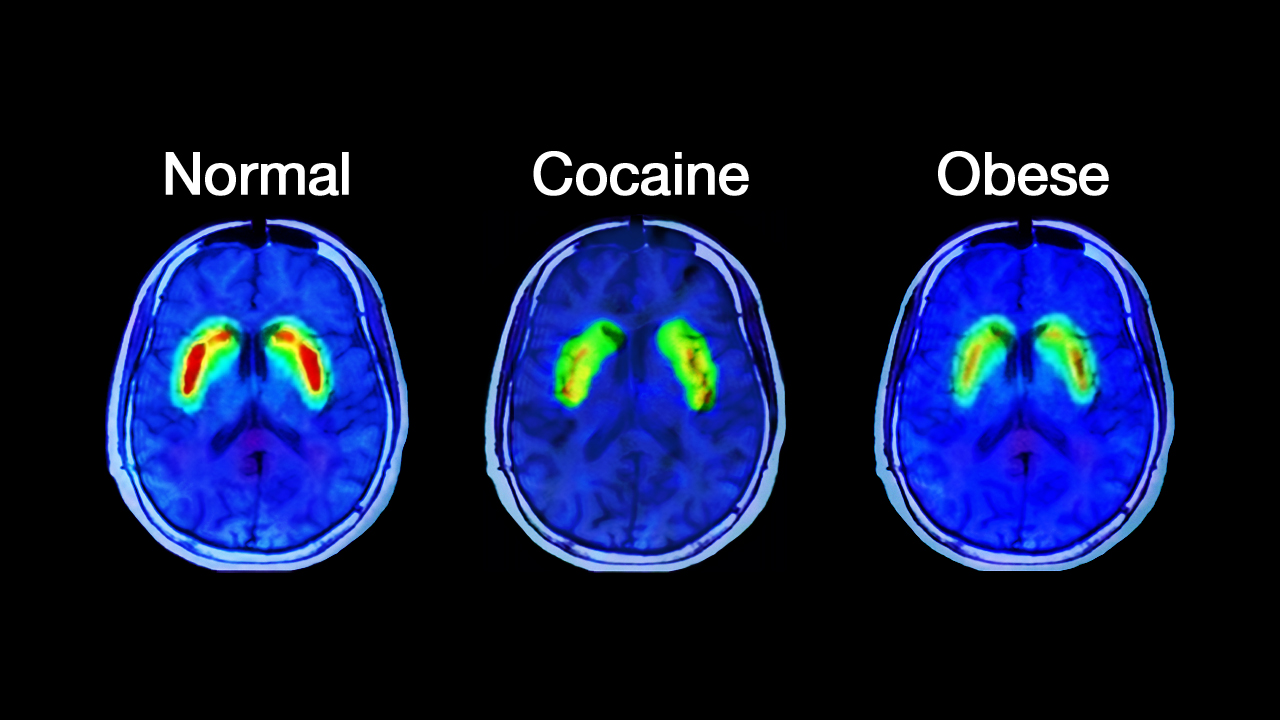
    But something interesting happened in the 1990’s when a few groundbreaking doctors first began to use SPECT (Single-photon emission computed tomography) scans of their patients brains, in their treatment. And when they did, they discovered some interesting patterns — especially where addictions are concerned.

    For example, if you scan a person’s brain who is addicted to alcohol and compare that to a healthy person’s brain, you will see two completely different organs.

    The healthy person’s scan will show activity in the various areas of the brain — the frontal lobe, the hypothalamus, the prefrontal cortex — all firing off as needed. There will be a dispersed activity in all these areas. All parts of the machine have a use and all of those parts are being utilized where needed.

    But the alcoholic scan will show overactive areas in the what is referred to as the pleasure and reward bundle of the brain — the nucleus accumbens, the prefrontal cortex and the amygdala — with other areas seeing very little use. In fact, an alcoholic’s brain will have this swiss-cheese-appearance with certain areas of the brain basically shutting down due to lack of use. And an alcoholic’s brain will actually be physically smaller than a healthy person’s brain. We see the exact same thing when we look at a brain scan of someone addicted to drugs.

    Now this isn’t very surprising to us. We know that there are chemicals in alcohol and drugs that are extremely harmful. So a chemical attack of the brain can result negatively to someone who abuses drugs or alcohol. Yeah. That makes sense.

    But here is where things get interesting.

    If you now scan a person brain who is addicted to say, food for example — someone who is morbidly obese — or someone who is addicted to gambling, pornography, sex or shopping, you will see —- the exact same thing.

    A person’s brain addicted to shopping — is almost identical to that of someone who is addicted to alcohol. The brain from an individual who is addicted to pornography — will look just like the brain of someone who is addicted to heroin.

    brain

    What? How is that possible?

    It’s simple.

    The brain registers all pleasures in the same way — whether it’s booze or sex. Gambling or cocaine. Finishing an important project at work, or scraping enough change together for a fifth of bourbon. In the brain, pleasure has a simple and distinct signature: the release of the neurotransmitter dopamine. That’s it. To the brain, all pleasures are the same.

    All drugs of abuse — nicotine or chicken wings, crystal meth or Facebook — causes a particularly powerful surge of dopamine. And in our brain we then create a well-worn path to get to it.

    And in addiction our view of the daily life becomes very simplified.

    Stressed? No problem, grab the addiction.

    Celebrating? No problem, grab the addiction.

    Bored? No problem, grab the addiction.

    Eventually the other areas of the brain — reason, patience, problem solving, planning, — aren’t needed as much. You have only a condition and response. This equals that —- with the ‘that’ being the addiction. The magic button that can be used at any time, all the time.

    And eventually a very worn path is created between a very small part of our brain. And the other rooms just —well. Shut the lights off because there is no activity going on there.

    Now, where it gets even more interesting is that the likelihood that the use of a drug or activity will become an addiction is directly linked to the speed and intensity of that dopamine release. So smoking or injecting a drug, produces a faster and stronger dopamine signal and is more likely to lead to drug use that taking as a liquid or pill.

    But we live in a very fast paced society. A person who is addicted to shopping can get that dopamine rush as soon as they pull out the credit card out or even hit the shopping cart icon. And someone addicted to gambling doesn’t need to find a bookie or a casino any longer. You can gamble online from your phone. And food —? Twenty four hours a day we can get fast and hot food delivered, picked up or microwaved — in seconds. And that dopamine rush is triggered.

    And this is not only for addictions that we consider ‘destructive’ but for all addictions. A person’s brain who ids addicted to marijuana will look like the one who is addicted to work. The individual, who has to get to the gym six times a week, will have a brain that looks like the person who is addicted to nicotine.

    Do you know anyone who cannot hear that ping of a text message or the sound that an email has just been received, without checking their phone? That little sound can easily be hard wired to that dopamine trigger, and a path is formed.

    So what does all of this mean?

    Well, it means that when we get most of the joy, happiness, release, and pleasure from only a few areas, that there is not only a spiritual cost but a biological one. It means that that quick pleasures can be extremely costly — not just for what we are leaving out of our lives, but for the damage done to the organ that keeps us breathing and allows us to reason.

    It means that old habits destroy, and new skills build.

    It means that quick fixes are costly, and new experiences are constructive.

    It means that the greatest joys are the ones we work at, and the ones we strive for.

  • Depression in men

    Depression in men

    gloom

    A radical statistical shift is when a significant number of people within a group suddenly change in action — it’s the unexpected, quick right turn of statistics. It’s when, without communicating and completely independent of the group, individuals act in a common but unpredicted manner that isn’t orchestrated or even acknowledged and the group shifts. So, instead of deciding between a Ford or Chevy, for example, millions sell their cars and start riding bicycles; or a neighborhood that is prime and expanding, suddenly sees a mass exodus of people selling and moving to live off the grid. It’s the place on the graph when the spike moves sideways.

    It’s the didn’t see that coming, moment.

    One of these radical statistic shifts have occurred with men over the last ten years that wasn’t expected and is more than a little shocking.

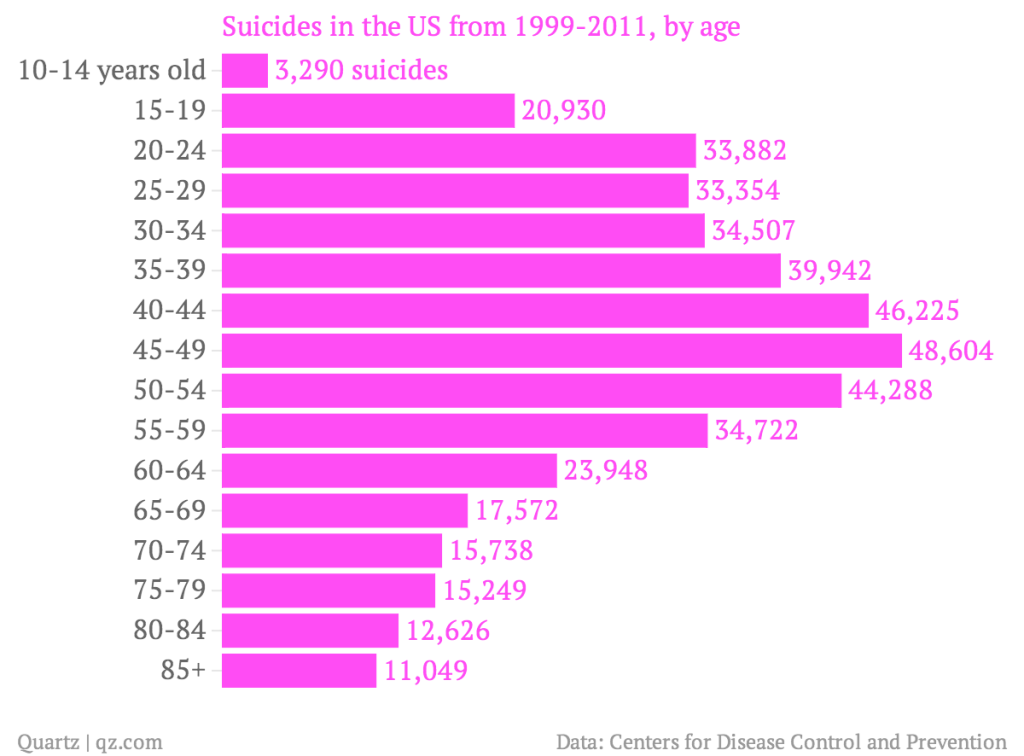
    For the first time in American history, the largest group of people most likely to commit suicide are — middle aged men.

    According to the Centers for Disease Control and Prevention, middle-aged men — those between the ages of 45 to 64 — have the highest rate of suicide; a rate that has been rising since 1999.

    Which means that for the first time ever, the once vulnerable teenager — insecure, sullen, angry and fearful — is half as likely to kill themselves as their own fathers are.

    suicides-in-the-us-from-1999-2011-by-age_chartbuilder

    Why is this?

    Well, one major driver seems to be that men emotionally suffer alone — especially when it comes to sensitive areas such as stress, relationships and financial issues; common categories involved in suicide among men. Men ignore it and suck it up. We plow through crisis rather than dealing with the causes. We fight instead of discuss and — and here is the big one — we don’t know how to, or even want to, cope with the possibility that we may be — depressed. We see depression as something that’s for the weak and an area to simply ignore and work through. Men can view depression as being ungrateful — as a slap in the face to our family, friends and work — since what do we have to be depressed about? As well as see it as a state that only occurs to frail people, ungrateful people. Not to us.

    Now, does being depressed mean that we are likely to commit suicide?

    Absolutely not. It’s the smallest percentage of depressed men that go on to commit suicide. The very smallest. But — here’s the important part — all men that commit suicide are depressed.

    So what does that mean?

    Well, it means that as tough as it sounds, we men need to acknowledge and face the fact that we are very likely to get depressed, return to it and possibly may be depressed right now.

    SINGS OF DEPRESSION IN MEN

    • Unexpected anger and anxiety
    • Loss of interest in once pleasurable activities — work, family, friend
    • Change in libido.
    • Not being able to sleep or wanting to sleep all the time.
    • Feeling very tired
    • Difficulty in concentrating or remember details
    • Overeating, or not wanting to eat at all
    • Escapist or risky behavior; driving recklessly, compulsive gambling, abuse of drugs or alcohol, or an emersion in pornography.
    • Aches or pains, headaches, cramps, or digestive problems

    Yup. So according to the math, there is a 73% chance that you have been, will be or currently are, depressed. And the first step — that absolute silver bullet — is to acknowledge it. To recognize it.

    Being depressed as a man does not make you weak. It doesn’t make you vulnerable. It doesn’t mean you’re broken and it doesn’t even mean that it’s a permanent state.

    It makes you human.

    And being human males, there are certain ways — methods that are effective for us — to work through the depression.

    Here are a few.

    1. Exercise. Exercise is the absolutely best self-treatment for depression. Physical activity releases endorphins in the brain and elevates mood — even a 20 minute walk each day can have amazing results in how clear you think and how you deal with stress.
    2. Unplug. In our stressful lives, it’s important to build in time to turn off the cell phone and computer and give yourself permission to leave the cyber web for a while. Go for a walk, a bike ride or go read a book — without being able to be contacted by text, email or voice. Step out and go black for a while. Or a weekend. Disconnect.
    3. Identify sources of stress. This is a big one in men because we see this as a weakness but by classifying what we see as stressful, we can create ways to act differently. To build in methods to counter it. If we know the Tuesday meeting is stressful, we can schedule our workout right before it, or if that confrontation with the neighbor is going to get heated we can go watch a comedy before and just laugh for an hour.
    4. Accept help when it’s offered. Whether it’s having someone else read through your presentation or getting a neighbor to help you stack wood, asking for help is difficult for men. But it does not mean your weak and it does not mean you’ve failed if you need help to accomplish something. It shows wisdom in asking for and accepting help.
    5. Say no. This is huge with men. Not only do we want to do everything, we want to do it all well and we want there  to be no limit. But we also need to find what works for us. Over committing is the fastest way to tap into your energy reserves and sabotage other areas of your life. It’s not weak, uncaring or wrong — to say, no. It’s healthy and wise.
    6. Talk. Find someone —  a member of your family, a friend, co-worker, professional, it doesn’t matter — and begin to unload. Talk about what’s going on; what’s your feeling and frustrated with. It’s very common that when you begin to actually put into words how you feel, the bubble weakens. But here is the trick. For many of us that finally unload on thoughts and feelings that we’ve kept bottled up we often feel angry afterwards. Agree that when we talk we are not going to regret the talking.
  • The weight goal secret

    The weight goal secret

    dave

    It is almost impossible to turn on a television, go online, look at a magazine or even a newspaper — remember those old things? — without seeing some advertisement, article or new miracle pill for — what? Of course. How to put on pounds. How to get big. How to be fat and how to remain overweight.

    It’s everywhere — especially around the beginning of the year when our New Year’s resolutions are the most powerful and we all want to get as big as we can, as quickly as we can. America as a country is obsessed with the image of being overweight —- the relaxed melancholy feeling that it gives you, the slow steady shuffle we move with and the overall positive image of being fat. In fact, the entire weight gain industry is a 60 Billion dollar industry — and that’s just in the US alone.

    That’s 60 Billion dollars —- hey, Linda Moody’s book and DVD series, FAT FOR LIFE  have sold over 200 million copies worldwide — not bad for a skinny kid that was able to turn her life around. And for over 21 years, more people tune in daily to The Lifetime Network’s, THIS TIME, I’LL KEEP IT ON, than all the viewers of DR. OZ, ELLEN and THE VIEW — combined.

    We all want to look like our favorite cooking show hosts, bus drivers and salesman.  We all want to get those admiring gazes that come when we accidentally complain about having no clothes that fit. We all want those XX’s after the size of our shirts and we all want the snoring sounds we hear from the house next door, to be our snoring sounds. Of course we do.

    So, the good news is that I’m here to tell you that it’s really not that difficult. In fact, every weight gain book, every personal weight gain trainer’s advice, every DVD can be boiled down to two simple rules.

    The core of every weight gain strategy is simply this:

    1. Eat more.

    2. Move less.

    That’s it. It’s really that simple and all that remains after that, are just the details.

    Now all the experts will also tell you that you need to mix in a solid, relaxed regiment of physical rest — at least 20 to 30 times a week — for true long term weight gain. This is true. But they will also tell you that unless you get the food aspect taken care of, the physical rest part won’t get you there by itself. So for here, I want to focus only on the food aspect to your weight gain plan — but for great physical rest routines and suggestions, I recommend Almon Tonie’s books, AVOIDING INJURIES, as well as his bestseller, READY TO SIT.

    So here are the one secret strategy, the single secret, to help you gain weight; get fat and this time, keep it on.

    Ready? Here it is.

    Food is love.

    That’s it. With our incredibly busy lives it’s so very easy to forget what food is. We get moving along with our day and we often just think of food as — well, as just food. Nothing more. We see it as no more than fuel for our bodies. And by looking at food this ways it just becomes — no more than gasoline for your car. That’s it.

    And this is so, so untrue.

    Food is a reward. Food is a treat, food is medication and of course, food is love. It’s how we show the people around us that we care about them. It’s how we give back to co-workers. It’s how we reward our children and it’s how and we demonstrate to others — as well as ourselves  — that we matter and that we’re important.

    How many times have you been so busy that you forgot to eat? How does that make you feel when food just becomes nothing but fuel? Nothing else. What holes are left in your day?

    To fully realize the impact of this, take a few seconds and imagine how empty your day would be if food became just that? Just fuel. What would you fill that time with? — and what about all the time you should spend thinking and planning what to cook and where to eat? What would now take its place? How would you spend time with the people you care about if it wasn’t around food?

    The answer is, you couldn’t. There is no other way.

    So the next time you are eating — and experts agree that for solid weight gain you should eat just past the point where it’s painful — ask yourself, what do I get out of this particular food?

    If your answer is; nutrition, fuel, energy —- then you have a poor food image.

    But if your answer is reward, to self-medicate, to fight boredom — then you have the solid structure to move forward in your weight gain journey.

    And of course, don’t forget your quantities.

    Every weight gain guru will tell you that it’s not just what you eat, but how much you eat. Yeah, yeah, yeah. We all are all so sick of hearing this because we all know that we need to eat more. But it’s not always that easy.

    Remember, the more you eat — the more you eat. As we exercise our stomachs, they stretch and are able to take in more food. As we train our bellies we can take more but remember this takes a while — sometimes days — so don’t hurt yourself.

    So make today the day you begin this incredible quest.

    And remember, I believe in you.

    You can do this.

  • The Files

    The Files


    memo

    When we are born, when we first take delivery of our body, there is some set up and installation time required for the main component; the brain. And this takes a little while to completely go through. So since nothing interesting can happen until the brain is fully functional, for the first three years of life — as our brain goes through this construction and set up phase — we remain in in a state of LOADING. During this period, software is installing, hardware is being assembled, code is being added in and miles and miles of connections and cables are being strung. It’s a capital project and after several years we are ready for some trial runs as we first put our brain through its paces.

    This is why any long term memories we have begin at around age three because before this, our brain is unable to store and record. But from that point on, we are given the keys to our mind and we start to determine who we are and who are the people around us. What will we believe? Who will we trust? What’s important and what is our place in the universe?

    So we are an adult at 18, we can drink at 21, we can drive at 16, but we are responsible for our own thoughts at around age three.

    Now when we first start using this brand new brain of ours, it begins in vacuum-cleaner-mode as we suck up all information on everything around us. Everything. Pure data. Pure experience. All is recorded.

    Then, after a few years of doing this, there is sufficient enough information to begin to sort it all. So the first category we create is, THINGS THAT ARE SAFE and the other is for THINGS THAT ARE SCARY. And everything new goes in one of these two boxes. Then once those files are established, old data is pulled out and resorted; the chair is safe, but the cat hissed at us once so he now goes in the scary box. And for years the world is divided into two parts. The safe and the frightening.  Safe is good. Scary is bad.

    Then we add new files: what tastes good and what does not. What is easy and what is hard. What gets us attention and what gets us ignored. And file after file after file is filled. And we call this personality; how we react to things, what we avoid and what we gravitate to.

    This is what people remember about us. This is the footprint we leave in a crowd.

    Okay, so here’s the scenario.

    You are now an adult, with your seasoned, battle tested brain. And for this illustration let’s put you in prison — sorry, you’ve lead a very troubled life. So you’re in prison, but because you are an extremely smart convict, one day you escape. You get out of your cell, you get outside the pod and then you get out of the building. You make it over the wall and into the woods. Now, because you are a very detailed person you manage to ditch the orange prison jumpsuit and get into some street clothes. You get a little cash and are a few hundred miles away before the guards even know you’re gone.

    Like I said, you are very, very smart.

    Now, because you are a disciplined person, once you are free you do not make contact with your sister in Albany or your childhood friend in Tulsa and you don’t even go to father’s funeral six months later. You cut all ties with his past at places where they may be looking for you. You get a new identity, a new life and a new job.

    So, here is the question. Will you get caught?

    Answer: Yes.

    Why? Because without even realizing it, you will begin operating according to those old files and if the police are looking for you they will find you. And when they do, you will be making a living as a mechanic, like you did before. And you will be on a dart league, like you were before. And you will be a member of the Moose Club and you will order rose bulbs from a catalog and drink Mountain Dew and follow the New York Giants. All like you did before. And even though your name is now Kevin Loomis, you are the same person as before and if the police follow your profile they will find you and they will drag your sorry backside back to A-block.

    Why? Because as disciplined as you are you never changed your profile. You operated only according to the old files.

    Now, is this programming our personality? Well if it is then you need to alter it or you’re going back to prison. But what if this personality is stopping us from taking better care of our families or making more money? What if it’s stopping us from obtaining a more personal relationship with God or being just plain being happier? After all, this personality of ours didn’t come in a box. We built it with the brain we were given. It was whittled and formed by each experience and fear and belief and desire. A trillion tiny thoughts, a million tiny events chipped away and made us, us.

    We take the same route home from work. We sit in the same seats during lunch. We go to the same garage when our car doesn’t work and we order the same pizza on Saturday night. Is that our personality? Is that what makes us, us? Pizza and car repair?

    So what’s the moral of all this?

    It’s this.

    You are not what you drive or what you eat or the team you root for. You are not even how you have chosen to act for the last thirty or seventy years. The real you — and you may not even know who that really is yet — is much, much more.

    And it’s your job to find out who that is. And then once you know, dump the files you don’t like or need.

    And fill new ones.

  • How to remove a splinter

    How to remove a splinter

    splinter

    There is a story in my family about my great, great, grandfather — or maybe he was a great, great, uncle. It doesn’t matter. So this grandfather — or uncle — got married and lived with his wife in a cabin on a small farm. This cabin had a rough wooden floor and if you had stocking feet — or worse yet, bare feet — you would end up with a foot full of splinters. Every stinking time.

    Now, the first few years on the farm were tough. Sometimes the two of them barely had enough to eat, but they worked through it and this grandfather — or uncle — and his wife, gave birth to their first child. Time went by and life did not become any easier, especially with another mouth to feed. Until one day, after a few additional years of struggle — as well as of a few more years of yanking splinters out of his feet — the grandfather-uncle had finally had enough. So he went to his wife and said, Maggie — I’m guessing at her name is Maggie because that sounds like the right kind of name. He said, Maggie, we’re not making a go of it here. So this is what I’m proposing. You go back to your people. I’ll go back to my people. We’ll leave this marriage and we’ll leave this farm the same way that we came into it. As separate people.   

    And Maggie — being a very wise women, said; Okay, fine. We’ll leave the marriage the same way we came into it. Which means that I came into it without a child. So you’ll be taking the boy with you.

    Now, as kids, when we would hear this story, the first thing we noticed was that when the story ended, every time, all the adults laughed. Every one of them.

    And we, the children of the family — possibly concerned with the knowledge of starving being only slightly worse than parenthood — never laughed. Ever.

    But the even more disturbing part of the story was that my grandfather-or-uncle and his wife deciding to stay together because being a parent was only slightly better than a foot full of splinters. In fact, the two made the farm work and even remained married for over forty years and — here comes the good part —- they had nine more children.

    All the adults always laugh at this part, too.

    Us kids? Not so much.

    But the mental image of this that has stayed with me all these years is the idea of a foot full of splinters.

    Can you imagine a foot full of splinters? — actually, that sounds like a great country song — because the truth of it is that even a single splinter, just one, is bad. And if I woke up each morning with a foot – or possibly two feet — full of them, I would probably loose my mind too.

    HOW TO REMOVE A SPLINTER.

    The rule about removing splinters is simple. The bigger the splinter, the easier it is to remove. The smaller the splinter, the more it will want to hunker down and get cozy. So let’s focus on the small and nasty splinters here because the larger ones usually come out quickly or they get lazy and take care of themselves.

    The aspect that has always made removing a splinter a largely male thing is that very often the splinter is in deep enough to need to force the splinter end through the skin — i.e. the needle method — or of clipping away parts of sensitive skin with nail clippers or small shears in order to get to it. This is the worse part, because you are often causing pain to someone who is in pain.

    But if you do this right, you can do it almost painlessly.  

    Now, over the years I have seen many methods of removing splinters. I’ve seen people use duct tape, use glue, I had an aunt that was pretty good at removing them with an uncooked sliced potato. I’ve seen people soak bread overnight to draw the splinter out, use egg shells, place bacon fat over the splinter and even knew a little league coach of mine, who kept a cut piece of ladies stocking in the first aid kit. He would use the stocking to snag the end of the splinters we always received from the wooden bats, enough to pull the splinter out with tweezers.

    And although I’ve seen most of these methods work, they have not always worked for me. So, for me, there are only two ways to remove a splinter. The dry method and the wet method.

    DRY METHOD

    1. Wash your hands, wash the area with the splinter as well as a pair of tweezers and a pin. Now, this is easy if you’re in your kitchen, but many times you get a splinter in the woods, on a camping trip or off of a canoe panel and don’t have that luxury. If you have a first aid kit use some peroxide or alcohol wet naps to clean the area of the splinter and tweezers. Or run the end of the tweezers and pin over a flame for to sterilize. If none of these options are available, get the splinter out and then clean when you can to avoid infection.

    2. Feel for the end of the splinter. This is the key. A splinter can be removed easily if you can get to the end of it. If you can find the end, try and get the tweezers around it and gently pull out in the path it came in on.

    3. Get to the end of the splinter. If the splinter is in too deep to get a pair of tweezers around it, then you have to either get the end up with a pin, or cut away the skin around to get to it. Not always as easy as it sounds but if the area is very sensitive you can numb with some ice or if you have any bee or wasp sting spray that works well. Enough ice and this will pretty painless. But the main thing is to focus and remove the splinter.

    4. Clean the area again — or as soon as you can — to avoid infection.

    WET METHOD

    There are many wet methods of removing a splinter but the ones I have used on my kids involves a simple baking soda paste — I’ve used this to get bee stings out as well.

    1. Mix baking soda and water together. You are looking for paste constancy.

    2. Place the paste over the splinter and cover with a band aid, or with gauze and tape. Let the paste stay over the splinter for an hour or two.

    3. Remove the gauze. More than half of the time, the splinter has been removed. For the other half you can try the dry method or ….

    … or, you can do nothing.

    Splinters will want to remove themselves naturally — through our movements and the movements of the skin they will eventually want to back out. It’s just a question of how bad the splinter is and how quickly we want them gone.