Category: Outdoors

  • How to build a fire.

    How to build a fire.

    fire

    Barbara Streisand, Ricky Gervaise, Daniel Radcliffe, Tina Fey and Barbara Walters. What do they all have in common?

    Well, they are all successful, recognizable names in their own fields but there is something else that binds them together.

    Ready?

    None of them can drive a car.

    These are very prosperous, highly motivated people that have achieved so much in their lives but have never mastered one of the skills that most of us learn at 16 years old — now some of this has to do with living in places like London or New York where driving is actually a detriment, but for others it has to do with simply not having an interest in driving.

    So, can you be successful without learning to drive a car? Yup. Sure. You can work around it.

    And can you go through life without knowing how to build a fire? Yup. Sure. You can work around that too.

    But there will come a time — whether in the woods, in a cabin , or even in a survival situation — where you’ll need to. And knowing how means that you don’t have to ask someone for a ride.

    THE GOLDEN RULE OF BUILDING A FIRE.

    There is one thing —- one single entity — that is the single most important part of  building a fire and the one that has the most impact. It’s also the first rule that’s ignored. It’s that you are building a fire. Not starting one, arranging one or finding one. But building one.

    I’ve been on camping trips where I’ve seen guys throw a pile of sticks on the ground and light it and then get frustrated when a fire doesn’t magically appear.

    You are building a fire. Constructing it. You are creating layer of light material that can be lit easily that will then light other slightly larger material which will then light slightly larger material in a precise manner so heat is created and larger pieces of wood can be burned. This is a constructing project not cooking.

    Don’t be in a hurry. Take your time and get the foundation done and the fire will happen.

    Years ago I was on a two day survival weekend with a group of people on Hiawatha Island in New York and one of our challenges was to build a fire with a battery and steel wool and then get a can of water to boil. Now as soon as the timer began — we were all racing against each other — we all scrambled to get materials. Now the guy who lit the fire last, the one who spent the most time on the construction of the fire, is the one who succeeded first. His fire went up quickly and efficiently and he actually worked less on the maintenance of the fire because his foundation was so solid.

    BUILDING A FIRE

    Whether your building a fire in a fireplace, a pit, a stove or a camp the rules are all the same. You will need three types of wood:

    1. Tinder — pine needles, paper, dry leaves, dried grass, birch bark
    2. Kindling — small sticks under 1″, pine cones, bark, wood shavings.
    3. Fuel — sticks larger than 1” in diameter.

    So your tinder goes in the basement of your construction project, the kindling above it and then the fuel either above that or added on once the fire gets going.

    1. Loosely pile the tinder in the center of fire pit or on yoru firegrate/stove. Be sure there is air around it for fuel.
    2. Add the kindling around the tinder so it catches. The two ways to do this are in a teepee — best for camp fires — or a frame, where you have large pieces off to the side and the kindling in the center. You can place the fuel on the edge but don’t rush it, you can always add the fuel when the kindling is hot.
    3. Light the tinder.
    4. Add more tinder as the fire grows — you want the flame to be high at first so it catches
    5. Then add more kindling — rule of thumb is get twice as much as you think you need. Remember kindling is more important that fuel. Getting the fire hot means you can add larger and ever wetter pieces later but not getting it hot means it has a chance of going out.
    6. Add fuel.

    Experiment and play around. Building a fire should be something you’re confident in doing and may come in pretty handy someday.
  • How to clean a fish

    How to clean a fish

    fishie

    The Colonel — his real name is Frank but we all know him as The Colonel — lives across the street from us. He is a 93 years old but no one has really taken the time to explain to him how a 93 year old man is supposed to act so you can’t blame him for his ignorance. Frank is healthy, active, sharp as a tack and lives alone in the same house he has owned since he and his late wife bought it in the 1970’s — well, that is saying he lives alone for those rare occasions that he’s actually at home. Because even when he is home — referring to being in town — he’s rarely at his house. Frank hates staying home and when he is actually in the area he’ll pull out of the garage early in the morning, wave goodbye, pick up his sixty year old girlfriend and head out for the day. I would say in a given year Frank spends possibly four, maybe five months of it even in town and when he is, he only sleeps at his house.

    It’s a depressing fact The Colonel has a far more active social life than anyone else on the street. Bar none. And most of us are four or five decades younger than he is.

    Now, Frank is known as The Colonel, because that’s simply what he is. A retired World War II Air Force Colonel and he is only given this title behind his back. If you do slip up and refer to him as The Colonel to his face, he will quickly correct you.

    “Please,” he’d smile. “Just call me Frank.”

    Frank drives his own car. He plays golf — he actually participates in several senior golf tournaments every year — he competes in poker tournaments and he skeet shoots. But Frank’s true passion, what The Colonel truly enjoys more than anything, is fly fishing. Frank loves fly fishing and he goes on several major fly fishing trips a year. For weeks at a time he will fly into Maine or New Hampshire or Alaska and meet a friend or one of his sons and fly fish.

    Trout and Salmon fear The Colonel.

    [amazon asin=B000QAS14G&template=iframe image][amazon asin=B002VYWWKO&template=iframe image][amazon asin=B002OFJ578&template=iframe image][amazon asin=B000Q89MCS&template=iframe image]

    Now fly fishing is a gentlemen’s sport and is somewhat different than the hook and line variety the majority of us barbarians practice. There is an art to fly fishing, a grace, that is missing in conventional fishing. And once I asked Frank if he kept that fish that he caught.

    “Naw,” Frank would say. “I just like giving them a sore mouth and sending them on their way.”

    But occasionally, if they have a large group of people that are fishing with that  need to feed, The Colonel will end up eating a few of the salmon or trout that he catches.

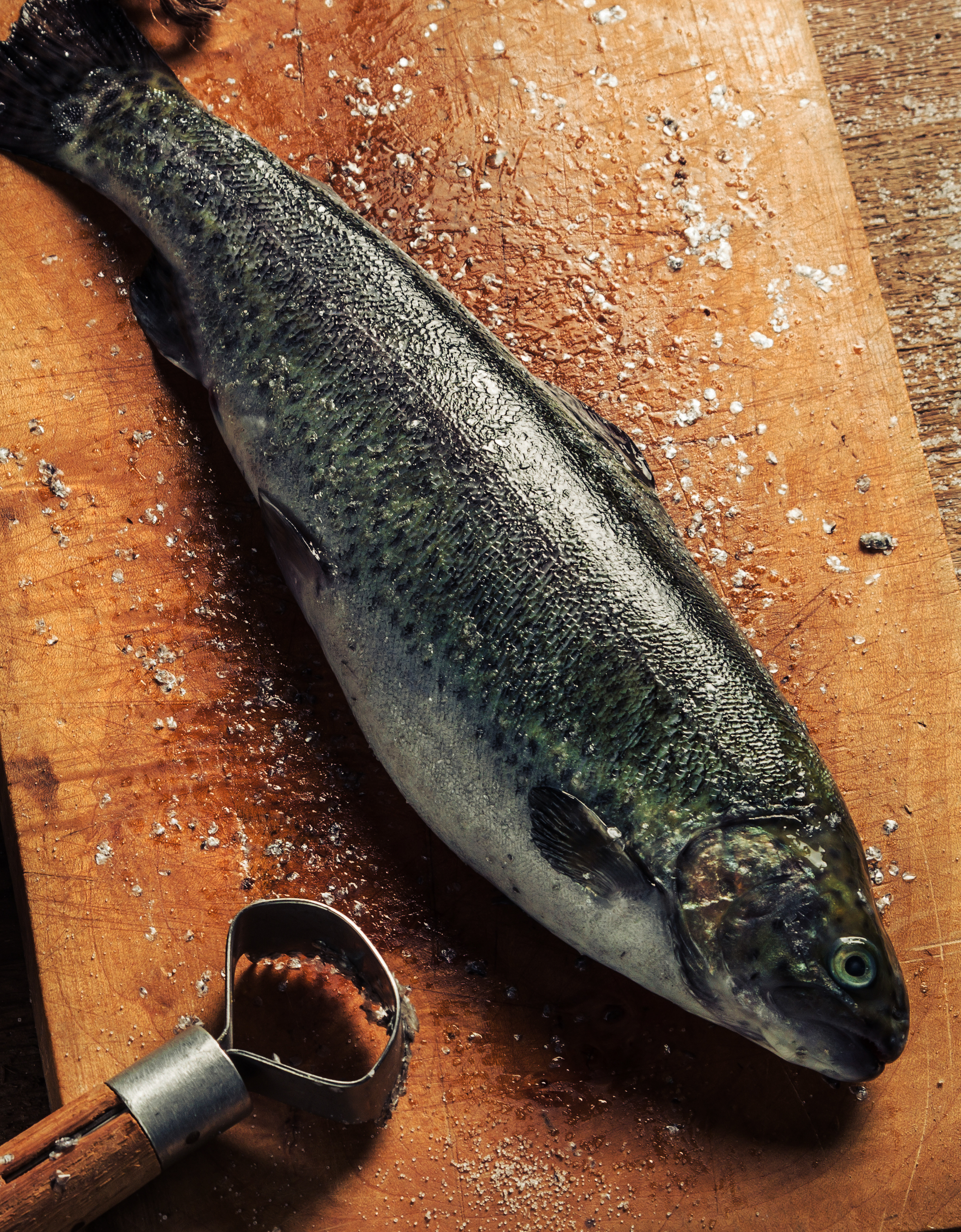
    Even if you fish occasionally, even if you fish once in a great while, there will come the times when you will want to keep a few of the fish you catch. And when I say keep, I mean eat. So you’ll need to know how to gut a fish.

    HOW TO CLEAN A FISH.

    Go outdoors. Cleaning fish is messy business. Even with a skilled fisherman the smell will remain so this is done outdoors, preferably where you have water available. A makeshift table —- even a piece of wood between two saw horses with a garden hose works well.

    Scale the fish. Hold the fish by the head and with the back end of a knife — you can also use a butter knife or a spoon — scrape against the scales to remove them. You want these strokes to be smooth and even otherwise you’ll cut into the meat of the fish.

    Rinse the fish. This is also a good time to check and verify that all the scales are off.

    Cut open the fish. With the fish belly up, make a clean cut from the bottom of the mouth to just below the tail.

    Open the fish and remove the entrails. This is the messiest part of the process but it doesn’t last long. Simply pull everything out and then cut anything remaining. When you think it’s complete, rinse the fish.

    Remove the head. Depending on the type of fish you caught as well as the type of cooking you’ll be doing, you can remove the head. If you’re cooking over the fire, it might make sense to leave the heads on. A simple stick placed through the inside and mouth of the fish will make for a great way to smoke the day’s catch over a fire. Also, trout cooks well with the heads left one — as well as the scales left on. Pan fish or anything deep fried you’ll want the heads and tails off.

    And that’s it. Once you’ve done this a few times you’ll be a pro.

  • Homesteading

    Homesteading

    homestead

    There is a great quote by Robert Heinlein that goes, “Every generation thinks they invented sex.”

    Yup. We do. And not just sex, every generation thinks they were the first to discover — everything.

    We arrive in the world and we begin to see and experience. And when we see and experience it’s assumed that no one has seen or experienced before us. How could they? We just found out about it ourselves and since we’re the center of it all, how could anything of any importance have occurred before we got here? Or before it involved us?

    It can’t. And since it’s all new to us, therefore it’s all new.

    Makes sense. Except for the fact that — it’s all been done before. And just because we are now experiencing it, doesn’t make it new.

    What has been will be again, what has been done will be done again; there is nothing new under the sun.” Ecclesiastes  1:9

    And there isn’t.

    With the exception of every generations new technological gizmos that are coming out, and will always be coming out, everything important has been done before.

    But this isn’t a bad thing.

    What is a bad thing is when we think that by just renaming it or repackaging it, that we get the discovery credits. Because there aren’t new discoveries, there are only new movements.

    Eating only what food that will go to waste if we don’t eat it, doesn’t get to be freeganism. It’s what people have been doing for centuries and do every day around the world.

    Making use of what materials you have, doesn’t get to be repurposing or even recycling; it’s just plain good sense and what’s been done since — forever.

    Now, there’s another new trend of an old idea that has popped up in the last few years that isn’t new at all, but is still pretty intriguing. And it’s the old concept of homesteading.

    The term homesteading is pretty commonly known and we all have a general idea of what that means. You go someplace where few people live and you live there and farm.

    Sort of.

    The true definition of the term homesteading has to do with subsistence farming or living a self-sufficient lifestyle — more modern terms for old ideas. But what makes this  modern trend and an interesting one is that there is now land out there that developers have no interest in — in every state, probably within two or three hours from where you are right now — that is dirt cheap.

    And I mean dirt cheap. In fact, for less than the cost of a big screen TV you can get a few acres of land — and some plots for even less than that.

    Now, these are homesteading lots — or undeveloped lots. Most don’t have power, or water or much of anything except the land itself. But they are cheap and they are plentiful.

    What is homesteading?

    The pure definition of homesteading dates back to the 1862 and the United States Homestead Act. It is the ability to establish a home in unsettled land and get everything you need from that land. You get your food from your garden, your fruit trees and your livestock. You get what currency you need in the sale of said items, by bartering or other means. You take care of the land and the land takes care of you.

    Now recently homesteading has been placed in a ultra-liberal almost radical box by using such terms as self-sufficiency and living off the grid. But the act of homesteading is simply taking responsibility for yourself through your land.

    Now the reason I’m bringing up all of this is not to promote the idea of homesteading. I think it’s a great concept for the right people but I also think it can be used as an  excuse to pull away from society and the neighbors that need you. So it’s two edged.

    But what I do want to promote — and think that this does apply to everyone — is that there is cheap land out there. It’s probably on a hill, covered in trees and probably will never see a power connection or a water line, but it’s affordable. And the thing about land is that they are not making any more of it.

    There is something in our core — and this goes back further than generations, it’s why our ancestors came here — about the need to own a piece of land. If you own your home that’s great, but it’s not land. It’s not a piece of the earth.

    For a few thousand bucks you can own a few acres of land. And if you only throw a tent there a few times a year, if you only go to it to show your friends, if you only build a shack or a cabin or an a-frame on it, it’s your land. And if you pay the few hundred dollars a year in taxes, it will be yours forever.

    That flat screen will be gone. That vacation will be distant memories. But your land will always be there.

    Your land.

  • How to Make Acorn Pancakes

    How to Make Acorn Pancakes

    acorn

    When I was a kid, my all-time favorite book — and I mean all-time favorite — was a novel entitled My Side of the Mountain. I loved that book and I read it at least a dozen times. It’s the story of a boy named Sam — I think he was around twelve years old — who runs away from his New York City home and heads for the Catskill Mountains to live off the land. The book actually takes place in Delhi, NY, which is sixteen miles from my hometown of Walton.

    Now Sam isn’t the typical runaway. He doesn’t hate his parents. He’s not in trouble with the law. And he is not being abused by his family. Sam just wants to be on his own and wants to live in the mountains

    So he does.

    And while surviving alone he hollows out the base of a tree to live in, raises a baby peregrine falcon that he trains to hunt for him, and has some other amazing adventures.

    For food, Sam survives on the rabbits and squirrels that Frightful — Sam’s trained Falcon — brings him, as well as the occasional stolen deer that he would poach from the illegal hunters who shot them out of season. And of course, there were acorn pancakes. Sam lived on piles and piles of acorn pancakes.

    Now, when I was a kid I asked my mother if we could make acorn pancakes, and she told me that this was impossible. She said that My Side of the Mountain was simply a story; you couldn’t make flour from acorns and therefore you couldn’t make pancakes from acorn flour.

    I was heart broken. The author had lied to me! Everything else had seemed so real… Years later, when I had finally come to grips with forgiving author Jean Craighead George for her deception, I discovered that she was not the one lying. (Sorry, Mom!) There are acorn pancakes.

    Acorn pancakes and acorn biscuits were actually a staple of the Native American meal. Acorns hold some valuable proteins and carbohydrates and also hold a good deal of saturated fats. In the modern world they are fun to collect, fun to process, and add a unique nutty flavor that can’t be found anywhere else.

    How to Make Acorn Pancakes

    Gather. The first step is to collect your acorns, and the rule of thumb here is to harvest a third more than you need. The acorns should be perfect specimens — if they are rotten or have been infiltrated by bugs, they can’t be used.

    1. You need to crack the acorns and get to the meat. This is where you’ll do your final inspection. If the nuts are dark, chipped, or look as if bugs have gotten in, chuck them.
    2. A coffee grinder works well for this. You don’t want to get the acorn meal down to a flour consistency, but more like the consistency of ground coffee beans.

    Wash. If you were to taste the acorn meal right now you would notice one thing: it’s horrible. That’s because it’s loaded with tannins. Native Americans would take the acorns and fill them in baskets and leave them in streams. It’s difficult to get this tannin out, but crucial. The method I’ve found that works the best is using a stocking. Take a stocking and fill it with the acorn meal. Tie it off and run it under cold water, all the time kneading the stocking. You’ll need to do this several times — a dozen or so — to make sure the tannins are all out. A good way to check is to taste the water that comes out of the meal you are rinsing. If it’s clear and has no taste, you’re good.

    Some people bake the acorn meal, but I find this gives it a more bitter taste. Just spread it out and let it dry.

    Now, there is no yeast in acorn meal so it is best used to add into other meals — I like using buckwheat flour or corn meal. This gives it a unique nutty and sweet flavor.

    Knowing how to make acorn pancakes is not a mission critical skill to possess. It’s not up there with being able to change your tire or tie a tie. But it’s a fun thing to do with your kids as a fall project or as just a very creative way to zest up foods.

    Enjoy.

  • How to cook a pizza on the grill

    How to cook a pizza on the grill

    pizza

    My backyard grill is one of my all time favorite personal possessions. In fact, if I could keep only three items that would be mine and mine alone, they would be;

    My bike.

    My Swiss Army watch — yeah, I have a Swiss Army Knife too, but my watch is great.

    And my grill.

    And as long as my family was safe and they had all they needed, I would be extremely content with just owning these three things for myself.

    [amazon asin=B000077CPK&template=iframe image][amazon asin=B00CZ5VF84&template=iframe image][amazon asin=B00BC3UVDK&template=iframe image][amazon asin=B0000E2GYL&template=iframe image]

    I have a Weber Spirit. It’s a great grill. With the three burners I can do pretty much anything and one of my favorite things to do on the grill is pizza. It’s fun, unique and with the high heat of the grill you can get that brick oven crunch — also we are ex-New Yorkers who now live in Delaware and there is no decent pizza here.

    Now the method I use for pizza is based on trial-and-error of a three burner grill like the Weber Spirit. I have tried other grilled pizza techniques and this works really well, but experiment with your particular grill.

    HOT TO COOK A PIZZA ON THE GRILL.

    Purchase a 1 pound bag of commercial pizza dough or make your own pizza dough. Pizza Bud is the brand I buy and it costs only eighty-eight cents and I can get two pizzas out of one bag of dough.

    Cut a 16 oz dough ball in half

    With a rolling pin, roll out the dough. Yes, the pizza tossing thing is very cool but you need to be good at that and I am not. So a rolling pin is a great way to get an even crust. Also, roll your dough out long ways instead of the traditional round pie. This allows you to get up to four on your grill and reduces the chance of burning. And don’t worry about making the shape perfect. The more imperfect it is the more authentic it becomes.

    On a low heat — now this is based on a three burner grill —- place the dough directly on the grill.

    Wait three minutes or so and flip the dough. Wait another three minutes and pull the dough from the grill. This will be your pizza crust.

    So here, with the most cooked end up, cover lightly with some olive oil and now build your pizza —- cheese, sauce pepperoni, spices, whatever you want — and place back directly on the grill.

    Close the grill and allow to cook. Check every few minutes and look at the bottom of the pizza — this will not only tell you how the pizza is cooking but keep in mind there is a thin line between getting that perfect brick oven crunch and burning the bottom of the pizza. When you’re not sure, pull the pizza early.

    Let cool and cut.

    Enjoy.

  • How to remove a tick

    How to remove a tick

    tick

    My son Alex is a bonafide tick magnet — not a chick magnet, but a tick one; which at 17 years old is strangely not as cool.

    I’ve never seen anything like it. This kid excretes some sort of tick pheromone, a disco ball for parasites, because not only when we go into the woods does he come out with new colonies of ticks that are settling in and designing the city center, but even if he walks across a lawn or the grassy part of a parking lot he often gets a few hitchhikers — and this is where the outlying ticks are, the ones that have been banned from the forests and when they see Alex coming they sing songs and hold each other as they wait for their salvation to arrive.

    In fact, when Alex, our dog Riley, and myself are in the woods, Alex will come out with ticks. When it’s just Riley and myself, Riley will. So according to this highly scientific evidence, if given the chance. ticks prefer to risk the larger target of Alex — even though their chance of success is far less — then shoot for the shorter and easier one of Riley the dog.

    It’s very weird.

    WHAT IS A TICK?

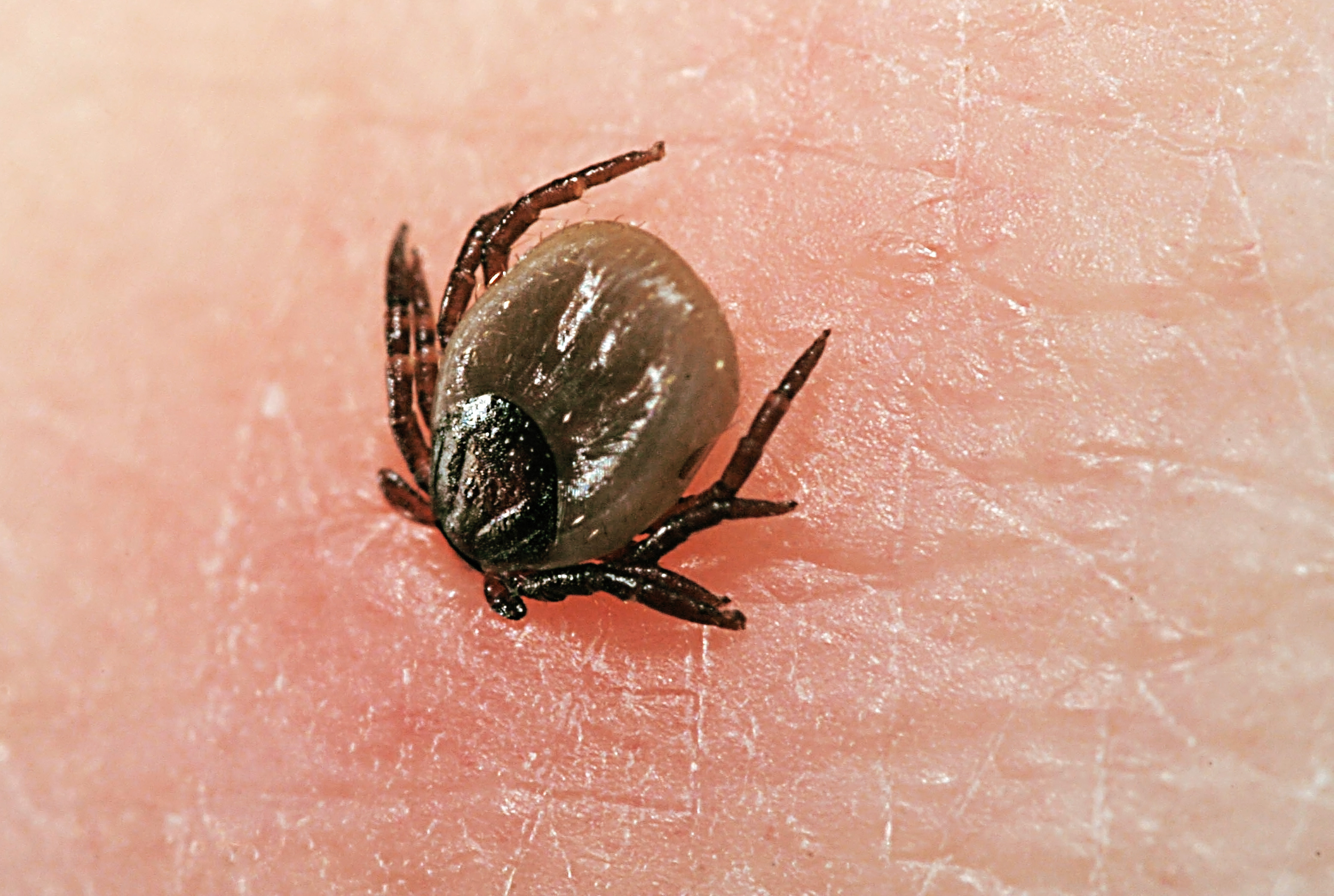
    So, a tick is a type of mite that falls in the external parasites category. They attach to animals —mammals and birds but will also go after reptiles and amphibians as well — and live off the blood. They burrow their mouths under the skin and start drinking.

    Now the challenge with ticks is unlike mosquitos, who take a big drink and leave, ticks are in for the long hall. Once they have found The Promised Land they have their mail forwarded and take up residency. And the longer they are there, the fatter they get off the hosts stolen blood and the harder they are to get rid of.

    The most common ticks in North America are the deer ticks and the dog tick — which look very much alike

    Besides being unwanted, ugly, a thief, and just plain gross, the other concern with ticks is that some carry disease. These include Colorado Tick Fever, Rocky Mountain Spotted Fever and of course, Lyme Disease. But if you’ve come out of the woods with a few ticks don’t automatically think you’ve been exposed. Even though only a few types of ticks are capable of spreading the diseases it also depends upon the geographic location, the season of the year, the type of tick and how long it was attached.

    In fact, even if a tick that carries a disease has attached to you and even fed, the chance of infecting are still very low. For example, the deer tick that transmits Lyme Disease must feed for more than 36 hours before it can pass on the disease and most ticks are found within a few hours.

    But if you are an overly cautions individual and want to make sure that no disease was transmitted from a tick bite, can you get a blood test to determine this? No. Even if you were infected signs in your blood will not show up for two to six weeks later. But, as  long as you catch that tick before it’s been on you for three days, the odds are very high that no disease has been passed.

    TICK REPELLENT

    So a good offense is a strong defense. True. And the best defense against ticks are through your clothing. Commercial bug spray that you apply to your skin tries to be everything to everyone and also wears off. The best tick defense is to use a Permethrin based products that you apply to your clothes. Permethrin is a synthetic chemical found in insect repellent and there are many tick repellents made with Permethrin but the best one I’ve seen is made by a company called Sawyer that has a Duranon Permethrin spray for the deep woods. This stuff is amazing and I’ve been in the woods and watched ticks crawl on my clothes and die before they got to me.

    HOW TO REMOVE A TICK

    First, what not to do.

    When I was a kid there were dozens of folk-treatments that were used to remove ticks — many of which, we know now, not to do. The most common is to irritate the tick into removing itself and you do this by lighting a match, blowing it out and holding the hot match head behind the tick. Or putting fingernail polish. kerosene, Vaseline or dish soap on the end of the tick. The idea is that the tick will pull out of the skin to get away from the heat or the chemical burn.

    Don’t do this.

    Yes, it’s possible that the tick might actually pull out of the skin. Maybe. But in panic the tick is more likely to inject its bodily fluids before escaping — fluids that would include any disease it might be carrying. And that would be a bad thing.

    The best way to get rid of a tick is the tride-and-true, tweezer method — this is why it’s great to carry a small first aid kit or 48 hour kit on you in the woods — an easy one can be made from an Altoids tin and kept in your pocket.

    The tweezer method:

    1. With a pair of tweezers, as close your skin and its mouth as you can.

    2. Pull slowly back using steady and even pressure — don’t twist. And don’t squeeze the body as this can send the body fluids into the skin.

    3. If the whole tick came out, great. If not, leave the part that is still in the skin alone. If you try to go after that part you could irritate the skin even more and possibly cause an infection. Your body will eventually reject it.

    4. Clean and treat the area.

  • How to Split Wood With an Axe

    How to Split Wood With an Axe

    axe

    For the first twelve years of my life — from 1962 until 1974 — I lived in this amazing place in upstate New York named Sanitaria Springs. It wasn’t a town — it was barely a village — but it was a great place to be a kid and an amazing place to grow up.

    The town was originally named Osborne Hollow and later changed its name when, in 1892, Dr. Sylvester Kilmer wanted a location for his health sanitarium and chose the area because of its natural phosphate springs. But before he started construction he convinced the town to change the name to Sanitaria Springs — if you were sick would you want to go to Osborne Hollow? A sanitarium was built in addtion to a hotel — which is the house my parents later bought and where I grew up — as well as a bottling plant and stores.

    [amazon asin=B00002N5N7&template=iframe image][amazon asin=B0010ORKD0&template=iframe image][amazon asin=B00AH9A8JM&template=iframe image][amazon asin=B00A6F6602&template=iframe image]

    The sanitarium fell under disrepair after the good doctor’s death — who actually claimed to have taken the cure to cancer to his grave. Then the sanitarium closed but the town moved on.

    By the time I came along remnants of the old days were still there. The place where my dad dragged our garbage cans out for pickup was the old horse trough for the hotel and at my cousin’s house up the street were the original stone steps where horse and buggies would pull up to let off their passengers.

    It was a place all its own. Long before the highway came in, it was rare and hidden and all ours. Where fields became baseball diamonds, gravel pits became swimming holes and barns became haunted houses.

    It’s just a ghost town now. Just a name printed on EXIT 4, off Route 88 South and although I think the fire station is still there as well as a few houses and a chain gas station popped up ten years ago or so,  the place I remember — Shirley’s Store, The Post Office, The Grange, The School, my parents fish store, are all either empty buildings are gone completely. Some say it was the highway that killed the town. Others said it would have died anyway but it  doesn’t matter. What matters are the memories and all of them are good.

    And one of my favorite memories were the ones of my cousin Chris McAvoy. And although I loved my cousin Brad, I idolized his big brother Chris and still remember many of the things he taught me about camping and hiking and of being a man. One thing Chris taught me — while we were building go carts from flower boxes we had stolen from our house — was how to use a hammer and how to use an axe. And he did so by telling me one rule — the same rule I passed on to my kids — that makes it all make sense.

    And that rule is this.

     Let the tool do the work, not you. Hold the hammer low, swing and let that weight of the hammer or the axe do the job.

    HOW TO SPLIT WOOD WITH AN AXE.

    Find a stump. Placing the wood on top of something is the way to do it. It’s also safer, so you don’t have to bring the axe down farther.

    Place wood long ways up. Make sure the wood is steady.

    Take a solid stance. Place your feet at shoulders length.

    Swing your axe around … Keep your grip midway until you bring the axe around and are starting back down with it. Then move your hands to the base and bring the weight off the axe head down on the wood. This is where you’re letting the axe do the work.

    Rinse and repeat.


  • Book REVIEW: Born To Run by Christopher McDougall

    Book REVIEW: Born To Run by Christopher McDougall

    I spend an enormous amount of time in the car — and I mean an enormous amount. As proof of this, I purchased a new car in February and when I was coming back from my second 5,000 mile oil change from my local garage, the odometer now toping 16,000, I received an e-mail from the dealer telling me that according to the calendar, I may be getting close to my 2,500 mile checkup and should soon bring the car in. And although I have a cell phone and blue tooth and all the toys to stay productive, there is still down time in the car. So I listen to books-on-tape — lots and lots of them.

    I love books-on-tape and I get them from the library three at a time — this is not only so I’m not caught short without one, but although I can watch a bad movie, I cannot read a bad book and a certain percentage of them don’t make the cut.

    With a traditional book I can somewhat control this failure rate by what editors call ‘the first page test’. I can tell within the first page of the book — often within the first paragraph — if a book is written well — it doesn’t matter what the subject matter is, if it’s not written well, what’s the point? But with a book-on-tape you have only the back jacket marketing blurb and can’t experience the writing until you press the CD into the slot.

    So I always take three hopefuls out at a time.

    Last week I had several meetings in Buffalo, NY and from my home in Delaware that meant that I would have at least 14 hours of windshield time on my hands. So I went to the library and got my three books-on-tape.

    The first two were excessively painful and were quickly abandoned but the third, was a keeper.

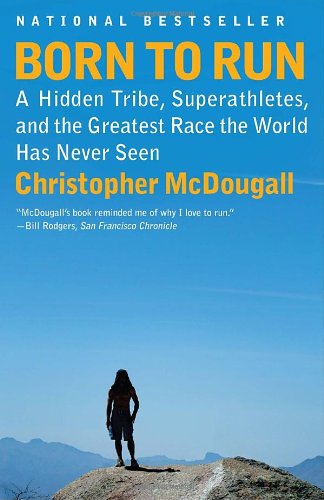
    The book was entitled, Born To Run – A Hidden Tribe, Superathletes, and the Greatest Race the World Has Never Seen.

    [amazon asin=0307279189&template=iframe image][amazon asin=B0098IGRZC&template=iframe image][amazon asin=B006TXCMF8&template=iframe image][amazon asin=B008FPTW3S&template=iframe image]

    Now a good book is a good book. Whether it’s about cooking or boxing or The Civil War or taxidermy — well, maybe taxidermy might be a stretch — and this is a good book.

    Born to Run starts out with this fitness writer trying to determine why he can only run a few miles without experiencing pain, but ultra-runners can travel fifty, even a hundred miles with no pain at all. The book bounces around and is part essay, part term paper and part narrative, but by the time you get to the halfway point — to this secret race in The Copper Canyon in Mexico — it is a serious page turner.

    Born To Run focuses on the Tarahumara Indians of Mexico, who run hundreds of miles in homemade sandals without rest or injury. It describes the ultra-running sport, the cast of characters and the science behind it, but ends in a secret race where America’s top ultra-runners travel to the Copper Canyons for a 50 mile desert foot race — over the world’s least hospitable terrain — against the tribe.

    The books main point is that human beings are literally born to run — and he delves into the research to support this. He covers the jogging movement and takes a few swings at Nike — but comes back to one great question.

    When we were kids we were always told to slow down. Stop running. Then as adults we state that we hate running.

    How did that happen?

    Born to Run shows what can happen when running recovers that childlike joy again and is more game than chore.

    A sign of a great book is when it’s over, when you’ve turned the last page or listened to the last CD, you go through a period of separation — after all, the people you have just spent countless hours with and have learned to care about are now gone. Poof.

    And when this happened here, I went rushing online to research the real life characters of the book: Jenn and the Bonehead, Barefoot Ted and Micah True, just so I could extend the experience a little longer. Just to say goodbye.

    And although I rolled my eyes at the lengthy evolution ‘science’ descriptions – which were a little high-handed — I really did enjoy this book. And when I had finished it, many of the things I thought were impossible in my life, I began to rethink.

    Born to Run shows just what us humans can do if there are no limits.

    If you need a lift, encouragement, or inspiration — and what man doesn’t — read this book.

  • How to plan a family reunion

    How to plan a family reunion

    reunion

    When it comes to how men view family gatherings — specifically, how men view extended family gatherings — there are three common stages that we pass through.

    First, we have the carefree days of youth; stage one. This stage runs from birth to sometime in our teenaged years. This is when we are excited to be part of this distinctive, kinetic family group and we look forward to each and every time all the aunts and cousins gather. These are the times when the best possible place to be, is right next to Uncle Don when he tells the boomerang story, or be at bat just before Amy; because she has a wicked cleanup swing. This is the time period when all your grandfather’s jokes are hysterical and all your aunts are beautiful. And the absolute saddest part of the day, the only bleak aspect, is when the cars begin to pull out of the driveway. And when all the cousins are gone.

    Then we move to stage two. These are the dark days and run from our teenaged years to sometime in our late twenties to early thirties. These are the thin skinned, chip on our shoulder, lots to prove and little show for it, angry days. When we grit our teeth every time Uncle Mike asks us how long we’re going to keep this job. This is when Vick and the other cousins smirk when we talk about our multi-level marketing plans — right before they ask how long it’s been since Jennifer dumped us. And even though she didn’t dump us, it was mutual, we watch the clock and cannot wait for everyone to leave — so we can catch our dad alone and discretely ask if he can help with part of this month’s rent.

    Then comes the third and final stage. The best stage. The last stage. Stage three. This occurs from your late thirties on until you die. This is when we show up for family gatherings in that twelve year old car — and are actually proud of it because it runs and is paid for. This is when your uncle challenges you to an arm wrestling match and you let him win. This is the time when you want to listen to the stories so much more than you want to tell any. These are the days when humility and pride both exist together and where you bounce your child on your leg and give a secret look to your cousins as your nephew describes how he’s going to make an absolute killing in real estate. These are the days you’ll enjoy the most and these are the times when you will work the hardest to keep the extended family together.

    Which means continuing, or beginning, those family reunions.

    HOW TO PLAN A FAMILY REUNION

    It’s a good idea to plan a reunion four to six months out — this gets the event on everyone’s calendar and locks everything in. It also gives you half a year to organize everything and work it.

    6 Months Before

    • Choose a date — check with folks that are traveling the longest distance and make sure it fits their schedules as they are making the biggest sacrifice.
    • Choose a length of time — is this over a Saturday afternoon or an entire weekend?
    • Choose a general location.
    • If over 50 people, create a reunion committee — determine person in charge of finance, food, entertainment, clean up, lodging, etc.

    4 Months Before

    • Lock in your location — if it’s a park or outdoor event, reserve the pavilion or fields if needed. If it’s inside, give the deposit needed or reserve the spot, etc.
    • Plan the menu — create the food assigning dishes and other food items to each family. Arranging for extra cooking and/or grilling facilities. Or finding a caterer.
    • Create a schedule — determine activities and entertainment, is there going to be a family softball game or contests. When do you want to schedule this?
    • Build in family history portion — start doing some research on the family tree or a huge white board/chalkboard is great for everyone to build a family tree together.
    • Photography and/or video — with everyone carrying cameras on their phones, hiring a photographer or videographer may not be necessary, but what will be is to find a place to store all those images and video. Create a reunion Facebook page or website where everyone can dump all the pictures taken — you can use this in the organization end as well to post updates and schedule.
    • Marketing — are you going to create postcards for the event or design t-shirts? Now is the time to plan those.

    3 Months Before

    • Finance — if large, determine cost per person.
    • Send out invitations — include times, locations, schedule, maps and costs or side dishes that need to be brought.
    • Committee sign ups — depending on the size there will be needs in each area. This is the time to get people to sign up for; set up teams, cooking committees, entertainment teams, etc.
    • Reserve items — do you need to rent a tent, chairs, portable grill? This is the time to reserve all of that stuff.

    2 Months Before

    • Create a stocking location — you’ll need a place to begin to store things.
    • Make nonperishable purchases — order the cups, table cloths, condiments, craft items, decorations, etc.
    • Send out e-mail or social network posts to keep the momentum going and stay on everyone’s thoughts
    • Arrange/place deposits on large food items — will you need 200 pounds of burgers? Now is the time to arrange this and to shop around for the best price.

    1 Month Before

    • Confirm, confirm, confirm — with family on food items, with reservations and with lodging.

    2 Weeks Before

    • Contact restaurants with a final guest count if necessary.
    • Contact volunteers with specific tasks to confirm times, locations, and the final guest count.
    • Review your final to-do list.
    • Buy last-minute decorations and supplies.
    • Create signs and banners.

    2 Days Before

    • Review reunion minutiae with committees.
    • Pick up any rental equipment — chairs, tables, grills, etc.
    • Prepare final payments and tips

    The Day Before

    • Set up and decorate.
    • Sleep.
  • How to pitch horseshoes

    How to pitch horseshoes

    shoe

    Back in the days of the Roman Empire, the horseshoe — the one we think of now with the U shape — hadn’t been invented yet. So instead, they used round iron rings that were nailed to the horse’s hoofs to protect them. Now, when the soldiers had some down time — you know, when they weren’t busy sacking and pillaging — they were always on the lookout for ways to keep busy, so they would pitch these round iron rings towards stakes in the ground. And from this the game of quoits — which would later evolve to the game of horseshoes — was born.

    The game grew and continued to be played for thousands of years, but not always by full-time soldiers or farmers or other “hardworking” laborers of the time — they would never have had the free time needed to play such a game. It was truly more of a volunteer soldier’s sport because the trained soldiers would have tasks to complete during every minute of the day. In fact, after the Revolutionary War, a beaten and bitter Duke of Wellington could not believe that his great English army was brought down by “pitchers of horse hardware.”

    After the wars came peace, and as soldiers returned home they brought the game of quoits with them. Soon it was not uncommon for every village and farming community to have their own pitching court.

    In 1869, eager to organize the game, England set up rules to govern it. It was determined that the distance between stakes would be 19 yards. The player would pitch his quoit with one step, the ground around the stake would be filled with sand, etc. Even with these rules in place, it wasn’t until 1910 in the city of Bronson, Kansas, that the first World Horseshoe Pitching tournament was held.

    Today, the game of horseshoes remains the ultimate backyard game. It’s a  perfect blend of skill, risk, and tactics. And although Corn Hole is a portable game that works well while tailgating and waiting in line for concert tickets, the game of horseshoes will always remain as the ultimate gentlemen’s recreational activity.

    HOW TO PLAY HORSESHOES

    The game of horseshoes includes four shoes — two of each color — and two stakes. Regulation horseshoes require that the two stakes be 40 feet apart, with each stake in the center of a sand-filled pit.

    If you have some space in your yard, the horseshoe pit is very easy to be made permanent by framing the two stakes with some scrap lumber and filling with playground sand. If you’re going to do this, toss a little cement in the hole with the stake so that it doesn’t move when the horseshoe hits it. Or, you can keep your game portable and bring them with you to every picnic and family reunion.

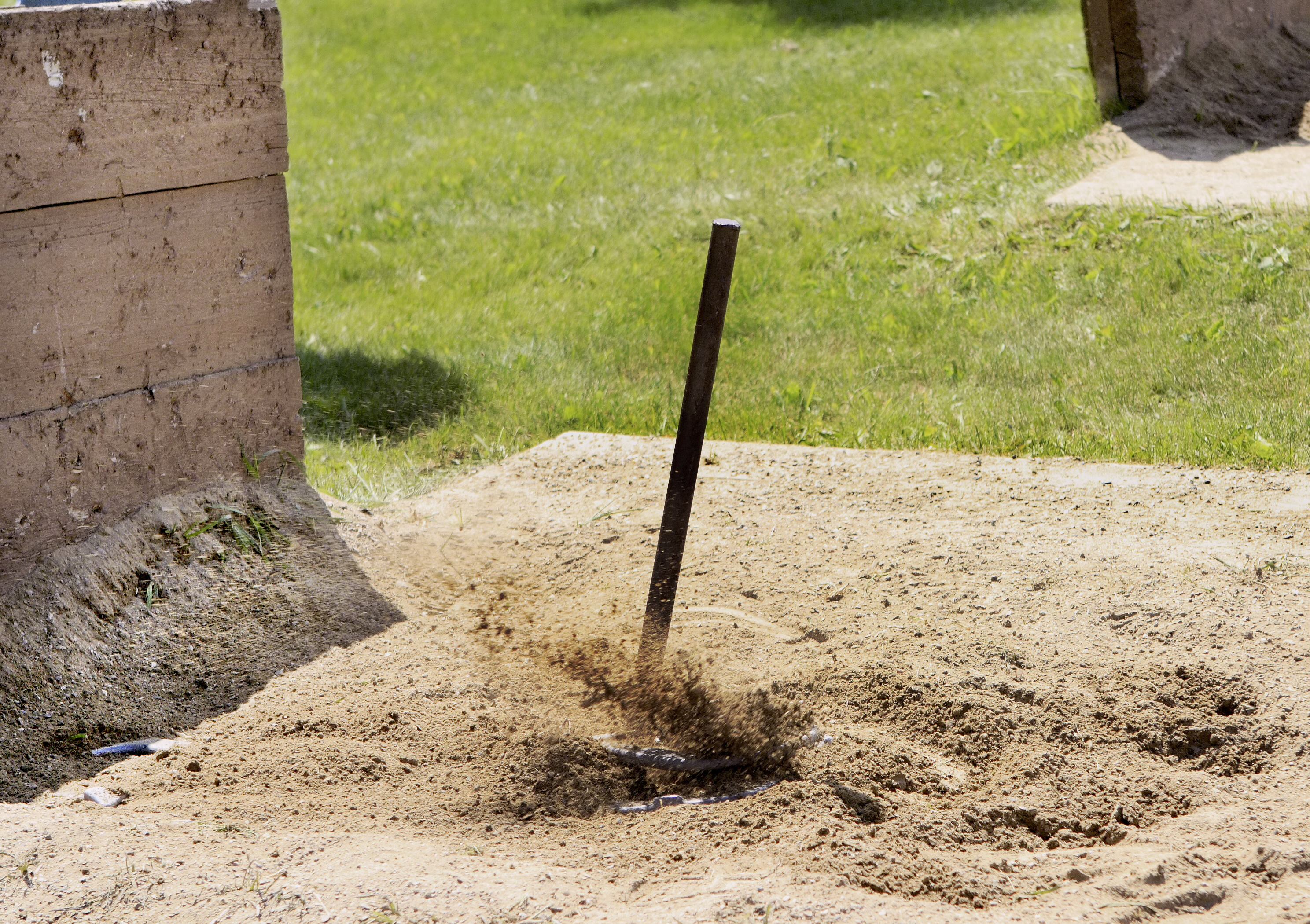
    Horseshoes can be played by two individuals or two teams of two players. The most common version of the game involves “innings.” During each inning, each player pitches two shoes. The goal is to get the horseshoe around the stake. This is a “ringer” and it is determined by the ends of the horseshoe being hooked on the stake and both ends of the shoe clearing the stake. When pitching, you must stay behind the foul line, which is 3 feet in front of each stake.

    Scoring:

    1. A ringer — the stake is completely encircled by the shoe — 3 points.

    2. A leaner — the horseshoe is leaning against the stake — 1 point.

    3. Closest — if there are no ringers or leaners, the person with the shoe closest to the stake gets 1 point. In addition, if your two shoes are closer than both of your opponent’s shoes, you get 2 points. If you get a ringer, and you have the closest shoe, it’s 4 points.

    4. Cover — if a shoe is thrown on top of your shoe as a ringer, your ringer is cancelled.

    The goal is to be the first to score 15. In another version of the game, you can determine that you’ll both have a set number of pitches, and whoever has the most points at the end wins.

    Remember the goal is to not only get more points, but to stop your opponent from scoring. Sometimes the best tactic is not to pitch for the point but to cover or knock over the opponent’s leaning shoe.

    A backyard set of horseshoes will run you about twenty bucks. If you look around, I bet you’ll find some public horseshoe pits near you and probably a league looking for members.

  • Every man needs a garden

    Every man needs a garden

    garden

    Remember when you were a kid and you took the tops of carrots and placed them in in a jar lid of water on the windowsill? Then every hour, all day long, you would run back to check; to see if the carrots had sprouted yet? Then, the next morning, as soon as you got up, you checked again? Then later that day too? Then —. Well then — it would always get a little boring. And by the end of that day you had forgotten it all?

    Remember that?

    Then later, about two weeks, you’d finally think about those carrots and you would run to the windowsill to find one of two things?

    1. Either the carrot tops had completely dried out from neglect and stood there mocking you? Or —
    2. Your mother had watered them, which meant that you had bright green sprouts of success projecting from the top?

    And when that happened, you —. Well, you felt like a —. Well, like a guy who could get carrot tops to grow on a windowsill. Which, at six years old, is about as big a deal as it gets.

    And that — my friends — was your very first garden.

    And for some of us, that was our last one too.

    There are many reasons to have a garden — and when I say garden I mean everything from a few tomato plants to an acre of produce. A garden is just something you grow on your own.

    Reasons to have a garden

    1. No matter where you live, you can have a garden. If you are in the middle of Manhattan or the backwoods of Tennessee, you can grow stuff. On a windowsill, a roof top, the sunny part of an alley or in the many community gardens that are set up. There is no place, no living arrangement, where you can’t grow a few things.
    2. There is little skill involved. Yeah, I know, you don’t have a green thumb. And yes there is an art to gardening. But the basics are incredibly simple. You put seeds in the ground. You water them. They grow.
    3. Cost savings. Just a few tomatoes or squash from the small patch of dirt by the garage saves you money that you would have to pay out. And that’s not even adding in the value of canning or freezing for the winter.
    4. Pride. Yeah, it sounds hokey but there is pride involved. When you take a few zucchini to a neighbor or a basket of tomatoes into work, there is enormous pride in that. A sense of accomplishment.
    5. Health. Whatever you grow in your garden you know how it was grown. You know what pesticides you put on and how much. There are no secrets. And you have the advantage of taking the food at its most peak time and going from garden to table.
  • How to make jerky

    How to make jerky

    jerky

    Origins

    Tracing the history of jerky is somewhat difficult because people have been salting and drying meat for centuries. However, the word jerky has a direct line back to the ancient Incas: sometime around the year 1550. During that time, the Incas would cut slices of llama meat, rub it with salt and dry it in the sun or over a fire. When the Conquistadors arrived, they continued this tradition and called it Charqui, and when they later invaded the Americas they noticed that the natives were doing a similar process with meat from buffalo, deer and elk. The Native Americans began using the same term — only with their accents they pronounced it jerky.

         Jerky allowed people to consume high protein fuel that was readily available and eat it when food was scarce. It became a staple food item for early American pioneers and allowed for Western expansion. Over the years people discovered that the meat could hold more flavor if certain spices and tastes could be added and they began to create it for flavor, not only as a survival food.

    Nutrition

    Contrary to popular belief, beef jerky is actually a pretty healthy snack. It’s a great source of protein, is low in fat and calories and has minimal carbohydrates. Yeah, the sodium content is through the roof, but hey, it’s salted meat.

    And remember, jerky is not just a snack food. Jerky is dehydrated meat which means it can be rehydrated again when placed in hot water so you can use it in chili’s, stews, at home or while camping or hiking.

    But here’s the thing. The cost of commercial jerky is downright ridiculous.

    Economics

    Let’s use the Jack Links brand of beef jerky as an example. This brand resale’s for $5.99 for a 3.25 ounce bag. So, if we take $5.99 and divide it by 3.25, we find out that this jerky costs $1.84 an ounce. And since there are 16 ounces in a pound, that means the cost of this jerky is — $29.44 a pound.

    That’s thirty dollars a pound for — beef jerky.

    In comparison:

    • Lobster is currently running around $12.00 a pound
    • Filet Mignon is $19.00 a pound
    • And Prime Rib is about $17.00 a pound

    But beef jerky — that you buy at the gas station — is thirty dollars a pound.

    Now add to this, the comparison between the taste of homemade jerky and the prepackaged kind, and it’s not even worth comparing. The jerky you can make at home tastes worlds better, hands down — and will not contain any strange chemicals, preservatives or nitrates.

    Now marketers jumped on this fact a few years ago and starting producing small commercial dehydrators to dry your meats and vegetables, at home. They created infomercials, bought television time and dominated the shopping channels, stating what a crime it was for you to pay so much for beef jerky when you can make it yourself. But they would like you to make it at home — with their two hundred dollar dehydrator.

    Now, that’s just plain silly.

    Why would you pay two hundred dollars — for something that is basically a little heater and fan? And why would you pay any amount of money for a device that can do what the Incas did in the 1500’s with just fire and the sun?

    Because everything you need to do to dehydrate — herbs, vegetables, meats, anything — can be done in your kitchen oven and can be done for pennies.

    And it doesn’t matter what type of meat you use. You can use beef, venison, turkey, salmon, tuna or something even more exotic. And you can cater each batch to different tastes — make sweet, smoked or spicy.

    HOW TO MAKE JERKY

    1. Cut meat in strips. You’ll want these to be about the size of a slice of bacon. And the best way I’ve found is to get your butcher or meat department in the supermarket to cut the meat for you.
    2. Prepare marinade. Here is a real simple marinade that works well.
    • 1 part Worcestershire sauce
    • 1 part Soy Sauce
    • 1 tbl Honey
    • 2 tsp black pepper
    • 1 tsp chili powder
    • 1 tsp crushed red pepper flakes
    • 1 tsp liquid smoke
    • 1 slice of onion
    • 1 squeeze of lemon
    1. Place meat in storage dish, cover with foil and refrigerate anywhere from two hours to overnight.
    2. Preheat oven to 160°F
    3. Place a cookie sheet, wrapped with aluminum foil, in the bottom of the oven. This is to catch all the dripping from the jerky, because you are going to place the jerky right on the oven racks.
    4. Allow to dry in the oven for anywhere from 6 to 12 hours.