Category: Free Stuff

  • 10 free things to do this weekend

    10 free things to do this weekend

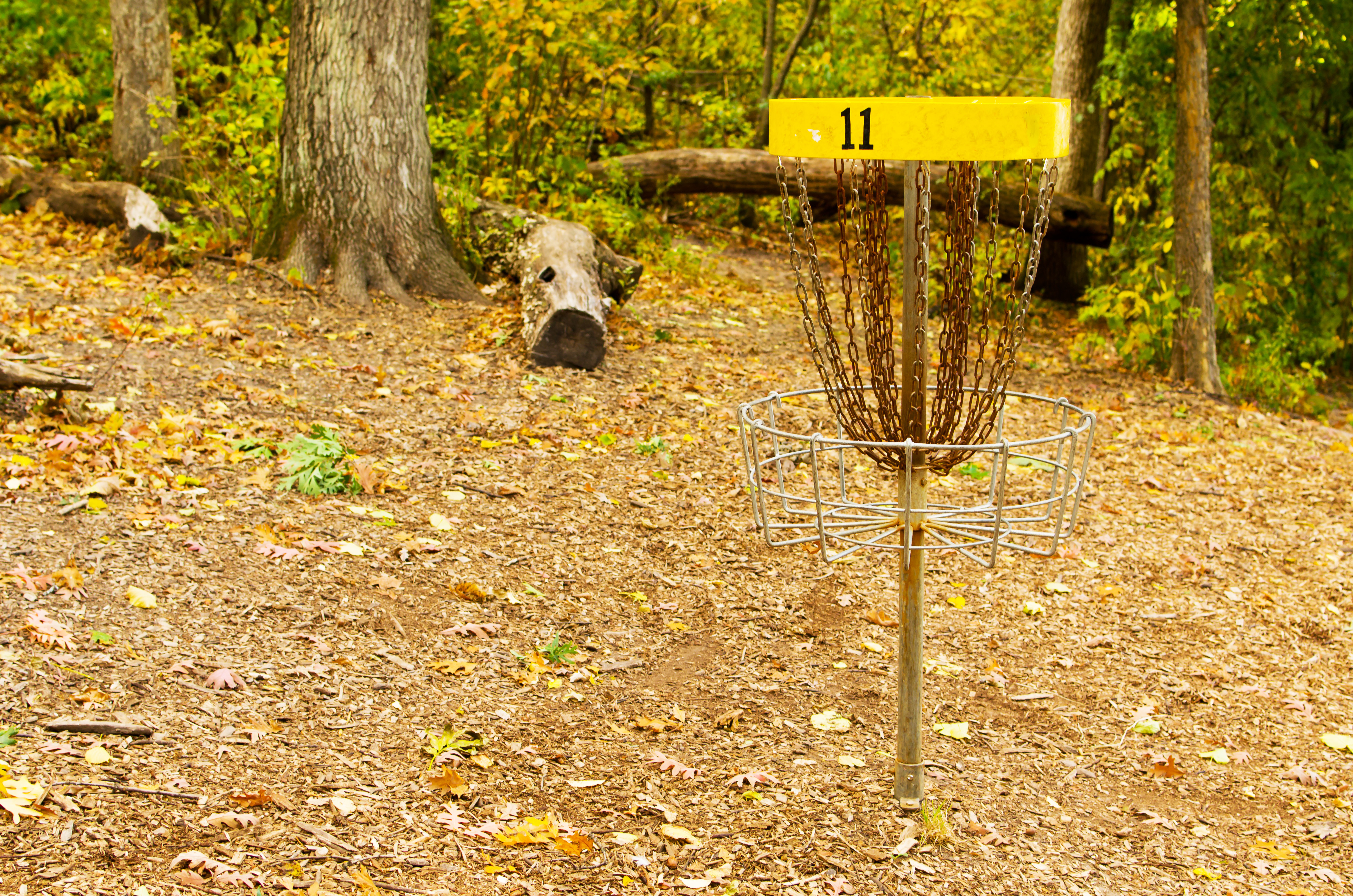
    frisbee

    When the kids were little — probably around age 7 and 9 — we had this Saturday tradition. I’d get them up, get them fed and dressed, and we would head out for the day; just the three of us. No girls allowed. Now, we could do anything we wanted to on those days. Anything. But there was only one rule. We couldn’t spend any money.

    Now part of the reason for this was because we were a young family and were trying to be frugal — hey, just an afternoon of bowling or movies with kids will cost fifty dollars or more — but there was actually more to it. When you pay for something — especially when you pay for entertainment — it loses charm quickly. It’s less special, less personal, since it’s easily accessible and available to anyone who will pay for it. But if you have to find the things to do, to locate and get to them; there is a reward at the end.

    So those Saturdays had to be free.

    And today, if you asked the kids about those times — ten years later — they will tell you, in exciting detail, of all the goofy things we did. Of the battlefields we went to, of the time we took a bus tour of a landfill — which was actually pretty fun. They’ll tell you of open air concerts, of the wars we had in the woods, the street fairs and the concerts of Irish dancers. We went to museums and zoos. We toured churches and synagogues and we caught buckets and buckets of fish.

    All fun. All free.

    10 FREE THINGS TO DO THIS WEEKEND

    10. Movie festival.

    This may seem corny, but home movie festivals are a lot of fun — and can be as large or as an intimate as you want them to be. Break out all the DVD’s in the house and pick the top ten or so and that’s your film selection for the day — an entire guilt free Saturday of doing nothing but watching movies. If you want to open it up to family and friends, a quick post on your favorite social network showing the schedule, and you’re good to go. Or you can pull down the curtains, turn the phones off and just escape for the entire day.
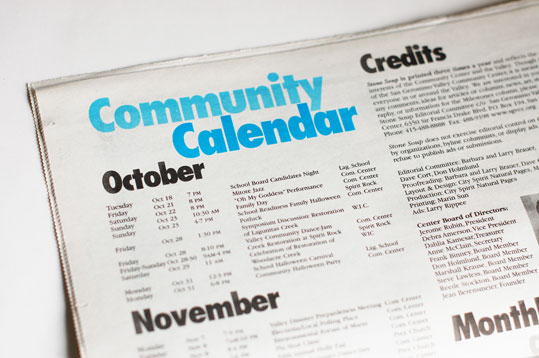


     9. Community Calendar.

    Community calendars are amazing and much of what the kids and I used to do, came from these sources of information. On any Saturday, there are always little festivals, tours, classes and concerts. Always. And these folks are so glad to see you and to tell you about what they do.


    8. Community sports

    Professional and college sporting events are pretty pricey and even High School level sports will cost you a few bucks. But there are always community sports that are open to the public. Softball leagues, Little League Baseball and Pop Warner Football, are a lot of fun to watch. But what’s really interesting is to find the less mainstream sports — I just found out that in our area, there are Cricket Leagues. I’ve never been but we’ll be going this year.


    7. Create a potluck open house

    With a few phone calls, texts or posts, you can invite the world in for the day. Ask everyone to bring a dish to pass and break out the board games, the horseshoes, the video controllers or just sit in the backyard and catch up. People can come and go, arrive and leave, all day long.
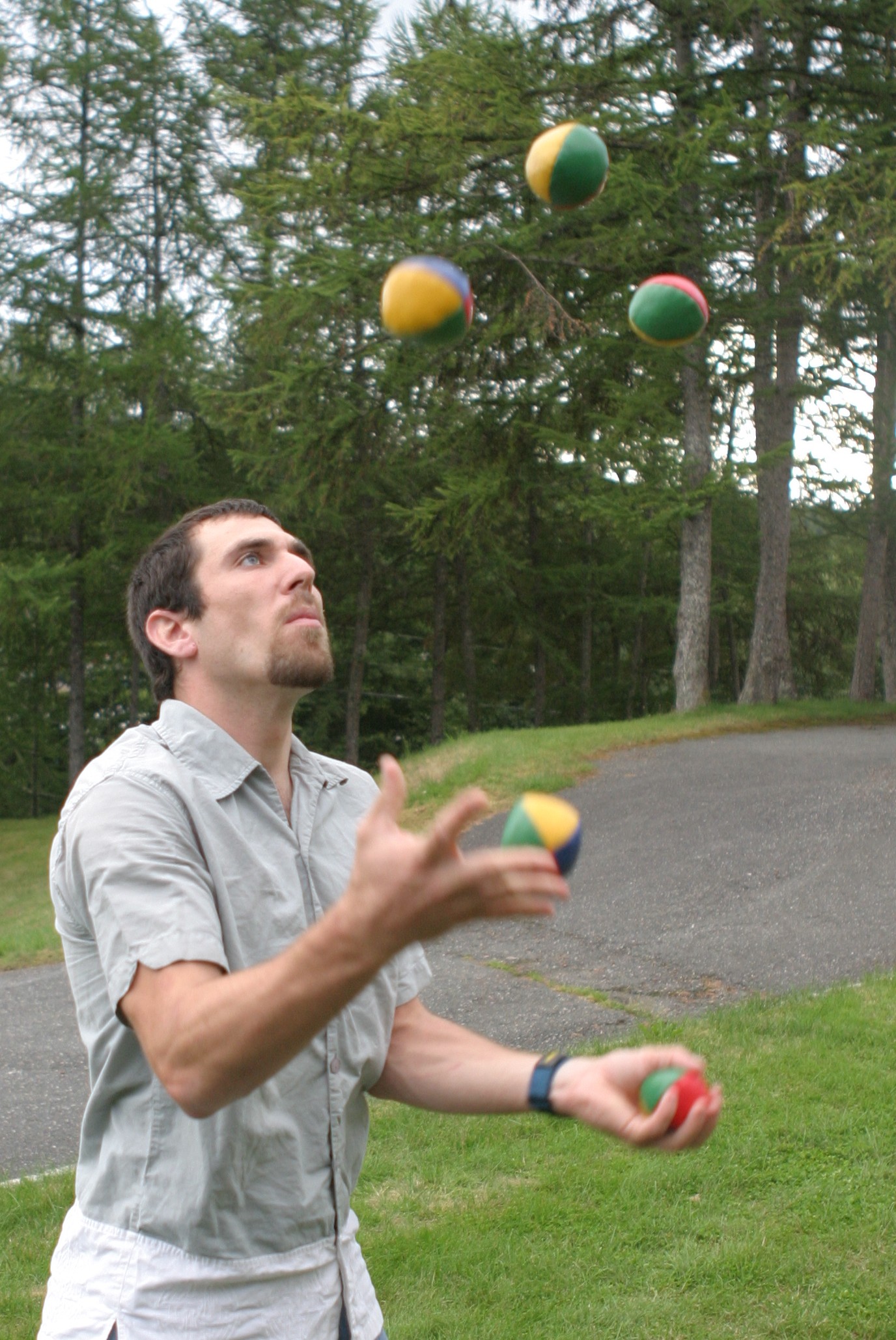


    1. 6. Learn how to juggle

    Okay, hear me out on this one. On Monday morning, when your co-workers ask, “So, what did you do this weekend?” You can answer, “Oh, not much”. Or you can say, “Me? Oh I learned to juggle.” With a few tennis balls, some online videos and a couple of hours of practice, you can learn the basics of juggling — in a single day. And believe it or not, you will use this for the rest of your life.


    5. Frisbee golf

    Most of the Frisbee golf courses I’ve ever seen are open to the public and are inside parks. A cooler full of sandwiches, a few Frisbees and some friends, and you have another cool story to tell on Monday morning.
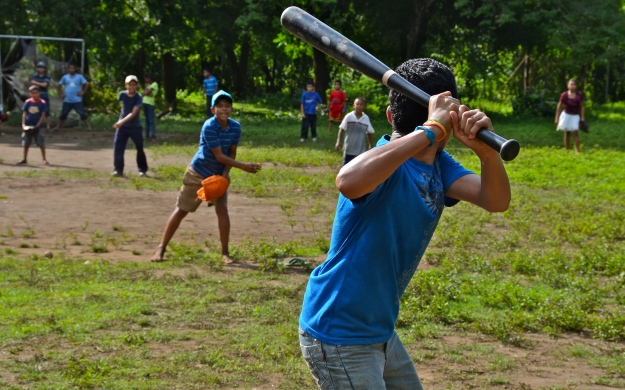


    4. Pick up game.

    With the exception of basketball, you rarely see pickup games of baseball and flag football anymore because organized sports are more the norm. But with a few phone calls you can organize a pickup softball game on Saturday. Bring a cooler and sandwiches and your all set — and if it’s a park where you can bring a charcoal grill, even better.


    3. Have a yard sale.

    I said you couldn’t spend any money, I didn’t say you couldn’t make any. Yard sales are actually pretty fun to host and can be quite lucrative; depending on the goods you have to sell. And it also allows you to clean out your attic or garage.
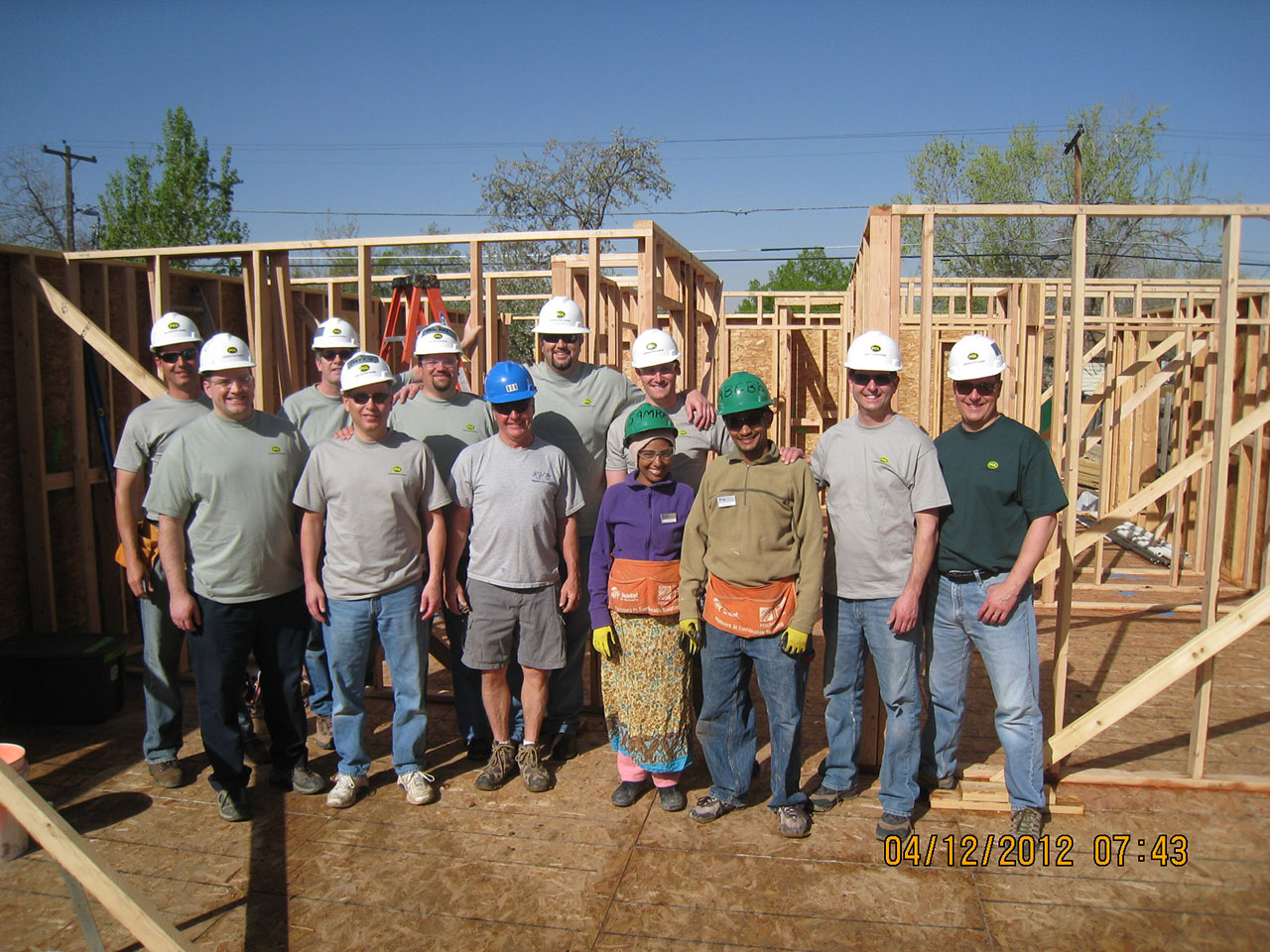


    2. Habitat for Humanity

    There are many organizations that don’t want your money as much as they need your time. Habitat for Humanity is a great example. On any given Saturday they have ongoing projects where they could use your help and the great thing is they don’t care if you’re a carpenter or don’t know which end of the hammer to hold. There’s something for everyone to do — and it’s a great way to learn basic construction skills.


    1. A trip to nowhere

    Probably the most fun I’ve had with my kids is when we would get in the car and head out with absolutely no destination or plan. Because when you do this, you’re not just focused on the destination — because you don’t have one — you’re enjoying the entire trip.
  • How to build a Hobo Stove

    How to build a Hobo Stove

    hobo

    If you are under the age of eighty, then you — like most of us — have not lived through a true worldwide economic depression. Oh, we have all seen economic challenges — layoffs, rightsizing and recessions — but few of us were alive to experience the prevailing effects of The Great Depression of the 1930’s.

    During this time, jobs did not simply become scarce, they just vanished. Banks collapsed. Manufacturing stopped. Crop prices were cut in half and virtually overnight the country changed and remained changed for nearly a  decade.

    Imagine what happens when a country of men wake up and in spite of their best intensions and efforts, they can no longer take care of themselves or their families. Over time, the strain broke many of these men — because underneath subsistence is survival but underneath survival is hopelessness.

    Very few of us know what it’s like to live in a world when money was not simply hard to come by, but for many American’s it just didn’t exist any longer. Bartering became a common method of commerce and many people simply worked for food and shelter.

    Ironically, the group of people that faired the best during this time was the  American farmer — those located outside of the dustbowl Midwest. Even with low crop and meat prices, the American farmer had enough food for his family as well as had goods to trade with.

    With these farms surviving, migratory workers would travel and seek out the seasonal seeding and harvest work available. This was fueled by the fact that with homes being foreclosed on and with little cash for rent, there were more people living a transitory lifestyle then ever before — moving from town to town seeking what work could be found.

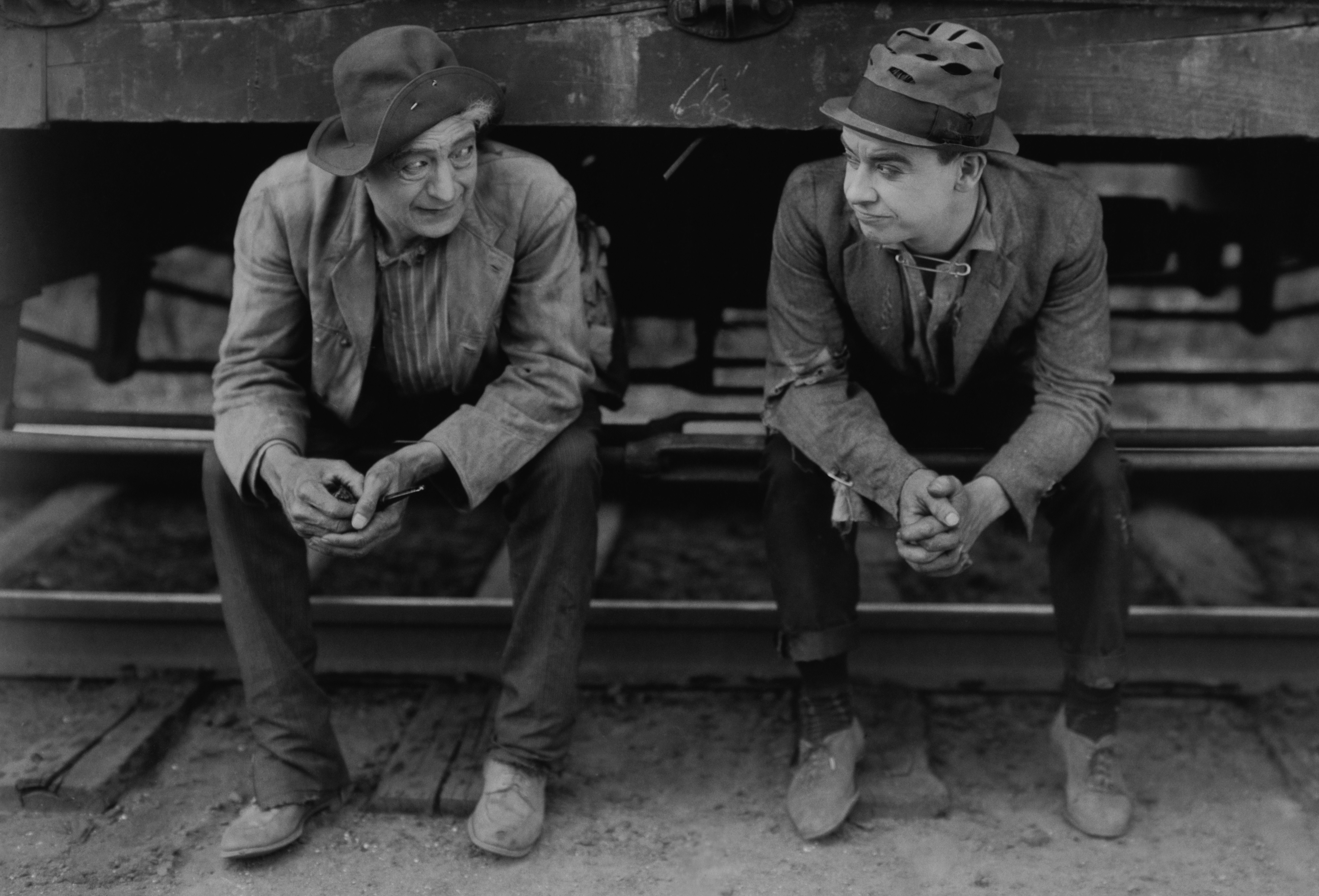
    Now, the most colorful group of travelling men during this time was the American Hobo. The term hobo is believed to come from the phrase ho-boy, referring to the great groups of farm and field workers that competed for migratory work. These men would travel light and stay on the move — often by sneaking aboard freight trains — looking for work, a meal and if possible a little adventure.

    The modern term hobo is often used when referring to anyone homeless but this is not accurate.

    Remember …

    A hobo is someone that travels looking for work.

    A tramp is someone that travels but does not work.

    And a bum neither travels nor works.

    The general philosophy of the hobo — and of many American’s during The Great Depression — was simple: waste nothing, throw little away and make do with what you can find.  And from this, the hobo stove was born.

    Now, there is no evidence that the hobo stove was actually created during the 1930’s. It’s such a simple design — made simply from old cans — and a stove similar to it was used in World War I. But it was commonly used during this period and often associated with it.

    A hobo stove is a simple stove made from discarded food cans — a coffee can is often used but you can build the stove with larger or smaller cans — that allows air to ventilate it and an area to feed fuel in. These stoves are cheap, easy to make, relatively efficient and can be burned at no cost because they burn sticks, pine cones, wood scraps, cardboard, pretty much anything you find along the way. And because they burn pretty much anything, you will never run out of fuel.

    In the modern world, Hobo Stoves are great little devices to have. They can be used during power outages, as a camping stove, while hiking or backpacking, to distill water in or as part of a survival kit.

    Now there are many designs to a hobo stove, but here is a real simple one — and remember, they don’t need to be too pretty they just need to work.

    [amazon asin=1586489011&template=iframe image][amazon asin=B00IK6HKFE&template=iframe image][amazon asin=B000HEKR98&template=iframe image][amazon asin=B007WHCFC0&template=iframe image]

    HOW TO BUILD A HOBO STOVE:

    1. Find a base can for your stove and a slightly smaller top can. You can make this stove as large or as small as you want. I wanted to build a light backpacking stove here, so I used a spaghetti sauce can for the base and a dog food can for the top, but I’ve seen these stoves made out of large #10 food cans for those wanting full sized camp stove.

    2. With a ‘church key’ style can opener, place some holes along the bottom base can. These are to draw air in and up through the stove — it’s important to have some space between holes though so you have stability at the base of the can.

    3.  With a nail, punch some holes in the side of the can, center, for ventilation, as well as four additional holes  — an inch from the top — for the support pins. The small holes in the center will add some additional ventilation and the four peg holes need to be directly across from each other as the pegs that will support the top half will rest on it. Make sure the holes are equal distance across, as you want this stove to be as stable as possible so the pot on top of it is centered.

    4. Place two pins across the can for support of the top can. Metal tent poles work great for this and you can even use coat hangers but you’ll need to find the thicker, heavy coat hangers to use. A standard coat hanger will be too thin and not work here. Remember, this is where the top can, the pot and a few cups of water will be supported. The ones I used metal from a metal bathroom shelf that I rescued from the trash. I cut off a few tent pole sized pieces, straightened them and bent the edges down.

    5. Cut the bottom out of the top-can so it becomes a metal tube. You can try to use a can opener on some cans but this one had a rounded edge so I just poked a hole in it and then used tin snips. Bend the sharp edges in with pliers.

    6. Cut a “V” shaped section out of the top can. This will be used to feed the fuel down into the stove as well as allow the opposite side of the can to become a wind screen. Bend any sharp edges back with pliers.

    7. Set the top-can down into the bottom-can until it rests on the pins. You want your pins to be across parallel with each other not making an X. Although by crossing them might be more stable, you will be placing fuel down past the pins and don’t want anything to get hung up.

    8. Find the pot you will be using. This should really be done earlier in the process, then you can identify the size stove you want based on the pot you will be using — as well as the place it will be stored. But I got lucky here and found this great little coffee pot in my basement — it had a small pinhole in the side that I patched with some J-B Weld and it worked great. The size of the pot was small enough but the right size so the entire stove fit perfectly inside of it — even allowing room for my silverware, fire starters, and other items to be stores. It’s difficult to tell in these photos, but this pot is very compact and is only 6” high. The perfect size for a small backpacking stove.

    9. Cover stove and pot with high temperature spray-paint. You don’t have to take this step, but by covering both the stove and the pot you are not only protecting it but making it more difficult for the tars and oils from the fire to build up on the surfaces. High temperature spray paint can be found in any hardware store.

    Test your gear. If you need to make modifications it’s easier to do this at home. Try the stove at least once before using it in the field and anything you don’t like, just change and tweak until you have it exactly the way you want it.

    I tried this stove and I had water boiling in about four minutes — using just a handful of twigs and leaves from my backyard as fuel. Total cost ended up being zero because I recycled the cans and pegs and found the coffee pot in my basement.

    Remember: keep the design of the stove simple as you don’t need a device to simmer a five hour brisket in. These stoves were designed to quickly cook a few  stolen eggs before breaking down camp and catching the next freight out of town.


    BIG ROCK CANDY MOUNTAIN

    First recorded by Harry McClintock.

    1928

    The Hobo Theme song.

    One evening as the sun went down
    And the jungle fires were burning,
    Down the track came a hobo hiking,
    And he said, “Boys, I’m not turning
    I’m headed for a land that’s far away
    Besides the crystal fountains
    So come with me, we’ll go and see
    The Big Rock Candy Mountains

    In the Big Rock Candy Mountains,
    There’s a land that’s fair and bright,
    Where the handouts grow on bushes
    And you sleep out every night.
    Where the boxcars all are empty
    And the sun shines every day
    And the birds and the bees
    And the cigarette trees
    The lemonade springs
    Where the bluebird sings
    In the Big Rock Candy Mountains.

    In the Big Rock Candy Mountains
    All the cops have wooden legs
    And the bulldogs all have rubber teeth
    And the hens lay soft-boiled eggs
    The farmers’ trees are full of fruit
    And the barns are full of hay
    Oh I’m bound to go
    Where there ain’t no snow
    Where the rain don’t fall
    The winds don’t blow
    In the Big Rock Candy Mountains.

    In the Big Rock Candy Mountains
    You never change your socks
    And the little streams of alcohol
    Come trickling down the rocks
    The brakemen have to tip their hats
    And the railway bulls are blind
    There’s a lake of stew
    And of whiskey too
    You can paddle all around it
    In a big canoe
    In the Big Rock Candy Mountains

    In the Big Rock Candy Mountains,
    The jails are made of tin.
    And you can walk right out again,
    As soon as you are in.
    There ain’t no short-handled shovels,
    No axes, saws nor picks,
    I’m bound to stay
    Where you sleep all day,
    Where they hung the jerk
    That invented work
    In the Big Rock Candy Mountains.