Category: Simplifying

  • Homesteading

    Homesteading

    homestead

    There is a great quote by Robert Heinlein that goes, “Every generation thinks they invented sex.”

    Yup. We do. And not just sex, every generation thinks they were the first to discover — everything.

    We arrive in the world and we begin to see and experience. And when we see and experience it’s assumed that no one has seen or experienced before us. How could they? We just found out about it ourselves and since we’re the center of it all, how could anything of any importance have occurred before we got here? Or before it involved us?

    It can’t. And since it’s all new to us, therefore it’s all new.

    Makes sense. Except for the fact that — it’s all been done before. And just because we are now experiencing it, doesn’t make it new.

    What has been will be again, what has been done will be done again; there is nothing new under the sun.” Ecclesiastes  1:9

    And there isn’t.

    With the exception of every generations new technological gizmos that are coming out, and will always be coming out, everything important has been done before.

    But this isn’t a bad thing.

    What is a bad thing is when we think that by just renaming it or repackaging it, that we get the discovery credits. Because there aren’t new discoveries, there are only new movements.

    Eating only what food that will go to waste if we don’t eat it, doesn’t get to be freeganism. It’s what people have been doing for centuries and do every day around the world.

    Making use of what materials you have, doesn’t get to be repurposing or even recycling; it’s just plain good sense and what’s been done since — forever.

    Now, there’s another new trend of an old idea that has popped up in the last few years that isn’t new at all, but is still pretty intriguing. And it’s the old concept of homesteading.

    The term homesteading is pretty commonly known and we all have a general idea of what that means. You go someplace where few people live and you live there and farm.

    Sort of.

    The true definition of the term homesteading has to do with subsistence farming or living a self-sufficient lifestyle — more modern terms for old ideas. But what makes this  modern trend and an interesting one is that there is now land out there that developers have no interest in — in every state, probably within two or three hours from where you are right now — that is dirt cheap.

    And I mean dirt cheap. In fact, for less than the cost of a big screen TV you can get a few acres of land — and some plots for even less than that.

    Now, these are homesteading lots — or undeveloped lots. Most don’t have power, or water or much of anything except the land itself. But they are cheap and they are plentiful.

    What is homesteading?

    The pure definition of homesteading dates back to the 1862 and the United States Homestead Act. It is the ability to establish a home in unsettled land and get everything you need from that land. You get your food from your garden, your fruit trees and your livestock. You get what currency you need in the sale of said items, by bartering or other means. You take care of the land and the land takes care of you.

    Now recently homesteading has been placed in a ultra-liberal almost radical box by using such terms as self-sufficiency and living off the grid. But the act of homesteading is simply taking responsibility for yourself through your land.

    Now the reason I’m bringing up all of this is not to promote the idea of homesteading. I think it’s a great concept for the right people but I also think it can be used as an  excuse to pull away from society and the neighbors that need you. So it’s two edged.

    But what I do want to promote — and think that this does apply to everyone — is that there is cheap land out there. It’s probably on a hill, covered in trees and probably will never see a power connection or a water line, but it’s affordable. And the thing about land is that they are not making any more of it.

    There is something in our core — and this goes back further than generations, it’s why our ancestors came here — about the need to own a piece of land. If you own your home that’s great, but it’s not land. It’s not a piece of the earth.

    For a few thousand bucks you can own a few acres of land. And if you only throw a tent there a few times a year, if you only go to it to show your friends, if you only build a shack or a cabin or an a-frame on it, it’s your land. And if you pay the few hundred dollars a year in taxes, it will be yours forever.

    That flat screen will be gone. That vacation will be distant memories. But your land will always be there.

    Your land.

  • How to Make Acorn Pancakes

    How to Make Acorn Pancakes

    acorn

    When I was a kid, my all-time favorite book — and I mean all-time favorite — was a novel entitled My Side of the Mountain. I loved that book and I read it at least a dozen times. It’s the story of a boy named Sam — I think he was around twelve years old — who runs away from his New York City home and heads for the Catskill Mountains to live off the land. The book actually takes place in Delhi, NY, which is sixteen miles from my hometown of Walton.

    Now Sam isn’t the typical runaway. He doesn’t hate his parents. He’s not in trouble with the law. And he is not being abused by his family. Sam just wants to be on his own and wants to live in the mountains

    So he does.

    And while surviving alone he hollows out the base of a tree to live in, raises a baby peregrine falcon that he trains to hunt for him, and has some other amazing adventures.

    For food, Sam survives on the rabbits and squirrels that Frightful — Sam’s trained Falcon — brings him, as well as the occasional stolen deer that he would poach from the illegal hunters who shot them out of season. And of course, there were acorn pancakes. Sam lived on piles and piles of acorn pancakes.

    Now, when I was a kid I asked my mother if we could make acorn pancakes, and she told me that this was impossible. She said that My Side of the Mountain was simply a story; you couldn’t make flour from acorns and therefore you couldn’t make pancakes from acorn flour.

    I was heart broken. The author had lied to me! Everything else had seemed so real… Years later, when I had finally come to grips with forgiving author Jean Craighead George for her deception, I discovered that she was not the one lying. (Sorry, Mom!) There are acorn pancakes.

    Acorn pancakes and acorn biscuits were actually a staple of the Native American meal. Acorns hold some valuable proteins and carbohydrates and also hold a good deal of saturated fats. In the modern world they are fun to collect, fun to process, and add a unique nutty flavor that can’t be found anywhere else.

    How to Make Acorn Pancakes

    Gather. The first step is to collect your acorns, and the rule of thumb here is to harvest a third more than you need. The acorns should be perfect specimens — if they are rotten or have been infiltrated by bugs, they can’t be used.

    1. You need to crack the acorns and get to the meat. This is where you’ll do your final inspection. If the nuts are dark, chipped, or look as if bugs have gotten in, chuck them.
    2. A coffee grinder works well for this. You don’t want to get the acorn meal down to a flour consistency, but more like the consistency of ground coffee beans.

    Wash. If you were to taste the acorn meal right now you would notice one thing: it’s horrible. That’s because it’s loaded with tannins. Native Americans would take the acorns and fill them in baskets and leave them in streams. It’s difficult to get this tannin out, but crucial. The method I’ve found that works the best is using a stocking. Take a stocking and fill it with the acorn meal. Tie it off and run it under cold water, all the time kneading the stocking. You’ll need to do this several times — a dozen or so — to make sure the tannins are all out. A good way to check is to taste the water that comes out of the meal you are rinsing. If it’s clear and has no taste, you’re good.

    Some people bake the acorn meal, but I find this gives it a more bitter taste. Just spread it out and let it dry.

    Now, there is no yeast in acorn meal so it is best used to add into other meals — I like using buckwheat flour or corn meal. This gives it a unique nutty and sweet flavor.

    Knowing how to make acorn pancakes is not a mission critical skill to possess. It’s not up there with being able to change your tire or tie a tie. But it’s a fun thing to do with your kids as a fall project or as just a very creative way to zest up foods.

    Enjoy.

  • The versatile toolbox

    The versatile toolbox

    tool

    My mother was born in 1922. My dad in 1924. So, if you calculate and then add forward you would think that my age would be — what? 72? Late sixties?

    Well, I guess that makes sense since my brother would have been 70 this year and my sister 66, but no. I’m 52. My mother had me when she was 40 and she had my younger sister when she was 42.

    So I was born in the sixties and my parents were born in the twenties. This is not a generation gap but two generations apart which created some interesting paradoxes. The first was that my brother and sister were the age of most of my friend’s parents — when I was three years old my brother was coming back from Vietnam and when I was six I remember hearing a huge fight as my sister was leaving for something called Woodstock. But those are different stories.

    Now, there were some challenges with this arrangement; my dad’s health never allowed him to be the rough and tumble father that other kids had and at the age of 54 my mother started Nursing School to bring in some much needed income after my father became disabled; which meant that for a period of time my dad was retired and my mother was a college student. And for those friends that came to our house there was a certain generational language barrier that would often need translation; a davenport is a couch, dungarees are blue jeans and gangershank is someone tall and thin.

    But it also created the amazing opportunity to not only experience my own generation growing up but the other two in my home: my older siblings of the sixties and my parents of the Depression Era, 1930’s.

    Now as a kid, having Depression Era parents created certain challenges — plaid pants were just as good as solid colors that cost more and powdered milk is very tasty. And as an adult it engrained a desire for all things to have value and to have multiple uses.

    Tools are like that. Sure, there are tools that are designed for one specific use, one specific application. But the most use we get out of our tools means the we can not only get more done with what we have but it also justifies paying a little more for the tools that are more versatile and we will be using more.

    An example of a non-versatile tool is a hammer. As soon as you put together a tool box the first thing you grab is usually a hammer but in reality it has only a few uses — and is almost becoming obsolete with the use of cordless screwdrivers. A hammer is used for hammering in nails and pulling them out. That’s pretty much it. Anything bigger than that, a post or a beam, you’re going to pound in with a sledge or a mall. So in actuality you will probably not use a hammer all that often.

    But there are other tools that can be used for multiple uses and will allow you to get more bang for your buck.

    VERSATILE TOOLS
    Cordless drill. The cordless drill is the big daddy of versatile tools. This thing has so many uses and is so handy that if you are going to buy a higher end tool, this is where you might want to spend your money. All a cordless drill is, is a drill with a rechargeable battery with a screwdriver bit but you will use it all the time. My neighbor Eric and I just built a 25 X 15 foot deck in our backyard using only two cordless screwdrivers and a power saw. You can change out a door lock, mix paint, grind metal and, oh yeah, drill holes with this amazing tool. Worth having and worth having a good one.


    Socket set. Socket sets are used to tighten bolts and nuts and some will argue that a set of spanners — the silver wrenches with a closed end and an opened one — is better than a socket set. But I have lost far more spanners than I have lost sockets because I always put it back in the spot in the case. Also because of the gears of the ratchet handle, you will always be able to torque a bolt tighter with a socket wrench than a spanner. Now, unless you are going to rebuild a car or doing some high end stuff, my advice is to go middle of the road to cheap on a socket set. Get yourself a metric and American style and keep them handy.


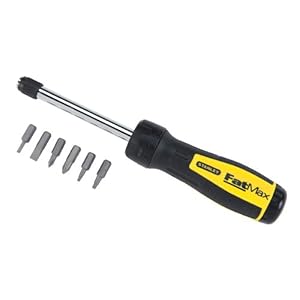
    Multi bit screwdriver. My second favorite versatile tool is the multi bit screwdriver. All this is, is a screwdriver with a hollow magnetic end that allows you to change the ends — flat head, philips, mechanical and a few different sizes — so you have six  screwdrivers in one. These are handy little things and my advice here is to first get the style where the extra heads go into the hollow part of the handle and screw closed. The models where the bits pop into the lower shaft will always get lost. Every time. And the second is to go cheap. Multi bit screwdrivers are great but they are pretty much disposable. Get yourself a few and put in one in your junk drawer, glove compartment, garage. Great little tools to have and you can get them everywhere from Dollar General to Wal-Mart.


    Mini screwdriver kit. These are also great little kits and have all the very small flathead and phillips screwdriver sizes. They are perfect for fixing a pair of eyeglass, opening up small electronics and getting in anywhere the manufacturer doesn’t want you to go. Again, go cheap here because you will always loose some and every Dollar Tree in the country has these kits.


    Reciprocating saw. Now until recently my reciprocating saw sat on the bottom of my workbench and saw very little use. But once I started using it I saw how incredibly versatile it is. It is so light and portable that you can use them to cut tree branches, metal, PVC, anything. I recently built a large kindling box with leftover wood from our deck and used a reciprocating saw and a cordless screwdriver. Saw-Zall is the big guy here but again unless you’re a pro, go cheap. Harbor Freight has some very inexpensive brands.


    Staple gun. Where you can’t get a hammer, you can get a staple gun. Small, cheap, easy to use, these guys work well for tacking down carpeting, cable, upholstery, any place you would normally use a small hook or nail. They are many different sizes and grade of staple and you can swap out if needed. Go middle of the road here as far as cost. The springs on the cheap ones tangle and snap pretty easily and the cheaper frames are easier to bend.


    The key is if you pretend these tools are all you have in your toolbox and use them as much as you can.

    Have fun.

  • The power of the bagged lunch

    The power of the bagged lunch

    lunch

    In the early 1800’s, almost 70% of all American families lived on farms. Most of these were subsistence farms — a few cows, pigs, chickens on some land where corn, wheat and potatoes were planted — and these farms were the family’s main source of food and clothing. So, the farmer would rise early and feed his livestock, repair fences, outbuildings, fix machinery, gather eggs and in the middle of the day, when he would need some food and a short break, he would walk back to his house to visit with his wife and children and eat a small meal. And for hundreds of years the term lunch would simply mean that; to take a break from your work and go home to eat.

    As the effect of The Industrial Revolution spread, factories and mills needed more and more workers. Now the small farmer had the opportunity to not only care for his land but to travel to town for day work in order to bring additional income into the household. And because it would not be practical for the farmer to return home for lunch — and because he would need to leave early in the morning and not return until late that night — he would have to take food with him.

    So the farmer would put hard-boiled eggs, biscuits, vegetables and meat into a container —often a small basket with a handles — and head out in the morning. He would often meet up with other men who were carrying similar baskets as well as those with meals wrapped in handkerchiefs or placed in metal tins. In fact, workers in more extreme environments — such as coal mines and steel mills — needed something to transport their lunch in that would protect it, so they often used small covered milk pails.

    By the 1850’s manufacturers saw this growing consumer need and began to mass produce fitted metal buckets and boxes specifically designed to carry lunches in. They were called lunch pails even though the trend was leaning more towards the box style. They sold well and the need increased.

    [amazon asin=B0040MH642&template=iframe image][amazon asin=B000246GSE&template=iframe image][amazon asin=B00HJ8DFGC&template=iframe image][amazon asin=B006HFC3K2&template=iframe image]

    In 1904 The Thermos, was introduced as an option to the commercial lunch pail and now a worker could have a cold lunch with a hot drink. And when schools began to regionalize — and the one room school migrating to the larger multi grade school — children were now unable to come home for lunch and also needed to take food with them. And many children who wanted to mimic their fathers, sought out metal pails or buckets to take their lunches in.

    In 1935, the first children’s lunch box with a licensed character was produced and the image of Mickey Mouse was lithographed over an oval tin with a handle. And in 1950 the first TV character made the cut, with Hopalong Cassidy being the choice, which was a lunchbox that cost two dollars and sold half a million units in the first year alone.

    For decades the metal lunchbox was the symbol of the workforce and the character lunchbox was the symbol of childhood — with millions of men carrying their lunches to work and millions of school children carrying theirs in boxes decorated with their favorite TV shows, bands and sports figures.

    But when a child moved from Elementary School to High School the lunch box was often abandoned. In that socially sensitive environment, the need to quickly distance ourselves from childish things became powerful and the brown paper bag became a safer containment choice — as well as the ability to now purchase a hot lunch from a school cafeteria.

    Today, the average American purchases his lunch rather than brings it. He spends an average of ten dollars on each trip and the majority of those meals are bought at fast food restaurants. We eat in our car. We eat on the run. And we eat whatever is quickly made and cheaply provided and whether it’s the memories of soggy bologna sandwiches or the still need to distance ourselves from childish things, few of us bring a lunch to work — or if we do it’s a quickly prepared sandwich that we eat at our desk.

    But the bagged lunch as an entity, as a creative endeavor, is an amazing thing. It is healthier, far less expensive (we spend almost $1,000 a year on fast food lunches ) and give us this versatile control over our day. It’s a very neat thing.

    So the first step is to get yourself a lunch box — and I mean one that fits your needs as well as your lifestyle. A brown paper bag is only temporary but choosing a container to bring your lunch in shows a commitment to seeing it through.

    So here are some quick options for lunch ideas.

    1. Leftovers. This is an easy and simple. Simply take some of that lasagna from last night or some of that leftover casserole and bring it to work in a Tupperware container. Provided you have access to a microwave, this works well.

    2. Soup. There is nothing like a cup of hot soup with a biscuit or some bread in the middle of the day. And the great thing here is you can be working in the middle of the woods and still bring hot soup in a thermos. The only requirement here is, make a pot of homemade soup — very easy to make, tastes better, healthier and much less expensive than canned soup — http://543skills.com/skill-194-how-to-make-homemade-soup/

    3. Wraps. Only because sandwiches are so overplayed — and because most store bought bread is pretty tasteless — wraps are a good alternative. You can make a wrap with cold cuts, or a with beans and cheese for a tortilla. They are smaller, can be made quicker and are easier to eat on the run.

    And the last option is this amazingly simple thing called a Mason Jar Salad. This is so incredibly simplistic that it’s absolutely brilliant.

    mason jar

    So, what you do is take a Mason Jar and in the bottom you put in your wet ingredients; your salad dressing. Then you add in the solid vegetables — anything that won’t get soggy if they touch the dressing — tomatoes, cucumbers, red onion, celery, peppers, etc. Then you add your softer items; your pasta, mushrooms, avocado. On top of that you put your protein; your chicken, turkey, beans and then the lettuce and on top goes your cheese and any nuts.

    So what you have is this self-contained salad that is separated, fresh and can remain that way for days. In fact many people make these up a week at a time and use them days later. It remains in the jar until you need it then you pour it into a bowl where all the ingredients mix. Genius.

    So get creative, get a lunch box and get to work.

    http://www.epicurious.com/articlesguides/blogs/editor/2014/07/mason-jar-salad-inspiration.html


  • 9 older products that are better than their newer versions.

    9 older products that are better than their newer versions.

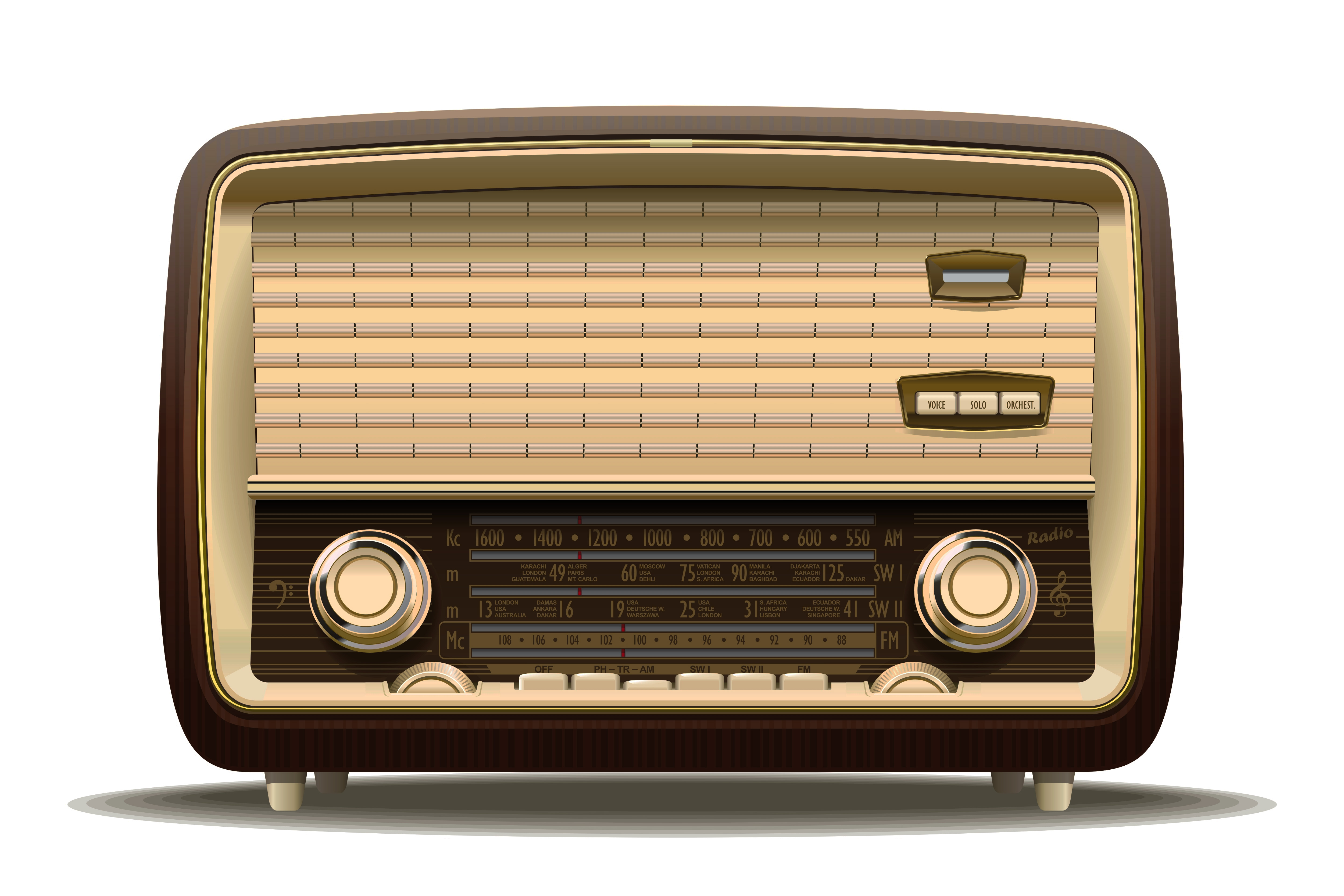
    radio

    As the great Billy Joel said, the good old days weren’t always good and tomorrow’s not as bad as it seems.

    In 1955, 38,000 people in the country had polio — now there are less than 300 cases in the entire world. In 1960, 30% of Americans lived under the poverty line and that number is now below 10%. And in 1950, almost half of all American homes didn’t have a telephone. Today there are roughly six internet connected devices per household.

    So yes, we’ve come a long way. But still, there are some areas, some products and services, that have suffered from the modern march of advancement. Which means that there are a certain number of areas where the older versions are much better than the new ones.


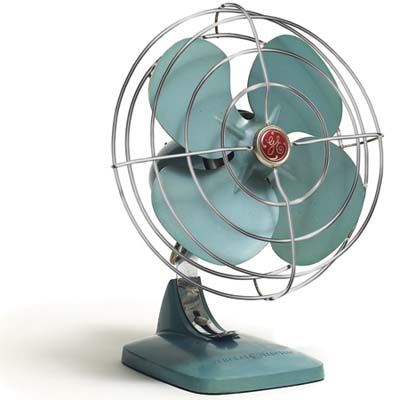
    9. FANS

    The vintage fans of the 1940’s and 50’s were amazing. They had metal blades, huge motors, moved air around like a jet engines and lasted forever. Modern versions are basically disposable with tiny motors, plastic cages and thin plastic blades.


    8. SILLY PUTTY

    The old Silly Putty was this amazing stuff that bounced, floated, stretched and held any image that you put it to. It fit back in its egg shaped container and unless it got covered in gunk from the floor, could be used for months. The newer version is less pliable, doesn’t bounce and worse yet, does not pick up any image that you press against it. And is this strange purple color now.


    7. FISHING REELS

    In the 1980’s many spinning reel manufacturers went through a process to remove cost from their products. Metal housing and gears were replaced with plastic ones and mechanisms were simplified and redesigned. The result of this was a reel of far less quality. In fact, in 1994 I gave my brother-in-law my old Mitchell 300 reel when I got my new Mitchell. He still uses my old one and I’ve been through four replacement reels since.


    6. CROCK POTS

    About five years ago, the great crockpot cartel got together and decided — for whatever reason — to increase the low cooking temperature on new crockpots. I have no idea why, but the result is a crockpot that cooks higher. So now slow cookers, cook faster. And if you’re not careful it is so much easier to overcook meat in a new crockpot than it was in an old one.


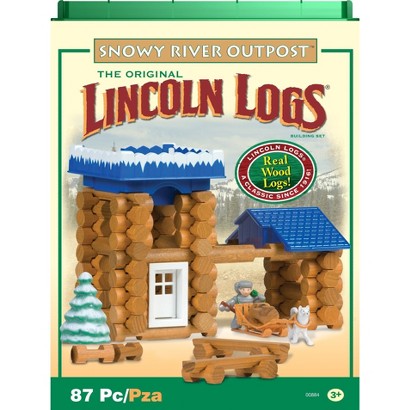
    5. LINCOLN LOGS

    Lincoln logs are great. They were these logs that were etched out at the end so you could build cabins, forts and outbuildings. And of course because they were logs they were made of wood. New ones are not. They are made of — plastic. How can you have a plastic log cabin?


    4. UMBRELLAS

    And umbrella was once a well-crafted, solid, piece of adornment. It had a thick wooden handle, solid metal bracings and heavy canvas to protect you from the rain — in fact umbrellas were coveted by thieves because there was always a market for them. Modern equivalents are made to be replaceable and disposable and in fact you can buy umbrellas from The Dollar Tree.


     3. PAPER ROLL CAPS

    Cap guns came out in the 1950’s and were these guns that shot paper caps that exploded and smoked like real guns. The caps hid large dimples filled with black powder that created this exciting bang. Modern equivalents are completely flat and contain very little powder and make a soft pop — about as load as bubble wrap popping.


    2. CRACKER JACK PRIZES

    The prizes in Cracker Jacks used to be amazing — small pinball games, cars, charms, plastic guns, everything. In fact, that was part of the charm of Cracker Jack was getting to that prize. The prizes of today are not even worth mentioning — usually a piece of paper — and is the equivalent of getting socks for Christmas.


    1. AIR TRAVEL

    Even before 911 air travel had lost its glamour. Gone are the days of warm towels, full meals and a cheery attendant that is only a button push away. Air travel is now no frills, sit down, shut up and keep quiet.


  • How to simplify your digital life

    How to simplify your digital life

    digi

    On June 5th of 1883, at the house that stood on 6 Harvey Road in Cambridge, England, John and Florence Keynes gave birth to their very first child. A son they would  name John, after his father. Young John, was bright and happy and had the advantage of being raised by a prominent English family that highly valued formal education.

    A few years passed and shortly after John’s brother Geoffrey was born, John was enrolled in the Perse School Kindergarten — but was absent a great deal due to illness and was almost held back. And by the time his sister Margaret was born, Keynes was a student at Saint Faith’s Preparatory School, where he excelled in mathematics and algebra and was recognized for the breadth of his vocabulary.

    In 1894, at the age of eleven, John Maynard Keynes rose to the top of his class. It was a place that he would stay for the remainder of his education.

    1897 came and Keynes won a scholarship to Eton College where he continued to excel in mathematics, and in 1902 he left Eton for King’s College, Cambridge, where he was given another scholarship as well as began to specialize in economics.

    Now, if you’ve studied economics, you know the basics of Keynes. He would end up changing the standard economic views of the time; as well alter the way we look at governmental roles. He created in depth theories of business cycles — all of which would be later called Keynesian Economics — and in the 1930’s, he began to seriously challenge world economic concepts. He disagreed that free markets would always provide full employment, as well as the idea of demand leading to periods of high unemployment and argued that governmental regulation would need to closely monitor boom and bust cycles.

    Then came World War II and Keynes’s ideas began to be adopted by the leading Western economies, which lead to the creation of The World Bank. And even though Keynes died in 1946, he actually became more influential after his death — as the governments and economic systems that had adopted Keynesian practiced were now booming — which created real life success to support his theories. Time Magazine listed John Maynard Keynes as one of the top 100 most influential people of the 20th century.

    Now there is no doubt of the intelligence and vision of John Maynard Keynes. It’s clear that he was absolutely correct in many of his theories of economics and financial projection, and his understanding of business and world market trends is probably better than anyone’s ever. But — there was one area that Keynes was incorrect about.

    In fact — he was dead wrong.

    Keynes began to map the growth of technology in the 1930’s. He saw that with the rate of the development of useful tools and innovations being created, that this would eventually affect society as a whole. He factored in the advances he was seeing in communications, manufacturing, transportation, all areas, across all industries, and in an essay entitled Economic Possibilities For Our Grandchildren, Keynes made a statement that would be tied to his name from that moment on.

    “By the time my grandchildren are adults,” Keynes had said. “They would be working a 15 hour work week.”

    Technology would free us. New machinery and modernization would be the tools to take on most of the burden of our average work week.

    Keynes stated that over time, with the help of machines, technology and new concepts, people would become more productive. Machinery and the modernization of the work place would be able to take on the burden of most of our work week and an hour of labor would produce more and more stuff as time moved on. So we would be able to work less and less. Technology would free us.

    And Keynes was —- so wrong.

    Well — that’s not true. He was right about the development of technology.

    Since his death in 1946, mechanical and computer innovation has changed every aspect of our lives. We can now send information around the globe, in seconds. We can communicate with anyone we want to in a written, video or text format. We have access to information on any possible subject instantaneously and can bounce signals off satellites to track our location and get us where we need to go faster and more efficiently. We can sort, organize or trend data. And we have successfully made the world a much smaller place by opening access to every part of it.

    But Keynes was wrong about how this would affect us. It didn’t free us. Not at all. It only lead to the bar being raised.

    According to the US Bureau of Labor Statistics, an average individual needs to work 51 hours per week today, in order to produce as much as someone who was working 40 hours a week in 1950 — so a team with email, spreadsheets and cell phones, needs to work more than the team with typewriters, carbon paper and messenger services. And in 1990, MIT completed a study that predicting that with the current rate of technology growth, mixed in with the productivity rates; we will need to increase our work by 120% more in the next 50 years to capture the same current production rate. So we will need to work 15 hours more each week in fifty years, in order to be as productive as we are today.

    The technology that is available now is not creating less work. It’s creating more, by constantly raising the competitive need. So we end up doing more because we need to do more.

    And not only has technology simply raised the minimum standard of work production, it is completely altered how we think and react. We need to be wired, to be connected — all the time. If we hear that ding or buzz of our phone, we have the Pavlovian need to see what it is — no matter what we are doing or where we are.

    Here are some interesting facts.

    84% of people use their cellphones as alarm clocks, so their phones are right there with them, even when they sleep.

    A Health Club chain recently had to post signs asking members not to use cell phones — in the shower.

    Lifeline and Link-Up provides free smart phones to those on state welfare programs, as texting capabilities and wireless internet access is now seen as a basic human need.

    We are 34% more likely to misplace our car keys, than we are our cell phones, because we are on average away from the less.

    Municipalities are now adding signs on rural roads that have limited cell phone coverage to prepare drivers for the fact that their phones will not work for several miles.

    Phones, tablets, smart watches and whatever is next in the technology line, are deeply embedded into our lives. So how do we use these tools — as tools and not leashes? How do we take back our lives and unhook the electronic collars?

    Well, there are a few ways.

    1. When is it ego and when is it priority? Yes, there are times when that phone needs to be glued to your hand — if you’re on call, working out a customer emergency, someone in your family is ill. Yes. You need to work the phone. But those are rare. Most of the times that we respond to an email during dinner, is so we can be the first one on the email chain to do it. To save our place. To let our customers, or co-workers, or the guys on The Little League Committee know that we are on this. And this is just ego. If you are not getting further information or adding information to the conversation, then you are just electronically thumping your chest to show others that you soon will.
    2. Respond with data — anytime you send a work email, text, voicemail without new information, you are wasting time. Especially on long email chains where the world is being copied. Determine what the goal is and work towards that.
    3. Batch tasks. The most productive people out there, batch there electronic chores. The answer emails in the morning or late afternoon. They respond to texts at lunch and return voicemails only in the car. They get more done in a shorter period of time and actually get real work done, offline, with real people, face to face.
    4. Turn off notifications. Just because your aunt posted a video on Facebook or your neighbor put her goulash recipe on Pintrist, this doesn’t make it news. Those notifications are only distractions. So turn them off and look at them later.
    5. Leave it in the car. If you look at an organization’s highest ranking individuals, thye almost always never arrive at a meeting, presentation, lunch or discussion, with their cell phone. They almost always leave it in the car. These are the people that want to be focused and want you to know that they are. The reverse side of that is, when you are meeting with high ranking people from other companies, they won’t have their’s either. And they will respect those that give them the same respect.

    The simple rule is you want walk around all day with your hammer or a spatula. You use these things when needed then put them back. The same thing is true for your phone, tablet watch or whatever other magical electronic gadget you have. Use the tool and master it. Then put it away.

    Confidence is found when you can distance yourself until needed.


  • 10 free things to do this weekend

    10 free things to do this weekend

    frisbee

    When the kids were little — probably around age 7 and 9 — we had this Saturday tradition. I’d get them up, get them fed and dressed, and we would head out for the day; just the three of us. No girls allowed. Now, we could do anything we wanted to on those days. Anything. But there was only one rule. We couldn’t spend any money.

    Now part of the reason for this was because we were a young family and were trying to be frugal — hey, just an afternoon of bowling or movies with kids will cost fifty dollars or more — but there was actually more to it. When you pay for something — especially when you pay for entertainment — it loses charm quickly. It’s less special, less personal, since it’s easily accessible and available to anyone who will pay for it. But if you have to find the things to do, to locate and get to them; there is a reward at the end.

    So those Saturdays had to be free.

    And today, if you asked the kids about those times — ten years later — they will tell you, in exciting detail, of all the goofy things we did. Of the battlefields we went to, of the time we took a bus tour of a landfill — which was actually pretty fun. They’ll tell you of open air concerts, of the wars we had in the woods, the street fairs and the concerts of Irish dancers. We went to museums and zoos. We toured churches and synagogues and we caught buckets and buckets of fish.

    All fun. All free.

    10 FREE THINGS TO DO THIS WEEKEND

    10. Movie festival.

    This may seem corny, but home movie festivals are a lot of fun — and can be as large or as an intimate as you want them to be. Break out all the DVD’s in the house and pick the top ten or so and that’s your film selection for the day — an entire guilt free Saturday of doing nothing but watching movies. If you want to open it up to family and friends, a quick post on your favorite social network showing the schedule, and you’re good to go. Or you can pull down the curtains, turn the phones off and just escape for the entire day.


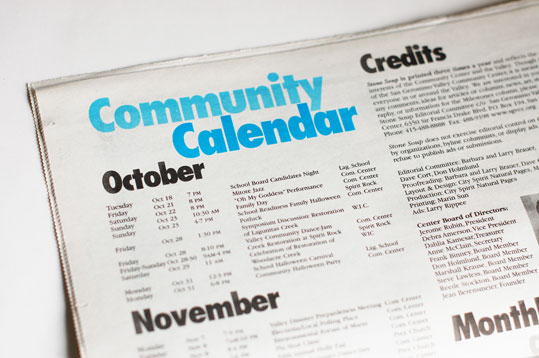
     9. Community Calendar.

    Community calendars are amazing and much of what the kids and I used to do, came from these sources of information. On any Saturday, there are always little festivals, tours, classes and concerts. Always. And these folks are so glad to see you and to tell you about what they do.


    8. Community sports

    Professional and college sporting events are pretty pricey and even High School level sports will cost you a few bucks. But there are always community sports that are open to the public. Softball leagues, Little League Baseball and Pop Warner Football, are a lot of fun to watch. But what’s really interesting is to find the less mainstream sports — I just found out that in our area, there are Cricket Leagues. I’ve never been but we’ll be going this year.


    7. Create a potluck open house

    With a few phone calls, texts or posts, you can invite the world in for the day. Ask everyone to bring a dish to pass and break out the board games, the horseshoes, the video controllers or just sit in the backyard and catch up. People can come and go, arrive and leave, all day long.


    1. 6. Learn how to juggle

    Okay, hear me out on this one. On Monday morning, when your co-workers ask, “So, what did you do this weekend?” You can answer, “Oh, not much”. Or you can say, “Me? Oh I learned to juggle.” With a few tennis balls, some online videos and a couple of hours of practice, you can learn the basics of juggling — in a single day. And believe it or not, you will use this for the rest of your life.


    5. Frisbee golf

    Most of the Frisbee golf courses I’ve ever seen are open to the public and are inside parks. A cooler full of sandwiches, a few Frisbees and some friends, and you have another cool story to tell on Monday morning.


    4. Pick up game.

    With the exception of basketball, you rarely see pickup games of baseball and flag football anymore because organized sports are more the norm. But with a few phone calls you can organize a pickup softball game on Saturday. Bring a cooler and sandwiches and your all set — and if it’s a park where you can bring a charcoal grill, even better.


    3. Have a yard sale.

    I said you couldn’t spend any money, I didn’t say you couldn’t make any. Yard sales are actually pretty fun to host and can be quite lucrative; depending on the goods you have to sell. And it also allows you to clean out your attic or garage.


    2. Habitat for Humanity

    There are many organizations that don’t want your money as much as they need your time. Habitat for Humanity is a great example. On any given Saturday they have ongoing projects where they could use your help and the great thing is they don’t care if you’re a carpenter or don’t know which end of the hammer to hold. There’s something for everyone to do — and it’s a great way to learn basic construction skills.


    1. A trip to nowhere

    Probably the most fun I’ve had with my kids is when we would get in the car and head out with absolutely no destination or plan. Because when you do this, you’re not just focused on the destination — because you don’t have one — you’re enjoying the entire trip.

  • The smart way to spend your tax return money

    The smart way to spend your tax return money


    check

    Around early October — this is when the stores are full of pumpkin carving kits and bite sized packs of Snickers bars — you will see the first sign of the retail Christmas season. In some stores this will be just a peak; a few feet on an aisle where you can buy garland and lights, whereas other retailers will dedicate one side of the Halloween aisle with wrapping paper and bows; just waiting for the first of November when they can evict Halloween and get the inflatable reindeer on the shelf.

    Then Halloween which means that Christmas has officially begun — and yeah, there’s Thanksgiving in between and you’ll see displays for Stove Stop Stuffing and premade pie crusts, but Christmas is the real rock star of retail.

    Now, if you’re paying attention, this is also when you’ll see the very beginning of the retail tax season. In between the commercials for the hottest door buster bargains, you’ll see the first tax commercials. Small and spread out. Just a few and usually from H&R Block who have significantly bumped up their marketing efforts over the last few years. And these ads will be about how much money you’re not going to get back by using other tax preparers.

    These are the teaser adds. Little reminders dropped in amongst the Christmas cheer to get you to start thinking about your taxes.

    Then comes Christmas. Then New Years which means that the retail tax season has officially begun. Now the ads will pick up. H&R Block will tell you that you will lose a fortune to the Government if you don’t set up an appointment with them today. Turbo Tax will tell you that it’s so easy to do your taxes at home with their software, any child could do it.

    These efforts will increase through TV ads, the internet, those inflatable air dancers you see in parking lots along with guys dressed in Uncle Sam costumes waving large arrows that tell you to hurry up and pull into this shopping center right this second and get your taxes done.

    Now what’s interesting is, that at this point in the season the marketing is to get your tax preparations business. After that it begins to switch.

    When March comes so does the shift. Now you’ll see new ads migrate from those who want to file your taxes, to those who want to help you spend your tax return. This is when you’ll see car lots offer to do your taxes for you and use the tax money on a new car. You’ll see furniture outlets do the same thing and charitable organizations will ask you to donate a portion of that return. And throughout the month this will get bigger and bigger until the middle of April when the bubble will pop.

    Now, the dangerous aspect of these ads — as well as how the retail tax market works — is that all of these efforts are based on one interesting premise. That you look at your tax return money as — found money. As extra money. As money that fell from the sky and now you are looking for a way to get it all and then spend it fast.

    Which is perfect. And the retail world is more than happy to help you do that — spend it on a new car, the latest iPhone, furniture, a trip because — well, by gosh, you deserve it.

    But here is the boring truth about your tax return.

    Ready?

    Here it is.

    Your tax return is not found money.

    What?!

    No. It is not.

    You didn’t win the lottery. You didn’t find that money on the street and you weren’t given it by a rich uncle. This money, this tax return, is your money that you earned as salary and it was held — in effect, taken from you — until you could document why you should have some of it back.

    It’s not separate from your income in any way. It is your income.

    Which means that it still falls under the rules of your income.

    WHAT TO DO WITH YOUR TAX RETURN

    Since this tax return is your income in a lump sum form, the rules you’ve established for your income will apply to your return. And the first rule of your income is …

    1. Pay yourself first. No, you shouldn’t blow the tax return, but sticking it all in an account is just as bad because it will soon widdle away and be gone. Like your income, there needs to be a purpose and plan to your money. So, like you do with your paycheck, pay yourself first. This is your income and you would have taken a percentage of it from your salary if these taxes weren’t held. So, if your weekly spending money is 10% of your check, then take 10% of the return and pay it to yourself. And no, this doesn’t mean blow it, it means that this portion of it is your money. It would have been yours if taxes weren’t taken out so it’s yours once they were given back.
    2. Start, or add to, your emergency fund. What happens if you get in an accident and need to cover your deductible? What if you lose your job or get hurt? The general rule of thumb regarding an emergency fund is that it should be six to eight months of your salary. Now your tax return may not be that much and that’s fine, all you want to do is add a portion of the return to the fund to build it up. Create an interest bearing savings account that is only used for emergencies and then add to it each paycheck.
    3. Pay off or pay down, high interest debt. If you are carrying high interest debt, your emergency fund will be eaten up pretty quickly. Create a plan to eliminate this debt. Again, if your return can’t pay it all off, pay it down and create a plan to not acquire any additional debt and pay it off.
    4. Buy what you need. Do you need new tires or is your water heater on its last legs? This is the time to get what you need; those things you’ve been putting off. Pay cash and get that new car battery or replace the broken washing machine.

    Stick to these basic rules and treat the return for what it is. Part of your income given back to you in one lump sum.

  • The understanding of plenty

    The understanding of plenty

    tomato

    My mother, Velma De Morier, is 92 years old. Which is pretty impressive even before you add in the ands. See, she is 92 years old and still lives at home. She is 92 years old and still drives her car. She still takes care of her own bills, makes her own meals, buys her own groceries, makes muffins every Sunday for church and has the most active social life of any of us  — if you’d like my mother to do something with you, choose a Tuesday or a Thursday. Those are her most flexible.

    At 92 my mother remembers every family member’s birthday — including every niece, grandchild and great grandchild but then can go back to her grandparents and their extended families. And every summer we have a family reunion at her home where we will all travel for up to nine hours to descend on her Walton, NY, home for the weekend.

    Now before you think that my mother is some kind of perfect human, it’s important to know that she —. Well, she sees the world a little differently. And this has nothing to do with her age, this is just her.

    Here’s an example.

    When I was in my twenties, a young guy on his own, I went to my parent’s home for the weekend. And like many young guys I brought a bag of laundry to do while I was there. So I did the laundry, the weekend passed and on Sunday night I said goodbye to my parents and drove the sixty miles back to my apartment in Binghamton, NY.

    Now, when Monday morning came my mother got up and noticed that I had left some underwear in the dryer.

    Oh no, my mother thought. My child is out there in the world without all of his clean underwear. So, Velma De Morier put the underwear in a clear —- and this is a very important part of the story — clear, plastic bag and high-tailed it the sixty miles to deliver the much needed underwear to her son.

    Now, I had a small apartment at the time — my mother knew exactly where this apartment was and it provided several ideal places where you could discretely drop off underwear if needed — a fact I insisted on before signing the lease. But this was much more urgent than that. So, my mother headed to where I worked. And since it was a large corporation she drove around the buildings trying to find the main entrance. When she couldn’t, she saw some people outside one of the buildings on a smoke break.

    Do you know my son? — my mother asked. And since there were over a thousand employees and I hadn’t been there that long, he didn’t. So my mother gave the man the clear bag of underwear and instructed him to give it to me. The poor guy walked the clear bag of underwear to the main building secretary. Who walked it to the second building secretary. Who gave it to the sales secretary. Who called and got the purchasing secretary to pick it up. Who was given the bag and was nice enough to drop it off on my cubicle chair.

    In twenty minutes my underwear saw more of those buildings then I did for the two years I was there.

    Now, the fascinating aspect of this story is that when you tell it to my mother she looks at you with that — yeah? What’s your point? expression. Because from her perspective there is absolutely nothing wrong with her actions. There was a job to do and she did it. Over.

    Now, I have dozens of stories like this — ones where she had a pond dug out for us and then a few hours later realized that ponds were dangerous and had it filled back in, ones where I heard knocking on my apartment door and opened it to find four fireman there because my phone had tipped off the hook and my mother thought the apartment had filled with gas, and a few on how she nearly drowned me trying to teach me to swim — my mother can’t swim a stroke but figured the basic skills were teachable.

    So you are dealing with someone that sees the world with a unique perspective.

    Which is exactly the point of one of her biggest strengths.

    Every Thanksgiving my mother and my mother-in-law come down to stay with us for a few days. Now, during this time I take both the grandmothers to an Amish General Store nearby that has everything from craft items to discount canned goods. Both women love it and I have a great time going through every aisle with my mom as she picks out her canned goods — canned peaches – three for a dollar, peas and carrots – fifty cents a can: she is an excited person.

    Now when I take my mother home, she places her canned goods and dry goods in her already full pantry. Which brings me to the point.

    My mother has a kitchen full of canned fruits and vegetables, canned soups, muffin mixes, some frozen meat and coffee. That’s pretty much all she wants and all she needs. And every day — if she’s not out to dinner with someone — she walks out to her kitchen and opens a can of soup or warms up some stewed tomatoes. That’s her dinner and that’s all she wants.

    She never —- and I mean ever — walks into her kitchen and says, there’s nothing to eat here. She never — and I mean ever, looks at the canned goods and says, ughh, I feel like pizza. And she never, and I mean ever, feels like she is skimping or going without.

    Now the irony is that my mother is a very particular person. She likes her coffee right out of the pot plus 15 seconds in the microwave. She doesn’t like grape jelly or chocolate and the last time she visited us, when she asked for a wash cloth and I gave her one she looked at it and said — don’t you have a thinner one?

    Who in the world has a washcloth preference?

    So she likes things a certain way, which makes her gratitude, simplicity and appreciation all that more amazing.

    When there is snow predicted in her area I always call and ask if she has enough food — I know the answer but I like hearing her say it.

    Oh, I have plenty, she says. And she does. We all do.

    In a world where we have a thousand TV channels and there is nothing on. When we look at a full refrigerator and say there’s nothing to eat. When we walk through a house with games and books and sporting equipment and paper and pens and say there’s nothing to do — we need to think like Velma thinks.

    We need to see all the plenty.

  • No knead bread

    No knead bread

    art2

    In November 2006, New York Times food columnist Mark Bittman wrote an article for his Sunday feature—it was just an interview with a baker who came up with a new method to bake bread, no big deal. Except that this baker claimed he had not only developed a manner of making absolutely amazing bread at home without the headaches of kneading and working the dough, but that his process was so easy, a four-year-old could do it.

    Wait.

    Why would a commercial baker develop a way to make his product at home? This seemed a little self-defeating. But this baker—his name was Jim Lahey—stated that his goal was for anyone to be able to create bakery-quality bread—you know, that bread with the hard crust and the rich center, not the squishy store-bought stuff—as often as they wanted.

    So, Mark Bittman met with Lahey and the two baked this new bread together. Bittman wrote the piece and that article launched an entire bread-making movement. There were videos, additional articles, online pieces, cookbooks—all about this new method of baking bread easily.
    Now, baking bread had always been a daunting and intimidating task, one only taken on by the serious home baker. It was time-consuming, required a lot of attention, and was easy to mess up—which is why homemade bread has always been so revered.

    The traditional process of baking bread requires dissolving yeast and sugar in water, then adding in lard, salt, and flour. Then the kneading starts. After that, the bread has to rise for an hour. Then you punch the dough and allow it to deflate and sit for another hour. Then you bake.

    Then, in the 1990s, bread machines came along. These things were great. Now there was a machine where you could load in all the ingredients and allow the device to do all the kneading, punching, waiting, and cooking. You just loaded it up, pressed a few buttons, and walked away. But the bread was still the soft, squishy store-bought kind—a much fresher, preservative-free version of it, but still not that artisan, bakery-style bread we all love.

    Then came Jim Lahey’s method, where we can not only make the most amazing artisan bread ever, but it is so incredibly easy that—yes, a four-year-old can do it.
    It’s cheap—an average loaf will cost you about thirty cents to make—incredibly crispy, tasty, and easy to do.

    What Jim Lahey came up with was a way to allow time to do all the work—up to twenty-four hours. It takes a minute to mix the bread, uses only a quarter teaspoon of yeast (most recipes call for a full teaspoon or more), and allows the yeast to ferment very slowly. The dough is so sticky that you couldn’t knead it even if you wanted to, which is good because you just leave it alone and let it do its thing.

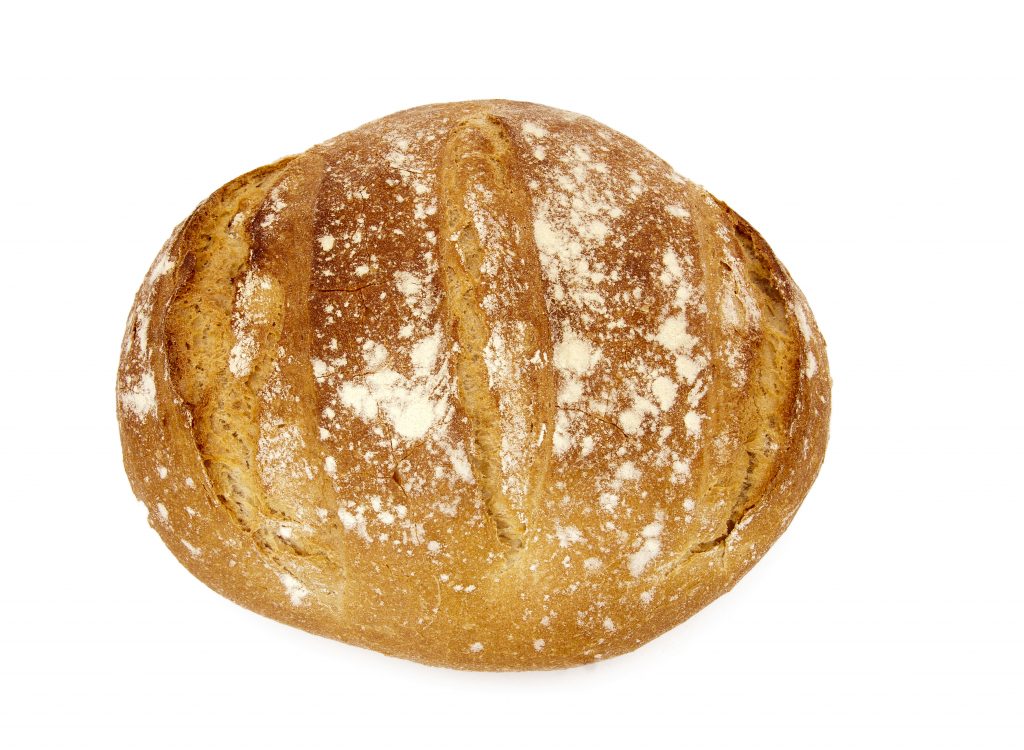
    His method creates a great cracking crust and flavor and is the kind of bread that you get from professionals’ steam-injected ovens. And it does this by allowing the pot you cook it in to act as a steam oven and get the same results. Over the past year, I’ve made dozens of loaves of this bread and with a few tweaks, it’s pretty bullet proof.

    So how do you make no-knead bread? It’s pretty easy.

    First, you will need:

    1¾ cup of warm water
    3 cups of flour
    1 teaspoon of salt
    ¼ teaspoon of yeast

    In a large bowl combine flour, yeast, and salt. Mix the dry ingredients, then add your water. Cover the bowl with plastic wrap and let it sit. Jim Lahey’s recipe calls for between eighteen and twenty-four hours, but I would say eight hours is a minimum. I make a batch up at night and we have it for breakfast the next day. I also use a Sharpie and write on the plastic wrap the time that I started it, so I don’t forget. If you like a larger loaf and less dense bread, wait longer, toward the twenty-four-hour time frame.

    Place flour over a cutting board and place the dough on it. Fold it into a ball—don’t knead it or work it; just fold it—place back in the bowl and cover back with plastic wrap for thirty minutes.
    HINT: What I do here is, while the dough is on the cutting board, I wash out the bowl, dry it, and place a layer of olive oil on the bottom. Then when the dough goes back in the bowl, I’ll add a little olive oil on the top. This will add flavor and allow the bread to easily slip into the pan when you cook it.

    Preheat the oven to 400 degrees and place a Dutch oven, casserole dish, or anything that has a heavy cover and seals, into the oven to preheat—empty—for ten minutes. You want the pan to be hot when you start.

    Place the bread inside the Dutch oven. I used to cut vent holes on the top of the loaf, but found that they don’t do much and the look of the bread is nicer without them. Cook for thirty minutes.
    Remove the lid and cook for an additional five minutes or so to get the top get crusty.
    It’s tempting to cut it right out of the oven, but you get a better result if you let it cool for ten minutes or so.

    Now, I might add that with this recipe is everything depends on the Dutch oven or pot that you use to cook it in. With mine, I can’t get the crust extremely crusty, without burning the bottom of the bread, so I settle for a medium crust. I’ve seen others do it where they can cook and extra five minutes or so and get it crusty all over. You can try adding parchment paper to the bottom of the pot; that will give you some additional cooking time.

    And that’s it. No-knead bread. Fast, easy, fun, and costs probably around thirty cents a loaf. Obviously, there are no preservatives in it like there are with store-bought bread, so it won’t stay fresh for more than a week or so, but you won’t have to worry about it. This bread goes fast. We’ve never had a loaf make it to three days.

    Two days is our record—two days, five hours, and sixteen minutes.

  • Debt Think

    Debt Think

    debt

    At one time, it went like this:

    Something catastrophic occurred — a crop failed, there was a fire, a death, a flood or some unplanned event took place in a person’s life that they were not prepared for. So new priorities would arise. How will this person put food on the table? How will they repair that building, replace that income, or even have a roof over their head?

    This individual would go through all their many options — what can be sold, what can they do without, what extra work can be found, what sacrifices can be made? And after painstakingly going through every single possibility, every potential solution, they may arrive at the very end of the list. The last resort. And with heavy heart and humbled head, they would go to a person that lent money and they would borrow. They would agree to go into debt bondage until the money was paid back, and with interest.

    And once a loan was taken, this person would work hard, they would sometimes go without basic life necessities, perhaps not even eating if it meant the difference between paying this loan back or not. If it meant being free again. If it meant getting back to the way life should be.

    And if something even worse happened so that they could not pay this debt back — if something occurred where they could not earn the money to repay the lender — then they would be imprisoned. After all, they had gone into debt bondage and they now belonged to the debtor — and they would remain there until their family and friends could repay the loan. Until their debt could be paid back in full. Until they would no longer remain the collateral for that debt.

    That’s how debt used to be seen.

    Here is a modern day example:

    Let’s say you take out a car loan and are about to make your last payment. This last $350 means that the car is now yours. You make the payment and the loan is fulfilled. The car is now completely paid for.

    The next month you are excited because you now have an extra $350. You have found money. It’s like getting a raise. And for the first few months you enjoy the found money and just blow it, until it quickly gets absorbed into something else, or your decide it’s time to trade in the car for something newer.

    That’s debt think. In reality, you don’t have an extra $350. You have the same $350 that no longer has to be turned over towards your debt bondage.

    Debt think is when it becomes normal to have debt, and it’s strange when you don’t.

    And when you first bought the car and friends and family asked what you paid for it, what was the answer? $30,000? That’s debt think too, because when the loan is completely paid for you will have actually forked over $50,000 for the car. That’s the real cost.

    Debt think is when we celebrate because we got a boat loan — not a boat. We get to revel in the debt bondage of something we hope to someday own and get high on the temporary illusion of owning something. We didn’t work for it yet. We didn’t sacrifice for it — we may not even really want it. We just agreed to go into bondage for it.

    Debt think is signing that student loan agreement and being so excited because you don’t have to make a single payment until 6 months after you graduate. What you didn’t realize, because you didn’t read the fine print, is that the interest starts the minute we sign the paper — actually, most student loans take decades to pay just the interest off before the principle is even touched. Debt think let’s us see only the small, $50 monthly payment, without thinking about what the loan actually costs us.

    Debt think sees in monthly payments. Debt think sees how fast something can be turned around. Debt think sees the power of borrowing and not the slavery of it. It’s buying into the sexy, slick way that stuff is supposed to makes us feel about ourselves and our lives.

    Hey, not that credit is bad. It’s not. Using other people’s money can be the smartest thing you can do, if done right.

    But debt think is a lie. It is a trick and an illusion.

    If you have to go into bondage, do it. But don’t celebrate the bondage. Get free, and celebrate that.

  • How to Live a Cash Life In a Non-Cash World

    How to Live a Cash Life In a Non-Cash World

    cash

    When we were kids, money was a much simpler entity to manage; in fact it was downright easy back then. The process went like this: if our pockets were empty, and they often were, we went without. And if our pockets had something in it, we could spend what we had. And, here comes the stress-free part, how much we spent was determined by how much we had. Simple.

    So, the decision process went like this. Can I buy a soda? Let’s see, do I have any money? No, I don’t have any money. Then the answer is no. I cannot buy a soda. Done.

    Now, it’s a little more complicated.

    Now our buying decisions are not based on how much we have in our pockets, or how much money we have in the bank, or how much money we can afford to spend, or how much we earn, or how much money is left in our budget, or is the thing that we wish to purchase priced correctly. Nope. It’s only based on — do we want it and do we want it now?

    So, do I want a soda? Well, of course I want a soda. And I’m a grown man and I work hard so I’ll buy whatever I want. Because this is America. And I have three credit cards and a debit card in my wallet that says it’s America. So yes. Yes I can buy a soda.

    And we buy. And it’s easy because we don’t really spend money, we spend numbers. Think about it: with little exceptions, it’s possibly to go a very long time spending, buying, and earning and never seeing the actual money that is flowing in and out. We just see numbers on a screen.

    [amazon asin=B001D07XCO&template=iframe image][amazon asin=B00B3PP5Q0&template=iframe image][amazon asin=B009ANX56O&template=iframe image][amazon asin=B00KECATZU&template=iframe image]

    Using a cash system is the only way to spend only what you have. Because with our credit cards we can spend until we hit our credit limit and with our debit we can clean out our account and push the overdraft limit dry before the red light comes on.

    And the irony is that we’ve been conditioned to not think of these swipes of a card as real money. Yet, take actual cash from our wallet and we feel that psychological loss.

    Using a Cash System

    1. Establish a budget.
    2. Create an envelope system. Create a physical envelope for each budget category. Now there will be budget items that won’t fit in the envelopes — automatic payments, etc. — so you keep those automatic and make categories for all that you normally use your credit and debit card for. These should include: Gas, Entertainment, Groceries, Clothing, Car Maintenance, etc.
    3. After you’ve categorized your cash expenses, fill each envelope with the money allotted for it in your budget — if you allow $100 for clothing, put $100 in cash in your clothing envelope for the month.
    4. Determine what is a weekly or bi-weekly (depending on how you get paid) expense and which is ongoing. So if you allot $50 a week for entertainment, then that will fill each pay period, whereas $25 a week for car maintenance will build until needed.
    5. Tweak. During the first three months or so your system is in beta-test mode. There will be items you forgot, over budgeted for, or simply got wrong. Keep adjusting.
    6. Once you’ve spent all the money in a given envelope, you’re done spending for that category. If you go on a shopping spree and spend the $100 in your clothing envelope, you can’t spend any more on clothes until you budget for that category again. That means no visits to the ATM to withdraw more.
    7. When it’s gone, it’s gone. Don’t be tempted.
    8. Blow money. There’s also no problem in adding a “blow money “category — money to have a little fun with! As long as you and your spouse have agreed on it, you are fine. There should be no lying. Agree on your budget, agree on your fun money, and be open. Fun money can be anything you want it to be. There are no rules on that envelope.
    9. Keep the change. Tossing your spare change in a jar is almost a mini savings account. It’s there for small emergencies and at the end of the year it’s not unusual for your change to equal $400 or more.