Category: Skills

  • How to Shuffle Cards

    How to Shuffle Cards

    shutterstock_128283971

    Shuffling cards is the ultimate card player’s bling. In fact, in cards, it’s the equivalent of walking out to a tee box with a great bag of clubs, or stepping up to a podium wearing a great suit; because right then, right at that moment before you take a swing or utter a single word, there is a possibility that you might actually know what you’re doing.

    Right then, the crowd assumes that you do.

    Then you shank the ball in the woods and it’s all over. But before then, while you’re still sizing the ball up, while you’re still clearing your throat in front of an auditorium, they just don’t know.

    [amazon asin=B002JAZ9GY&template=iframe image][amazon asin=B005RBVE84&template=iframe image][amazon asin=B000G8Q15E&template=iframe image][amazon asin=B001GPUSIW&template=iframe image]

    That’s what shuffling is. It’s the right to be at the party. It’s the dues you pay to play cards.

    There are actually a few types of shuffles, which include:

    The Overhand Shuffle – This is the simple split deck and place back in, shuffle. Nothing fancy and gets the job done.

    The Weave Shuffle – This is the same as the overhand, only you remove and place in from the top of the deck as apposed to the side.

    The Hindu Shuffle – This is where you separate the deck, place, long way, end to end, bend the cards and let them weave into one deck.

    And the shuffle shuttle – This is the fancy shuffle, the one you see in all the movies, and with blackjack dealers and anyone trying to show off.

    This is THE shuffle.

    So for here, we’ll focus on the shuffle shuttle.

    Now, shuffling cards is one of those skills that needs a solid visual reference, so here it is. After searching the internet, one of the clearest shuffle shuttle videos is found on the expert village website. This explains it well. It takes its time and you can watch it over and over again.

    http://www.youtube.com/watch?v=uh8iMZY4Nb4

    Good luck.


  • How to choose a watch

    How to choose a watch

    watch

    Before the 1920’s many men swore that they would sooner wear a dress, than to be seen wearing —. A watch. Or, more specifically, a wrist watch.

    Now the standard watch — or what was known as the pocket watch — was an acceptable male accouterment for hundreds of years. In fact, up through the 19th century most men owned a pocket watch and it was very common for a father’s watch to be handed down to his son and keep moving down the family — hey, I have my great-grandfather’s pocket watch.

    But a wrist watch was considered a lady’s watch. It was a decorative piece of jewelry that women wore on their wrists and was actually called a wristlet. It wasn’t until World War I when soldiers strapped their pocket watches to their wrists to synchronize attacks that the wrist watch began to slowly move into male vogue.

    Today, even with clocks on our phones, laptops and i-pods, a watch is still a standard male adornment. And choosing the right watch for you can be a difficult decision. In fact, many men simply choose to purchase a disposable watch; a watch under $30.00 and simply replace it when it dies, rather that choose a watch they can wear for years.

    [amazon asin=B000AR7S3A&template=iframe image][amazon asin=B00068TJ76&template=iframe image][amazon asin=B000820YBU&template=iframe image][amazon asin=B0012IR0U2&template=iframe image]

    HOW TO CHOOSE A WATCH.

    Round crystal.

    With the popular watches you see rectangular, square and other funky crystal shapes. But the reality is a crystal has a chance to break or leak at the corners. No corners and your chance of allowing water in or a seal to crack are reduced. The classic round face is the way to go.

    Budget

    The diamond industry set the standard that a man should spend two months salary on the engagement ring he chooses. This is nuts. And it is only based on what the jewelry folks want you to spend. But the watch industry has a standard that is a little more realistic. Their’s state that a man should spend on a watch ten times what he spends on lunch for a week. So, if you brown bag it, then a $300 watch is about right. If you run through a drive thru every lunch then a $500 watch is about right. If you eat at a Fridays or Olive Garden, then a $700 watch and if you eat at a place with table cloths and a wine list a $1,000 watch is for you.

    TIP. Do your research and find the watch you like and then look for a used watch in that type. Look on e-bay, craigslist, pawn shops or in thrift stores.

    Style

    Your watch signifies who you are. Your watch will convey your style, your mindset and your image. Your watch doesn’t have to cost more than your car, but it does need to be a quality watch. Remember, a watch is an investment. It tells people where you are and where you intend to go. Buying a cheap watch says that you are cheap. Buying an expensive watch says that you are irresponsible. It’s finding the right watch that is the key.

    Remember: choose quality and take your time.

  • How to plan a family reunion

    How to plan a family reunion

    reunion

    When it comes to how men view family gatherings — specifically, how men view extended family gatherings — there are three common stages that we pass through.

    First, we have the carefree days of youth; stage one. This stage runs from birth to sometime in our teenaged years. This is when we are excited to be part of this distinctive, kinetic family group and we look forward to each and every time all the aunts and cousins gather. These are the times when the best possible place to be, is right next to Uncle Don when he tells the boomerang story, or be at bat just before Amy; because she has a wicked cleanup swing. This is the time period when all your grandfather’s jokes are hysterical and all your aunts are beautiful. And the absolute saddest part of the day, the only bleak aspect, is when the cars begin to pull out of the driveway. And when all the cousins are gone.

    Then we move to stage two. These are the dark days and run from our teenaged years to sometime in our late twenties to early thirties. These are the thin skinned, chip on our shoulder, lots to prove and little show for it, angry days. When we grit our teeth every time Uncle Mike asks us how long we’re going to keep this job. This is when Vick and the other cousins smirk when we talk about our multi-level marketing plans — right before they ask how long it’s been since Jennifer dumped us. And even though she didn’t dump us, it was mutual, we watch the clock and cannot wait for everyone to leave — so we can catch our dad alone and discretely ask if he can help with part of this month’s rent.

    Then comes the third and final stage. The best stage. The last stage. Stage three. This occurs from your late thirties on until you die. This is when we show up for family gatherings in that twelve year old car — and are actually proud of it because it runs and is paid for. This is when your uncle challenges you to an arm wrestling match and you let him win. This is the time when you want to listen to the stories so much more than you want to tell any. These are the days when humility and pride both exist together and where you bounce your child on your leg and give a secret look to your cousins as your nephew describes how he’s going to make an absolute killing in real estate. These are the days you’ll enjoy the most and these are the times when you will work the hardest to keep the extended family together.

    Which means continuing, or beginning, those family reunions.

    HOW TO PLAN A FAMILY REUNION

    It’s a good idea to plan a reunion four to six months out — this gets the event on everyone’s calendar and locks everything in. It also gives you half a year to organize everything and work it.

    6 Months Before

    • Choose a date — check with folks that are traveling the longest distance and make sure it fits their schedules as they are making the biggest sacrifice.
    • Choose a length of time — is this over a Saturday afternoon or an entire weekend?
    • Choose a general location.
    • If over 50 people, create a reunion committee — determine person in charge of finance, food, entertainment, clean up, lodging, etc.

    4 Months Before

    • Lock in your location — if it’s a park or outdoor event, reserve the pavilion or fields if needed. If it’s inside, give the deposit needed or reserve the spot, etc.
    • Plan the menu — create the food assigning dishes and other food items to each family. Arranging for extra cooking and/or grilling facilities. Or finding a caterer.
    • Create a schedule — determine activities and entertainment, is there going to be a family softball game or contests. When do you want to schedule this?
    • Build in family history portion — start doing some research on the family tree or a huge white board/chalkboard is great for everyone to build a family tree together.
    • Photography and/or video — with everyone carrying cameras on their phones, hiring a photographer or videographer may not be necessary, but what will be is to find a place to store all those images and video. Create a reunion Facebook page or website where everyone can dump all the pictures taken — you can use this in the organization end as well to post updates and schedule.
    • Marketing — are you going to create postcards for the event or design t-shirts? Now is the time to plan those.

    3 Months Before

    • Finance — if large, determine cost per person.
    • Send out invitations — include times, locations, schedule, maps and costs or side dishes that need to be brought.
    • Committee sign ups — depending on the size there will be needs in each area. This is the time to get people to sign up for; set up teams, cooking committees, entertainment teams, etc.
    • Reserve items — do you need to rent a tent, chairs, portable grill? This is the time to reserve all of that stuff.

    2 Months Before

    • Create a stocking location — you’ll need a place to begin to store things.
    • Make nonperishable purchases — order the cups, table cloths, condiments, craft items, decorations, etc.
    • Send out e-mail or social network posts to keep the momentum going and stay on everyone’s thoughts
    • Arrange/place deposits on large food items — will you need 200 pounds of burgers? Now is the time to arrange this and to shop around for the best price.

    1 Month Before

    • Confirm, confirm, confirm — with family on food items, with reservations and with lodging.

    2 Weeks Before

    • Contact restaurants with a final guest count if necessary.
    • Contact volunteers with specific tasks to confirm times, locations, and the final guest count.
    • Review your final to-do list.
    • Buy last-minute decorations and supplies.
    • Create signs and banners.

    2 Days Before

    • Review reunion minutiae with committees.
    • Pick up any rental equipment — chairs, tables, grills, etc.
    • Prepare final payments and tips

    The Day Before

    • Set up and decorate.
    • Sleep.
  • The power of the bagged lunch

    The power of the bagged lunch

    lunch

    In the early 1800’s, almost 70% of all American families lived on farms. Most of these were subsistence farms — a few cows, pigs, chickens on some land where corn, wheat and potatoes were planted — and these farms were the family’s main source of food and clothing. So, the farmer would rise early and feed his livestock, repair fences, outbuildings, fix machinery, gather eggs and in the middle of the day, when he would need some food and a short break, he would walk back to his house to visit with his wife and children and eat a small meal. And for hundreds of years the term lunch would simply mean that; to take a break from your work and go home to eat.

    As the effect of The Industrial Revolution spread, factories and mills needed more and more workers. Now the small farmer had the opportunity to not only care for his land but to travel to town for day work in order to bring additional income into the household. And because it would not be practical for the farmer to return home for lunch — and because he would need to leave early in the morning and not return until late that night — he would have to take food with him.

    So the farmer would put hard-boiled eggs, biscuits, vegetables and meat into a container —often a small basket with a handles — and head out in the morning. He would often meet up with other men who were carrying similar baskets as well as those with meals wrapped in handkerchiefs or placed in metal tins. In fact, workers in more extreme environments — such as coal mines and steel mills — needed something to transport their lunch in that would protect it, so they often used small covered milk pails.

    By the 1850’s manufacturers saw this growing consumer need and began to mass produce fitted metal buckets and boxes specifically designed to carry lunches in. They were called lunch pails even though the trend was leaning more towards the box style. They sold well and the need increased.

    [amazon asin=B0040MH642&template=iframe image][amazon asin=B000246GSE&template=iframe image][amazon asin=B00HJ8DFGC&template=iframe image][amazon asin=B006HFC3K2&template=iframe image]

    In 1904 The Thermos, was introduced as an option to the commercial lunch pail and now a worker could have a cold lunch with a hot drink. And when schools began to regionalize — and the one room school migrating to the larger multi grade school — children were now unable to come home for lunch and also needed to take food with them. And many children who wanted to mimic their fathers, sought out metal pails or buckets to take their lunches in.

    In 1935, the first children’s lunch box with a licensed character was produced and the image of Mickey Mouse was lithographed over an oval tin with a handle. And in 1950 the first TV character made the cut, with Hopalong Cassidy being the choice, which was a lunchbox that cost two dollars and sold half a million units in the first year alone.

    For decades the metal lunchbox was the symbol of the workforce and the character lunchbox was the symbol of childhood — with millions of men carrying their lunches to work and millions of school children carrying theirs in boxes decorated with their favorite TV shows, bands and sports figures.

    But when a child moved from Elementary School to High School the lunch box was often abandoned. In that socially sensitive environment, the need to quickly distance ourselves from childish things became powerful and the brown paper bag became a safer containment choice — as well as the ability to now purchase a hot lunch from a school cafeteria.

    Today, the average American purchases his lunch rather than brings it. He spends an average of ten dollars on each trip and the majority of those meals are bought at fast food restaurants. We eat in our car. We eat on the run. And we eat whatever is quickly made and cheaply provided and whether it’s the memories of soggy bologna sandwiches or the still need to distance ourselves from childish things, few of us bring a lunch to work — or if we do it’s a quickly prepared sandwich that we eat at our desk.

    But the bagged lunch as an entity, as a creative endeavor, is an amazing thing. It is healthier, far less expensive (we spend almost $1,000 a year on fast food lunches ) and give us this versatile control over our day. It’s a very neat thing.

    So the first step is to get yourself a lunch box — and I mean one that fits your needs as well as your lifestyle. A brown paper bag is only temporary but choosing a container to bring your lunch in shows a commitment to seeing it through.

    So here are some quick options for lunch ideas.

    1. Leftovers. This is an easy and simple. Simply take some of that lasagna from last night or some of that leftover casserole and bring it to work in a Tupperware container. Provided you have access to a microwave, this works well.

    2. Soup. There is nothing like a cup of hot soup with a biscuit or some bread in the middle of the day. And the great thing here is you can be working in the middle of the woods and still bring hot soup in a thermos. The only requirement here is, make a pot of homemade soup — very easy to make, tastes better, healthier and much less expensive than canned soup — http://543skills.com/skill-194-how-to-make-homemade-soup/

    3. Wraps. Only because sandwiches are so overplayed — and because most store bought bread is pretty tasteless — wraps are a good alternative. You can make a wrap with cold cuts, or a with beans and cheese for a tortilla. They are smaller, can be made quicker and are easier to eat on the run.

    And the last option is this amazingly simple thing called a Mason Jar Salad. This is so incredibly simplistic that it’s absolutely brilliant.

    mason jar

    So, what you do is take a Mason Jar and in the bottom you put in your wet ingredients; your salad dressing. Then you add in the solid vegetables — anything that won’t get soggy if they touch the dressing — tomatoes, cucumbers, red onion, celery, peppers, etc. Then you add your softer items; your pasta, mushrooms, avocado. On top of that you put your protein; your chicken, turkey, beans and then the lettuce and on top goes your cheese and any nuts.

    So what you have is this self-contained salad that is separated, fresh and can remain that way for days. In fact many people make these up a week at a time and use them days later. It remains in the jar until you need it then you pour it into a bowl where all the ingredients mix. Genius.

    So get creative, get a lunch box and get to work.

    http://www.epicurious.com/articlesguides/blogs/editor/2014/07/mason-jar-salad-inspiration.html


  • The New Year’s resolution hack

    The New Year’s resolution hack

    New Year

    It’s a pretty well known fact in the health club and fitness Industry that the best time of year — their season — is January. No doubt about it. This is when health clubs, gyms, personal trainers; diet supplement companies and home gym equipment manufacturers, all see the bulk of their business for the entire year. It’s their market. It’s New Year’s resolution time.

    And these same health club and fitness professionals will also tell you that the busiest time of that month is the second week of January; when they will see the largest single week of the year. And after that  — things begin to taper down. Each week. Until the second week of February when the season is officially over.

    Now at the end of that four week period, 80% of the people who have bought their Super Stepper 9,000 or joined a gym, have stopped. Over the next two months — until the second week of April — an additional 12% will stop as well. Leaving 8%. Which is the average percentage rate of people who reach their New Year’s resolutions.

    8%.

    Now as far as health clubs and gyms go, they love this trend — they will never tell you this, but their accountants will. Because what is a better customer than one who pays for an entire year and then doesn’t use up valuable is resources or equipment. And — here is the best part — those same people will be back again next January convinced that this year things are going to be different. And they’ll sign up again.

    Now fitness is only one of the goals we set at the beginning of the year — financial is another big area, career, artistic goals of music or of finally sitting down and writing that book, there are many.

    So why do New Year’s resolutions fail? Well, there are many reasons. Here are a few …

    1. Because they are fueled by motivation only — motivation is short lived and usually lasts only about a month by itself.
    2. Because we set unrealistic goals.
    3. Because we need the goal to fix something in our life; to make it all better.
    4. Because we don’t have a plan, we just have an end result.
    5. Because we are now in panic time. It’s not important that it took us 3 years to put on that extra 60 pounds, it must be off by summer!

    Yup. All of these are true. But there are two other reasons — the two real reasons — why most New Year’s resolutions fail. And if you address these two other areas, your odds go up substantially. In fact, you will double your chance of success if you only focus on these two areas.

    Ready? Here they are.

    The real two real reasons why 92% of all New Year’s resolutions fails — are this.

    1. Because we get something out of where we are now. If we are overeating, overspending, drinking too much, out of work or have our finances way overextended, we get something out of that. Either a pleasure or an escape and until we identify what that is — really spend time with it — then it will continue to run silently in the background; quietly and under the surface, and will derail any minor motivation fueled trend we are running on the top.

         Because if we never turn the program off. Identify it and replace it with something else. Then that beacon — that we ourselves put into motion — is enough to make us one of the 80%. If we don’t turn it off an replace it, motivation alone will not break through it. We are wishing to go north but we are steering south.

        And the second reason is this  …

    1. Because we think we need to fight. That there is something inside of us that wants us to fail and we need to fight, it, Defeat it. Instead of realizing that it is a program that we put there, to protect and help us — http://543skills.com/skill-529-the-truth-about-self-discipline/

    So here is the single thing you can do — the very best action — to drastically increase your chance of reaching your New Year’s resolution.

    Ready?

    Here it is.

    The best way to achieve your New Year’s resolution is —-.

    Don’t set one.

    At least not right away. Instead, spend this month — four solid weeks — in getting to know yourself and getting to know how you got to where you are now.

    Oh and cop-out answers don’t count here. Answers like, I took my eye off the ball or I wasn’t motivated enough to change — are bull. You get something out of overeating or avoiding those work projects. You told yourself to keep you safe or keep you protected. You get something from it otherwise you wouldn’t be doing it.

    What do you get?

    So, spend a solid month in getting to know what that is. Now, I now, but the gym, the office, the life you are going to organize, it will be there waiting for you. Consider this month basic training, getting you ready for it.

    And here are the two best ways to do that. Here are two ways to get into that programming and see what that code really is.

    1. Write. Just start writing, every day, in a journal of everything you think and feel. Start to write about why you want to change and how you got to where you are. Keep digging and digging for a solid month.

    And …

    1. Go into the silence. Now this one will take a little getting used to but it is amazing the results. What it is is take an hour — yeah, it seems like a long time but it’s worth it — where you are completely unplugged. Step into a a quiet room, your parked car, the woods, whatever. Turn your phone off and just sit — motionless, don’t move — for one hour.

    The first twenty minutes of this will be hell. Then calm will come over you. And then — things will begin to click. Doors will open and you will begin to think pure thoughts. Pure code. You will see clearly.

    Do this — do all of this. And when your four weeks are up, then set your goals. And you’ll not only be one of the 8% but you’ll get there easier and you’ll get more joy out of it because you’ll be in sync with what you really want.

  • How to say grace over a meal

    How to say grace over a meal

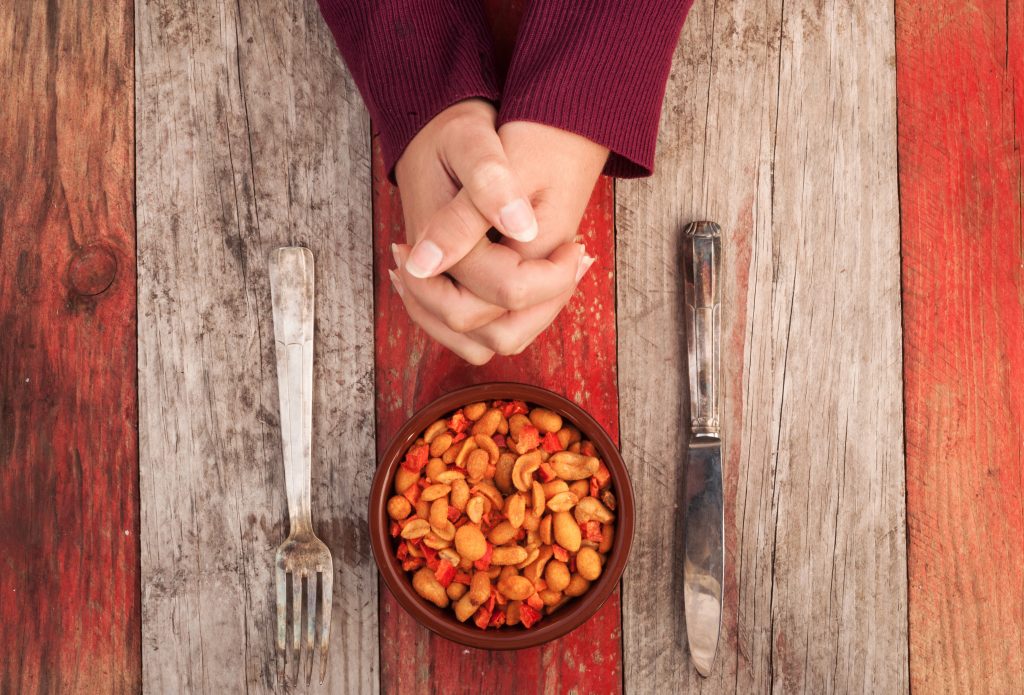
    shutterstock_218825743There are many words in the English language that have changed meaning over time. For example, the word artificial originally meant artistic or crafty. The word decimate meant to reduce by one tenth and in the original Latin the word nice, meant ignorant or unaware.

    Just since the 19th century the words for dinner and supper have changed, when dinner referred to the large meal of the day —  often in the early afternoon — and supper meant the smaller meal later at night — often after 7:00 pm. Now, both dinner and supper are interchangeable and refer to the evening meal.

    In the modern world, many other words have changed meanings. Spam, a processed and canned meat, now refers to the mountains of junk e-mails we receive daily. A cursor was the word for a running messenger and now means the movable indicator on a computer screen. The the word friend once applied only to those people we have a close personal bond and connection with, but now refers to anyone on our Facebook or Twitter page.

    But in my opinion, one of the most interesting word changes involves the word offensive or the phrase to offend. These words have long been in existence — for hundreds of years — but only in the last decade the meaning become altered and is now even confusing.

    During the Vietnam War, American television announcers warned viewers when upcoming footage from the war, would be offensive; when it would contain graphic images of war and violence. And we knew what the word offensive meant then — even without seeing it, we knew.  

    At that same time, domestically, we were a country divided by race and hate and fear. A man with dark skin now had the right to fight and die as a soldier along with his white counterparts — a first in US History — but he could not attend the same church or use the same public restroom.

    To say these events were offensive would be a great understated truth.

    Then, in 1968, Brown vs. The Board Education, would allow black and white students to actually sit in the same classroom together. And there was more violence. And more fear.

    Slowly — over the decades — the race walls began to crumble. Slower yet, the hate and fear began to fade.

    Then came the events of September 11, 2001; a world altering event where a radical group of Muslim extremists plotted attacks that took thousands of American lives.

    And everything changed.

    Religion now became the new race. We were frightened and angry and confused and were told that a world split by religion could only be mended by understanding and tolerance. And fueled by a desire for healing, we embraced this word; tolerance. And there were more words that were added to our lexicon. And the more words mixed in, the more vague and confusing it all became.

    Instead of kindness we were asked to be objective. Instead of understanding we were encouraged to be respectful. Instead of being neighborly we were told to be civil. And above all things, the ultimate focus was to never say or do anything that might be ever be perceived as  — offensive.

    And because we never truly understood the new meaning of this word — offensive — we did not understand what it truly was to offend. So, we simply took the easier path and avoided any and all areas that even might offend. And that meant anything religious or spiritual.

    And the new segregation began.

    Which bring us to this. To the ultimate irony and the ultimate truth.

    I believe in God. I believe in a God that created me and watches over me and who is with me on earth will be with me in Heaven. There is no need for me to apologize for this because there is nothing offensive about it.

    As men, we need to work less on being tolerant and more on being generous.

    We need to be less objective and be more helpful.

    And we need to be less unbiased and be more forgiving.

    And above all things, we need to be grateful. Grateful to our God. Grateful to our family, our neighbors and grateful to all that is on loan to us for the short time we live in this world.

    And during that Thanksgiving or Christmas or Easter or that visit to someone else’s home, if we are extended the honor to say grace over the meal, we should embrace it.

    If you’ve never publicly said grace over a meal, the rules are simple.

    We are thanking God for the meal. We are thanking Him for the chance to be at that table with family and friends. We are grateful to live in a place where food is plentiful and we can live and work without fear or danger. We will work hard to show love and kindness to all we come in contact with.

    And we are grateful.

  • Tool secrets: Loctite and JB Weld

    Tool secrets: Loctite and JB Weld

    loctite

    I have this great workbench in our basement that I built myself — I didn’t like the prebuilt workbenches so for thirty dollars worth of two-by-fours and some planks I built one myself — and on this workbench as well as on the pegboard behind it hang some very cool tools. There are coping saws, drills, laser levels, a miter-box— well, the miter-box sits on a shelf below but I just like saying ‘miter box’ — and a bunch of other cool stuff.

    Now, most of these tools I’ve used, some not so often and a few not at all but they each look amazing hanging there. In fact, sometimes I go down in the basement and just visit my tools — admiring them like a painting.

    Now, it’s not that I’m afraid of these tools or that I just wanted to collect them. The truth is that 90% of the time I do something around the house I don’t need much in the way of tools. I don’t do major construction; I like to putz around the house, tinker with some things, make repairs and small upgrades when needed. So the majority of work I do could be completed with only five items.

    In fact, if I had to keep only five objects from my workbench and only use only them, I’d be pretty safe by keeping …

    • A roll of duct tape
    • A can of WD-40
    • A cheap, multi-head screwdriver
    • A pair of needle nose pliers
    • And Loctite or J-B Weld

    Boom.

    That would get me — as well as the majority of people — through most of the quick fixes and minor repairs that need to be done around the home.

    Because there are many tools that can do many things. it’s like brand names. 80% of the time brand names are not that important — you get the same result from brand B as you would from Brand A — but in that 20% of the time when they are important — they really are. Which brings us to an important brand name difference as far as super glue.

    First, make sure it’s Loctite. Because if you think that by Loctite I’m referring to generic super glue, you would be incorrect. Next to GPS and luggage with wheels, Loctite — the real super glue — is one of the greatest inventions in the last hundred years. It can be used for everything from ceiling a cut, to repairing coffee mugs, to being mixed with baking soda and used like calk.

    Remember that while Loctite might have invented Super Glue, not all super Glue is Loctite. This may seem like a minor point but it’s not. In fact, the next time you are standing at Wal-Mart looking at the super glue, the crazy glue and super bondo and you don’t see the Loctite symbol, walk away.

    Loctite was developed in the 1950’s as a thread locking adhesive. The formula worked so well that they developed other products and Loctite was the industrial staple for decades before branching out to commercial products. Simply put, when you buy Loctite you know it is going to work. Any glue can add the word Super, or Crazy to it and still be just glue. Loctite is a liquid weld and other brands may or may not work, so why take the chance?

    By the way, this is simply my opinion and is not because I am receiving anything from Loctite — or from J-B Weld — or am being paid any referral fees. Nope. It’s simply that when I find something that works I want to pass it on and Loctite works.

    There is one thing I don’t like about Loctite and that is there gel line of adhesives — I guess they were trying to find a way to work on horizontal surfaces where the thinner stuff would run — and I don’t like them as much and try to stay away from it. So I buy the standard Loctite.

    With that said, there are those occasion when Loctite just doesn’t have the fire power you need. And that’s where J-B Weld comes in.

    This stuff is amazing and is used on everything from repairing fuel tanks to patching bathtubs to welding pipes.

    J-B Weld can be found in any hardware store or Auto Parts Store. It costs about five bucks and pays for itself with the first use — I used this recently to repair a fireplace screen that was in five pieces and ready for the dumpster. That one pack saved me over $200.00 and you use such a small amount of it that a single pack will last you for years.

    J-B Weld is a cold weld process in which you take a dab from each container and mix them together to get the reaction started. The contents from one tube is black the other is white and you mix together until you get a solid grey color — there is the odd fishy smell when you first mix it but it doesn’t last long. Once mixed, you apply and wait.

    The downside to J-B Weld is it takes several hours to harden — in some thick applications I’ve gone back ten hours later and it still was slightly tacky. The good news is that when it does harden, it’s there forever. You can even sand and drill though it if needed — like I said they repair gas tanks with this stuff.

    So spend the seven bucks and get a two dollar bottle of Loctite and a five dollar pack of-J-B Weld and you’ll be all set.

    And then you can use the money you saved to buy gas to drive to my place and come look at my tools.

  • How to Change the Oil in Your Car

    How to Change the Oil in Your Car

    oil change

    1971 was a very busy year. Charles Manson was convicted for his part of the Tate-LaBianca murders. Paul McCartney formed a new band called Wings. A man calling himself DB Cooper hijacked a Boeing 727 and then parachuted from the plane with $200,000 in ransom cash. And at Madison Square Garden, Joe Frazier defeated the great Mohammad Ali.

    It was also the year of Edwin Washburn.

    Now Edwin Washburn was man who, when he retired from the military, finally had the long awaited back surgery he had been putting off. And as Edwin was recuperating he wondered how he would get down under his vehicles to change the oil now that his mobility was limited.

    As he was in a tire store, Washburn noticed that there was an outside pit where mechanics could work on campers and RVs. Why couldn’t you do this inside, with cars, and by doing it, drastically reduce the service time? And from this, the very first Jiffy Lube fast oil change shop was created.

    Now these shops would have remained simply a few unique stores in Utah if it wasn’t for another character named Jim Hindman.

    Jim Hindman was a successful businessman and was also the football coach at Western Maryland College. And during a conversation on tenacity and a hard work ethic, one of his players spoke up.

    “That’s great coach, but you already made your million. I’d like to see you make another one.”

    So he did. Hindman purchased the first Jiffy Lube from Washburn and began spinning out franchises.

    Today there are over 2,000 Jiffy Lube locations, and an additional 800 Valvoline Instant Oil change centers, making the instant oil change shop a solid part of our car maintenance landscape.

    [amazon asin=B00BXLUI5M&template=iframe image][amazon asin=B000GHK2IM&template=iframe image][amazon asin=B000JFHMVQ&template=iframe image][amazon asin=B0000AXRH5&template=iframe image]

    Now this is both a good and a bad thing. It’s good because the instant oil change sites probably extended the life of many cars for drivers who would never change their own oil and who didn’t have the funds or time for the oil change at the dealer. It also made oil changes affordable — if you can avoid the constant up-sell that occurs. But the down side is that now the concept of changing your own oil is right up there with grinding your own meat or making your own clothes since today there are generations of drivers who have never owned a car during a time when you couldn’t pull in during lunch for a fifteen-minute oil change.

    But changing the oil in your car will not only save you money, but it is a simple maintenance task that you can master easily.

    HOW TO CHANGE THE OIL IN YOUR CAR.

    Now here is the first rule. Get yourself a good set of car ramps — those metal ramps you see at Walmart — and never, ever use the car jack.

    I mean it. Don’t use the car jack.

    That jack that came with your car was meant to lift the vehicle high enough to change your tire during an emergency. It was never designed to lift it up for maintenance. The higher the car goes, the more unstable it is and the easier it is to get hurt — especially if you’re yanking on a stubborn oil filter on an already unstable three-thousand pound vehicle. Also, if you place the car jack in the wrong place you could do some serious damage to your car.

    You can get a decent set of ramps for forty bucks that will last you a lifetime so don’t use the car jack for anything other than roadside emergencies.

    With that out of the way, let’s cover the 9 steps:

    1. Go to an auto parts or department store and get the oil and oil filter for your car — there should be guides there to tell you or it will also be in the car’s owner’s manual. You will also need: a pan to catch the old oil, a socket set, an oil filter wrench — all inexpensive and easily found.

    2. Open the hood and remove the oil cap. This will allow the oil from the crankcase to drain easier.

    3. Drive the car on the ramps and apply the emergency brake.

    4. Drain the oil. Under the car you will see a flat metal pan with a square plug — the perfect size for the end of a socket wrench to fit in. Place the drip pan directly under the plug and remove it, closer to the engine than the transmission. It should have a bolt or plug toward the bottom. This is the oil plug you’ll need to remove to let the oil drain. When the oil has drained completely — and this could take a few minutes — replace the plug.

    5. Remove the oil filter. The filter is easy to find and the oil filter wrench will fit right over it. Unscrew it and remove, making sure you take off the rubber gasket of the filter as well.

    6. Replace the filter. Dip the tip of your finger in the new oil and run it along the gasket of the new filter — this will help in creating a tighter seal. Screw on the new filter.

    7. Add in the new oil.

    8. Replace the oil cap.

    9. Check. Start the engine and make sure the oil pressure light goes and your oil pressure gauge moves.

    And that’s it.

    Easy. And a home oil change should cost you around twenty bucks or less for the oil and filter. When oil and filters go on sale — and they always do — purchase them and keep them in your garage until the next oil change.

  • How to pitch horseshoes

    How to pitch horseshoes

    shoe

    Back in the days of the Roman Empire, the horseshoe — the one we think of now with the U shape — hadn’t been invented yet. So instead, they used round iron rings that were nailed to the horse’s hoofs to protect them. Now, when the soldiers had some down time — you know, when they weren’t busy sacking and pillaging — they were always on the lookout for ways to keep busy, so they would pitch these round iron rings towards stakes in the ground. And from this the game of quoits — which would later evolve to the game of horseshoes — was born.

    The game grew and continued to be played for thousands of years, but not always by full-time soldiers or farmers or other “hardworking” laborers of the time — they would never have had the free time needed to play such a game. It was truly more of a volunteer soldier’s sport because the trained soldiers would have tasks to complete during every minute of the day. In fact, after the Revolutionary War, a beaten and bitter Duke of Wellington could not believe that his great English army was brought down by “pitchers of horse hardware.”

    After the wars came peace, and as soldiers returned home they brought the game of quoits with them. Soon it was not uncommon for every village and farming community to have their own pitching court.

    In 1869, eager to organize the game, England set up rules to govern it. It was determined that the distance between stakes would be 19 yards. The player would pitch his quoit with one step, the ground around the stake would be filled with sand, etc. Even with these rules in place, it wasn’t until 1910 in the city of Bronson, Kansas, that the first World Horseshoe Pitching tournament was held.

    Today, the game of horseshoes remains the ultimate backyard game. It’s a  perfect blend of skill, risk, and tactics. And although Corn Hole is a portable game that works well while tailgating and waiting in line for concert tickets, the game of horseshoes will always remain as the ultimate gentlemen’s recreational activity.

    HOW TO PLAY HORSESHOES

    The game of horseshoes includes four shoes — two of each color — and two stakes. Regulation horseshoes require that the two stakes be 40 feet apart, with each stake in the center of a sand-filled pit.

    If you have some space in your yard, the horseshoe pit is very easy to be made permanent by framing the two stakes with some scrap lumber and filling with playground sand. If you’re going to do this, toss a little cement in the hole with the stake so that it doesn’t move when the horseshoe hits it. Or, you can keep your game portable and bring them with you to every picnic and family reunion.

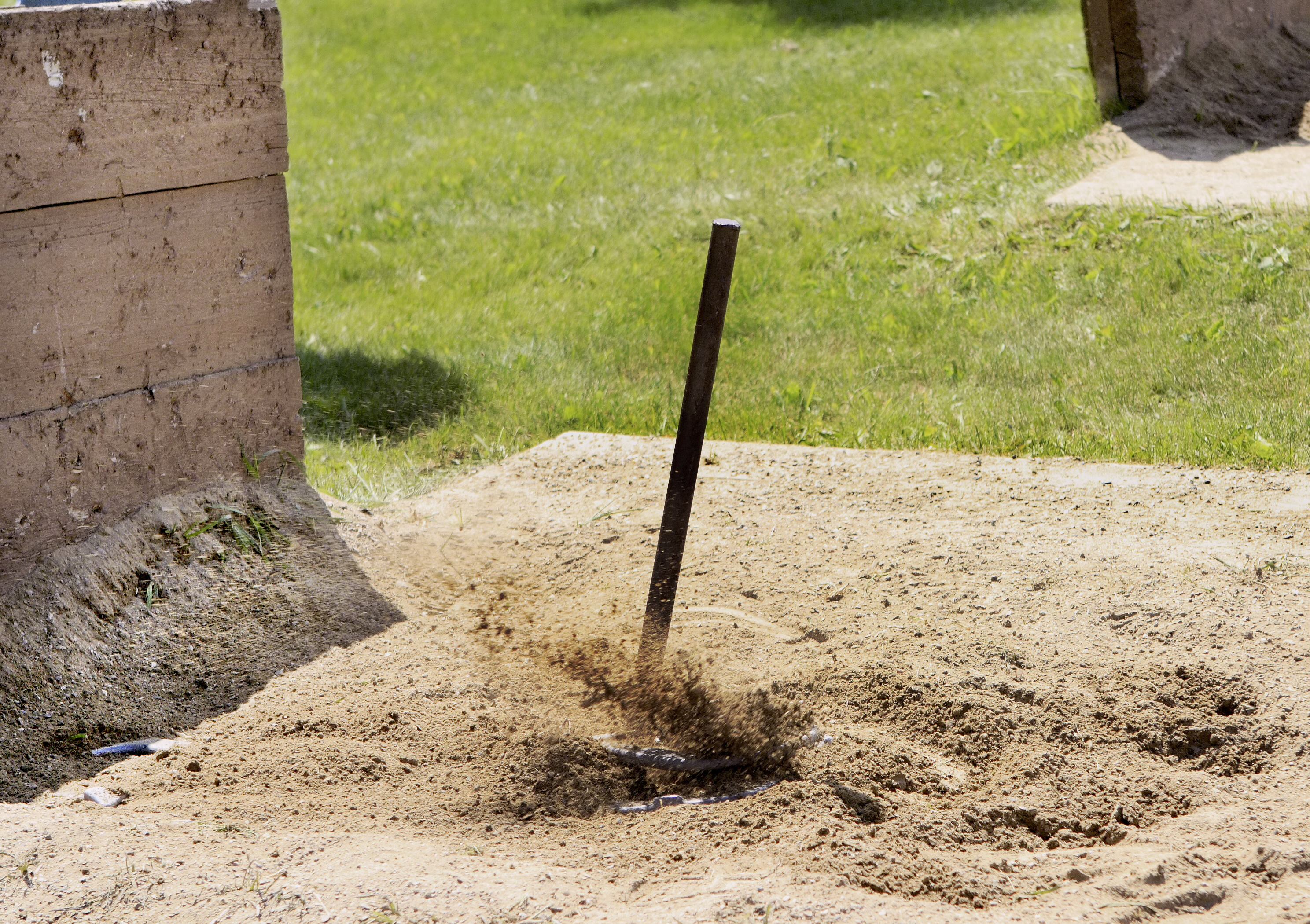
    Horseshoes can be played by two individuals or two teams of two players. The most common version of the game involves “innings.” During each inning, each player pitches two shoes. The goal is to get the horseshoe around the stake. This is a “ringer” and it is determined by the ends of the horseshoe being hooked on the stake and both ends of the shoe clearing the stake. When pitching, you must stay behind the foul line, which is 3 feet in front of each stake.

    Scoring:

    1. A ringer — the stake is completely encircled by the shoe — 3 points.

    2. A leaner — the horseshoe is leaning against the stake — 1 point.

    3. Closest — if there are no ringers or leaners, the person with the shoe closest to the stake gets 1 point. In addition, if your two shoes are closer than both of your opponent’s shoes, you get 2 points. If you get a ringer, and you have the closest shoe, it’s 4 points.

    4. Cover — if a shoe is thrown on top of your shoe as a ringer, your ringer is cancelled.

    The goal is to be the first to score 15. In another version of the game, you can determine that you’ll both have a set number of pitches, and whoever has the most points at the end wins.

    Remember the goal is to not only get more points, but to stop your opponent from scoring. Sometimes the best tactic is not to pitch for the point but to cover or knock over the opponent’s leaning shoe.

    A backyard set of horseshoes will run you about twenty bucks. If you look around, I bet you’ll find some public horseshoe pits near you and probably a league looking for members.

  • The Sitting Disease

    The Sitting Disease

    sit

    In the late 1980’s there was an incredible innovation that came into the business mainstream — like a bull — and it was called voicemail and — it— changed — everything.  I mean everything. Oh there had been some other recent technological advances before this; yeah, fax machines were pretty cool — you could send a document from New York to California in seconds, what’s not to love about that? But voicemail altered the very fabric of our everyday jobs. It changed how we moved around, how we reacted to new information. It meant freedom.

    But in order to appreciate voicemail you need to understand what work-life was like before this amazing breakthrough.

    For example, the challenge with being an outside salesperson back then was that it was very difficult to actually get outside. At all. You had a desk and you had customers — that called you at your desk. They called with issues, corrections, questions, change orders, to input new orders, expedite and sometimes just to talk. It was necessary to take these calls, to react to these needs, but it was also necessary to meet with customers as well as cultivate new business. But this meant leaving your desk. And your phone.

    Now we had answering machines at this time — they had been around for ten years or so and yeah, that changed things a bit. They were these big clunky tape recorders that sat on a secretary’s desk and recorded any general phone messages that came in after hours. So even if you called in late — even at midnight — you could leave a message. But voicemail was so much better.

    Because the thing with voicemail was that you didn’t have to be physically at the tape recorder to get your message. You could be — anywhere.

    If a customer called the office and you weren’t there, or if they called your voicemail directly, they left a message. Then at any payphone, at any phone at all — anywhere in the world — you could call the voicemail number, push a code and get all your messages. You could be down the street or across the country and still get your messages.

    Just — like — that!

    And as if a lock had been picked, as if a door was swung open, we were no longer chained to our desks. We could be on the road all the time. If we had a phone nearby we could gather our messages and take care of them from anywhere.

    We had become —- mobile.

    And that was just the beginning. After that came mobile phones and emails and smart phones and Bluetooth and a bunch of other things that followed. All mobile. All giving us freedom. Freedom to move — in fact a new smart phone commercial shows a a surfer sending an email — inside of a wave.

    And the mobile revolution had begun.

    And now —. Thirty years into this mobile movement. After we are free to be as mobile as we want to — we are the most sedentary that we have ever been. Ever. In history.

    Since the beginning of time, today, at this point in our history — Americans spend more of the day sitting then ever before. Ever.

    Thirty years after all of this mobility started, we now sit for most of the day. Sometimes for fifteen hours a day.

    In fact, we’re mobile, we’re on the go, but we’re still sitting. We sit in the car, we sit on the plane, we sit in the airport waiting to get on the plane. We sit in the waiting room, we sit at home and of course — we sit at work.

    So why is this a big deal?

    Well, we were not built to sit. We were built to move. And with sitting we increase our risk of heart disease to 65% — which means that we have just given away seven years of our life by sitting. Add to that the risks of certain types of cancer.

    Immediately after you sit down, the electrical activity in your muscles slows down dramatically along with your ability to burn calories. If you sit for a full 24-hour period, you experience a 40 percent reduction in glucose uptake in insulin. All of which has caused many health experts to call sitting; the new smoking.

    To break that down, The American Cancer Society recently published an article stating that men who sit 6 hours a day are 48% more likely to die before their standing counterparts and women that sit this long are 94% more likely to die.

    http://www.juststand.org/tabid/674/language/en-us/default.aspx

    The only good news about this is that the effects are reversible.

    – Stand up once an hour.

    – If your driving, pull over every hour or so and stretch for a few minutes

    – Walk during breaks.

    – Look into standing-desks and working more while standing.

    – Walk a message to a co-worker instead of sending an email.

    – Park as far away as possible and walk to where you’re going.

    – Exercise three times a week.

    And get moving.

  • How to make homemade chili

    How to make homemade chili

    carne

    In March of 1519, when Cortes landed in what is now Veracruz, Mexico, to conquer the Aztec Empire, he arrived with only 500 men, 15 cannon and 20 horses. With this he would face the 12 million strong Aztec Nation.

    Shortly after Cortes reached Mexico — just so there would be no confusion on intent — he ordered the sinking of ten of their eleven ships so retreat was never an option for his men — they would go home when Mexico was part of Spain, or they would not go home.

    As they moved towards the Aztec capital of Tenochtitlán, Cortes recruited troops by conquering villages and making alliances with various enemies of the Aztec’s. In fact, when a rival Spanish contingent landed, Cortes quickly defeated them and the remaining soldiers were absorbed into his army.

    In November of that year, after conquering numerous Aztec cities, Cortes and his new army — numbering now in the thousands — arrived in Tenochtitlán. Clad in their Spanish armor and riding horseback — which the Aztecs believed were deer — Cortes and his men were perceived as gods —- which made it easier for the Emperor Montezuma to be taken prisoner and for the Spanish to begin removing the gold from the city.

    Once the capital was taken, the army continued, city by city, until August of 1521 — only two years later — when the last Aztec emperor, Cuauhtémoc, surrendered to Cortes. The Aztec Nation was no more.

    Now, the reason these details survived over the last 500 years is largely due to one man. A conquistador named Castillo, who fought with Cortes, had a first hand account of the events, but more importantly kept an extremely accurate journal — in fact, it is from Costillo, that the first documented chili recipe exists.

    [amazon asin=0761147616&template=iframe image][amazon asin=091484606X&template=iframe image][amazon asin=B003IKMSFE&template=iframe image][amazon asin=B0030T1KR0&template=iframe image]

    In one of the very early battles with the Cholulan Indians, in 1519, Castillo wrote that the Cholulan’s were so confident of their defeat over Cortes that they boiled chilies, tomatoes and spices, as a meal to celebrate.

    What was missing in the pot? Meat — which the conquistadors would provide because the Cholulan’s planned on eating them.

    The day — and the meal — did not go as planned but what did occur was that the first meatless chili recipe was documented.

    From there, chili migrated from Mexico through Texas and into the American Frontier where wagon cooks created brick chili; where they would cook chili and then compress the liquid out and form it into bricks so they could transport and cook on the trail by warming it up and adding water.

    But it wasn’t until 1893, at The Chicago Worlds Fair, that The San Antonio Chili Stand exposed 27 million people to the wonders of chili. And from there chili became a part of our American — and worldwide — culture.

    For something so simple in nature — tomatoes, peppers and meat — it’s amazing how many types of chili there are.

    For example, Chili con Carne is the traditional chili with meat.

    Texas Chili, contains no beans; it’s simply meat, peppers and tomatoes — and a true Texas Chili purist will say that the stew should have no other vegetables but peppers.

    Chili Verde is a spicy green chili that is made with pork that has been slow-cooked in chicken broth, peppers, and chili — with no tomatoes.

    And there are many more. And within these and other categories there are a myriad of styles.  In fact, the great thing about chili is that there are no two alike.

    Having our own signature chili recipe is important for us modern men for several reasons. First of all it’s an inexpensive but hearty meal. Being able to whip up a quick pot of chili means we will never go hungry. Also, chili is the quintessential guy meal that is so versatile and allows us so much creativity in preparing, so we get to expend some creative energy in perfecting our chili. And a quick pot of homemade chili is the perfect and simple dish to bring to an event or when you have people over.

    HOW TO MAKE HOMEMADE CHILI

    If you follow just one rule, just one, then you’re chili will be in the top twenty percent of all the homemade chili’s out there.

    The rule is this.

    Use dried beans.

    Canned beans are fine to use for chili — and I’ve made gallons of great chili using canned beans — but by cooking the beans yourself the beans will be firmer and the chili will be heartier. Also, instead of sitting in a salt water solution in the can, your beans will be soaking up all that great flavor of your chili.

    Follow the directions on the bag for your beans but the method that seems to work best is the quick soak method — where you bring to a boil for one minute then let it set for an hour.

    Now here are the basics, but the one thing to remember is this:

    This is not is a chili recipe. You don’t want a chili recipe but  you want the basics. You’re going to develop your own.

    Cook your dried beans.

    In a pan, fry your onions, peppers, garlic, — whatever vegetables you want —  until they begin to caramelize and soften.

    Brown your meat. Now ground beef or ground turkey is commonly used but you can be creative here and use anything you want; sausage, chicken, pork or cut up a steak or a roast. Also game meats work real well such as venison or goose. If you want to make a meatless chili you can cut up potato or use garbanzo beans or tofu — in fact, rutabaga works great in a meatless chili.

    Combine your meat and vegetables in a pot with a few cans of stewed tomatoes, tomato chunks and/or tomato paste or fresh tomatoes if you have them. Whatever you want. You may need to add a little water here but you can also use beer or apple juice for taste.

    Add your spices in. This is completely up to you and the only advice is to avoid the chili spice packets you buy in the store — because you can control it better by doing it yourself. The basic spices are cumin, cayenne pepper, chili powder and salt and pepper, tobacco. But there are no spices you can’t use —- I know a man who adds peanut butter and nutmeg in his chili and it tastes great.

    Simmer and taste. Let the chili simmer down and let all those flavors meld together and keep tasting it and tweaking it.

    And that’s it. Experiment and develop your own recipe. If there is something you don’t like change it next time.

    Also, make a big pot. Chili freezes pretty well and you can save it.

    Have fun.

  • Brain Health

    Brain Health

    brain2For almost a century, the field of clinical psychiatry — the medical branch dedicated to the study and treatment of mental disorders — was the only branch that did not look at the actual organ it was treating.

    This is true. For over a hundred years, a psychiatric assessment of a patient’s mental care would begin with a patient history and psychological assessment, and would end with therapeutic sessions — and of course, lots and lots of drugs.

    Now, with cardiac treatment, the very first step for diagnosis has always been to have scans of the heart, valves and arties taken. Pulmonary care first begins with looking at the lungs, and if you broke a bone, the first step— the very first action taken — would be to have an x-ray shot of the injured bone.

    But in the world of mental health it was always assumed that the mental illnesses had nothing to do with the vessel that illness was contained in. That struggles, disease and conditions of the brain —– had nothing to do with the brain itself. So it was simply ignored.

    But something interesting happened in the 1990’s when a few groundbreaking doctors first began to use SPECT (Single-photon emission computed tomography) scans of their patients brains, in their treatment. And when they did, they discovered some interesting patterns — especially where addictions are concerned.

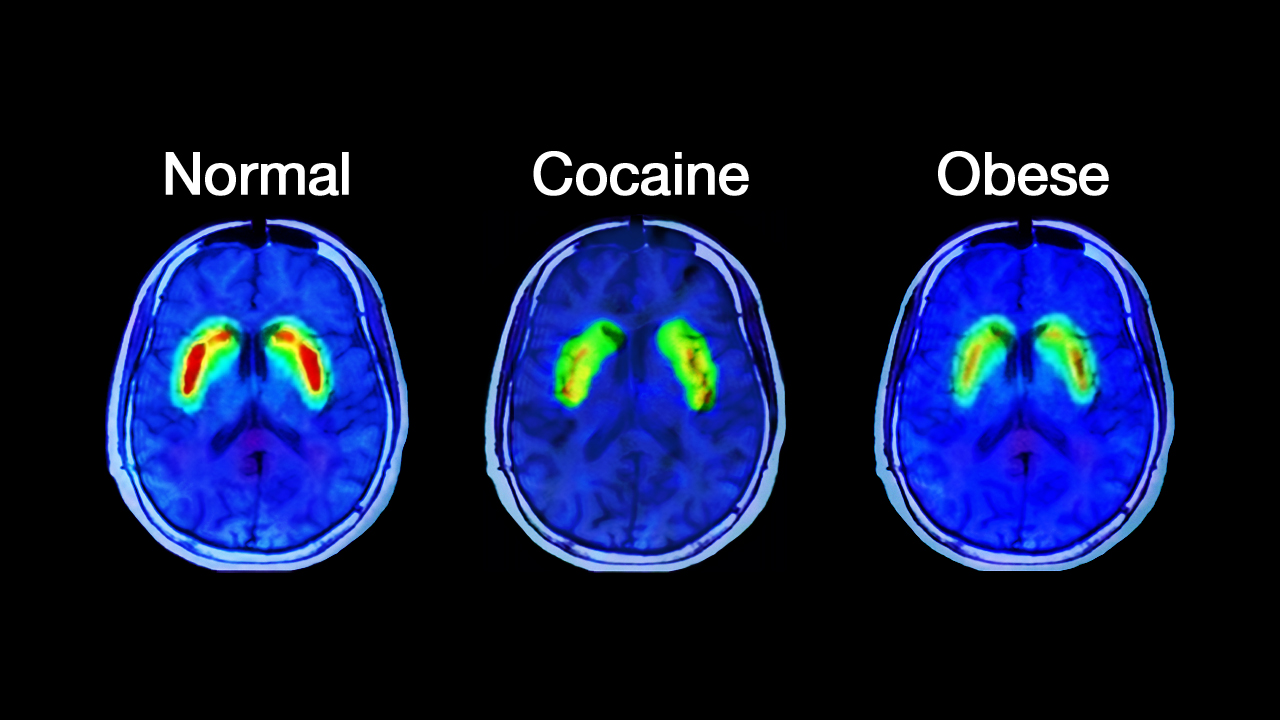
    For example, if you scan a person’s brain who is addicted to alcohol and compare that to a healthy person’s brain, you will see two completely different organs.

    The healthy person’s scan will show activity in the various areas of the brain — the frontal lobe, the hypothalamus, the prefrontal cortex — all firing off as needed. There will be a dispersed activity in all these areas. All parts of the machine have a use and all of those parts are being utilized where needed.

    But the alcoholic scan will show overactive areas in the what is referred to as the pleasure and reward bundle of the brain — the nucleus accumbens, the prefrontal cortex and the amygdala — with other areas seeing very little use. In fact, an alcoholic’s brain will have this swiss-cheese-appearance with certain areas of the brain basically shutting down due to lack of use. And an alcoholic’s brain will actually be physically smaller than a healthy person’s brain. We see the exact same thing when we look at a brain scan of someone addicted to drugs.

    Now this isn’t very surprising to us. We know that there are chemicals in alcohol and drugs that are extremely harmful. So a chemical attack of the brain can result negatively to someone who abuses drugs or alcohol. Yeah. That makes sense.

    But here is where things get interesting.

    If you now scan a person brain who is addicted to say, food for example — someone who is morbidly obese — or someone who is addicted to gambling, pornography, sex or shopping, you will see —- the exact same thing.

    A person’s brain addicted to shopping — is almost identical to that of someone who is addicted to alcohol. The brain from an individual who is addicted to pornography — will look just like the brain of someone who is addicted to heroin.

    brain

    What? How is that possible?

    It’s simple.

    The brain registers all pleasures in the same way — whether it’s booze or sex. Gambling or cocaine. Finishing an important project at work, or scraping enough change together for a fifth of bourbon. In the brain, pleasure has a simple and distinct signature: the release of the neurotransmitter dopamine. That’s it. To the brain, all pleasures are the same.

    All drugs of abuse — nicotine or chicken wings, crystal meth or Facebook — causes a particularly powerful surge of dopamine. And in our brain we then create a well-worn path to get to it.

    And in addiction our view of the daily life becomes very simplified.

    Stressed? No problem, grab the addiction.

    Celebrating? No problem, grab the addiction.

    Bored? No problem, grab the addiction.

    Eventually the other areas of the brain — reason, patience, problem solving, planning, — aren’t needed as much. You have only a condition and response. This equals that —- with the ‘that’ being the addiction. The magic button that can be used at any time, all the time.

    And eventually a very worn path is created between a very small part of our brain. And the other rooms just —well. Shut the lights off because there is no activity going on there.

    Now, where it gets even more interesting is that the likelihood that the use of a drug or activity will become an addiction is directly linked to the speed and intensity of that dopamine release. So smoking or injecting a drug, produces a faster and stronger dopamine signal and is more likely to lead to drug use that taking as a liquid or pill.

    But we live in a very fast paced society. A person who is addicted to shopping can get that dopamine rush as soon as they pull out the credit card out or even hit the shopping cart icon. And someone addicted to gambling doesn’t need to find a bookie or a casino any longer. You can gamble online from your phone. And food —? Twenty four hours a day we can get fast and hot food delivered, picked up or microwaved — in seconds. And that dopamine rush is triggered.

    And this is not only for addictions that we consider ‘destructive’ but for all addictions. A person’s brain who ids addicted to marijuana will look like the one who is addicted to work. The individual, who has to get to the gym six times a week, will have a brain that looks like the person who is addicted to nicotine.

    Do you know anyone who cannot hear that ping of a text message or the sound that an email has just been received, without checking their phone? That little sound can easily be hard wired to that dopamine trigger, and a path is formed.

    So what does all of this mean?

    Well, it means that when we get most of the joy, happiness, release, and pleasure from only a few areas, that there is not only a spiritual cost but a biological one. It means that that quick pleasures can be extremely costly — not just for what we are leaving out of our lives, but for the damage done to the organ that keeps us breathing and allows us to reason.

    It means that old habits destroy, and new skills build.

    It means that quick fixes are costly, and new experiences are constructive.

    It means that the greatest joys are the ones we work at, and the ones we strive for.