Category: Skills

  • Every man needs a garden

    Every man needs a garden

    garden

    Remember when you were a kid and you took the tops of carrots and placed them in in a jar lid of water on the windowsill? Then every hour, all day long, you would run back to check; to see if the carrots had sprouted yet? Then, the next morning, as soon as you got up, you checked again? Then later that day too? Then —. Well then — it would always get a little boring. And by the end of that day you had forgotten it all?

    Remember that?

    Then later, about two weeks, you’d finally think about those carrots and you would run to the windowsill to find one of two things?

    1. Either the carrot tops had completely dried out from neglect and stood there mocking you? Or —
    2. Your mother had watered them, which meant that you had bright green sprouts of success projecting from the top?

    And when that happened, you —. Well, you felt like a —. Well, like a guy who could get carrot tops to grow on a windowsill. Which, at six years old, is about as big a deal as it gets.

    And that — my friends — was your very first garden.

    And for some of us, that was our last one too.

    There are many reasons to have a garden — and when I say garden I mean everything from a few tomato plants to an acre of produce. A garden is just something you grow on your own.

    Reasons to have a garden

    1. No matter where you live, you can have a garden. If you are in the middle of Manhattan or the backwoods of Tennessee, you can grow stuff. On a windowsill, a roof top, the sunny part of an alley or in the many community gardens that are set up. There is no place, no living arrangement, where you can’t grow a few things.
    2. There is little skill involved. Yeah, I know, you don’t have a green thumb. And yes there is an art to gardening. But the basics are incredibly simple. You put seeds in the ground. You water them. They grow.
    3. Cost savings. Just a few tomatoes or squash from the small patch of dirt by the garage saves you money that you would have to pay out. And that’s not even adding in the value of canning or freezing for the winter.
    4. Pride. Yeah, it sounds hokey but there is pride involved. When you take a few zucchini to a neighbor or a basket of tomatoes into work, there is enormous pride in that. A sense of accomplishment.
    5. Health. Whatever you grow in your garden you know how it was grown. You know what pesticides you put on and how much. There are no secrets. And you have the advantage of taking the food at its most peak time and going from garden to table.

  • How to shine your shoes

    How to shine your shoes

    shoe shine

    Although the good old days when shoeshine boys stood on street corners — young kids with a shoe box, offering a quick shine to passersby — was well before my time, I did get to be part of the great suit era of the 1980’s; when no matter whether you worked in the mail room or had the corner office, you were donned in a suit and tie.

    And this was also the time of the shoeshine guys.

    These shoeshine guys — with their barbershop like chairs on a pedestal — were everywhere; hotels, airports and even some restaurants. Which made perfect sense because these were the days when your first impression was determined by the firmness of your handshake and the shine of your shoes.

    Now if you think that the shoeshine guys were just a nostalgic look at a different era, I guess they were. But for a young man they were also a rite of passage. Having your shoes professionally shined while you sat there and looked on,  meant that you were not only old enough to get your shoes shined — and were actually wearing shoes that you could be shined, not sneakers — but that you could pay for it yourself. And for a few bucks you could feel both responsible and frivolous at the same time.

    They are mostly gone now, the shoeshine guys. I mean, you still see them in airports and most major cities still have them, but the bulk of them; the shoeshine guys set up as you waited to get a table for lunch or as you sat at a bus stop, are all gone. With the majority of us in business casual, our loafers don’t seem to need to be as shiny as our wing tips.

    And most likely the next generation probably doesn’t need the shoe shine guys like we did. Because they have there own rites to go through. But there still — even if just for a wedding, funeral or interview — you will be a need to shine your shoes. And when you do, you want them to glow.

    HOW TO SHINE YOU SHOES:

    1. Remove the laces of the shoes. A lot of people don’t bother with this but its the only way to get the tongue polished and get in all the nooks at crannies of the shoe. Take the laces out and fold the tongue up — this is also a good time to replace the laces if needed
    2. Clean the shoe. Not polish, but clean. Place your hand inside the shoe and with the other hand take a slightly damp cloth and wipe down the entire surface of the shoe to get off all the dirt and dust. Note, if you skip this step you could not only polish the dirt into the leather, but any sort of particle of dust could easily scrath the surface of the shoe.
    3. Apply polish. Using circular motions apply a thick coat of polish all over the shoe. Don’t be stingy here. Get a thick coat of polish all over the shoe and work it in.
    4. Get the shoes wet. With a spray bottle or a just taking your hand over the stream of water from the sink, cover the shoes with beads of water — its best to do one shoe at a time. Once its wet, you get in there and start buffing the shoe. This is the shining stage. Work it hard and add more water if needed.
  • How to pack a suitcase

    How to pack a suitcase

    bag

    I love the type of movie where there is a tortured soul, filled with wanderlust, who hears the call of the open road and decides to see the world. So he throws a few meager possessions in a small backpack and starts walking. He hitchhikes, he takes the bus, and he meets people along the way. Then we have scene-five. This will be after he arrives in a town — usually to help a rancher or struggling non-profit group out of a crisis — and he meets the girl. Scene-five will be their first date. You know the scene — the darkened restaurant, the candlelit tables, him in a suit and her in a dress, and as you watch, only one thought goes through your head.

    Really? You packed a suit in that small backpack? C’mon.

    This kid has a daypack that is half full. He carries it from New York City to Provo, Utah, and during that time he has six full changes of clothes, a suit, a raincoat, hiking boots, sneakers and during the date scene he is wearing an expensive pair of Italian loafers.

    No. You did not get all of that in your twelve pound pack.

    But that’s what we want. We want a bag to be light and small, yet we want it to contain a never ending supply of clothes, coats, shoes, formal wear and a few books — just in case we get bored. We want it to be our house — in a bag.

    Type of travel

    There are two basic types of travel packing. You are packing for weight, or you are packing for content. You can’t do both.

    If you are going to be in three different locations over four days, if you are going to be carrying your bag through train stations, airports or have it on your back most of the time, then you want the bag to be the smallest and the lightest possible.

    But if you are going to one location and then back, then you want your bag to contain everything you need, or will ever need, for a specific time period. You want maximum content in a limited space.

    The suitcase laws

    Half of everything in your bag you will use.

    A quarter of everything in your bag you will not use

    And a quarter of items that you end up needing — you forgot to pack.

    Staging

    Most of us pack this way. We open the bag and start stuffing things in. When there is no more room, we’re done packing. But by staging, we can guarantee that we get everything we need.

    Spread out the bare minimum you need for the trip — the absolute least you will need. Pretend that this is all you are allowed to take and you could survive the trip if you only had that. Now pack it. When you’re done, the available space is what you have for everything else you think you’ll need.

    Over packing is a common — and sometimes costly — mistake. Pack too much and your free carry-on could easily cost you a hundred dollars or more in fees. Remember, laundromats exist in hotels, resorts and in every town or city you’ll be in. You can always wash clothing while you’re away.

    And remember if you’re going to be bringing things back — souvenirs, clothing, items purchased while away — you’ll need space for that.

    Rules of the road       

    Try to bring one belt if possible — something that can be used for both casual and dress.

    Try to bring two pairs of shoes — or if needed the pair of shoes your wearing, one extra pair and a pair of sandals. No more.

    HOW TO PACK A SUITCASE:

    1. Use the roll-up method. By taking your clothing — shirts and pants mostly — and rolling them in a tight tube, you can get the best use of space in your bag
    2. Underwear. Pack one pair for everyday your away, plus one extra pair. No more.
    3. Wear the same clothes on your way out, as you do on your way back in. This will save you one change of clothes.
    4. Toiletries. Clean out your toilet kit before you leave — otherwise you’ll be carrying those free shampoos and conditioners you had to have from the last trip out, and then back home again. And if flying, remember the TSA regulations of liquids being 3 ounces or less — unless you are checking your bag.
    5. Pack for the weather. The forecasts for your location could change a dozen times before you get there, but it doesn’t hurt to have a rough idea of what the weather will be like so you can pack accordingly.
    6. Fill your shoes. Pack socks and underwear in the shoes that will be in your bag. This is wasted space so fill them up.
    7. Fill the edges of your bag first. Again, this is where pockets of wasted space often hide, so fill that in first.
    8. Use the outside pockets for items you’ll want to get to quickly: phone chargers, books, magazines, etc.
    9. If checking a bag it’s a great idea to fill your carry on with all you’ll need to survive a few days — contact lens stuff, change of underwear, toothbrush, etc. That way if your bag gets lost you can stick with the plan while they find it and get it to you.
  • How to make corned beef and cabbage

    How to make corned beef and cabbage

    corned

    Until they make Superbowl Sunday an official holiday, the most gastro-masculine celebration of the year has to go to —  Saint Patrick’s Day. I mean, c’mon, any day that revolves around red meat and beer is bound to attract testosterone. Which means that being able to make the staple meal of Saint Patrick’s Day, corned beef and cabbage, is right up there in the masculine food hierarchy with grilling a great steak or deep frying a whole turkey.

    History

    Corned beef and cabbage became part of the Irish-American culture in the early nineteenth century when Jewish butchers offered very inexpensive cuts of salted beef to the public. Salted meats had been available in Europe for centuries but most of Ireland ate little of it, in either fresh or salted form, because it was not only extremely expensive but came from cows that were owned by the wealthy — so even if you did have the coin to purchase it, you probably didn’t have permission to buy it. So what beef that wasn’t used by the estate was salted and exported at a much higher profit than they could have received at selling it to the lowly peasants. So, when Irish immigrants came to the larger cities in the US, they saw inexpensive cuts of salted beef were available for purchase — possibly for the first times in their lives.

    More corned beef in consumed in the United States on Saint Patrick’s Day than any other day, which means that the price need to  be competitive on that day. This gives you an opportunity to purchase a few of these salted gems and freeze them for later on in the year.

    Corned beef and cabbage is an example of what is called a boiled dinner. These are one pot meals that are cooked low and slow and include a piece of meat, and many root vegetables and spices. These are great because they are easy to make, inexpensive, hard to mess up and feed many people — which makes them ideal for camping trips, tailgating, deer camps or any time you want a big hearty meal for many.

    And the best part is, they are really hard to mess up. A boiled dinner is quick to prep it, then you turn it on and wait.

    HOW TO MAKE CORNED BEEF AND CABBAGE

    Ingredients

    • 1 medium onion, cut into wedges
    • 6 red potatoes — or a bag of fingerling potatoes.
    • 1 bag of carrots
    • 1 bottle of dark beer
    • 3 garlic cloves, minced
    • 1 bay leaf
    • 3 stalks of celery
    • I head of cabbage cut into wedges
    • 1 cup of apple cider
    • 1 corned beef brisket with spice packet (2-1/2 to 3 pounds), cut in half
    • 1 small head cabbage, cut into wedges

    Many people make this meal in a Crockpot and you definitely can. However, I find that the more modern the Crockpot the faster it cooks — I can’t prove this yet, but it seems like the newer crockpots cook at a higher temperature and can dry out the meat. So a Dutch oven or any pot or pan you can cover, will work fine.

    Place your onions, celery — cut long way like your carrots — and potatoes in the bottom of the pan. Place your brisket on top of the vegetables. Add the spice pack that came with the meet to the top and place the cabbage on top of the meat. Pour the vinegar and beer to the side to fill the pot.

    And that’s it. Cook for about 4 hours at 300 degrees.

  • How to make jerky

    How to make jerky

    jerky

    Origins

    Tracing the history of jerky is somewhat difficult because people have been salting and drying meat for centuries. However, the word jerky has a direct line back to the ancient Incas: sometime around the year 1550. During that time, the Incas would cut slices of llama meat, rub it with salt and dry it in the sun or over a fire. When the Conquistadors arrived, they continued this tradition and called it Charqui, and when they later invaded the Americas they noticed that the natives were doing a similar process with meat from buffalo, deer and elk. The Native Americans began using the same term — only with their accents they pronounced it jerky.

         Jerky allowed people to consume high protein fuel that was readily available and eat it when food was scarce. It became a staple food item for early American pioneers and allowed for Western expansion. Over the years people discovered that the meat could hold more flavor if certain spices and tastes could be added and they began to create it for flavor, not only as a survival food.

    Nutrition

    Contrary to popular belief, beef jerky is actually a pretty healthy snack. It’s a great source of protein, is low in fat and calories and has minimal carbohydrates. Yeah, the sodium content is through the roof, but hey, it’s salted meat.

    And remember, jerky is not just a snack food. Jerky is dehydrated meat which means it can be rehydrated again when placed in hot water so you can use it in chili’s, stews, at home or while camping or hiking.

    But here’s the thing. The cost of commercial jerky is downright ridiculous.

    Economics

    Let’s use the Jack Links brand of beef jerky as an example. This brand resale’s for $5.99 for a 3.25 ounce bag. So, if we take $5.99 and divide it by 3.25, we find out that this jerky costs $1.84 an ounce. And since there are 16 ounces in a pound, that means the cost of this jerky is — $29.44 a pound.

    That’s thirty dollars a pound for — beef jerky.

    In comparison:

    • Lobster is currently running around $12.00 a pound
    • Filet Mignon is $19.00 a pound
    • And Prime Rib is about $17.00 a pound

    But beef jerky — that you buy at the gas station — is thirty dollars a pound.

    Now add to this, the comparison between the taste of homemade jerky and the prepackaged kind, and it’s not even worth comparing. The jerky you can make at home tastes worlds better, hands down — and will not contain any strange chemicals, preservatives or nitrates.

    Now marketers jumped on this fact a few years ago and starting producing small commercial dehydrators to dry your meats and vegetables, at home. They created infomercials, bought television time and dominated the shopping channels, stating what a crime it was for you to pay so much for beef jerky when you can make it yourself. But they would like you to make it at home — with their two hundred dollar dehydrator.

    Now, that’s just plain silly.

    Why would you pay two hundred dollars — for something that is basically a little heater and fan? And why would you pay any amount of money for a device that can do what the Incas did in the 1500’s with just fire and the sun?

    Because everything you need to do to dehydrate — herbs, vegetables, meats, anything — can be done in your kitchen oven and can be done for pennies.

    And it doesn’t matter what type of meat you use. You can use beef, venison, turkey, salmon, tuna or something even more exotic. And you can cater each batch to different tastes — make sweet, smoked or spicy.

    HOW TO MAKE JERKY

    1. Cut meat in strips. You’ll want these to be about the size of a slice of bacon. And the best way I’ve found is to get your butcher or meat department in the supermarket to cut the meat for you.
    2. Prepare marinade. Here is a real simple marinade that works well.
    • 1 part Worcestershire sauce
    • 1 part Soy Sauce
    • 1 tbl Honey
    • 2 tsp black pepper
    • 1 tsp chili powder
    • 1 tsp crushed red pepper flakes
    • 1 tsp liquid smoke
    • 1 slice of onion
    • 1 squeeze of lemon
    1. Place meat in storage dish, cover with foil and refrigerate anywhere from two hours to overnight.
    2. Preheat oven to 160°F
    3. Place a cookie sheet, wrapped with aluminum foil, in the bottom of the oven. This is to catch all the dripping from the jerky, because you are going to place the jerky right on the oven racks.
    4. Allow to dry in the oven for anywhere from 6 to 12 hours.
  • The world’s greatest venison roast recipe — ever!

    The world’s greatest venison roast recipe — ever!

    venison

    The first thing I need to mention is, I don’t hunt.

    Not at all. And that’s not because I’m against hunting, I’m not. I don’t view  hunting as being wrong, cruel, barbaric, in fact as long as the meat is being used I think it’s a self-sufficient and admirable thing to do.

    In fact, I grew up in a little town in the Catskill Mountains called Walton, NY. and although it might be different now, in those days if Dad didn’t get a deer, it was going to be a long winter. There were many families back then that depended on wild game to supplement their food stocks and The State Police had a long list of families that would take deer killed in car accidents so the meat didn’t go to waste.

    I have no problem with hunting. Never did. I just don’t hunt.

    But all of us — myself included — know plenty of people that do hunt. Plenty of them. And hunters are very generous people that enjoy sharing some meat with friends and family that will use it.

    Which means, that if you’re like me and don’t deer hunt, that doesn’t mean that we don’t need to be familiar with how to cook venison. Especially a venison roast. And the reason to focus on the roast is that besides being a great piece of meat, it’s not as sexy and sought after as say, the tenderloin; which everyone prizes and covets. So, many folks will have extra venison roasts in their freezer and are more than happy to share with all us non-hunters out there that enjoy it and know how to prepare it.

    In fact, if you have family or friends that have never had venison and are a little apprehensive to try it — this is the recipe for you. Which is actually how I came to get it.

    My mother-in-law grew up being one of those people unfamiliar with venison but her mother-in-law would cook it occasionally for Sunday dinner. This young, recently married woman did not want to insult her husband’s mother, so she tried it. And she was hooked. The meat was tender, moist and tasted, well — nothing like what she expected deer to taste like.

    And that is this recipe here. The actual venison roast recipe from my wife’s grandmother, Elsie Wilkins, circa 1950 and the greatest venison roast recipe you will ever find and the only one you will ever need.

    It’s so simple, fun to make and has an amazing flavor.

    THE WORLD’S GREATEST VENISON ROAST RECIPE — EVER.

    Ingredients:

    A 4-6 pound venison roast

    Flour

    1 tablespoon cooking oil

    1 large onion

    One half garlic clove

    4 teaspoons oregano

    1 pinch celery seed

    4 tablespoons wine vinegar — not cider vinegar

    Salt and pepper to taste

    Accent ™ to taste.

    Directions:

    Peel half of a small clove of garlic

    Cut small slits in the roast and place long pieces of garlic into the roast — this will add moisture while the roast is cooking.

    Place the oil in the bottom of a French Oven (French oven is an enamel covered version of a Dutch oven and retains heat a little better than its Dutch cousin), and bring up to a medium heat on the stovetop.

    Brown roast in oil for 10 to 15 minutes, or until a nice brown sear are on all the edges.

    Slice one large onion and set aside.

    Remove roast. Place onion and vinegar in French oven.

    Place spices liberally over the roast (Accent ™, celery seed, salt and pepper, oregano).

    Place roast on top of the onions and cook at 325 F for 3 to 4 hours.

    Check half way through to see if additional moisture is needed.

     Eat and enjoy.

  • The smart way to spend your tax return money

    The smart way to spend your tax return money


    check

    Around early October — this is when the stores are full of pumpkin carving kits and bite sized packs of Snickers bars — you will see the first sign of the retail Christmas season. In some stores this will be just a peak; a few feet on an aisle where you can buy garland and lights, whereas other retailers will dedicate one side of the Halloween aisle with wrapping paper and bows; just waiting for the first of November when they can evict Halloween and get the inflatable reindeer on the shelf.

    Then Halloween which means that Christmas has officially begun — and yeah, there’s Thanksgiving in between and you’ll see displays for Stove Stop Stuffing and premade pie crusts, but Christmas is the real rock star of retail.

    Now, if you’re paying attention, this is also when you’ll see the very beginning of the retail tax season. In between the commercials for the hottest door buster bargains, you’ll see the first tax commercials. Small and spread out. Just a few and usually from H&R Block who have significantly bumped up their marketing efforts over the last few years. And these ads will be about how much money you’re not going to get back by using other tax preparers.

    These are the teaser adds. Little reminders dropped in amongst the Christmas cheer to get you to start thinking about your taxes.

    Then comes Christmas. Then New Years which means that the retail tax season has officially begun. Now the ads will pick up. H&R Block will tell you that you will lose a fortune to the Government if you don’t set up an appointment with them today. Turbo Tax will tell you that it’s so easy to do your taxes at home with their software, any child could do it.

    These efforts will increase through TV ads, the internet, those inflatable air dancers you see in parking lots along with guys dressed in Uncle Sam costumes waving large arrows that tell you to hurry up and pull into this shopping center right this second and get your taxes done.

    Now what’s interesting is, that at this point in the season the marketing is to get your tax preparations business. After that it begins to switch.

    When March comes so does the shift. Now you’ll see new ads migrate from those who want to file your taxes, to those who want to help you spend your tax return. This is when you’ll see car lots offer to do your taxes for you and use the tax money on a new car. You’ll see furniture outlets do the same thing and charitable organizations will ask you to donate a portion of that return. And throughout the month this will get bigger and bigger until the middle of April when the bubble will pop.

    Now, the dangerous aspect of these ads — as well as how the retail tax market works — is that all of these efforts are based on one interesting premise. That you look at your tax return money as — found money. As extra money. As money that fell from the sky and now you are looking for a way to get it all and then spend it fast.

    Which is perfect. And the retail world is more than happy to help you do that — spend it on a new car, the latest iPhone, furniture, a trip because — well, by gosh, you deserve it.

    But here is the boring truth about your tax return.

    Ready?

    Here it is.

    Your tax return is not found money.

    What?!

    No. It is not.

    You didn’t win the lottery. You didn’t find that money on the street and you weren’t given it by a rich uncle. This money, this tax return, is your money that you earned as salary and it was held — in effect, taken from you — until you could document why you should have some of it back.

    It’s not separate from your income in any way. It is your income.

    Which means that it still falls under the rules of your income.

    WHAT TO DO WITH YOUR TAX RETURN

    Since this tax return is your income in a lump sum form, the rules you’ve established for your income will apply to your return. And the first rule of your income is …

    1. Pay yourself first. No, you shouldn’t blow the tax return, but sticking it all in an account is just as bad because it will soon widdle away and be gone. Like your income, there needs to be a purpose and plan to your money. So, like you do with your paycheck, pay yourself first. This is your income and you would have taken a percentage of it from your salary if these taxes weren’t held. So, if your weekly spending money is 10% of your check, then take 10% of the return and pay it to yourself. And no, this doesn’t mean blow it, it means that this portion of it is your money. It would have been yours if taxes weren’t taken out so it’s yours once they were given back.
    2. Start, or add to, your emergency fund. What happens if you get in an accident and need to cover your deductible? What if you lose your job or get hurt? The general rule of thumb regarding an emergency fund is that it should be six to eight months of your salary. Now your tax return may not be that much and that’s fine, all you want to do is add a portion of the return to the fund to build it up. Create an interest bearing savings account that is only used for emergencies and then add to it each paycheck.
    3. Pay off or pay down, high interest debt. If you are carrying high interest debt, your emergency fund will be eaten up pretty quickly. Create a plan to eliminate this debt. Again, if your return can’t pay it all off, pay it down and create a plan to not acquire any additional debt and pay it off.
    4. Buy what you need. Do you need new tires or is your water heater on its last legs? This is the time to get what you need; those things you’ve been putting off. Pay cash and get that new car battery or replace the broken washing machine.

    Stick to these basic rules and treat the return for what it is. Part of your income given back to you in one lump sum.

  • How to iron clothes

    How to iron clothes


    iron

    There is nothing that screams, yes, yes, my mother did used to do my laundry — then when a man shows up wearing wrinkled clothes.

    There is nothing that screams — yes, yes, an iron is way too heavy, complicated, frightening and/or dangerous for me to operate — then when a man shows up wearing wrinkled clothes.

    And there is nothing that screams, yes, yes, I have officially given up on what I look like and how others see me —  as when a man shows up wearing wrinkled clothes.

    Nothing.

    Ironing your own clothes is right above making your own meals and right below driving your own car. It’s a basic modern day survival skill.

    So learn it. Do it. Live it. .

    THE GOLDEN RULE OF LAUNDRY:

    Now we are discussing ironing not laundry but there is one important rule of laundry that will guide your ironing success. And it’s this.

    Don’t use the dryer.

    With the exception of socks, underwear and blue jeans never, ever, dry your clothes in a dryer. Hang everything out to dry — not necessarily outside but in your closet, on a clothes line in your laundry room or wherever you can find some space. Especially dress shirts and t-shirts. A dryer will not only shrink these shirts in as little as one drying but it will seriously shorten their life.

    So don’t do it.

    HOW TO IRON CLOTHES:

    Tools you will need:

    One iron — you can use a steam iron but the method below does not use the steam option. Standard irons usually range from 1200 watts to 1800 watts with some higher end models go up from there. But all this really has to do with is how fast it heats up now how hot it really gets. A standard iron will run you about thirty bucks and should last for years.

    One standard size ironing board — those dorm sized travel boards are just plain silly and don’t work. Don’t use them. You’ll need something sturdy and has a top that you’re comfortable ironing on.

    One spray bottle.

    One pile of clothes to iron.

    Ironing Shirts:

    1. Spray your shirt down with water from the spray bottle — if you are ironing your shirt straight from the washer you can skip this step and it actually is an advantage of ironing right from the washer.
    2. Plug in the iron and set the temperature gauge to the type of cloth you are ironing. If you’re not sure, check the label on the shirt.
    3. Place the damp shirt on the ironing board. Hold the shirt by the collar right side of the shirt facing you and spread the collar out on the ironing board — you’ll be ironing under the collar first. Iron and turn the collar over and repeat.
    4. Place the damp shirt on the ironing board so the back of the shirt is flat. Iron.

    At any time if the shirt begins to dry out, spray the cloth down again.

    1. Flatten the sleeves against the board and iron the sleeves. Flatten one cuff on the ironing board and iron it, then take that sleeve by the seam and lay the whole sleeve flat on the ironing board. If you can see the crease on the top of the sleeve from previous ironing, try to match it again so that you have a single crease line on the sleeve. Repeat with the other sleeve.
    2. Iron the front of the shirt. With the collar to your left, place the left side of the shirt on your ironing board. Iron around the collar and then down, smoothing with your had if needed. Keep rotating, smoothing, and ironing until you come to the right front of the shirt. Iron the top section first then the rest of it.

    Ironing pants:

    This is pretty easy and only has two real steps …

    1. Hook pants over the tip of the board so the upper thigh part of the pant is flat. Iron that part. Repeat on the other end.
    2. Find the crease of the pant and fold along the crease. Iron the front crease and the back. Repeat on the other leg.
  • Depression in men

    Depression in men

    gloom

    A radical statistical shift is when a significant number of people within a group suddenly change in action — it’s the unexpected, quick right turn of statistics. It’s when, without communicating and completely independent of the group, individuals act in a common but unpredicted manner that isn’t orchestrated or even acknowledged and the group shifts. So, instead of deciding between a Ford or Chevy, for example, millions sell their cars and start riding bicycles; or a neighborhood that is prime and expanding, suddenly sees a mass exodus of people selling and moving to live off the grid. It’s the place on the graph when the spike moves sideways.

    It’s the didn’t see that coming, moment.

    One of these radical statistic shifts have occurred with men over the last ten years that wasn’t expected and is more than a little shocking.

    For the first time in American history, the largest group of people most likely to commit suicide are — middle aged men.

    According to the Centers for Disease Control and Prevention, middle-aged men — those between the ages of 45 to 64 — have the highest rate of suicide; a rate that has been rising since 1999.

    Which means that for the first time ever, the once vulnerable teenager — insecure, sullen, angry and fearful — is half as likely to kill themselves as their own fathers are.

    suicides-in-the-us-from-1999-2011-by-age_chartbuilder

    Why is this?

    Well, one major driver seems to be that men emotionally suffer alone — especially when it comes to sensitive areas such as stress, relationships and financial issues; common categories involved in suicide among men. Men ignore it and suck it up. We plow through crisis rather than dealing with the causes. We fight instead of discuss and — and here is the big one — we don’t know how to, or even want to, cope with the possibility that we may be — depressed. We see depression as something that’s for the weak and an area to simply ignore and work through. Men can view depression as being ungrateful — as a slap in the face to our family, friends and work — since what do we have to be depressed about? As well as see it as a state that only occurs to frail people, ungrateful people. Not to us.

    Now, does being depressed mean that we are likely to commit suicide?

    Absolutely not. It’s the smallest percentage of depressed men that go on to commit suicide. The very smallest. But — here’s the important part — all men that commit suicide are depressed.

    So what does that mean?

    Well, it means that as tough as it sounds, we men need to acknowledge and face the fact that we are very likely to get depressed, return to it and possibly may be depressed right now.

    SINGS OF DEPRESSION IN MEN

    • Unexpected anger and anxiety
    • Loss of interest in once pleasurable activities — work, family, friend
    • Change in libido.
    • Not being able to sleep or wanting to sleep all the time.
    • Feeling very tired
    • Difficulty in concentrating or remember details
    • Overeating, or not wanting to eat at all
    • Escapist or risky behavior; driving recklessly, compulsive gambling, abuse of drugs or alcohol, or an emersion in pornography.
    • Aches or pains, headaches, cramps, or digestive problems

    Yup. So according to the math, there is a 73% chance that you have been, will be or currently are, depressed. And the first step — that absolute silver bullet — is to acknowledge it. To recognize it.

    Being depressed as a man does not make you weak. It doesn’t make you vulnerable. It doesn’t mean you’re broken and it doesn’t even mean that it’s a permanent state.

    It makes you human.

    And being human males, there are certain ways — methods that are effective for us — to work through the depression.

    Here are a few.

    1. Exercise. Exercise is the absolutely best self-treatment for depression. Physical activity releases endorphins in the brain and elevates mood — even a 20 minute walk each day can have amazing results in how clear you think and how you deal with stress.
    2. Unplug. In our stressful lives, it’s important to build in time to turn off the cell phone and computer and give yourself permission to leave the cyber web for a while. Go for a walk, a bike ride or go read a book — without being able to be contacted by text, email or voice. Step out and go black for a while. Or a weekend. Disconnect.
    3. Identify sources of stress. This is a big one in men because we see this as a weakness but by classifying what we see as stressful, we can create ways to act differently. To build in methods to counter it. If we know the Tuesday meeting is stressful, we can schedule our workout right before it, or if that confrontation with the neighbor is going to get heated we can go watch a comedy before and just laugh for an hour.
    4. Accept help when it’s offered. Whether it’s having someone else read through your presentation or getting a neighbor to help you stack wood, asking for help is difficult for men. But it does not mean your weak and it does not mean you’ve failed if you need help to accomplish something. It shows wisdom in asking for and accepting help.
    5. Say no. This is huge with men. Not only do we want to do everything, we want to do it all well and we want there  to be no limit. But we also need to find what works for us. Over committing is the fastest way to tap into your energy reserves and sabotage other areas of your life. It’s not weak, uncaring or wrong — to say, no. It’s healthy and wise.
    6. Talk. Find someone —  a member of your family, a friend, co-worker, professional, it doesn’t matter — and begin to unload. Talk about what’s going on; what’s your feeling and frustrated with. It’s very common that when you begin to actually put into words how you feel, the bubble weakens. But here is the trick. For many of us that finally unload on thoughts and feelings that we’ve kept bottled up we often feel angry afterwards. Agree that when we talk we are not going to regret the talking.
  • The heart of cool

    The heart of cool

    ethan

    There is a supermarket near us where Debbie often sends me to get last minute items — it’s a short drive from our house and is ideal when we need one green pepper or a dozen eggs. Things like that. And yes, it’s convenient. And yeah, it’s reasonably priced. But more importantly it’s where a kid named Ethan works.

    Now, I’m using the word kid here because I have no idea of Ethan’s real age. He’s young — but every year a larger slice of the population look young to me — and he does have those weird double earrings that appear as if dime sized holes were drilled through his earlobes — but they’re not — and if I had to guess I’d say he was somewhere between 17 and the ripe old age of 20. Around there. Which by using the age barometer that we  middle aged men carry; this puts him well within the kid range.

    The grocery store in question is convenient and well stocked and the first time I met Ethan there he was loading yogurts in a dairy case. I walked right by him, to the next glass door. I had already looked in there but you never know, maybe I missed what I wanted so I looked again. Nope. And when I didn’t find it for the second time, I closed the door, turned and saw Ethan’s half smile.

    “I look lost, huh?”

    “Maybe,” Ethan smirked.

    “I’m looking for the Bob Evans, Macaroni and Cheese. You know the ones that –.”

    It was then that Ethan’s smirk became a wider smile. “I gotcha,” he nodded. As if in the history of franchise food shopping, Bob Evans Macaroni and Cheese was the greatest thing that anyone could be looking for. Ever. And only those like me — the rare, the connected, the exceptional — would even think to ask for it.

    Ethan abandoned his pallet of yogurts and walked me over three aisles. He then opened a refrigerator case to reveal two shelves of Bob Evans food products. There. Just waiting for me.

    I thanked Ethan and he smiled and went back to his yogurt.

    After that, anytime I couldn’t find something I would seek Ethan out — I could have found it myself. Eventually. But even if I did, I would have missed out on that cool experience.

    Because that’s what Ethan is. He is one of those rare individuals who are naturally cool. Not cocky. Not arrogant. Not proud, smug or conceited. But cool — because there is a big difference.

    And cool is so much better than all of those other things. Cool is even better than just being confident and self-assured.

    Because cool is — . Well, it’s cool.

    Cool is the ability to be positive, but so much so that people feel confident around you. Cool is inviting. Cool is happy and content — it’s the attitude that no matter where you are, that’s the place to be.

    Cool doesn’t hide anything but it celebrates everything. It can’t be bought, it can’t be faked and it can’t be forced. Because it’s not a destination it’s a side effect.

    Which means, that is we try to get to cool — we never will. Ever. And by trying we’ll get lost or think we’re there — which is so much worse than not being cool at all.

    Cool has nothing to do with what you wear, what you drive, how much money you make, who you know, or where you’ve been. Cool doesn’t care about any of that.

    And cool isn’t perfect or flawless; cool makes mistakes and has errors and even regrets. But cool doesn’t hide those mistakes but celebrates them.

    If you think your cool, you’re not. If you don’t care if you’re cool, you might be — but most likely you’re still not.

    But whether or not we have the ability to be cool, we all have the ability to do things that are cool — which is almost as good.

    Because every time we make someone feel important, powerful or essential — that’s cool.

    Every time we ignore what is normal, standard or average and embrace what simply feels right — that’s cool.

    Every time we turn the attention from us to someone else in a public way — that’s cool.

    Every time we enjoy something from the background, every act that is kind, every chance we have to step forward even though we’re scared to death, for every aspect of beauty that we notice that we’ve never seen before …

    That’s very, very cool.

  • How to build a wooden toolbox.

    How to build a wooden toolbox.

    wooden

    There are certain phrases in the English language — and I’m sure in other languages as well — that are spoken so often that they are no longer heard. It’s not that they you don’t actually hear them, it’s more that they become overused; white noise. And we never even question their validity because they’ve been around for so long.

    There are many examples of this, such as — Don’t go to bed angry. What? That’s the dumbest thing I’ve ever heard and is also totally wrong because angry is the absolute best time to go to bed. Since sleep is the cosmic reset button, you go to bed angry, you wake up not angry. Perfect. And you also wake up and realize what an idiot you were for being ticked off in the first place.

    Here’s another one. Let’s give it 110%. Dumb. I mean, I get it. You’re saying let’s give more than we have, let’s push the envelope, —. Yeah. But you’re also stating that we should give an immeasurable, incomprehensible amount that can never be tracked or gauged — and the phrase is so overused that our 110% has been reduced to about 40%.

    How about this one. Well, to be honest here … That great. So it basically it says, okay, I’ll start telling the truth now because everything else I’ve said so far has been total crap.

    And how about this one. The best gifts are the homemade. This is basically false. Because the best gifts are the ones with thought behind them, where we have spent time thinking about the gift and most homemade gifts are usually quickly made, generic items, thrown together without much thought or meaning.

    However …

    There are a few homemade gifts that can be both made pretty quickly, are of higher quality and will show a little thought. And — here is the best part — they will actually be used.

    On the very top of the list is the classic open faced wooden toolbox. These things are great and have been used for generations and even if you have a toolbox — even if you have ten toolboxes — you need a classic wooden toolbox because they are ideal to carry specific tools to a specific project. They are simple to make, quick, have a real charm and will actually be used —- and more importantly they will be remembered.

    Make one for yourself and them make them as gifts.

    HOW TO MAKE AN OPEN FACED WOODEN TOOLBOX.

    1. Get some lumber. The great thing about these boxes is they can be made from any scrap lumber you have laying around — often these are made from pine because its low cost but you can also get yourself a solid piece of oak to give it more of a furniture look. On the other side, I’ve seen some really great ones made out of rough cut lumber that gives it that rustic quality. So there is not wrong answer.

          2. Design the size of the box. There is no standard length and height for these boxes and they range from a few feet long to three or four feet long to hold saws and levels in. But a 24” box is pretty common. So lay out the tools you want to fit in there and go from there.

    I have seen several drawings online for these boxes but the most simplistic and easy is one I found on the handymanwire.com site …

    draw

    http://www.handymanwire.com/articles/toolbox.html

    3. Cut your lumber. (see above).

          4. Assemble the tray. Glue and nail the tray bottom and sides — and remember, you are nailing in the edges of wood so screws and even larger nails will split the wood. Be careful. Use furniture or finishing nails.

         5. Insert the dowel. Slip it in and glue it — you can also add a nails into the edge for support.

         6. Finish. You can leave these boxes unfinished or you can stain or paint. Completely up to you.

  • How to build a workbench.

    How to build a workbench.

    bench

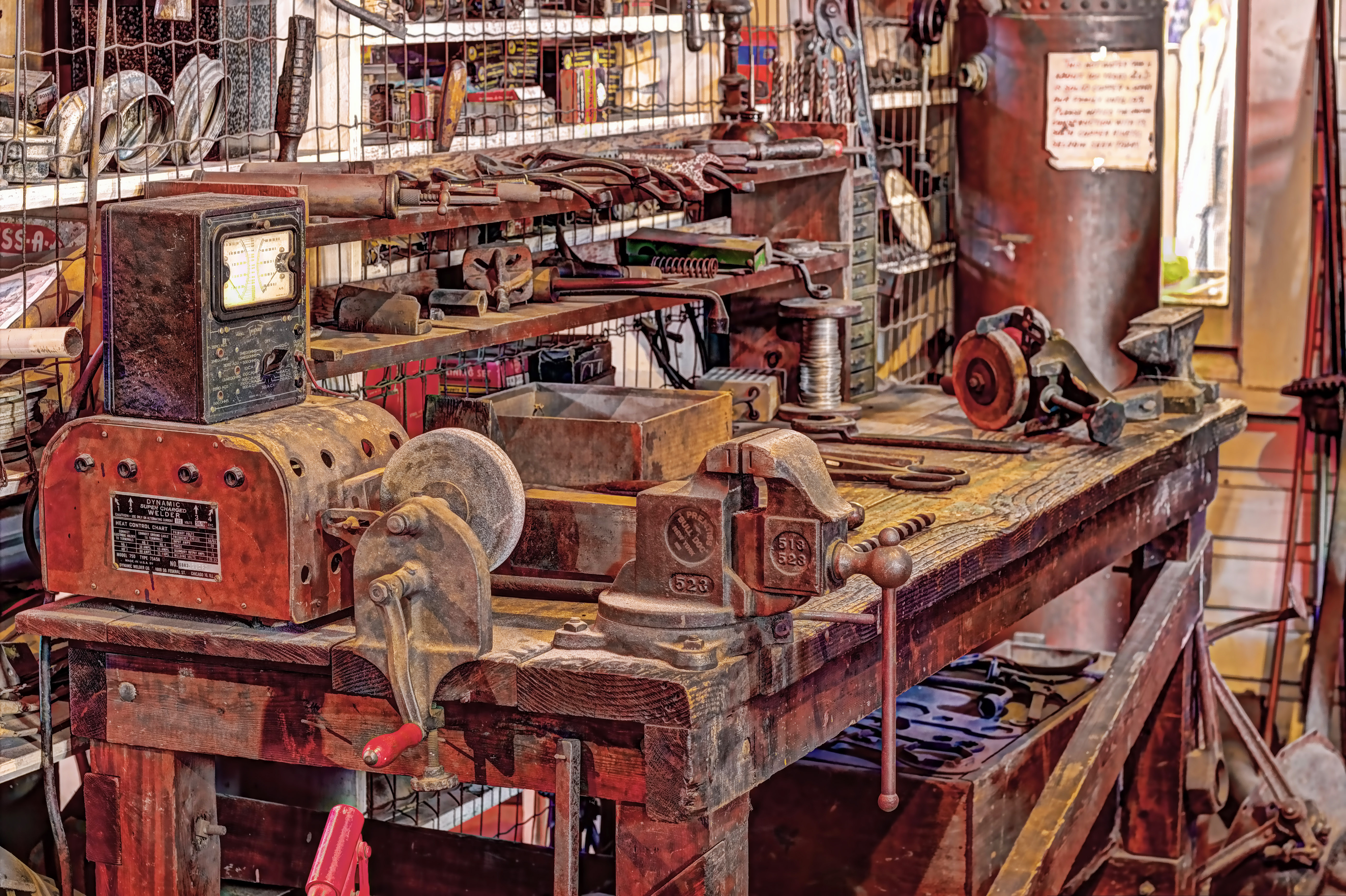
    One of the great ironies of tools and their use is that the absolute best area to work on is a workbench — a high, solid, well lit, structure on which to cut and vise and connect and create. No question. And in order to have the right workbench for you, you’ll need to build one. And in order to build one, you’ll need a workbench. Well … This isn’t completely true. You can build one, without one. But later on when you’re using the bench and you have it exactly the way you like it, you’ll realize that it would have been so much easier to build it if you had it before. Now, in this world of mass produced everything, why would you want to build a workbench? Great question. And there are about a zillion reasons why — well, that’s also not true. There are five. Five reasons why— but they are five pretty good reasons.

    1. Quality. Most workbenches are cheap, mass-produced structures. You can get workbench and workbench kits — where you add your own lumber — everywhere from Lowes to CVS, — yup, I have seen workbench’s at CVS on Father’s Day. And 90% of these are light, poorly designed structures that will not work well with your home, garage, or the type of projects you will be working on. The remaining 10% that are fairly well designed and constructed are not designed specifically for you.
    2. Cost. For a fraction of the cost of the most expensive pre built workbench out there, you can build one yourself — actually, less than that, you can get a high end workbench for almost $1,000 and the lumber for that would be around $100.
    3. Designed specifically for you. What type of work are you going to be doing and how do you like to do it? Because a workbench for wood carving is going to be different than one for repairing old radios. Are there enough outlets? Is there a place for your coffee pot and for all the stuff you like to have around you?
    4. Designed specifically for your location. There are many times that you could find the ultimate workbench — if your garage was bigger. Or your basement had more light. Or you had more space in the shed. You need to design your bench for the real estate it will take up as well as the space you don’t. In fact there are many, fold down workbenches that work great.
    5. Sense of pride. There is something about building — anything, but there is great irony in having a structure to build things on, that you didn’t build.

    HOW TO BUILD A WORKBENCH

    1. Location. Decide where the bench will go — which is actually more important than the design itself. Walk out where it will sit, look all around it, is there enough light, enough storage space? Is it easy to get material in and out? — a bench to finally build that canoe may not work well in your basement where the finished product cant get back out.
    2. Overall design. There are some great sites online that offer overall workbench plans and here is the best one I found that incorporates many of them http://freebies.about.com/od/free-plans/tp/free-workbench-plans.htm Choose an overall plan and then look at the areas you want to personalize such as height of the bench. And if you don’t like any of these, just draw out what you like and add in the two important aspects; power and light. You will want to attach at least one power strip right to the workbench for power needs and you will need at least one flexible lamp for additional light.
    3. Simpson ties. If there is a magic trick in building a solid, rugged workbench, it’s Simpson ties. Simpson is a company that was founded by a man named Barclay Simpson — who just passed away this past November at the age of 93 — that manufactures joist hangers, angles and a bunch of other stuff that strengthen structures. And since a workbench is not a table but a solid work structure that you can vice something to and saw or hammer, you want it to be solid. By using Simpson ties for the corners of your bench and where the lumber fits together, your bench will be rock solid.
    4. Overdesign for material. Like any project, once you finalize you design and make your materials list, add about 25% more of everything you’ll think you’ll need. This is an overall handyman trick that works, because it is far better to make one trip back to Lowes when you are done to return what you don’t need, then it is to make the six extra trips for what your forgot. So buy more than you need and return it.
    5. Take your time. As you get going you may want to make changes or add in new pieces of jewelry to the project. No rush. Take your time.

    … and let us know how it went. Please post photos of your workbench — or of any project you are working on — at the 543skills forum — http://543skills.com/forumpress/