Author: Everett DeMorier

  • How to cook on a charcoal grill

    How to cook on a charcoal grill

    grill

    Ten thousand years ago —- I think it was on a Tuesday — our collective ancestors had a great hunt. A huge hunt.

    For days, the tribe carried their spears and bows and moved along with a herd of antelope. They would follow the herd and then thin off a few of them — forcing them to run from the group and create a smaller herd. Then they would follow that smaller herd and thin that off making yet another smaller group. And then a few more off from that one.

    Eventually, the tribe had a single antelope — a large one — trapped in a cavern. They faced the animal. They surrounded it. And they brought the great beast down.

    The tribe was very happy.

    They carried the prize back to their camp. They sang songs and butchered the game and began to cook the meat on the fire and as they rejoiced and enjoyed the thrill of the hunt — as they talked and joked and listened to the meat sizzle on the open flame — one of the hunters began to think. He pondered and worried until he eventually spoke.

    “You know,” he turned to his friends. “If we ever start living inside,” he paused. “If we ever start wearing clothes and cooking in metal boxes and sleeping in beds. If they ever invent jobs and bills and stress.”

    His friends watched as he pointed to the meat sizzling over the flame.

    [amazon asin=B00004RALU&template=iframe image][amazon asin=B002Y0KA1S&template=iframe image][amazon asin=B00008DHPA&template=iframe image][amazon asin=B002UKPTRM&template=iframe image]

    “If that ever happens,” he stated. “Then I’m going to miss this.”

    There was a silence for a moment as they all thought. Then they consoled their friend. They explained that he was simply tired. Exhausted from the hunt and that there was nothing to worry about. This would never happen.

    And they cooked and talked and ate.

    HOW TO COOK ON A CHARCOAL GRILL

    Cooking on a charcoal grill is amazing. Its part cooking, part camping. It not only creates a cooking surface of high and steady heat but it seals in juices and adds that great smoky flavor.

    And it’s a great way to tap into that hard wired need we males have for the tribal outside campfire.

    Gas grills are great for convenience — and I use ours at least twice a week, year round — but nothing compares to cooking on a charcoal grill — unless it’s cooking over a campfire.

    Charcoal grills come in all shapes in sizes. There are inexpensive, portable grills that are great for tailgating and picnics. Then there are the mid sized grills that you roll out when needed — we have a twenty dollar charcoal grill I bought for my mom six years ago that we use every time we go to her house that works great. And then there are the great permanent charcoal grills such as Weber and Char-Griller.

    But no matter what grill you use, here are the basics.

    Choose good charcoal. For the small amount of money you’ll save, it’s not worth buying a no brand charcoal. I have tried all of them — in grills and in smokers — and I buy name brand every time and just watch for sales — Kingsford charcoal is the brand I like. But experiment and find the one that works for you.

    Place your charcoal on one side of the grill. This is important because it will give you a hot side and a cold side of your grill. By placing charcoal on one side you’ll be able to control the heat. You can move what you’re grilling around the grill and monitor it.

    Light the charcoal. Many charcoal-purists object to using lighter fluid; preferring a wax charcoal brick or some other device. But the truth is, as long as you allow the charcoal to get to get to heat, any lighter fluid has been burnt off. And I have found that many self lighting charcoals retain that lighter fluid taste.

    When the charcoal is white hot, start cooking. But watch the time. Depending on the amount of charcoal you’re cooking, you usually have about forty minutes of prime cooking time before it begins to cool.

    A chimney. A charcoal chimney is a great device to get backup charcoal going. If you have to cook for a large group, or need to keep the coals hot for an extended time, get a chimney going on the side. After about thirty minutes or so, you’ll have red hot coals to add to the grill.

    Here’s a tip. When you think the coals are hot enough, wait another fifteen minutes. It’s not unusual to struggle with the grill until everything is cooked only to come back and notice that now, the grill is where you want it.

    Enjoy.


  • Goofy laws that are still on the books

    Goofy laws that are still on the books

    gorilla

    The law is a very interesting entity. Laws are passed to protect and to regulate. To control and to moderate. And as life changes laws get removed or altered or simply rescinded.

    However, sometimes they simply slip through the cracks and remain on the books.

    Over the years I have collected some of my favorite laws that still remain — just in case I ever decide to go to prison, I want to go down for one of these …

    DELAWARE

    Getting married on a dare is illegal.

    No person shall change clothes in his or her vehicle.

    One may not whisper in church.

    No person shall pretend to sleep on a bench on the boardwalk. (You can sleep on one, just be honest about it).

    ALABAMA

    Bear wrestling matches are prohibited.

    It is illegal to maim oneself to escape work.

    It is considered an offense to open an umbrella on a street.

    It is illegal to sell peanuts after sundown on Wednesday.

    Dominoes may not be played on Sunday.

    It is illegal to wear a fake moustache that causes laughter in church.

    Putting salt on a railroad track may be punishable by death.

    It is legal to drive the wrong way down a one-way street if you have a lantern attached to the front of your automobile. (Otherwise, it’s fine).

    You may not have an ice cream cone in your back pocket at any time.

    It is illegal for a driver to be blindfolded while operating a vehicle.

    In Alaska, it is considered an offense to push a live moose out of a moving airplane.

    ARIZONA

    Any misdemeanor committed while wearing a red mask is considered a felony.

    There is a possible 25 years in prison for cutting down a cactus.

    Donkeys cannot sleep in bathtubs.

    When being attacked by a criminal or burglar, you may only protect yourself with the same weapon that the other person possesses.

    It is unlawful to refuse a person a glass of water.

    Cards may not be played in the street with a Native American.

    No more than six girls may live in any house.

    A decree declares that anyone caught stealing soap must wash himself with it until it is all used up.

    An ordinance prohibits the wearing of suspenders.

    [amazon asin=B00KBNP3EY&template=iframe image][amazon asin=B00CH4ONF0&template=iframe image][amazon asin=B0007OF2QQ&template=iframe image][amazon asin=B0006HUYGM&template=iframe image]

    No one is permitted to ride their horse up the stairs of the county court house.

    In Tombstone, it is illegal for men and women over the age of 18 to have less than one missing tooth visible when smiling.

    In Tucson, women may not wear pants.

    ARKANSAS

    The Arkansas River can rise no higher than to the Main Street bridge in Little Rock.

    A law provides that school teachers who bob their hair will not get a raise.

    A man can legally beat his wife, but not more than once a month.

    Alligators may not be kept in bathtubs.

    Honking one’s car horn at a sandwich shop after 9 PM is against the law.

    It is unlawful to walk one’s cow down Main Street after 1:00 PM on Sunday.

    CALIFORNIA

    It is a misdemeanor to shoot at any kind of game from a moving vehicle, unless the target is a whale. (You can’t make this stuff up).

    Women may not drive in a bathrobe.

    Nobody is allowed to ride a bicycle in a swimming pool. (And I mean NOBODY, start taking this seriously!).

    City Council order reads: “No dog shall be in a public place without its master on a leash.

    One may not bring their dog to school.

    One must obtain a permit from the city to throw hay in a cesspool. (Kid’s, get the proper permit, okay. You’ll get caught).

    COLORADO

    Throwing missiles at cars is illegal. (Wow, picky)

    Catapults may not be fired at buildings.

    It is illegal to permit ones llama to graze on city property.

    Boulders may not be rolled on city property. (Whow, Colorado is violent).

    Couches may not be placed on outside porches.

    It is permissible to wear a holstered six-gun within city limits, except on Sunday, Election Day, or holidays. (What’s the lesson here? Do not tick off peoples in Colorado, they will fire missiles at your from a catapult).

    It is unlawful to lend your vacuum cleaner to your next-door neighbor.

    FLORIDA

    The state constitution allows for freedom of speech, a trial by jury, and pregnant pigs to not be confined in cages.

    Doors of all public buildings must open outwards.

    It is illegal — and I mean illegal — to sell your children.

    It is illegal for women to fall asleep under a hair dryer in a beauty salon.

    A law prohibits unmarried women from parachuting on Sunday.

    If an elephant is left tied to a parking meter, the parking fee has to be paid.

    It is illegal to sing in a public place while wearing a swimsuit. (Don’t do it).

    Men may not be seen publicly in any kind of strapless gown.

    It is considered an offense to shower naked. (You can’t make this up).

    You are not allowed to break more than three dishes per day, or chip the edges of more than four cups and/or saucers.

    Torpedoes may not be set off in the city. (Wow, Colorado rocks).

    It’s illegal to lean your bicycle against a tree in a cemetery.

    In Georgia, it is illegal to use profanity in front of a dead body.

    In Hawaii, coins are not allowed to be placed in one’s ears. (We’d better text Katie…)

    IDAHO

    You may not fish on a camel’s back.

    Boise

    Residents may not fish from a giraffe’s back.

    “The carrying of concealed weapons is forbidden, unless weapons are fully exhibited to public view.

    ILLINOIS

    Law forbids eating in a place that is on fire.

    It is illegal to give a dog whiskey.

    It is forbidden to fish while sitting on a giraffe’s neck.

    It is illegal to drink beer out of a bucket while sitting on the curb. (Drinking beer from a bucket in a bus, on a giraffes back, fine. Just not on the curb).

    Wheelbarrows with For-Sale signs may not be chained to trees.

    In Indiana, Liquor stores may not sell milk.

    IOWA

    A man with a moustache may never kiss a woman in public.

    One-armed piano players must perform for free.

    Tanning bed facilities must warn of the risk of getting sunburn.

    Ministers must obtain a permit to carry their liquor across state lines.

    The fire department is required to practice fire fighting for fifteen minutes before beginning to put the fire out.

    Horses are forbidden to eat fire hydrants. (Huh? One tough horse).

    One must obtain written permission from the City Council before throwing bricks into a highway.

    Within the city limits, a man may not wink at any woman he does not know.

    KANSAS

    Rabbits may not be shot from motorboats.

    Pedestrians crossing the highways at night must wear tail lights.

    The state game rule prohibits the use of mules to hunt ducks.

    If two trains meet on the same track, neither shall proceed until the other has passed.

    Hitting a vending machine that stole your money is illegal.

    No one may wear a bee in their hat. (When would that EVER be an issue?)

    Musical car horns are banned.

    It is illegal to drive one’s car through a parade.

    No one may sing the alphabet on the streets at night. (Hey, what are you in for?)

    KENTUCKY

    Throwing eggs at a public speaker could result in up to one year in prison.

    One may not dye a duckling blue and offer it for sale unless more than six are for sale at once.

    It is illegal to fish with a bow and arrow in Kentucky.

    A woman may not buy a hat without her husband’s permission.

    In Louisiana, it is illegal to shoot lasers at police officers. (Proton torpedoes, plasma cannon, fine. Just no lasers, people ..)

    In Maryland, It’s illegal to throw bales of hay from a second-story window within the city limits, and, you cannot sell chicks or ducklings to a minor within 1 week of the Easter holiday.

    MASSACHUSSETTS

    It is illegal to give beer to hospital patients.

    At a funeral, mourners may eat no more than three sandwiches. (Hey, Mrs., Phelps, I know your husband is dead, but isn’t that your forth sandwich? Hands against the wall, spread em.)

    An old ordinance declares goatees illegal unless you first pay a special license fee for the privilege of wearing one in public.

    It is illegal to go to bed without first having a full bath.

    No gorilla is allowed in the back seat of any car. (Again, this must have been an issue once).

    Children may smoke, but they may not purchase cigarettes.

    Tomatoes may not be used in the production of clam chowder.

    Quakers and witches are banned.

    Bullets may not be used as currency.

    In Missouri, it is illegal to provide beer or other intoxicants to elephants. (There were a lot of issues with elephants).

    In Montana, it is illegal to bring a bomb or rocket to city council proceedings.

    In Nevada, benches may not be placed in the middle of any street.

  • How to tie a bow tie

    How to tie a bow tie

    tie

    Somewhere during the 1990’s a change occurred on the landscape of American business. For hundreds of years, business men — doctors, salesmen, accountants, hotel clerks — all woke up in the morning and put on a dress shirt, jacket, tie and headed out for the day. The business suit — or at least the dress shirt and tie — were the staple of American business and had been for two hundred years.

    Then the hi-tech world exploded. With software companies, engineering firms and hardware designers starting up, many of these had extremely loose dress codes. In fact, the recruiting pitch was often, good salary, stock options and you can wear jeans and a t-shirt to work.

    In order to attract the same technical talent, larger firms began to relax their dress requirements in specific departments, allowing their engineering, IT and technical people to wear chinos and golf shirts. But now a paradox was forming. Because the salesmen of these companies were wearing the traditional shirt and tie, but their customers — the engineers, the software designers, the technical supervisors — were all wearing polo shirts, there was a rift. Before this, the salesman was always seen as a problem solver, a team mate, one of us. But now, just from the act of wearing a shirt and tie, he stuck out. He was an outsider. So sales departments began to match their dress codes to their customers.

    And from this, business casual was born.

    [amazon asin=B00EO4THO8&template=iframe image][amazon asin=B00936UHEG&template=iframe image][amazon asin=B00ATM2UW0&template=iframe image][amazon asin=B00FR6NCDE&template=iframe image]

    Now there are very few industries — outside of banking, law and politics — where the entire industry is required to wear a shirt and tie. There are a small number of individual companies that still do, but not many. Which means that men who would have normally had a closet full of dress shirts and neckties, now have a closet full of golf pants and dress shirts. Which also means that when the occasional wedding, Christmas party, Easter service or graduation comes up, there is less formal wear to quickly choose from.

    Many men purchase what they call their wedding and funeral suit. Often a dark blue suit — black suits are too formal for anything other than a funeral —  white shirt and a few ties. This is pulled out when needed and then placed back in the closet until the next time.

    Which brings us to the bow tie.

    The aspect of the bow tie is that on those formal occasions when you need to wear a tie, you don’t need to wear a bow tie. You choose to wear a bow tie. Sometimes a tie is required but a bow tie — with the exception of it being part of a tuxedo — is always a choice.

    A bow tie is that classic, standout, in your face formal attire that will always atract attention. Which is why it is only for those men who have the sand to wear one. You will be noticed and you will be seen.

    And don’t think that the clip-on or a wrap around bow tie counts. It doesn’t. If you’re going to wear a clip on bow tie then just wear a traditional tie instead. Because you’ve just taken all the class out of it. The only reason to wear a clip on bow tie is because you don’t know how to tie one.

    But now you will.

    HOW TO TIE A BOW TIE.

    The first thing you’ll need is the tie itself. Bow ties are pretty rare at department store men’s departments anymore, but you can find them at specialized men’s formal shops and they are all over the internet.

    The top of the line for high quality bowties is The Brooks Brothers website — although these are very pricey, with each tie being just over $50.00 each. A much more reasonable selection can be found on a website called the-perfect-necktie.com. They have a great selection and each bow tie is around $12.00.

    So tying the bowtie is not a complicated thing and is one of those skills where a diagram makes it easier than a video. I’ve looked at many videos and diagrams for tying a bow tie and by far the best one that I’ve seen is from Jasper at folds.net who gave me permission to use it here. What’s great about this one is that not only is it very easy to follow, but it is designed to be taped to a mirror so you can practice.

    Using this diagram you’ll be able to tie a bowtie in minutes. Then keep the diagram. Because like any other skill, you’ll only be as good as how often you use it.

    http://www.folds.net/bowtie/


  • The need for one good thermos

    The need for one good thermos

    thermos

    There are a handful of items that every man needs to own — not should own, but needs to own. These objects are not a suggestion; not simply a list that would be nice once we get around to it but are the gear that is part of the required inventory of man-law — the unwritten rules that define the masculine system of life.

    And since these objects need to be part of our possessions, they should be a part of sons and grandson’s inventory as they grow up — our children may not remember what video game they received on their twelfth birthday but they will remember who gave them their first pocket knife, their first wallet and their first toolbox.

    Now this list — the required man-inventory list — includes the following items:

    One good pocket knife. A decent one, in the forty dollar range.

    One silver money clip —- yes, you can still keep your wallet but every man needs a good money clip.

    [amazon asin=B0017IHRNM&template=iframe image][amazon asin=B0037SNATU&template=iframe image][amazon asin=B008JC76XA&template=iframe image][amazon asin=B00FS2AJ42&template=iframe image]

    One set of inexpensive but reliable hand tools.

    One reliable wrist watch.

    And one, high quality, thermos.

    Now in this brand conscious world, you may think that the word thermos is a misnomer because it describes the company and not the product — just like Kleenex or Xerox — because the actual item is called a vacuum bottle or vacuum flask. But in 1963 the U.S. declared Thermos to be “genericized trademark” and is actually now synonymous with vacuum bottles.

    So feel free to use the word thermos as much as you want.

    The first thermos was invented in 1892 by a German physicist named James Dewar who came up with the idea of a bottle within a bottle and was at first referred to as the Dewar flask or Dewar bottle. Between the outside of the thermos and the inside is a vacuum of air that prohibits the heat from the inside bottle to migrate to the outside. So the heat — or cold — of the liquid becomes trapped inside the thermos.

    Now, because of the popularity of the thermos, you would think that James Dewar became a very wealthy man. But Dewar never registered a patent for his invention and it was subsequently patented and produced by — yup, Thermos, who in 1907 rolled it out for commercial use by the truck load.

    The thermos changed everything. In a time when commercial refrigeration was still decades away and microwaves were pure science fiction, a thermos could transport hot or cold liquids and soups for hours. In fact, when World War II broke out in Europe, thermos turned all its English production to the war effort and every time a British bombing run went out, the men were equipped with a thermos full of hot coffee or soup.

    Now, in our modern world a good thermos is more important than ever for several reasons. By taking a thermos full of coffee to work every day instead of stopping at Starbucks, you save over a thousand dollars a year. Also the waste is drastically reduced — how many half cups of cold coffee do you throw out every year? With a thermos, a cap full of coffee is exposed and the remaining stays warm in the bottle — there are many times I am drinking my morning coffee from my thermos in the afternoon. And a thermos can be used for more than just coffee or tea. A wide mouth thermos is great for carrying soups — homemade soups; see the post on how to make homemade soups — and stews. And how can you compare a lunch of a bologna and cheese sandwich to one of a piping hot cup of homemade soup with crackers?

    For the outdoorsman, sitting in a tree stand or standing in a cold trout stream, a thermos of hot coffee is mandatory. And for those of us who spend most of their time in a car, a thermos is not only financially attractive, but drastically cuts down on the number of coffee stops we need to make — where the number of bathroom breaks remain the same.

    Now there is a world of difference between a thermos and a good thermos.

    A simple thermos can be purchased from a dollar store and is actually just a glorified travel mug; a thick plastic bottle with a cap. And will keep your liquids warm for an hour at best — the stainless steel bottles aren’t much better.

    The use of a thermos only has one rule. Prime it. Before you pour in the hot coffee, fill it with hot water first and let the inside bottle warm up. With a good thermos, the heat of your priming water will drastically increase the length of time the liquid will stay warm. I know several guys who microwave a few cups of water until it boils and prime the thermos. These are the guys who can actually get the coffee to stay warm for 24 hours —- my limit is about eight.

    A good thermos will run you about thirty bucks and will last forever. The big brand names are obviously Thermos and Stanley and they each make several good models.

  • The return of business non-casual

    The return of business non-casual

    casual

    In the 1990’s, the stodgy American business world created a weekly event called Casual Friday.

    Casual Friday began on the West Coast and was an  innovative idea that was pretty simple; one day a week — a Friday — employees could leave their business attire at home and come to work casually. Now, casual in some offices meant khaki’s and a polo shirt where in another office this would include jeans and t-shirts.

    When Casual Friday first began, it was an instant hit. Employers noticed there was higher productivity, more comradery and a general lifting of office morale — and employees actually seemed more comfortable.

    As the same time that this trend began to gain popularity, the landscape of American business began to change. Certain hi-tech companies began to adapt business casual as there everyday dress code. And as these hi-tech companies began to dominate the economic stage, spin offs and start ups began — all with this new business casual approach to their dress code. The idea of wearing jeans and sneakers was now the sign that a company was edgy and creative.

    So in order to attract the same technical talent, larger hi-tech firms began to relax their dress requirements, allowing their engineering, IT and other technical people to wear chinos and golf shirts. But now a paradox was forming.

    Because the salesmen to these companies were wearing the traditional shirt and tie, but their customers — the engineers, the software designers, the technical supervisors — were all wearing polo shirts and jeans, there was a gap. Before this, the salesman was always seen as a problem solver; one of us. But now, just from the act of wearing a shirt and tie, he stuck out. He was an outsider. So sales departments began to match their dress codes to their customers.

    And from this, business casual was born.

    Because before this, business men — doctors, salesmen, accountants, hotel clerks — all woke up in the morning and put on a dress shirt, jacket, tie. The business suit — or at least the dress shirt and tie — had been the staple of American business since the 1800’s. But then the business dress code changed.

    But now the landscape is changing once again. After almost two decades of business casual, there is a trend now to bump that up a notch. The idea of a dress shirt with a jacket, a shirt with a tie, a pair of suit pants instead of chinos, is rising fast with many American men: opting to dress a little higher than mere business casual.

    And the Men’s apparel industry has noticed and have catered to this trend with what is called Business Separates. Now khakis and a button down shirt can be highlighted with a separate colored blazer. A tie and a vest will be worn or dress pants and dress shoes will be worn instead of chinos and penny loafers.

    The full blown grey suit and tie are no longer the norm in American business. But the bar is now being raised from the dark days of the ’90’s to something — different.

  • The 10 books that every man needs to read before he dies

    The 10 books that every man needs to read before he dies

    books

    Catcher in the Rye is not on this list. Nor is Catch 22 — or The Grapes of Wrath, To Kill a Mockingbird or Farewell to Arms.

    Nope.

    Why?

    Because this is not THAT list. This is not the list you were given to read in High School or College or the books you read because you felt that if you didn’t you would have nothing to talk about at Christmas parties. No. This is the list of books that every man should read for — well, I’m not sure what the reasons are. Maybe because of the importance of the books themselves, or maybe just out of pure entertainment value or maybe because there are lessons that every man needs to know. Not sure. But these are great books — really, great books — and are worth the read.


    10. THE WORST HARD TIME. By Timothy Egan. Houghton Mifflin, 2006

    Not only is The Worst Hard Time the best historical analysis of the details that lead to The Dust Bowl, it also goes deep into the individual lives that experienced it. It’s well read, well researched and is powerful and for every man who thinks he’s been hungry or worried or frightened — this book will remind you of how easy we actually have it.


    9. READY PLAYER ONE. By Earnest Cline. Random House. 2011

    Ready Player One, is a book that needs to be read for the pure fun and entertainment reasons and is a must read for any of us who have ever spent time in a 1980’s arcade. Not only is it a great read —yes, it’s written extremely well — but it’s a fun ride.

    I am not going to tell you the plot of the book, because I don’t want you to try and label it, but I will say that if you remember anything about the 1980’s or you have ever played a video game or watched an early music video — you have to read this book.


    8. UNTIL I FIND YOU. By John Irving. Random House. 2005

    Until I Find You is John Irving’s greatest novel. Ever, It’s better than The World According to Garp and is more powerful than The Cider House Rules. It’s an amazing story about a man’s search for his father that keeps changing and warping and taking you along with it. I will warn you though, as in all John Irving novels, be prepared for the graphic and the taboo — also it’s a big book, about 850 pages — but it is definitely worth the read.


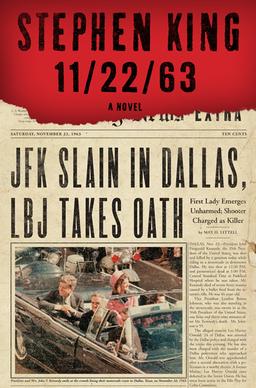
    7. 11/22/63. By Steven King. Scribner. 2011

    11/22/63 is the only book that I have read cover-to-cover, three times — not simply because of the story but because his characters were so powerful and real that you go through withdrawal when its over. I haven’t read a great deal of Steven King — I’m not really the horror kind of a guy — but I did enjoy The Stand and Under the Dome — but 11/22/63 surpasses both of them.  This is a phenomenal book that takes place — in part — around the Kennedy Assassination but does so in a creative and King-like way that you’ll never forget it. A great book.


    6. THE DEVIL IN THE WHITE CITY. By Erik Larson. Crown Publishers. 2003.

    The Devil in the White City juxtaposes two events that occurred at the same time. The first was the creation around the 1893 Chicago World’s fair and the second was the life of HH Holmes who was the probably the worlds first serial killer — who lured hundreds of people to their deaths. A great balance of the technological achievements of the fair and the warped greed of a killer.


    5. PERMANENT MIDNIGHT. By Jerry Stahl. Warner Books. 1995.

    The first thing to know about Permanent Midnight is this book is raw. It candy coats — nothing — and it probably takes you closer then you comfortably want to go into the life of a heroin addict. The writing is amazing — some of the best I’ve ever seen — and the story winds a thousand moments of life carefully into a story. Permanent Midnight forces you to care — absolutely care — about the character and you will spend months worrying about him long after the last page is turned. An incredible book.


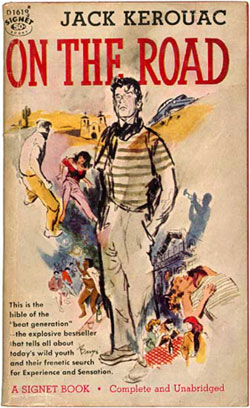
    4. ON THE ROAD. By Jack Kerouac. Viking Press. 1957

    What can I say about On the Road that hasn’t already been said? It’s amazing; part history, part epic and part nostalgia. For every man who ever dreamed of picking up a backpack and hitting the open road — which is all of us — you have to read this book.


    3. BLEACHERS. By John Grisham. Doubleday. 2003

    If you ever played High School Football, or if you have ever lived in a small town where High School Football — or any High School sport — ruled, then Bleachers is the book for you. My fifteen year old son, who hates reading, read this cover-to-cover in a day. It’s a great read with characters you will recognize and care about.


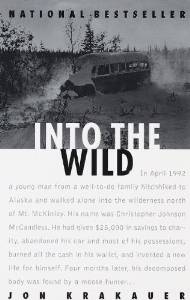
    2. INTO THE WILD. By Jon Krakauer. Villard Publishing. 1996.

    into the wild

    The only reason that Into the Wild beat On the Road for the 2nd spot is because Into the Wild goes deeper into the travel and the person involved. It’s the true story of Chris McCandles, who in 1990, gave all his money away and hit the open road. Which is where he lived for two years until his death in an abandoned bus in Alaska. An amazing read.


    1. ANGELA’S ASHES. By Frank McCourt. Scribner. 1996

    Angela’s Ashes is the biography if an Irish family and specifically a young boy named Frank McCourt. This book is absolutely amazing and has the ability to allow the reader to laugh at the most painfull and difficult parts of the author’s life. A great book.

  • The unexpected

    The unexpected

    fire

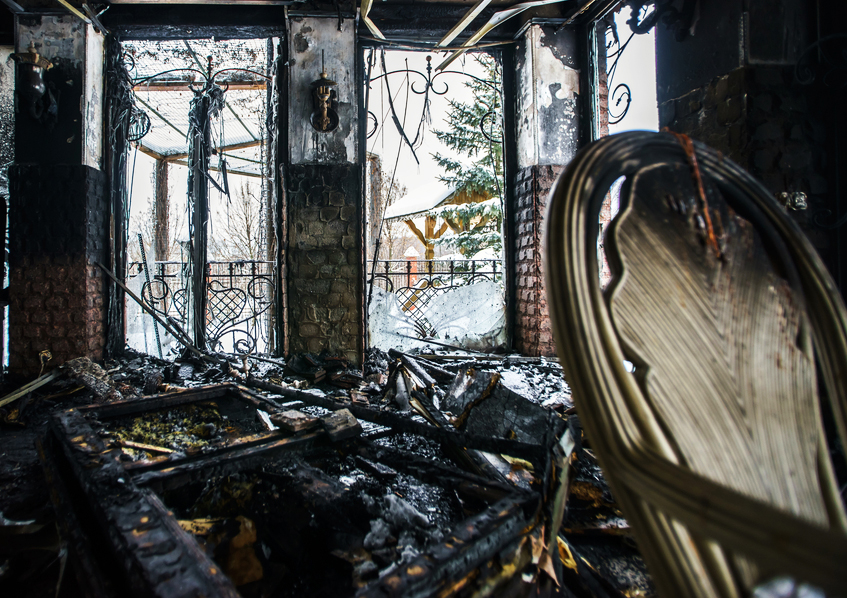
    On January 9, 2011 — on the day The Philadelphia Eagles were scheduled to beat The Green Bay Packers and move up in the NFL playoffs — I burned our house down.

    It was an accident. A stupid mistake. But it was my accident. It was my stupid mistake and because of it our home was destroyed, our family was displaced and our world changed.

    The day before the fire, a friend had given us a goose and I smoked it along with a ham in our backyard smoker.  At four that afternoon I had taken the ham and goose off the smoker and sat the charcoal pan on the cement patio to cool and since it was twenty degrees that night, I simply poured the water tray over the charcoal instead of dousing it like I normally did.

    The next afternoon — almost twenty hours later — I went to clean up the smoker and took the charcoal pan — which had stayed out all night, was cold to the touch and even had a thick coat of ice on top of it — and dumped it in our outside garbage can. A few hours later, some hidden spark that sill lived in the center of the charcoal pile reignited and the garbage can caught fire. Next to the garbage can was a recycling bin full of newspapers and junk mail that caught fire. Then the garage wall went up. Then the roof and within twenty minutes the fire had shot through the house at record speeds.

    The rest of the day was pretty action packed and it included my thirteen year old son getting his mother out of the house safely — my wife was on the treadmill in the basement with her iPod on and she couldn’t here the smoke alarms — as well as neighbors running into the burning house to help. And as I had taken my oldest son and his friends to the mall, I also received one of those phone calls you hope you never get — your children are hurt, your wife is hurt, or your house is on fire. And on that day our lives changed.

    [amazon asin=B0012SNLJG&template=iframe image][amazon asin=B00AO4AKYS&template=iframe image][amazon asin=B001612HIU&template=iframe image][amazon asin=B000A09SQW&template=iframe image]

    The key to this change is in the word unexpected. A fire is unexpected. So is a flood, a car accident, an injury at work, or a sudden death. These are all unexpected. They are events where in the course of a single day, life tilts. It changes. These are days when you go to bed living in one life, and go to bed the next night living in another. And we do this without the luxury of, yup, tomorrow is the day of the car accident, or tomorrow is the day we’ll get hurt, or tomorrow is the day someone breaks into our house. Nope. These events occur without our knowledge or permission.

    And when they do, they divide time. There is the time before the fire. There is the time after the fire. There is that world before the car accident; before you needed to learn to walk again— and there is that new world that remains afterwards. It is one of the dividing lines that will determine the rest of your life.

    Because regardless of what your challenges have been through, we all still go through life with a protective belief that although bad things happen — and we all acknowledge that they do — they just don’t happen to us. Not the big stuff anyway. We calculate the odds and accept that these odds are basically in our favor; that the chances of one of those life changing catastrophes happening to us are fairly slim. Sure a layoff can happen, but not a fire. Yeah, we could get into financial trouble, but a sudden death won’t happen. Or our home won’t be robbed. These are TV plots. These are the bad things that fall in other peoples lives. Not ours.

    In the U.S. alone, 1,000 house fires occur everyday. On that same day there will be 60,000 injuries from car accidents and 4,000 people injured while their homes are robbed. According to the US Census, 9 million people this year will experience one of these unexpected life changing events and these nine million catastrophes will occur with one thing in common; the day before, everyone  involved, everyone, would have bet you their car that it wouldn’t’ happen to them.

    Now, before you label this article as one that is selling fear and you roll your eyes in disgust, wait. This is not here to shock you or shame you or compel you to dedicate four hours a week to home fire drills and weekly tire pressure checks. The unexpected cannot be planned for and it shouldn’t be.

    Yes, you can make sure your smoke alarms work and you don’t keep oily rags in the garage. Yes, you should have safe tires on your car and wear your seat belts. Yup. And once you done these things leave it alone. Because you can not plan for the unexpected and you shouldn’t waste your time worrying about what possibly might happen. You should take precautions and then you should leave it alone and live your life.

    And actually, the odds are in your favor that that one of these big unexpected events won’t occur to you. Out of the 300 million people in this country, only 9 million will experience the unexpected this year — fire, serious car accident, unexpected death, robbery, etc. That’s less then 3%. The better news is, that if one of these events do happen — you’ll not only survive, you’ll actually thrive from it. I know, weird, huh?

    The point of all of this is that I can now say that our fire was one of the defining moments for us. Now granted, no one got hurt in our fire, so I’m cheating a little and the things we lost in the fire, well, things can be replaced and they were. But the seven months that it took to rebuild our home we had a rental house by the lake. We were unplugged from our routines and the outside. We relied on each other and we spent more time together then we ever had. We were closer. We were stronger.

    As a man, the unexpected — those events that cannot be planned for — happen. They occur without our consent and regardless of how prepared or unprepared we are. And when they do, they define us.

  • The payday loan trap

    The payday loan trap

    trap

    A few weeks ago, a reader e-mailed me — let’s call him Leopold, because that’s not his real name — with some financial and debt questions. I emailed him back. Leopold responded with some additional questions and before the end of that first day, Leopold and I had spoken on the phone for what would not be the last time. There were many financial conversations that followed and I can now say that I now know more about Leopold’s finances than anyone other than Leopold.

    Now, in case you are wondering, yes. He does know that I am writing this and he actually encouraged me to do so. But be warned. What is written here is not gentle of censored or even necessarily nice. In fact, you may find the depiction of Leopold to be harsh —- even cruel — at times. And it is.

    Because I’m pissed off. I’m pissed off at Leopold and the stupid decisions he made. But I’m also pissed off at the parasitic institutions that have preyed upon him.

    Leopold’s financial story is not one of bad luck or of extenuating circumstances. Leopold didn’t lose his job. He didn’t have his house burn down and he wasn’t hospitalized and left with huge medical bills. Leopold made bad decisions and those bad decisions were born from allowing himself to fall into the worse, the absolutely most dangerous, state that a man — or a woman — can fall into. Because once we step into this state, once we cross this line, our thinking, our options, or future —- change. And they changes quickly. And they change for the worse.

    And that state is, the state of desperation.

    Because once we get desperate, we get stupid.

    [amazon asin=B00IDHUR3W&template=iframe image][amazon asin=B00GNR2XB8&template=iframe image][amazon asin=1476739854&template=iframe image][amazon asin=1477463992&template=iframe image]

    I’m going to say that again.

    Once we get desperate, we get stupid.

    Whether it’s financial, emotional, social, or whatever. The decisions we make when desperate are not our decisions. They are not made by us. They are made by new forces that drive and limit us.

    All of this is being written now because there may not be time to write it later. Because in three days, on Friday, August 31st — or more accurately after midnight Thursday, August 30th — Leopold’s life will go from bad to worse.

    He may lose everything.

    It will not be a good day for Leopold.

    THE BACKGROUND.

    Leopold is in his early forties. He has been married for eighteen years and has two daughters and a son. He owns a nice home. He coaches his daughter’s soccer teams and for the last nine years he has made a comfortable living selling advertising. Leopold has been enjoying the middle class American dream. However, as the economy softened so did Leopold’s earning potential.

    As a commissioned salesman, four years ago Leopold had the best year he ever had and earned $153,000.

    Three years ago he earned $104,000.

    Two years ago he earned $82,000

    And this year Leopold will earn about $52,000.

    And as his income went down with his shrinking commissions, his debt went up to cover it. And for three years Leopold denied that his income was decreasing. He loved his job and refused to look elsewhere and simply wished the missing money would come back. The debt continued to pile up and when there was not enough to cover expenses, a credit card could fill in. Then a personal loan — he even took out a loan on his 401K and a home equity loan but that’s okay, soon the good times will return and he’ll earn the big bucks again. And when all outside sources were drained, when he couldn’t borrow another dime with traditional credit, he took the next step.

    There are many variations of payday loans each are very creative in the way they exploit loopholes in the law.

    Here is how they work.

    You walk into a storefront payday loan facility — you know where they are, you see them all the time — and ask for a loan. You fill out some forms and you present your last three paystubs and your bank statement — this is important because these places do not check credit.

    Why? Why would a financial institution that loans money, not care about your credit? Why would they risk losing their money?

    Because they have a better way of ensuring they’ll get paid.

    So, when your employment is verified, when your bank statement is confirmed, a quick calculation determines what your loan will be. Often it is between $500 and $1,000, but sometimes it can be up to $2,500 and more.

    So, let’s say you qualify for $1,000.00. You agree to pay a mere $25.00 per $100 borrowed, or pay $1,200.00 next week when you get paid, for the $1,000 you borrowed this week — a mere 300% interest. And in return, you write a personal check for $1,200; the total of which you borrowed. The next week you come in and pay it all off, $1,200, or just the fee $200. If you pay just the fee, then the amount owed does not change, you write another check for $1,200.00 and you come in next week.

    In this manner, you can pay $10,400 a year and still never pay down the original $1,000 you borrowed.

    But why stop there? $1,000 may not make a difference in the money you need. So, once you have your first loan for $1,000, not only is there no governing group that monitors how many payday loans you take out, you are actually encouraged to take out more loans from others. In fact, many loan company’s have relationships with other loan companies — hey, you can only get $500 from us, but we have an agreement with the folks next door, go over there for another $500.

    In Phase I of Leopold’s destruction —- going from store front loan to store front loan —- he borrowed, $5,900* in payday loans. In normal payments, this is a total of $24,950 in yearly payments that will only pay down a fraction of the loan.

    But it gets better. If for some reason you can’t make your payment, the loan company pushes the button and cashes the check you wrote. Now an amazing transformation occurs. Now your arrangement with the company moves from a credit issue, to a criminal issue. You have bounced a check. You have probably bounced several checks. A misdemeanor. And for those check’s written over $1,000, this becomes a felony.

    So, even if you walk out of the payday loan company and file bankruptcy that day, you are not protected. You are now facing criminal fraud charges.

    Leopold’s paycheck this week will be $634.56. His payday loan payments alone are $1,513.

    Checks will be cashed.

    Like I said, this Friday, will be a very bad day.

    Today, Leopold has an appointment with a second lawyer —- the first one gave him little hope. And for all of you who think that Leopold had no choice, that he had to take out those payday loans, let me leave you with this.

    It is far better to bounce checks to direct payments you have made, than to take out a payday loan.

    It is far better to have you cable turned off, than to take out a payday loan.

    It is far better to have your credit card cancelled, than to take out a payday loan.

    Once you get in bed with these guys, you never get out. Even if you take a quick loan, pay it off and walk away, the seal has been broken. And you will be back.

    It’s the mob with a storefront.

  • How to build a bugout bag

    How to build a bugout bag

    doom

    A few years ago, The National Geographic Channel introduced a new reality series entitled, Doomsday Preppers; a show that focused on individuals who are actively preparing to survive a possible global disaster. With each episode, we are allowed an inside look at the lives of a few preppers who have a specific disaster scenario that he or she believes will occur — worldwide economic collapse, pandemic, megaquake, nuclear war, etc. We spend a few days with these folks, see how they prepare and view the eminent end of the world and then experts determine if their plan is solid enough to survive in that specific scenario.

    When the show’s first season was aired it was met with mixed reviews.

    While some critics saw the series as an accurate portrayal of a worldwide movement, there were others who claimed it was simply another exploitive reality series — a vehicle to ridicule these individuals rather than educate on their beliefs and lifestyles. Also, many viewers objected to what they called the show’s anti-life format — as most preppers have large cashes of firearms and ammunition set aside to protect their food and rations from those who were not as prepared as they were. In fact, most preppers are very open on their intent to kill anyone and anything that plans on stealing from them if said disaster occurs — because in a world where society has broken down and there are no longer laws to protect, it becomes kill or be killed.

    But regardless of your opinion, millions of us tuned in — and 60% of the Doomsday Preppers audience were men.

    Now it’s important to note that this is not a piece on doomsday prepping and I am not a prepper. I am not concerned about the collapse of our banking system, a worldwide virus, or the takeover from the walking dead. I’m not mocking those individuals who are actively preparing for these events — well, maybe a little — but I am simply stating that I’m not worried about it. But just because I don’t believe in the collapse of modern civilization doesn’t mean I don’t believe in disaster.

    In my life, I have had one house burn and another one flood. I have had cars break down on back country roads. I have been lost in the woods. I have been knocked unconscious and I’ve been trapped in the snow.

    These things I do believe in. These things I try to prepare for.

    [amazon asin=B008HHX15Y&template=iframe image][amazon asin=B00K5AH8T6&template=iframe image][amazon asin=B002PEZH3O&template=iframe image][amazon asin=B00H4JDHRS&template=iframe image]

    HOW TO BUILD A BUGOUT BAG

    A bugout bag — or 72 hour bag — has taken on a prepper reputation  because it often refers to that bag when civilization collapses — usually a handgun is the first item in it — but it’s simply a bag that will allow you to survive for three days. 72 hours. Because if you are lost in the woods, stranded in your car, caught in a freak snowstorm, your odds of rescue increase if you can make it through those first three days.

    The bag itself.

    A bugout bag is often kept in a small day backpack. Nothing too large or  too heavy because you want it to be something you will grab for a hike and not think about — if the bag is too bulky you may not take it with you.

    Food.

    Food is the first thing that people think about when putting together a 72 hour bag but in fact it’s the last thing you’ll need.

    Remember …

    You can survive three minutes without air.

    You can survive three hours without shelter — in extreme temperatures.

    You can survive three days without water.

    But you can survive three weeks without food.

    Food is actually the last of the four survival basics that you will need if caught in a survival situation. However, you will need to keep up your strength, your morale and your health. So you will need some food.

    A few Cliff bars are a good idea, or some dried fruit, or trail mix. And you can cover your food needs is by having a few military MRE’s — Meals Ready to Eat. These are simple food kits that the military uses when in  the field. They can be purchased online, at any Military Surplus Store, or civilian versions can be found in camping or outdoor stores. These meals are high in protean — they are broken down into entree’s, snacks and even have coffee and drink mixes inside — and contain a manner to flamelessly cook that require simply a little bit of water to activate. So you can have a hot meal anywhere. One Military MRE — in a survival situation —- is enough protein to get you through a full day.

    But I think the easiest way to take care of food in your bugout bag is simply a small jar of peanut butter — high in protean and high in fat.

    After that here are some basic ideas for your bugout bag …

    Tarp — for shelter

    First aid kit

    Knife

    A few bottles of water — you’ll need a gallon of water per day but since you can’t carry three gallons in a pack you’ll need a way to purify and/or boil water when you find it.

    Cooking kit

    Matches/lighter/way to make fire

    Fire starter — I have one of those fireplace starter bricks in my pack. A small piece of this will get even the wettest wood going

    Space blanket or light blanket

    Water purification tablets

    Rope or cordage

    Whistle – a great way to signal. Screaming will hurt your throat and take up energy.

    Plastic garbage bags — bring a few, these can be used as ponchos, bags, to carry water, etc.

    Emergency literature — books on survival, first aid, distilling water, edible plants, etc.

    Some cash

    Crank radio

    Compass

    Crank flashlight

    Fishing line and hooks — when the food runs out, you’ll have a way to catch additional food

    Additional socks — things go easier if you can keep your feet dry

        There are no set rules to a bugout bag and you can make it as simple or complicated as you want. But for thirty dollars or less — I know some guys who have purchased every item in their bag from The Dollar Tree and done it for much less —  you can have a bag that will allow you to survive for three days.

  • How to Create a Budget

    How to Create a Budget

    budget

    When my wife Debbie and I were first married, we were on a very strict budget — I mean a death grip budget — where every dime was needed and every penny was accounted for. And even though we were extremely strict with our money, we didn’t go without. We didn’t go hungry and we didn’t go in debt. In fact, it was not even a difficult financial time for us but more of a disciplined one; a lean but happy one. And actually it was because our household budget was so severe that this was an extremely secure and safe time for us — because no matter what happened financially, we had a budget envelope set aside for it.

    Now, my routine at that time was pretty set as well. Every payday I would leave work at lunch to cash my check and when I did, I had the guilty pleasure of peeling off the very top seven dollars — we had calculated both our checks down to what was needed and mine held an extra seven bucks in it — and I would get to just blow that money. The bulk of the check was converted into cash to be taken  home and placed in the various envelopes where it was needed but that first seven bucks, that top seven bucks, was all mine, baby. And that meant I could spend it on — any — thing — I — wanted.

    And I did.

    [amazon asin=B00NAY3L9U&template=iframe image][amazon asin=B00HLUUBSS&template=iframe image][amazon asin=0451416600&template=iframe image][amazon asin=B006LH5UJ2&template=iframe image]

    It took me about nine minutes.

    Because the bank we used on Court Street in Binghamton, NY was only a block away from the greatest delicatessen north of Flatbush: The Old World Deli. And every Friday, I would wait in line with the downtown lunch crowd along with the smells of pastrami and corned beef and I would order a sandwich the size of my head, a pickle and a drink. And even though I would try to make the lunch last, even though I would try and savor it, the meal would be over in less then ten minutes. And once again I would be broke.

    Happy, but broke.

    Now this type of severe budgeting is not a great way to plan because it breaks the first financial rule of, pay yourself first — and pay yourself more then seven dollars. And it also shows what happens when you are ultra strict about your finances — and what happens when you do get a few bucks in your pocket.

    But, it worked for us.

    CASH IS KING.

    Now, the best and most pure method of creating a budget is to use a cash system. A simple cash envelope system — separate envelopes marked with each budget area and then placing the cash needed in each envelope — is the best method by far. No math errors. No confusion. If you don’t have enough money in the envelope, then you don’t have enough money for that item.

    However, whether we like it or not we are very close to becoming a cashless society. Our paychecks are directly deposited. Many of us pay bills electronically and other items we need we use our debit or credit cards — and electronic bits and bytes bounce back and forth where dollars and coins once did. In fact many economists estimate that paper checks may be completely obsolete by 2020.

    On top of that, we are becoming a society that is not only e-payment friendly, but is actually becoming cash-resistant. Because the business world doesn’t want you to use cash.

    Why?

    Well, from the merchant’s perspective, the less cash a business takes in means less risk of error or theft. It also means there is less need to make physical bank deposits and if you are purchase from a line of credit, then your buying power has increased. So a merchant sells less to those using cash than those using a line of credit.

    From a banking perspective, credit card interest is a financial goldmine but even using debit cards make banks a lot of money — I mean a lot of money. Because every time you use your debit card as a credit card, the merchant pays a bank fee. And every time you use the debit card as a debit card, the bank will either charge you a POS (Point Of Sale) fee, or build in a monthly cost into your account. In fact, many banks are raising these POS fees to discourage consumers from using the cards as debit cards, because they can make so much more income by charging the merchants for the credit transaction.

    And from a consumer perspective, it’s simply becoming easier to use credit or debit cards. We can now use cards in vending machines, in parking meters and many stores have drastically dropped — or completely eliminated — purchase limits on credit and debit cards; which means we can buy a pack of gum or a soda and put it on a card. And since our payroll is often direct deposited anyway, using the debit card from our account just saves a step of running to the bank or ATM.

    So how do we create a cash budget in a cashless society?

    Well, the best way to do this is to use cash in those areas that we have the most flexibility — and therefore the largest margin for error.

    HOW TO CREATE A BUDGET.

    1. Gather data going out. Grab all your bills, statements, account data and begin listing all your expenses — and not only monthly expenses, if you pay something once or twice a year you need to take a portion out for that monthly. Include in this list everything; car insurance, mortgage or rent, car payments, entertainment, groceries, utilities, dry cleaning, garbage services, car maintenance, retirement or college savings, vacations. Everything.

    2. Gather data coming in. List all the monthly income. Record all of your sources of income — if you do something once or twice a year that earns income include that along with your regular income.

    3. Breakdown expenses. Everything you owe is in one of two categories. It’s either fixed — meaning it is the same payment month after month — or its variable — meaning the expense can change, such as  groceries, entertainment, vacations, etc. Use cash for all your variable expenses.

    4. Total everything. If your total for expenses is less than the total for income, good. We’re off to a great start. This means you will have some wiggle room to whittle down any debt you have or save and invest. If your list shows more expense going out then income coming in, you’ll need to make some changes. Usually this is tied to a high debt load, so look at that first and see what can be done to reduce it.

    5. Adjust, adjust, adjust. It will take about three months to tweak your budget so it works for you. There will be items you forgot or things change. The more accurate the budget is, the more of a tool it will be for you.

    And remember a high income is not needed for financial security — the more you budget and stay out of debt, the better you will be. My cousin, Rena, was the sole breadwinner of her family. She bought a house, raised two kids, put them both through college and has a nice retirement lined up, all on the salary of a McDonalds Manager.

  • How to smoke a cigar

    How to smoke a cigar

    cigar

    In 1492, during the famed Christopher Columbus expedition, there was a young crewman on board by the name of Rodrigo de Jerez. Now, Rodrigo sailed on The Santa Maria and is not a well known historical figure — not nearly as famous as Columbus — but it was actually Jerez who was not only responsible for discovering tobacco but was also it’s first documented addict.

    Take that, Columbus.

    In October of 1492, Jerez and his crew landed in what is now the island of San Salvador in the Bahamas and when they arrived the natives of the island brought the explorers gifts — pottery, fish, berries as well as bundles of a dried leaf that the natives burned for fragrance. The crew took the gifts, but quickly discarded the leaves as they saw no use for them.

    A month later — November of that same year — Jerez noticed the natives were smoking these very leaves. They would take the leaves and pack them tightly inside of palms, light the ends and suck in the smoke. Jerez was amazed at this and later described the act as; drinking in the smoke.

    Jerez tried smoking. He liked it.

    When Rodrigo de Jerez returned to Spain — this time on The Nina — he brought his new habit and a large supply of tobacco with him. This supply was soon in huge demand as Jerez introduced many of his friends and neighbors to smoking tobacco.

    Everything went well for Jerez — for a while — until many of his neighbors became concerned. After all, everyone knew that only The Devil could breath smoke. This opinion was also shared by members of The Spanish Inquisition — who were very active at the time and were not known for their tolerance of new things.

    Rodrigo de Jerez was arrested and held in prison for questioning.

    His questioning lasted seven years.

    HOW TO SMOKE A CIGAR:

    Smoking a cigar is a very social act — much different then smoking a cigarette. One of the main reason  for this is that a cigar is so tightly packed that it takes much longer to smoke then a cigarette — in fact, depending on the size, a cigar can take anywhere from twenty minutes to an hour to smoke. Which is plenty of time to golf nine holes, catch a few fish, play several hands of cards or simply sit around the fire and trade some lies. A cigar is something to be savored. Enjoyed.

    Cut the cigar. A cigar comes with an open end — to light — and a closed end — to draw in. The closed end will need to be cut in order to smoke the cigar and, yes, in desperate situations we have all simply bit the end of the cigar off. It works. But you will be spitting bits of cigar paper and tobacco out all night. A cigar cutter is a little guillotine- like device that’s sold in cigar stores — for usually less then a dollar. It creates a smooth straight line at the end of the cigar.

    Light the cigar. A true cigar aficionado will tell you that a cigar will need to be lit by a match — preferably a wooden one — and never lit by a lighter. The reason is that it’s believed the butane smell can transfer through to the cigar — think of the difference between cooking a steak over charcoal as apposed to cooking it on a gas grill.  Also, as you are lighting it, rotate the cigar so the end is lit evenly.

    Hold the cigar. The say — you know, them, the experts — that the right way to hold a cigar is between your index finger and thumb. But that way always felt strange to me. I always hold them between the pointer and the ring finger — just like you would a cigarette.

    Don’t inhale. Now, you’re not supposed to inhale the smoke from your cigar and you’ll know it when you do. Cigar tobacco is pretty tough stuff and your throat will scream if you pull it in. Simply draw into your mouth, enjoy the flavor and draw out.

    When to quit. There is no set place when to put the cigar out — no filter like on a cigarette. But you will know. Either when the flame is too hot against your hand or when the taste becomes too strong — usually down to the last third of the cigar — it’s time to put that baby out. When putting out a cigar don’t crush it on an ashtray like a cigarette. Just place it in an on the rim of the ashtray and allow it to go out on it’ s own.

  • The five things our grandfathers would kick our tails for

    The five things our grandfathers would kick our tails for

    grand

    There is an old story about two frogs. The first frog was tossed into a pot of boiling water. He screamed — Yeah, I looked it up, frogs can actually scream — http://conservationreport.com/2009/03/03/nature-screaming-frogs/ — and then he jumped out of the pot. He checked himself over. He took a few frog breaths, and then he moved on with his frog life.

    But the second frog was different. He was tossed into the pot while the water was still cool. The frog swam around. He checked everything out and saw nothing to be concerned about so he settled in. Then the burner under the pot was turned on, the water all around the frog began to heat up, slowly. But the frog doesn’t seem to notice or care. Bit by bit the water temperature increased. There were no frog screams. There were no frog escape attempts. The frog simply remains in the pot until the water boiled. And until —. Dead frog.

    Now, this phenomenon is often referred to as creeping normalcy or a shifting baseline and it describes the state that occurs when change occurs slowly, in small steps, over time. And because we only see the parts of the change not the total change itself, we don’t react to it.

    Every day. Every moment. Our lives change. What is normal today was not normal only a few years ago.

    Now, yes, technology has something to do with this.  But the big changes, the sweeping changes, the dead frog changes, have very little to do with technology. These changes are driven by shifting priorities and varying acceptance.

    Now let’s turn back the clock a bit. Let’s take a look at our normal, everyday lives through someone else perspective. Let’s go back in time but not simply to the generation before us  — born in the 1950’s — but to the one before that — the ones born in the 1920’s and ’30’s. This is the generation that fought in World War II. This is the generation that fought in Korea — in fact, many WWII vets volunteered to fight again in Korea. This is the generation that was raised through The Great Depression. This is the generations that struggled and sweated and built the structure of this country and is the one that lead Tom Brokow to deem it as “…the greatest generation any society has ever produced.”

    If we are going to look at the everyday structure of our society, then what better generation to view it through than the eyes of that group of men.

    Through the eyes of our grandfathers.

    Now, these changes are not large cultural and world changes — because the big changes are not the interesting ones. What’s fascinating is the little stuff. The tiny insignificant items that move and wiggle and shift all around us until one day we wake up and see it all as normal. But this version of normal would cause our grandfathers to smack us on the back of the head.

    So what would these men — our grandfathers — think of the every day, the basic, the routine, aspect of our lives today?


    THE FIVE THINGS OUR GRANDFATHERS WOULD KICK OUT TAILS FOR.


     1. Bottled water.

    This is one of those dead frog changes that has built up slowly for the last few decades and is now so embedded in our culture that we don’t even notice it. But think about it. We are paying —- for water.

    The stuff that comes out free from sinks and water fountains and garden hoses?

    Water.

    Which means that in a factory some place, someone turns the tap on, filters the water for taste — because our sensitive twenty-first century palate wants all our water to taste the same — squirts it into a plastic bottles and we buy it by the truck loads.

    In fact, the bottled water industry is a 60 Billion dollar industry. But did you realize that we buy more bottled water than we buy milk? And ready for a real surprise? We also buy more bottled water than we do — beer.

    So, say we yanked a solider out of the battlefield of World War II and brought him to the modern day. Then we gave him three bucks and said, Okay, go to that convenient store and buy me a bottle of water.

    The soldier would look at you strangely. He would walk into the store and open the cooler. He would pick up the water and look at the money you gave him and then look at the bottle of water. He would check the ingredients — nope, just water. And then he would walk back to you.

    “No,” he’d say. “I can’t do it.

    It would be so foreign to him that he wouldn’t be able to do it.

    http://www.bottledwater.org/economics/bottled-water-market

    2. The backyard deck.

    Backyard decks are great places. It’s where we entertain family and friends. It’s where we barbecue and it’s the place we often relax. But in our grandfathers day there was a place called the front porch and this was a social place. An open and connected place to sit and visit with neighbors.

    During this time it was very common to finish dinner and take a walk. And during this walk you would stop and visit with the folks sitting on their porch. You would connect with the neighborhood. Hear the gossip and check up on people. When you had visitors at your home, you often sat on the porch. When you listened to the ball game, you did it on the front porch so anyone could stop and listen with you.

    The front porch was open. The front porch was inviting.

    When the front porch became a merely decorative place, our neighborhoods became less involved with us and we became less involved with them. Now, we can now drive into our driveway, hit the electronic garage door opener, drive into the garage and never see our neighbors.

    3. Logos

    Your grandfather probably had a set of ESSO Put a Tiger in Your Tank coffee mugs. They were thick and white and very common and he probably had a few of them. Why? Because they gave them away free when you purchased ESSO gas. Your grandfather had the coffee cups with the ESSO tiger logo on it because they were free. No other reason. If they had offered to sell those same mugs — even at a very low cost — your grandfather would have sneered.

    Why would I pay to buy someone’s name on a mug?

    But today we do. We actually pay — and pay quite a bit — for the right to wear clothing, coffee mugs, key chains or hats that says Aeropostale, Harley Davidson or Nike.

    And I haven’t even gotten into the sports logos yet. With sports we pay for the right to promote our favorite sports teams. And what would your grandfather say when you spent eighty bucks to wear your favorite quarterbacks jersey?

    What?

    Your grandfather would want to know why any man would want to put another man’s name on his own back?

    What’s wrong with your own name? —he’d ask. What’s wrong with doing something you are proud of instead of pretending to be someone else?

    4. Credit

    Now before you argue, that there wasn’t credit available in your grandfather’s day, you’re wrong. Of course there was. There has always been credit. The only difference is that in your grandfather’s day, credit was seen as a weakness not a reward. In his day, the people who used credit were the ones who could not afford to pay in cash. They were looked down on because a man in debt was no man at all.

    Credit meant bad planning. Credit meant that you didn’t earn enough to take care of yourself and your family. The men that lived through The Great Depression and fought in foreign lands and came back home to raise families had only one rule. If you can’t afford it — meaning you don’t have the cash money to buy it — then you go without it.

    5. T-shirts  

    Yes, your grandfather owned t-shirts — he wore them under his dress shirts. And the only time you saw him in wearing only it, was when he was sitting in his chair listening to the ball game, or when he was mowing the lawn. And if someone came to the door, he would grab his dress shirt and pull it on before opening the door.

    When your grandfather went out to eat, he wore a tie. Even if he was a blue collar guy there was a sense of pride that he had.

    Whether you were a ditch digger or a doctor, a lawyer or a shoe shine man, there was a sense of pride in appearance.

    Now it’s casual —- well, that’s what we call it — but casual has long fallen into a new category. Now we have work clothes and everything else. We don’t dress for dinner at a restaurant, much less dress for dinner at our home.

    Your grandfather did. He would often dress to eat dinner with his wife and family. Because it was an event. He was proud to have earned the money for the food. He was proud of his home and wife and his children.

    Your grandfather had pride.

    And that’s probably what it boils down to. Pride. Our grandfathers had it and we as modern men are lacking it.

    Why did they have it? Because they deserved it. They fought and sacrificed and planned for it.  They earned that pride — it wasn’t given to them, they paid for it several times over.

    When is the last time we sacrificed or went without? When is the last time that we felt real pride in something — not simply in the pride in a new car we owe on or of what comforts we can rent. But true, bone deep pride?

    … for most of us, it’s been a long time.